Bilfinger UK opens new regional office in Scotland

Engineering and industrial services provider Bilfinger UK has opened a new regional office in Falkirk following a succession of recent contract wins in Scotland.
The new site will provide a base for 20 employees and create the platform and infrastructure to support further growth for the business in Scotland.
Several of Bilfinger UK’s regional client’s contracts will be managed centrally from the new office, located in Grangemouth.
Martin Beale, Regional Director, Bilfinger UK, said, “The new base will bring us closer to our clients in the region and will provide our business with the platform to build on the string of new maintenance and operations contracts we’re delivering across the energy sector. This investment in Grangemouth underpins our commitment to growing our footprint in Scotland across all of our core disciplines.”
Bilfinger UK delivers unified, multidisciplinary support to its partners, driving efficiencies and reducing cost across the whole life cycle of their assets. Its services include design and build, automated control and electrical systems, installation, commissioning, and operations and maintenance.
Bilfinger UK is one of UK’s leading providers of integrated engineering and technical services to the process industry and employs more than 2,500 people operating across eight UK offices. It is part of international industrial services provider Bilfinger.
Scam warning issued for UK scaffolding suppliers

A warning has been issued after a scaffolding supplier was targeted by suspected fraudulent customers.
UK Scaffolding suppliers are today being urged to be vigilant following a report that Actavo Hire & Sales (UK) has been subjected to a spoofing scam. It’s not known at this time if the scammers were successful (see update below) but the company has reported that an individual or individuals have been calling the Hire & Sales firm claiming to be a customer from ‘bona-fide’ scaffolding companies. The individual or individuals are spoofing the landline phone numbers of the compaines to look like legitimate customers. They place large value orders on scaffolding materials for sale and quote a KT16 postcode address for delivery. The caller then always asks for any return calls or queries to be directed to a mobile number. The scammers to date have claimed to be calling from companies including B J Champion Scaffolding, Essential Scaffolding and Amber Scaffolding Ltd. Scaffolding trade body the NASC has sent out emails urging its UK supplier members to be vigilant of the scam. We have reached out to Actavo for further details and comment, we await their reply.UPDATE:
A spokesperson for Actavo Hire & Sales (UK) Ltd has said: “The scam was not successful and that their vigilant staff, who are well versed in anti-fraud/scam measures, spotted this from the outset, thus giving them the opportunity to issue a company-wide alert, as well as reporting the matter for the attention of the NASC membership. It should also be noted that the same person(s) is/are now attempting to acquire large quantities of Scaffold Boards via the same method, and is/are quoting the same mobile telephone number for contact.”Scaffolding firm launches Asia-Pacific brand and bags major offshore windfarm deals

A Welsh scaffolding firm has continued to expand after securing major international offshore deals and opening new headquarters during the Coronavirus pandemic.
BGB Scaffolding – now based at the Port of Mostyn in Flintshire – signed high-profile contracts and framework agreements in the offshore and onshore sectors over the past 12 months. Alongside these exciting opportunities, Managing Director Ben Badham revealed they have been awarded access work in Taiwan – on the Greater Changhua 1 and 2a Offshore Wind Farms – and for the world’s largest offshore wind farm Hornsea 2 off the Yorkshire coast. Ben says the North Wales firm will play its part in the global Green Industrial Revolution, committing to initiatives in the UK and Europe. And to meet demand in the booming Asia-Pacific region, they have launched BGB APAC (Asia-Pacific), reinforcing Ben’s long-term vision to forge new partnerships and support local supply chains, economies, and employment overseas. “We are really excited to be playing a major role in helping to construct offshore wind farms, especially in light of plans by so many countries to increase and speed up the development of offshore wind energy by 2030,” said Ben. “Taiwan is our first port of call, where we are looking to build new relationships and support their green energy development by finally meeting face to face with the suppliers, we’ve been in contact with over the past year. “Long-term there will be a lot of growth within the area, and we aim to play a big part in that, but we also want to give back as much as we can. “Eventually we would be looking to enter into joint ventures with companies and to help train their scaffolders using our experience and expertise – that’s the ultimate aim.” Ben added: “It’s a statement of intent that we have a clear vision; to be able to go out there and deliver during such a challenging period globally is a benchmark for us and the industry.”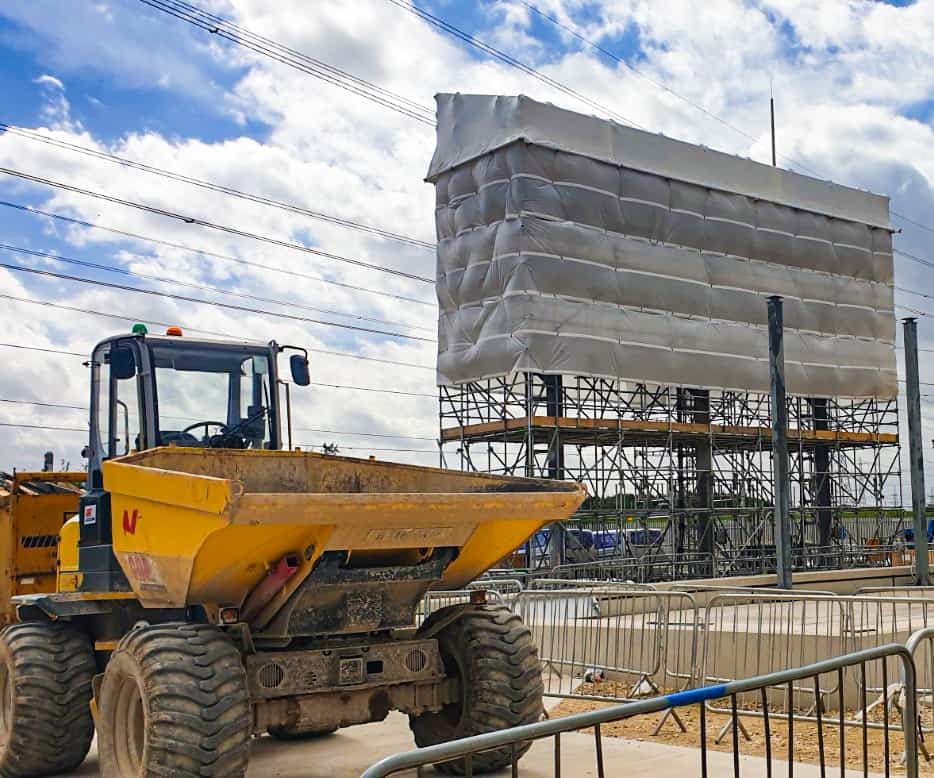 Other highlights in recent times included the completion of jobs for LS Cable and System, one of the biggest cable manufacturers globally, a project for the National Grid, and beginning works on the 50MW Kincardine offshore wind farm.
Currently under construction in Scotland, that will be the world’s biggest floating offshore wind farm.
Ben was also delighted to see BGB Scaffolding gain ISO 9001/14001/45001 accreditations with the support of Fulcrum Scaffolding Safety and Training and The Scaffolding Association.
From painting, rope access and blasting to training and even a drone and underwater inspection division, they are very much a multi-disciplined operation and going forward will also focus on larger infrastructure schemes in alternative sectors including rail and construction.
However, safety continues to be their number one priority, and ensuring every one of their 40 direct employees has a career development pathway.
Other highlights in recent times included the completion of jobs for LS Cable and System, one of the biggest cable manufacturers globally, a project for the National Grid, and beginning works on the 50MW Kincardine offshore wind farm.
Currently under construction in Scotland, that will be the world’s biggest floating offshore wind farm.
Ben was also delighted to see BGB Scaffolding gain ISO 9001/14001/45001 accreditations with the support of Fulcrum Scaffolding Safety and Training and The Scaffolding Association.
From painting, rope access and blasting to training and even a drone and underwater inspection division, they are very much a multi-disciplined operation and going forward will also focus on larger infrastructure schemes in alternative sectors including rail and construction.
However, safety continues to be their number one priority, and ensuring every one of their 40 direct employees has a career development pathway.
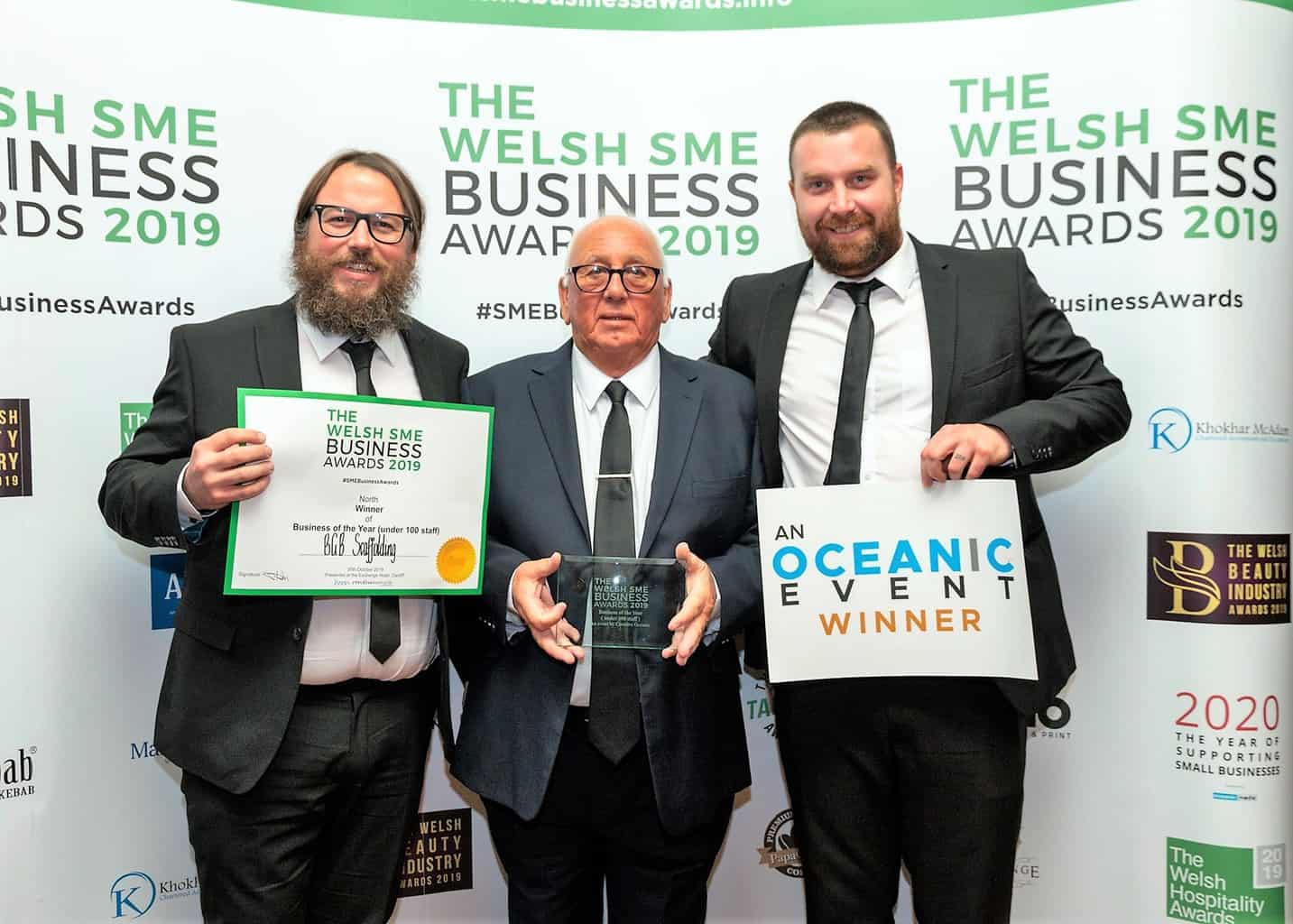 “We are growing and working to internationally recognised standards, and that is pivotal to our future success at home and overseas,” said Ben.
“This is a challenging time, but we are in a strong position and a lot of that is down to us looking further and wider at what opportunities are out there, strengthening and expanding our offering and making sure staff are well-trained and supported.
“Last year we unveiled plans to double in size and that’s the way we are heading; creating lasting relationships with the sector in the Asia-Pacific region will play a big part in that.”
He added: “I would like to thank each and every member of our team for their efforts in helping achieve what we have so far and look forward to creating a long-lasting future with them all at BGB.”
“We are growing and working to internationally recognised standards, and that is pivotal to our future success at home and overseas,” said Ben.
“This is a challenging time, but we are in a strong position and a lot of that is down to us looking further and wider at what opportunities are out there, strengthening and expanding our offering and making sure staff are well-trained and supported.
“Last year we unveiled plans to double in size and that’s the way we are heading; creating lasting relationships with the sector in the Asia-Pacific region will play a big part in that.”
He added: “I would like to thank each and every member of our team for their efforts in helping achieve what we have so far and look forward to creating a long-lasting future with them all at BGB.” LDS posts 37% turnover increase from record G-Deck sales
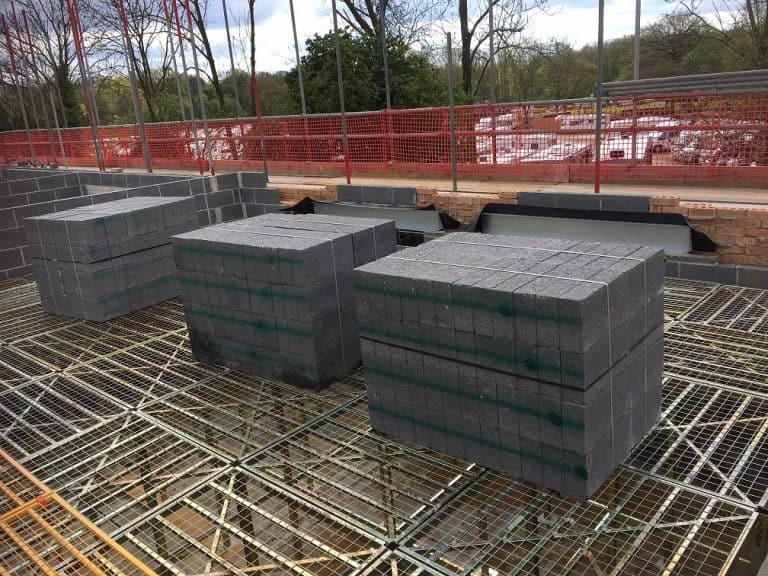
LDS Hire & Sales has posted a 37% increase in its business turnover thanks to record-breaking sales of its safety decking systems.
LDS, the company behind the G-Deck range of safety decking systems for the construction sector, has announced record sales and a 37% growth in turnover over the past financial year. The company has said it’s down to the popularity of its systems amongst housebuilders, construction companies and scaffolding firms. Based in Leicester, the company designs, engineers and manufactures its safety decking systems in house and has quickly gained a reputation for offering one of the safest, strongest and most versatile decking systems on the UK market. The robust, metal-fabricated G-Deck systems offer fast and simple installation and a safety-first approach, with an unbroken 100% zero collapse record. The range includes G-Deck, a versatile three-in-one system, G-Deck Dual, a metal deck and brackets used in combination with scaffolding tubes, and G-Deck Lite, a metal deck with steel supports within a plastic casing. Gurdip Siingh Bains CEO of LDS and the designer behind all G-Deck safety systems commented: “From the outset, our mission has been to provide safer, stronger construction decking products that offer value for money and ease of installation. The results we’ve achieved over the past year demonstrate that we have succeeded in those goals and have become the go-to choice for a wide range of housebuilders, construction companies and scaffolding firms because they know they’re in safe hands with G-Deck. “HSE figures indicate that construction remains the UK’s most dangerous industry, accounting for more fatalities than any other sector, and the highest proportion of fatal accidents are from falls from height. Our passion is making sites safer with robust products, that are correctly deployed thanks to their ease of installation and the training we provide. Every member of our team shares that goal and we’re delighted that our growth proves the construction sector is investing in a safety-first approach too.” Plans to build on LDS’ record year with G-Deck include developing export markets for the company’s innovative construction safety range in the US, Ireland and Europe, along with further product development. “Over the past year, we have launched G-Deck Dual, our G-Deck Lift Shaft Gate and our G-Deck Safety Hatch,” Gurdip Siingh Bains continues, “all of which are designed to make sites safer and encourage good safety behaviours. Our success during 2020/21 will be a springboard for further growth and innovation as we continue to reinvest in resources and product development.”Mental Health First Aid Instructors Programme delivers £5.5million of Social Value to Society
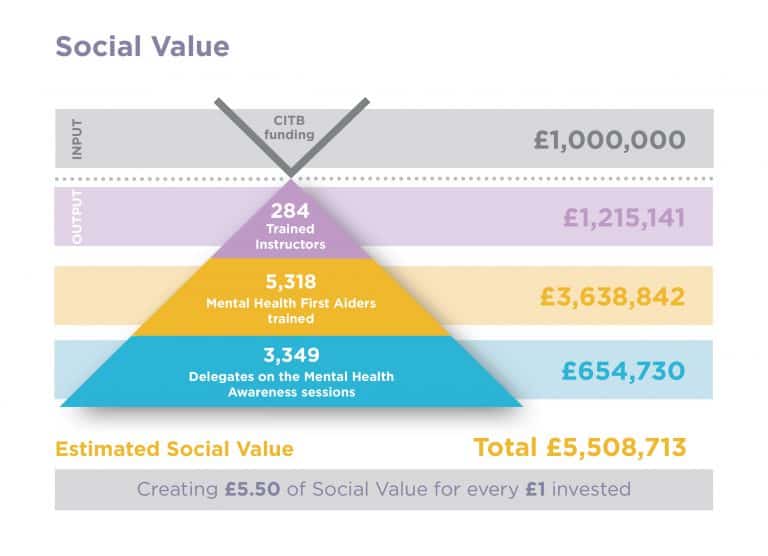
Building Mental Health, the CITB and the Lighthouse Construction Industry Charity have published a report detailing the social value of their Mental Health First Aid Instructors Programme; an initiative to train 288 construction industry dedicated Mental Health First Aid Instructors. The Social Value Report shows that for every £1 invested there has been £5.50 of Social Value to society.
This amazing result is despite the challenges presented by the Covid-19 pandemic, which meant that the programme had to be extended by a year. The programme achieved 99% of its target for training instructors and 166% of its target for training Mental Health First Aiders (MHFA) to operate in the industry on a daily basis.
‘Building Mental Health’ was launched by a working group of construction industry leaders and experts in 2018 in response to findings published the previous year in the ‘Thriving at Work’, Stevenson/Farmer review of mental health and employers. Commissioned by the Government, the report looked into how employers could provide better support to employees, including those with poor mental health or wellbeing, to remain in and thrive at work.
The Thriving at Work review identified not only the immediate human cost of poor mental health at work, but also the knock on impacts for society and the economy. It cited that employers are losing billions of pounds because employees are less productive, less effective, or off sick. In construction alone, stress, anxiety and depression accounts for a fifth of all work related illness.
One of the key objectives of the Building Mental Health Programme was to address the findings of the Thriving at Work report and provide companies of all sizes a portal of free and easily accessible information so that they could develop a positive mental health culture in their organisations. Contributions from across the industry ensured that an array of comprehensive support and expert guidance was easily accessible by all. The programme also includes a 5-step framework to better mental health, which focussed on the importance of pro-active training to support the industry.
To help support the aims of the Building Mental Health framework, a specific training project was created and managed by the Lighthouse Construction Industry Charity and funded with £1m from the CITB in May 2018 to deliver a programme of bespoke construction-based instructor courses to achieve the following key objectives:
- Train 288 Mental Health First Aid Instructors
- Trained instructors to subsequently train 3,000 Mental Health First Aiders (MHFAs) in the industry
- To encourage the industry to engage and embrace the mental health agenda and raise awareness of mental health issues in the industry in general
- To make best practice and information readily and wherever possible freely available
- To ensure that the industry takes a huge leap forward to reduce the stigma surrounding mental health by getting the conversation started while educating as many as possible about where and when to seek help.
- 284 Mental Health First Aid Instructors trained resulted in £1,215,141 of social value
- Instructors delivered training to 5,318 Mental Health First Aiders, outperforming target by 66% and resulting in £3,638,842 of social value
- 3349 Mental Health Awareness courses delivered £654,730 of social value
- Total social value of the Mental Health First Aid Instructors Programme £5,508,713
UK construction needs to create 217,000 new jobs

New research suggests that the UK construction industry needs to recruit an additional 217,000 new workers by 2025 just to meet demand.
Construction has bounced back quicker than expected from the Covid-19 pandemic and the industry will reach 2019 levels of output in 2022. The Construction Skills Network (CSN) research published by the CITB shows 216,800 new jobs will be needed to be created to meet the forecasted demand. According to the CSN, most English regions will experience an increase in construction workers by 2025, with East Midlands (1.7%) and West Midlands (1.4%) forecast to lead demand. Scotland (1.4%) and Wales (0.7%) are also predicted to fare well. The only region forecast to see a slight decline in the workforce is the North East (-0.1%). Major projects such as HS2 are driving growth in some regions and infrastructure (5.2% per annum) and private housing (6.7%) should see the healthiest pace of expansion by 2025. The report predicts a growing contribution to come from repair, maintenance and improvement work, as retrofitting existing buildings to meet net-zero emissions targets becomes more important. In terms of annual average recruitment requirement (ARR), the most in-demand trades are forecast to be in wood trades & interior fit-out (5,500 per year), other construction professionals and technical staff (5,150), construction managers (3,600) and electrical installation trades and (3,400). There will also be a demand for non-construction, office-based professional, technical and IT support staff (7,850). However, it’s not all good news – the commercial sector faces significant near-term risks while the public sectors could be impacted by tighter government finances.? Despite this, the CSN forecasts UK output to grow annually at an average rate of 4.4% across 2021-2025.? Commenting on the research CITB Policy Director Steve Radley said: “It’s great to see construction coming back so strongly and creating lots of job opportunities. We need to adopt new approaches to meet these growing skills needs and deliver these quickly. “We are working closely with the government and FE to build better bridges between FE and work and make apprenticeships more flexible. We are also making significant investments in supporting work experience that make it easier for employers to bring in new blood. “We must also make sure that we invest in the skills that will drive change and meet new and growing needs such as Net Zero emissions and Building Safety. We will be announcing plans soon to tackle specific skills and occupations such as leadership and management, digital skills and skills related to energy efficiency.”Infiniti Group completes £1.5m Esplanade Hotel refurb contract

Scarborough-based Infiniti Group has completed an extensive £1.5m interior, exterior and roof refurbishment of the coastal resort’s Grade II listed Esplanade Hotel for the Daish Hotel Group.
Infiniti Group’s work on the Victorian hotel, which has just re-opened, started in 2020 creating jobs for Infiniti Group employees and employment for local sub-contractors throughout the project, between 15 and 40 at any one time. A complete wraparound scaffold – now taken down – was erected during October and November, followed by re-roofing of the five-storey hotel with 15,000 traditional slates over a 620sqm area; the full refurbishment of 12 of the Esplanade’s 73 bedrooms and bathrooms; installation of a new women’s WC; external painting of all walls and window wood works, including more than 200 sash windows; and redoing the external walkways. Alex Willgrass, Infiniti Group Director, said: “It is an incredibly satisfying feeling to now see the hotel fully finished and open as a result of all the work and effort that the Infiniti team have put in.” Infiniti Group’s contracts manager, Sharon Lester, who oversaw the project, said: “We’ve had so many people come up to us and say how professional, considerate and hard working the Infiniti staff have been. And with the freezing cold and wet weather that we’ve had this winter and spring the job has certainly had its challenges, especially on the edge of the North Sea.” One impressed neighbour is Lord Rodney Walker, who said: “Over the past 12 months we have observed the work carried out by Infiniti on the Esplansde Hotel from our nearby apartment. This was a major project involving scaffolding the entire building, installing a complete new roof, exterior repair and repainting. The result is a new look to this prominent hotel thanks to the professionalism of Infiniti.” Marcus Rowe, Infiniti Group Director, helped to ensure that all logistical and construction obstacles posed by lockdown were overcome, such as pre-empting Covid-19 lockdown restrictions by buying in advance the majority of the materials they needed to finish the work, while also sourcing additional fully experienced, available, skilled contractors. Covid social distancing safety was achieved using signage, floor and wall markings, hi vis and intelligent clothing and exact, pre-planned operational movements of workers around the site, such as keeping contractors separate and adopting work patterns sequentially across the hotel’s floors. The company also had to overcome Brexit-related delays related to specialist supplies being brought in from mainland Europe including a new 4,000-litre water tank.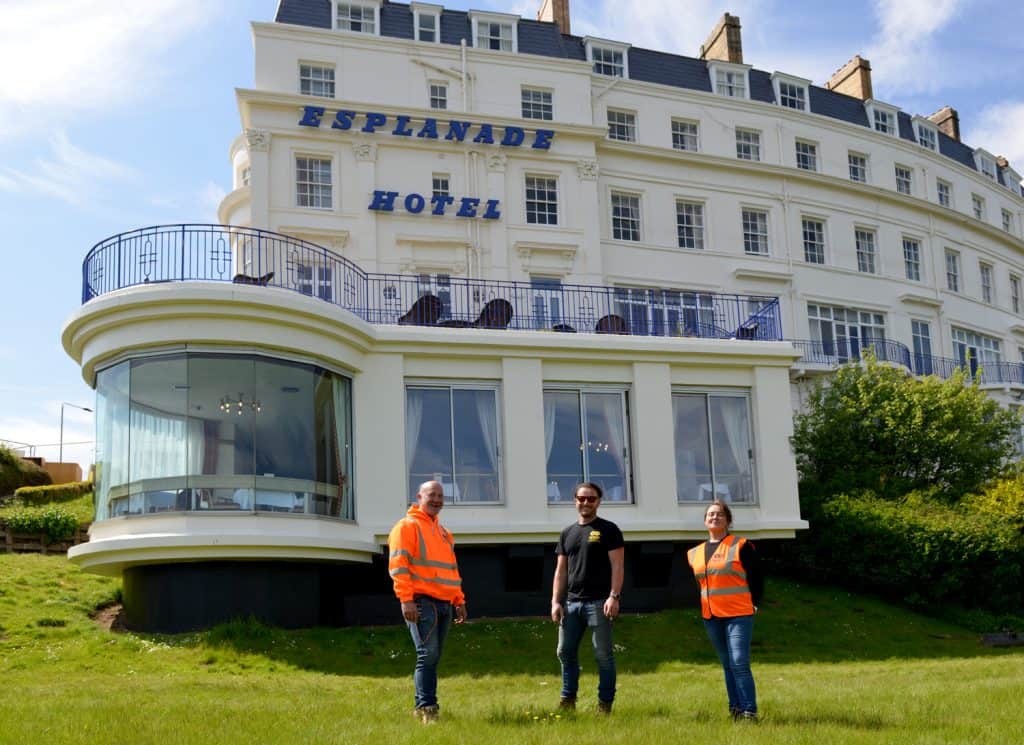 The Esplanade Hotel is the second high-profile hotel refurbishment Infiniti Group have won in Scarborough and follows the conversion of The Mount Hotel into the Bike & Boot Hotel in 2020.
Established in 2015, Infiniti Group has a 10,000sqft HQ in Scarborough, roofing & construction businesses. The roofing & construction business employs a team of 10 staff including expert builders, roofing, general labourers, as well as an experienced administration and office team.
The group’s ethos of innovation and continual improvement can be seen with Infiniti Roofing & Construction’s approval as an accredited contractor for Sika Liquid Plastics. Its roofing and construction services include full new commercial and industrial construction and roofing installations, repairs, and refurbishments. Infiniti Scaffolding was recently accredited by the National Access and Scaffolding Confederation (NASC).
The Esplanade Hotel is the second high-profile hotel refurbishment Infiniti Group have won in Scarborough and follows the conversion of The Mount Hotel into the Bike & Boot Hotel in 2020.
Established in 2015, Infiniti Group has a 10,000sqft HQ in Scarborough, roofing & construction businesses. The roofing & construction business employs a team of 10 staff including expert builders, roofing, general labourers, as well as an experienced administration and office team.
The group’s ethos of innovation and continual improvement can be seen with Infiniti Roofing & Construction’s approval as an accredited contractor for Sika Liquid Plastics. Its roofing and construction services include full new commercial and industrial construction and roofing installations, repairs, and refurbishments. Infiniti Scaffolding was recently accredited by the National Access and Scaffolding Confederation (NASC). Scaffolding Training in Trinidad Resumes
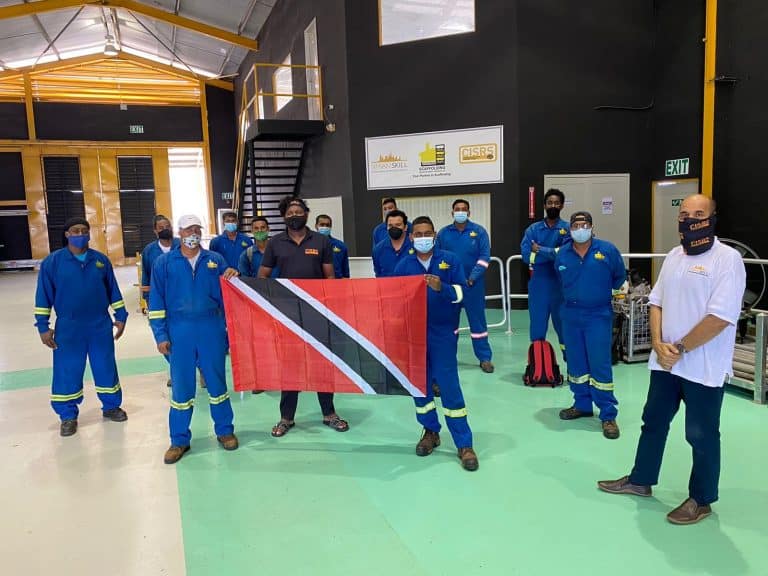
Simian International and its partner SMTL Training are set to deliver three months of back-to-back CISRS scaffolding courses in Trinidad after lockdown restrictions were lifted.
According to information supplied by the Construction Industry Scaffolders Record Scheme (CISRS) a selection of courses including; Level 1, Basic Scaffolding Inspection and Supervisor training will run in succession in the coming weeks and months. The training blitz follows a 15-month closure of the scaffolding training centre due to the Covid-19 pandemic. “It’s great to see overseas CISRS training resume in Trinidad and neighbouring Barbados,” says Ian Fyall, SIMIAN’s Operations Director. “There were a number of logistical challenges to overcome and we couldn’t have done it without our travel agents and SMTL Training, who went to great lengths to ensure the centre is Covid compliant.
“We also need to thank CISRS for completing the 2021 centre audit, paving the way for training to begin again.
“Travel has been extremely difficult over the past year, meaning we’ve struggled to fly CISRS instructors where they’re needed. However, we’re beginning to see restrictions lifted and more centres reopen.
“Every member of the Simian Overseas team has had both Covid-19 vaccinations and is available when required.”
Dave Mosley, CISRS Managing Director, added: “This is excellent news for the centre and scaffolders in the region. Simian/SMTL have set up a first-class centre in Trinidad. We are hoping they can pick up where they left off and continue to flourish in the Caribbean.”
Phillip Archie, SMTL Training Managing Director, said: “It was indeed challenging getting the CISRS trainer into the country. Trinidad borders remain closed due to the Covid-19 restrictions and we faced additional setbacks due to the closure of neighbouring airports as a result of the La Soufrière volcanic eruptions.
“Together with the Simian team we were able to get the trainer here, have resumed scaffolding training for our employees and are open to provide similar training to other scaffolding providers in Trinidad.”
“There were a number of logistical challenges to overcome and we couldn’t have done it without our travel agents and SMTL Training, who went to great lengths to ensure the centre is Covid compliant.
“We also need to thank CISRS for completing the 2021 centre audit, paving the way for training to begin again.
“Travel has been extremely difficult over the past year, meaning we’ve struggled to fly CISRS instructors where they’re needed. However, we’re beginning to see restrictions lifted and more centres reopen.
“Every member of the Simian Overseas team has had both Covid-19 vaccinations and is available when required.”
Dave Mosley, CISRS Managing Director, added: “This is excellent news for the centre and scaffolders in the region. Simian/SMTL have set up a first-class centre in Trinidad. We are hoping they can pick up where they left off and continue to flourish in the Caribbean.”
Phillip Archie, SMTL Training Managing Director, said: “It was indeed challenging getting the CISRS trainer into the country. Trinidad borders remain closed due to the Covid-19 restrictions and we faced additional setbacks due to the closure of neighbouring airports as a result of the La Soufrière volcanic eruptions.
“Together with the Simian team we were able to get the trainer here, have resumed scaffolding training for our employees and are open to provide similar training to other scaffolding providers in Trinidad.” Altrad support the decommissioning of an offshore gas platform
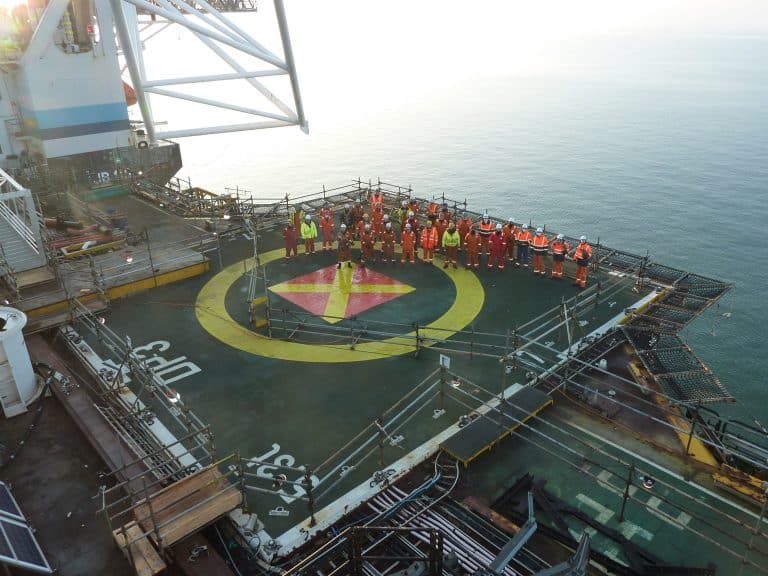
The UK Continental Shelf (UKCS) contains a range of mature oil and gas assets, many of which are approaching the end of their useful working lives.
Decommissioning these assets safely is becoming increasingly important for energy producers and it requires specialist skills and experience.
Altrad have supported Worley, and their client Allseas, with a range of services to enable the safe removal of Spirit Energy’s 11,000 tonne platform, DP3, at Morecambe Bay in the eastern Irish Sea.
The decommissioning platform will be lifted and taken back to shore by Allseas’ Pioneering Spirit – the world’s largest construction vessel.
Altrad’s scope included access scaffolding, complex rigging and the cutting and disassembly of caissons, conductors and platform legs, these essential, time critical works, were required prior to the removal of the platform via a single heavy lift.
Altrad utilised diamond wire saws and oxy acetylene torches to enable the cutting of each tubular, which were up to 36 inches in diameter.
The entire work scope was completed safely, without incident and within the condensed eight-week window permitted by the work schedule.
Chris Garland, Altrad’s Director of Upstream Operations, said, “I’m delighted we have been able to use our skills and expertise in support of the decommissioning of Spirit Energy’s assets in the eastern Irish Sea, wherein our teams have worked collaboratively with Worley to achieve a safe and successful outcome.”