WorkSafe New Zealand is inspecting residential sites from October to December, with falls from height accounting for 70% of construction prohibition notices.
WorkSafe New Zealand is inspecting residential sites from October to December, with falls from height accounting for 70% of construction prohibition notices.
WorkSafe New Zealand is inspecting residential sites from October to December, with falls from height accounting for 70% of construction prohibition notices.
WorkSafe New Zealand is inspecting residential sites from October to December, with falls from height accounting for 70% of construction prohibition notices.
Altrad aspires to become a business of scale aiming to be 75% larger by 2026 according to its new bold growth-driven strategy launched today.
In today’s global, digitally connected market, sector convergence sets industries and organisations on a collision course – revealing both opportunities and threats in the shape of new markets, broader capabilities, technologies and competitive behaviours.
Peter Hughes, Altrad’s Director of Business Development & Strategy said “Our markets are changing faster than at any time in our lifetime, driven by growing concern over climate change, the energy transition and rapidly advancing digital technology. So, it will come as no surprise to hear that our growth-driven agenda requires us to continually evolve, as our markets and sectors change – but of course, delivering transformational growth requires courage and ingenuity – characteristics that typify Altrad and its people”.
February 2021 appears to be an exciting milestone for Altrad, as they launch their new Altrad 2026 strategy – ‘It all begins with a desire to create a better tomorrow’.
In 2026, Altrad aspire to become a business of scale – aiming to be 75% larger than they are today. Their journey is to become more diversified in terms of the services they provide and the markets they serve, providing enhanced value to their clients and enriched growth opportunities for their people.
Altrad intends to acquire businesses and form new strategic partnerships with like-minded companies that share their excitement, vision and values.
In addition, Altrad have also committed to a range of corporate social responsibility (CSR) and environmental performance targets – which includes becoming carbon neutral by 2030 or sooner.
“Unlike many of our peers, who work tirelessly on their strategies, and then keep them locked away – we have adopted a very different approach. Our approach is bold – so our strategy is publicly available to everyone via our web site at Our Approach | Altrad Services UK. We’re committed to delivering our growth-driven agenda and moving our strategy from ‘excitement into execution’ such that our strategy is a feature of our daily life – and everyone, including our competitors – can see and measure our progress” added Hughes.
It’s fair to say that Altrad has set out a bold growth driven strategy, and only time will tell if this approach succeeds – but given their track record and the confidence in their messaging – it might not be the wisest choice to bet against them.
A campaign calling on the Government to withdraw the implementation of Reverse Charge VAT is gathering pace after it was revealed it could cause a cash-flow crisis across the construction industry.
Over 150,000 businesses within the construction industry are set to see a 20% drop in cash flow when the planned VAT changes come into force on the 1st March. Many have said the impact of this could scupper the construction-led economic COVID recovery.
As previously reported in January the largest industry organisations and trade bodies supported a letter calling on the Government to scrap its VAT changes for construction.
Now the Construction Leadership Council (CLC) which represents the whole construction industry has taken the lead on again urging the Chancellor Rishi Sunak to withdraw the impending changes.
In a letter to the Chancellor, chairman of the CLC, Andy Mitchell wrote: “Despite the Government’s support, our industry remains in extremely challenging times as we continue to adapt to ongoing Covid-19 rules, mitigate the impact of Brexit and prepare for the forthcoming implementation of rule changes on IR35 and the Construction Industry Scheme. It is also important to note that by continuing to operate the industry has suffered a serious financial impact as a result of project delays and costs incurred in adapting working practices. This has resulted in many contractual disputes which our monitoring suggests are currently growing and which will accelerate further still. We are currently quantifying the impact; however, it is reasonable to assume that without further financial support many companies will become insolvent.”
Referring to the Withdrawal of Reverse Charge VAT, Andy Mitchell added: “The implementation of Reverse charge VAT in April will restrict cashflow in our industry, especially to the smallest firms, at an extremely critical financial period for many businesses. This policy risks reversing any recovery industry has made from Covid-19 and will limit the scope for protecting and creating jobs across the UK. As such, we call for the legislation to be withdrawn to help secure an economic recovery for the long term.”
The CLC hopes the forthcoming Spring Budget on the 3rd March will see Rishi Sunak make an announcement on Reverse Charge VAT and hopefully a change of direction.
See the full letter here: https://www.constructionleadershipcouncil.co.uk/wp-content/uploads/2021/02/Letter-to-Rishi-Sunak-MPChancellor-of-the-Exchequer-from-the-co-Chair-of-the-CLC_26-January-2021.pdf
UK charity launches free support pack helping people affected by a fall from height.
THE NO FALLS FOUNDATION, the UK charity dedicated to preventing falls from height and helping people affected by the life-changing consequences of a fall, has published a Support Pack signposting organisations and resources that can provide advice and assistance following a fall from height in the workplace.
It also includes details of the charity’s Ambassadors who have all faced the aftermath and consequences of a fall and are available to provide advice and guidance to anyone experiencing the traumatic affects of a fall and wondering what to do next.
The free pack covers a wide range of topics, including:
What to do immediately;
What financial assistance may be available;
How to begin a personal injury claim;
Support with transport and home adaptations;
Using the No Falls befriending service;
Organisations that can help with issues of mental health.
For those who have experienced the loss of a loved one as a result of a fall from height, the pack also provides details of those organisations that can offer help and support.
Comments the charity’s manager, Hannah Williams: “What should have been a perfectly normal day has ended in a potentially life-shattering accident. What do you do now? Who can you turn to? What help is available? The pack attempts to answer these questions and provides contact details for the Foundation.”
The No Falls Foundation also publishes a bi-monthly e-newsletter Saving Lives which contains details of all the latest news and developments at the charity. You can sign up at www.nofallsfoundation.org
A third of construction companies expect to provide more jobs for British workers as the sector rises to challenges presented by Brexit and Covid-19.
CITB’s annual Migration Survey showed while there are challenges ahead for the sector which is set to grow by a quarter of million workers in the next four years, British construction is a robust industry which is well provide more opportunities for British workers, as the number of migrant workers falls.
Among the findings were that 41% of employers will look to increase the skills of British workers, almost a third (30%) will provide more permanent jobs for Brits, a quarter (24%) will increase minimum salaries, and 16% will look to take on more local apprentices. While employers reported a fall in the number of migrant employees, there was a rise in the number of self-employed migrants working for the industry.
While only 16% of companies expect that issues with migrant workers not remaining in the UK will impact their firm, almost three-quarters (72%) expect it to impact on the sector, with a quarter (27%) anticipating a serious impact.
CITB will work with construction companies to help them meet these challenges and realise the opportunities created, while ensuring employers understand the implications of the new system Brexit and can fill any skills gaps accordingly by working in partnership with Government to ensure the right training for those entering the industry.
Steve Radley, Director of Strategy and Policy at CITB, said: “Construction faces a number of challenges over the next few years, among them declining numbers of migrant workers, as Covid has seen more workers leave the country and with a new tighter migration system Employers expect to provide more jobs for British workers but for some occupations and employers, this is already proving challenging with order books growing, particularly in housing and infrastructure.
The government has made some important commitments such as reforming FE, introducing construction traineeships and increasing access to unused apprenticeship levy funding. It’s vital that we work together to ensure these deliver the skills construction needs. It’s also critical that employers understand the new points-based system and have confidence it will respond quickly where there are pressures on key skills.
CITB will support the sector in meeting the challenges of Covid-19 and Brexit with investments over the next five years including 28,000 taster experiences of construction, 19,000 on site experiences to help prepare students, working with government on a new construction traineeship to get more FE learners into jobs and apprenticeships and increasing the number of apprentices completing their training.
While the report showed that most employers reported no change in their number of migrant workers over the last year, 13% reported a fall in employing them, and only 2% a rise. The largest fall (41%) was among those employing non-UK workers indirectly (ie. self-employed). Just over a tenth of the construction workforce are migrants, with the proportion falling from 10.7% in 2018 to 10.2% – a drop of about 5% in two years – with most coming from the EU.
The number of employers dependent on migrant workers has fallen slightly (from 15% in 2019 to 13%). While those directly employing migrants (ie. as staff) fell by 11%, the number of firms indirectly employing migrants rose by the same number.
One concerning trend was the lack of understanding among companies of how post-Brexit settlement empowers them to retain staff, with less than one in ten (9%) saying they understood it well. The chief reasons for this included a primary focus on Covid-19, the belief that their firm will not suffer due to a low number of migrant workers, and waiting for further clarity on Brexit and preparing to act afterwards.
The trade body says it’s Audited Membership is the highest level available, developed in line with PAS91 specifically for scaffolding contractors who work to the strictest safety standards, display the utmost professionalism and support the association’s mission to raise standards across the sector.
The title of 100th Audited Member has been achieved by Globe Scaffolding (Cambridge) Ltd, a business with over 30 years experience and one of the most highly respected independent scaffolding contractors in their area.
Neil Thacker, Managing Director of Globe Scaffolding (Cambridge) Ltd said: “As a large, ambitious, growing contractor, based on a strong code of ethics, we are always looking to improve. We feel that membership of the Scaffolding Association is the best way to achieve this aim.
Clients recognise Audited status as a benchmark for quality and professionalism, meaning that we can be considered for more projects that will enhance our skillsets, reinforce our reputation and grow our revenue streams. We’re also keen to give something back to the sector and will support the association’s drive to improve safety, training and work opportunities for all.”
Robert Candy, Chief Executive of the Scaffolding Association, is delighted with this latest landmark: “It isn’t easy to attain Audited Membership status – the qualification criteria are extremely robust – so Globe Scaffolding (Cambridge) Ltd and the other 99 companies can rightly be proud of their achievements. They represent some of the best in the access and scaffolding sector, and their efforts, excellence and expertise will be rewarded as more and more clients accept Scaffolding Association members onto their tender lists.
We look forward to supporting all our members in these challenging times, and working together to secure a successful future for all.”
According to the trade body, the organisation saw a 30% increase in its membership numbers in 2020. It offers a framework that allows businesses to progress at all stages in their growth and development.
Two Hull scaffolders have been dubbed hero’s after saving the life of a woman dangling from a flyover bridge.
Scaffolders Jordan Ness, 21, and Jay Shaw, 20, stopped traffic and rushed to the woman’s aid after she was seen walking along the outside of Hull’s Daltry Street flyover.
The duo were driving along Hessle Road towards the flyover when they saw the woman. The pair pulled over in their truck with Jordan making a dash to the woman’s aid, reports HullLive.“I sprinted up there,” said Jordan. “I grabbed hold of her arm and she was dangling off the bridge so I was lucky to have got to her.“I had to pull her up and wrap my hands around her waist. I held on to her for about ten to 15 minutes.”
Meanwhile, Jay was stopping traffic down below to warn other drivers before he made his way up to help his friend save the woman’s life.
Jordan, from east Hull, added: “Luckily, my friend Jay got there in time as I probably would have let go of her.”
Jay said: “I just noticed her and pulled over and tried to stop a bit of traffic and luckily someone chipped on to what was going on and people got out of their cars.“Jordan was holding her for ages. Thankfully, a lorry driver pulled up underneath the bridge to make the fall smaller and someone pulled up on the bridge who was a paramedic.”
Jordan and Jay stayed with the woman on the bridge for 45 minutes to make sure she was okay.
“I calmed her down and said I’m here to talk,” said Jordan. “I was holding her hand to comfort her and Jay was talking to her making her feel better.“The emergency services managed to get there really quickly. It was absolutely traumatising and heartbreaking.”“It was not nice to see,” Jay added. “Regardless of who it was.”
A spokesperson from Humberside Police said: “Officers responded to an incident on the Daltry Street flyover on the A63 just before 5pm on Wednesday, January 27.“The incident was brought to a safe conclusion and the road was reopened.”
Working closely with UK System Scaffold Hire, JDC Scaffolding developed an innovative gantry design which used HAKI Tripods to minimise disruption in Kensington High Street.
Even with the reduced footfall and lower traffic levels created by Covid-19, scaffolding an iconic building in Kensington High Street poses major challenges, including the need to minimise impact on pedestrian traffic and the requirement to ensure that store windows and access routes are not obstructed, not to mention the fact that the scaffolding has to be erected during night-time possessions.
JDC Scaffolding were responsible for erecting the scaffold on what was formerly Barkers Department store – one of the most iconic buildings in the Kensington Square Conservation Area. Contracted by PAYE Stonework and Restoration Ltd who were undertaking extensive refurbishment of the spectacular Grade II* listed Art Deco façade, JDC Scaffolding knew exactly how to fulfil the brief.
Working closely with UK System Scaffold Hire, JDC Scaffolding developed an innovative gantry design which used HAKI Tripods to span over the existing lightweight canopy and support double width access scaffold above.
Tripods helped achieve huge time savings
Each single tripod could carry a permissible load of 60Kn which reduced enormously the amount of scaffolding that had to be used at street level: This had multiple benefitsas Adam Callow, Design Manager at JDC Scaffolding explains: “Using the HAKI tripods helped us to achieve huge time savings compared with using tube and fittings. It also enabled the pavement to be kept open throughout the project (even allowing the free movement of mobilityscooters) and also providedclear visibility of display windows while work was progressing.”
Adam also praised UK System Scaffold Hire’sapproach to the project: “UKSSH were fully on board with the project from day one: They understood the requirements from a technical perspective, they responded to our needs for accurate and on time delivery to comply with our night-time possessions and they integrated their skill sets with our overall design which involved utilising tube and fittings once the 10 metre high Tripod element had provided the foundation for a working gantry above the building’s decorative canopy. The result is a project that we can all be proud of.”
CITB supported the training of nearly a quarter of a million construction workers in the last financial year, according to newly published accounts.
The annual report, laid before Parliament on 28 January 2021, shows that in the 12-month period ending 31 March 2020 more than 15,000 construction employers and over 20,000 apprentices were supported by CITB.CITB provided direct funding for training of £105.1m to employers through the Grants Scheme, the Skills and Training Fund and Training Groups of which £76.9m was received by small, micro or medium-sized enterprises (SMEs). An additional £28.8m was invested in specific projects, benefiting firms of all sizes. Sarah Beale, CITB Chief Executive, said: “In 2019-20 we provided funding to over 15,000 construction employers which funded the training of around 245,000 of their employees, the vast majority from SMEs.“So much has changed in the past year that it now seems a long time ago. Construction, like all industries, underwent unprecedented upheaval due to the pandemic, and CITB immediately took action to support industry. “Now starting to stabilise since the pandemic began we’re tackling the skills challenges of Net Zero and Brexit with a new generation of home-grown talent, while new technologies and modern methods of construction can help industry recover stronger and more sustainable than ever.” The accounts show that 25 Construction Skills Fund (CSF) hubs trained 13,200 people to become site-ready for employment in the industry. An Immersive Learning commission saw dozens of employers participating through supply chains, an example being BAM Nuttall using handheld tablets to improve memory retention and streamline site induction teaching.CITB supported the creation of 4,528 new apprenticeships and provided ongoing support for 15,844 with an investment of £35.3m, part funded via ESFA, Welsh Government and Skills Development Scotland. Apprenticeship grants were offered to industry employers, with £48.8m provided in 2018-19 compared to £61m in 2019-20, an increase of 25%. Last year the national COVID-19 response initially shut down most construction sites, with reopening in accordance with strict safety measures. CITB enabled apprenticeship attendance grants to be paid in advance to employers, and contacted over 11,000 apprentices to provide support through the pandemic – just 2.5% ended up being made redundant, with half of those going on to start a new construction apprenticeship.On 1 April the Skills and Training Fund was expanded to include medium-sized employers as well as small- and micro-sized. A Leadership and Management Fund for large levy-registered businesses was developed shortly afterwards, ultimately approving 38 bids worth £2.8million to support more than 7,000 workers.To aid cashflow for employers, CITB suspended levy collection for five months and halved the amount due for 2021-22. To maintain service, CITB depleted its reserves and a £10million loan was secured from the Department for Education. Further cost control measures included a staff restructure and further reduction in operational size, in addition to previous programmes.MB Roche & Sons Ltd is one of the many SMEs to fund training through CITB. Daniel Roche, Company Director, said: “Upskilling means we are able to access tendering processes which companies with lesser qualified operatives can’t. A fully trained workforce is more engaged, efficient and productive and makes sound business sense.”CITB’s 2019-20 accounts took longer to prepare due to COVID-19, a restructure and systems change. The next corporate business plan will be published in the spring. Read the Annual Report and Accounts 2019-20
A scaffolding contractor has been hit with a £15,000 fine after scaffolding collapsed across the entrance to the car park of Coventry Skydome.
The Birmingham based firm erected scaffolding, which was approximately 13 metres in length and four metres high to protect the public from falling debris.
Coventry Magistrates’ Court heard that on the 3rd of March 2020, the structure collapsed in high winds during Storm Freya trapping motorists for hours in the Skydome’s car park.
Luckily, no members of the public or motorists were passing under as it fell – which would almost certainly have caused severe damage, injury or even death.
A Health and Safety Executive (HSE) investigation found that the scaffolding was not adequately fixed into the structure and was not designed and installed to withstand foreseeable wind loads.
The management of the scaffolding operation was well below the expected standard because it did not identify the need for a bespoke design, required to ensure the strength and stability of the proposed structure, the HSE said.
Climar Scaffolding Limited of Widney Avenue in Birmingham pleaded guilty to breaching the Construction (Design and Management) Regulations 2015. It was fined £15,000 and ordered to pay costs of £2,532.
Speaking after the hearing, HSE inspector Edward Fryer said: “Scaffolds need to be adequately tied, in line with the recognised health and safety requirements or a bespoke design should be created based on established engineering principals. In this case the scaffolding was not properly designed or adequately tied into the permanent structure.“It’s only a matter of fortune that nobody was seriously injured, the collapse presented a significant risk to the safety of the public.”
Using PLETTAC Metrix system TRAD Scaffolding Contractors (TRAD) has completed the erection stage of work on 9 Millbank, a busy central London development managed by St Edwards Homes.
TRAD was engaged by the client late last year to provide the complete scaffolding package for the development of the former government-owned building.
The original building was partly demolished, and the remaining Grade II listed section is currently being refurbished. Phase 2 of the works is a new build section which retains the traditional look of the existing building and is set to become a highly desirable luxury residential centrepiece within our client’s portfolio.
Gracing the banks of the River Thames at the heart of historic Westminster, the stunning location has The Houses of Parliament, Westminster Cathedral and Big Ben within its gaze.
TRAD Scaffolding has recently completed the refurb and new build elements of the project, in a contract worth more than £2m, using its own highly adaptable and impressive Plettac Metrix system scaffold.
Working to strict deadlines and in one of the busiest locations in London the team worked around the clock to quickly deliver a stunning looking scaffold envelope incorporating some 2000 tons of brand-new equipment.
The on-site team, led by senior Black Hat foreman Scaffolder Nigel Garner, worked very closely with their design team, TRAD contracts management and the client to deliver the scaffold safely and to a very precise and high standard.
TRAD Scaffolding Managing Director Peter McShane said: “I have visited the site regularly during the build process and I have to say every time I’ve approached the project the scaffold has stood out aesthetically. The team has done a great job here and they should all be hugely proud.”
TRAD, with the support of the St Edwards Homes team, has also taken the opportunity to introduce several apprentices – male and female – along the way. Closely managed by their site team they have made very positive contributions and have experienced working on a large and important development project.
Peter McShane added: “St Edwards Homes has been very supportive of our apprentices being involved in the project. They recognise that these young people are the future of our industry and I’ve been really pleased with the progress I have seen from our apprentices on site.”
With a large proportion of this project delivered during Covid lockdowns the team has maintained programme safely, within budget and been fully aware of the health and wellbeing of its own team, other teams on-site and the general public.
Dismantle is due to start shortly and the TRAD team are all looking forward to seeing the full reveal over the coming months.

 “Unlike many of our peers, who work tirelessly on their strategies, and then keep them locked away – we have adopted a very different approach. Our approach is bold – so our strategy is publicly available to everyone via our web site at Our Approach | Altrad Services UK. We’re committed to delivering our growth-driven agenda and moving our strategy from ‘excitement into execution’ such that our strategy is a feature of our daily life – and everyone, including our competitors – can see and measure our progress” added Hughes.
It’s fair to say that Altrad has set out a bold growth driven strategy, and only time will tell if this approach succeeds – but given their track record and the confidence in their messaging – it might not be the wisest choice to bet against them.
“Unlike many of our peers, who work tirelessly on their strategies, and then keep them locked away – we have adopted a very different approach. Our approach is bold – so our strategy is publicly available to everyone via our web site at Our Approach | Altrad Services UK. We’re committed to delivering our growth-driven agenda and moving our strategy from ‘excitement into execution’ such that our strategy is a feature of our daily life – and everyone, including our competitors – can see and measure our progress” added Hughes.
It’s fair to say that Altrad has set out a bold growth driven strategy, and only time will tell if this approach succeeds – but given their track record and the confidence in their messaging – it might not be the wisest choice to bet against them. 
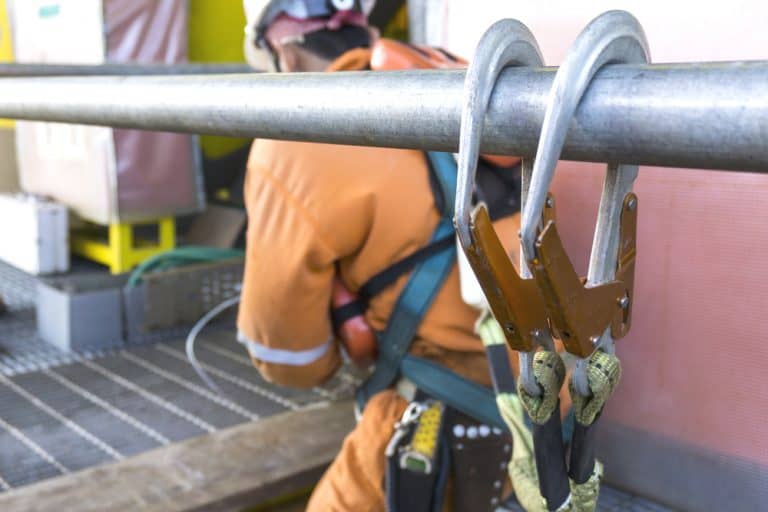
 For those who have experienced the loss of a loved one as a result of a fall from height, the pack also provides details of those organisations that can offer help and support.
Comments the charity’s manager, Hannah Williams: “What should have been a perfectly normal day has ended in a potentially life-shattering accident. What do you do now? Who can you turn to? What help is available? The pack attempts to answer these questions and provides contact details for the Foundation.”
The No Falls Foundation also publishes a bi-monthly e-newsletter Saving Lives which contains details of all the latest news and developments at the charity. You can sign up at
For those who have experienced the loss of a loved one as a result of a fall from height, the pack also provides details of those organisations that can offer help and support.
Comments the charity’s manager, Hannah Williams: “What should have been a perfectly normal day has ended in a potentially life-shattering accident. What do you do now? Who can you turn to? What help is available? The pack attempts to answer these questions and provides contact details for the Foundation.”
The No Falls Foundation also publishes a bi-monthly e-newsletter Saving Lives which contains details of all the latest news and developments at the charity. You can sign up at