NASC President’s Double Triathlon Challenge for Young Epilepsy
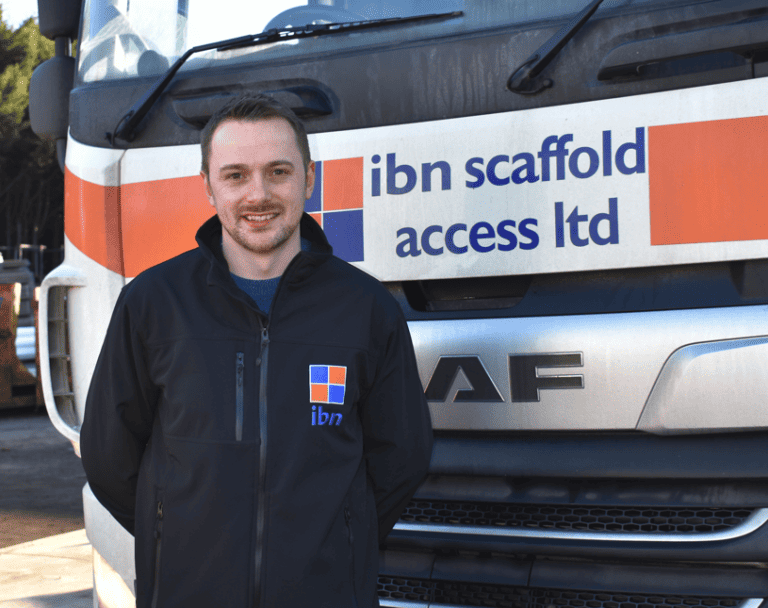
NASC President David Brown is set to take on a significant personal challenge this month as he participates in two triathlons to raise funds for Young Epilepsy, a charity that supports children and families affected by the condition.
Brown, who is also the Managing Director at IBN Scaffolding based in Barnsley, South Yorkshire, will be swimming, cycling, and running across two gruelling events this month, all in the name of charity. His first triathlon will be the Shropshire Triathlon on September 8th, followed by the North West Triathlon on the 22nd. Despite joking about his swimming skills, he is determined to complete both events and raise awareness and sponsorship for the cause. The Shropshire Triathlon will see him tackle a 750m swim, a 25km cycle, and a 5km run, while the North West Triathlon features a slightly shorter 500m swim but similar bike and run distances of 21km and 5km, respectively. Brown explained that these challenges will push him to his limits, particularly in the swimming sections.“Swimming isn’t my strong suit – I swim like a brick! So, I’ll need to make up time on the bike and run,” he said.
 Young Epilepsy is a charity close to Brown’s heart, and his fundraising efforts are aimed at ensuring the organisation can continue its critical work.
The charity offers vital support to young people diagnosed with epilepsy, a condition that affects nearly one in every hundred children in the UK. Through fundraising, Brown hopes to contribute to research, treatment advancements, and practical support for those impacted.
“Epilepsy can be one of the most frightening and isolating conditions a young person can experience,” Brown explained. “Together, we can improve research, treatment, and support for those affected.”
He has also set up a fundraising page where supporters can contribute to his effort. He will be sharing updates and photos of his progress through the events, and he jokes that he hopes they won’t include any pictures of him being rescued during the swim.
Those wishing to sponsor David can do so via his fundraising page: JustGiving. Every donation, he says, will help bring hope and support to young lives affected by epilepsy.
Young Epilepsy is a charity close to Brown’s heart, and his fundraising efforts are aimed at ensuring the organisation can continue its critical work.
The charity offers vital support to young people diagnosed with epilepsy, a condition that affects nearly one in every hundred children in the UK. Through fundraising, Brown hopes to contribute to research, treatment advancements, and practical support for those impacted.
“Epilepsy can be one of the most frightening and isolating conditions a young person can experience,” Brown explained. “Together, we can improve research, treatment, and support for those affected.”
He has also set up a fundraising page where supporters can contribute to his effort. He will be sharing updates and photos of his progress through the events, and he jokes that he hopes they won’t include any pictures of him being rescued during the swim.
Those wishing to sponsor David can do so via his fundraising page: JustGiving. Every donation, he says, will help bring hope and support to young lives affected by epilepsy. Layher Hosts Successful Eggborough Open Morning
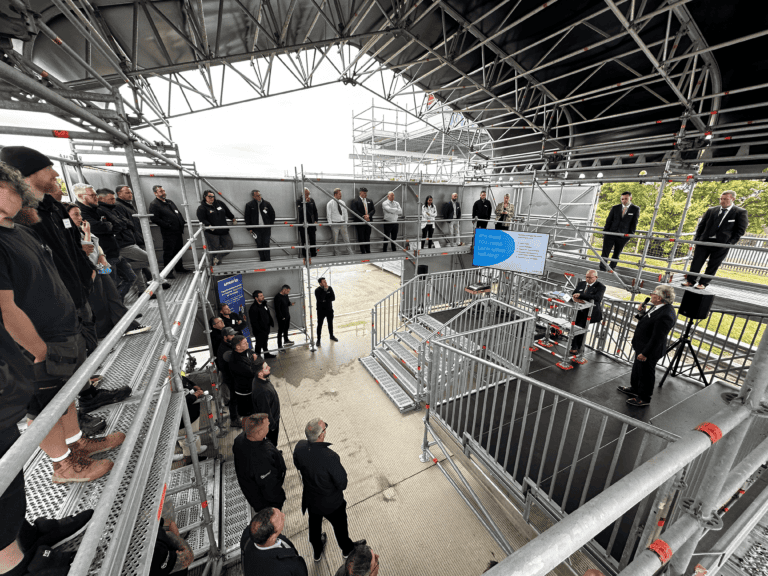
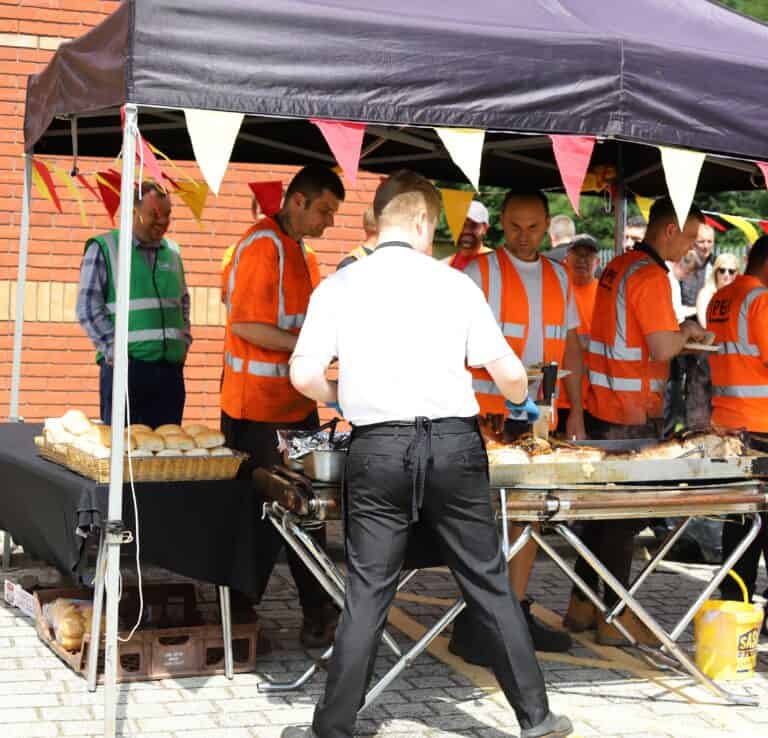
Layher UK’s 2024 Open Morning series continued with a highly successful event today at the Eggborough Depot.
Following the well-received kickoff in Leytonstone earlier this year, the Eggborough Open Morning offered industry professionals yet another opportunity to learn about Layher’s cutting-edge scaffolding solutions and forward-thinking approach. The event began at 9 a.m., and attendees were warmly welcomed with bacon butties, tea, and coffee—a perfect start to a day of learning and networking. The relaxed atmosphere set the tone for a productive morning, allowing participants to engage in informal conversations before diving into the day’s agenda. Attendees had the chance to experience hands-on demonstrations of Layher’s innovative products, including the much-discussed Twix Beam and Flex Beam, as well as the established Allround® Modular Scaffolding System. These practical demonstrations provided a clear understanding of how Layher’s solutions can enhance efficiency and safety on construction sites. As in previous events, the presentations were a highlight of the morning. Sean Pike, Managing Director of Layher UK, and Des Moore, Layher’s Brand Ambassador, again took the stage to share their extensive industry knowledge.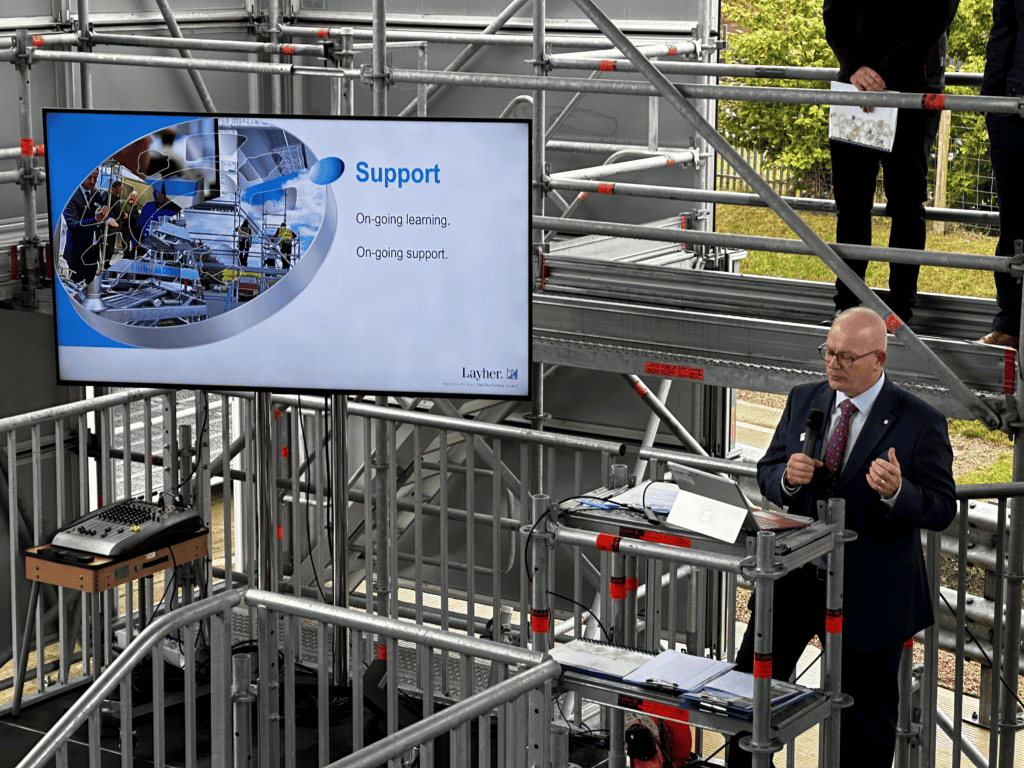 Sean Pike began by reiterating Layher’s core values and the four ‘S’ promise: Service, Support, Solutions, and Supply. He emphasised how these principles have driven the company’s commitment to providing high-quality scaffolding solutions that cater to projects of all sizes.
Des Moore followed with a compelling presentation from a contractor’s perspective, reinforcing the long-term cost benefits of Layher’s systems. Drawing on his extensive experience with TRAD Scaffolding, Des explained how the initial investment in Layher’s products is not only recouped but often surpassed by the savings in labour and the potential to access new markets.
His insights, particularly on the durability and efficiency of the Allround system, resonated with the audience.
In addition to the new Twix Beam, which has been designed for suspended scaffolding, and the versatile Flex Beam, the event also showcased the Layher Keder XL Roof and other essential products such as loading bays and site stairs.
The practical demonstrations of these products highlighted their potential to improve efficiency and safety on construction sites.
Sean Pike began by reiterating Layher’s core values and the four ‘S’ promise: Service, Support, Solutions, and Supply. He emphasised how these principles have driven the company’s commitment to providing high-quality scaffolding solutions that cater to projects of all sizes.
Des Moore followed with a compelling presentation from a contractor’s perspective, reinforcing the long-term cost benefits of Layher’s systems. Drawing on his extensive experience with TRAD Scaffolding, Des explained how the initial investment in Layher’s products is not only recouped but often surpassed by the savings in labour and the potential to access new markets.
His insights, particularly on the durability and efficiency of the Allround system, resonated with the audience.
In addition to the new Twix Beam, which has been designed for suspended scaffolding, and the versatile Flex Beam, the event also showcased the Layher Keder XL Roof and other essential products such as loading bays and site stairs.
The practical demonstrations of these products highlighted their potential to improve efficiency and safety on construction sites.
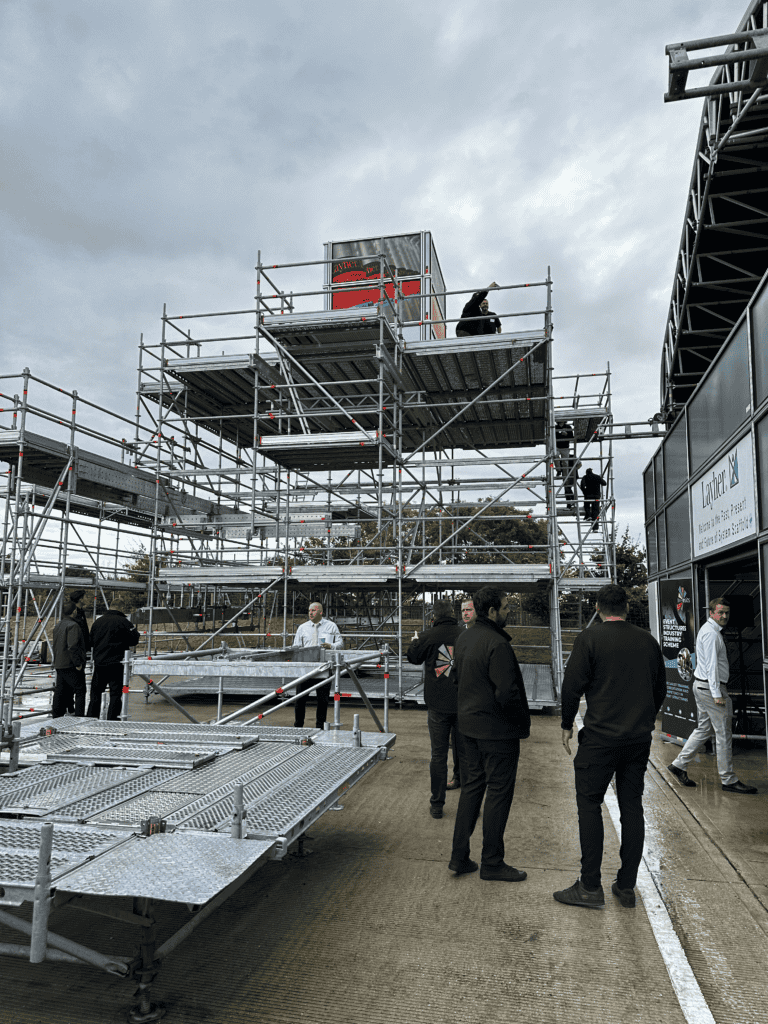 The intimate setting of the Eggborough Depot allowed for meaningful discussions and networking opportunities. Attendees praised the event for its informative presentations and the chance to engage directly with Layher’s team.
To conclude the morning, a fun and interactive quiz was organised, challenging attendees to find deliberate faults in a constructed Layher scaffold. This exercise not only tested their knowledge but also reinforced the importance of safety and precision when working with scaffolding systems.
Reflecting on the success of the event, Sean Pike remarked, “Our goal with these Open Mornings is to foster an environment where professionals can learn, engage, and envision the future of their businesses with our solutions. The turnout and the enthusiasm we’ve seen here in Eggborough are a testament to the growing interest in Layher’s approach.”
The Eggborough event marks the second in a series of Open Mornings that Layher UK has planned across the country. The next stops include Livingston on 26th September and West Brom on 8th October, where Layher is set to continue its mission of empowering the construction industry with innovative scaffolding solutions.
The intimate setting of the Eggborough Depot allowed for meaningful discussions and networking opportunities. Attendees praised the event for its informative presentations and the chance to engage directly with Layher’s team.
To conclude the morning, a fun and interactive quiz was organised, challenging attendees to find deliberate faults in a constructed Layher scaffold. This exercise not only tested their knowledge but also reinforced the importance of safety and precision when working with scaffolding systems.
Reflecting on the success of the event, Sean Pike remarked, “Our goal with these Open Mornings is to foster an environment where professionals can learn, engage, and envision the future of their businesses with our solutions. The turnout and the enthusiasm we’ve seen here in Eggborough are a testament to the growing interest in Layher’s approach.”
The Eggborough event marks the second in a series of Open Mornings that Layher UK has planned across the country. The next stops include Livingston on 26th September and West Brom on 8th October, where Layher is set to continue its mission of empowering the construction industry with innovative scaffolding solutions. PERI Training Courses Eligible for Substantial CITB Funding
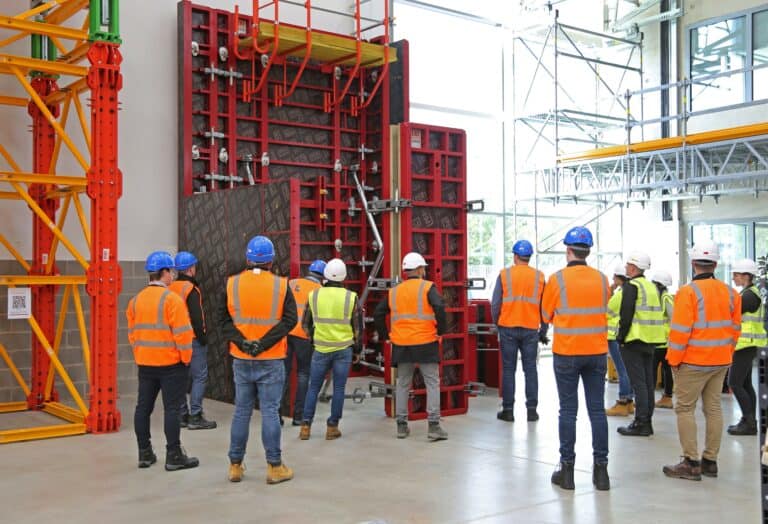
In a significant boost for the construction sector, PERI, a leading provider of formwork, system scaffolding and training, has announced that its courses will now be heavily subsidised for levy-registered employers in London, with many other regions across Great Britain also eligible for the funding.
This initiative is part of PERI’s recent partnership with the Construction Industry Training Board (CITB) through the Employer Networks programme. Under this scheme, CITB will fund 70% of the cost for any course offered by PERI, a move designed to make high-quality training more accessible to a broader range of employers across the industry.
The Employer Networks initiative, launched by CITB, aims to address the growing skills gap in the construction sector by encouraging employers to invest more in workforce training.
By partnering with trusted delivery organisations like PERI, CITB hopes to provide more workers with the necessary skills to meet industry demands and ensure safer working environments.
PERI, which has been a CITB Approved Training Organisation since 2020, views this initiative as a vital opportunity to expand its training services and reach more employers.
The company offers an extensive range of scaffolding and formwork courses, including specialised jumpform climbing courses, at its 600-square-metre flagship training facility in Brentwood. Additionally, PERI provides on-site training across the UK upon request.
 Terry Hall, Field Services Manager at PERI, expressed enthusiasm about the new funding opportunities: “We are on a mission to make formwork training compulsory across the construction industry. Joining forces with CITB and being part of the Employer Networks initiative widens our reach and will enable us to demonstrate the importance of proper, regulated training to more contractors.
We hope to see more employers in the industry at our Brentwood training facility as they make the most of the funding offered by CITB.”
Currently, the funding is available to employers in parts of England, Wales, and Scotland, with plans to extend it across all of Great Britain by the end of October 2024. This expansion aims to ensure that more companies can benefit from the initiative, ultimately leading to a better-trained and safer workforce in the construction sector.
Terry Hall, Field Services Manager at PERI, expressed enthusiasm about the new funding opportunities: “We are on a mission to make formwork training compulsory across the construction industry. Joining forces with CITB and being part of the Employer Networks initiative widens our reach and will enable us to demonstrate the importance of proper, regulated training to more contractors.
We hope to see more employers in the industry at our Brentwood training facility as they make the most of the funding offered by CITB.”
Currently, the funding is available to employers in parts of England, Wales, and Scotland, with plans to extend it across all of Great Britain by the end of October 2024. This expansion aims to ensure that more companies can benefit from the initiative, ultimately leading to a better-trained and safer workforce in the construction sector.
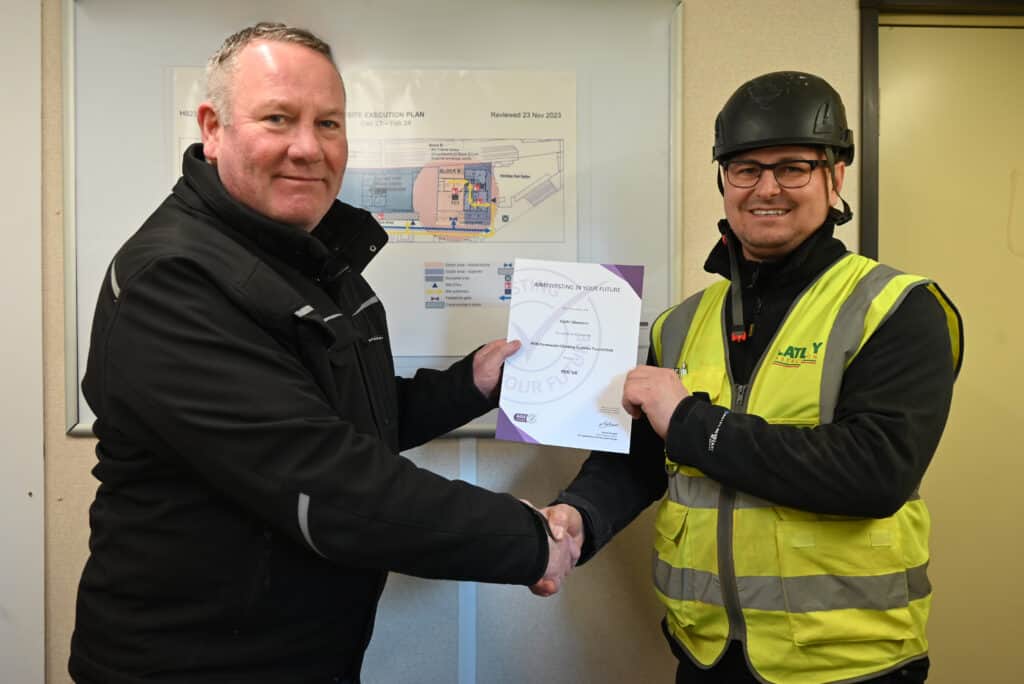 Terry Hall, Field Services Manager at PERI, expressed enthusiasm about the new funding opportunities: “We are on a mission to make formwork training compulsory across the construction industry. Joining forces with CITB and being part of the Employer Networks initiative widens our reach and will enable us to demonstrate the importance of proper, regulated training to more contractors.
We hope to see more employers in the industry at our Brentwood training facility as they make the most of the funding offered by CITB.”
Currently, the funding is available to employers in parts of England, Wales, and Scotland, with plans to extend it across all of Great Britain by the end of October 2024. This expansion aims to ensure that more companies can benefit from the initiative, ultimately leading to a better-trained and safer workforce in the construction sector.
Terry Hall, Field Services Manager at PERI, expressed enthusiasm about the new funding opportunities: “We are on a mission to make formwork training compulsory across the construction industry. Joining forces with CITB and being part of the Employer Networks initiative widens our reach and will enable us to demonstrate the importance of proper, regulated training to more contractors.
We hope to see more employers in the industry at our Brentwood training facility as they make the most of the funding offered by CITB.”
Currently, the funding is available to employers in parts of England, Wales, and Scotland, with plans to extend it across all of Great Britain by the end of October 2024. This expansion aims to ensure that more companies can benefit from the initiative, ultimately leading to a better-trained and safer workforce in the construction sector. Purchase or Hire: Which is the Best Way to Add System Scaffolding to Your Stock?


Why do some manufacturers and H&S companies offer a hire option?
 These companies want to be able to maximise their profits, as do we all, and there’s nothing wrong with that. It makes sense to give clients options – system scaffolding looks like a big investment, so many contractors think it is best to hire instead.
You can see that this makes some sense – it gives contractors the opportunity to use system scaffolding in practice and see what potential labour savings and other benefits they can gain.
As someone who has managed a large and well-known hire and sales business, I know that hire is always more profitable for the manufacturer than sale. Why? Because, despite the investment in stock and other overheads such as drivers, additional yard staff and commercial vehicles etc. hire rates are set to deliver more profit.
Again, you can understand this. For companies offering both hire and sale options, hire underpins that business. It gives them consistent, predictable, profitable income. That’s because the hire model is pretty much the same as the model that credit card companies use. Rates are set higher because customers tend to have less cash, and so are more likely to default on their payments. Hire companies have to cover themselves for this significant risk, so they charge more to customers who hire. Taking that risk, on balance, produces a greater level of profit.
So, that’s why some companies offer a hire option – but should you take that option?
These companies want to be able to maximise their profits, as do we all, and there’s nothing wrong with that. It makes sense to give clients options – system scaffolding looks like a big investment, so many contractors think it is best to hire instead.
You can see that this makes some sense – it gives contractors the opportunity to use system scaffolding in practice and see what potential labour savings and other benefits they can gain.
As someone who has managed a large and well-known hire and sales business, I know that hire is always more profitable for the manufacturer than sale. Why? Because, despite the investment in stock and other overheads such as drivers, additional yard staff and commercial vehicles etc. hire rates are set to deliver more profit.
Again, you can understand this. For companies offering both hire and sale options, hire underpins that business. It gives them consistent, predictable, profitable income. That’s because the hire model is pretty much the same as the model that credit card companies use. Rates are set higher because customers tend to have less cash, and so are more likely to default on their payments. Hire companies have to cover themselves for this significant risk, so they charge more to customers who hire. Taking that risk, on balance, produces a greater level of profit.
So, that’s why some companies offer a hire option – but should you take that option?
Is it worth hiring system scaffolding?
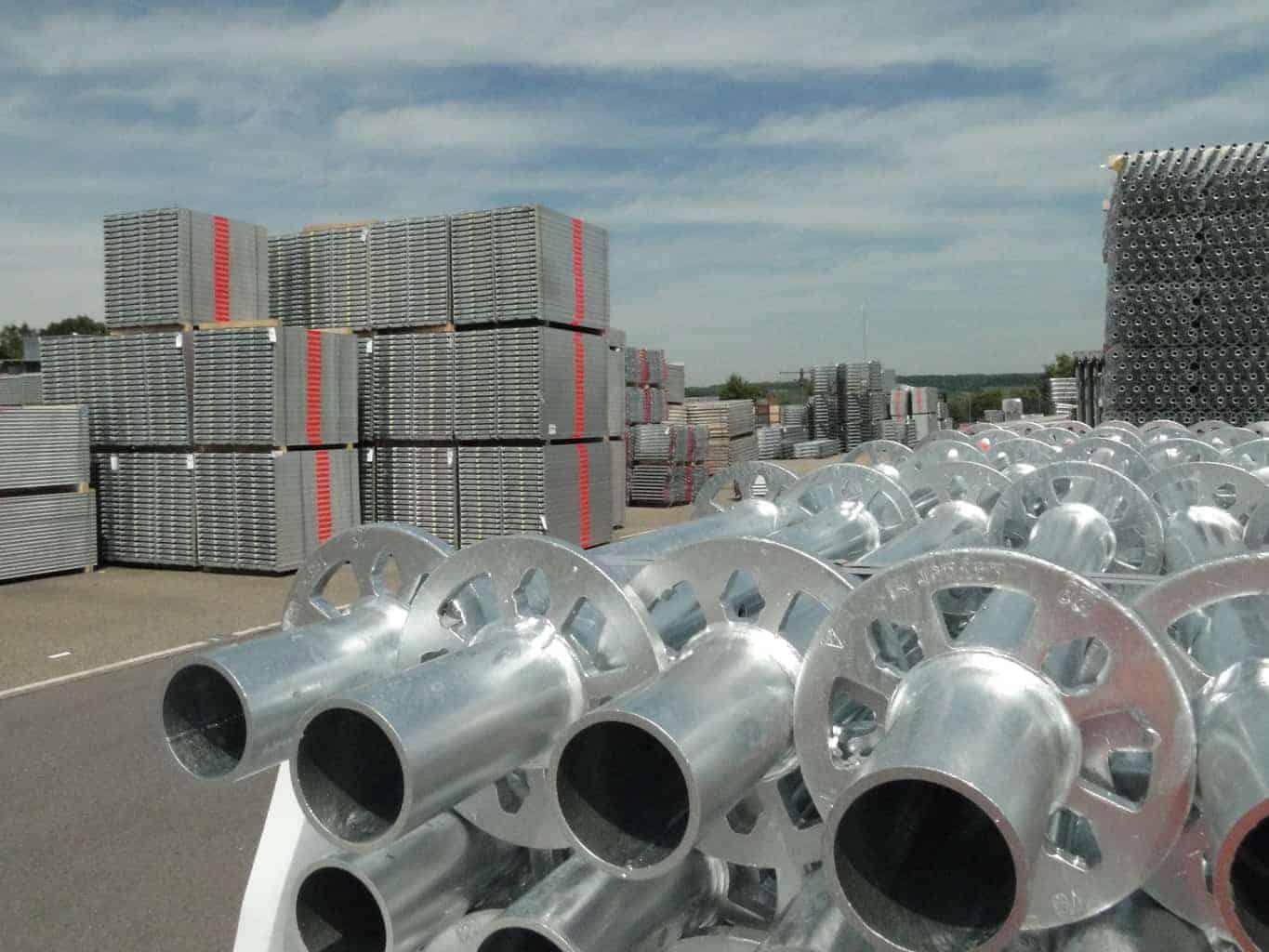 My view is that, if you are running a highly disciplined and efficient operation, you can do good business with hire. If you are not, you will almost certainly lose or misplace equipment. And that equipment will be charged for by the manufacturer at full replacement cost. So you will be paying twice – and sometimes more than that.
But more importantly for the commercial impact on your business, if you choose to hire for the medium or long term, you will be paying out a lot of money in hire fees and have absolutely no equipment or assets to show at the end of it.
So you can save money in the short term, but you can, much more easily, lose money too.
In my experience, a small number of companies do manage hire very well – but they are very few and far between. As an example, in the early years of TRAD Hire & Sale in the late 1990s, GKR Scaffolding, a well-known and respected London scaffolding company, hired significant volumes of equipment from us – and it worked for them. The reasons why they were successful are straightforward – but are often very difficult to manage in practice:
My view is that, if you are running a highly disciplined and efficient operation, you can do good business with hire. If you are not, you will almost certainly lose or misplace equipment. And that equipment will be charged for by the manufacturer at full replacement cost. So you will be paying twice – and sometimes more than that.
But more importantly for the commercial impact on your business, if you choose to hire for the medium or long term, you will be paying out a lot of money in hire fees and have absolutely no equipment or assets to show at the end of it.
So you can save money in the short term, but you can, much more easily, lose money too.
In my experience, a small number of companies do manage hire very well – but they are very few and far between. As an example, in the early years of TRAD Hire & Sale in the late 1990s, GKR Scaffolding, a well-known and respected London scaffolding company, hired significant volumes of equipment from us – and it worked for them. The reasons why they were successful are straightforward – but are often very difficult to manage in practice:
- They hired equipment for one dedicated project.
- The equipment was always counted off at the start of the project.
- They never transferred equipment to another project, or brought equipment over from an existing project.
- No equipment was ever left unprotected on site overnight.
- Returns were always counted back in and signed for.
- They maximised profit and invested in their own equipment as soon as it was financially viable.
- When you are hiring solution components or specials that have low utilisation.
- When you have a short-term ‘spike’ in normal trading, and you need to hire to meet your commitments.
- When the agreed programme timescale is more convenient for hiring than buying.
Why is buying system scaffolding better?
 As I have written elsewhere, investing in system scaffolding is a much better commercial investment over a 10-year period. When you purchase, your balance sheet is stronger because you have an asset with a clear value, and that strengthens your business and can also bring significant tax advantages.
As Layher UK’s Brand Ambassador, I think its Rent to Own is a very sound option. That’s because:
As I have written elsewhere, investing in system scaffolding is a much better commercial investment over a 10-year period. When you purchase, your balance sheet is stronger because you have an asset with a clear value, and that strengthens your business and can also bring significant tax advantages.
As Layher UK’s Brand Ambassador, I think its Rent to Own is a very sound option. That’s because:
- It doesn’t encourage expensive long-term hire.
- It offers significant financial options to allow you to purchase.
- Livingstone 24th September
- Midlands 8th Oct
- London 6th November
- ScaffEx24 29th November
Nominations Open for Scaff Star Awards
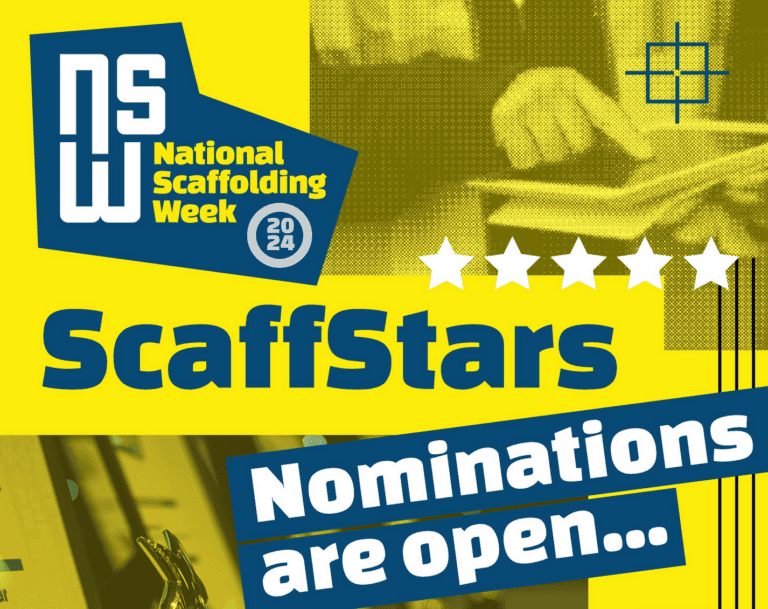
Nominations have officially opened for the Scaff Star Awards, a key feature of the upcoming National Scaffolding Week (NSW) 2024.
This annual event, set to take place in October, seeks to recognise and celebrate outstanding contributions within the scaffolding and access sector, a vital part of the UK’s construction industry. National Scaffolding Week 2024 aims to spotlight the achievements of individuals who have made significant impacts in the scaffolding industry. With over 33,000 scaffolding operatives working nationwide, the Scaff Star Awards are designed to honour those who have gone above and beyond in their roles. The awards are open to a wide range of nominees, including professionals who have supported charitable initiatives, those who have played a crucial role in mentoring and training the next generation of scaffolding talent, and veterans of the industry whose long-standing dedication warrants recognition. Nominations can be submitted via the official NSW website. Nominees will be featured on the NSW website and across its social media platforms. The winners will be celebrated at the Scaffolding Conference in October, hosted by the Scaffolding Association. The deadline for nominations is Friday, September 27th, 2024. Industry professionals and members of the public are encouraged to nominate deserving individuals to ensure their contributions are recognised. National Scaffolding Week serves as a platform to celebrate industry achievements and inspire the next generation of scaffolding professionals. The week-long event highlights the diverse career opportunities available, promotes best practices, and showcases innovative projects within the sector. Further details and nomination forms can be found at www.nationalscaffoldingweek.com/scaffstar.CISRS Releases Updated 2-Day SSPTS Cuplok Course
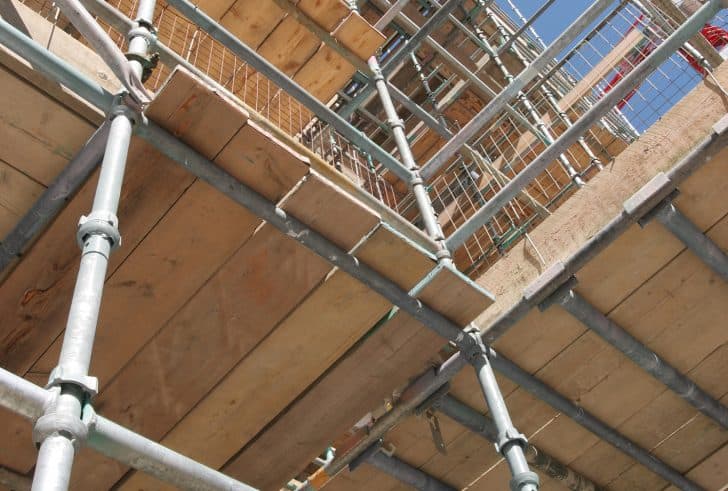
The Construction Industry Scaffolders Record Scheme (CISRS) has released a newly updated 2-day System Scaffolding Product Training Scheme (SSPTS) Cuplok course.
This development is part of CISRS’s ongoing efforts to standardise training across the UK, ensuring that all SSPTS courses are thorough and in line with the latest industry standards. As the use of system scaffolding continues to expand within the UK construction industry, the demand for structured and consistent training has become increasingly important. The updated 2-day SSPTS Cuplok course addresses the distinct differences between various system scaffold products, providing scaffolders who have previously been trained mainly in tube and fitting methods with the skills and knowledge necessary to safely use system scaffold products in accordance with manufacturers’ guidelines. This course is available to all CISRS cardholders who have completed their Part 1 training. It represents a significant step in ensuring that scaffolders are well-prepared to work with system scaffolds and are kept informed of the latest advancements and best practices within the industry.More Updates Coming Soon
CISRS has also revealed that updates to other SSPTS courses, including those covering the Layher and Plettac Metrix systems, will be introduced soon. These updates are part of CISRS’s commitment to providing scaffolders with the most relevant and up-to-date training as the construction industry evolves. CISRS has expressed its appreciation to David Abraham of Fulcrum Scaffold Safety Training & Working at Height Safety Solutions for his expert contributions to the development of this course. The CISRS website provides additional information on system scaffold training and inspection and details on how to book an SSPTS course. A complete list of training centres offering the relevant courses is also available online. For more information, visit CISRS System Scaffold Product Training Scheme. To locate a training centre, visit: CISRS Training Centres.Scaffolders Urged to Protect Swift Nests During Breeding Season
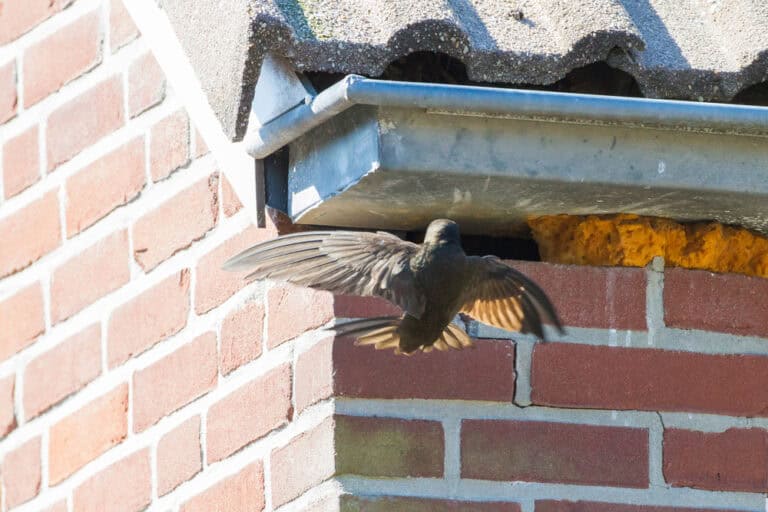
In response to recent incidents where scaffolding has obstructed swift nest sites, RSPB volunteer Kerry Dawson is issuing a heartfelt plea to scaffolding companies across the UK.
This summer, two alarming cases have been seen in Ramsgate and Eltham, where scaffolding unintentionally blocked the nests of swifts, a species now red-listed and at serious risk of extinction in the UK. Swifts are unique and remarkable birds that spend nearly all their lives in the air. Their ability to enter nesting sites at high speed through small gaps makes them particularly vulnerable to obstruction by scaffolding. Swifts cannot perch due to the lack of a ‘thumb’ claw, meaning they rely solely on their flight skills to access their nests.Legal and Conservation Urgency
Speaking to Scaffmag, Kerry Sabin-Dawson emphasised the legal ramifications of blocking swift nests. Obstructing these nests’ entry or exit routes is an offence under the Wildlife and Countryside Act 1981. With swift populations in steep decline, it is vital that scaffolding companies take proactive measures to ensure they do not inadvertently contribute to this crisis. “Nest sites are often hidden,” Dawson explains, “but there are signs to look out for, such as the calls of nestlings, droppings, or adult swifts trying to access the site. Even if you don’t see a nest, it doesn’t mean one isn’t there. That’s why it’s so important to check carefully before erecting scaffolding.”Guidance and Resources for Scaffolders
Dawson calls on scaffolders to avoid placing scaffolding around roofs or fascias between April and September, the critical swift breeding season. If scaffolding is unavoidable, she urges companies to inspect for potential nesting sites thoroughly. “Swifts can squeeze through the smallest of holes, so it’s crucial to be vigilant,” she adds. She also recommends using the RSPB’s Swift Mapper website (https://www.swiftmapper.org.uk/) to check for recorded nest sites, although she cautions that many nests remain unrecorded.
A Call to Action
Kerry Dawson notes that once scaffolders understand the unique situation swifts face, they are often very willing to make accommodations. “This is a collaborative effort,” she says. “By taking these small but significant steps, scaffolders can make a huge difference in the survival of these incredible birds.” For more information on how scaffolders can help protect swifts, visit RSPB’s website.Liddiard Scaffolding and LSS Deliver Success with Layher’s Keder XL Roof System
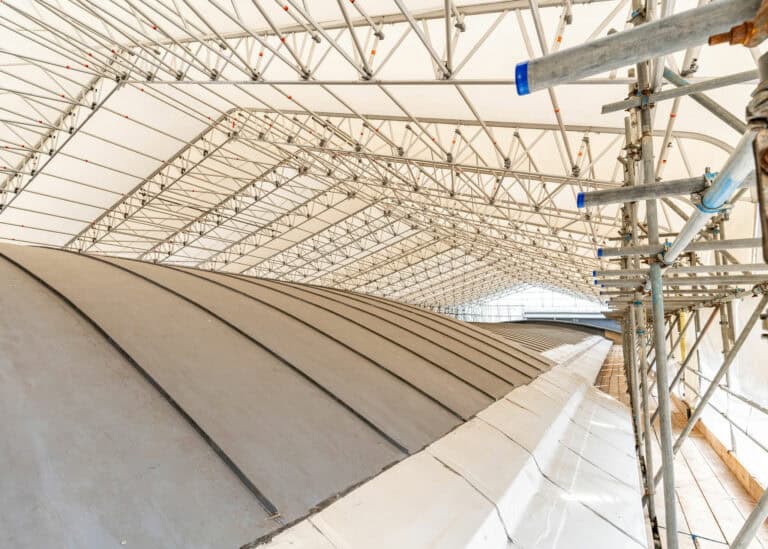
The Amelia Court project at Union Place in Worthing is a remarkable example of the successful integration of traditional scaffolding methods with modern, innovative solutions.
The project involved the complete replacement of the roof covering on a large, central vaulted roof of a care home, presenting a complex and ambitious challenge.
The building’s “U” shape, with West and East wings extending from each end, added to the complexity, but Liddiard Scaffolding, the scaffolding contractor on site, expertly managed these challenges.
 The combination of traditional scaffolding with Layher’s Keder XL Roof System illustrated how modern scaffolding technology can enhance traditional methods, resulting in a project that was both secure and efficient.
The temporary roof’s design allowed for easy installation and adaptability, perfectly meeting the project’s demands despite the site’s challenging constraints.
The combination of traditional scaffolding with Layher’s Keder XL Roof System illustrated how modern scaffolding technology can enhance traditional methods, resulting in a project that was both secure and efficient.
The temporary roof’s design allowed for easy installation and adaptability, perfectly meeting the project’s demands despite the site’s challenging constraints.
 Another significant challenge was maintaining continuous access to the care home’s main entrance while ensuring the safety of residents and staff. The project team, led by their experienced foreman, meticulously planned each project stage.
Their close coordination with care home management ensured minimal disruptions and upheld safety as the top priority throughout the project.
Another significant challenge was maintaining continuous access to the care home’s main entrance while ensuring the safety of residents and staff. The project team, led by their experienced foreman, meticulously planned each project stage.
Their close coordination with care home management ensured minimal disruptions and upheld safety as the top priority throughout the project.
 Their ability to overcome unexpected challenges, such as the presence of memorial Rose bushes and the proximity of a two-story office building along the car park boundary, demonstrated their professionalism and commitment to the project’s success.
The project was completed successfully, with McCarthy & Stone, the main contractor, expressing their satisfaction with the quality of the scaffolding work and the overall management of the project.
The successful completion of the central roof section led to additional orders for roof access scaffolding on the building’s West and East wings, further cementing the reputations of both Layher UK and Liddiard Scaffolding.
Their ability to overcome unexpected challenges, such as the presence of memorial Rose bushes and the proximity of a two-story office building along the car park boundary, demonstrated their professionalism and commitment to the project’s success.
The project was completed successfully, with McCarthy & Stone, the main contractor, expressing their satisfaction with the quality of the scaffolding work and the overall management of the project.
The successful completion of the central roof section led to additional orders for roof access scaffolding on the building’s West and East wings, further cementing the reputations of both Layher UK and Liddiard Scaffolding.
Traditional Meets Modern: The Scaffolding Structure
The main framework of the scaffolding structure for this project was built using traditional tube and fitting scaffolding. This method provided the strength and stability for the extensive work required on the care home’s roof. However, the project’s innovative aspect came from the use of Layher’s Keder XL Roof System, supplied by Layher UK. This advanced temporary roofing system was essential in providing full weather protection, covering an impressive 1,426 square meters.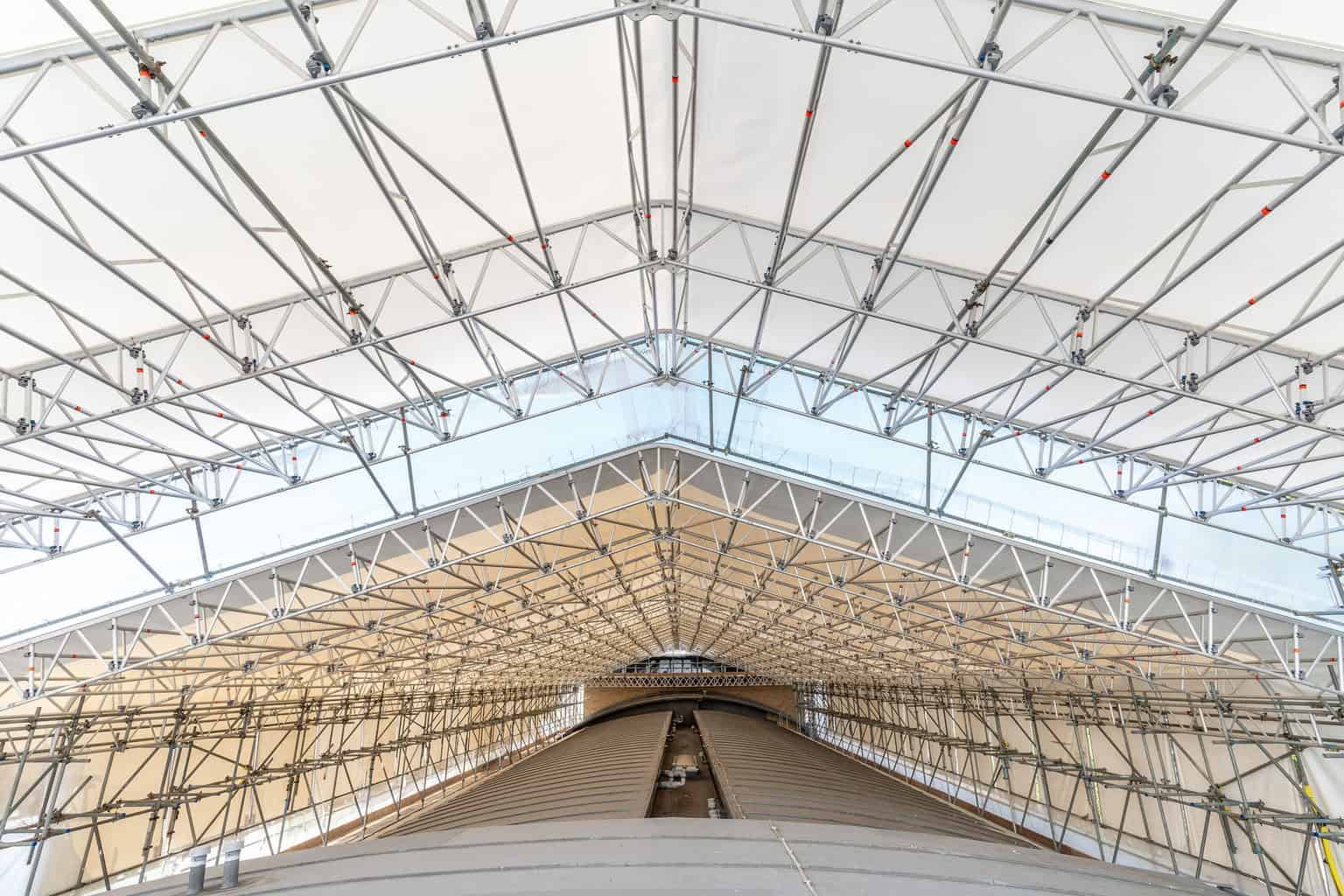 The combination of traditional scaffolding with Layher’s Keder XL Roof System illustrated how modern scaffolding technology can enhance traditional methods, resulting in a project that was both secure and efficient.
The temporary roof’s design allowed for easy installation and adaptability, perfectly meeting the project’s demands despite the site’s challenging constraints.
The combination of traditional scaffolding with Layher’s Keder XL Roof System illustrated how modern scaffolding technology can enhance traditional methods, resulting in a project that was both secure and efficient.
The temporary roof’s design allowed for easy installation and adaptability, perfectly meeting the project’s demands despite the site’s challenging constraints.
Liddiard Scaffolding and LSS: A Synergy in Execution
Liddiard Scaffolding’s role was critical to the project’s success, leveraging their extensive experience with traditional scaffolding and modern systems like Layher’s Keder XL Roof. The project required overcoming significant logistical challenges, particularly the restricted space for unloading and assembling materials in a small car park. A key element in managing these challenges was the involvement of Lifting & Scaffolding Services (LSS), Liddiard’s sister company. LSS provided the Hiab vehicles essential for transporting and precisely lifting materials, including assembling and placing the spine beams and temporary roof sections. As a company responsible for much of Liddiard Scaffolding’s transport requirements, LSS played a crucial role in ensuring that materials were delivered and positioned efficiently, allowing the project to proceed smoothly despite the confined working environment.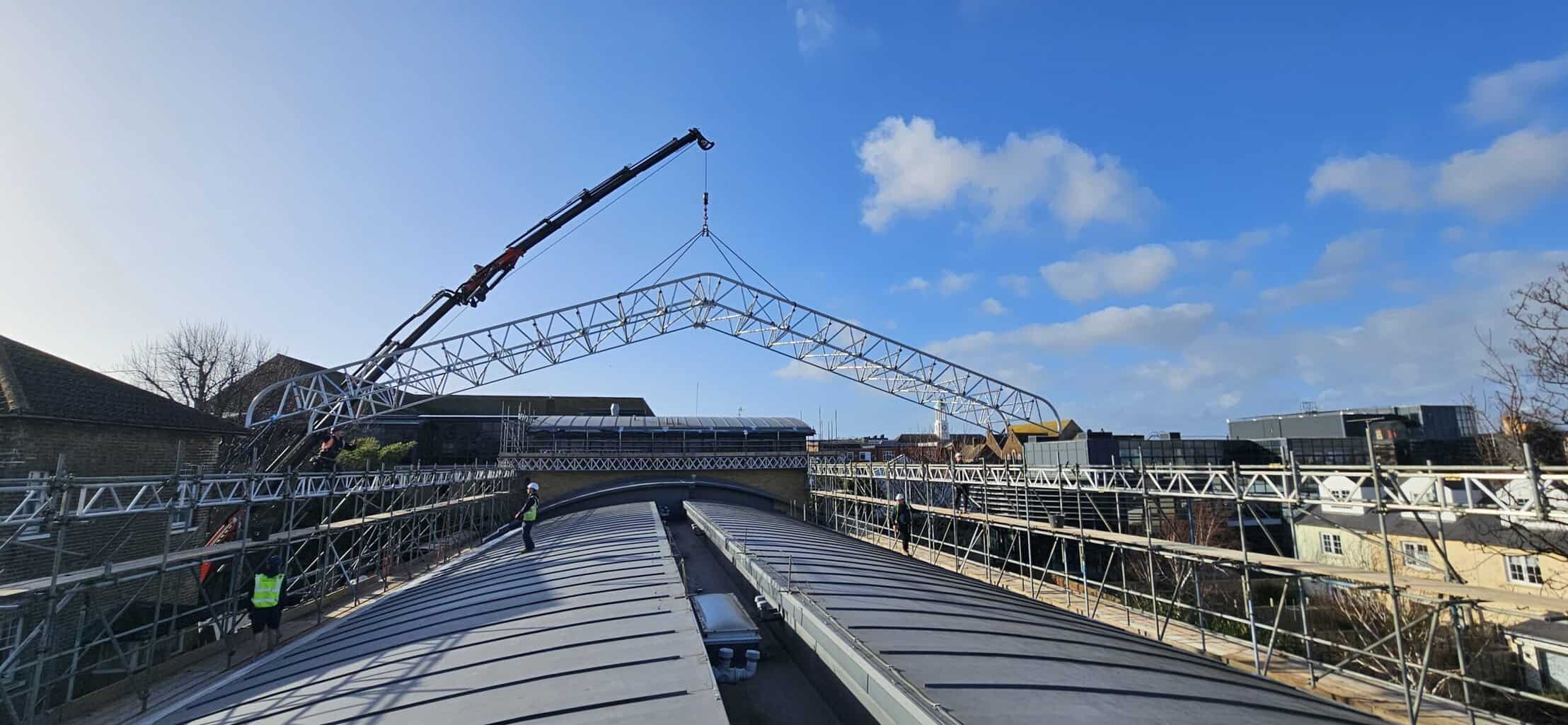 Another significant challenge was maintaining continuous access to the care home’s main entrance while ensuring the safety of residents and staff. The project team, led by their experienced foreman, meticulously planned each project stage.
Their close coordination with care home management ensured minimal disruptions and upheld safety as the top priority throughout the project.
Another significant challenge was maintaining continuous access to the care home’s main entrance while ensuring the safety of residents and staff. The project team, led by their experienced foreman, meticulously planned each project stage.
Their close coordination with care home management ensured minimal disruptions and upheld safety as the top priority throughout the project.
Collaborative Success and Client Satisfaction
This project underscored the importance of collaboration between all stakeholders. Liddiard Scaffolding worked closely with Layher UK design engineers and the client’s management team to ensure that all modifications and adaptations were seamlessly integrated into the project plan.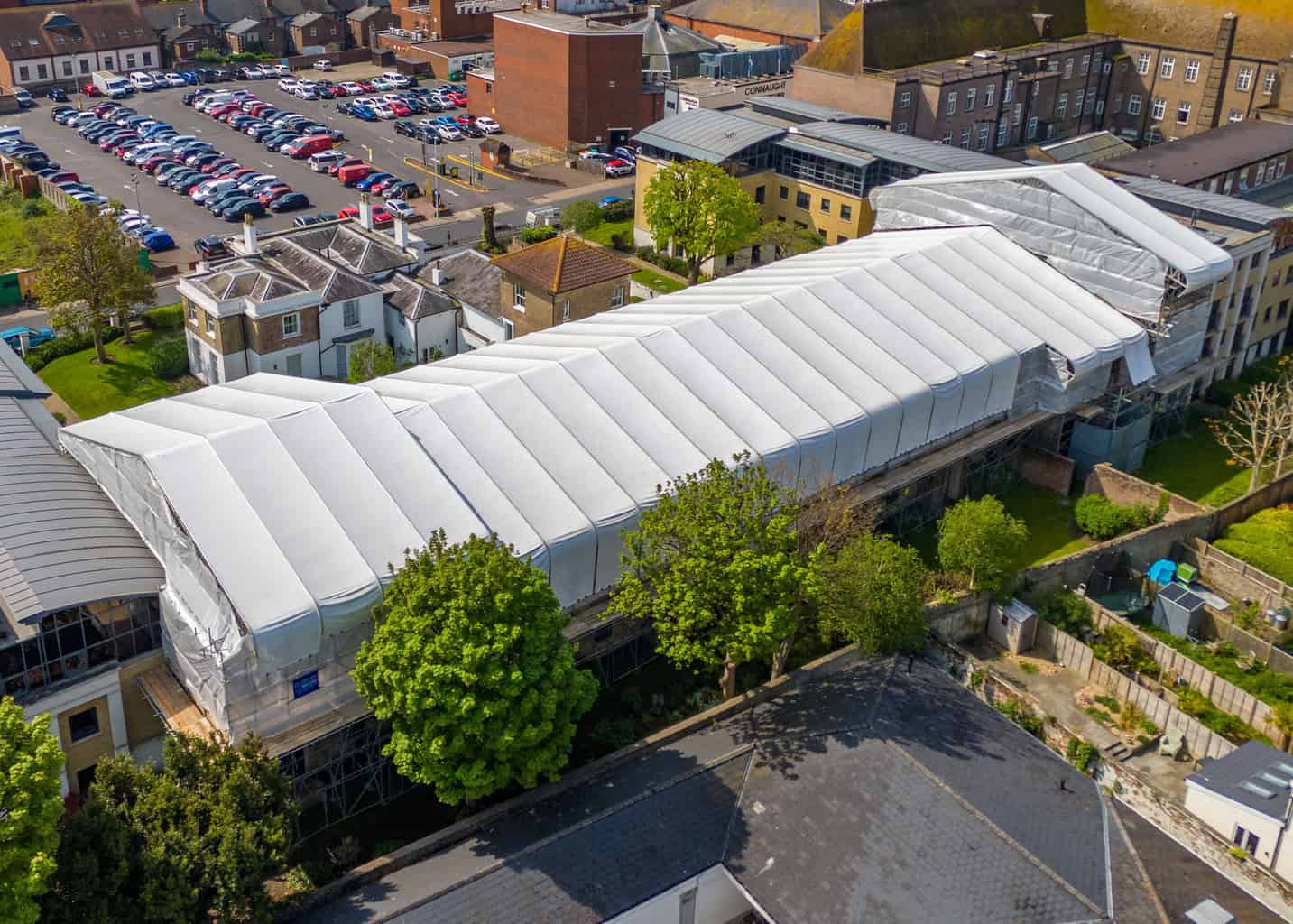 Their ability to overcome unexpected challenges, such as the presence of memorial Rose bushes and the proximity of a two-story office building along the car park boundary, demonstrated their professionalism and commitment to the project’s success.
The project was completed successfully, with McCarthy & Stone, the main contractor, expressing their satisfaction with the quality of the scaffolding work and the overall management of the project.
The successful completion of the central roof section led to additional orders for roof access scaffolding on the building’s West and East wings, further cementing the reputations of both Layher UK and Liddiard Scaffolding.
Their ability to overcome unexpected challenges, such as the presence of memorial Rose bushes and the proximity of a two-story office building along the car park boundary, demonstrated their professionalism and commitment to the project’s success.
The project was completed successfully, with McCarthy & Stone, the main contractor, expressing their satisfaction with the quality of the scaffolding work and the overall management of the project.
The successful completion of the central roof section led to additional orders for roof access scaffolding on the building’s West and East wings, further cementing the reputations of both Layher UK and Liddiard Scaffolding.
Final Thoughts
The Amelia Court project exemplifies the effective combination of traditional scaffolding methods with modern innovations like Layher’s Keder XL Roof System. Liddiard Scaffolding’s expertise and careful planning, supported by Lifting & Scaffolding Services (LSS) ’s logistical capabilities, ensured the project’s success. This collaboration not only met but exceeded the expectations of all involved, reinforcing Layher UK, Liddiard Scaffolding, and LSS’s reputations as leaders in their respective fields.PERI UK Marks 35th Anniversary