The Access Industry Forum has called for clearer reporting to tackle workplace falls from height.The Access Industry Forum (AIF), representing the principal work at height trade associations and federations, has raised concerns over persistently high workplace falls from height statistics and called for urgent action to prevent accidents. In response to newly released statistics from the Health & Safety Executive (HSE), the AIF is urging the government and businesses to work together to spearhead change and save lives.The latest HSE statistics, published last week, reveal that over 5,000 people in Great Britain were injured at work last year due to falls from height, and tragically, 40 people lost their lives as a result of these incidents. While these incidents are legally required to be reported by employers through RIDDOR (Reporting of Injuries, Diseases and Dangerous Occurrences Regulations), there is substantial underreporting of non-fatal falls from height, particularly among self-employed workers, who reported only 12% of workplace incidents.Furthermore, the HSE estimates that the scale of non-fatal workplace injuries related to falls from height, as reported through their preferred source, the self-reported Labour Force Survey (LFS), may be as high as 425,000 incidents over the last decade.Aside from the human toll and the impact on families and businesses, these incidents also resulted in up to 992,000 working days lost in Great Britain last year alone. Moreover, the total cost of non-fatal falls in 2022/23 is estimated to be over £770 million, encompassing costs to employers, individuals, government tax losses, and benefit payments.Unfortunately, these figures have remained consistent over recent years, indicating a lack of improvement in addressing workplace falls from height.Research conducted by the AIF highlighted the challenges associated with limited data collection on the circumstances surrounding these accidents and a problematic reporting system. This situation makes it difficult to pinpoint the underlying causes of falls from height, whether they stem from faulty equipment, insufficient training, or negligence.The AIF is renewing its call for a simplified and more informative system of reporting that can accurately reflect the root causes of workplace accidents. This approach would enable informed and preventative measures to be implemented, addressing the factors contributing to falls from height incidents.Unlike many other workplace injuries, falls from height often result in life-changing consequences for those involved, with many unable to return to their previous occupations. This also has long-term effects on employers, colleagues, and families.The AIF actively supports the work of the All-Party Parliamentary Group (APPG) on Working at Height, which is set to convene its next meeting in Westminster in December. This meeting will bring together MPs and stakeholders from various industries to discuss how the government and businesses can collaborate to ensure technological and regulatory progress is made, making the UK the safest country in the world for those working at height.Peter Bennett OBE, AIF Chair, expressed his concern, “This year’s statistics show that there is much work still to be done to ensure those who have to work at height do so in as safe an environment as possible. Very little information is provided on the circumstances around non-fatal and fatal incidents, with current reporting focused on the type of incident rather than what caused it in the first place. This needs to change if we are to see a decrease in the number of people who tragically lose their lives while working at height and those who suffer the life-changing consequences of a fall from height.”Bennett added, “We know that working at height can be dangerous, but we should be able to put appropriate and robust measures in place to make it safer. I look forward to attending the meeting of the APPG in December so we can demonstrate to lawmakers the need for a simplified reporting system and ensure all those working at height go home safely at the end of the day.”
Scaffolders and van drivers across Britain are being urged to acquaint themselves with some of the country’s most obscure parking laws or else risk facing fines that could amount to £1,000. Motoring experts at LeaseVan have identified several lesser-known driving laws that could catch drivers off guard, leading to hefty fines and penalties.Among the peculiar parking regulations, parking next to a fire hydrant is singled out, with potential on-the-spot fines of £500 for those obstructing access to these vital emergency water sources. Breaking exempt times on double yellow lines can also lead to fixed penalty points, adding to the parking-related infractions list.Another unexpected law drivers should know is parking a van with a dirty number plate. If the registration on the vehicle is rendered unreadable due to dirt and grime, drivers could be slapped with a hefty £1,000 fine.Tim Alcock, a spokesperson from LeaseVan, emphasised the importance of understanding these lesser-known laws, stating, “Drivers need to brush up on their motoring laws to prevent any nasty surprises if a fine comes through the post. Even common mistakes such as parking too close to a fire hydrant and having a dirty van can result in hefty fines, which is why it’s important to be vigilant when it comes to your vehicle. Some of these laws can result in fines of up to £1,000, points on your license, and eventually a driving ban if continuously broken.”Here are seven of Britain’s strangest van parking laws that drivers should be aware of:1. Parking a Dirty Van: If a vehicle is covered in dirt and grime while parked, and the number plate becomes unreadable, the driver can be charged a £1,000 fine.2. Parking Close to a Fire Hydrant: Van drivers can face £500 fines for parking too close to a fire hydrant, as emergency services require clear and easy access to water for any incidents.3. Pavement Parking: While it’s not illegal to park your car on the pavement, it’s considered a criminal offence in London unless specific permission is granted. Vans can still be reported in cases where the vehicle is causing an obstruction.4. Saving Spaces: Using wheelie bins, traffic cones, or other objects to reserve a parking space near your house or workspace can result in fixed penalties, as it can be seen as causing a dangerous obstruction on the road.5. Parking Heavy Vans on Grass Verges: Rules regarding parking on grass verges can vary between local councils, but it’s generally allowed unless the van exceeds the optimal weight limit of 7.5 tonnes. Drivers should always check the local rules before parking on a grass verge.6. Remove Air Fresheners: Motorists need to remove any ornaments or air fresheners that obstruct their view of the road. Van drivers can be found guilty of careless driving under the Road Traffic Act 1988 if an accident occurs due to an obstructed view.7. Breaking Time Limits on Double Yellows: The general rule is that vans engaged in light loading have 20 minutes of access on double yellow lines, which is extended to 40 minutes for heavy loading. Exceeding these time limits can result in penalty fines and points on the driver’s license.
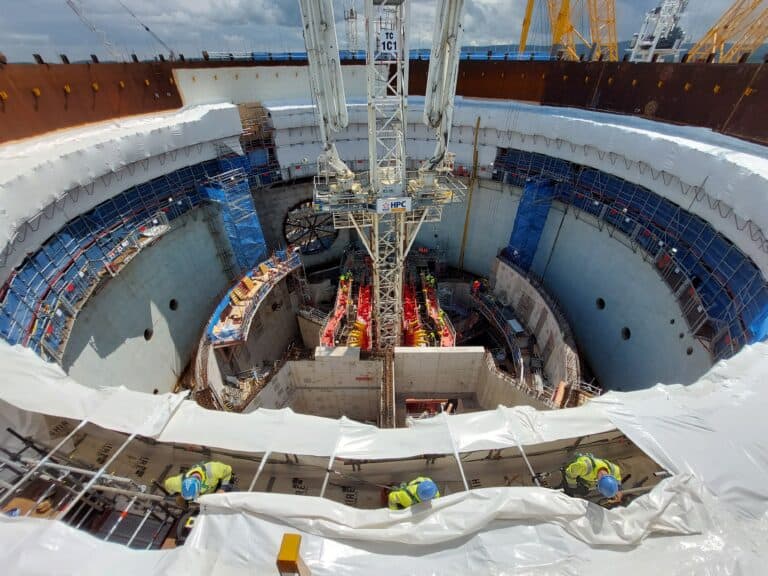
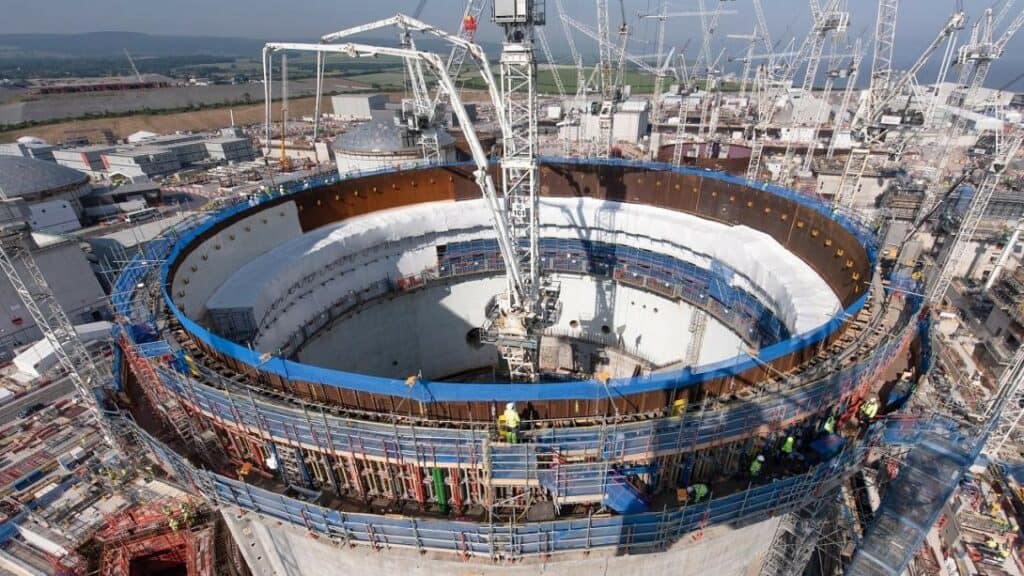
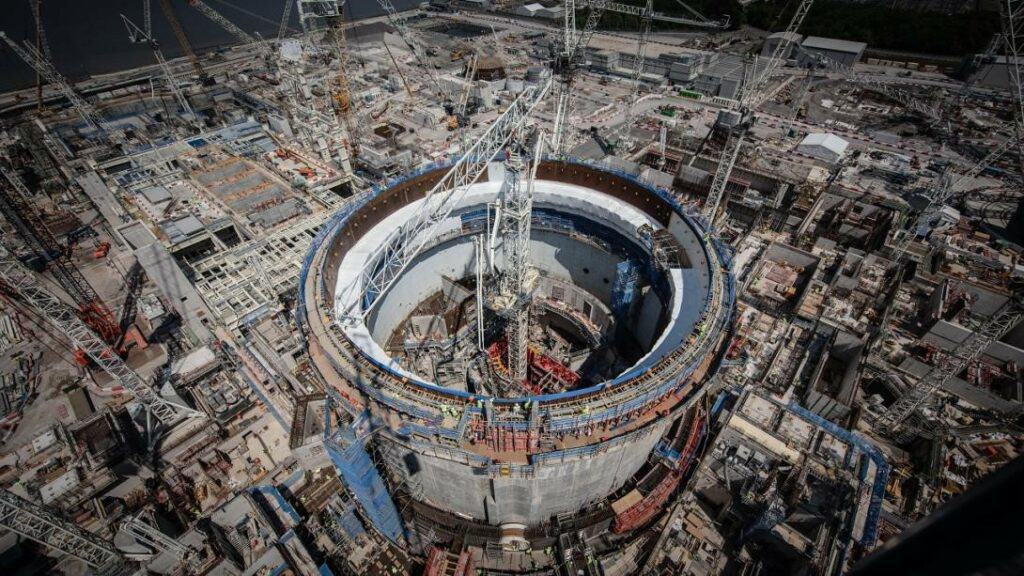
Safety, agility, and innovation are of utmost importance when building the first of a new generation of nuclear power stations. Industrial services specialist KAEFER UK & Ireland was tasked with delivering the Containment Liner Coating Package for the Hinkley Point C build, which involved blasting and specialist coatings of internal surfaces of both nuclear reactor containment buildings and providing the necessary access to undertake these operations.
Each containment liner is composed of five components and stands 65m tall when fully assembled. For this monumental task, KAEFER used the world-renowned Layher Allround scaffolding system, supported by Layher UK throughout the project.
Layher Precision in Practice
In April 2021, KAEFER built a 171-tonne, 160m circumferential scaffold on the Slab 8 construction area at Hinkley Point C, using the Layher Allround system. This allowed the second 17m high liner ring for Hinkley Reactor 1 to be lifted over it, providing access for contractors, including the KAEFER painting team, before it was lifted into its final position on top of Liner 1 in November 2021.
Before lifting the second 47m ring into position in November, an equipment hatch needed to be welded to the liner by the Hinkley Point C team. KAEFER stepped in to provide a solution where others said it was impossible, with design support from experts at Layher UK in Letchworth the team devised an innovative suspended scaffold for the ring in March 2022. This suspended structure allowed for welding the equipment hatch onto the ring liner, keeping the project on schedule.
In August 2022, the same KAEFER scaffold on Slab 8 was reused, and the 12m-high liner ring three was lifted over it, again allowing access for the KAEFER team and other contractors before it was lifted to its final position on top of ring two in December 2022.
Overcoming Challenges
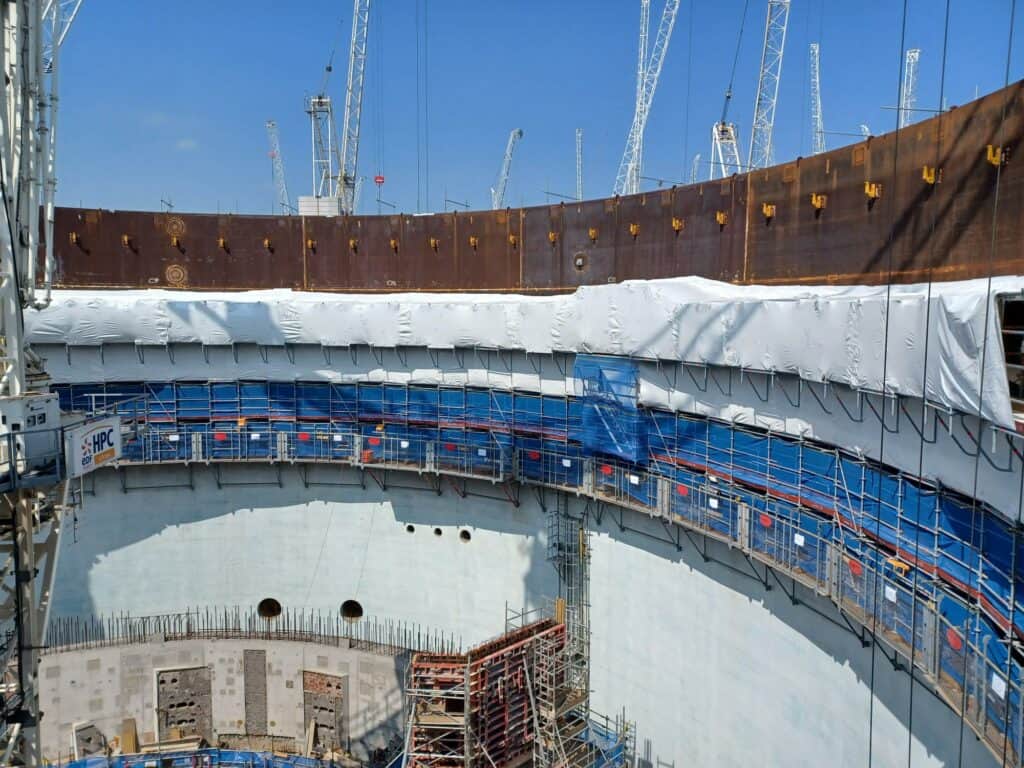
Hinkley Point C project milestones required the planned timeline to be shortened, and when the third ring was lifted into position in December 2022, it still needed additional work. The KAEFER temporary works team, with support from Layher UK, were tasked with designing a scaffold to allow for the blasting and painting operations to ring three and provide access for the installation of the polar crane and the final dome top.
Initial discussions began in November 2022 and involved multiple stakeholders. Design considerations included loading onto the existing platforms in the liner, the available weight loadings of the liner itself due to the concrete pours on the external sides of the liner, suitable access for the range of trades needed to work on the ring, and the tie points for the scaffold.
Paul Ferrand, Operational Delivery Lead for KAEFER UK & Ireland at Hinkley Point C, explained the challenges faced during the project. “A challenge presented itself when the planned crane was moved out of service for several weeks, meaning a new crane and material store had to be arranged,” he said. “This required daily coordination with several stakeholders to organise deliveries with crane time booked in advance: on a busy site like Hinkley Point C, this can be difficult.”
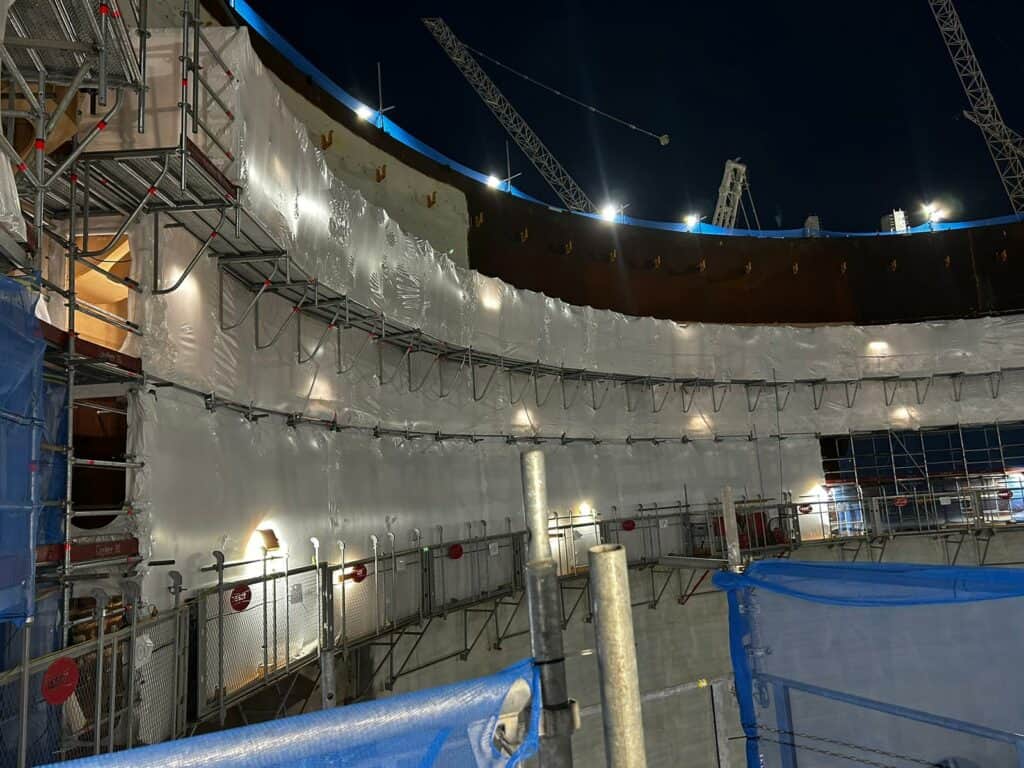
The availability of Hinkley Point C riggers to support the crane tasks was also limited during the day; combined with working at height safety requirements, minimising available working areas below the scaffold meant the KAEFER team moved to night shifts.
Incident first response manpower availability at Hinkley Point C is reduced overnight, so KAEFER collaborated with Bylor’s HSE team, creating a viable rescue plan from the working platform to ensure the safety of the KAEFER team members.
Keeping the Motion Going
With the scaffold build now fully underway, it was crucial to maintain momentum. “We attended daily coordination meetings during the day and ensured this information was handed over to the night shift teams,” said Paul. “Ongoing design amendments continued throughout the programme to modify the scaffold for crane operations.”
Thanks to the agility of the KAEFER temporary works team, disruption to other trades was minimised, allowing project timelines to be met.
Once the scaffold build was completed, it was handed over to the KAEFER containment team to encapsulate the structure. Over 2,400m2 of flame-retardant shrink wrap material was used to create an enclosed habitat for the KAEFER coatings team to complete blasting works.
This habitat contained the garnet blasting medium used in the coating’s preparation works and also protected the three-coat phenolic epoxy-polyamide PIC 100 coatings scheme as it cured. The KAEFER coatings team applied this scheme to 26,000m2 of steel across the inside of both containment liners.
The scaffold build and containment took 52 nights, including downtime due to bad weather and crane availability. “These efforts allowed project-critical operations to continue, meaning Hinkley Point C is one step closer to providing zero-carbon electricity for around six million homes,” said Paul. “We’re proud to be playing our part, and it’s a good feeling to know that whatever challenges we’re set, our team is equipped and ready to handle them.”
Conclusion
The success of the Hinkley Point C project demonstrates the importance of safety, agility, and innovation in large-scale infrastructure projects. With the support of Layher UK and the use of the Layher Allround scaffolding system, KAEFER UK & Ireland was able to overcome significant challenges and meet critical project milestones.
This collaborative effort has brought Hinkley Point C one step closer to providing zero-carbon electricity to millions of homes, highlighting the crucial role that innovative engineering solutions play in addressing global energy challenges.
This article was originally published in Issue 20 of the ScaffMag magazine.
Pilosio, a renowned Italian manufacturer, has been making waves in the UK scaffolding and construction market since its debut in March last year. The company’s innovative products and commitment to practicality have been the driving forces behind its success.
In a recent development, Pilosio has appointed Andy Graham as the Managing Director for their UK operations, signalling an exciting new phase for the company. Scaffmag had the privilege of speaking with Andy Graham to discuss his new role, Pilosio’s value proposition, and the plans for the UK business.
A Remarkable Journey in the UK
Pilosio, known for its extensive experience in the construction industry, entered the UK market with great determination. Francesca Fuser, Pilosio’s Business Development Manager, explained their strategy:
“We got a lot of interest from UK companies, but they wanted local references and a presence on the market. We participated in trade shows, organised events, and engaged with engineering companies to better understand the market. But we realised the importance of letting people touch and try the product.”
To address this, Pilosio established a training centre in Aberdeen, which offers practical training on their Flydeck system, among others. This move aligns with Pilosio’s commitment to practicality and compatibility, a crucial aspect of their product design.
Francesca expressed their plans, saying, “One of our next steps is to invest in a second training centre in England. We want to stay close to the customer and make them comfortable.”
Introducing Andy Graham
Andy Graham, Pilosio’s newly appointed Managing Director in the UK, brings over 30 years of subsea and topside access, construction, and inspection experience into the business.
In addition to hands-on supervisory roles, Andy has previously held field engineering, project management, operations management, and head of department roles at several well-established service companies specialising in confined space and hazardous area operations, rope access, alternative access, and suspended decking systems.
When asked about his decision to accept this role, Andy shared; “The quality and flexibility of Pilosio products was evident to me from the early stages of our initial engagement, but it was the focus on safety-driven innovation that really caught my attention. Product development is continual, and concept ideas are translated into final product design quickly by experienced in-house design and engineering teams. Secure supply chain, efficient manufacturing processes, and factory capacity ensure that Pilosio products can be delivered quickly and with the quality required to serve a global market. Understanding the markets that would benefit from the use of the Pilosio product range meant that accepting the new role was a very simple decision.” “The Flydeck system was of particular and immediate interest to me,” he said.
“It can be installed by either scaffolders or by rope access personnel; the system is very light, use of the Flyrail offers significant safety benefits to installers during erection and dismantling, and installation rates are fantastic. Offering options as a stand-alone suspended access platform used alongside other systems, or used in combination with Pilosio MP scaffolding to provide a total access solution from the ground up, the Flydeck offers improved safety, productivity, and value as standard. And with today’s unveiling of our revolutionary PVC water collection system, Bluesky, Flydeck can now be supplied complete with an eco-friendly environmental protection solution suitable for a range of applications.Pilosio’s new PVC water collection system, Bluesky.Safety, productivity, and value are the primary benefits of the Flydeck system, and the system is perfect for use on civils, infrastructure, oil & gas, marine, and renewables projects, with flexibility and adaptability extending into commercial, airport, stadium, and factory applications.”“Flydeck is not just for bridges; it’s a game-changer for multiple industries,” he added.
The Future of Pilosio in the UK
Looking ahead, Andy shed light on Pilosio’s future strategy in the UK. “Our goal is to offer both sales and rental options for our materials, and provide flexibility to our clients. We’ll continue promoting Flydeck and introduce the MP Ringlock system to cater to diverse construction needs across the UK construction, oil and gas, renewables, and infrastructure sectors. We are greatly encouraged by the attendance of interested parties from across a range of sectors at our demo and training facility in Dyce, and we continue to receive requests for concept design proposals. We’re happy to say that Flydeck is being recognised by potential users as a multi-purpose system. Flydeck not just for bridges and offshore platforms; it’s a game-changer for multiple industries,” he emphasised.
As for expansion plans, Pilosio aims to establish a depot and a second training centre in the Midlands, emphasising their commitment to being accessible to customers across the UK.
In closing, it’s clear that Pilosio is poised for significant growth in the UK market, and Andy Graham’s leadership will play a pivotal role in realising these ambitions. With their innovative products and a strong focus on safety and practicality, Pilosio is well on its way to becoming a prominent name in the UK scaffolding and construction industry.
Scaffolding may not be the first profession that comes to mind when you think of humour, but one seasoned scaffolder aims to take the industry by storm with a laugh-out-loud book that exposes the most outlandish excuses used by scaffolders to skip work on Mondays.
Callum Worth, a scaffolder with over 15 years of experience, has released “Monday Club,” a book that compiles some of the most absurd and comical excuses he has encountered during his career.
Worth’s book is set to become a hit among those in the construction industry and beyond. With his first-hand experience and a keen eye for the hilarity in everyday life, he provides readers with a glimpse into the quirky world of scaffolding, complete with characters who have mastered the art of Monday-morning excuses.
“Monday Club” is a testament to the wild creativity of scaffolders when it comes to avoiding the start of the workweek. Worth explains, “For many years, my colleagues and I would swap stories about the unbelievable excuses we’d heard from fellow scaffolders who didn’t want to show up for work on a Monday. We always said someone should write a book about these excuses because they are just comical. Well, after many years, I finally did it.”
The book is a delightful collection of excuses that will leave readers both amused and flabbergasted. Here are some highlights:
The Loft Hatch Incident: One worker claimed to be unable to work because a loft hatch had hit him on the head.
The Double Jury Service: Another scaffolder had to deal with jury service not once but twice in the same year, conveniently on Mondays.
The Broken Down Car with a Twist: A classic excuse involving a broken-down car takes an unexpected turn, leaving readers in stitches.
Wet Socks Drama: One worker pleaded that they couldn’t come in due to wet socks.
Worth goes above and beyond by naming and shaming the culprits behind these hilarious excuses, albeit using false names to protect their identities. He also provides text messages and phone call transcripts that will have readers doubled over with laughter.
“Different excuse on each page,” promises Worth with a laughing emoji. The book guarantees page after page of side-splitting tales, reminding readers that humour can be found even in the most unexpected places.
“Monday Club” is now available on Amazon under the title “Monday Club” by Callum Worth. It’s a must-read for scaffolders and anyone in the construction industry or anyone looking for a good laugh. You can find it here.
So, if you’re in need of a good chuckle and want to explore the world of scaffolding like never before, be sure to grab a copy of “Monday Club.” Callum Worth’s witty anecdotes are a testament to the fact that sometimes, the best way to face a Monday is with a hearty dose of humour.
RS Rendering Specialists Limited, a Manchester-based rendering company, has been fined £3,000 following a serious breach of safety regulations that put its workers at risk.
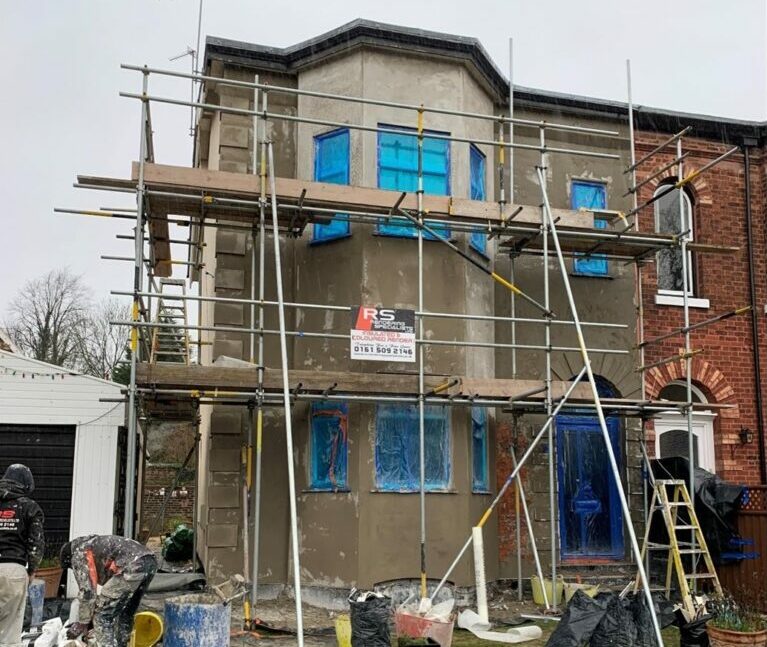
The Health and Safety Executive (HSE) inspector observed unsafe scaffolding at a house renovation site, leading to the enforcement action.
The incident came to light on 17th February 2022 when HSE inspector Phil Redman was driving through the area and noticed hazardous scaffolding being used by RS Rendering Specialists Limited on a property located at Belgrave Crescent, Eccles, Manchester.
After a thorough inspection, it was discovered that the scaffolding had significant gaps, creating a potential danger for the workers working at height.
The HSE inspector also determined that the company had failed to plan the work safely at the property, a crucial requirement for such projects.
Furthermore, it was revealed that RS Rendering Specialists had not conducted the mandatory weekly inspection of the scaffolding as per safety regulations. In response to these serious safety violations, a Prohibition Notice was promptly issued, banning the company from using the unsafe scaffolding.
However, the company chose to ignore the Prohibition Notice, risking its workers’ lives. On 23rd February 2022, Inspector Phil Redman returned to the property and observed two RS Rendering Specialists workers still operating on the same prohibited scaffolding.
The fact that the house’s colour had changed since the previous visit indicated that the company had continued to use the same scaffolding despite the explicit prohibition.
The Health and Safety Executive has clear guidelines to ensure safe working conditions for employees, especially when working at height. However, RS Rendering Specialists Limited disregarded these guidelines and endangered the lives of its workers.
At Manchester Magistrates’ Court on 24th November 2023, RS Rendering Specialists Limited pleaded guilty to breaching the Work at Height Regulations 2005 and the Health and Safety at Work, etc. Act 1974. The court imposed a fine of £3,000 on the company and ordered them to pay £1,000 in costs.
HSE inspector Phil Redman stated, “We will not hesitate to prosecute companies who choose to ignore enforcement notices issued to prevent risks from falls from height or any other health and safety-related matters. This case highlights how such actions will not be tolerated under any circumstances.”
ELP Broadcast and Events Ltd, a company operating in the entertainment industry, has been fined £16,000 following the tragic death of a worker in a workplace incident.
The incident occurred on 13th March 2018 at the Cardington Hangar Studios in Bedfordshire and resulted in the loss of Russell Bowry, a self-employed rigger.
Mr. Bowry, a 52-year-old resident of Lower Stondon, Bedfordshire, was part of an assembly team assigned to construct a temporary rehearsal stage for an upcoming musical performance at the studios.
The stage was a water and windproof cube designed for the musical’s rehearsals. Tragically, while working on the roof of this structure, Mr. Bowry fell through it, landing 10 meters below. He succumbed to his injuries three days later.
The Health and Safety Executive (HSE) conducted a thorough investigation into the incident and uncovered significant safety violations by ELP Broadcast and Events Ltd.
The investigation revealed that the company had failed to plan and implement a safe system of work for its employees properly. Furthermore, it was determined that the company had not adequately implemented its own health and safety policy and lacked appropriate supervision measures.
HSE guidelines for work at height emphasise the importance of safety protocols to prevent such incidents, underscoring the gravity of ELP Broadcast & Events Ltd’s negligence in this case.
ELP Broadcast & Events Ltd, headquartered at Bedford Technology Park, Thurleigh, Bedfordshire, pleaded guilty to breaching The Health and Safety at Work etc Act 1974. As a result of this breach, the company faced legal consequences in the form of a £16,000 fine and an additional financial burden of £2,968.70 in costs. These penalties were imposed at Luton Magistrates’ Court on 22nd November 2023.
Samantha Wells, an enforcement lawyer from the HSE, expressed deep concern about the incident, stating, “This tragic incident should not have happened. It is vital the entertainment sector has safe systems of work so when it puts on a good show, the workers behind the scenes are protected at all times.”
Inner City Scaffolding Ltd, a well-known name in the scaffolding sector, has undertaken a monumental recladding project that has caught the industry’s attention. This complex and innovative endeavour is set to redefine the standards of scaffolding excellence.
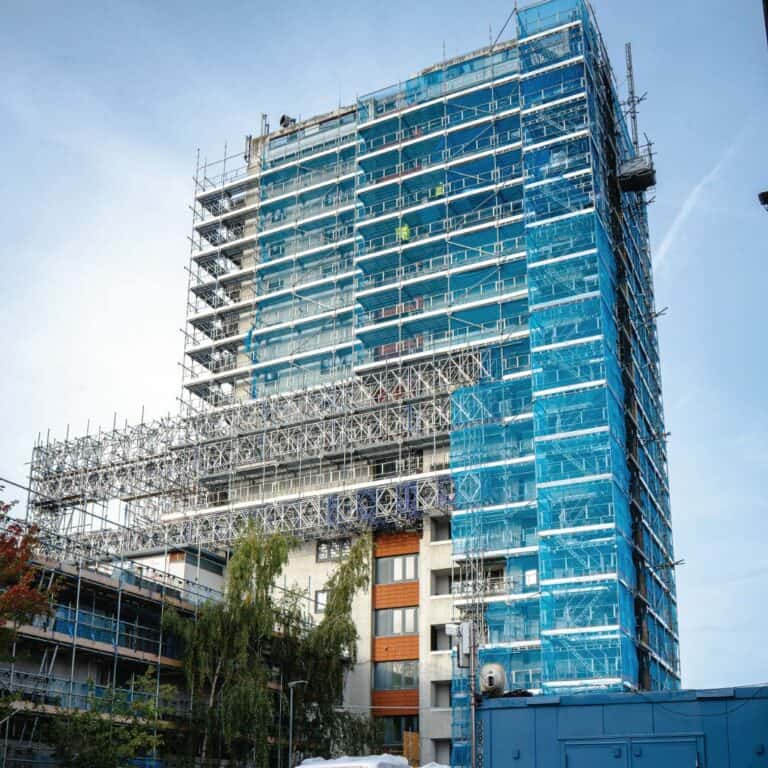
The project, which involves the recladding of a live building, was awarded to Inner City Scaffolding Ltd in March 2023, with an anticipated duration of 18 months. What makes this project exceptional is the scale and complexity of the engineered scaffolding system deployed by the company.
Engineering Marvel
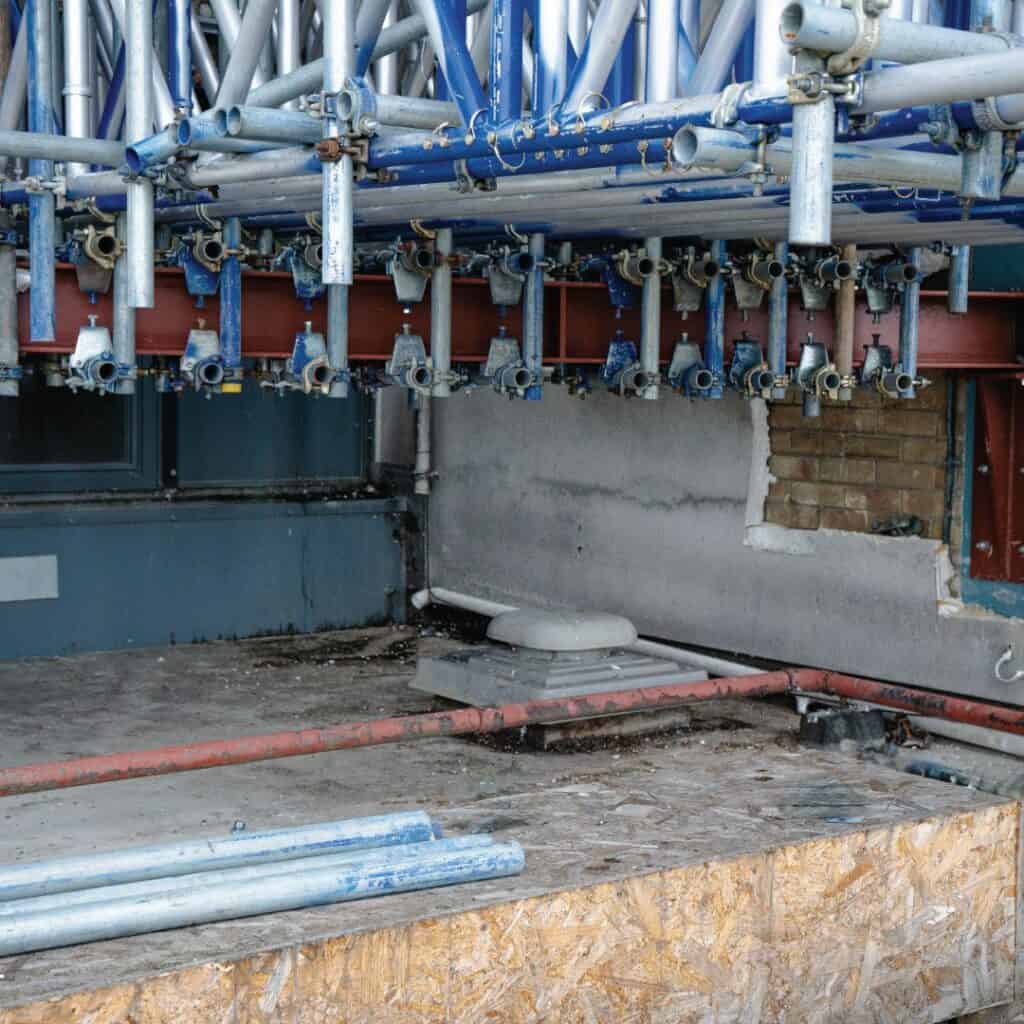
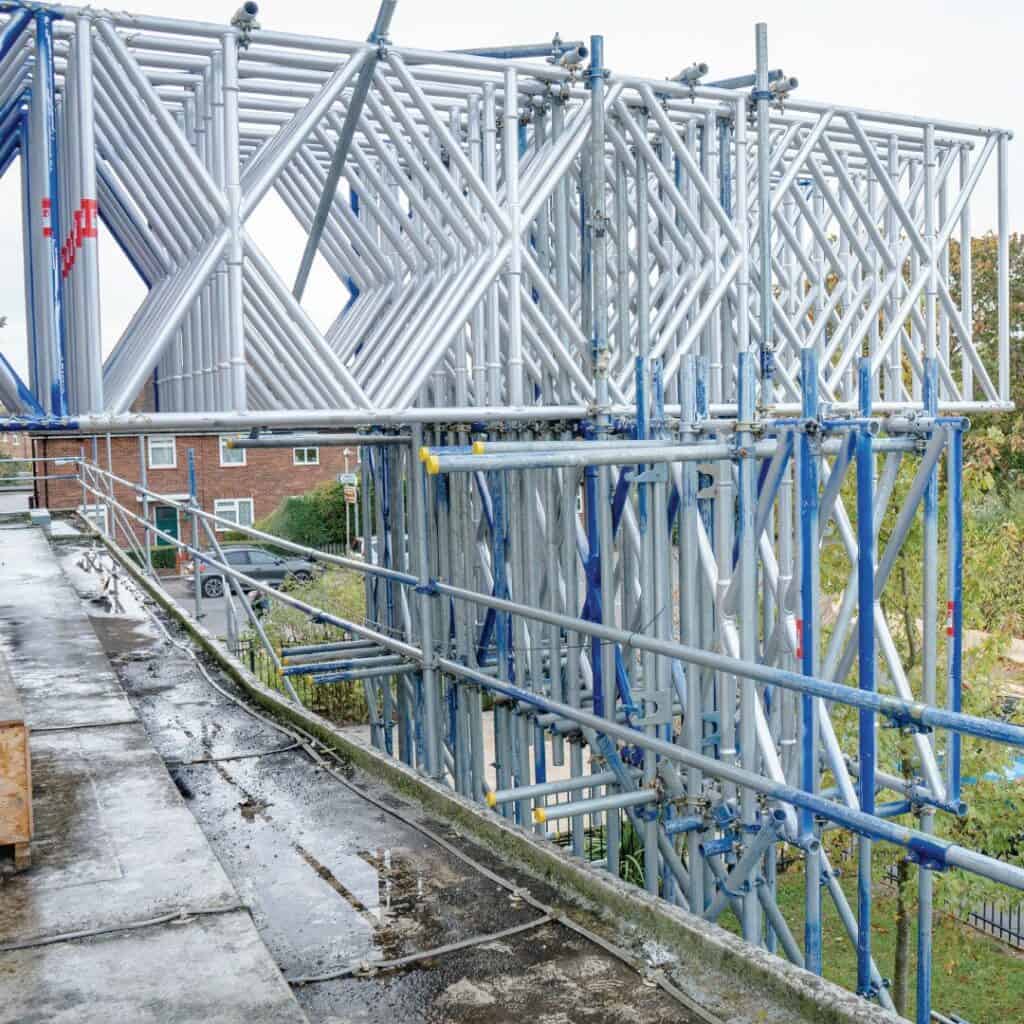
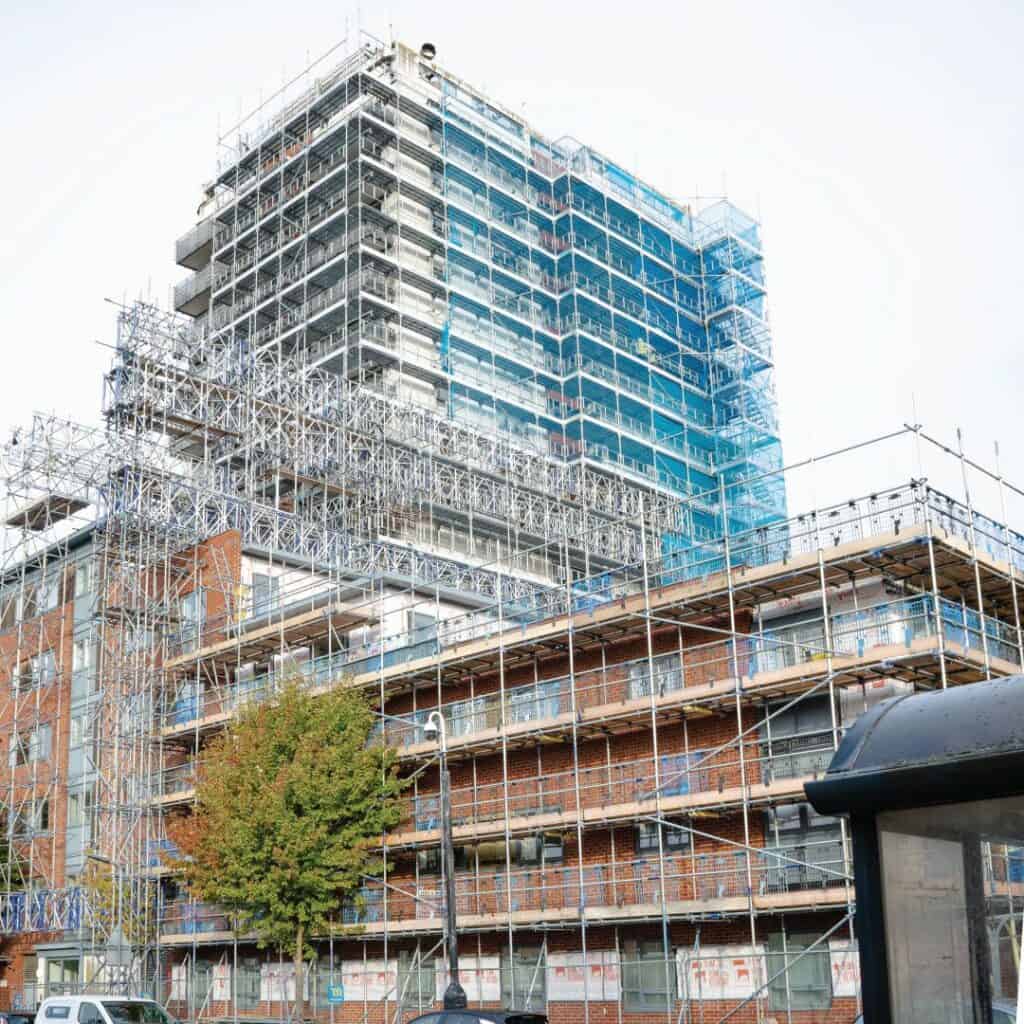
Inner City Scaffolding Ltd embarked on this ambitious project by implementing a large-scale engineered HAKI System scaffolding solution. This scaffolding extends from ground level up to 40.00 meters on the roof. The structure includes extensive triple bank 1300mm HD Spine Beams and steel shore integration, bridging podium areas. Additionally, a traditional tube, fitting, and beam approach was utilised for remedial upgrade works on the lower-level podium building.
The logistics package accompanying the project includes HAKI site staircases and integrated goods hoists. A bespoke gated solution was designed for the system scaffolding, along with material chutes for fabric removal. To ensure safety and functionality, lightning protection was also integrated into the scaffolding and hoist due to the building’s topographical location.
Impressive Metrics
The sheer magnitude of this project becomes evident when considering the statistics. Inner City Scaffolding Ltd has erected approximately 4,000.00m2 of FR netted external facade scaffolding. This required 600.00 individual support legs and 1,000.00 linear meters of HD Asterix Beams, X-Beams, and Ladder Beams. The scale of this undertaking is genuinely awe-inspiring.
Innovative Solutions to Challenges
One of the most remarkable aspects of this project is how Inner City Scaffolding overcame challenges. With a lack of foundation support from the building, they devised a ground-breaking approach that involved transferring loads to minimal areas, including the building’s steel frame. This required scaffolding service loads to be transferred onto engineered scaffolding beam work arrangements, with spans between supports exceeding 25.00 meters. These were then attached to purpose-built steel shores linked to the building’s core steel structure. The sheer magnitude of these works, completed with operational ingenuity and no crane or plant assistance, is a testament to Inner City Scaffolding’s expertise.
A Trojan Horse of Innovation
As the project evolved, the scaffolding’s look and dynamics took on a unique character, often compared to that of a Trojan Horse. This evolution earned the project its own class identity, emphasising the innovative spirit driving its success.
Notably, all of this intricate work was carried out while the building and surrounding areas remained live with residents and fully operational traffic routes. Inner City Scaffolding Ltd managed to deliver the project on time, working with precision and care.
In conclusion, Inner City Scaffolding Ltd’s recladding project is a shining example of innovation and expertise in scaffolding. With its complex engineered solutions and the ability to overcome immense challenges, this project is set to inspire and help redefine the industry’s standards. It is a testament to what can be achieved through ingenuity and dedication in construction and scaffolding.
In a concerning report released yesterday, the Health and Safety Executive (HSE) disclosed that nearly two million workers in Great Britain suffered from work-related ill health in the fiscal year 2022/23. The annual statistics shed light on a troubling rise in work-related stress, depression, anxiety, and injuries, posing significant challenges to both employees and employers alike.According to the HSE’s data, a staggering 1.8 million workers reported experiencing work-related ill health during the 2022/23 period. Of these cases, approximately half were attributed to stress, depression, or anxiety. This marks a troubling departure from pre-pandemic trends when the rate of self-reported work-related ill health had remained relatively stable. The current rate is notably higher than that recorded in 2018/19.The report further reveals that an estimated 875,000 cases of work-related stress, depression, or anxiety were reported in 2022/23, exceeding the levels seen before the COVID-19 pandemic. These mental health-related issues are significantly impacting the well-being of the workforce.One of the most startling revelations is the toll this is taking on the nation’s productivity. An estimated 35.2 million working days were lost in 2022/23 due to self-reported work-related ill health or injury. This loss of productivity is a pressing concern for businesses across the country.HSE’s Chief Executive, Sarah Albon, emphasised the importance of addressing these issues promptly, “Preventing or tackling work-related stress can provide significant benefits to employees, improving their experience of work and their overall health; and also to employers including increased productivity, decreased absenteeism, and reduced staff turnover.”The report also delves into the economic impact of work-related ill health and workplace injuries. In 2021/22, the estimated annual costs associated with workplace injuries and new cases of work-related ill health reached a staggering £20.7 billion. This represents a £1.9 billion increase compared to figures from 2019/20. The rising economic burden underscores the urgency of taking action to improve workplace safety and mental health support.Tragically, the report reveals that 135 workers lost their lives in work-related accidents during the 2022/23 period, and an additional 561,000 workers sustained self-reported non-fatal injuries in the workplace. These statistics serve as a stark reminder of the critical need for continued efforts to enhance workplace safety standards.The HSE’s annual report serves as a stark wake-up call for both employers and policymakers to prioritise the well-being and safety of the workforce. As the country grapples with the long-lasting effects of the pandemic, addressing the rising rates of work-related ill health and injuries must be a top priority to ensure the health, productivity, and prosperity of Great Britain.
Scaffmag can reveal the official dates for ScaffChamp 2024, which promises to be an even bigger and better international scaffolding championship.
The Baltic Scaffolders Association (BSA), the driving force behind the Scaffolders Championship, dubbed ScaffChamp, has been working tirelessly to make the 2024 edition a remarkable experience for participants and spectators alike.
Scaffmag can exclusively reveal that ScaffChamp 24 is scheduled to take place from May 24 to 25, 2024, in Vilnius, Lithuania.
While we eagerly await the official announcement of team registration dates, we can also confirm that the registration process for ScaffChamp 24 will follow the same format as the previous year.
Teams will be required to register for the event, and there will be a team limit in place. As always, it will be on a first-come, first-served basis, ensuring that early registrants secure their spots in the competition. To promote fairness, BSA has pledged to announce the opening of team registration at least one week in advance so that all teams have an equal opportunity to register.
ScaffChamp 23, also held in Vilnius, Lithuania, exceeded all expectations, attracting over 400 participants from around the world. The event was a true testament to the international scaffolding community’s skill, dedication, and camaraderie.
The highlight of ScaffChamp 23 was the intense competition among fifteen international teams, who had to erect and dismantle a specially designed Layher Allround scaffold structure as quickly and safely as possible.
The Swedish team, Kaefer AB, set a new record with a remarkable time of 59 minutes and 1 second. Lithuanian teams Globalita and Hotrema secured the second and third positions, respectively, showcasing their scaffolding expertise.
We use cookies on our website to give you the most relevant experience by remembering your preferences and repeat visits. By clicking “Accept”, you consent to the use of ALL the cookies.
This website uses cookies to improve your experience while you navigate through the website. Out of these, the cookies that are categorized as necessary are stored on your browser as they are essential for the working of basic functionalities of the website. We also use third-party cookies that help us analyze and understand how you use this website. These cookies will be stored in your browser only with your consent. You also have the option to opt-out of these cookies. But opting out of some of these cookies may affect your browsing experience.
Necessary cookies are absolutely essential for the website to function properly. These cookies ensure basic functionalities and security features of the website, anonymously.
Cookie
Duration
Description
cookielawinfo-checbox-analytics
11 months
This cookie is set by GDPR Cookie Consent plugin. The cookie is used to store the user consent for the cookies in the category "Analytics".
cookielawinfo-checbox-functional
11 months
The cookie is set by GDPR cookie consent to record the user consent for the cookies in the category "Functional".
cookielawinfo-checbox-others
11 months
This cookie is set by GDPR Cookie Consent plugin. The cookie is used to store the user consent for the cookies in the category "Other.
cookielawinfo-checkbox-necessary
11 months
This cookie is set by GDPR Cookie Consent plugin. The cookies is used to store the user consent for the cookies in the category "Necessary".
cookielawinfo-checkbox-performance
11 months
This cookie is set by GDPR Cookie Consent plugin. The cookie is used to store the user consent for the cookies in the category "Performance".
viewed_cookie_policy
11 months
The cookie is set by the GDPR Cookie Consent plugin and is used to store whether or not user has consented to the use of cookies. It does not store any personal data.
Functional cookies help to perform certain functionalities like sharing the content of the website on social media platforms, collect feedbacks, and other third-party features.
Performance cookies are used to understand and analyze the key performance indexes of the website which helps in delivering a better user experience for the visitors.
Analytical cookies are used to understand how visitors interact with the website. These cookies help provide information on metrics the number of visitors, bounce rate, traffic source, etc.
Advertisement cookies are used to provide visitors with relevant ads and marketing campaigns. These cookies track visitors across websites and collect information to provide customized ads.

 Before lifting the second 47m ring into position in November, an equipment hatch needed to be welded to the liner by the Hinkley Point C team. KAEFER stepped in to provide a solution where others said it was impossible, with design support from experts at Layher UK in Letchworth the team devised an innovative suspended scaffold for the ring in March 2022. This suspended structure allowed for welding the equipment hatch onto the ring liner, keeping the project on schedule.
In August 2022, the same KAEFER scaffold on Slab 8 was reused, and the 12m-high liner ring three was lifted over it, again allowing access for the KAEFER team and other contractors before it was lifted to its final position on top of ring two in December 2022.
Before lifting the second 47m ring into position in November, an equipment hatch needed to be welded to the liner by the Hinkley Point C team. KAEFER stepped in to provide a solution where others said it was impossible, with design support from experts at Layher UK in Letchworth the team devised an innovative suspended scaffold for the ring in March 2022. This suspended structure allowed for welding the equipment hatch onto the ring liner, keeping the project on schedule.
In August 2022, the same KAEFER scaffold on Slab 8 was reused, and the 12m-high liner ring three was lifted over it, again allowing access for the KAEFER team and other contractors before it was lifted to its final position on top of ring two in December 2022.

 Before lifting the second 47m ring into position in November, an equipment hatch needed to be welded to the liner by the Hinkley Point C team. KAEFER stepped in to provide a solution where others said it was impossible, with design support from experts at Layher UK in Letchworth the team devised an innovative suspended scaffold for the ring in March 2022. This suspended structure allowed for welding the equipment hatch onto the ring liner, keeping the project on schedule.
In August 2022, the same KAEFER scaffold on Slab 8 was reused, and the 12m-high liner ring three was lifted over it, again allowing access for the KAEFER team and other contractors before it was lifted to its final position on top of ring two in December 2022.
Before lifting the second 47m ring into position in November, an equipment hatch needed to be welded to the liner by the Hinkley Point C team. KAEFER stepped in to provide a solution where others said it was impossible, with design support from experts at Layher UK in Letchworth the team devised an innovative suspended scaffold for the ring in March 2022. This suspended structure allowed for welding the equipment hatch onto the ring liner, keeping the project on schedule.
In August 2022, the same KAEFER scaffold on Slab 8 was reused, and the 12m-high liner ring three was lifted over it, again allowing access for the KAEFER team and other contractors before it was lifted to its final position on top of ring two in December 2022.
 Paul Ferrand, Operational Delivery Lead for KAEFER UK & Ireland at Hinkley Point C, explained the challenges faced during the project. “A challenge presented itself when the planned crane was moved out of service for several weeks, meaning a new crane and material store had to be arranged,” he said. “This required daily coordination with several stakeholders to organise deliveries with crane time booked in advance: on a busy site like Hinkley Point C, this can be difficult.”
The availability of Hinkley Point C riggers to support the crane tasks was also limited during the day; combined with working at height safety requirements, minimising available working areas below the scaffold meant the KAEFER team moved to night shifts.
Incident first response manpower availability at Hinkley Point C is reduced overnight, so KAEFER collaborated with Bylor’s HSE team, creating a viable rescue plan from the working platform to ensure the safety of the KAEFER team members.
Paul Ferrand, Operational Delivery Lead for KAEFER UK & Ireland at Hinkley Point C, explained the challenges faced during the project. “A challenge presented itself when the planned crane was moved out of service for several weeks, meaning a new crane and material store had to be arranged,” he said. “This required daily coordination with several stakeholders to organise deliveries with crane time booked in advance: on a busy site like Hinkley Point C, this can be difficult.”
The availability of Hinkley Point C riggers to support the crane tasks was also limited during the day; combined with working at height safety requirements, minimising available working areas below the scaffold meant the KAEFER team moved to night shifts.
Incident first response manpower availability at Hinkley Point C is reduced overnight, so KAEFER collaborated with Bylor’s HSE team, creating a viable rescue plan from the working platform to ensure the safety of the KAEFER team members.
 This habitat contained the garnet blasting medium used in the coating’s preparation works and also protected the three-coat phenolic epoxy-polyamide PIC 100 coatings scheme as it cured. The KAEFER coatings team applied this scheme to 26,000m2 of steel across the inside of both containment liners.
The scaffold build and containment took 52 nights, including downtime due to bad weather and crane availability. “These efforts allowed project-critical operations to continue, meaning Hinkley Point C is one step closer to providing zero-carbon electricity for around six million homes,” said Paul. “We’re proud to be playing our part, and it’s a good feeling to know that whatever challenges we’re set, our team is equipped and ready to handle them.”
This habitat contained the garnet blasting medium used in the coating’s preparation works and also protected the three-coat phenolic epoxy-polyamide PIC 100 coatings scheme as it cured. The KAEFER coatings team applied this scheme to 26,000m2 of steel across the inside of both containment liners.
The scaffold build and containment took 52 nights, including downtime due to bad weather and crane availability. “These efforts allowed project-critical operations to continue, meaning Hinkley Point C is one step closer to providing zero-carbon electricity for around six million homes,” said Paul. “We’re proud to be playing our part, and it’s a good feeling to know that whatever challenges we’re set, our team is equipped and ready to handle them.”
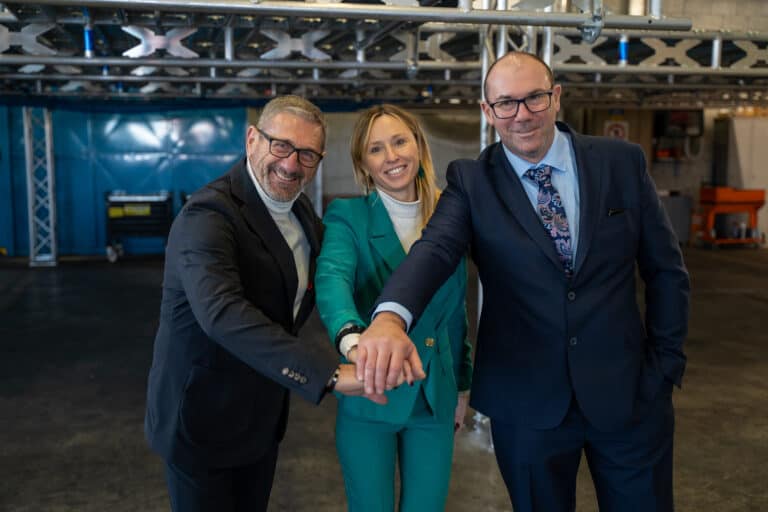
 Andy Graham, Pilosio’s newly appointed Managing Director in the UK, brings over 30 years of subsea and topside access, construction, and inspection experience into the business.
In addition to hands-on supervisory roles, Andy has previously held field engineering, project management, operations management, and head of department roles at several well-established service companies specialising in confined space and hazardous area operations, rope access, alternative access, and suspended decking systems.
When asked about his decision to accept this role, Andy shared; “The quality and flexibility of Pilosio products was evident to me from the early stages of our initial engagement, but it was the focus on safety-driven innovation that really caught my attention.
Product development is continual, and concept ideas are translated into final product design quickly by experienced in-house design and engineering teams. Secure supply chain, efficient manufacturing processes, and factory capacity ensure that Pilosio products can be delivered quickly and with the quality required to serve a global market. Understanding the markets that would benefit from the use of the Pilosio product range meant that accepting the new role was a very simple decision.”
“The Flydeck system was of particular and immediate interest to me,” he said.
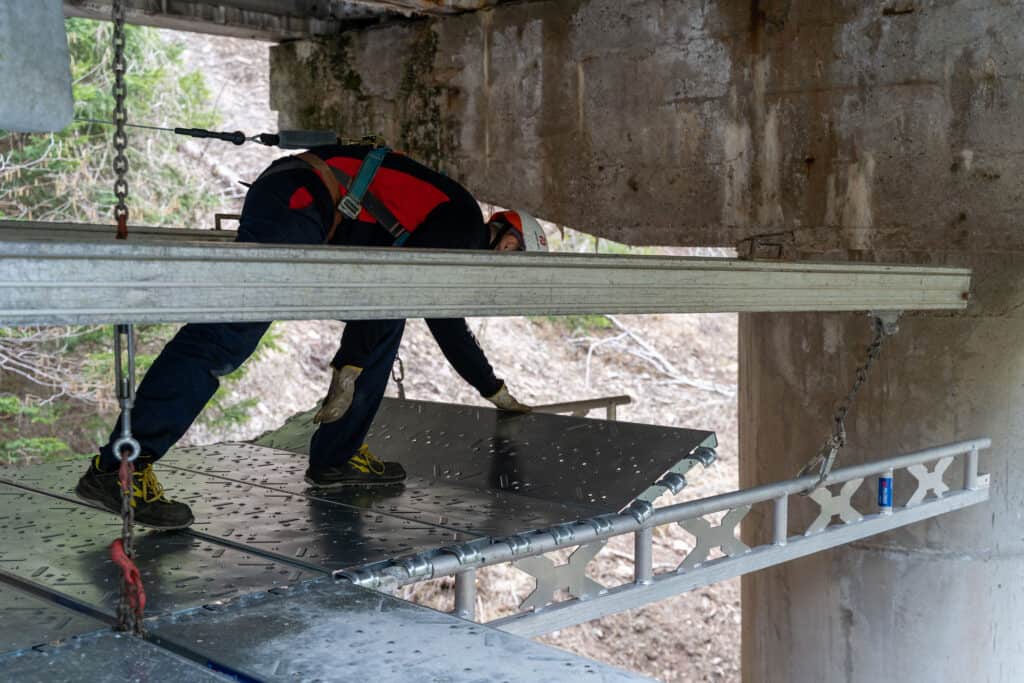
“It can be installed by either scaffolders or by rope access personnel; the system is very light, use of the Flyrail offers significant safety benefits to installers during erection and dismantling, and installation rates are fantastic.
Offering options as a stand-alone suspended access platform used alongside other systems, or used in combination with Pilosio MP scaffolding to provide a total access solution from the ground up, the Flydeck offers improved safety, productivity, and value as standard.
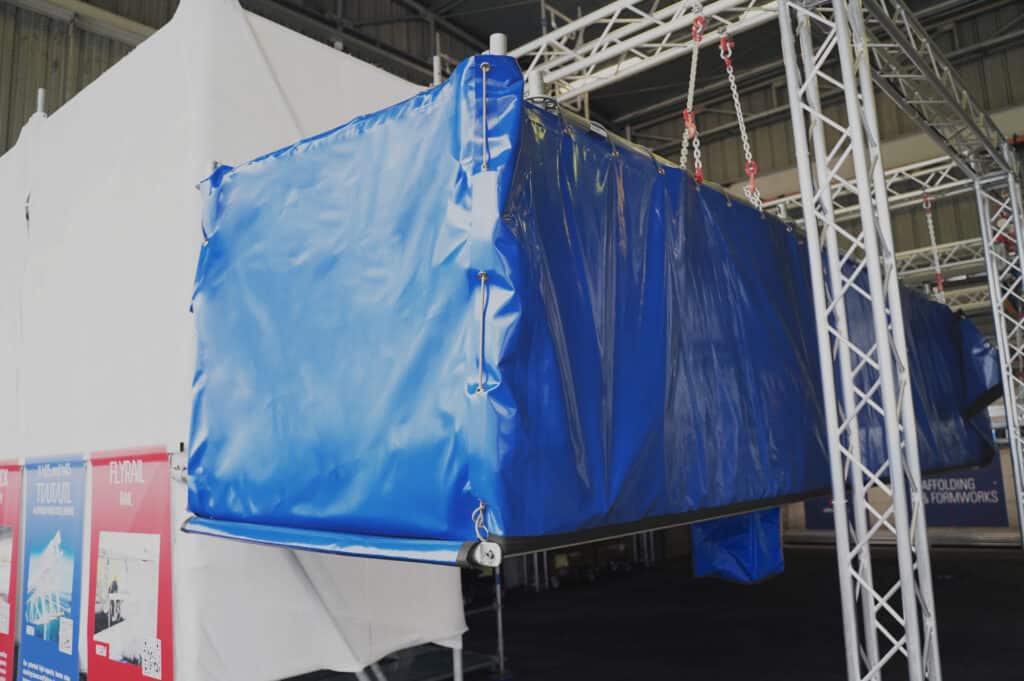
And with today’s unveiling of our revolutionary PVC water collection system, Bluesky, Flydeck can now be supplied complete with an eco-friendly environmental protection solution suitable for a range of applications.
Andy Graham, Pilosio’s newly appointed Managing Director in the UK, brings over 30 years of subsea and topside access, construction, and inspection experience into the business.
In addition to hands-on supervisory roles, Andy has previously held field engineering, project management, operations management, and head of department roles at several well-established service companies specialising in confined space and hazardous area operations, rope access, alternative access, and suspended decking systems.
When asked about his decision to accept this role, Andy shared; “The quality and flexibility of Pilosio products was evident to me from the early stages of our initial engagement, but it was the focus on safety-driven innovation that really caught my attention.
Product development is continual, and concept ideas are translated into final product design quickly by experienced in-house design and engineering teams. Secure supply chain, efficient manufacturing processes, and factory capacity ensure that Pilosio products can be delivered quickly and with the quality required to serve a global market. Understanding the markets that would benefit from the use of the Pilosio product range meant that accepting the new role was a very simple decision.”
“The Flydeck system was of particular and immediate interest to me,” he said.
“It can be installed by either scaffolders or by rope access personnel; the system is very light, use of the Flyrail offers significant safety benefits to installers during erection and dismantling, and installation rates are fantastic.
Offering options as a stand-alone suspended access platform used alongside other systems, or used in combination with Pilosio MP scaffolding to provide a total access solution from the ground up, the Flydeck offers improved safety, productivity, and value as standard.
And with today’s unveiling of our revolutionary PVC water collection system, Bluesky, Flydeck can now be supplied complete with an eco-friendly environmental protection solution suitable for a range of applications.

 As for expansion plans, Pilosio aims to establish a depot and a second training centre in the Midlands, emphasising their commitment to being accessible to customers across the UK.
In closing, it’s clear that Pilosio is poised for significant growth in the UK market, and Andy Graham’s leadership will play a pivotal role in realising these ambitions. With their innovative products and a strong focus on safety and practicality, Pilosio is well on its way to becoming a prominent name in the UK scaffolding and construction industry.
As for expansion plans, Pilosio aims to establish a depot and a second training centre in the Midlands, emphasising their commitment to being accessible to customers across the UK.
In closing, it’s clear that Pilosio is poised for significant growth in the UK market, and Andy Graham’s leadership will play a pivotal role in realising these ambitions. With their innovative products and a strong focus on safety and practicality, Pilosio is well on its way to becoming a prominent name in the UK scaffolding and construction industry.  Andy Graham, Pilosio’s newly appointed Managing Director in the UK, brings over 30 years of subsea and topside access, construction, and inspection experience into the business.
In addition to hands-on supervisory roles, Andy has previously held field engineering, project management, operations management, and head of department roles at several well-established service companies specialising in confined space and hazardous area operations, rope access, alternative access, and suspended decking systems.
When asked about his decision to accept this role, Andy shared; “The quality and flexibility of Pilosio products was evident to me from the early stages of our initial engagement, but it was the focus on safety-driven innovation that really caught my attention.
Product development is continual, and concept ideas are translated into final product design quickly by experienced in-house design and engineering teams. Secure supply chain, efficient manufacturing processes, and factory capacity ensure that Pilosio products can be delivered quickly and with the quality required to serve a global market. Understanding the markets that would benefit from the use of the Pilosio product range meant that accepting the new role was a very simple decision.”
“The Flydeck system was of particular and immediate interest to me,” he said.
“It can be installed by either scaffolders or by rope access personnel; the system is very light, use of the Flyrail offers significant safety benefits to installers during erection and dismantling, and installation rates are fantastic.
Offering options as a stand-alone suspended access platform used alongside other systems, or used in combination with Pilosio MP scaffolding to provide a total access solution from the ground up, the Flydeck offers improved safety, productivity, and value as standard.
And with today’s unveiling of our revolutionary PVC water collection system, Bluesky, Flydeck can now be supplied complete with an eco-friendly environmental protection solution suitable for a range of applications.
Andy Graham, Pilosio’s newly appointed Managing Director in the UK, brings over 30 years of subsea and topside access, construction, and inspection experience into the business.
In addition to hands-on supervisory roles, Andy has previously held field engineering, project management, operations management, and head of department roles at several well-established service companies specialising in confined space and hazardous area operations, rope access, alternative access, and suspended decking systems.
When asked about his decision to accept this role, Andy shared; “The quality and flexibility of Pilosio products was evident to me from the early stages of our initial engagement, but it was the focus on safety-driven innovation that really caught my attention.
Product development is continual, and concept ideas are translated into final product design quickly by experienced in-house design and engineering teams. Secure supply chain, efficient manufacturing processes, and factory capacity ensure that Pilosio products can be delivered quickly and with the quality required to serve a global market. Understanding the markets that would benefit from the use of the Pilosio product range meant that accepting the new role was a very simple decision.”
“The Flydeck system was of particular and immediate interest to me,” he said.
“It can be installed by either scaffolders or by rope access personnel; the system is very light, use of the Flyrail offers significant safety benefits to installers during erection and dismantling, and installation rates are fantastic.
Offering options as a stand-alone suspended access platform used alongside other systems, or used in combination with Pilosio MP scaffolding to provide a total access solution from the ground up, the Flydeck offers improved safety, productivity, and value as standard.
And with today’s unveiling of our revolutionary PVC water collection system, Bluesky, Flydeck can now be supplied complete with an eco-friendly environmental protection solution suitable for a range of applications.
 As for expansion plans, Pilosio aims to establish a depot and a second training centre in the Midlands, emphasising their commitment to being accessible to customers across the UK.
In closing, it’s clear that Pilosio is poised for significant growth in the UK market, and Andy Graham’s leadership will play a pivotal role in realising these ambitions. With their innovative products and a strong focus on safety and practicality, Pilosio is well on its way to becoming a prominent name in the UK scaffolding and construction industry.
As for expansion plans, Pilosio aims to establish a depot and a second training centre in the Midlands, emphasising their commitment to being accessible to customers across the UK.
In closing, it’s clear that Pilosio is poised for significant growth in the UK market, and Andy Graham’s leadership will play a pivotal role in realising these ambitions. With their innovative products and a strong focus on safety and practicality, Pilosio is well on its way to becoming a prominent name in the UK scaffolding and construction industry. 
 The logistics package accompanying the project includes HAKI site staircases and integrated goods hoists. A bespoke gated solution was designed for the system scaffolding, along with material chutes for fabric removal. To ensure safety and functionality, lightning protection was also integrated into the scaffolding and hoist due to the building’s topographical location.
 The logistics package accompanying the project includes HAKI site staircases and integrated goods hoists. A bespoke gated solution was designed for the system scaffolding, along with material chutes for fabric removal. To ensure safety and functionality, lightning protection was also integrated into the scaffolding and hoist due to the building’s topographical location.
 Impressive Metrics
The sheer magnitude of this project becomes evident when considering the statistics. Inner City Scaffolding Ltd has erected approximately 4,000.00m2 of FR netted external facade scaffolding. This required 600.00 individual support legs and 1,000.00 linear meters of HD Asterix Beams, X-Beams, and Ladder Beams. The scale of this undertaking is genuinely awe-inspiring.
Innovative Solutions to Challenges
One of the most remarkable aspects of this project is how Inner City Scaffolding overcame challenges. With a lack of foundation support from the building, they devised a ground-breaking approach that involved transferring loads to minimal areas, including the building’s steel frame. This required scaffolding service loads to be transferred onto engineered scaffolding beam work arrangements, with spans between supports exceeding 25.00 meters. These were then attached to purpose-built steel shores linked to the building’s core steel structure. The sheer magnitude of these works, completed with operational ingenuity and no crane or plant assistance, is a testament to Inner City Scaffolding’s expertise.
Impressive Metrics
The sheer magnitude of this project becomes evident when considering the statistics. Inner City Scaffolding Ltd has erected approximately 4,000.00m2 of FR netted external facade scaffolding. This required 600.00 individual support legs and 1,000.00 linear meters of HD Asterix Beams, X-Beams, and Ladder Beams. The scale of this undertaking is genuinely awe-inspiring.
Innovative Solutions to Challenges
One of the most remarkable aspects of this project is how Inner City Scaffolding overcame challenges. With a lack of foundation support from the building, they devised a ground-breaking approach that involved transferring loads to minimal areas, including the building’s steel frame. This required scaffolding service loads to be transferred onto engineered scaffolding beam work arrangements, with spans between supports exceeding 25.00 meters. These were then attached to purpose-built steel shores linked to the building’s core steel structure. The sheer magnitude of these works, completed with operational ingenuity and no crane or plant assistance, is a testament to Inner City Scaffolding’s expertise.
 A Trojan Horse of Innovation
As the project evolved, the scaffolding’s look and dynamics took on a unique character, often compared to that of a Trojan Horse. This evolution earned the project its own class identity, emphasising the innovative spirit driving its success.
Notably, all of this intricate work was carried out while the building and surrounding areas remained live with residents and fully operational traffic routes. Inner City Scaffolding Ltd managed to deliver the project on time, working with precision and care.
In conclusion, Inner City Scaffolding Ltd’s recladding project is a shining example of innovation and expertise in scaffolding. With its complex engineered solutions and the ability to overcome immense challenges, this project is set to inspire and help redefine the industry’s standards. It is a testament to what can be achieved through ingenuity and dedication in construction and scaffolding.
A Trojan Horse of Innovation
As the project evolved, the scaffolding’s look and dynamics took on a unique character, often compared to that of a Trojan Horse. This evolution earned the project its own class identity, emphasising the innovative spirit driving its success.
Notably, all of this intricate work was carried out while the building and surrounding areas remained live with residents and fully operational traffic routes. Inner City Scaffolding Ltd managed to deliver the project on time, working with precision and care.
In conclusion, Inner City Scaffolding Ltd’s recladding project is a shining example of innovation and expertise in scaffolding. With its complex engineered solutions and the ability to overcome immense challenges, this project is set to inspire and help redefine the industry’s standards. It is a testament to what can be achieved through ingenuity and dedication in construction and scaffolding.