Recent testing conducted by the British Safety Industry Federation (BSIF) has raised concerns about the safety of numerous non-compliant safety footwear products flooding the UK market. The findings, which were based on assessments carried out between December 2021 and December 2022, reveal that a significant portion of safety footwear produced by non-registered Safety Suppliers failed to meet advertised safety standards.Safety footwear is a critical component of personal protective equipment (PPE) designed to protect workers from a range of hazards, including slips, sharp objects, heavy loads, extreme temperatures, and exposure to chemicals. Ensuring that such footwear meets the specified safety requirements is paramount in safeguarding the health and well-being of workers across various industries.However, the BSIF’s tests paint a worrying picture, indicating that many safety footwear products on the UK market fall short of their promised protection levels. Of the 42 safety footwear items assessed during the testing period, only five met the BSIF’s stringent criteria, covering both product performance claims and the required supporting documentation.Alan Murray, CEO of BSIF, expressed deep concern over the findings, saying, “Foot injuries are unfortunately common in workplaces, and it is crucial that all safety footwear undergoes rigorous testing and certification to meet the required standards. A significant portion of safety footwear available in the UK market is currently not fit for purpose, including many products that claim to be ‘unbreakable’ or ‘indestructible’ but failed key tests.”In the UK, safety footwear used at work must comply with regulation (EU) 2016/425 and follow the relevant approval procedures to qualify for a UKCA or CE mark. PPE categorised as Category II or III, designed to protect against more than minor injuries, must undergo type-examination by an accredited testing body to ensure they meet ‘Essential Health and Safety Requirements’ (EHSR). Category III products, which protect against permanent damage and death, require ongoing, at least annual, independent quality assurance.Manufacturers must provide the Declaration of Conformity, user instructions, and technical documentation for Category II and III safety footwear sold in the UK, demonstrating compliance with all necessary regulations and safety requirements.To address these concerns, the BSIF offers membership to its Registered Safety Supplier Scheme, which encourages manufacturers to commit to producing fully compliant PPE with all relevant standards and regulations appropriately marked with UKCA or CE. The BSIF closely monitors Registered Suppliers to ensure they sell only certified safety products that meet stated claims and regulatory responsibilities.Out of the 108 tests conducted on RSSS members’ footwear between December 2021 and December 2022, an impressive 90% met all requirements regarding product claims and documentation. RSSS members whose products failed to meet these criteria were required to rectify the issues immediately to maintain their membership in the scheme.Alan Murray emphasised the importance of purchasing PPE from compliant sources, stating, “PPE used at work must carry a UKCA or CE mark, signifying that the product meets the minimum legal requirements for its design and basic health and safety criteria. Unfortunately, non-compliant and, on occasion, counterfeit products are on the rise. We advise anyone responsible for purchasing safety footwear to look for the RSSS shield to ensure the safety and well-being of their staff in the workplace.”The BSIF encourages those responsible for specifying PPE to:CHECK if your supplier is BSIF-registered, as audited suppliers are compliant, competent, and trustworthy.SELECT appropriate, certified, and compliant products, with the support of Registered Safety Suppliers in the product selection process.PROTECT your workforce and your business by choosing Registered Safety Suppliers who prioritise safety and contribute to business success.A comprehensive list of registered suppliers is available on the BSIF’s website at www.bsif.co.uk/rsss/.
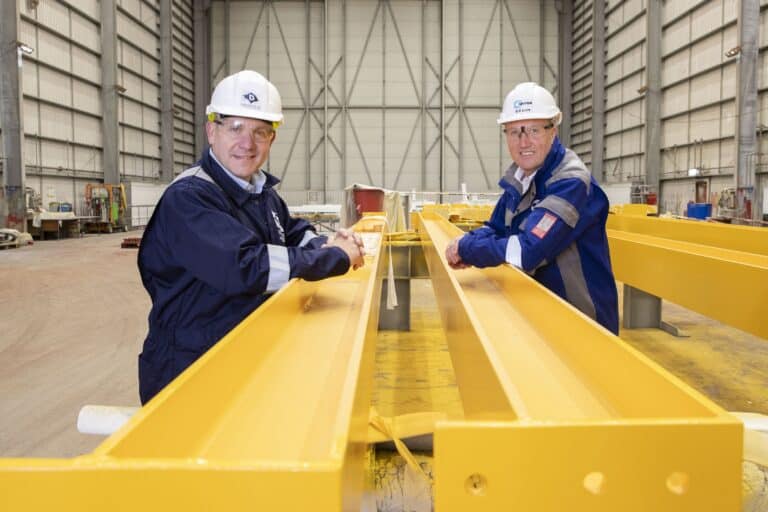
Denholm Industrial Services Limited, a subsidiary of the Denholm Group, has entered into a significant partnership by acquiring a 60 per cent stake in Universal Coatings & Services Limited.
This move cements the company’s co-ownership with Wilton Universal Group, marking the beginning of a promising collaboration to bolster Universal’s position within the industrial sectors.
The partnership formalises a two-year-long supply chain relationship between the two organisations, creating a dynamic synergy that promises to deliver enhanced size and scale for their combined operations, ultimately benefiting their valued customers.
Denholm Industrial Services is renowned for providing critical engineering support in challenging environments. Their expertise facilitates the construction and maintenance of vital power, infrastructure, and naval and commercial marine assets.
The company employs over 600 individuals at regional branches and project sites across the UK, offering services such as engineered scaffolding, specialist platform solutions, cradle and rope access, blasting, painting, and industrial cleaning.
Universal Coatings, on the other hand, operates one of the largest coatings facilities in the UK, strategically located on the banks of the River Tees in Tees Valley. Their services cater to a wide range of industries, including engineering, petrochemical, subsea, offshore renewables, and nuclear power generation.
With a workforce of 61 people, Universal Coatings boasts an 11,500 square meter blast and coating facility at Wilton Universal Group’s 112-acre base, in addition to providing on-site surface and coatings services.
By combining the capabilities of both organisations, Universal aims to offer a comprehensive solution that integrates specialist coatings, blasting, scaffolding, and rope access services. This integrated approach will cater to customers responsible for naval defence, energy infrastructure, and industrial facilities.
Steve Hill, Managing Director of Denholm Industrial Services, expressed his enthusiasm for the partnership. He said, “Following two years as supply chain partners, it is the natural next step for Denholm Industrial Services to become a co-owner of Universal Coatings. Formalising our relationship will enable stakeholders of both businesses to benefit from our enhanced size and scale, as well our shared ethos of service excellence, delivered through world-class skills and experience.”
Tees Valley has a long-standing reputation for its industrial capabilities, with forward-thinking companies like Universal Coatings contributing to the area’s heritage, which has evolved to support cutting-edge sectors, including marine defence, energy, and industrial assets.
Bill Scott OBE DL, Chief Executive of Wilton Universal Group, shared his optimism about the partnership, saying, “As co-owners with Denholm Industrial Services, we will accelerate growth at Universal. This will enable us to invest in further training and career prospects for our loyal and highly talented team, who always maintain exceptional standards of workmanship on the prestigious projects we deliver. There are strong synergies between Universal and Denholm Industrial Services, both in terms of company ethos and capabilities. Integrating the companies’ services along with Universal’s facilities, services, and highly experienced local workforce is a unique and powerful combination that will benefit customers of both businesses.”
With this strategic partnership, Denholm Industrial Services and Universal Coatings are well-positioned to expand their reach, offer a broader range of services, and continue their commitment to delivering excellence in the defence and industrial sectors.
A devastating incident in December 2022 has resulted in the sentencing of Scaffolder Russell Le Beau, 34, to four years in prison following the tragic death of 11-year-old Harry Dennis.
Le Beau was found guilty of failing to secure a scaffolding board, which struck the windscreen of a car, causing fatal injuries to young Harry.
The accident occurred on Top Road in Hooe, East Sussex, at approximately 3 pm on December 15, 2022. Le Beau had not adequately secured scaffolding boards on his van, causing one of them to become suspended in mid-air, protruding across the carriageway in the opposite direction.
The dangerously protruding board would have been visible in Le Beau’s wing mirror as he drove, the court was told.
Lee Dennis was driving in the opposite direction, with his 11-year-old son Harry in the passenger seat and his 13-year-old daughter in the back. Unfortunately, Mr Dennis had no time to react to prevent the scaffolding board from striking his car’s window, causing severe injuries to Harry.
Harry was immediately flown to Kings College Hospital in London, where he tragically succumbed to his injuries days later.
Investigations conducted by the Health and Safety Executive (HSE) revealed alarming safety lapses. The wooden boards were secured only by a scaffold tube at one end, at the very rear of the van, with no ratchet straps, net, or tarp to secure them. Furthermore, there were no straps, nets, or tarpaulin bags anywhere in the vehicle, leaving the scaffolding boards vulnerable to swinging out onto the carriageway.
Credit: Sussex Police
The HSE report characterised the load security on the vehicle as “grossly inadequate,” concluding that Le Beau had disregarded safe loading guidelines for scaffolding equipment.
In a heartfelt statement following the case, Maria Dennis, Harry’s mother, expressed the family’s immense grief, describing her son as “our beautiful son with the biggest of smiles and the biggest of hearts.” She recounted Harry’s kind, caring, and fun nature, as well as his infectious laughter and love for making others happy.
The Dennis family celebrated Harry as a “true sportsman” who played football for Hastings Athletic Football Club, emphasising his unwavering dedication and sportsmanship. They described his ambition to win as second to none, and yet, he remained humble in defeat.
Judge Christine Laing KC delivered the sentence, acknowledging that while Le Beau did not intend to cause harm, he had taken an enormous risk by driving with an insecure load. The judge stated, “You were at the wheel and bear the responsibility for not checking.”
As a result of his actions, Le Beau was not only sentenced to four years in prison but also disqualified from driving for seven years.
The tragic loss of Harry Dennis serves as a stark reminder of the importance of road safety and securing loads correctly, with consequences that will forever impact the lives of those involved.
Thousands of engineering construction workers at prominent energy sites across the United Kingdom are on the brink of launching industrial action after rejecting an unsatisfactory pay deal. More than 3,000 workers employed at vital locations, including Stanlow, Fawley, Valero, Grangemouth, Mossmorran Oil Refineries, Sellafield Nuclear Facility, and nuclear power stations, have overwhelmingly voted against a proposed pay deal that would have provided a 10 per cent increase for 2024 and an additional 5 per cent for 2025.The ballot results, which were officially announced on Friday, revealed that an overwhelming 86 per cent majority of the workers rejected the proposed pay deal. This resounding rejection has left the workers and their representatives contemplating potential industrial action to address their growing concerns over falling real wages.Charlotte Brumpton-Childs, GMB National Officer, expressed the workers’ dissatisfaction with the pay offer and highlighted the dire state of their income relative to inflation:“Engineering construction worker’s pay has plummeted to more than 20 percent below inflation. So, it’s not hugely surprising they haven’t accepted a pay deal that still amounts to a real terms pay cut. These are extremely skilled workers, who are considering mass legal industrial action for the first time in their careers because their employers have failed to keep their rates of pay in line with inflation.”The rejection of this pay deal marks a significant turning point for these workers, who are now considering the possibility of taking coordinated industrial action to demand fair compensation for their valuable contributions to the energy sector.The GMB union is scheduled to meet with its representatives on Monday, November 6th, to formulate a strategy and discuss the next steps in the effort to secure better pay and conditions for the affected workers.This development highlights the growing frustration among essential workers across various sectors who are struggling to maintain their standard of living in the face of rising inflation and stagnant wages. It remains to be seen whether this discontent will escalate into widespread industrial action that could disrupt energy production and supply across the UK.
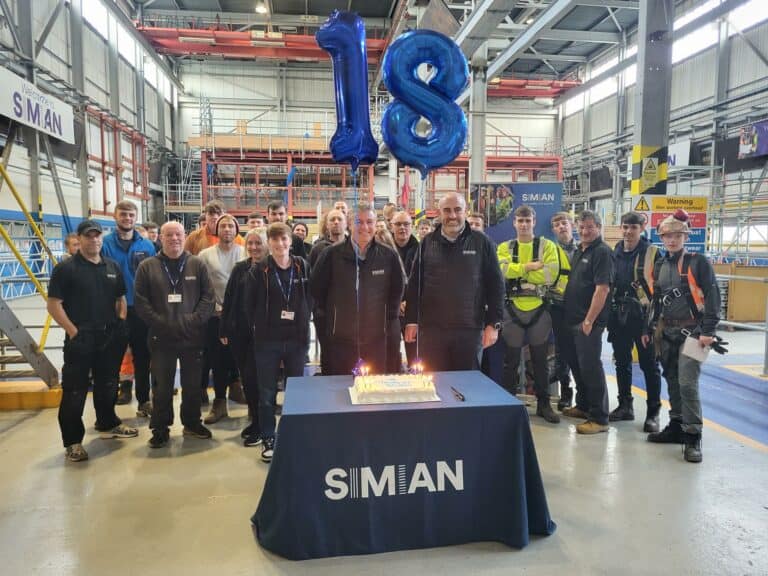
In a celebratory milestone, SIMIAN, a leading name in the construction training and support services sector, proudly commemorates its 18th anniversary this month, marking nearly two decades of successful operations and invaluable contributions to the scaffolding industry.Founded in November 2005 by Simon Hughes and Ian Fyall, SIMIAN was established with the vision of revolutionising the Safety Consultancy market by offering specialised advice tailored to the scaffolding industry. Since its inception, the company has charted a remarkable journey characterised by rapid growth, an expanding customer base, and a commitment to excellence in its services.A pivotal moment in SIMIAN’s history occurred in 2007 when the company opened its Warrington training centre and SIMIAN Headquarters. This milestone marked the beginning of a period of expansion and innovation. In 2019, the Weston-super-Mare Centre was established, followed by the LASC in Leytonstone in 2021.One of SIMIAN’s significant achievements has been developing its scaffolder apprenticeship program in 2008. This program has since grown to become the largest scaffolder apprenticeship provision in the UK, reflecting SIMIAN’s dedication to nurturing and developing the scaffolding workforce of the future.Dave Randles, who initially served as a specialist scaffolding Health and Safety Advisor on a consultancy basis, was promoted to the Board in 2008, a testament to the company’s commitment to nurturing talent and expertise within its ranks. This growth continued with the addition of Commercial Director Jackie Thomason, leading to a dynamic and experienced leadership team.Throughout its journey, SIMIAN has steadfastly pursued excellence in all facets of its operations, setting industry standards and continually raising the bar. Whether it’s delivering top-notch training, offering consultancy services, or managing apprenticeships, the company has consistently aimed for the highest standards.Reflecting on 18 years of success, SIMIAN’s Managing Director, Simon Hughes, stated, “I am most pleased with the positive impact SIMIAN has had, and continues to have, within the Scaffolding industry. We’ve had a part to play in changing the industry for the better, and I am confident that the work we have done over the years has played a part in saving lives in the industry.”Hughes also noted that many specialist Health and Safety litigators now recognise SIMIANs as the go-to organisation for expert witness services, which is a remarkable endorsement of their expertise. Additionally, the company’s consultancy and training services are regarded as some of the best in the UK, a source of immense pride for the team.In acknowledgement of the pivotal role played by its dedicated and professional team, Hughes expressed his gratitude, stating, “Our journey could not have happened without our dedicated and professional team, and I would like to say a special thank you to them all. We have always been dedicated to helping people develop and grow, and this has been a key to the success of the business.”Today, SIMIAN boasts a team of over 80 members across three dedicated training centres and field-based advisors and coaches in the UK. The company has supported more than 150,000 learners and numerous commercial customers over the years. Remarkably, some of SIMIAN’s first customers from 18 years ago, including Allied Scaffolding and the ALTRAD Group, continue to rely on SIMIAN’s services today, a testament to the enduring quality of their offerings.Looking to the future, SIMIAN is enthusiastic about further growth and exploring opportunities to expand into other disciplines and industries. As they celebrate 18 years of excellence, the company remains a beacon of innovation, expertise, and dedication in the scaffolding industry, poised for continued success and impact in the years to come.
In yet another groundbreaking achievement, ScaffFloat, a leading provider of innovative floating solutions, has successfully demonstrated its ability to handle a remarkable 20-ton single-point load on its pontoons. This milestone was achieved during a time-sensitive project for A&P Docks in Falmouth, where ScaffFloat pontoons were enlisted to support the refit of Stena ferry ramps.The request from A&P Docks came on short notice, as they needed to provide stable support for the stern ramps of a Stena Ferry undergoing a critical refit. The challenge was to support the ferry’s horizontal ramps on their hinge pins, allowing for the commissioning and testing of hydraulics while ensuring easy access underneath the vessel.ScaffFloat quickly mobilised two massive pontoons, each measuring 16 meters by 6.4 meters. These pontoons were equipped with eight 750mm Apollo longitudinal beams and custom-made 450mm transverse beams. To achieve the desired level of support, 20-foot containers were strategically placed on the pontoon decks, accompanied by steel packers to ensure the ramps were positioned at the correct height. This configuration resulted in an impressive 20-ton single-point load, distributed over a 2.5-meter span at the center of the pontoon.Prior to commencing the challenging task, ScaffFloat conducted a floating test, using a weighted scrap metal bin that weighed precisely 20 tons. The successful execution of this test demonstrated the capability of the ScaffFloat system to handle such a substantial load under real-world conditions.Toby Budd, the founder and Managing Director of ScaffFloat, expressed his pride in the company’s achievement, stating, “When we started ScaffFloat, I remember thinking 1 ton was a big payload. Now, we have a number of jobs in this 20-30 ton category and others in the pipeline over this. It is great to see the system evolving organically like this as it proves itself out in the real world, solving problems and getting stuff done.”
Small building companies in the UK are facing a significant downturn in workloads, enquiries, and employment, with 40% of members of the Federation of Master Builders (FMB) reporting a decrease in the number of work enquiries, according to the latest State of Trade Survey released by the FMB.While the repair, maintenance, and improvement (RMI) sector remains relatively robust, there is growing concern within the industry about the declining state of housebuilding, which is struggling to keep pace with demand.Brian Berry, Chief Executive of the FMB, expressed his concerns, stating, “The RMI sector remains fairly strong this quarter, with more FMB members still seeing an increase in workload than a decrease, but worrying signs are on the horizon with a sharp drop-off in enquiries.”He continued, “House building continues to struggle with more members reporting fewer workloads than those reporting more. There has also been a sustained decline in enquiries, suggesting the picture will continue to worsen. Housing is rising up the political agenda as evidenced at the recent party conferences, and this new data highlights why the Government should be concerned at a time when we need to be building more, not fewer, new homes.”The FMB’s latest survey for the third quarter of 2023 revealed several key findings:Market Conditions:
A decrease in total workload, enquiries, and employment, primarily driven by underperforming housebuilding and industrial and commercial sectors.
40% of FMB members reported a decrease in enquiries.
RMI reported workloads remain positive but have dropped since the second quarter of 2023.
Skills Shortage:
Difficulty in recruitment has slightly increased.
39% of members are struggling to hire carpenters, while 35% are facing challenges in hiring bricklayers.
There has been a sharp upturn in difficulty hiring general labourers, with 34% reporting problems (up from 25% in Q2).
Half of FMB members report that jobs are delayed because they are struggling to hire skilled workers.
Impact of Prices and Costs:
71% of members report that material costs increased in Q3 2023, with 55% expecting this trend to continue into the next quarter.
Increased outgoings have led to 71% of members increasing the prices they charge, with half reporting that their businesses are on track to make a loss or fall below expected margins.
Over a quarter report that they are restricting hiring new staff as a consequence of increased outgoings.
The FMB State of Trade Survey, released quarterly, is the longest-running survey of its kind, tracking the experiences of small to medium-sized construction firms in the UK. With these concerning findings, industry experts and policymakers will be closely monitoring the construction sector and considering potential measures to support its recovery.
The UK construction industry faces a dire financial crisis, as the number of companies on the brink of collapse has surged by 46% in the past three months, according to the latest Begbies Traynor Red Flag Alert report. The report highlights that 5,919 construction firms are now in ‘critical’ financial distress, with an additional 72,257 companies categorised as being in ‘significant’ financial distress.The real estate and property services sector is also grappling with financial challenges, with 4,994 companies experiencing critical distress—a 38% increase between the second and third quarters of the year—alongside 51,240 in significant distress.To put these figures into perspective, the Office for National Statistics reported 353,365 firms in the construction sector in Great Britain in 2021. Approximately 1.6% of construction companies are now in critical financial distress and one in five face significant financial difficulties.Across the broader British economy, nearly 40,000 companies are now deemed to be in critical financial distress. This alarming situation is attributed to the combined pressures of rising interest rates, inflation, and weakening consumer confidence, which are now affecting sectors beyond those that directly face consumers.The construction and real estate sectors jointly account for nearly 30% of all companies in critical financial distress. This is particularly concerning as the residential housing market slowdown continues to impact these industries.Julie Palmer, partner at Begbies Traynor, stated, “Tens of thousands of British companies are now in financial dire straits as the era of cheap money is firmly behind us. Businesses that relied on low-interest-rate debt and government support during the pandemic are now facing a financial reality check with higher interest rates eroding working capital.”Palmer added, “The construction industry, which is often seen as a barometer for the overall economy, appears especially vulnerable with over 70,000 firms in significant financial distress and around 6,000 in critical financial distress—often a precursor to formal insolvency. Many of these businesses will struggle to survive amidst inflation-eroded margins, weak demand, and a looming recession.”Executive chairman Ric Traynor expressed hope that stabilising inflation and interest rates would eventually alleviate the rising distress levels in the economy. However, he cautioned that insolvencies often peak after economic recovery has begun and highlighted the ongoing geopolitical uncertainty and challenges such as high-interest rates, weak consumer demand, inflation, and an anticipated recession, which could prove overwhelming for many distressed businesses.Traynor concluded, “Given the challenges the economy still faces, the outlook remains pretty bleak, and I expect many more ‘zombie’ companies to continue to fail for some time to come as the impact of this economic backdrop makes them increasingly unviable.”
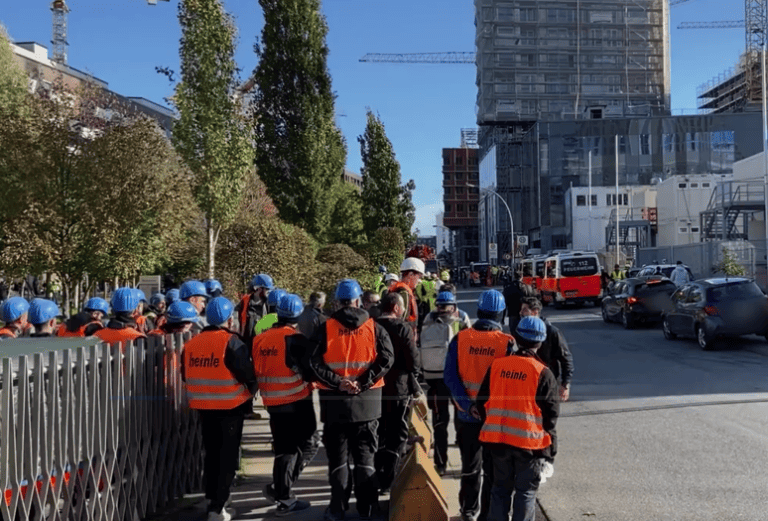
A major construction site accident in Hamburg has claimed the lives of four construction workers, with several more individuals reported missing, according to German authorities. According to reports, the incident unfolded this morning (Monday, 30 October) when scaffolding collapsed down a lift shaft at the construction site, causing workers to fall at least eight stories.The fire service in Hamburg, Germany’s second-largest city, swiftly responded to the incident, with local reports indicating that the building site was promptly evacuated in the aftermath of the accident. Witnesses described several hundred workers gathered outside, grappling with the shock and uncertainty stemming from the tragic event.The devastating incident occurred in the heart of the Ueberseequartier, an integral part of Hamburg’s ambitious redevelopment project in the HafenCity district. HafenCity, a former port area situated along the picturesque Elbe river, has been undergoing a transformation into a vibrant hub replete with office complexes, residential buildings, luxurious hotels, and a bustling array of shops and amenities.The authorities are actively engaged in search and rescue efforts to locate any missing persons. Questions surrounding the cause of the scaffolding collapse loom large, with investigations underway to determine the exact circumstances that led to the incident.
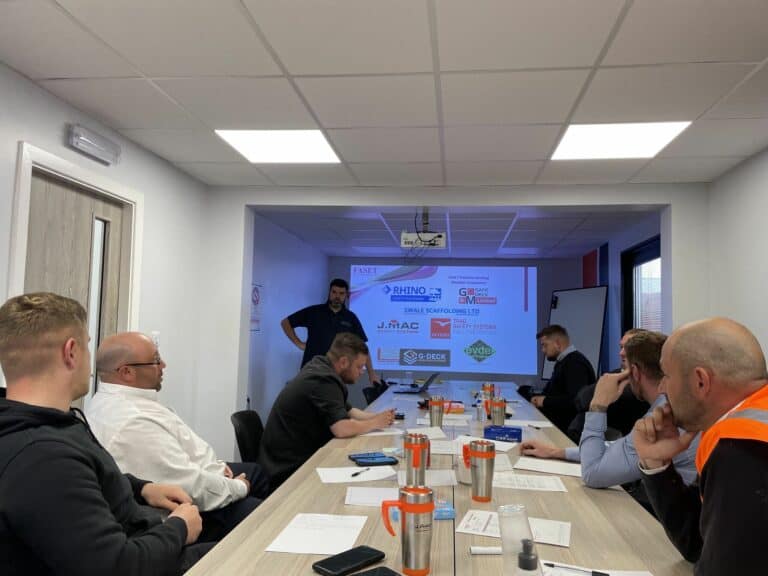
JMAC Group, a leading Teesside-based company specialising in access and multi-discipline industrial services, is significantly enhancing safety standards within the construction industry by offering FASET-approved training courses.FASET, a recognised authority in the temporary safety systems sector, strongly emphasises training, assessment, and competence through the issuance of CSCS cards, emphasising the importance of ongoing skill development.To address the rising safety concerns within the construction industry, Persimmon Group, a major housebuilder, has made it mandatory for all platform decking installers to complete the FASET-approved training course, effective from January 2024. This directive follows a surge in construction industry incidents over the past few years. According to Health and Safety Executive (HSE) statistics, falls from heights continue to be the leading cause of workplace fatalities.As an approved FASET training provider, JMAC Group is well-prepared to respond to the industry’s need for improved safety standards. The company offers a comprehensive range of training courses tailored specifically for platform decking. Among these courses, the FASET Platform Decking Managers Course is designed for individuals involved in site management, while the FASET Platform Installers Course is geared towards platform decking installers. Successful completion of these programs and assessments will make participants eligible to apply for the FASET Platform Installer CSCS Card, which will bear the endorsement of the specific Platform Decking System Manufacturer, serving as a testament to their expertise in platform decking installation.With a mission to promote safety excellence across the UK and beyond, JMAC Group offers internal and external training courses, ensuring that industry professionals have access to the essential knowledge and skills required for safe platform decking installations.Luis McCarthy, Managing Director at JMAC Group, expressed, “Being an approved FASET training provider gives those that we work with peace of mind, knowing that we’re operating to appropriate standards and industry best practice. Persimmon Group’s forward-thinking decision to mandate FASET registration for safety decking installers is a monumental step towards a safer construction industry and one that we’re proud to play a part of.”JMAC Group is encouraging other major housebuilders to follow the lead of Persimmon Group by adopting similar safety measures. This collective commitment to safeguarding workers and fostering a safety-centric culture reflects a significant step forward in ensuring the well-being of construction industry professionals.The initiative taken by JMAC Group and Persimmon Group represents a collaborative effort to enhance safety standards within the construction industry and reduce workplace accidents, ultimately creating a safer working environment for all involved.
We use cookies on our website to give you the most relevant experience by remembering your preferences and repeat visits. By clicking “Accept”, you consent to the use of ALL the cookies.
This website uses cookies to improve your experience while you navigate through the website. Out of these, the cookies that are categorized as necessary are stored on your browser as they are essential for the working of basic functionalities of the website. We also use third-party cookies that help us analyze and understand how you use this website. These cookies will be stored in your browser only with your consent. You also have the option to opt-out of these cookies. But opting out of some of these cookies may affect your browsing experience.
Necessary cookies are absolutely essential for the website to function properly. These cookies ensure basic functionalities and security features of the website, anonymously.
Cookie
Duration
Description
cookielawinfo-checbox-analytics
11 months
This cookie is set by GDPR Cookie Consent plugin. The cookie is used to store the user consent for the cookies in the category "Analytics".
cookielawinfo-checbox-functional
11 months
The cookie is set by GDPR cookie consent to record the user consent for the cookies in the category "Functional".
cookielawinfo-checbox-others
11 months
This cookie is set by GDPR Cookie Consent plugin. The cookie is used to store the user consent for the cookies in the category "Other.
cookielawinfo-checkbox-necessary
11 months
This cookie is set by GDPR Cookie Consent plugin. The cookies is used to store the user consent for the cookies in the category "Necessary".
cookielawinfo-checkbox-performance
11 months
This cookie is set by GDPR Cookie Consent plugin. The cookie is used to store the user consent for the cookies in the category "Performance".
viewed_cookie_policy
11 months
The cookie is set by the GDPR Cookie Consent plugin and is used to store whether or not user has consented to the use of cookies. It does not store any personal data.
Functional cookies help to perform certain functionalities like sharing the content of the website on social media platforms, collect feedbacks, and other third-party features.
Performance cookies are used to understand and analyze the key performance indexes of the website which helps in delivering a better user experience for the visitors.
Analytical cookies are used to understand how visitors interact with the website. These cookies help provide information on metrics the number of visitors, bounce rate, traffic source, etc.
Advertisement cookies are used to provide visitors with relevant ads and marketing campaigns. These cookies track visitors across websites and collect information to provide customized ads.








 Luis McCarthy, Managing Director at JMAC Group, expressed, “Being an approved FASET training provider gives those that we work with peace of mind, knowing that we’re operating to appropriate standards and industry best practice. Persimmon Group’s forward-thinking decision to mandate FASET registration for safety decking installers is a monumental step towards a safer construction industry and one that we’re proud to play a part of.”
JMAC Group is encouraging other major housebuilders to follow the lead of Persimmon Group by adopting similar safety measures. This collective commitment to safeguarding workers and fostering a safety-centric culture reflects a significant step forward in ensuring the well-being of construction industry professionals.
The initiative taken by JMAC Group and Persimmon Group represents a collaborative effort to enhance safety standards within the construction industry and reduce workplace accidents, ultimately creating a safer working environment for all involved.
Luis McCarthy, Managing Director at JMAC Group, expressed, “Being an approved FASET training provider gives those that we work with peace of mind, knowing that we’re operating to appropriate standards and industry best practice. Persimmon Group’s forward-thinking decision to mandate FASET registration for safety decking installers is a monumental step towards a safer construction industry and one that we’re proud to play a part of.”
JMAC Group is encouraging other major housebuilders to follow the lead of Persimmon Group by adopting similar safety measures. This collective commitment to safeguarding workers and fostering a safety-centric culture reflects a significant step forward in ensuring the well-being of construction industry professionals.
The initiative taken by JMAC Group and Persimmon Group represents a collaborative effort to enhance safety standards within the construction industry and reduce workplace accidents, ultimately creating a safer working environment for all involved.  Luis McCarthy, Managing Director at JMAC Group, expressed, “Being an approved FASET training provider gives those that we work with peace of mind, knowing that we’re operating to appropriate standards and industry best practice. Persimmon Group’s forward-thinking decision to mandate FASET registration for safety decking installers is a monumental step towards a safer construction industry and one that we’re proud to play a part of.”
JMAC Group is encouraging other major housebuilders to follow the lead of Persimmon Group by adopting similar safety measures. This collective commitment to safeguarding workers and fostering a safety-centric culture reflects a significant step forward in ensuring the well-being of construction industry professionals.
The initiative taken by JMAC Group and Persimmon Group represents a collaborative effort to enhance safety standards within the construction industry and reduce workplace accidents, ultimately creating a safer working environment for all involved.
Luis McCarthy, Managing Director at JMAC Group, expressed, “Being an approved FASET training provider gives those that we work with peace of mind, knowing that we’re operating to appropriate standards and industry best practice. Persimmon Group’s forward-thinking decision to mandate FASET registration for safety decking installers is a monumental step towards a safer construction industry and one that we’re proud to play a part of.”
JMAC Group is encouraging other major housebuilders to follow the lead of Persimmon Group by adopting similar safety measures. This collective commitment to safeguarding workers and fostering a safety-centric culture reflects a significant step forward in ensuring the well-being of construction industry professionals.
The initiative taken by JMAC Group and Persimmon Group represents a collaborative effort to enhance safety standards within the construction industry and reduce workplace accidents, ultimately creating a safer working environment for all involved.