Charles Whitewood, a young scaffolder from Brixton, has secured the coveted ABA (Amateur Boxing Association) Championship title in the fiercely contested 63kg weight category. His victory at the Balham Boxing Club on Saturday, October 21st, is a testament to his dedication, skill, and indomitable spirit.Charles Whitewood, a 22-year-old scaffolder by trade, has risen to prominence not only as a boxer but as a symbol of determination and perseverance. His journey began a dozen years ago when, at the age of 10, he first laced up his gloves at the Marvels Lane Boxing Club in Grove Park, SE London.Despite the challenges posed by the pandemic, Charles continued to pursue his passion for boxing with unwavering determination. He eventually found his way to the Honour & Glory gym in Kidbrooke, where he joined their prestigious seniors amateur boxing program. It was a pivotal moment in his career that ultimately led him to the ABA Championship.Sponsored by MC Scaffolding Supplies in Brixton, Charles has proven that he possesses not only the physical prowess but also the mental fortitude necessary to excel in the sport. Mark Whitewood, Managing Director of MC Scaffolding Supplies, commented, “We’re immensely proud to support Charles in his boxing journey. His commitment to both his trade as a scaffolder and his aspirations as a boxer is truly inspiring. Charles exemplifies the values of hard work and dedication that we hold dear at MC Scaffolding, and we are thrilled to be a part of his journey.”What sets Charles Whitewood apart from his peers is not only his remarkable boxing skills but also his passion for his trade outside the ring. With over 40,000 devoted followers on TikTok, he shares his experiences as a scaffolder, offering a unique perspective on his daily life and work. In addition to this, Charles has launched his line of custom-made boxing gloves, allowing fans and supporters to connect with him on a personal level and be part of his remarkable journey.As he continues to pursue his dreams, fans and supporters can stay updated on Charles Whitewood’s upcoming bouts and exclusive content on the MC Scaffolding Supplies website (www.mcscaffoldingsupplies.co.uk). His journey promises to be an inspiring one, as he carries the aspirations of his community and fellow scaffolders with him while reaching for greater heights in the world of boxing.
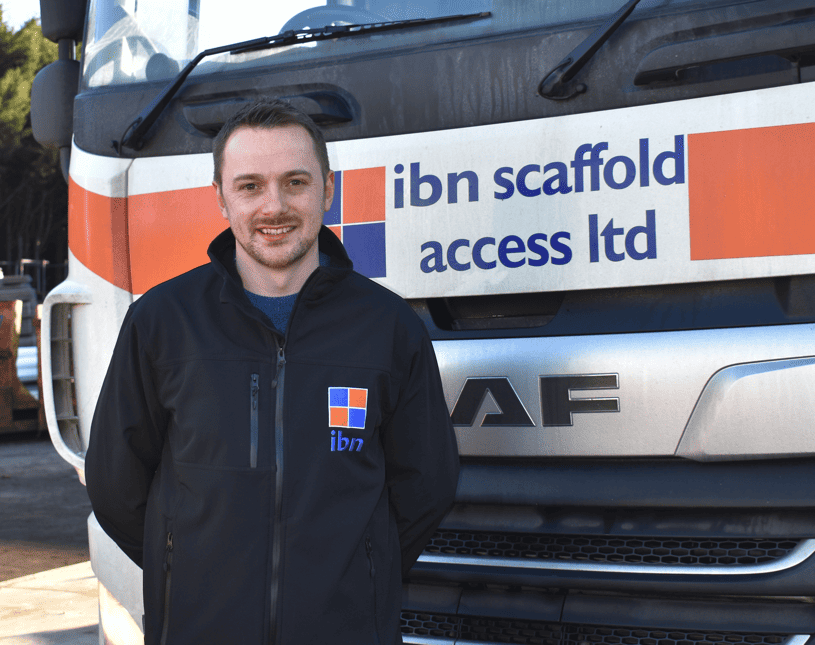
In a comprehensive insight into the evolving scaffolding sector, John Carolan, Manager at Catari Ireland, reflects on the industry’s transformative journey. From the transition from kwikstage to the more versatile ringlock systems to the innovative prospects of “smart scaffolding,” We delve deep into the challenges, innovations, and the commitment of Catari to the Irish market. Carolan presents a vision of an efficient and safer scaffolding industry for Ireland.Catari, a leading European manufacturer, has been a trusted name in the scaffolding industry for over 40 years. Renowned for producing products compliant with the EN 12810 European standards, Catari offers solutions tailored to the unique needs of every single client.
As they open their depot in Dublin, Catari Ireland signifies a renewed commitment to the Irish market. But to understand the depths of this commitment, it’s essential to reflect on the scaffolding industry’s evolution, its challenges, and how Catari aims to address these issues.
Challenges in the Scaffolding Industry: A Perspective by John Carolan
The scaffolding landscape in Ireland is diverse. Over the years, from traditional tube and fitting to kwikstage, cuplock, and the recent system scaffold, each has played its role in the nation’s construction efforts. However, the industry hasn’t been without challenges, notably labour shortages, and rising safety concerns.
In the mid-1990s, the demand was primarily for kwikstage scaffolds. Yet, the need for a more efficient system became clear when undertaking significant projects like Intel and Facebook’s head offices. The ringlock system, despite its initial high costs, brought versatility and efficiency to the fore.
While traditional scaffolding methods like kwikstage required more components and adjustments, the ringlock system stands apart. With multiple connection points, it offers flexibility, ensuring quicker setup times. Its robust design also means enhanced safety—a much-needed attribute given the dwindling interest in scaffolding as a career due to its physically demanding nature and associated risks.
But European producers like Catari are leading the charge as the industry evolves. Embracing user-centred designs, higher-strength steels, and innovative raw materials, these producers are making scaffolding more efficient and cost-effective.
Looking to the future, the prospect of “smart scaffolding” is on the horizon. The idea of scaffold components embedded with sensors for real-time feedback and data acquisition is not too far-fetched. Such innovations can revolutionise the industry, improving safety and efficiency.
These improvements will be manifested in various processes that were previously time-consuming, such as tracking scaffolding components in the rental business. The new technology will allow for real-time safety notifications to authorities regarding overloads or structural shifts following severe weather events, ensuring a rapid response to potential hazards and thereby safeguarding both workers and the general public.
Catari Ireland: Addressing Challenges Head-On
Catari has been subtly yet significantly influencing the Irish market since 2016, and the establishment of a depot in Dublin reflects a deepened commitment to addressing the unique challenges faced by clients in Ireland. The team at Catari understood early on that providing a comprehensive support package for their customers’ projects was vital, but doing so effectively was only possible with immediate access to necessary materials on hand.
This holistic support package encapsulates various crucial services, including determining commissioning quantities, crafting 3D project designs, construction drawings, static calculations, and project execution planning, as well as providing invaluable hands-on training and steadfast site support. Though meticulous planning and precise material lists are indispensable, the unpredictable nature of construction sites means that reality often diverges from initial predictions.
Responding to this, Catari Ireland has made it a core objective to mitigate lead time issues, aiming to emerge as a reliable and convenient partner for all scaffolding needs in Ireland. This commitment is unwavering, whether the project involves straightforward street scaffolding, extensive apartment blocks, or intricate industrial scaffold constructions.
With a steadfast commitment to delivering top-tier products at competitive prices, Catari Ireland is not just offering another choice in the market. Instead, it is positioning itself as a compelling alternative to existing ringlock systems, standing out through its combination of quality, service, and reliability, ensuring that every scaffolding project, regardless of its scale or complexity, can proceed smoothly, efficiently, and safely with Catari as a trusted partner.
Catari is also acutely aware of and responsive to considerations and concerns often raised by customers regarding the integration of ringlock scaffolding components from various brands or producers into a single scaffolding assembly. This mixing practice, a longstanding and prevalent one in Ireland for other systems like tube and fitting, kwikstage, or cuplock, is gradually being incorporated into the usage of the ringlock system as well, as observed in other markets already. Such trends indicate a growing acceptance and application of this approach within the ringlock system sphere, raising therefore Catari Ireland’s attentiveness to the evolving needs and practices in the market and reinforcing its commitment to providing flexible and client-centric solutions and services.
Embracing the Future Together
As Catari plants its roots deeper in Irish soil, John Carolan, with his years of experience, envisions a brighter future for the scaffolding industry. He emphasises the importance of safety, efficiency, and trust.
In the spirit of resilience and hope that characterises the Irish, John ends with a wish, “‘Be a lucky scaffolder.’ May your scaffolding endeavors in Ireland be as fortunate as the shamrock and may Catari bring the reliability you deserve.” With such dedication and commitment, Catari is set to usher in a new era of excellence for the Irish scaffolding industry.
Two companies have been fined a total of £46,000 following an incident where a labourer sustained a fractured skull while working on a construction site in Runcorn.
The incident occurred on March 3, 2021, when a 43-year-old labourer employed by Total Brickwork (UK) Ltd was involved in the construction of new homes on Okell Street, Runcorn. The site was under the management of Challenger Building Services Ltd, and both companies have faced penalties for their roles in the unfortunate event.
The victim had been assigned to clear debris and mortar left behind by bricklayers on the first floor of one of the new terraced properties. To access this area, he used a ladder placed at the stairwell opening, which had been temporarily covered with boards. While attempting to move one of these boards, he lost his footing and fell through the opening to the ground floor below.
The fall resulted in a fractured skull, multiple broken ribs, and the need for a collarbone plate insertion. The incident prompted an investigation by the Health and Safety Executive (HSE), which revealed significant safety deficiencies at the construction site.
The HSE found that both Challenger Building Services Limited, the principal contractor, and Total Brickwork (UK) Ltd, the contractor in charge of the work, had failed to adequately plan, manage, and monitor the work on-site to ensure safety measures were in place. The absence of appropriate safeguards to prevent falls from height put any worker accessing the first floor at risk.
Challenger Building Services Ltd, based in Horwich, Bolton, pleaded guilty to breaching Regulation 13(1) of the Construction (Design & Management) Regulation 2015. The company was fined £30,000 and ordered to pay £1,991.32 in costs at Warrington Magistrates’ Court on October 23, 2023.
Total Brickwork UK Ltd, located in Runcorn, Cheshire, also pleaded guilty, this time to breaching Regulation 15(2) of the Construction (Design & Management) Regulation 2015. The company received a fine of £16,000 and was required to pay £1,991.32 in costs, with the sentence handed down on the same date.
HSE inspector David Brassington commented on the incident, stating, “This incident could so easily have been avoided had the risks associated with working on the upper floors been adequately assessed and measures been taken to protect the stairwell openings. Companies should be aware that HSE will not hesitate to take appropriate enforcement action against those that fall below the required standards.”
The Tyra East offshore rig, operated by Total Energies, has suffered significant damage to its scaffolding in the aftermath of Storm Babet. Dramatic images sent to Scaffmag reveal the extent of the destruction caused by the heavy storm and towering waves, which reached heights of 14 to 16 meters. Fortunately, there have been no reports of injuries as a result of the incident.According to a source closely associated with the situation, the damage primarily targeted the rig’s scaffolding structure and equipment stored in the loading bays. This equipment, which included essential tools and machinery, was washed out by the relentless waves, adding to the logistical challenges facing the rig’s crew.The images show under-deck scaffolding that appears twisted, bent, and in some cases, partially collapsed. It is evident that the force of the storm was enough to wreak havoc on this essential infrastructure of the offshore rig.
Tyra Field is the largest gas condensate field in the Danish Sector of the North Sea. The Tyra East platform plays a vital role in the production and processing of hydrocarbons from the region.
The National Access & Scaffolding Confederation (NASC) has unveiled a groundbreaking improvement to its membership application process.
The development will drastically reduce the time it takes for prospective members to join while setting the stage for a more efficient and digitally driven future.
Previously, the NASC membership application process could take anywhere between four and 12 weeks to complete, causing frustration and delays for many aspiring members. However, NASC’s latest initiative aims to streamline this process, allowing qualified applicants to become members within just four weeks.
In addition to this reduction in processing time, NASC has also committed to digitising its membership applications in 2024. This forward-thinking approach will enable the use of publicly held information that supports the quality of scaffolding contracting businesses, thereby simplifying the application process for new members and alleviating paperwork burdens, all while maintaining the high standards expected from NASC members and their clients.
NASC’s Chief Executive Officer, Clive Dickin, emphasised the importance of these changes in maintaining and enhancing the industry’s reputation for quality and efficiency.
“NASC members are renowned for their commitment to quality and efficiency, as evidenced by our transparent NASC membership standards and audits. To ensure that NASC remains at the forefront of industry standards, it’s crucial that we improve our systems to assist contractors in joining our organisation and demonstrating their strengths. By doing so, we also ensure that prospective members fully understand and meet the quality standards expected by their clients. In the scaffolding and access industry, there is no equivalent to NASC audited membership, making NASC the gold standard for clients seeking high-quality contracting businesses.”
Jamie McGuire, NASC Membership Manager, expressed pride in his role in developing the new system, “I am proud to have played a part in the development of this innovative system, which will greatly benefit scaffolding contracting businesses. The introduction of Compliance Officers with an assistive approach to applicants, focused on expedited membership approval, will help prospective members gain recognition for their qualifications and expertise.”
NASC’s Membership and Compliance Committee is dedicated to ongoing systems improvements. It will be actively reviewing the Membership Charter to ensure that the standards defined lead to high-quality scaffolding and access solutions for clients. These improvements will not only reduce risk and waste but also elevate the overall industry standard.
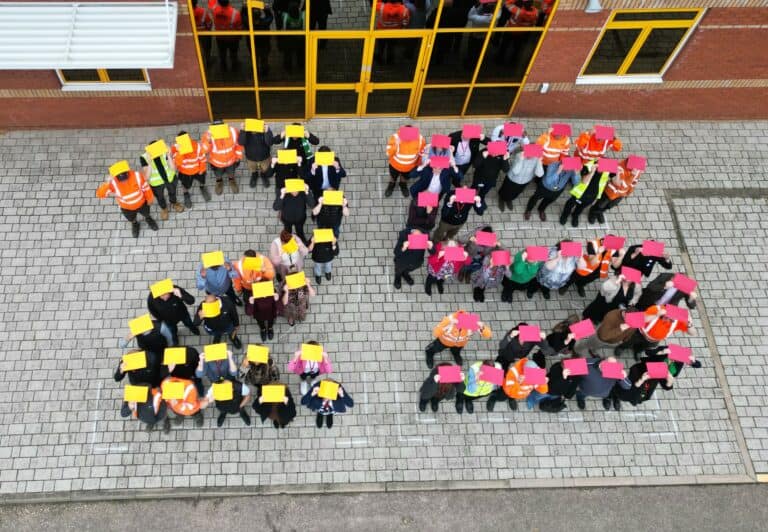
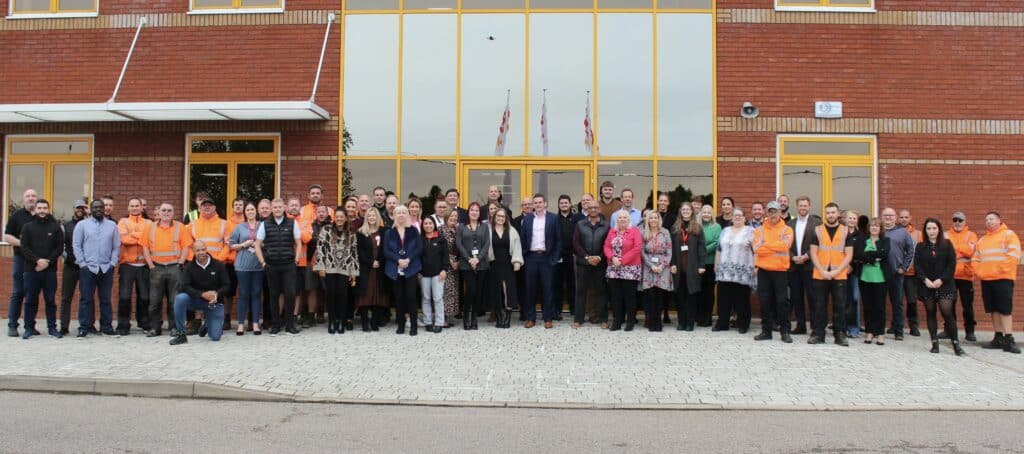
PERI is celebrating a significant milestone as it marks 25 years since the opening of its depot and UK headquarters in Rugby. Founded in 1998, this facility has played a pivotal role in the company’s journey to provide safe, innovative, and efficient temporary works systems for construction projects across the United Kingdom.Recognising the increasing demand for its comprehensive range of formwork and scaffolding services, PERI strategically chose Rugby as its central location for its second depot and UK headquarters. This decision was driven by the town’s excellent access to the road network and the availability of a skilled local workforce.PERI’s presence in the United Kingdom dates back to 1989, when it established its first UK site in Dartford. This initial venture aimed to support constructing the cable-stayed bridge crossing the Thames, marking the company’s debut project in the UK.Commenting on this remarkable achievement, Ian Hayes, PERI UK Managing Director, stated, “It’s incredible that the Rugby depot has been supporting customers throughout the UK for 25 years. In that time, not only has the range of products manufactured by PERI grown, but the services offered have also expanded to meet demand. What is gratifying is the number of employees in Rugby who have been with PERI from the start, measuring their careers in decades, not years.”PERI Celebrates 25 Years at Rugby HeadquartersEmphasising PERI’s commitment to sustainability, Hayes added, “As part of PERI’s climate protection and emissions reduction strategy, the roof of the Rugby facility has recently been fitted with 690 photovoltaic cells. This solar array is capable of generating 24,000kWh of clean energy in an average month, which is 80% of all the energy used on site.”PERI’s Rugby headquarters has weathered economic challenges throughout the years, including the financial crisis of 2008, Brexit, and the COVID-19 pandemic. Despite these obstacles, the company has maintained its strong performance, with Rugby playing a vital role in its success.Hayes expressed optimism about the future: “The UK market continues to present PERI with new and exciting opportunities for further growth, driven by our commitment to innovation and unrivalled customer service. The future is bright, and we expect Rugby to remain at the heart of our operations in the UK for another 25 years at least.”Steve Wightman, Workshop Manager at PERI Rugby, reflected on the journey since the facility’s inception in 1998. “When I started here in 1998, it was a basic site,” he recalled. “But then we started recruiting carpenters, some of whom are still with us. Now, Rugby is home to our main fabrication facility in the UK.”Wightman also highlighted the unique projects that have originated from Rugby, including the bespoke formwork for the V&A museum in Dundee. “A large part of the work was undertaken in Rugby by a team of talented engineers and carpenters, which peaked at 26 in the three years of its construction,” he explained.As PERI celebrates 25 years in Rugby, the company looks forward to a future filled with innovation, growth, and a commitment to excellence in formwork and scaffolding solutions.
Thousands of construction workers employed at energy sites across the United Kingdom have voted overwhelmingly to go on strike. The industrial action, which could involve up to 3,000 workers at various energy facilities, including oil refineries and nuclear power stations, results from a pay dispute that has been escalating in recent months.The affected sites include Stanlow, Fawley, Valero, Grangemouth, Mossmorran Oil Refineries, and the Sellafield Nuclear Facility. Additionally, strike votes are anticipated at Drax and Hartlepool nuclear power stations in the coming days, potentially adding to the scale of the industrial action.The construction workers in question fall under the National Agreement for the Engineering Construction Industry (NAECI), which governs their terms and conditions of employment. The catalyst for the strike is the rejection of a pay deal proposed by employers, offering an 8.5 per cent increase for 2024 and a 3.5 per cent raise for 2025. Workers argue that these proposed increases need to adequately address their financial concerns, particularly in light of the rising cost of living.More than 50 representatives from the GMB (General, Municipal, and Boilermakers’ Union) and Unite, two of the UK’s largest trade unions, have met to discuss the next steps in response to the strike vote. This massive demonstration of worker dissatisfaction underscores the seriousness of the situation and the urgency with which it needs to be addressed.Charlotte Brumpton-Childs, GMB National Officer, expressed the workers’ frustrations, stating, “Our members’ pay has fallen over 20 per cent behind inflation. The employers have forced our members into a position where they are taking part in industrial action ballots of this scale for the first time in their careers. The message from the workforce is loud and clear: value their work.”The strike could have significant implications for the UK’s energy sector, potentially causing disruptions in the construction and maintenance of crucial energy infrastructure. The unions are calling on employers to return to the negotiating table to seek a resolution that better meets the needs and expectations of the workers.As the strike votes at additional facilities loom, the nation’s attention remains focused on the ongoing dispute between energy construction workers and their employers. Both sides will face mounting pressure to find common ground and avert a potentially disruptive labour strike that could impact the country’s energy supply chain.
The second annual Scaffolding Conference, organised by the Scaffolding Association, was a resounding success that empowered many in attendance from all areas of the scaffolding and access industry. Held last week at the Heart of England Conference and Events Centre in Coventry, the event proved to be a pivotal gathering for scaffolding professionals, highlighting the industry’s commitment to education and innovation.With a theme centred around “Gaining the Advantage,” the Scaffolding Conference 2023 sought to address the evolving challenges and opportunities facing the scaffolding sector in an ever-changing world. In a highly competitive landscape, the pursuit of gaining an edge has become essential for businesses, and this year’s conference aimed to equip delegates with the knowledge and tools needed to do just that.The day-long event featured the Scaff Star Awards and a robust lineup of keynote speakers representing various facets of the scaffolding industry. Attendees had the privilege of hearing insights from leaders in construction law, the Construction Industry Training Board (CITB), the National Federation of Builders (NFB), and experts in brand management. These presentations provided invaluable insights into the latest industry trends, regulatory updates, and strategies for success.One of the notable highlights of this year’s conference was the significant increase in exhibitors compared to the previous year. The exhibition area buzzed with activity as industry leaders and innovators showcased their products and services. Among the prominent exhibitors were major system scaffolding manufacturers, including Afix Group, Layher UK, PERI, PILOSIO, Scafom-Rux, and Stepup Scaffold. Their presence allowed delegates to explore cutting-edge scaffolding solutions and technologies, fostering networking and collaboration opportunities.The Scaffolding Conference 2023 offered a knowledge-sharing platform and encouraged industry professionals to connect, collaborate, and explore new possibilities. The event underscored the scaffolding sector’s commitment to staying at the forefront of innovation and excellence.Dave Mitchell, a scaffolding company owner attending the conference, expressed his enthusiasm: “This conference has been an eye-opener. The industry is evolving rapidly, and being here has given me a better understanding of how to adapt and stay ahead. The presentations were insightful, and I made some valuable connections with exhibitors that could benefit my business.”Staying ahead of the curve is crucial in an industry characterised by constant change. The Scaffolding Conference 2023 succeeded in empowering delegates with the knowledge and tools necessary to “Gain the Advantage” and thrive in the ever-competitive world of scaffolding.As the Scaffolding Conference 2023 concludes its second year, anticipation is already building for what promises to be an even more enlightening and inspiring event in the years to come, further solidifying its place as a must-attend gathering for scaffolding professionals.
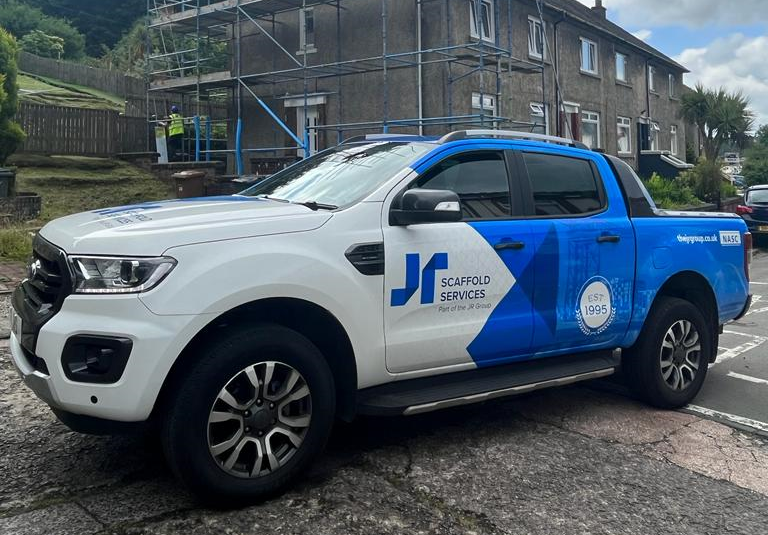
JR Scaffold, a prominent Paisley-based scaffold and construction firm, has secured its role as a crucial delivery partner in the second phase of the Scottish Government’s Warmworks initiative. This decision follows the company’s significant success in the project’s initial phase over the past five years.Having successfully contributed to the Warmer Homes Scotland 2 Scheme (WEH2) framework, JR Scaffold will continue its commitment to aiding the Scottish Government’s goal of providing affordable warmth to households nationwide.Warmworks’ initial phase, initiated in 2015, successfully warmed 35,000 Scottish homes, leading to enhanced living conditions for thousands. JR Scaffold was instrumental in this achievement, supplying efficient scaffold structures to ensure seamless and rapid work execution. Managed by Warmworks, the renewed initiative underscores a commitment to affordable warmth, prioritising zero-emissions heating solutions.Integral to the Warmworks project is an ambitious endeavour to curtail carbon emissions and facilitate Scotland’s evolution into a net-zero society. Warmworks is determined to make the transition to low-carbon living inclusive, emphasizing the introduction of renewable technologies in residences and ensuring that all segments of society, especially those requiring additional assistance, are incorporated.Expressing his satisfaction, John Horne, Managing Director of JR Scaffold, commented, “We are exhilarated to continue as a delivery partner in Warmworks’ second phase. The project holds immense significance, and our team takes immense pride in their role, understanding the profound impact of their contributions on residents.” He added, “Our involvement in the project’s upcoming phase reflects our team’s unwavering commitment to consistently delivering top-notch, professional services throughout Scotland. We eagerly anticipate commencing work.”Established in Govan in 1995 and currently headquartered in Paisley, The JR Group initially operated as a scaffolding enterprise. Today, it stands as one of Scotland’s most expansive building and construction entities, boasting a workforce of approximately 200.
The NASC has ramped up its commitment to alleviating labour shortages in the construction industry, earmarking over £300k in training funds for scaffolding and access businesses.As the construction industry grapples with significant labour shortages, the National Access & Scaffolding Confederation (NASC) is stepping up its support for scaffolding and access businesses across the UK. By the end of the year, NASC will have invested over £120,000 to aid these companies in staff training initiatives.Under the visionary leadership of NASC President David Brown, this considerable training fund is in line with a proactive strategy to bolster recruitment and address the labour crunch prevalent in the scaffolding sector and the broader construction industry. The fund, aimed at enhancing the workforce’s skills, is designed to facilitate recruitment and empower businesses to foster a skilled and resilient team.NASC’s proactive efforts are evident in allocating another £180,000 available for NASC member businesses that apply before November 2024. This further financing will continue to enable training, supporting scaffolding companies needing skilled labour.In partnership with the Construction Industry Training Scheme (CISRS) and Mental Health First Aid England (MHFA), training providers nationwide are ready to deliver reduced-price training to eligible operatives and staff of scaffolding and access businesses. In a significant boost to the initiative, some of the available grants have increased since the scheme’s inception. Currently, firms can access up to £200 per course, with no cap on the number of operatives eligible for training from each company.David BrownPresident David Brown, commenting on the initiative’s progress, highlighted that over 30 businesses have already reaped the benefits of the funds, with a total commitment of £120,000 expected by the year’s close. “With increases in COTS & MHFA course payouts, there is still a substantial amount of funds available for our members. We urge those who have not yet claimed to actively utilise this training pot,” urged Brown.Echoing the importance of training, NASC CEO Clive Dickin emphasised the critical role it plays in the development of scaffolding and access businesses. “NASC members can access training grants through their membership, building dynamic teams that are essential in these challenging times,” stated Dickin.For companies keen to access the training funds, or for those interested in joining the NASC to leverage this initiative, further information can be obtained by contacting the NASC office at (+44) 20 7822 7400 or via email at [email protected].
We use cookies on our website to give you the most relevant experience by remembering your preferences and repeat visits. By clicking “Accept”, you consent to the use of ALL the cookies.
This website uses cookies to improve your experience while you navigate through the website. Out of these, the cookies that are categorized as necessary are stored on your browser as they are essential for the working of basic functionalities of the website. We also use third-party cookies that help us analyze and understand how you use this website. These cookies will be stored in your browser only with your consent. You also have the option to opt-out of these cookies. But opting out of some of these cookies may affect your browsing experience.
Necessary cookies are absolutely essential for the website to function properly. These cookies ensure basic functionalities and security features of the website, anonymously.
Cookie
Duration
Description
cookielawinfo-checbox-analytics
11 months
This cookie is set by GDPR Cookie Consent plugin. The cookie is used to store the user consent for the cookies in the category "Analytics".
cookielawinfo-checbox-functional
11 months
The cookie is set by GDPR cookie consent to record the user consent for the cookies in the category "Functional".
cookielawinfo-checbox-others
11 months
This cookie is set by GDPR Cookie Consent plugin. The cookie is used to store the user consent for the cookies in the category "Other.
cookielawinfo-checkbox-necessary
11 months
This cookie is set by GDPR Cookie Consent plugin. The cookies is used to store the user consent for the cookies in the category "Necessary".
cookielawinfo-checkbox-performance
11 months
This cookie is set by GDPR Cookie Consent plugin. The cookie is used to store the user consent for the cookies in the category "Performance".
viewed_cookie_policy
11 months
The cookie is set by the GDPR Cookie Consent plugin and is used to store whether or not user has consented to the use of cookies. It does not store any personal data.
Functional cookies help to perform certain functionalities like sharing the content of the website on social media platforms, collect feedbacks, and other third-party features.
Performance cookies are used to understand and analyze the key performance indexes of the website which helps in delivering a better user experience for the visitors.
Analytical cookies are used to understand how visitors interact with the website. These cookies help provide information on metrics the number of visitors, bounce rate, traffic source, etc.
Advertisement cookies are used to provide visitors with relevant ads and marketing campaigns. These cookies track visitors across websites and collect information to provide customized ads.
 What sets Charles Whitewood apart from his peers is not only his remarkable boxing skills but also his passion for his trade outside the ring. With over 40,000 devoted followers on TikTok, he shares his experiences as a scaffolder, offering a unique perspective on his daily life and work. In addition to this, Charles has launched his line of custom-made boxing gloves, allowing fans and supporters to connect with him on a personal level and be part of his remarkable journey.
As he continues to pursue his dreams, fans and supporters can stay updated on Charles Whitewood’s upcoming bouts and exclusive content on the MC Scaffolding Supplies website (www.mcscaffoldingsupplies.co.uk). His journey promises to be an inspiring one, as he carries the aspirations of his community and fellow scaffolders with him while reaching for greater heights in the world of boxing.
What sets Charles Whitewood apart from his peers is not only his remarkable boxing skills but also his passion for his trade outside the ring. With over 40,000 devoted followers on TikTok, he shares his experiences as a scaffolder, offering a unique perspective on his daily life and work. In addition to this, Charles has launched his line of custom-made boxing gloves, allowing fans and supporters to connect with him on a personal level and be part of his remarkable journey.
As he continues to pursue his dreams, fans and supporters can stay updated on Charles Whitewood’s upcoming bouts and exclusive content on the MC Scaffolding Supplies website (www.mcscaffoldingsupplies.co.uk). His journey promises to be an inspiring one, as he carries the aspirations of his community and fellow scaffolders with him while reaching for greater heights in the world of boxing. 
 What sets Charles Whitewood apart from his peers is not only his remarkable boxing skills but also his passion for his trade outside the ring. With over 40,000 devoted followers on TikTok, he shares his experiences as a scaffolder, offering a unique perspective on his daily life and work. In addition to this, Charles has launched his line of custom-made boxing gloves, allowing fans and supporters to connect with him on a personal level and be part of his remarkable journey.
As he continues to pursue his dreams, fans and supporters can stay updated on Charles Whitewood’s upcoming bouts and exclusive content on the MC Scaffolding Supplies website (www.mcscaffoldingsupplies.co.uk). His journey promises to be an inspiring one, as he carries the aspirations of his community and fellow scaffolders with him while reaching for greater heights in the world of boxing.
What sets Charles Whitewood apart from his peers is not only his remarkable boxing skills but also his passion for his trade outside the ring. With over 40,000 devoted followers on TikTok, he shares his experiences as a scaffolder, offering a unique perspective on his daily life and work. In addition to this, Charles has launched his line of custom-made boxing gloves, allowing fans and supporters to connect with him on a personal level and be part of his remarkable journey.
As he continues to pursue his dreams, fans and supporters can stay updated on Charles Whitewood’s upcoming bouts and exclusive content on the MC Scaffolding Supplies website (www.mcscaffoldingsupplies.co.uk). His journey promises to be an inspiring one, as he carries the aspirations of his community and fellow scaffolders with him while reaching for greater heights in the world of boxing. 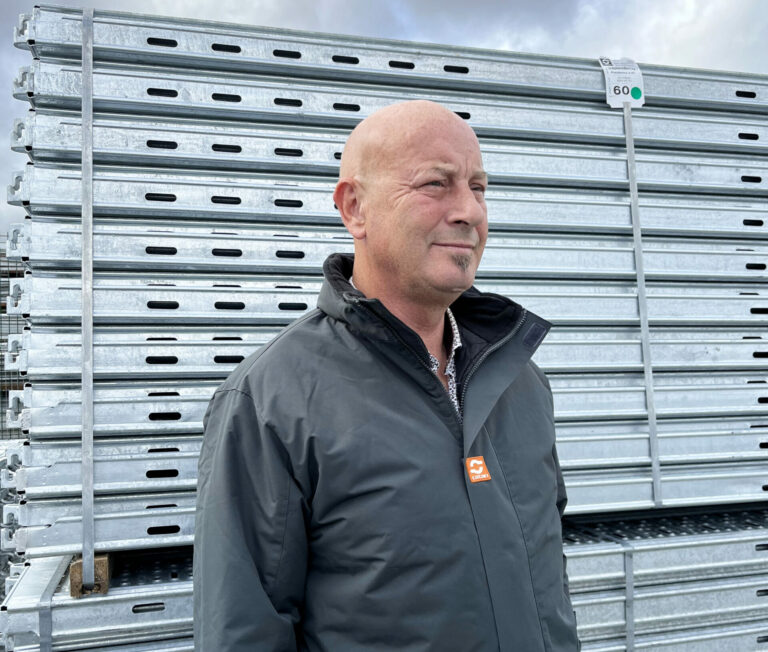
 Catari Ireland: Addressing Challenges Head-On
Catari has been subtly yet significantly influencing the Irish market since 2016, and the establishment of a depot in Dublin reflects a deepened commitment to addressing the unique challenges faced by clients in Ireland. The team at Catari understood early on that providing a comprehensive support package for their customers’ projects was vital, but doing so effectively was only possible with immediate access to necessary materials on hand.
This holistic support package encapsulates various crucial services, including determining commissioning quantities, crafting 3D project designs, construction drawings, static calculations, and project execution planning, as well as providing invaluable hands-on training and steadfast site support. Though meticulous planning and precise material lists are indispensable, the unpredictable nature of construction sites means that reality often diverges from initial predictions.
Responding to this, Catari Ireland has made it a core objective to mitigate lead time issues, aiming to emerge as a reliable and convenient partner for all scaffolding needs in Ireland. This commitment is unwavering, whether the project involves straightforward street scaffolding, extensive apartment blocks, or intricate industrial scaffold constructions.
With a steadfast commitment to delivering top-tier products at competitive prices, Catari Ireland is not just offering another choice in the market. Instead, it is positioning itself as a compelling alternative to existing ringlock systems, standing out through its combination of quality, service, and reliability, ensuring that every scaffolding project, regardless of its scale or complexity, can proceed smoothly, efficiently, and safely with Catari as a trusted partner.
Catari is also acutely aware of and responsive to considerations and concerns often raised by customers regarding the integration of ringlock scaffolding components from various brands or producers into a single scaffolding assembly. This mixing practice, a longstanding and prevalent one in Ireland for other systems like tube and fitting, kwikstage, or cuplock, is gradually being incorporated into the usage of the ringlock system as well, as observed in other markets already. Such trends indicate a growing acceptance and application of this approach within the ringlock system sphere, raising therefore Catari Ireland’s attentiveness to the evolving needs and practices in the market and reinforcing its commitment to providing flexible and client-centric solutions and services.
Embracing the Future Together
As Catari plants its roots deeper in Irish soil, John Carolan, with his years of experience, envisions a brighter future for the scaffolding industry. He emphasises the importance of safety, efficiency, and trust.
In the spirit of resilience and hope that characterises the Irish, John ends with a wish, “‘Be a lucky scaffolder.’ May your scaffolding endeavors in Ireland be as fortunate as the shamrock and may Catari bring the reliability you deserve.” With such dedication and commitment, Catari is set to usher in a new era of excellence for the Irish scaffolding industry.
Catari Ireland: Addressing Challenges Head-On
Catari has been subtly yet significantly influencing the Irish market since 2016, and the establishment of a depot in Dublin reflects a deepened commitment to addressing the unique challenges faced by clients in Ireland. The team at Catari understood early on that providing a comprehensive support package for their customers’ projects was vital, but doing so effectively was only possible with immediate access to necessary materials on hand.
This holistic support package encapsulates various crucial services, including determining commissioning quantities, crafting 3D project designs, construction drawings, static calculations, and project execution planning, as well as providing invaluable hands-on training and steadfast site support. Though meticulous planning and precise material lists are indispensable, the unpredictable nature of construction sites means that reality often diverges from initial predictions.
Responding to this, Catari Ireland has made it a core objective to mitigate lead time issues, aiming to emerge as a reliable and convenient partner for all scaffolding needs in Ireland. This commitment is unwavering, whether the project involves straightforward street scaffolding, extensive apartment blocks, or intricate industrial scaffold constructions.
With a steadfast commitment to delivering top-tier products at competitive prices, Catari Ireland is not just offering another choice in the market. Instead, it is positioning itself as a compelling alternative to existing ringlock systems, standing out through its combination of quality, service, and reliability, ensuring that every scaffolding project, regardless of its scale or complexity, can proceed smoothly, efficiently, and safely with Catari as a trusted partner.
Catari is also acutely aware of and responsive to considerations and concerns often raised by customers regarding the integration of ringlock scaffolding components from various brands or producers into a single scaffolding assembly. This mixing practice, a longstanding and prevalent one in Ireland for other systems like tube and fitting, kwikstage, or cuplock, is gradually being incorporated into the usage of the ringlock system as well, as observed in other markets already. Such trends indicate a growing acceptance and application of this approach within the ringlock system sphere, raising therefore Catari Ireland’s attentiveness to the evolving needs and practices in the market and reinforcing its commitment to providing flexible and client-centric solutions and services.
Embracing the Future Together
As Catari plants its roots deeper in Irish soil, John Carolan, with his years of experience, envisions a brighter future for the scaffolding industry. He emphasises the importance of safety, efficiency, and trust.
In the spirit of resilience and hope that characterises the Irish, John ends with a wish, “‘Be a lucky scaffolder.’ May your scaffolding endeavors in Ireland be as fortunate as the shamrock and may Catari bring the reliability you deserve.” With such dedication and commitment, Catari is set to usher in a new era of excellence for the Irish scaffolding industry.  Catari Ireland: Addressing Challenges Head-On
Catari has been subtly yet significantly influencing the Irish market since 2016, and the establishment of a depot in Dublin reflects a deepened commitment to addressing the unique challenges faced by clients in Ireland. The team at Catari understood early on that providing a comprehensive support package for their customers’ projects was vital, but doing so effectively was only possible with immediate access to necessary materials on hand.
This holistic support package encapsulates various crucial services, including determining commissioning quantities, crafting 3D project designs, construction drawings, static calculations, and project execution planning, as well as providing invaluable hands-on training and steadfast site support. Though meticulous planning and precise material lists are indispensable, the unpredictable nature of construction sites means that reality often diverges from initial predictions.
Responding to this, Catari Ireland has made it a core objective to mitigate lead time issues, aiming to emerge as a reliable and convenient partner for all scaffolding needs in Ireland. This commitment is unwavering, whether the project involves straightforward street scaffolding, extensive apartment blocks, or intricate industrial scaffold constructions.
With a steadfast commitment to delivering top-tier products at competitive prices, Catari Ireland is not just offering another choice in the market. Instead, it is positioning itself as a compelling alternative to existing ringlock systems, standing out through its combination of quality, service, and reliability, ensuring that every scaffolding project, regardless of its scale or complexity, can proceed smoothly, efficiently, and safely with Catari as a trusted partner.
Catari is also acutely aware of and responsive to considerations and concerns often raised by customers regarding the integration of ringlock scaffolding components from various brands or producers into a single scaffolding assembly. This mixing practice, a longstanding and prevalent one in Ireland for other systems like tube and fitting, kwikstage, or cuplock, is gradually being incorporated into the usage of the ringlock system as well, as observed in other markets already. Such trends indicate a growing acceptance and application of this approach within the ringlock system sphere, raising therefore Catari Ireland’s attentiveness to the evolving needs and practices in the market and reinforcing its commitment to providing flexible and client-centric solutions and services.
Embracing the Future Together
As Catari plants its roots deeper in Irish soil, John Carolan, with his years of experience, envisions a brighter future for the scaffolding industry. He emphasises the importance of safety, efficiency, and trust.
In the spirit of resilience and hope that characterises the Irish, John ends with a wish, “‘Be a lucky scaffolder.’ May your scaffolding endeavors in Ireland be as fortunate as the shamrock and may Catari bring the reliability you deserve.” With such dedication and commitment, Catari is set to usher in a new era of excellence for the Irish scaffolding industry.
Catari Ireland: Addressing Challenges Head-On
Catari has been subtly yet significantly influencing the Irish market since 2016, and the establishment of a depot in Dublin reflects a deepened commitment to addressing the unique challenges faced by clients in Ireland. The team at Catari understood early on that providing a comprehensive support package for their customers’ projects was vital, but doing so effectively was only possible with immediate access to necessary materials on hand.
This holistic support package encapsulates various crucial services, including determining commissioning quantities, crafting 3D project designs, construction drawings, static calculations, and project execution planning, as well as providing invaluable hands-on training and steadfast site support. Though meticulous planning and precise material lists are indispensable, the unpredictable nature of construction sites means that reality often diverges from initial predictions.
Responding to this, Catari Ireland has made it a core objective to mitigate lead time issues, aiming to emerge as a reliable and convenient partner for all scaffolding needs in Ireland. This commitment is unwavering, whether the project involves straightforward street scaffolding, extensive apartment blocks, or intricate industrial scaffold constructions.
With a steadfast commitment to delivering top-tier products at competitive prices, Catari Ireland is not just offering another choice in the market. Instead, it is positioning itself as a compelling alternative to existing ringlock systems, standing out through its combination of quality, service, and reliability, ensuring that every scaffolding project, regardless of its scale or complexity, can proceed smoothly, efficiently, and safely with Catari as a trusted partner.
Catari is also acutely aware of and responsive to considerations and concerns often raised by customers regarding the integration of ringlock scaffolding components from various brands or producers into a single scaffolding assembly. This mixing practice, a longstanding and prevalent one in Ireland for other systems like tube and fitting, kwikstage, or cuplock, is gradually being incorporated into the usage of the ringlock system as well, as observed in other markets already. Such trends indicate a growing acceptance and application of this approach within the ringlock system sphere, raising therefore Catari Ireland’s attentiveness to the evolving needs and practices in the market and reinforcing its commitment to providing flexible and client-centric solutions and services.
Embracing the Future Together
As Catari plants its roots deeper in Irish soil, John Carolan, with his years of experience, envisions a brighter future for the scaffolding industry. He emphasises the importance of safety, efficiency, and trust.
In the spirit of resilience and hope that characterises the Irish, John ends with a wish, “‘Be a lucky scaffolder.’ May your scaffolding endeavors in Ireland be as fortunate as the shamrock and may Catari bring the reliability you deserve.” With such dedication and commitment, Catari is set to usher in a new era of excellence for the Irish scaffolding industry. 
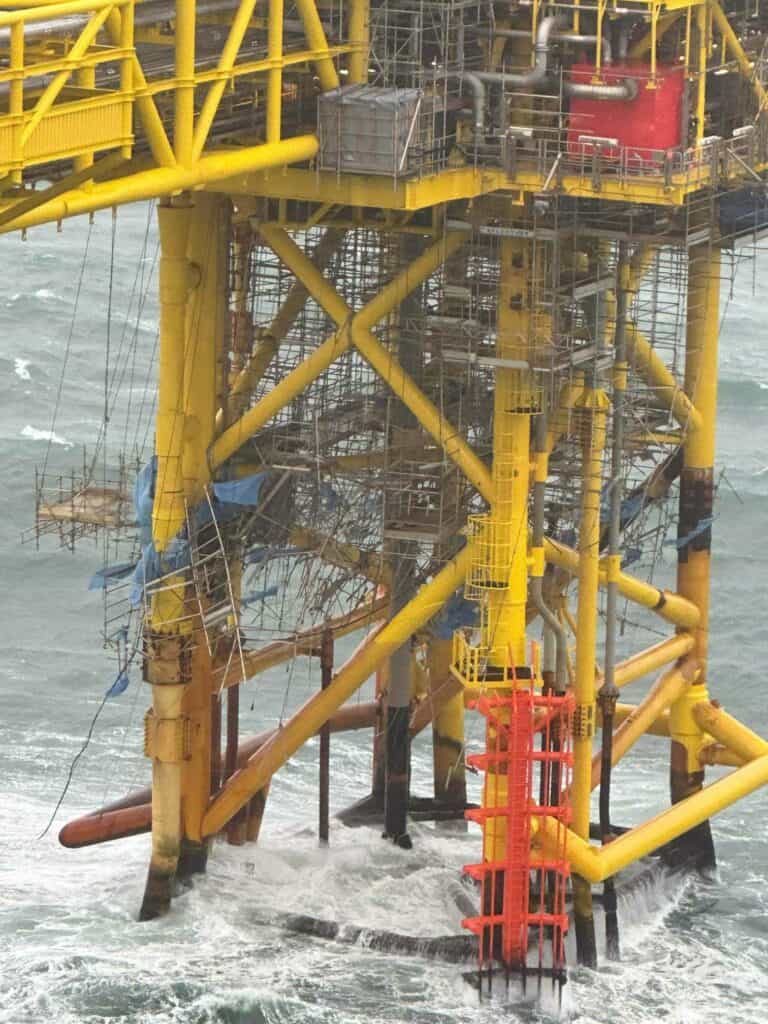
 The images show under-deck scaffolding that appears twisted, bent, and in some cases, partially collapsed. It is evident that the force of the storm was enough to wreak havoc on this essential infrastructure of the offshore rig.
Tyra Field is the largest gas condensate field in the Danish Sector of the North Sea. The Tyra East platform plays a vital role in the production and processing of hydrocarbons from the region.
The images show under-deck scaffolding that appears twisted, bent, and in some cases, partially collapsed. It is evident that the force of the storm was enough to wreak havoc on this essential infrastructure of the offshore rig.
Tyra Field is the largest gas condensate field in the Danish Sector of the North Sea. The Tyra East platform plays a vital role in the production and processing of hydrocarbons from the region. 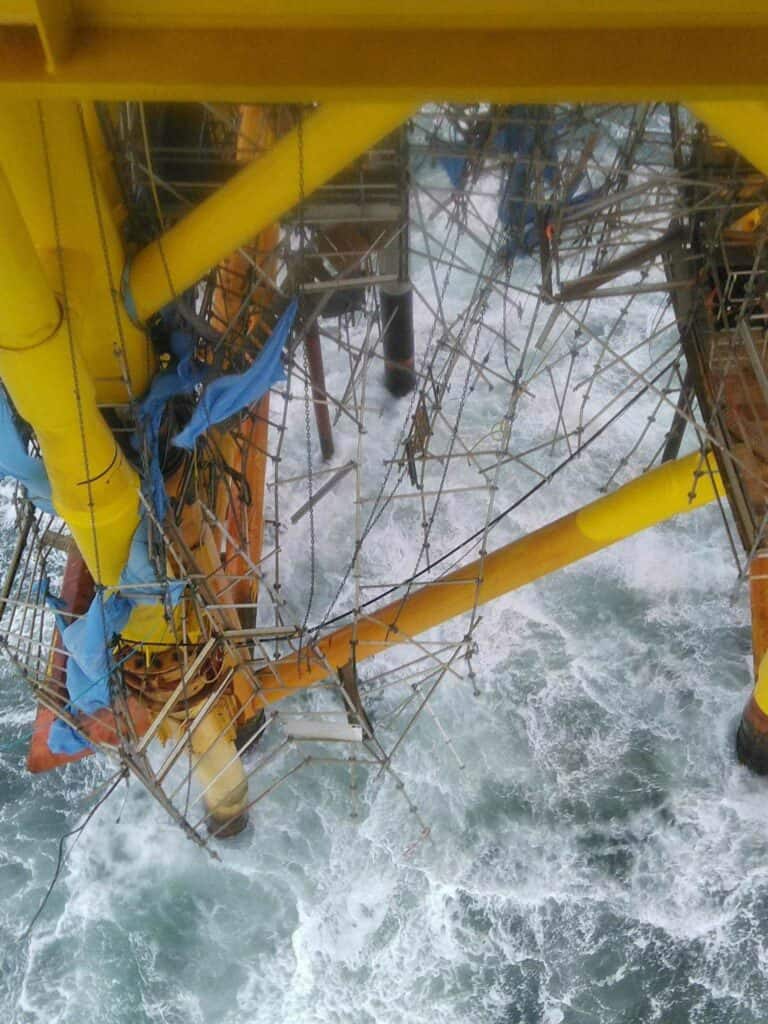 The images show under-deck scaffolding that appears twisted, bent, and in some cases, partially collapsed. It is evident that the force of the storm was enough to wreak havoc on this essential infrastructure of the offshore rig.
Tyra Field is the largest gas condensate field in the Danish Sector of the North Sea. The Tyra East platform plays a vital role in the production and processing of hydrocarbons from the region.
The images show under-deck scaffolding that appears twisted, bent, and in some cases, partially collapsed. It is evident that the force of the storm was enough to wreak havoc on this essential infrastructure of the offshore rig.
Tyra Field is the largest gas condensate field in the Danish Sector of the North Sea. The Tyra East platform plays a vital role in the production and processing of hydrocarbons from the region. 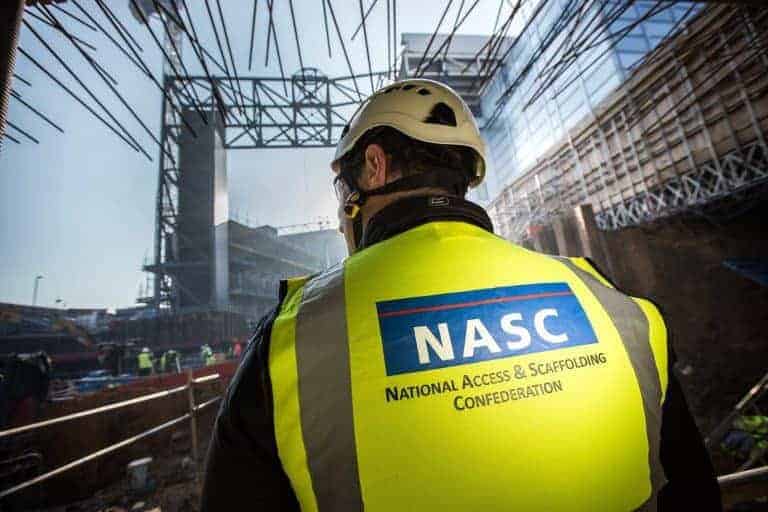

 Wightman also highlighted the unique projects that have originated from Rugby, including the bespoke formwork for the V&A museum in Dundee. “A large part of the work was undertaken in Rugby by a team of talented engineers and carpenters, which peaked at 26 in the three years of its construction,” he explained.
As PERI celebrates 25 years in Rugby, the company looks forward to a future filled with innovation, growth, and a commitment to excellence in formwork and scaffolding solutions.
Wightman also highlighted the unique projects that have originated from Rugby, including the bespoke formwork for the V&A museum in Dundee. “A large part of the work was undertaken in Rugby by a team of talented engineers and carpenters, which peaked at 26 in the three years of its construction,” he explained.
As PERI celebrates 25 years in Rugby, the company looks forward to a future filled with innovation, growth, and a commitment to excellence in formwork and scaffolding solutions. 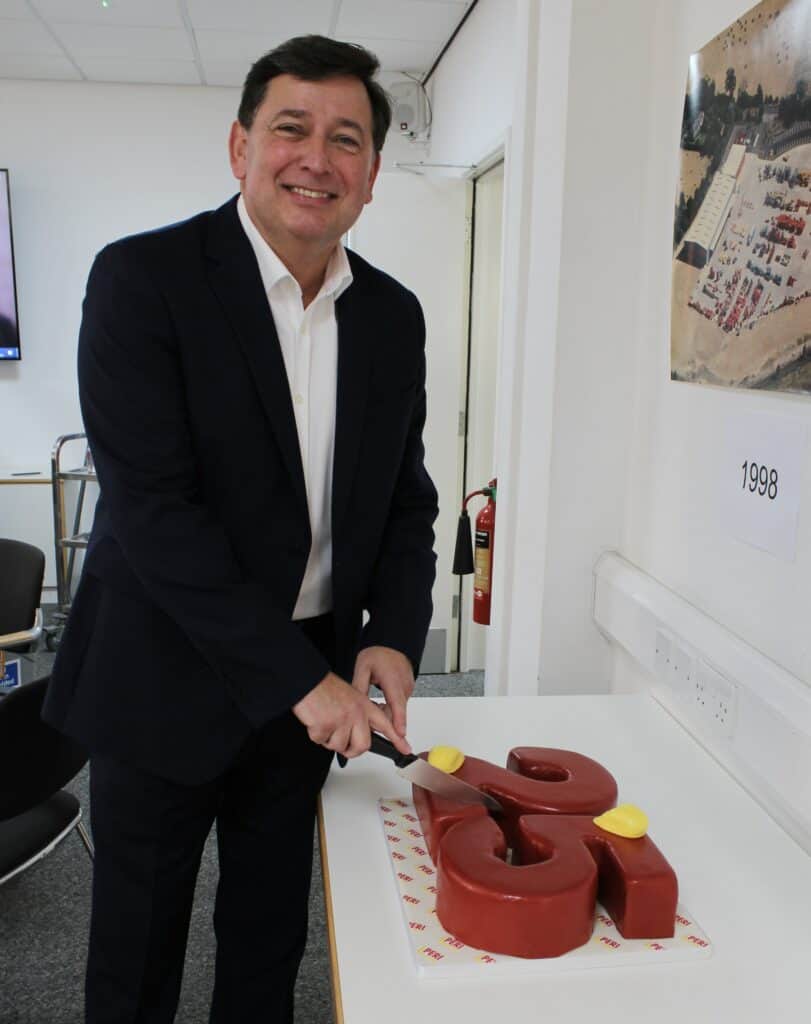
 Wightman also highlighted the unique projects that have originated from Rugby, including the bespoke formwork for the V&A museum in Dundee. “A large part of the work was undertaken in Rugby by a team of talented engineers and carpenters, which peaked at 26 in the three years of its construction,” he explained.
As PERI celebrates 25 years in Rugby, the company looks forward to a future filled with innovation, growth, and a commitment to excellence in formwork and scaffolding solutions.
Wightman also highlighted the unique projects that have originated from Rugby, including the bespoke formwork for the V&A museum in Dundee. “A large part of the work was undertaken in Rugby by a team of talented engineers and carpenters, which peaked at 26 in the three years of its construction,” he explained.
As PERI celebrates 25 years in Rugby, the company looks forward to a future filled with innovation, growth, and a commitment to excellence in formwork and scaffolding solutions. 
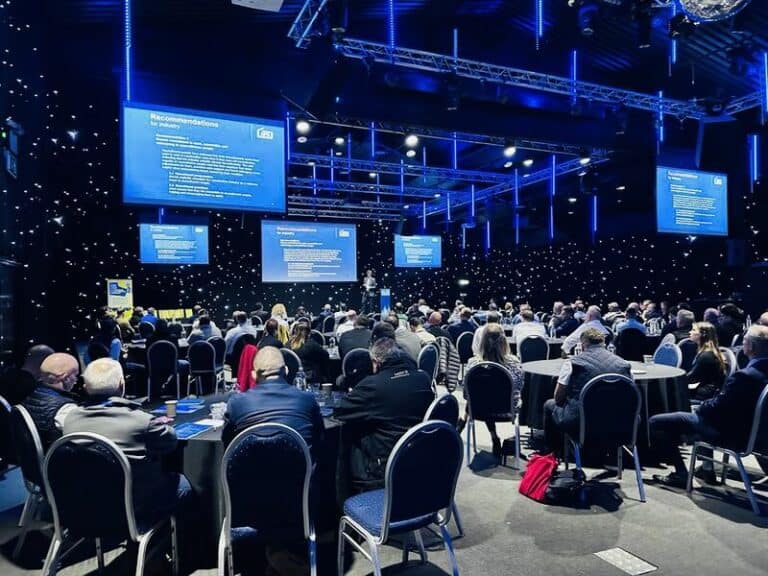

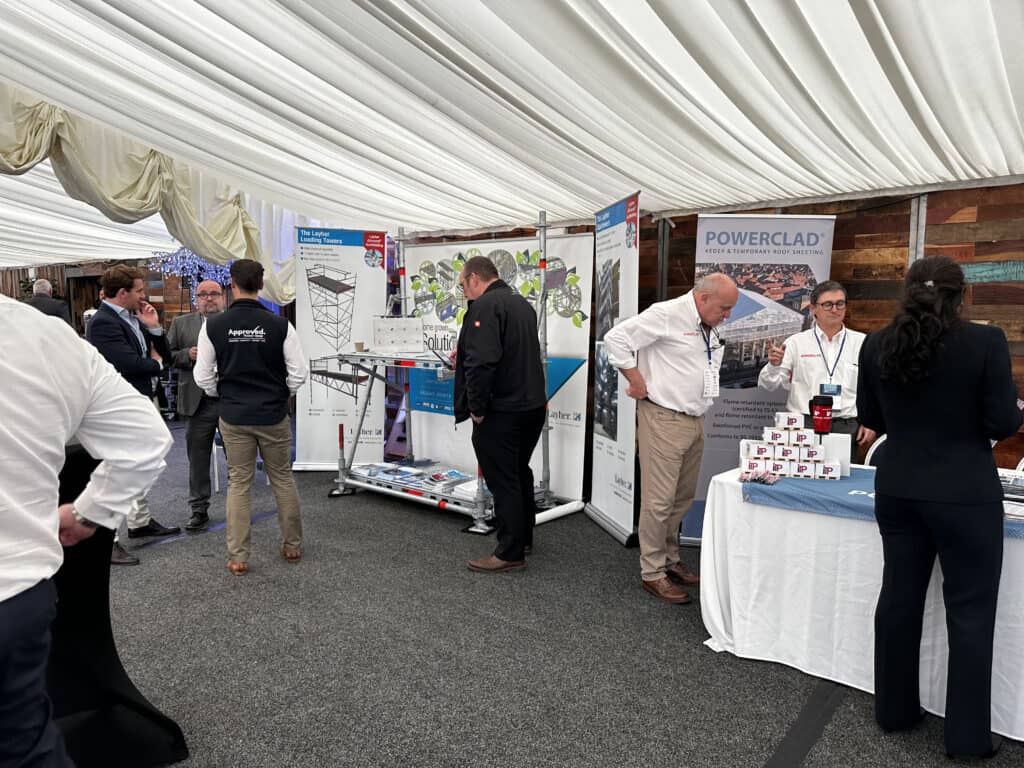 The Scaffolding Conference 2023 offered a knowledge-sharing platform and encouraged industry professionals to connect, collaborate, and explore new possibilities. The event underscored the scaffolding sector’s commitment to staying at the forefront of innovation and excellence.
Dave Mitchell, a scaffolding company owner attending the conference, expressed his enthusiasm: “This conference has been an eye-opener. The industry is evolving rapidly, and being here has given me a better understanding of how to adapt and stay ahead. The presentations were insightful, and I made some valuable connections with exhibitors that could benefit my business.”
Staying ahead of the curve is crucial in an industry characterised by constant change. The Scaffolding Conference 2023 succeeded in empowering delegates with the knowledge and tools necessary to “Gain the Advantage” and thrive in the ever-competitive world of scaffolding.
As the Scaffolding Conference 2023 concludes its second year, anticipation is already building for what promises to be an even more enlightening and inspiring event in the years to come, further solidifying its place as a must-attend gathering for scaffolding professionals.
The Scaffolding Conference 2023 offered a knowledge-sharing platform and encouraged industry professionals to connect, collaborate, and explore new possibilities. The event underscored the scaffolding sector’s commitment to staying at the forefront of innovation and excellence.
Dave Mitchell, a scaffolding company owner attending the conference, expressed his enthusiasm: “This conference has been an eye-opener. The industry is evolving rapidly, and being here has given me a better understanding of how to adapt and stay ahead. The presentations were insightful, and I made some valuable connections with exhibitors that could benefit my business.”
Staying ahead of the curve is crucial in an industry characterised by constant change. The Scaffolding Conference 2023 succeeded in empowering delegates with the knowledge and tools necessary to “Gain the Advantage” and thrive in the ever-competitive world of scaffolding.
As the Scaffolding Conference 2023 concludes its second year, anticipation is already building for what promises to be an even more enlightening and inspiring event in the years to come, further solidifying its place as a must-attend gathering for scaffolding professionals.