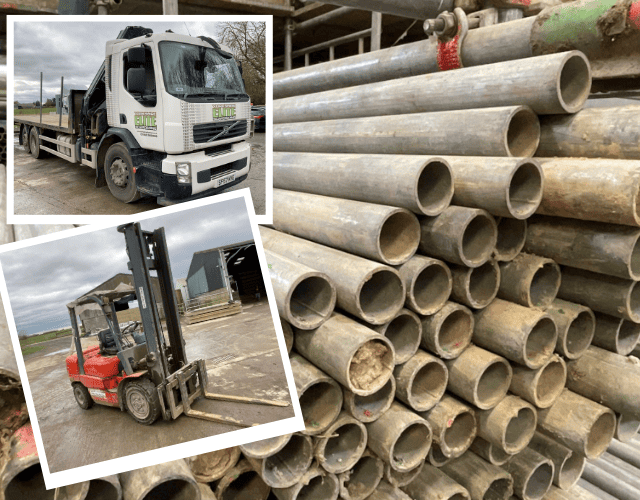
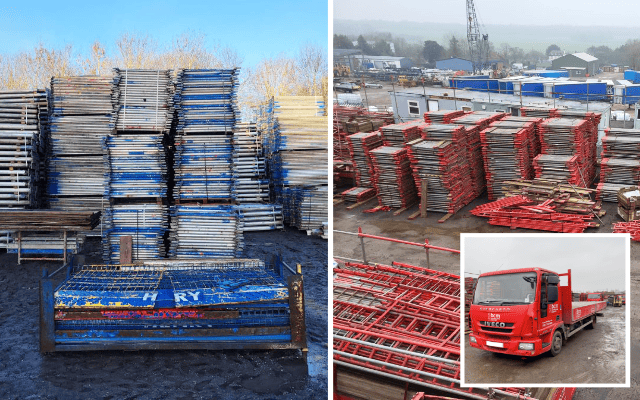
BPI Auctions has announced the auction of assets belonging to Yorkshire Elite Scaffolding, which is undergoing liquidation proceedings.
This event presents a significant opportunity for businesses and individuals seeking to acquire quality equipment and vehicles within the sector.The auction, which ends on March 22, 2024, at 14:00, features various items, including vehicles, forklifts, scaffolding materials, and associated accessories. Several vehicles, such as a 2015 Peugeot Partner, a 2012 Iveco Eurocargo, a 2008 Mercedes Sprinter, and a 2008 Volvo Flatbed, are notable among the offerings. Additionally, a 2014 Peugeot Partner will be available for acquisition.For many in the scaffolding industry, the auction presents an opportunity to procure essential materials. Tonnes of Scaffolding boards, tubes, fittings, ladders, and access towers are among the items on offer, catering to various industry requirements. Furthermore, a 2008 Heil forklift truck is among the assets available for acquisition.View the entire lot by visiting Bpi Auctions Website
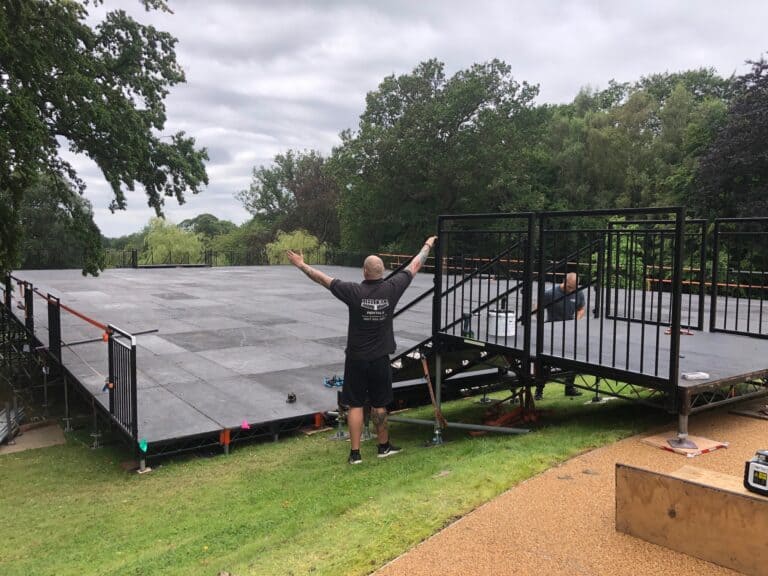
In a significant move poised to redefine standards within the events and entertainment industry, ESITS (The Event Structures Industry Training Scheme) has proudly announced a groundbreaking product partnership with Steeldeck Rentals, a leading provider of bespoke temporary staging and seating solutions. The collaboration aims to deliver unparalleled expert training and competency assurance in modular staging and seating, further cementing both organisations’ commitment to safety and excellence in the sector.Mike Dean, the Scheme Director of ESITS, emphasised the synergy between the two organisations, “Steeldeck Rentals is a leading supplier of modular staging and seating solutions within the events and entertainment industry, so it is great to have their valued support for ESITS. We look forward to working with Steeldeck on the addition of modular decking system training within ESITS for those involved in the planning, control, design, and building of temporary demountable structures.”Tariq Rifaat, Managing Director of Steeldeck Rentals, echoed this sentiment, highlighting the importance of this partnership in fostering a safer industry environment. “We are excited to be part of the ESITS training programme for modular staging and seating. Steeldeck Rentals’ commitment to health and safety is paramount to us, and as ESITS product partner – we can provide our expert knowledge to mitigate risks when working with our products.”The collaboration between ESITS and Steeldeck Rentals represents a pivotal step towards addressing the training and assessment needs within the events industry. It underscores a shared dedication to ensuring safe work systems and adopting best working practices. The partnership aims to significantly enhance the industry’s competency levels by leveraging Steeldeck Rentals’ thirty years of expertise in designing and installing bespoke event solutions across the UK and Europe.Both organisations have expressed their commitment to industry professionals’ health and safety, with every Steeldeck Rentals team member undergoing regular, rigorous training. The partnership with ESITS is a testament to Steeldeck Rentals’ expert knowledge and leadership within the industry, promising to elevate training and safety standards to new heights.
In a heartwarming fulfilment of a promise made over seven years ago, SCP Group (Scaffolding and Construction Products Ltd), a global pioneer in construction product solutions, has stepped forward to honour the legacy of the late Nick Flynn by initiating a financial recognition program for his children.
This gesture not only underscores the group’s commitment to its own word but also celebrates the innovative spirit of Flynn, whose invention, the Safelinx Board Retainer system, revolutionised safety in construction.
The late Nick FlynnNick Flynn, remembered for his remarkable contributions to the construction industry, faced numerous challenges in bringing his invention to market.
Despite initial hurdles in marketing and sales, Flynn’s partnership with SCP Group marked a turning point for Safelinx, transforming it from a struggling innovation to a success story. Sadly, Flynn passed away in mid-2017, not fully witnessing the fruits of his labour.
At that critical juncture, Dale, the owner of SCP Group, vowed to ensure that Flynn’s children would benefit from their father’s hard work and innovation.
Today, as Dylan Flynn, Nick’s son, celebrates his 18th birthday, SCP Group has proudly announced the commencement of an ongoing financial support program for him and his sister, honouring their father’s legacy.
Dylan, expressing his gratitude and pride in his father’s achievements, urged support for Safelinx, highlighting the importance of realising his father’s dreams for the product. “To many people, a seven-year-old promise doesn’t mean much, but it shows the honour and integrity of the group,” Dylan remarked, acknowledging SCP Group’s exceptional commitment.
Rikki, SCP Group’s Financial Director and Dale’s son shared his enthusiasm for supporting Nick Flynn’s children and expressed optimism about future collaborations, mirroring the successful partnership between their parents.
“It’s great to meet Dylan, and I look forward to us potentially working together in the future and being successful just like our parents,” said Rikki.
SCP Group’s act of kindness and commitment pays homage to Nick Flynn’s legacy and sets a commendable example of corporate integrity and compassion.
As Safelinx continues to thrive, the story of Flynn’s innovation and SCP Group’s unwavering support for his family will undoubtedly inspire many in the industry and beyond.
For inquiries about Safelinx and SCP Group’s range of construction product solutions, interested parties are encouraged to contact [email protected] or call 0121 526 2360.
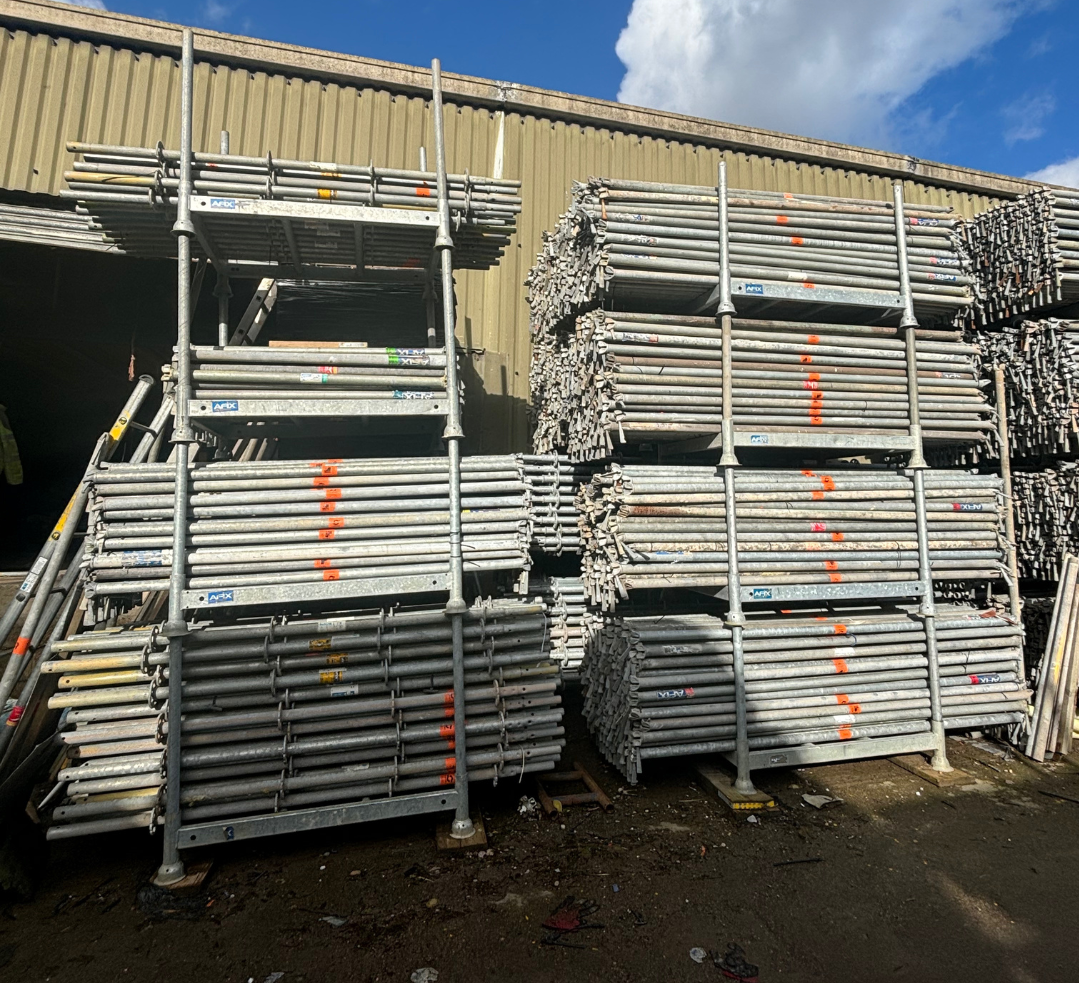
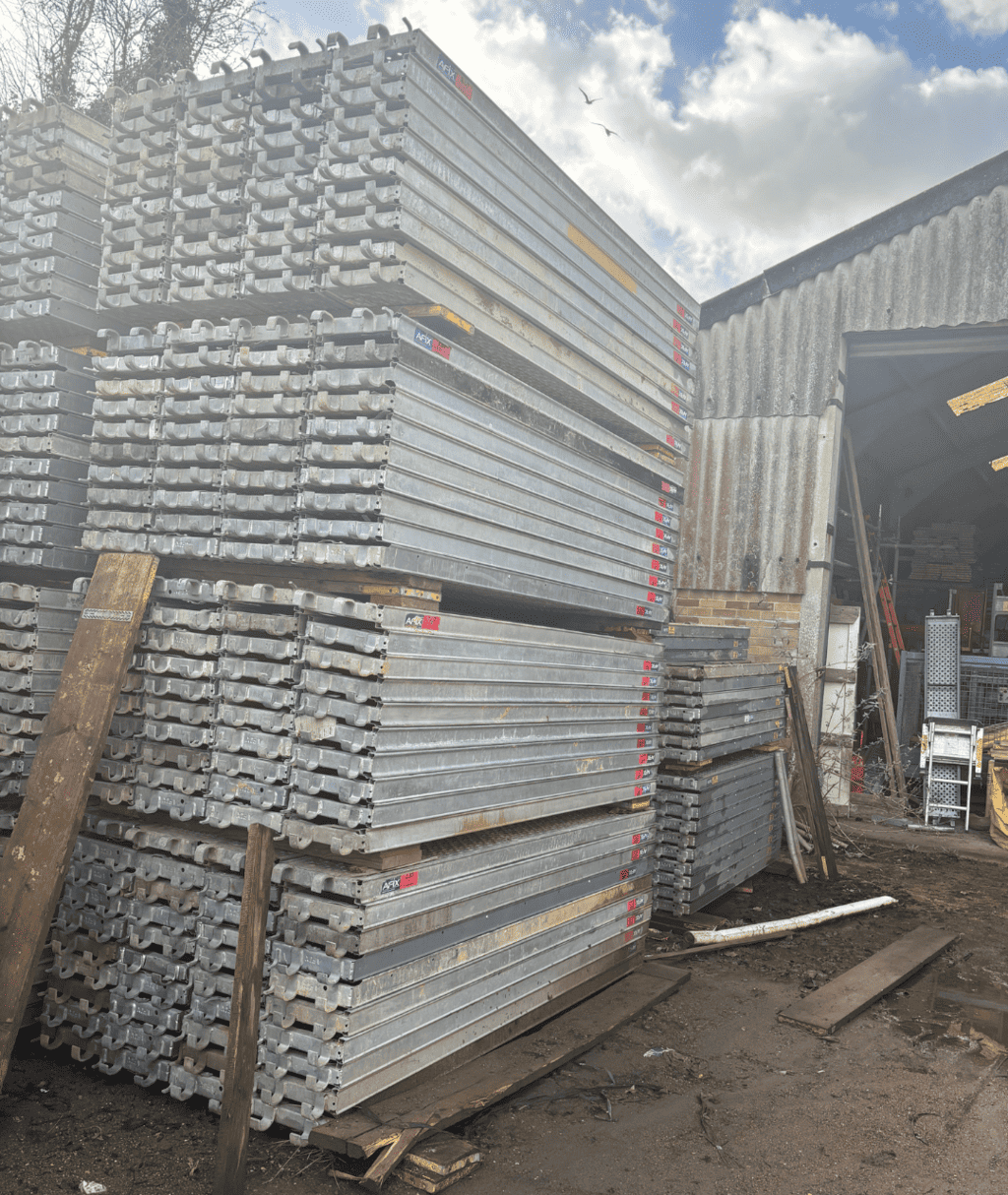
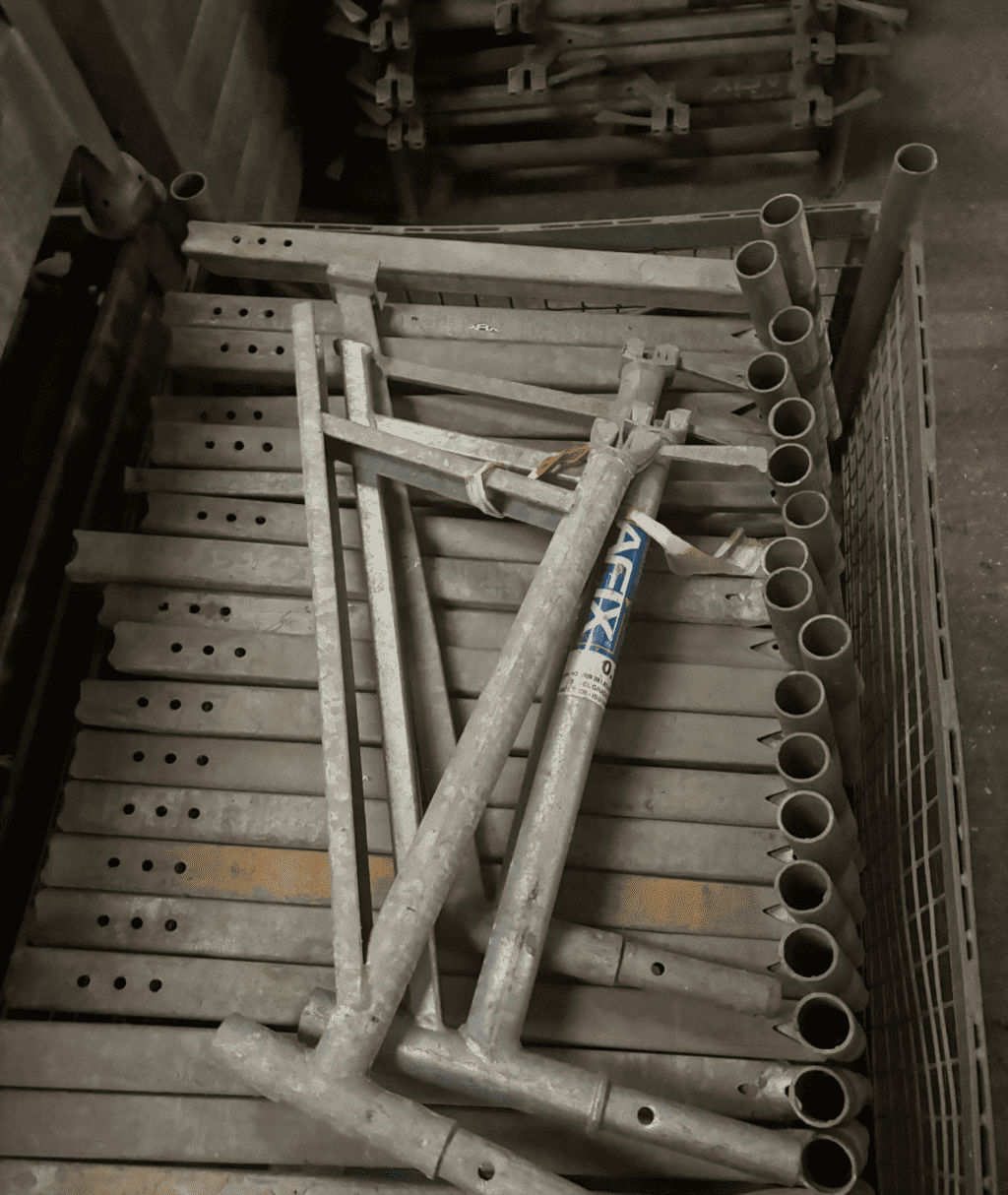
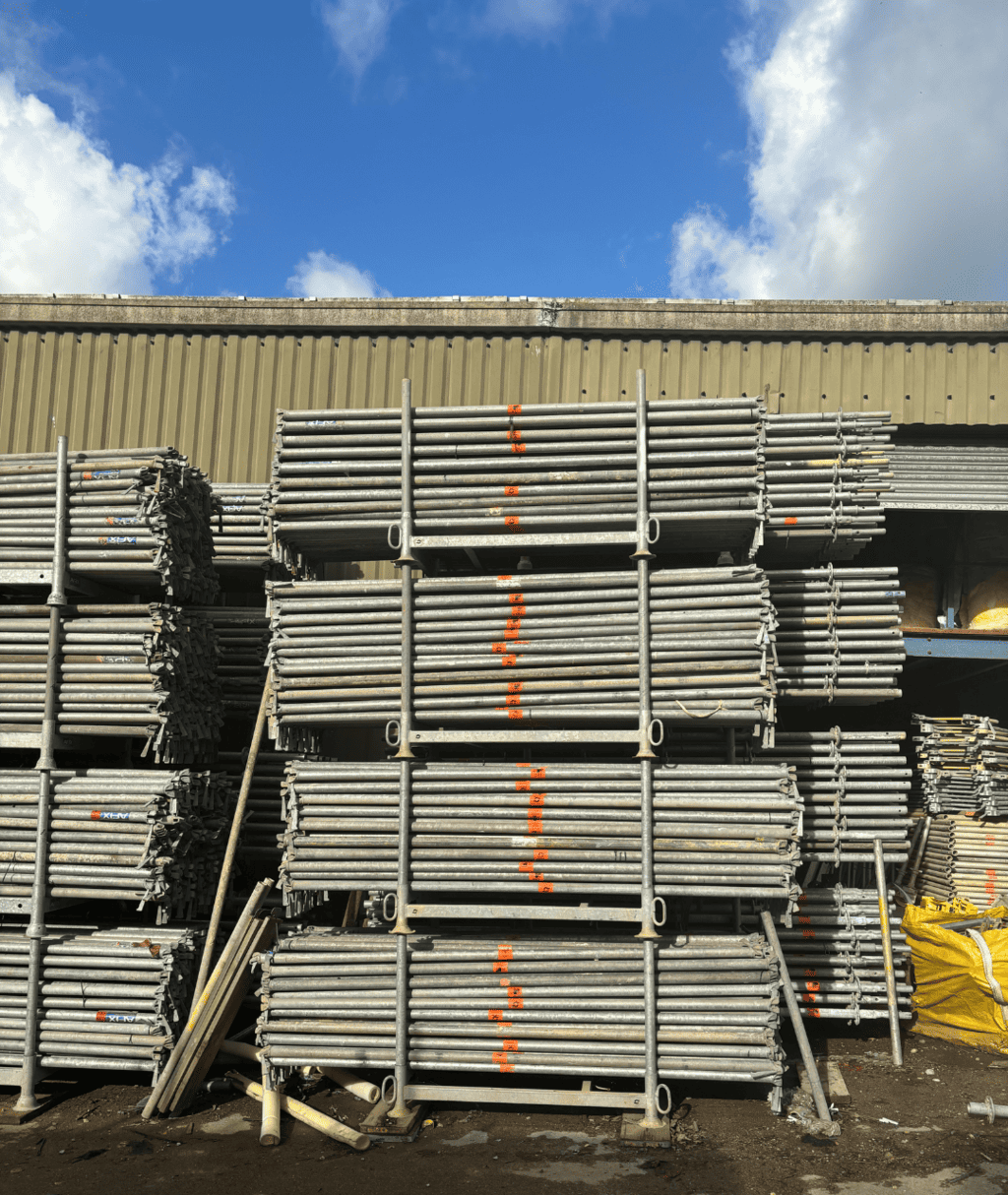
N.T RIX Scaffolding is selling a large quantity of Afix System Scaffolding.
N.T Rix Scaffolding, a prominent scaffolding contractor located in Dover, is excited to announce an exclusive sale featuring a substantial stock of Afix System Scaffolding.
Items for sale are displayed below
Item
Qty
Price Per Unit
Ledger 1.09M
3100
£10.92
Ledger 1.40M
1500
£13.38
Ledger 1.57M
550
£13.38
Ledger 2.07M
1600
£14.92
Ledger 2.57M
2800
£17.04
Deck 1.09M
720
£26.36
Deck 1.40M
400
£26.87
Deck 1.57M
360
£28.55
Deck 2.07M
960
£33.78
Deck 2.57M
2000
£39.56
Standard 1M
300
£11.96
Standard 2M
800
£19.64
Standard 3M
1600
£29.04
Standards 4M
600
£37.29
Brace 2.07M
350
£20.16
Barce 2.57M
700
£21.52
Inside Board bracket 1 Board
250
£39.30
Inside Board Bracket 2 Board
200
£39.30
1 Board with Spigots
200
£15.38
Contact Details
Neil Rix – 07860247612 / [email protected]
Longhill, Off Astley Avenue, Dover, CT16 2NJ
A prominent work-at-height charity has introduced the pioneering initiative No Falls Week to address one of the most pressing dangers in the workplace. The campaign, organised by the No Falls Foundation, will occur from May 13 to May 17, 2024. Its goal is to highlight the importance of safe working practices for people working at heights, prevent accidents, and ensure the well-being of all individuals involved in such tasks.The statistics surrounding accidents related to working at height are sobering, with both fatalities and non-fatal injuries posing significant risks. It’s estimated that over 1 million businesses and 10 million workers engage in activities involving working at height annually, highlighting the widespread nature of the issue.Falls from height persist as the leading cause of workplace fatalities in the UK, with 40 lives lost in 2022-2023 alone, according to the Health and Safety Executive (HSE). Furthermore, falls from height accounted for a third of all workplace fatalities last year, indicating a troubling trend.In addition to the loss of life, falls from height also result in a significant number of non-fatal injuries, with over 5,000 individuals reported to have been injured at work in Great Britain in 2022/23 alone. However, underreporting, particularly among the self-employed, likely means the actual number of incidents is higher.Hannah WilliamsHannah Williams, Charity Manager at the No Falls Foundation, stressed the importance of No Falls Week, emphasising the far-reaching impact of workplace injuries from falls.“Everyone who needs to work at height should be able to work safely and return home unharmed at the end of every shift… No Falls Week is an opportunity for everyone to recognise the mental, physical, and societal consequences of working at height accidents.”Employers are encouraged to participate in No Falls Week by signing up on the No Falls Week website, where they can access toolkits and resources provided by the Access Industry Forum (AIF). These resources enable toolbox talks, workshops, safety demonstrations, and social media campaigns to promote work at height safety.To learn more about No Falls Week and participate, visit the No Falls Week Website.
In the wake of Henry Construction’s collapse last year and BCM Scaffolding last month, tonnes of scaffolding and formwork owned by the defunct contractors are now up for auction. Scaffolding stocks and assets, including HGVs formerly belonging to BCM Scaffolding Services Ltd, which recently fell into administration, are also available for bidding. The development follows a report published by Scaffmag last month on BCM’s troubles. The sale, coordinated by Hilco Valuation Services, will conclude next week. It features 66 lots available for bidding. The auction presents an opportunity for interested parties to acquire quality scaffolding and formwork assets previously utilised by Henry Construction and BCM Scaffolding Services Ltd.View the Henry Construction lot: Click hereView the BCM Scaffolding lot: Click hereHenry Construction’s collapse in 2023 marked one of the most significant setbacks to hit the construction industry. The fallout left over 700 suppliers and subcontractors grappling with unpaid invoices totalling more than £43 million.BCM Scaffolding Services Ltd, along with Bristol’s Scaffteq West Ltd, both part of the Saferise Scaffolding Group, plunged into administration earlier this year. Collectively, they employed over 100 individuals. The internal memo obtained by Scaffmag outlined the financial difficulties faced by the companies attributed to the withdrawal of support from their finance company. Despite anticipated new projects and recent investments, BCM and Scaffteq West found themselves in a precarious position.
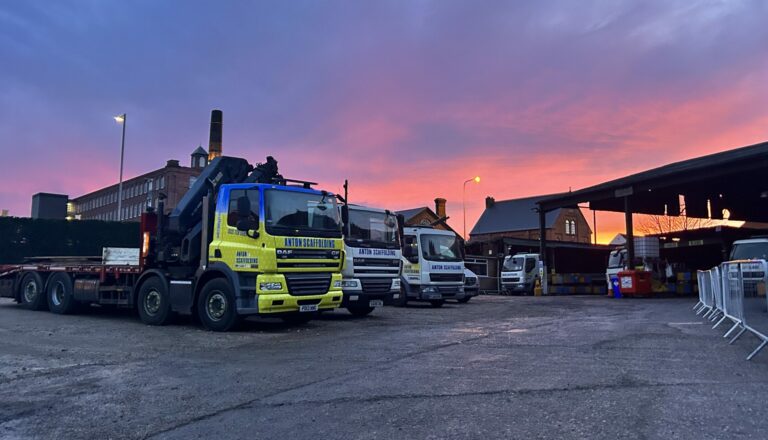
In a move reflecting growth and expansion, Anton Scaffolding has recently relocated its headquarters to the historic Fazeley Saw Mills in Tamworth, Staffordshire. The move from their previous base in Wishaw, Sutton Coldfield, to a new yard that spans approximately 40,000 square feet marks a significant milestone in the company’s development journey.Fazeley Saw Mills, a landmark in Tamworth for over half a century, is known for its distinctive towering crane visible from the A5. The site, which was once a bustling family-run timber business, is now home to Anton Scaffolding’s new headquarters, heralding a fresh chapter in its rich history. Located on Lichfield Street, the new site offers superb road connections and motorway access, positioning the company at the strategic heart of the country.Anton Scaffolding owner Tom Pawliw expressed his excitement about the relocation, highlighting the business’s recent growth and the clear need for new premises. “The move to Fazeley Saw Mills was a decision I knew was right for us and our expanding business,” Pawliw said. The new yard accommodates the company’s increasing stock and vehicle fleet and includes office space essential for business operations, staff training, and customer meetings.The relocation is also a personal milestone for Pawliw, who has strong ties to the local community and has lived in the area for many years. “It’s not just a business move; it’s a homecoming of sorts,” he noted, emphasizing his connection to the area and ongoing involvement in local projects, including refurbishment works on the canal footpath adjacent to the new premises.The strategic move has already yielded positive results for Anton Scaffolding. Following a successful NASC audit, the company recently earned the prestigious NASC Contractor Member status. This achievement highlights Anton Scaffolding’s dedication to maintaining the highest standards of safety and professionalism in the scaffolding industry.
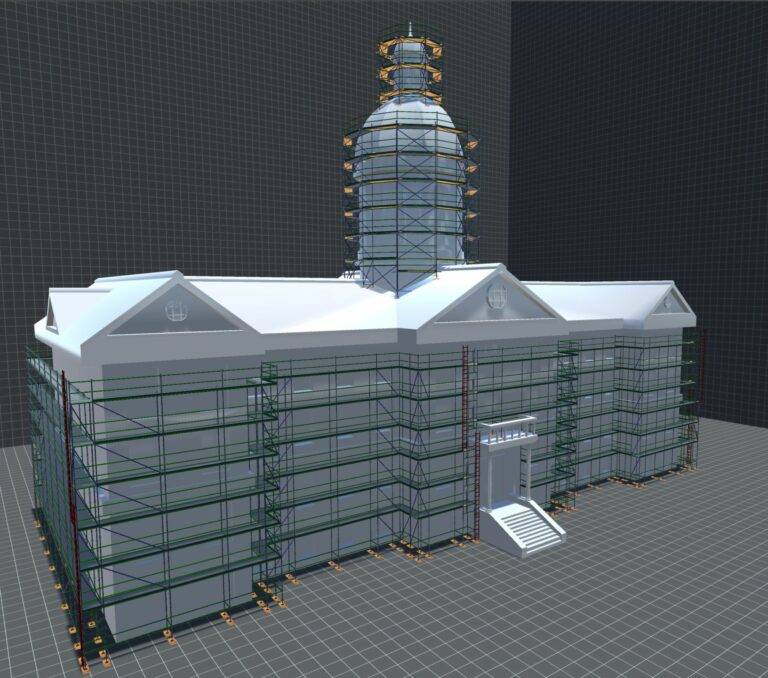
Avontus Software has announced the launch of a free 28-day trial of its innovative program, Avontus Designer.The offering marks a significant milestone for professionals in the scaffolding and industrial services sector, providing an unprecedented opportunity to experience the future of scaffolding design technology.Avontus Designer is heralded as a game-changer, offering solutions specifically tailored for system scaffolding. The program features an intuitive drag-and-drop interface, allowing users to quickly assemble detailed 2D and 3D models. This cutting-edge approach drastically reduces design time, starkly contrasting the lengthy hours required by traditional manual methods.Brian Webb, CEO of Avontus Software, highlighted the transformative potential of Avontus Designer: “One of the key features of Avontus Designer is its ability to streamline the scaffolding design process. Access to over 40 manufacturers’ catalogs and an instant bill of materials empowers users to create comprehensive designs with unprecedented speed and accuracy.”The launch also introduces Avontus Viewer, a complimentary program that lets users explore their scaffolding designs virtually. This feature is designed to provide valuable insights and foster enhanced collaboration among team members.Further enriching the scaffolding design ecosystem, Avontus Designer integrates seamlessly with Quantify, Avontus Software’s inventory management software. This integration ensures a smooth transition from design to inventory tracking and rental billing, addressing a critical need within the industry.Moreover, Avontus Designer supports extensive import options, allowing for the integration of designs in formats such as IFC, PDF, AutoCAD, and others. This flexibility guarantees compatibility with a broad array of industry-standard software platforms, thus facilitating efficient communication and collaboration throughout the project lifecycle.Professionals interested in leveraging this exclusive offer to explore the avant-garde of scaffolding design can sign up for the free 28-day trial at www.avontus.com.For further information, contact Avontus Software at [email protected] or call +44 0330 380 1349 x2
In a startling incident caught on a driver’s dashcam video last week in Buckingham, an aluminium mobile scaffold erected in front of a house on a bustling road collapsed, hurling two men into the path of oncoming traffic.
Miraculously, the workers were not injured, and the scaffold was promptly re-erected. The footage below shows a narrow escape for the men as a car swerves to avoid them, while a third worker in shock rushes to assist.
The incident, occurring next to the Grand Junction pub, has sparked conversations on moble scaffold safety in busy urban areas.
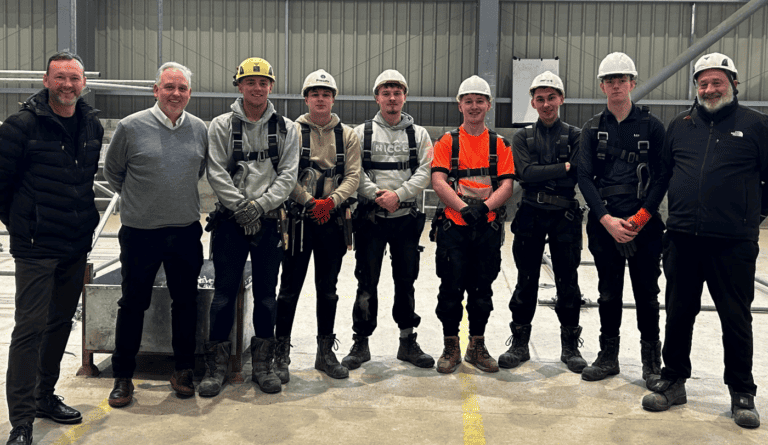
During Scottish Apprenticeship Week (SAW), a series of events were carried out across Scotland to honour current apprentices while highlighting the merits of work-based learning. Among the notable highlights of last week’s SAW was CISRS Managing Director Dave Mosley’s seizing the opportunity to engage with the next generation of scaffolders north of the border.Dave visited ASET International Energy Training Academy in Aberdeen and the National Construction College (NCC) Scotland at Inchinnan, where apprentices are currently completing their scaffolding apprenticeship programs. At these approved providers, apprentices from various companies, including Scaffold Orkney, L&M Scaffolding, AB Scaffold, Access 2000, Duncan Scaffolding, and Abscaff, were immersed in Part 1 training under the guidance of their instructor, Richard Wrightson.Interactions between Dave, Mark Davidson (CITB Apprentice Manager for Grampian), Shonagh Young of ASET, and the apprentices delved into various topics ranging from course content to industry experiences and future aspirations. Dave expressed delight in meeting these enthusiastic apprentices and conveyed optimism about their journey ahead in the scaffolding sector.Transitioning to NCC Scotland, Dave Mosley encountered another group of apprentices in their final assessment week under the attentive supervision of Instructor Stewart McAllister. This cohort hailed from companies such as Edinburgh Scaffolding Ltd, Lyndon/SGB, Enigma, Millar Scaffold, I-Scaff Access Solutions Ltd, McTaggart Construction, and Kingdom Access Scaffolding Ltd, reflecting diverse industry sectors and geographical regions.Following the successful completion of their assessments, Dave Mosley presented certificates to the apprentices, marking a significant milestone in their careers. The occasion was celebrated with a steak dinner, attended by the apprentices, instructors, program managers, apprentice officers, and support services team leaders.Reflecting on the experience, Dave extended his good wishes to the apprentices embarking on their CISRS-qualified scaffolding careers. Dave commented, “The apprentice group at NCC Scotland are coming to the end of their program and will very soon be CISRS qualified scaffolders. I wish them all the best for the future and that they have a long, varied and rewarding career in the Scaffolding sector.”
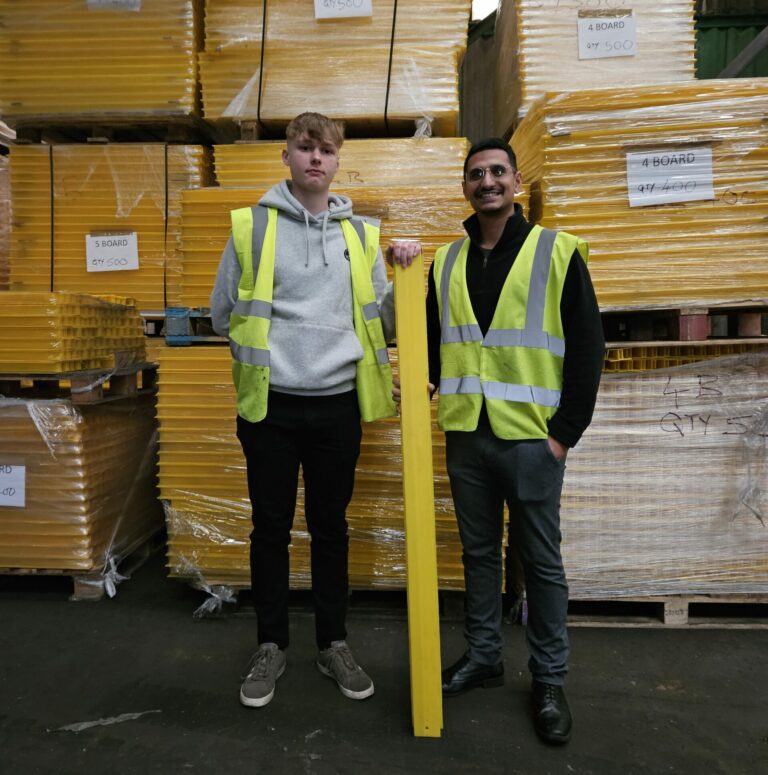

 Dylan, expressing his gratitude and pride in his father’s achievements, urged support for Safelinx, highlighting the importance of realising his father’s dreams for the product. “To many people, a seven-year-old promise doesn’t mean much, but it shows the honour and integrity of the group,” Dylan remarked, acknowledging SCP Group’s exceptional commitment.
Rikki, SCP Group’s Financial Director and Dale’s son shared his enthusiasm for supporting Nick Flynn’s children and expressed optimism about future collaborations, mirroring the successful partnership between their parents.
“It’s great to meet Dylan, and I look forward to us potentially working together in the future and being successful just like our parents,” said Rikki.
SCP Group’s act of kindness and commitment pays homage to Nick Flynn’s legacy and sets a commendable example of corporate integrity and compassion.
Dylan, expressing his gratitude and pride in his father’s achievements, urged support for Safelinx, highlighting the importance of realising his father’s dreams for the product. “To many people, a seven-year-old promise doesn’t mean much, but it shows the honour and integrity of the group,” Dylan remarked, acknowledging SCP Group’s exceptional commitment.
Rikki, SCP Group’s Financial Director and Dale’s son shared his enthusiasm for supporting Nick Flynn’s children and expressed optimism about future collaborations, mirroring the successful partnership between their parents.
“It’s great to meet Dylan, and I look forward to us potentially working together in the future and being successful just like our parents,” said Rikki.
SCP Group’s act of kindness and commitment pays homage to Nick Flynn’s legacy and sets a commendable example of corporate integrity and compassion.
 As Safelinx continues to thrive, the story of Flynn’s innovation and SCP Group’s unwavering support for his family will undoubtedly inspire many in the industry and beyond.
For inquiries about Safelinx and SCP Group’s range of construction product solutions, interested parties are encouraged to contact [email protected] or call 0121 526 2360.
As Safelinx continues to thrive, the story of Flynn’s innovation and SCP Group’s unwavering support for his family will undoubtedly inspire many in the industry and beyond.
For inquiries about Safelinx and SCP Group’s range of construction product solutions, interested parties are encouraged to contact [email protected] or call 0121 526 2360. 
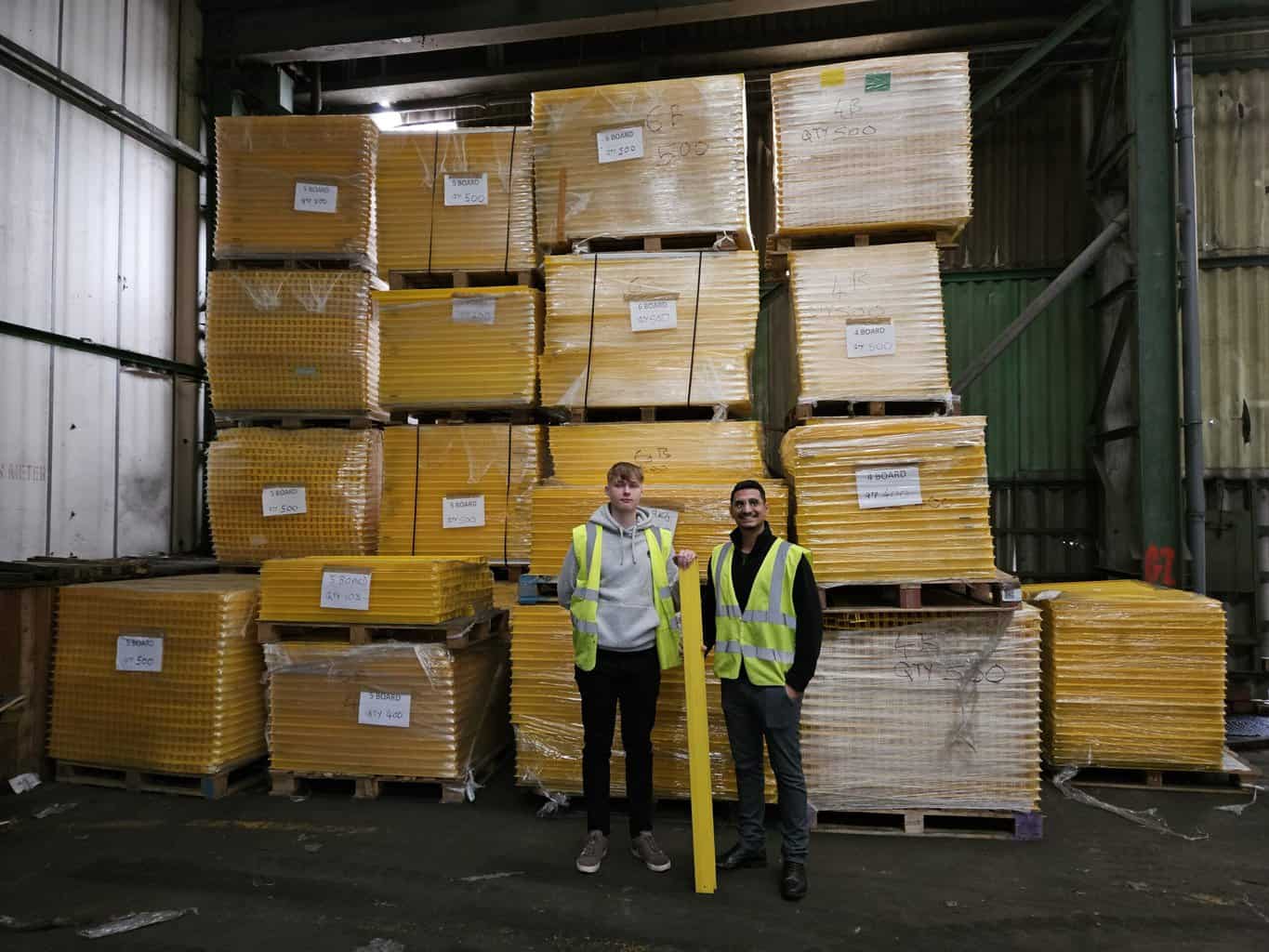 Dylan, expressing his gratitude and pride in his father’s achievements, urged support for Safelinx, highlighting the importance of realising his father’s dreams for the product. “To many people, a seven-year-old promise doesn’t mean much, but it shows the honour and integrity of the group,” Dylan remarked, acknowledging SCP Group’s exceptional commitment.
Rikki, SCP Group’s Financial Director and Dale’s son shared his enthusiasm for supporting Nick Flynn’s children and expressed optimism about future collaborations, mirroring the successful partnership between their parents.
“It’s great to meet Dylan, and I look forward to us potentially working together in the future and being successful just like our parents,” said Rikki.
SCP Group’s act of kindness and commitment pays homage to Nick Flynn’s legacy and sets a commendable example of corporate integrity and compassion.
Dylan, expressing his gratitude and pride in his father’s achievements, urged support for Safelinx, highlighting the importance of realising his father’s dreams for the product. “To many people, a seven-year-old promise doesn’t mean much, but it shows the honour and integrity of the group,” Dylan remarked, acknowledging SCP Group’s exceptional commitment.
Rikki, SCP Group’s Financial Director and Dale’s son shared his enthusiasm for supporting Nick Flynn’s children and expressed optimism about future collaborations, mirroring the successful partnership between their parents.
“It’s great to meet Dylan, and I look forward to us potentially working together in the future and being successful just like our parents,” said Rikki.
SCP Group’s act of kindness and commitment pays homage to Nick Flynn’s legacy and sets a commendable example of corporate integrity and compassion.
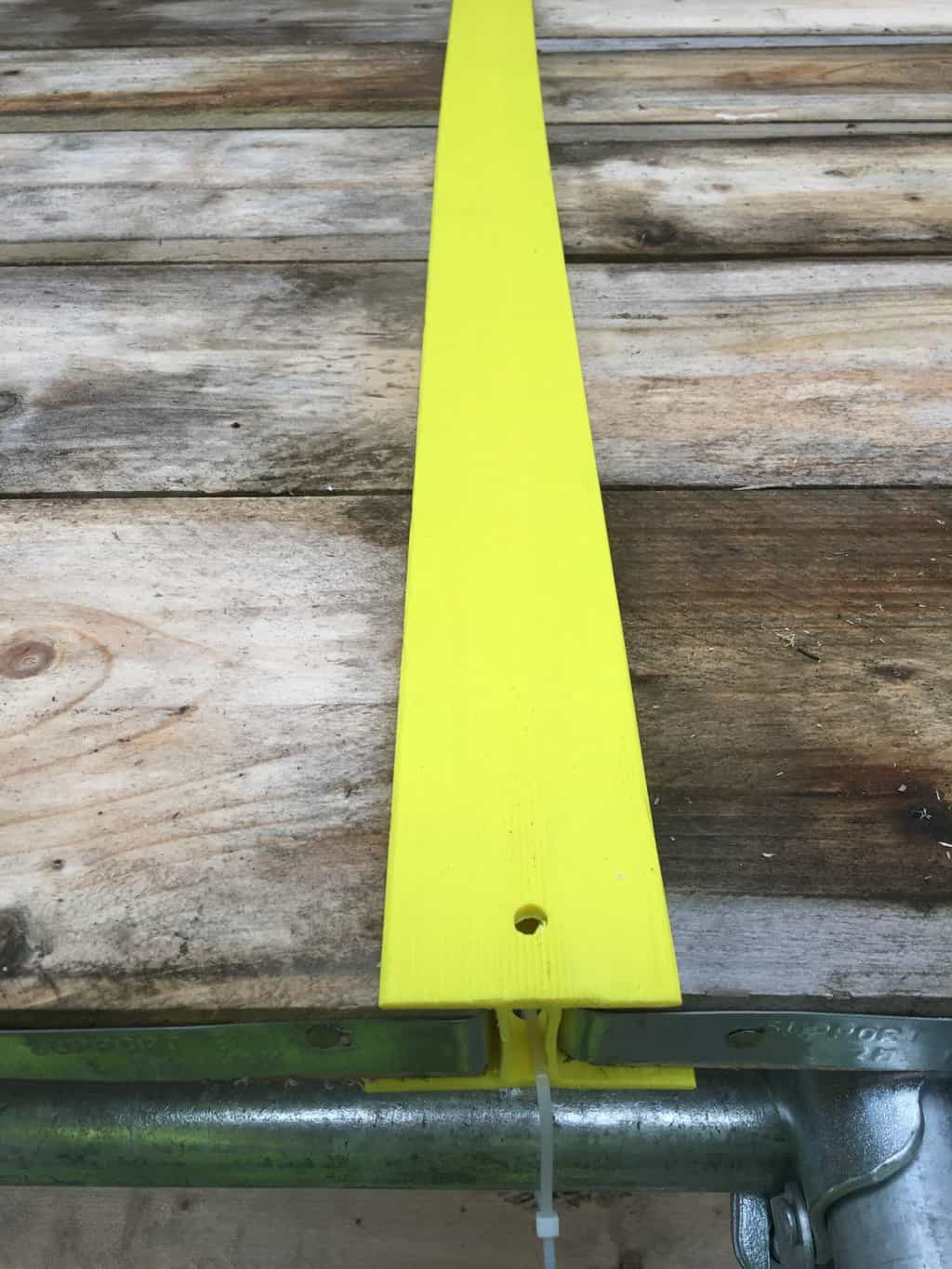 As Safelinx continues to thrive, the story of Flynn’s innovation and SCP Group’s unwavering support for his family will undoubtedly inspire many in the industry and beyond.
For inquiries about Safelinx and SCP Group’s range of construction product solutions, interested parties are encouraged to contact [email protected] or call 0121 526 2360.
As Safelinx continues to thrive, the story of Flynn’s innovation and SCP Group’s unwavering support for his family will undoubtedly inspire many in the industry and beyond.
For inquiries about Safelinx and SCP Group’s range of construction product solutions, interested parties are encouraged to contact [email protected] or call 0121 526 2360. 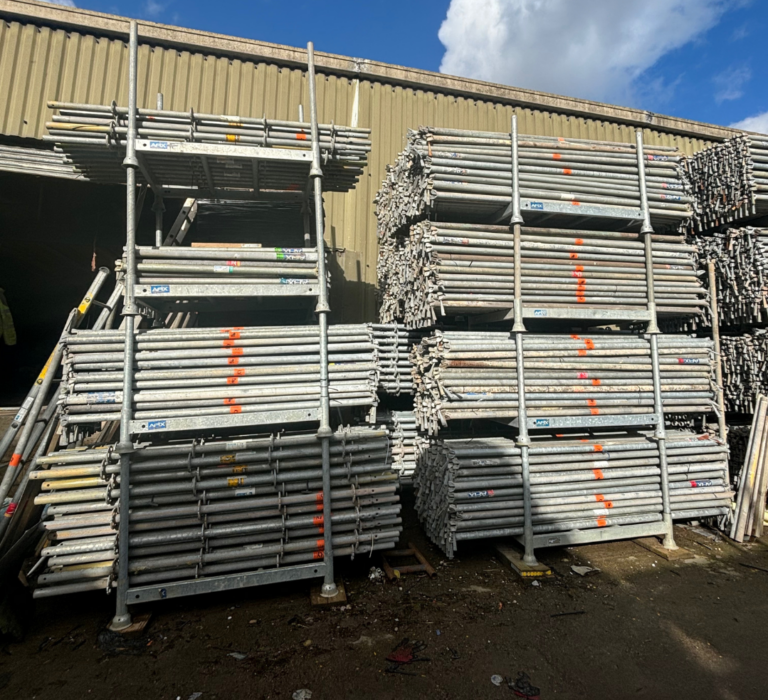



 In addition to the loss of life, falls from height also result in a significant number of non-fatal injuries, with over 5,000 individuals reported to have been injured at work in Great Britain in 2022/23 alone.
However, underreporting, particularly among the self-employed, likely means the actual number of incidents is higher.
In addition to the loss of life, falls from height also result in a significant number of non-fatal injuries, with over 5,000 individuals reported to have been injured at work in Great Britain in 2022/23 alone.
However, underreporting, particularly among the self-employed, likely means the actual number of incidents is higher.

 In addition to the loss of life, falls from height also result in a significant number of non-fatal injuries, with over 5,000 individuals reported to have been injured at work in Great Britain in 2022/23 alone.
However, underreporting, particularly among the self-employed, likely means the actual number of incidents is higher.
In addition to the loss of life, falls from height also result in a significant number of non-fatal injuries, with over 5,000 individuals reported to have been injured at work in Great Britain in 2022/23 alone.
However, underreporting, particularly among the self-employed, likely means the actual number of incidents is higher.

 The relocation is also a personal milestone for Pawliw, who has strong ties to the local community and has lived in the area for many years. “It’s not just a business move; it’s a homecoming of sorts,” he noted, emphasizing his connection to the area and ongoing involvement in local projects, including refurbishment works on the canal footpath adjacent to the new premises.
The strategic move has already yielded positive results for Anton Scaffolding. Following a successful NASC audit, the company recently earned the prestigious NASC Contractor Member status. This achievement highlights Anton Scaffolding’s dedication to maintaining the highest standards of safety and professionalism in the scaffolding industry.
The relocation is also a personal milestone for Pawliw, who has strong ties to the local community and has lived in the area for many years. “It’s not just a business move; it’s a homecoming of sorts,” he noted, emphasizing his connection to the area and ongoing involvement in local projects, including refurbishment works on the canal footpath adjacent to the new premises.
The strategic move has already yielded positive results for Anton Scaffolding. Following a successful NASC audit, the company recently earned the prestigious NASC Contractor Member status. This achievement highlights Anton Scaffolding’s dedication to maintaining the highest standards of safety and professionalism in the scaffolding industry. 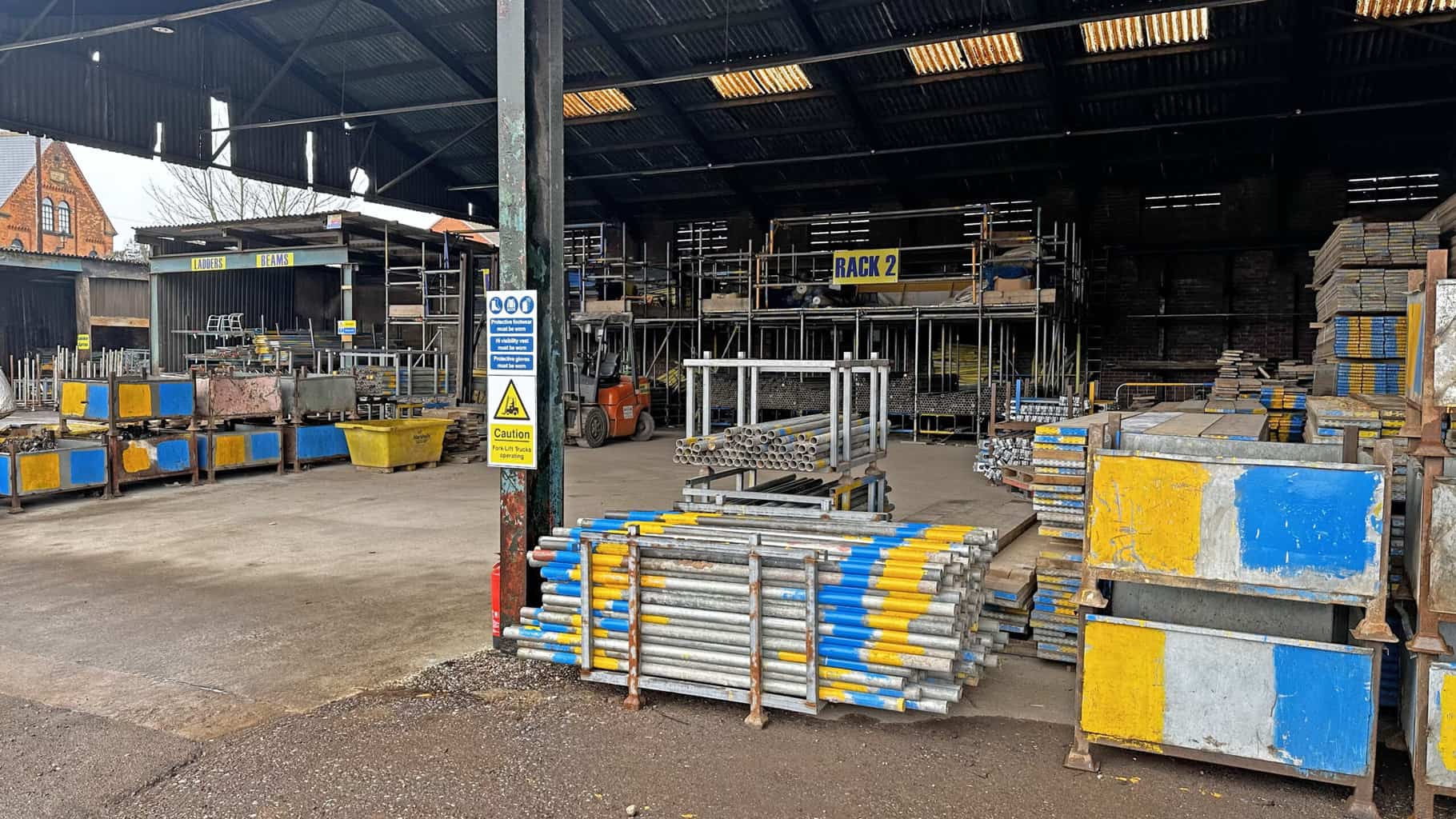 The relocation is also a personal milestone for Pawliw, who has strong ties to the local community and has lived in the area for many years. “It’s not just a business move; it’s a homecoming of sorts,” he noted, emphasizing his connection to the area and ongoing involvement in local projects, including refurbishment works on the canal footpath adjacent to the new premises.
The strategic move has already yielded positive results for Anton Scaffolding. Following a successful NASC audit, the company recently earned the prestigious NASC Contractor Member status. This achievement highlights Anton Scaffolding’s dedication to maintaining the highest standards of safety and professionalism in the scaffolding industry.
The relocation is also a personal milestone for Pawliw, who has strong ties to the local community and has lived in the area for many years. “It’s not just a business move; it’s a homecoming of sorts,” he noted, emphasizing his connection to the area and ongoing involvement in local projects, including refurbishment works on the canal footpath adjacent to the new premises.
The strategic move has already yielded positive results for Anton Scaffolding. Following a successful NASC audit, the company recently earned the prestigious NASC Contractor Member status. This achievement highlights Anton Scaffolding’s dedication to maintaining the highest standards of safety and professionalism in the scaffolding industry.