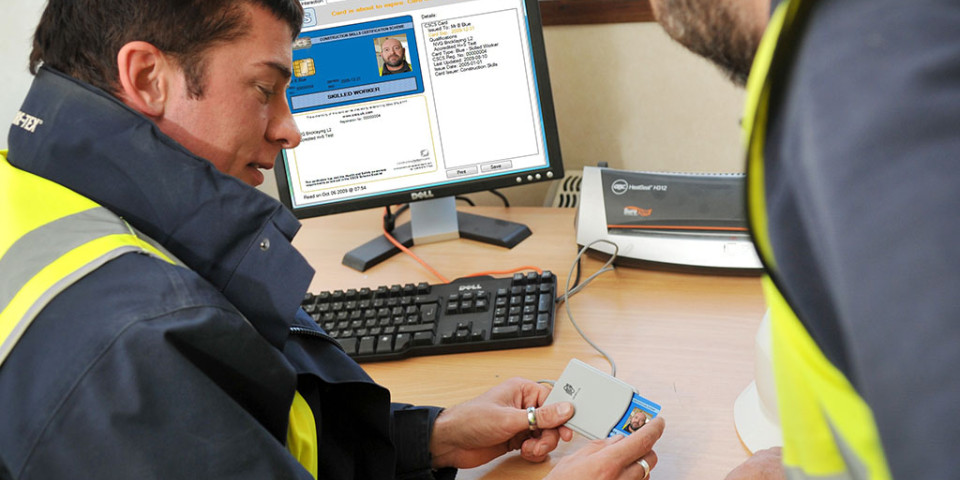
The CSCS Smart Check platform has recorded its 60 millionth scan, highlighting its growing role in workforce verification and compliance across the construction industry.
The milestone reflects increased use of the system by contractors and employers to verify skills, training and qualifications, particularly in response to the Building Safety Act.
CSCS Smart Check is currently the only platform that can verify all 2.3 million cards bearing the CSCS logo. It allows users to confirm in real time that individuals hold the correct card for the work they are performing.
Developed by the CSCS Alliance, the platform integrates via an API with site access and induction systems used by major contractors, including Wates, Vinci, and Balfour Beatty, as well as housebuilders such as Persimmon Homes and Taylor Wimpey.
The system also provides real-time data on workforce skills and occupational mixes for organisations using the API.
Sean Kearns, Group Chief Executive of CSCS, said the milestone showed a clear shift in how the industry approaches assurance.
“Reaching 60 million reads is a significant milestone and reflects the commitment across the sector to strengthen assurance around skills, training and qualifications,” he said.
He added that CSCS Smart Check acts as “the industry’s border control technology”, supporting compliance while reducing administration and improving efficiency.
The 60 millionth scan was completed in January by BAM, verifying a Craft card issued by the Electrotechnical Certification Scheme, which is part of the CSCS Alliance.
By total all-time scans, the leading contractors are:
- Morgan Sindall, 10,071,903
- BAM, 7,517,199
- Galliford Try, 7,006,997
CSCS Smart Check is referenced in recommendations from the Construction Leadership Council as the preferred method for verifying that workers hold the correct card for their occupation.
CSCS said it is continuing to develop the platform’s reporting features, including the introduction of reason codes such as pre-induction, induction and site access, alongside site identification data. The aim is to provide clearer insight into how and where checks are being carried out.