
*Alan Osborn writes in a personal capacity. The views expressed are his own and do not necessarily reflect those of Scaffmag.
The scaffolding industry is having an argument in public. CISRS has served notice to leave CSCS. The Scaffolding Association has published an open letter questioning why. The Scaffolding Training Alliance wants the evidence and legal advice released. Everyone has a position, and most of them are being defended loudly.
I want to make a different argument. The problem is not the scheme. Maybe the problem is who owns it.
CISRS has served this industry for more than 50 years. It was established by NASC and the union now known as Unite, and it built something genuinely valuable: a single, recognised route from labourer to advanced scaffolder that employers trust, clients specify and scaffolders carry with pride. Whatever happens over the next nine months, that foundation took decades to build and it belongs, morally if not legally, to the whole industry.
That last part is where the trouble starts. Morally is not legally. Control of CISRS sits with NASC, and NASC has carried much of the responsibility for the scheme over the years, often with little thanks. But the events of this month have shown what concentration of control looks like when a big decision arrives. A choice that affects every scaffolder’s card, every training provider’s business and every employer’s site access was made without the wider industry feeling it had a voice. The Scaffolding Association’s survey found no evidence of meaningful consultation, including among NASC’s own members. Whether or not the legal advice justifies the exit, the way it landed has damaged trust.
There is a human side to this month too. The pressure on the CISRS board, and on Clive Dickin personally, has been considerable. Dickin is running NASC at the same time, modernising it and driving it forward, and CISRS lands on the same desk. That is part of the problem: no one person, and no one organisation, should have to carry all of this. It is easy to criticise from the sidelines. The harder job is to come up with solutions and work with NASC rather than against it. That is what I am trying to do here.
So here is my proposal. Keep CISRS. Change its ownership.
CISRS is a non-profit scheme, and both its ownership and its funding should look like the industry it certifies. Neither should sit on one organisation’s shoulders.
NASC should hold 25 per cent. That recognises the stewardship, investment and institutional memory NASC has put into the scheme, and keeps it as a leading voice at the table. This is not about pushing NASC out. It is about sharing a load that has sat on one set of shoulders for too long.
The Scaffolding Association should hold 25 per cent. Putting the two contractor bodies on an equal footing ends the argument about who speaks for scaffolding contractors, because both would.
Unite should hold 30 per cent, the largest single share, on behalf of the workforce. The scaffolders who carry the cards should have the strongest voice in the scheme that certifies them, and Unite’s place in the scheme’s founding story makes its absence from the current structure hard to defend.
Training providers should hold 20 per cent, through the Scaffolding Training Alliance. The people who deliver the training every day, who see where the scheme works and where it creaks, currently have no stake in the thing their businesses depend on. Give them one. Ownership changes behaviour: providers with a stake protect standards, because the standard is theirs too.
Shared ownership also means shared funding and shared responsibility. The costs of running and developing the scheme should be spread across the partners, not carried by NASC alone.
Alongside ownership, two more changes. The quality assurance committee needs genuine independence: the Scaffolding Association and the Access Industry Forum have both said they do not recognise the current structure as independent, and after this month it may be difficult to argue with them. That independence should also make room for scaffolding contractors who belong to no trade body at all. A large part of this industry sits outside every association, and real representation includes them. And the scheme needs a small, dedicated secretariat, people who do not answer to any single association’s priorities. Their job would be CISRS.
Some will say this is naive, that ownership percentages will not settle an argument about legal advice and CLC clauses. Fair enough. But look at what the current dispute is actually about underneath the lawyers’ letters: who decides, who was asked, and who gets to shape what comes next. Those are ownership questions. Answer them and the rest becomes negotiation rather than warfare.
Others will say the industry should focus on competence, not committees. I agree more than they might expect. Cards matter. Training matters more. A scaffolder is not made competent by the plastic in their wallet but by the hours on the tools, the assessment that tests real skill and the training that stays honest about both. Every governance change I have described is only worth making if it protects that. Practical competence is the point of the scheme, and any reformed structure should be judged on whether it keeps skill at the centre.
There is also room here for the specialist sectors. ESITS has shown that a dedicated route for a specialist discipline can sit alongside the mainstream scheme without weakening it. A CISRS opened up to broader ownership could give other specialist sectors the same path in, rather than leaving them to build rivals outside.
The next nine months will decide more than a contractual relationship with CSCS. They will decide whether this industry can hold a difficult conversation and come out with something better, or whether we spend the next decade with competing cards, confused clients and scaffolders paying the bill.
Keep the foundation strong, share the load, and bring more voices into the room that decides its future. Every scaffolder, every provider and every employer should have a stake in the scheme that certifies this trade. That is how CISRS lasts another 50 years.
Together we are stronger.
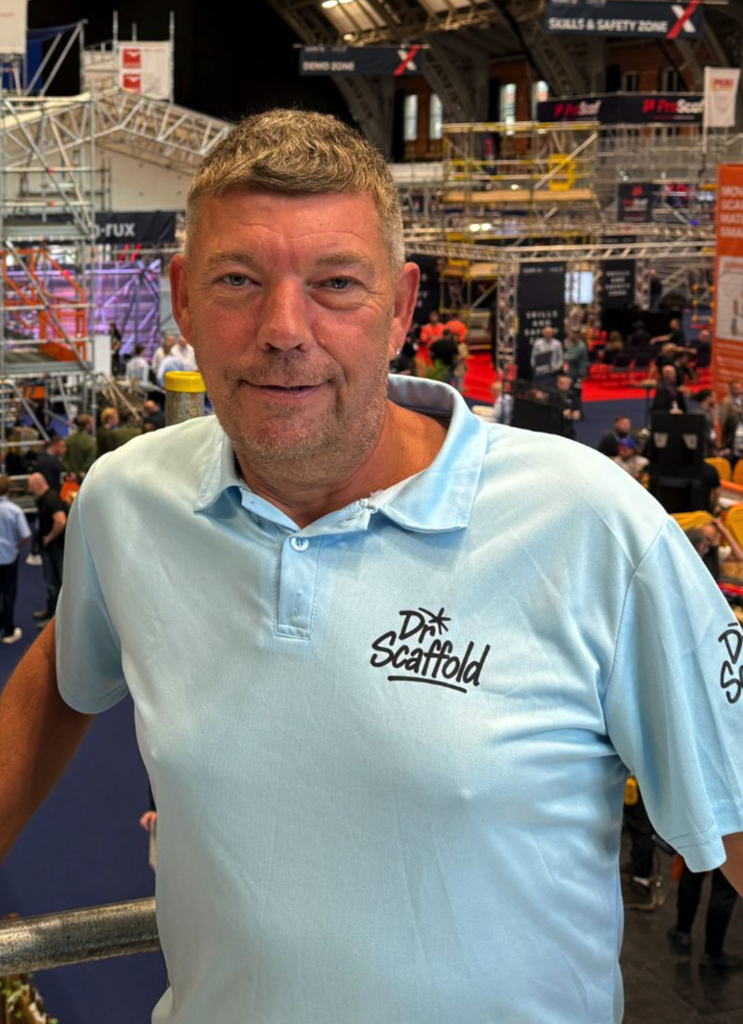
Alan Osborn is a scaffolding and safety consultant, founder of Osborn Scaffolding Services and a proud NASC committee member, known across the industry as Dr Scaffold. The views expressed are his own.