Billy Jones, Managing Director of Millcroft Services, discusses the importance of lifelong learning at all levels within a scaffolding business
Successful people are often asked about the secret to their success and there are many different answers, depending on the nature of their role and how they measure achievement. But there is one thing they all have in common: an ability to learn and keep on learning. As the late Steve Jobs, founder of Apple, said: “Learn continually – there’s always ‘one more thing’ to learn.”
At Millcroft, that’s a philosophy that we have put at the heart of our business. Training and personnel development are so central to how we operate that we have our own CITB Safety Plus accredited training centre at our head quarters in Greenwich and certified trainers on our team. But skill development is not just a priority for the site team and those seeking to further their career through training; it is also a priority for our leadership team who embrace the concept of continuous learning and understand the value of constantly adding to their skills and experience.
Our leadership team has decades of experience gained in both hands-on site activity and managerial responsibilities. As directors who have grown up within a family business, myself and my brother Sam Jones have been learning about construction and scaffolding since we were practising our times tables. But we both subscribe to the theory that there is always something new to learn and new ways of applying skills and knowledge to overcome challenges and enhance our service delivery. Moreover, we work in a sector where there is constant change across all kinds of operational areas, from health & safety and compliance, to construction methodologies and client requirements.
Both myself and Sam have recently successfully completed NVQ level 6 qualifications in construction management as have our Operations Director Mark Stimpson and Health & Safety Advisor Richard Ramkissoon. The qualification is equivalent to a degree and the course content complements the knowledge and experience our directors have already acquired during their careers, covering disciplines as diverse as programme planning, health & safety, quality control and relationship management.
Meanwhile, our Group Head of HSEQ Mike Wright has completed an NVQ Level 6 in occupational safety and health, building on his knowledge, experience and qualifications in this important aspect of our business.
At Millcroft we lead training in-house both for our own team and for the clients that come to us so it’s critical that we have current and wide-ranging knowledge. It’s also important that everyone who trains with us has complete confidence that they’re learning from people with certified expertise and authority.
Training and skill development at a senior level within Millcroft delivers value for the business and our clients in multiple ways. As a dynamic and ambitious business, learning is part of our commitment to delivering best practice and offering a smooth and efficient service for our clients. It is integral to quality-oriented operational management and our culture of continuous improvement. Learning is the process of questioning everything, so, when our directors invest time in training, it develops their ability to problem-solve and innovate in an ingrained discipline that influences the way they lead the business.
The senior team’s commitment to learning also influences the rest of our team. For many businesses, there is an emphasis on staff training, but the mandate is not carried through to management level. This can be especially true of family businesses where the leadership team has been born and bred in the scaffolding sector and does not perceive a need for training at director level. At Millcroft, we have seen the value of training for the senior team not only in building the skills and knowledge of directors and heads of departments, but also in inspiring the whole team about the benefits and value it brings.
When we developed our mental health awareness training and rolled this out to the whole team, we ensured that the initiative involved everyone at all levels. Our Group Head of HSEQ Mike Wright developed and delivered the training in a workshop style so that he was personally involved in exploring the topic with each cohort of staff, and all the directors also completed the course, establishing the importance of both training and mental health within the business.
Finally, it is our clients who benefit most from the training that our directors and senior managers complete. For them, this investment means that we offer a service that provides a best practice approach across all areas of project planning and delivery, operational management, financial management and collaboration. The skills our senior team develop when they pursue advanced learning permeate through the company, along with a culture of always being the best that we can be.
Fundamentally, therefore, at the successful completion of every job, we are firmly focused on what we have learned and how those lessons can be applied to do even better on our next project.
This article was first published in the ScaffMag Magazine Issue 16
Altrad has secured a multi-million pound, five-year (with an option of two additional, two-year extensions) contract to support the fabric maintenance of TotalEnergies’ offshore assets in the North Sea, Denmark.
The contract, which will become operational on 1st October 2022 adds to Altrad’s success earlier this month, when it also secured the Integrity Recovery Project (IRP) for TotalEnergies in Denmark.
Altrad’s Director of Business Development & Strategy – Peter Hughes said, “We are delighted to have secured both these contracts with TotalEnergies, which builds upon our successful strategic relationship that spans back over several decades. We look forward to working collaboratively with TotalEnergies, whilst using our industry leading skills and capabilities to enhance the performance of these contracts, to be the best they can be”.
The award of these contracts will increase Altrad’s offshore team numbers in Denmark and their new talented people will be valued and encouraged to develop fulfilling careers.
Jens Moerk – CEO of Altrad Services A/S added, “We are extremely pleased to have been awarded these contracts by TotalEnergies, which will be delivered in a value enhancing manner – using a combination of our local resources and facilities – and the skills and experience of the wider Altrad organisation.”
G-Deck has released a new DUAL bracket for its scaffold hybrid DUAL safety platform system.
The new bracket allows it to be fixed to a standard scaffold tube either using the external fittings provided or straight through the bracket. This means users no longer need legs to create platforms as it can be fixed to scaffold tubes, perfect for voids and tricky areas.
G-Deck says its always developing the system for the better. Its STANDARD system has already seen a deck weight reduction development this year which has seen 3.4kg wiped off the overall weight. Now sees the next innovation for the company this year for its DUAL system.
This new patent-pending bracket changes everything for scaffolders, says G-Deck. “We have called it ‘DUAL ANYWHERE’. The new features now enable our DUAL brackets to be fixed to, or a tube fed through to create a platform WITHOUT having to use a leg.“You can install the bracket using the external fittings provided, but now and possibly most exciting is you can place a scaffold tube all the way through and fix it at any point needed along. This is achieved with our V press tooth feature that grips and stops the bracket from moving once tightened.”“Perfect for stairwells, perfect for voids, perfect for areas where you can’t get legs in, it truly does allow the DUAL platform to be erected anywhere.We’re really excited to release this and continue the huge success DUAL has been.”
For further details on the DUAL Anywhere email: [email protected] or visit www.gdecking.com
0116 2510352
Leading training provider, AIS Survivex, has sealed a deal with the British Forces Resettlement Service (BFRS) to support those looking to work in the global energy sector after leaving military life.
The deal will see AIS Survivex become BFRS Gold Plus Sponsors and work closely with BFRS to help former military personnel retrain for new careers in the energy industry, particularly wind and renewables.
As well as attending a series of military careers events across the UK to promote energy sector careers and provide advice and guidance to BFRS members, AIS Survivex is developing tailored training packages to give ex-forces the right skills to get their first energy opportunity.
BFRS works with companies across the UK looking to hire, retrain and offer career advice to the armed forces community leaving service.
Neil Dean, operations director at BFRS, said: “This is an extremely important partnership for us and together with AIS Survivex, we want to lead the market in transitioning ex-military into new and meaningful energy sector careers through the launch of Military2Energy, which is specifically designed to filter people from the military to careers in energy.
“The energy sector has always been a popular career choice for ex-armed forces and even more so in the current market, which offers lots of opportunities. The UK wind industry alone needs more than 43,000 new workers by 2026 according to the Offshore Wind Industry Council.
“AIS Survivex is helping us to raise awareness of these opportunities at a series of military careers events. The next event will take place in Leicester on 16th June and after that Tidworth on 15th September so I’d urge people to come along to find out more.”
Linzi Ryan, Head of Marketing at AIS Survivex, said: “We are delighted to sign this agreement with BFRS and become the partner of choice for military personnel looking to successfully transition their skills into the global energy sector.
“We have extensive experience of training people for energy and work closely with key employers to develop career opportunities for those going through the resettlement process. As well as ensuring former military personnel have a smooth transition into civilian life, this also opens up the possibility of securing a full-time job within the exciting and dynamic energy sector. We are an ELCAS-approved supplier so ex-forces personnel can also access funding to help pay for training.”
There are lots of synergies between military life and working in the global energy sector and AIS Survivex has a proven track record of helping former military personnel transition into new careers. One example is former Royal Marine, Jonathan Askew.
Cramlington-born, Jonathan was a mortarman working with rifles and mortars but, after developing tinnitus, was medically discharged. After training with AIS Survivex, Jonathan secured a full-time job as a wind technician.
Jonathan said: “Coming out of the Royal Marines with no technical experience felt very much like starting from scratch and it was a huge transition to where I am now. I’ve now got extremely marketable skills and feel completely prepared for my wind career.”
AIS Survivex has set up a dedicated hotline to provide specialist help and advice for military personnel thinking about an energy sector career. Email [email protected] or call +44 (0) 191 3410 395.
CISRS carried out a trial run of the revised content for the new CPD course content at Construction College Midlands, Kings Norton, Birmingham last week.
The subsidised course was delivered by CISRS Compliance Manager Tony Barry. It was a return to familiar territory for Tony who had worked at the college (previously NCC Midlands) as a CISRS Lead Instructor for over 20 years prior to taking up his role with CISRS.
CISRS scaffolder CPD was originally launched in July 2017, with the first 5- year cycle of CPD and card renewals due to come to completion at the end of next month.
After initial resistance to the launch of the programme CISRS CPD has widely become accepted within the sector with over 20,000 operatives having attended the programme in this period.
Ben Ekins, Contracts Director and Advanced Scaffolder with NASC member Midland Scaffold Services, who attended the course said: “Some companies work hard to keep their workforce up to date with changes going on in the industry. Sadly, this is not the case for everyone and lots of scaffolders move employers pretty regularly so it makes sense that everyone comes back into the centre once every 5 years for a refresher. “Whoever you work for or however much you think you know it’s worthwhile making sure you kept up to date with changes in the industry.”
A survey went out to industry regarding the CPD programme looking for suggested changes to the content, delivery etc. The consultation document remained open for a 3-month period, within that time only around 400 responses were received.
The survey responses were taken into consideration along with the views of Access & Scaffolding Industry Training Organisation (ASITO) and it was concluded that the CPD format would remain, a 2-day programme which includes the additional Mobile Access Tower (MATS) and Inspection endorsement plus the Health Safety and Behavioural test for Phase 2.
Additional content on Health, including HAVS and Noise, Temporary works and increased inspection content will also be bolstered by the imminent launch of revised editions of SG4, SG6 and TG1.
Dave Mosley, CISRS Managing Director, was also in attendance at the course last week, assessing the delivery of the proposed programme and also renewing his CISRS card. He said: “The course went well but still requires a few minor tweaks which Tony is already addressing. Once these have been completed, he will deliver a webinar for CISRS-approved providers in order to bring them up to speed with the changes prior to the launch of phase 2.”
The new course will go live from Monday 1st August 2022.
Andrew Kitley, scaffold design specialist and Managing Director of structural engineering consultancy KITALL, argues internal design teams are not the be-all and end-all. Andrew Kitley
I’ve noticed something recently: the structural engineering industry is rife with company directors touting their internal scaffold design teams. In this era of FOMO where we all feel our shortfalls keenly, it’s enough to make the average small-to-medium-sized player feel inadequate.
But I call BS. Most companies don’t have an internal design ‘team’, but one engineer. Claiming to have a team made up of just one is faking it ‘til you make it… to the extreme. It’s time to own up to the fact that you don’t do everything – and there’s really nothing wrong with that.
To be effective, especially in a complex industry, a team needs a depth of experience and competence. This simply can’t be attained from just one or two team members.
When I talk to people in the industry and ask them what advantages they think relate to an internal design team, they usually tell me that most tenders for larger projects require concepts and internal designs, and doing this internally gives them the illusion of no cost. Secondly, they say that if they need to reduce their bid, they can throw the design in for free. Thirdly, they can tell their clients that they have an internal team, as clients like this. Lastly – and this is not something anyone would admit to, but I’ve definitely experienced it myself first-hand – they can bully an internal engineer into doing something they probably shouldn’t.
Busting the myths
I’ve come across so many misconceptions around internal design teams in my 15 years in the industry. Let’s take a look at a few of them.
Internal teams are cheaper, as you’re only paying their wages.
This seems true if you compare hourly rates, but hourly rates alone don’t tell the full story. Let’s say your internal team costs you £22 per person per hour and your external contractor costs £65 per hour. You’ll probably find that your internal team will take four hours to complete the job, while the external team takes two hours – so that’s £88 versus £130. Then you have to factor in the company overheads, which might bring the costs to almost equal.
Internal teams are good at innovating because they’re supported by a team of experienced scaffolders.
Innovation is so important, but this argument fails to take into account the expertise of most external design contractors. What would be better than being supported by a team of, say, 20 or 30 great scaffold contractors across the country and the world who have the most diverse set of experiences possible? External engineers are exposed to all sorts of challenging construction projects, large and small. At KITALL, we’ve delivered some of the country’s largest construction projects. Our experience means we can look at complex problems from different angles and challenge the status quo. We come up with innovative cost-saving solutions that others don’t, because we’ve already seen five different solutions across similar projects and can devise the best solution by merging those into one.
Internal teams are well trained.
This may be the case with some companies, but certainly not many. Most large scaffold design consultancies like KITALL hire engineers with vast experience in temporary works and even permanent works. This means their people have a deeper knowledge of engineering as a whole. This also means that consultancies can solve any complex problems you and your clients might face – something that 70% of scaffold designers can’t. For example, those on my team have the ability to check the foundations and advise on impacts to the existing structure – I’ll share more on this in a future article.
At KITALL, we spent £92,000 on developing software and software systems last year, plus £23,000 on training courses, and we allowed significant time for our staff to undertake professional development. This year will see us hire 12 external specialists to teach skills that will develop the team and business for the future. I interview engineers all the time and I know this is not happening in most internal teams.
But I want to add a caveat here to say that this does not apply to all companies – large corporate companies don’t seem to suffer the same problems as small-to-medium-sized enterprises. Companies like Actavo, BrandSafway and Enigma definitely have a solid reputation.
Times are changing and we must keep up
Scaffold design is changing, and most people in the industry don’t seem to see that. In two to three years’ time we’ll see the same shockwaves travel through our industry as we did the demolition industry, and many will be left sitting here wondering what happened.
It’s time for scaffold designers to step up and take ownership of their skills and expertise and challenge the stigma that so clearly exists. We sometimes forget that we’re an engineering practice. If you ask a civil engineering student what sort of work they want to do when they graduate, you won’t hear them say ‘temporary works’. As a group, temporary works specialists are looked down upon within the engineering industry. But the truth is that companies would simply not be able to deliver ambitious projects without us.
In the 70+ interviews I’ve either been part of or have chaired, I’ve mentioned freestanding structures and have asked the interviewee what the first thing they would consider. Approximately 60% of respondents get the answer wrong. The ones who do respond correctly have either come from good design consultancies, or have worked in other engineering disciplines. This figure should be 100%, we have to work to change this.
I often hear people say “it’s always been done like this” or “it’s only scaffolding”. Well, times are changing. The majority of our work now is in checking buildings that are having scaffolding constructed around them, and the main contractors are, these days, much less likely to suffer fools.
If you’re not following the British standards or Eurocodes for drawing standards, completing full carefully considered and understandable calculations, prioritising career development through the Institution of Civil Engineers (ICE) or the Institution of Structural Engineers (IStructE), and demonstrating an understanding of the structure you’re founding on, then you won’t survive in this industry.
It’s clear that we all have a lot to do to move with the times and, if I’m honest, not much time to do it in. So, let’s support each other to help elevate the industry, because change is going to happen whether we like it or not.
This article was first published in the ScaffMag Magazine Issue 16
It’s Men’s Health Week from 12th to 19th June and the Lighthouse Construction Industry Charity are supporting the week by raising awareness of all the resources they have to support our men in construction.
One in five men die before the age of 65. The causes are a variety of physical and mental health issues, so Men’s Health Week is all about increasing awareness of preventable health problems for men of all ages and backgrounds.
Our construction workforce is 87% male so it is vital that our workforce are given free and easily accessible support to live healthier lifestyles and there are plenty of things that can be done to help stay fit in mind and body.
Physical Health
Get regular check-ups with your doctor. Seeing your GP regularly can help them identify and treat any health issues, such as Prostate cancer, in its early stage.
Reduce your salt and sugar intake. Having too much salt can increase your cholesterol and cause heart problems later down the line whereas too much sugar can lead to obesity and/or diabetes.
Go for a daily walk. Taking a stroll lets you get in some cardio exercise and fresh air – and it’s great for your mental health.
Reduce alcohol intake. As well as inhibiting your ability to perform day to day functions, consistent and large intakes of alcohol can cause liver problems.
Quit smoking. Smoking is bad for every organ in your body and can lead to a variety of severe health issues, such as lung and throat cancer – it’s also expensive!
Enjoy breakfast everyday – A nutritious breakfast starts your day off right. It not only sets you up so you have energy and fuel for optimal mental and physical performance, but also to maintain stable blood sugar levels and a healthy weight because you are less likely to overindulge later in the day
Mental Health
Join a community group. Being part of a group can boost mental wellbeing by reducing feelings of loneliness and detachment. Try visiting one of our Lighthouse Beacons as a first step.
Talk to someone. Whether it’s family or friends (or even one of our helpline workers), maintaining healthy relationships with peers. You can always call our helpline if you need.?
Take up a hobby. Engaging in a hobby can be a mental escape, help us hone a skill, or just provide an opportunity to socialise with others. It’s also a great way to help us disconnect from work and break away from the monotony of daily life.
Volunteer. Doing something selfless for others has been proven to make ourselves feel better. We even have our own volunteering opportunities you can join.
Get a good night’s sleep. Sleep is essential to healthy mental wellbeing as it helps us regulate our emotions and ability to function effectively. Register for the free Sleepstation app to find out how.
Adopt relaxation techniques. These can work to slow down breathing, lower blood pressure, and reduce muscle tension and stress.
Bill Hill, CEO of the Lighthouse Construction Industry Charity said, “Our construction industry is 87% male, which is why it’s incredibly important for us to provide the right support and encourage them to be healthy for work and for life. As a charity we provide holistic support across all aspects of emotional, physical and financial wellbeing and we strive to provide education and information so that where possible people can help themselves and be pro-active in developing a healthy lifestyle. We’ve had a fantastic response to recent campaigns highlighting skin health, stress, prostate cancer and healthy sleeping and we will continue to provide pro-active resources for our workforce. We’re here for everyone who works in the construction industry and allied trades, including their families, and all our support services are completely free. Whether you want specific advice from one of our trained advisors through our helpline or text support service, or access to learning resources through our Self Support App, there is a route to support for everyone.”
Reaching out for support
24/7 Construction Industry Helpline offering free and confidential emotional, physical and financial wellbeing support with translation services for those that need extra support.
Construction Industry Helpline Self Support App which complements the helpline and signposts to over 3000 accredited organisations offering specialist support.
Free text HARDHAT service that gives immediate access to text back counselling
Lighthouse Beacons. 160 volunteer centres across the country that offer a safe place to meet in a confidential environment.
CPD accredited Wellbeing Masterclasses covering topics such as Managing Stress, Coping with Anxiety and Building Resilience to name just a few.
To access all the resources above and to find out more, visit the charity’s Mens Health Campaign page
If you need help or support now, or know someone that does, you can access free and confidential support 24/7 via:
Construction Industry Helpline on UK 0345 605 1956 / ROI 1800 939 122,
Or text HARDHAT to 85258 (UK) or 50808 (ROI)
Website signposting to all resources
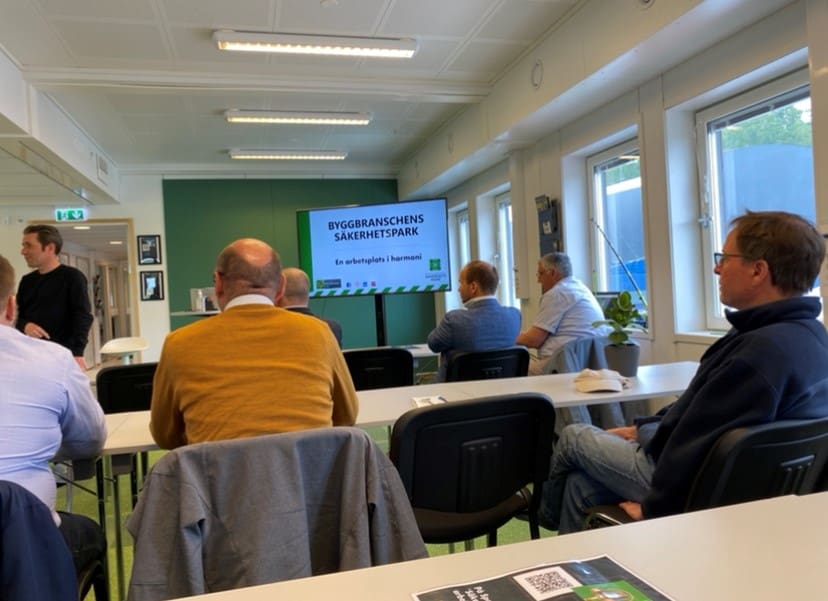
NASC Managing Director Robin James and Dave Mosley NASC Training Director and CISRS MD, have recently returned from a UEG (Union Europaischer Gerustbaubetriebe) meeting in Stockholm, having attended a two-day event focusing on scaffolder training standards across Europe on 30/31 May.
Hosted by the Swedish federation (STIB), delegates were in attendance from UEG member scaffolding organisations in Sweden, Germany, Norway, Luxembourg, UK, Denmark, Netherlands, Finland, Switzerland, and were joined by prospective UEG member Turkey.
Delegates included trade federation staff, scaffolding contractors, Hire, Sales and Manufacturers/Suppliers, training providers, CEN/BSI committee members, and other scaffolding industry experts.
Scaffolding training and qualifications vary massively across the UEG representative national organisations. It is accepted by the UEG that the aim to set a minimum standard for competency across Europe is a considerable project to undertake. However, those present in Sweden and those who attended the previous meeting felt that this was an admirable goal to strive to achieve which will ultimately help raise standards and improve safety in participating countries across Europe.
The initial focus will be on Scaffold Inspection and a small working party has been set up in order to look at existing programmes, giving consideration to International and national legislation, types of products and equipment used, course entry criteria, training provider requirements etc.
Dave Mosley said “This project is about sharing best practice. All countries must abide by international regulations and directives, however there is a huge difference in how strictly these are applied and how individual countries or sectors infer competence when it comes to Scaffold Inspection.
“Several UEG members have existing programmes in place. If we can use these to help us set a minimum standard that all members can work towards, it will have a massively positive effect.”
Robin James added “UK plays a prominent role in UEG, and collaboration with our European partners has proved beneficial for the UK scaffolding industry over the years. The NASC is widely-respected for the quality and range of its scaffolding guidance, and CISRS is regarded as the benchmark for industry training across Europe”.
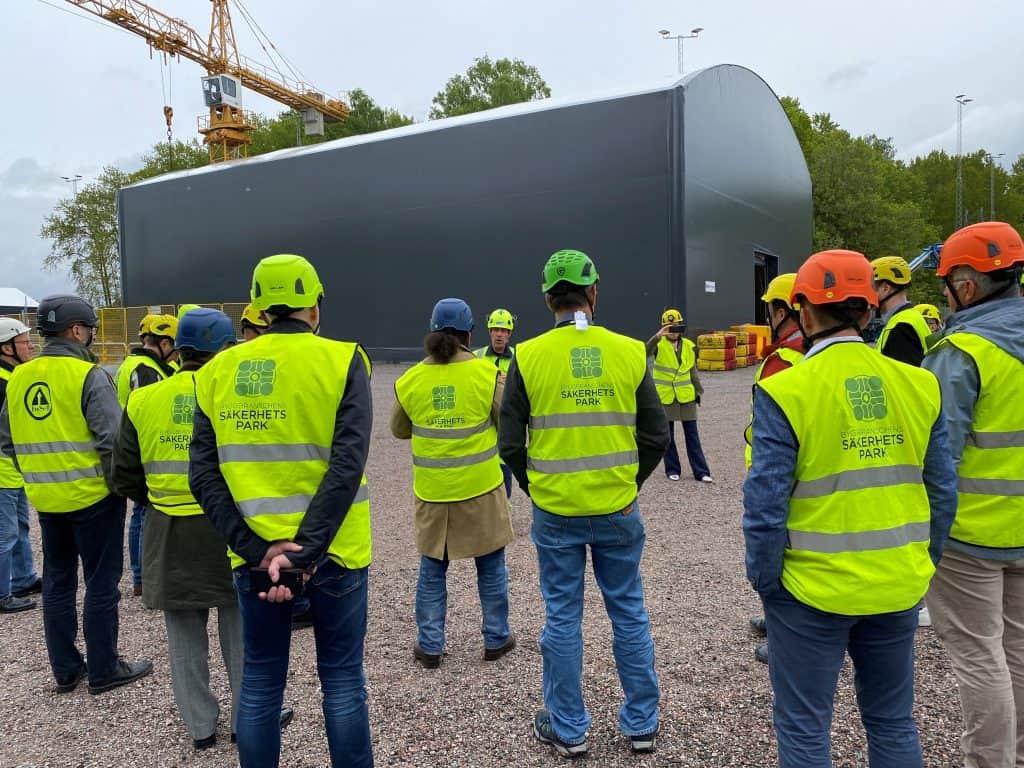
The 2-day event concluded with a guided tour around the Training Centre and Safety Parc just outside Arlanda Airport in Stockholm.
CISRS has issued a brand new ‘Have you got the right card?’ information poster.
The CISRS poster has been designed to be displayed in site offices, helping Site Managers and Contractors to check and demonstrate that Operatives, Manager/Supervisors and Inspectors of scaffolding hold the correct CISRS cards endorsing the correct qualifications and experience.
CISRS hopes that this resource will assist in their responsibility of keeping each site compliant and safe.
Covering all CISRS cards, the posters are also helpful for site cabins and training centres to inform operatives and delegates, about what each card should look like, how they are obtained and what they entitle the holder of said card to do.
To obtain a new poster you can contact CISRS directly via [email protected]
PHD Access has won the prestigious contract from the National Museum of the Royal Navy to provide the specialist access required for the latest stage of the renovation of the world-famous HMS Victory.
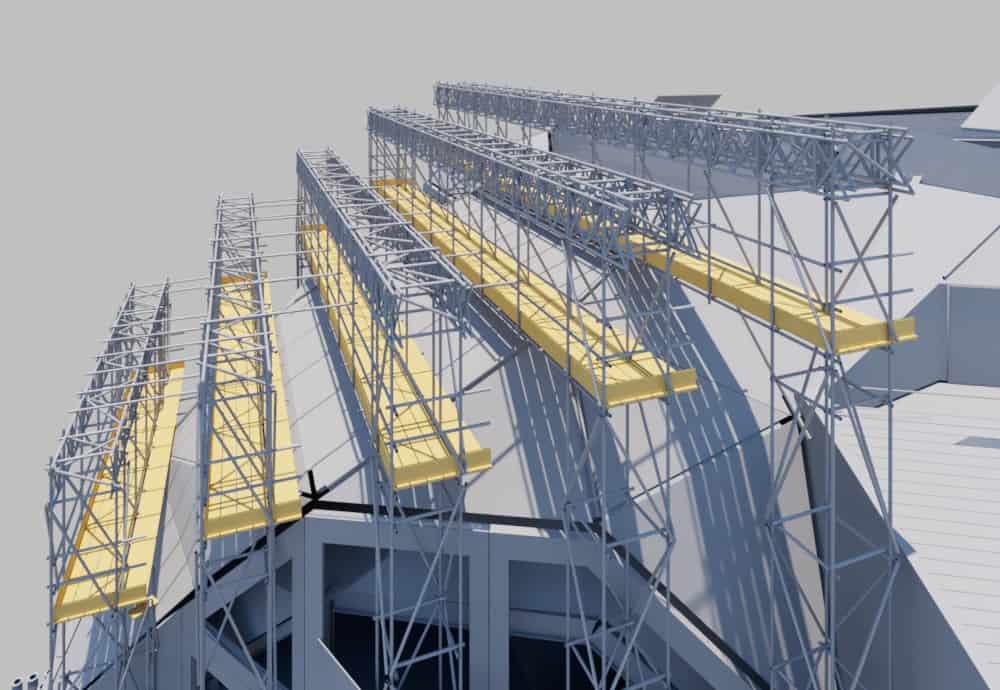
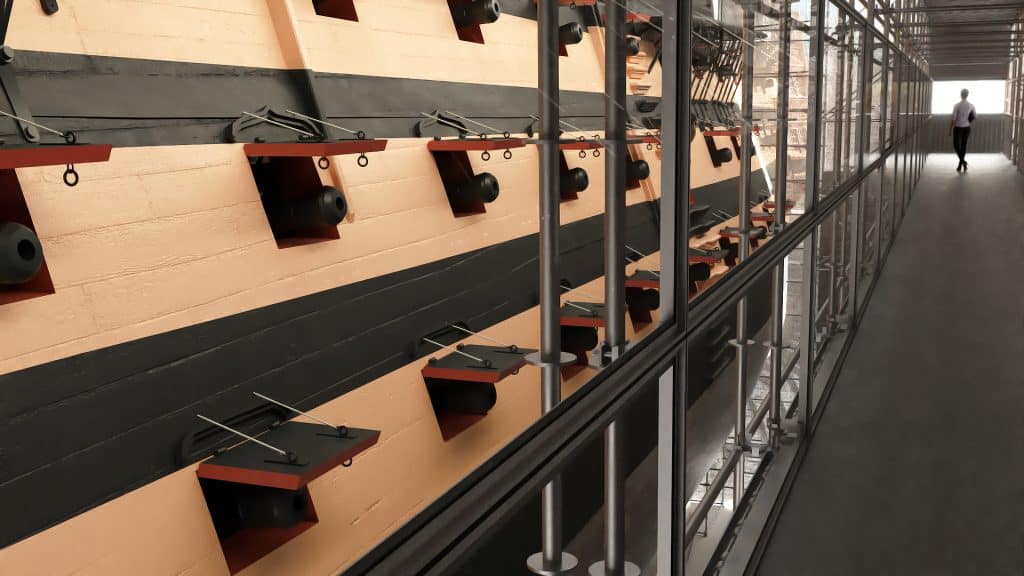
The specialist scaffolding company has designed a full-enclosed scaffolding installation that will allow the vital conservation work to take place while simultaneously allowing the public to continue to visit Vice-Admiral Lord Nelson’s iconic flagship at Portsmouth Historic Dockyard.
The latest phase of the conservation work is part of a wider 10-year renovation project that will ultimately see rotten wooden planks painstakingly removed and replaced in a bid to preserve the 18th century ship for future generations.
A temporary building will be constructed by PHD Access over one section of Victory at a time, initially allowing the process of drying to take place and then continuing to keep her weathertight during conservation work.
The specially-designed, public-friendly platforms and the temporary building will move along the 227 feet long ship in three phases as the work progresses.
A computer-generated artist’s impression of what HMS Victory will look like during the renovation programme when visitors will still be able to visit.
PHD Access has been awarded the £4million access contract for the renovation work which is taking place exactly a century after the ship was first moved to a dry dock in 1922.
The Uxbridge-based company, which provides specialist access across the globe in a number of different sectors, has a proven track record of providing specialist structures for heritage projects renovations, including the refurbishment of Elizabeth Tower (known as Big Ben) and the Cutty Sark restoration.
PHD Access is due to complete the first phase of the installation in time for the busy summer holiday period.
The company will use specialist 160-tonne cranes to scaffolding installation over the 62-metre high ship.
Danny Dwyer, Managing Director of PHD Access, said: “We are immensely proud to have won this prestigious contract to create the access structure that will allow conservation work to be carried out on HMS Victory.“One of our great strengths is being able to create specifically designed access solutions for difficult or unusual projects. This is one reason why we have created a good reputation when it comes to working with heritage projects which often have their own unique challenges that need to be successfully overcome.
“A key requirement for this project was to create a viable access solution that not only allowed the specialists to carrying out the conservation work but that also allowed the public to have a close-up view of the renovation at the same time.
It is an honour to think we will have played our part in helping to preserve this important piece of history.”
Professor Dominic Tweddle, Director General of The National Museum of the Royal Navy said: “After ten hard years exhaustively studying HMS Victory from bowsprit to beetles (yes really) and then designing and fitting a new high-tech support system, the next stage of the works begins. ?Victory will be partly covered to allow rotten wood to be painstakingly removed and replaced. ?And the brilliant thing is that our visitors will be able to get close up and personal with the ship and see the works close up under the guidance of our expert ship wrights!!”
Andrew Baines, Project Director for HMS Victory explained: “Conservation work on HMS Victory steps up a gear now as we enter a hugely significant phase that will temporarily transform her and open up an incredibly exciting opportunity to see her in a new light and interpret her story in a way never done before.“We need to construct access scaffold, inside the temporary building, to allow our shipwrights and conservators access to the rotten hull planking in order to remove it. Once removed, we must then let what’s left dry out, before we can then make repairs and then re-plank with new timber.” “The decade-long project will ensure the ship is protected for the next half century, as the ship’s rotten outer shell is removed and replaced with new oak. Repairs will be made to the ship’s structural framework and she will be fully re-rigged, in a process lasting ten to fifteen years and costing £35 million. Victory’s ceremonial function as flagship of the First Sea Lord will continue and the white ensign will still be flown from the ensign staff.”
We use cookies on our website to give you the most relevant experience by remembering your preferences and repeat visits. By clicking “Accept”, you consent to the use of ALL the cookies.
This website uses cookies to improve your experience while you navigate through the website. Out of these, the cookies that are categorized as necessary are stored on your browser as they are essential for the working of basic functionalities of the website. We also use third-party cookies that help us analyze and understand how you use this website. These cookies will be stored in your browser only with your consent. You also have the option to opt-out of these cookies. But opting out of some of these cookies may affect your browsing experience.
Necessary cookies are absolutely essential for the website to function properly. These cookies ensure basic functionalities and security features of the website, anonymously.
Cookie
Duration
Description
cookielawinfo-checbox-analytics
11 months
This cookie is set by GDPR Cookie Consent plugin. The cookie is used to store the user consent for the cookies in the category "Analytics".
cookielawinfo-checbox-functional
11 months
The cookie is set by GDPR cookie consent to record the user consent for the cookies in the category "Functional".
cookielawinfo-checbox-others
11 months
This cookie is set by GDPR Cookie Consent plugin. The cookie is used to store the user consent for the cookies in the category "Other.
cookielawinfo-checkbox-necessary
11 months
This cookie is set by GDPR Cookie Consent plugin. The cookies is used to store the user consent for the cookies in the category "Necessary".
cookielawinfo-checkbox-performance
11 months
This cookie is set by GDPR Cookie Consent plugin. The cookie is used to store the user consent for the cookies in the category "Performance".
viewed_cookie_policy
11 months
The cookie is set by the GDPR Cookie Consent plugin and is used to store whether or not user has consented to the use of cookies. It does not store any personal data.
Functional cookies help to perform certain functionalities like sharing the content of the website on social media platforms, collect feedbacks, and other third-party features.
Performance cookies are used to understand and analyze the key performance indexes of the website which helps in delivering a better user experience for the visitors.
Analytical cookies are used to understand how visitors interact with the website. These cookies help provide information on metrics the number of visitors, bounce rate, traffic source, etc.
Advertisement cookies are used to provide visitors with relevant ads and marketing campaigns. These cookies track visitors across websites and collect information to provide customized ads.
 Training and skill development at a senior level within Millcroft delivers value for the business and our clients in multiple ways. As a dynamic and ambitious business, learning is part of our commitment to delivering best practice and offering a smooth and efficient service for our clients. It is integral to quality-oriented operational management and our culture of continuous improvement. Learning is the process of questioning everything, so, when our directors invest time in training, it develops their ability to problem-solve and innovate in an ingrained discipline that influences the way they lead the business.
The senior team’s commitment to learning also influences the rest of our team. For many businesses, there is an emphasis on staff training, but the mandate is not carried through to management level. This can be especially true of family businesses where the leadership team has been born and bred in the scaffolding sector and does not perceive a need for training at director level. At Millcroft, we have seen the value of training for the senior team not only in building the skills and knowledge of directors and heads of departments, but also in inspiring the whole team about the benefits and value it brings.
When we developed our mental health awareness training and rolled this out to the whole team, we ensured that the initiative involved everyone at all levels. Our Group Head of HSEQ Mike Wright developed and delivered the training in a workshop style so that he was personally involved in exploring the topic with each cohort of staff, and all the directors also completed the course, establishing the importance of both training and mental health within the business.
Finally, it is our clients who benefit most from the training that our directors and senior managers complete. For them, this investment means that we offer a service that provides a best practice approach across all areas of project planning and delivery, operational management, financial management and collaboration. The skills our senior team develop when they pursue advanced learning permeate through the company, along with a culture of always being the best that we can be.
Fundamentally, therefore, at the successful completion of every job, we are firmly focused on what we have learned and how those lessons can be applied to do even better on our next project.
This article was first published in the ScaffMag Magazine Issue 16
Training and skill development at a senior level within Millcroft delivers value for the business and our clients in multiple ways. As a dynamic and ambitious business, learning is part of our commitment to delivering best practice and offering a smooth and efficient service for our clients. It is integral to quality-oriented operational management and our culture of continuous improvement. Learning is the process of questioning everything, so, when our directors invest time in training, it develops their ability to problem-solve and innovate in an ingrained discipline that influences the way they lead the business.
The senior team’s commitment to learning also influences the rest of our team. For many businesses, there is an emphasis on staff training, but the mandate is not carried through to management level. This can be especially true of family businesses where the leadership team has been born and bred in the scaffolding sector and does not perceive a need for training at director level. At Millcroft, we have seen the value of training for the senior team not only in building the skills and knowledge of directors and heads of departments, but also in inspiring the whole team about the benefits and value it brings.
When we developed our mental health awareness training and rolled this out to the whole team, we ensured that the initiative involved everyone at all levels. Our Group Head of HSEQ Mike Wright developed and delivered the training in a workshop style so that he was personally involved in exploring the topic with each cohort of staff, and all the directors also completed the course, establishing the importance of both training and mental health within the business.
Finally, it is our clients who benefit most from the training that our directors and senior managers complete. For them, this investment means that we offer a service that provides a best practice approach across all areas of project planning and delivery, operational management, financial management and collaboration. The skills our senior team develop when they pursue advanced learning permeate through the company, along with a culture of always being the best that we can be.
Fundamentally, therefore, at the successful completion of every job, we are firmly focused on what we have learned and how those lessons can be applied to do even better on our next project.
This article was first published in the ScaffMag Magazine Issue 16 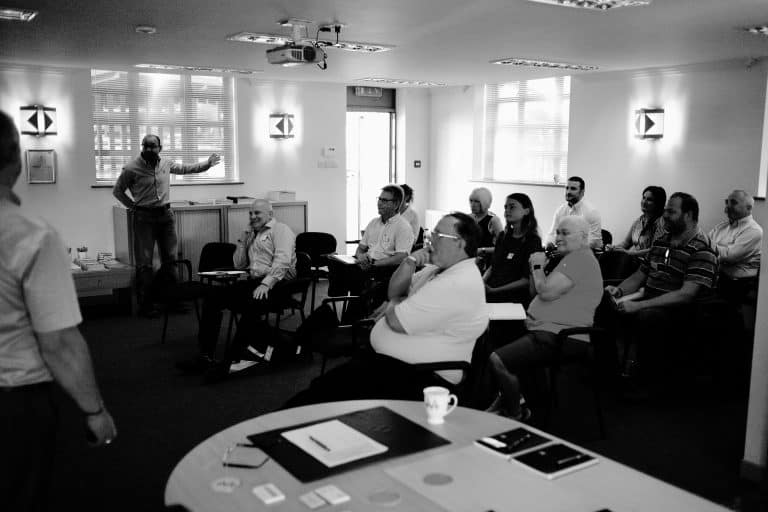
 Training and skill development at a senior level within Millcroft delivers value for the business and our clients in multiple ways. As a dynamic and ambitious business, learning is part of our commitment to delivering best practice and offering a smooth and efficient service for our clients. It is integral to quality-oriented operational management and our culture of continuous improvement. Learning is the process of questioning everything, so, when our directors invest time in training, it develops their ability to problem-solve and innovate in an ingrained discipline that influences the way they lead the business.
The senior team’s commitment to learning also influences the rest of our team. For many businesses, there is an emphasis on staff training, but the mandate is not carried through to management level. This can be especially true of family businesses where the leadership team has been born and bred in the scaffolding sector and does not perceive a need for training at director level. At Millcroft, we have seen the value of training for the senior team not only in building the skills and knowledge of directors and heads of departments, but also in inspiring the whole team about the benefits and value it brings.
When we developed our mental health awareness training and rolled this out to the whole team, we ensured that the initiative involved everyone at all levels. Our Group Head of HSEQ Mike Wright developed and delivered the training in a workshop style so that he was personally involved in exploring the topic with each cohort of staff, and all the directors also completed the course, establishing the importance of both training and mental health within the business.
Finally, it is our clients who benefit most from the training that our directors and senior managers complete. For them, this investment means that we offer a service that provides a best practice approach across all areas of project planning and delivery, operational management, financial management and collaboration. The skills our senior team develop when they pursue advanced learning permeate through the company, along with a culture of always being the best that we can be.
Fundamentally, therefore, at the successful completion of every job, we are firmly focused on what we have learned and how those lessons can be applied to do even better on our next project.
This article was first published in the ScaffMag Magazine Issue 16
Training and skill development at a senior level within Millcroft delivers value for the business and our clients in multiple ways. As a dynamic and ambitious business, learning is part of our commitment to delivering best practice and offering a smooth and efficient service for our clients. It is integral to quality-oriented operational management and our culture of continuous improvement. Learning is the process of questioning everything, so, when our directors invest time in training, it develops their ability to problem-solve and innovate in an ingrained discipline that influences the way they lead the business.
The senior team’s commitment to learning also influences the rest of our team. For many businesses, there is an emphasis on staff training, but the mandate is not carried through to management level. This can be especially true of family businesses where the leadership team has been born and bred in the scaffolding sector and does not perceive a need for training at director level. At Millcroft, we have seen the value of training for the senior team not only in building the skills and knowledge of directors and heads of departments, but also in inspiring the whole team about the benefits and value it brings.
When we developed our mental health awareness training and rolled this out to the whole team, we ensured that the initiative involved everyone at all levels. Our Group Head of HSEQ Mike Wright developed and delivered the training in a workshop style so that he was personally involved in exploring the topic with each cohort of staff, and all the directors also completed the course, establishing the importance of both training and mental health within the business.
Finally, it is our clients who benefit most from the training that our directors and senior managers complete. For them, this investment means that we offer a service that provides a best practice approach across all areas of project planning and delivery, operational management, financial management and collaboration. The skills our senior team develop when they pursue advanced learning permeate through the company, along with a culture of always being the best that we can be.
Fundamentally, therefore, at the successful completion of every job, we are firmly focused on what we have learned and how those lessons can be applied to do even better on our next project.
This article was first published in the ScaffMag Magazine Issue 16 

 Dave Mosley, CISRS Managing Director, was also in attendance at the course last week, assessing the delivery of the proposed programme and also renewing his CISRS card. He said: “The course went well but still requires a few minor tweaks which Tony is already addressing. Once these have been completed, he will deliver a webinar for CISRS-approved providers in order to bring them up to speed with the changes prior to the launch of phase 2.”
The new course will go live from Monday 1st August 2022.
Dave Mosley, CISRS Managing Director, was also in attendance at the course last week, assessing the delivery of the proposed programme and also renewing his CISRS card. He said: “The course went well but still requires a few minor tweaks which Tony is already addressing. Once these have been completed, he will deliver a webinar for CISRS-approved providers in order to bring them up to speed with the changes prior to the launch of phase 2.”
The new course will go live from Monday 1st August 2022. 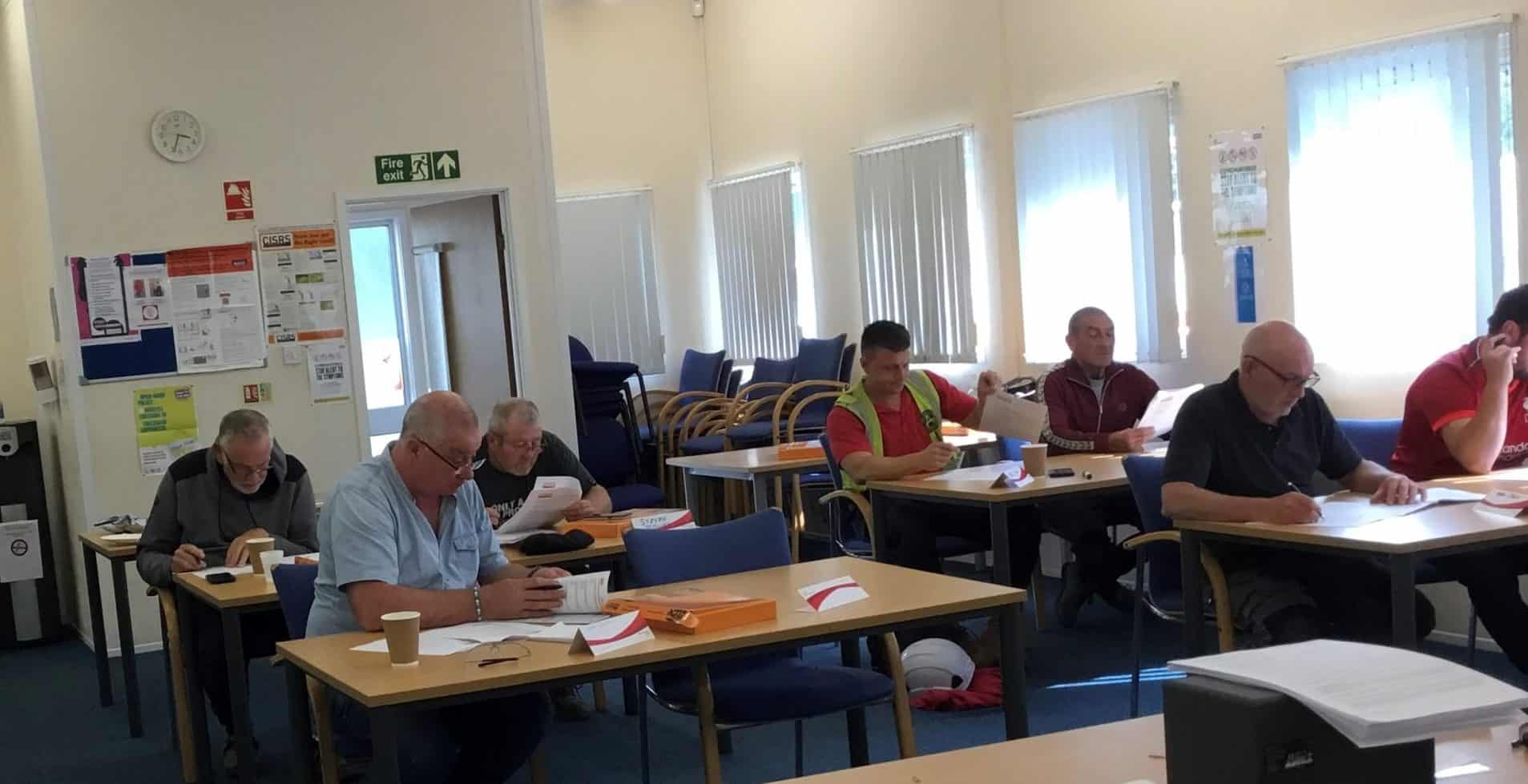 Dave Mosley, CISRS Managing Director, was also in attendance at the course last week, assessing the delivery of the proposed programme and also renewing his CISRS card. He said: “The course went well but still requires a few minor tweaks which Tony is already addressing. Once these have been completed, he will deliver a webinar for CISRS-approved providers in order to bring them up to speed with the changes prior to the launch of phase 2.”
The new course will go live from Monday 1st August 2022.
Dave Mosley, CISRS Managing Director, was also in attendance at the course last week, assessing the delivery of the proposed programme and also renewing his CISRS card. He said: “The course went well but still requires a few minor tweaks which Tony is already addressing. Once these have been completed, he will deliver a webinar for CISRS-approved providers in order to bring them up to speed with the changes prior to the launch of phase 2.”
The new course will go live from Monday 1st August 2022. 





 Dave Mosley said “This project is about sharing best practice. All countries must abide by international regulations and directives, however there is a huge difference in how strictly these are applied and how individual countries or sectors infer competence when it comes to Scaffold Inspection.
“Several UEG members have existing programmes in place. If we can use these to help us set a minimum standard that all members can work towards, it will have a massively positive effect.”
Robin James added “UK plays a prominent role in UEG, and collaboration with our European partners has proved beneficial for the UK scaffolding industry over the years. The NASC is widely-respected for the quality and range of its scaffolding guidance, and CISRS is regarded as the benchmark for industry training across Europe”.
Dave Mosley said “This project is about sharing best practice. All countries must abide by international regulations and directives, however there is a huge difference in how strictly these are applied and how individual countries or sectors infer competence when it comes to Scaffold Inspection.
“Several UEG members have existing programmes in place. If we can use these to help us set a minimum standard that all members can work towards, it will have a massively positive effect.”
Robin James added “UK plays a prominent role in UEG, and collaboration with our European partners has proved beneficial for the UK scaffolding industry over the years. The NASC is widely-respected for the quality and range of its scaffolding guidance, and CISRS is regarded as the benchmark for industry training across Europe”.
 The 2-day event concluded with a guided tour around the Training Centre and Safety Parc just outside Arlanda Airport in Stockholm.
  Dave Mosley said “This project is about sharing best practice. All countries must abide by international regulations and directives, however there is a huge difference in how strictly these are applied and how individual countries or sectors infer competence when it comes to Scaffold Inspection.
“Several UEG members have existing programmes in place. If we can use these to help us set a minimum standard that all members can work towards, it will have a massively positive effect.”
Robin James added “UK plays a prominent role in UEG, and collaboration with our European partners has proved beneficial for the UK scaffolding industry over the years. The NASC is widely-respected for the quality and range of its scaffolding guidance, and CISRS is regarded as the benchmark for industry training across Europe”.
Dave Mosley said “This project is about sharing best practice. All countries must abide by international regulations and directives, however there is a huge difference in how strictly these are applied and how individual countries or sectors infer competence when it comes to Scaffold Inspection.
“Several UEG members have existing programmes in place. If we can use these to help us set a minimum standard that all members can work towards, it will have a massively positive effect.”
Robin James added “UK plays a prominent role in UEG, and collaboration with our European partners has proved beneficial for the UK scaffolding industry over the years. The NASC is widely-respected for the quality and range of its scaffolding guidance, and CISRS is regarded as the benchmark for industry training across Europe”.
 The 2-day event concluded with a guided tour around the Training Centre and Safety Parc just outside Arlanda Airport in Stockholm.


 Danny Dwyer, Managing Director of PHD Access, said: “We are immensely proud to have won this prestigious contract to create the access structure that will allow conservation work to be carried out on HMS Victory.
“One of our great strengths is being able to create specifically designed access solutions for difficult or unusual projects. This is one reason why we have created a good reputation when it comes to working with heritage projects which often have their own unique challenges that need to be successfully overcome.
“A key requirement for this project was to create a viable access solution that not only allowed the specialists to carrying out the conservation work but that also allowed the public to have a close-up view of the renovation at the same time.
It is an honour to think we will have played our part in helping to preserve this important piece of history.”
Professor Dominic Tweddle, Director General of The National Museum of the Royal Navy said: “After ten hard years exhaustively studying HMS Victory from bowsprit to beetles (yes really) and then designing and fitting a new high-tech support system, the next stage of the works begins. ?
Victory will be partly covered to allow rotten wood to be painstakingly removed and replaced. ?And the brilliant thing is that our visitors will be able to get close up and personal with the ship and see the works close up under the guidance of our expert ship wrights!!”
Andrew Baines, Project Director for HMS Victory explained: “Conservation work on HMS Victory steps up a gear now as we enter a hugely significant phase that will temporarily transform her and open up an incredibly exciting opportunity to see her in a new light and interpret her story in a way never done before.
“We need to construct access scaffold, inside the temporary building, to allow our shipwrights and conservators access to the rotten hull planking in order to remove it. Once removed, we must then let what’s left dry out, before we can then make repairs and then re-plank with new timber.”
“The decade-long project will ensure the ship is protected for the next half century, as the ship’s rotten outer shell is removed and replaced with new oak. Repairs will be made to the ship’s structural framework and she will be fully re-rigged, in a process lasting ten to fifteen years and costing £35 million.
Victory’s ceremonial function as flagship of the First Sea Lord will continue and the white ensign will still be flown from the ensign staff.”
Danny Dwyer, Managing Director of PHD Access, said: “We are immensely proud to have won this prestigious contract to create the access structure that will allow conservation work to be carried out on HMS Victory.
“One of our great strengths is being able to create specifically designed access solutions for difficult or unusual projects. This is one reason why we have created a good reputation when it comes to working with heritage projects which often have their own unique challenges that need to be successfully overcome.
“A key requirement for this project was to create a viable access solution that not only allowed the specialists to carrying out the conservation work but that also allowed the public to have a close-up view of the renovation at the same time.
It is an honour to think we will have played our part in helping to preserve this important piece of history.”
Professor Dominic Tweddle, Director General of The National Museum of the Royal Navy said: “After ten hard years exhaustively studying HMS Victory from bowsprit to beetles (yes really) and then designing and fitting a new high-tech support system, the next stage of the works begins. ?
Victory will be partly covered to allow rotten wood to be painstakingly removed and replaced. ?And the brilliant thing is that our visitors will be able to get close up and personal with the ship and see the works close up under the guidance of our expert ship wrights!!”
Andrew Baines, Project Director for HMS Victory explained: “Conservation work on HMS Victory steps up a gear now as we enter a hugely significant phase that will temporarily transform her and open up an incredibly exciting opportunity to see her in a new light and interpret her story in a way never done before.
“We need to construct access scaffold, inside the temporary building, to allow our shipwrights and conservators access to the rotten hull planking in order to remove it. Once removed, we must then let what’s left dry out, before we can then make repairs and then re-plank with new timber.”
“The decade-long project will ensure the ship is protected for the next half century, as the ship’s rotten outer shell is removed and replaced with new oak. Repairs will be made to the ship’s structural framework and she will be fully re-rigged, in a process lasting ten to fifteen years and costing £35 million.
Victory’s ceremonial function as flagship of the First Sea Lord will continue and the white ensign will still be flown from the ensign staff.”