The UK’s top construction trainees will battle it out 16-18 November at CITB’s SkillBuild National Finals.
SkillBuild, the largest multi-trade construction competition in the country, will see more than 50 finalists from England, Scotland, Wales and Northern Ireland compete in their specialist skills.
The competitors will be set an 18-hour project to complete across the three days of the competition, which is set to take place at the National Construction College in Bircham Newton, Norfolk.
A series of remotely-delivered qualifiers ran across the UK during May and June, with nearly 100 colleges and training facilities supporting 250 competitors in their respective skills – bricklaying, carpentry, Foundation Skills: woodworking, furniture and cabinetmaking, joinery, painting and decorating, plastering, plastering and drywall systems, stonemasonry and wall and floor tiling.
In addition to their physical tasks, competitors were set a new online assessment, which tested their understanding of employability aspects such as Health & Safety.
Those competitors who will progress through to the SkillBuild 2021 National Finals will be announced, by WorldSkills UK, in mid-September.
Sarah Beale, CITB Chief Executive, said:?“SkillBuild is a terrific opportunity for young talent in the construction industry to shine, and I wish all participants the very best of luck. We’re delighted to be hosting the National Finals at Bircham Newton, it’s great that even with so much uncertainty during the past year the competition continues to proceed, albeit with significant safety restrictions.”
Long-term sponsors of SkillBuild who will be involved again in November include BAL, British Gypsum and Crown, with Michelmersh joining to support bricklaying competitions.
The Stone Federation GB is also supporting the event. CITB is extremely grateful to all organisations and agencies helping to showcase the quality and potential of the next generation of tradespeople.
Find out more about ?SkillBuild, and how to take part in next year’s competitions.
JECS Offshore Services has been selected to assist with the export cable pull-in, routing, termination and testing work on the Seagreen offshore wind farm.
Nexans Norway has selected JECS Offshore Services to supply its offshore access equipment along with its teams of scaffolding and rigging operatives.
Set to become Scotland’s largest offshore wind farm, Seagreen is located 27 kilometres off the coast of Angus in the North Sea Firth.
The offshore wind project, owned by TotalEnergies and SSE Renewables, will feature 114 Vestas 10 MW turbines expected to be operational in 2022/2023..
Last year, Nexans secured the contract to supply and install three 65-kilometre offshore export cables and three 20-kilometre onshore export cables for the 1,075 MW project.
The company will use its newbuild DP3 cable laying vessel (CLV) Nexans Aurora for the offshore installation.
A Sunderland scaffolder is in trouble after it was found he applied for a government-backed £50,000 Bounce Back Loan he wasn’t entitled to.
The 34-year-old scaffolder was trading as LTH Scaffolding until December 2019 he started working with a separate company.
But this did not stop him from applying for a government-backed Bounce Back Loan of £50,000 in the name of LTH Scaffolding which he received on 12 May 2020.
The money was then used to repay third parties rather than to meet ongoing business costs.
The scaffolder was declared bankrupt on 26 October 2020. But due to his improper application for the Bounce Back Loan and the risk he posed to other creditors, the Official Receiver sought to extend his bankruptcy restrictions further.
The man’s bankruptcy undertaking extends his restrictions for 10 years, which means he is limited to what credit he can access, as well as not being able to act as a company director without the permission of the court.
Richard Gill, the Official Receiver, said: “Mr Hobson was not entitled to the loan as he had already stopped trading having taken up employment. This money was not used for the purpose it was intended.Bounce Back loans are intended to enable businesses to survive the COVID-19 lockdowns and to be used to provide economic benefit for a business.
It is hoped that this Bankruptcy Restrictions Undertaking will act as a deterrent to others who may wish to abuse the government’s COVID-19 relief schemes.”
Two pensioners have died after falling from a scaffold that collapsed at a church in Peterhead, Scotland.
Emergency services rushed to the scene on Merchant Street in Peterhead last Wednesday after two pensioners fell from the scaffolding at a church.
According to reports, the men were painting the building when the incident happened at around 3 pm.
One 77-year-old man tragically died at the scene while the other 77-year-old man was rushed to hospital with serious injuries. Police have now unfortunately confirmed that this man has also died from his injuries.
The Health and Safety Executive are investigating the circumstances of the fall and were on-scene on the following day.
A Police Scotland spokesperson said: “A second 77-year-old man has died after falling from scaffolding on Merchant Street, Peterhead around 3pm on Wednesday, 18 August 2021. “He was taken to Aberdeen Royal Infirmary and died on Monday, 23 August. A 77-year-old man was also pronounced dead at the scene.”
The UK’s largest scaffolding trade body has welcomed an HMRC memo issued to businesses, reminding them to ensure that apprentices are paid at least the National Minimum Wage.
The Scaffolding Association has welcomed a Low Pay Commission report published earlier this year that states that around 1 in 5 apprentices earn less than their legal entitlement. The report sighted several common errors by businesses including:
Failure to pay the higher age-related minimum wage rate to those apprentices who are aged 19 and over and have completed the first year of their apprenticeship
Paying the £4.30 per hour minimum wage apprentice rate before or after an apprenticeship actually starts or finishes
Not paying for all the time worked by an apprentice – training time is working time
Scaffolding Association Chief Executive, Robert Candy, said “The skills shortage in the construction sector is a significant issue and attracting young blood is hard enough already.Businesses must ensure they are paying apprentices correctly and fairly which is vital to stay on the right side of the law but also to ensure that young talent is retained in the sector”.
See the apprentice section of Check your pay for further information on when minimum wage rates apply to apprentices.
Scaffolders are on alert after Sigma launched an exciting new regional retail assets framework potentially worth up to £2.5m.
The framework is now open for tender and Sigma is inviting sub-contractors in the South East, London and South-West regions, including ground workers, roofing contractors, general fit-out contractors, steelworkers, tile fitters and roofing contractors (London and South only) to express their interest to be part of the scheme.
Infrastructure, refurbishment, and fit-out works required for new build retail stores and the transformation of existing buildings will be covered under the framework, with contractors being called up to apply for projects ranging from £50k to £500k.
Launching in September 2021, the Sigma-led scheme will enable the refurbishment and fit-out of next-generation retail stores and create additional jobs in London and the South, with successful sub-contractors expected to work on notable projects for leading brands including Asda and M&S.
Craig Bennett, CEO at Sigma, said: “We are extremely thrilled to launch our new regional retail assets framework during a particular exciting time for the sector. In an industry undergoing rapid transformation, driven by constantly shifting consumer trends and digital technology, there are significant opportunities for sub-contractors to be a central part of that evolution.”“Across the region, there is a large amount of development that will require extensive refurbishment and fit-out works to get going. This framework is set to make those early services easier to access in a compliant manner for retail organisations, making sure that every site and project gets the quickest and best start possible to lead into the excellent, high quality schemes the industry is known for.”
To register your interest in being included in the new Retail Assets Framework, please provide details of your company, scope of works you are able to undertake and area of operation to [email protected]
Billy Jones, Managing Director of Millcroft, discusses why a degree in scaffolding engineering is vital for attracting talent and professional respect for the sector
For thousands of construction sites up and down the country, scaffolding requirements are relatively routine, enabling companies to erect a standard solution they’ve used countless times before. But at the more complex end of the market where Millcroft operates, the safety, access, logistical and operational elements of the project can involve much more complicated structural and engineering challenges, requiring creativity and expertise.
At Millcroft, we are very fortunate to have a technical director, Peter Holmes, who started within the scaffolding industry as a youngster and has trained and studied while working in a scaffolding environment. Peter has lived and breathed scaffolding engineering for more than 40 years: from being a junior draughtsman on day release through to gaining an HND in structural engineering. Thanks to his wealth of experience and engineering knowledge, he is the talented, safe pair of hands behind complex Millcroft projects as diverse as the prestigious heritage and restoration works at The Royal Navy College’s Painted Hall at Greenwich and our recent multi-site infrastructure project for Crossrail.
But the scaffolding sector does not have the luxury of decades to train and nurture a new generation of specialist engineers. To design the increasingly innovative structures across sectors including construction, demolition, rail, heritage and industry – we need these skills now.
And yet, there is still no dedicated, tailored degree-level qualification designed to bring the next generation of scaffolding engineers into the sector. Isn’t it about time there was?
Attracting Talent
Peter’s route to becoming a skilled scaffolding engineer is not unusual. Many of his peers began as draughtsmen or scaffolders on site and combined the knowledge they gained in their early career with further study in engineering to gain the experience and technical expertise needed to design complex solutions.
But the demands on scaffolding companies for flexible, cost-effective solutions, and the technologies available to aid the design process have changed significantly over the past few years. Scaffolding is a dynamic, creative environment that has the potential to attract high calibre talent at graduate level and provide a rewarding career for design engineers. When young people interested in engineering look around for a university course, however, they find their choice is to opt for civil or structural engineering, so there is no obvious conduit to steer engineering talent into scaffolding. Moreover, even for those young engineers who do pursue a career in scaffolding via the structural/civil engineering route, the lack of a tailored university course means that they still have a lot of scaffolding-specific knowledge to acquire. After years of study to gain their core skills, this is off-putting for some.
For the talented individuals that might come through by working their way up from a junior role in a scaffolding business, the lack of a scaffolding degree is similarly frustrating. These potential design engineers, who hold so much scaffolding knowledge, only have the option to take a civil or structural engineering degree which is tailored to careers in other disciplines.
Professional Respect
Amongst the challenges we face now as a sector is the need for clients to understand the complexity of what we do. We also need them to give us the freedom to respond creatively to their briefs and offer us the opportunity to advise them as a professional discipline. These are all integral elements to the dynamic between a client or main contractor and a civil or structural engineering specialist. For scaffolding companies, however, even those with a track record of complex projects like Millcroft, the professional respect afforded other types of engineering services is much harder won.
It is much harder to evidence the years of study and the expertise within the engineering design department because there is no scaffolding engineering degree available to back up the specialism. This is not because the level of skill and professionalism offered by scaffolding companies is any less than that provided by civil and structural engineering practices: far from it. Scaffolding engineers design projects just as complicated and safety-critical. What it means is that scaffolding companies can often be seen less as a professional service and more as a supplier. Fundamentally, the need for a scaffolding engineering degree is not just about changing the way we train our future design teams; it’s about changing perceptions of our industry; both for the clients we serve and for the talent we want to attract.
Education with Vision
With our own CITB-accredited training centre on site, we’re passionate about training at Millcroft. From the leadership team through to the young people who have recently joined us as part of the Kickstart scheme, we’re committed to making training and professional development part of everyone’s career journey.
However, we do not have the resources or authority to create a degree in scaffolding engineering ourselves; that needs to come from an education provider with the vision to create a vocationally-focused, creative and credible course. What the scaffolding sector can do is lobby for that to happen and give the idea our full support.
This article was first published in the ScaffMag Magazine Issue 13Find industry job vacancies.
Enigma Industrial Services is providing job placements for young people to help Kickstart their careers within the scaffolding industry.
The Covid pandemic has placed the global economy into the worst recession since the Second World War, and it’s contributed to the highest unemployment figures for many years throughout the UK, particularly amongst the younger generation.
To try to address the situation, the Government-funded Kickstart Scheme launched recently will help create job opportunities for 16 to 24 years old’s who are at risk of long-term unemployment.
The Government hopes employers throughout the UK will be encouraged to provide job placements for young people so they can gain experience within the workplace to help kickstart their careers.
The Enigma Industrial Services, Derby Depot, have recently provided 4 Kickstart trainees with 6-month placements and are extremely pleased with the progress and contributions they have made so far to support the team on-site and wider business.
To further assist and support their professional development and help to equip them with new skills, Enigma has inducted all 4 Kickstart trainees into the COTS programme provided in-house.
To further develop their skills and knowledge, Enigma has provided all four trainees with the opportunity to undertake a series of online training modules provided by “The QSHE Training Academy” a structured internal learning platform containing additional online training modules.
The new Kickstart trainee recruits can study over 30 modules to improve their understanding of Health and Safety in the workplace.
On successful completion of course modules, the Kickstart trainees become recognised “Knights of the Academy” and are awarded certificates for their achievements.
This extra tuition and support will better equip them for the workplace and provide them with additional valuable transferrable skills.
Darren Williams, Enigma Industrial Services, Operations Director, commented: “We believe young people actively seeking work deserve a chance to succeed. It’s great to see our new Kickstart placement trainees proactively embracing the additional training provided by Enigma. I am confident the new skills they have learnt to improve their Health & Safety understanding and knowledge whilst engaging with the Enigma Academy – Training Platform, will present them with future opportunities to progress their careers within the organisation or elsewhere.”
The revolutionary Macdeck safety decking system is set to become even more versatile across the industry thanks to a brilliantly designed new component.
It represents the perfect balance between precision and inventiveness, something at which Stockton-on-Tees JMAC Safety Systems excel.
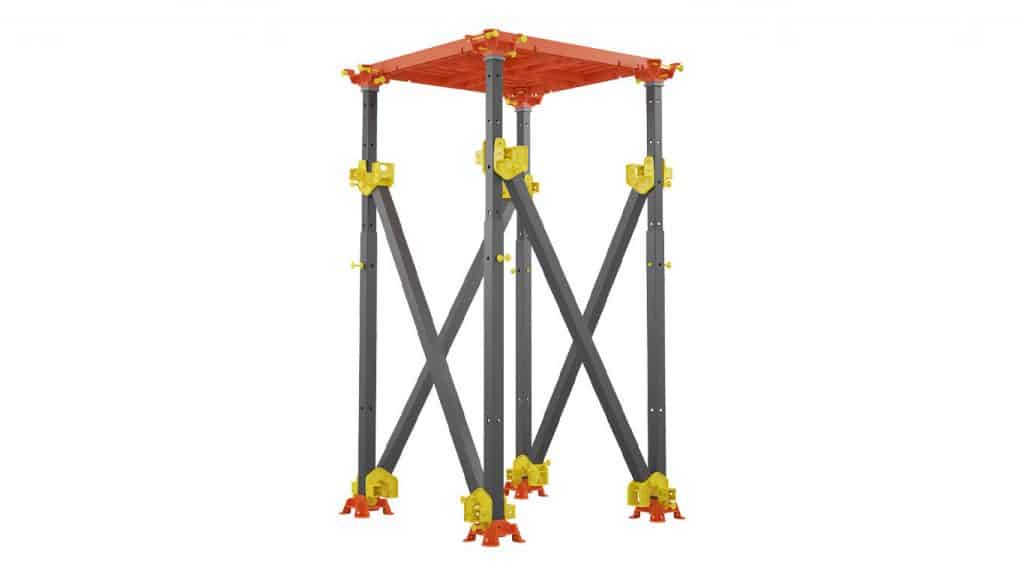
Many believe the MacDeck System is already a market leader in terms of safety – and now the MacBrace is a simple addition allowing the former to become totally free-standing when built in line with the manufacturer guidelines.
It means the system can be erected without the need of supporting walls – a common requirement in today’s construction market with low-level living spaces at single-story and protruding porches.
When the MacBrace is used in conjunction with their new Eco Extendable Leg; the MacDeck system can be utilised on a much broader range of build projects.
In fact, the MacBrace component was designed and tested in partnership with key supply chain partners and scaffold design engineers, with physical testing carried out at Teesside University. This was all made possible following the feedback received from both current clients and the JMAC management team.
Aaron Foley, General Manager at JMAC Safety Systems explained: “Our MacDeck Safety Decking system boasts a load capacity of 2.0kn per m2 and is the strongest injection moulded panel manufactured worldwide.“MacDeck is light weight and easy to handle, with only three main components. It is quick and simple to erect and dismantle. The system can be installed by one person, whilst easily erecting 60m2 within an hour.“All operatives using the MacDeck System must be adequately trained to ensure the system is installed in a safe and efficient manner. We offer free training to all customers wishing to purchase the MacDeck System. We will ensure all your operatives are competent before they undertake any work on site.“We have always believed the future of our business resides in the future of our ideas. We adopt a culture of ‘kaizen’ continuous improvement. The pandemic was the perfect opportunity for us to engage our creative capabilities and design something to adds value to our current MacDeck Safety Decking System.”
New product development is a strenuous and long process for most companies, but not for the visionary people at this dynamic north-eastern Company.
In terms of the system itself, JMAC Safety Systems recommend every 5th bay is fully braced in either direction or on each end bay, as a minimum.
To find out how to integrate the MacBrace into your MacDeck Safety Decking System, please contact the JMAC Hire & Sales team on 01642 563 69 www.jmacsafetysystems.co.uk
The Brogan Group have finished the tall building challenge, raising £2,000 for the Lighthouse Charity.
Brogan Group have finished the tall building challenge, raising £2,000 for the Lighthouse Charity, which provides emotional, physical, and financial wellbeing support to construction workers and their families.
Volunteers from the Construction Access company in the UK and Ireland clocked up over 2,800km walking or running a set distance each week for 8 consecutive weeks.
The distance was based on a multiple of the height of 8 Tall buildings Brogan Group have provided Access on. These were Boland’s Quay Dublin, Apex House, Wembley, West Tower, Liverpool, Capital Gate Splash, UAE, Walkie Talkie Tower and the Scalpel in London and the mighty Burj Khalifa in the UAE. A lighthouse was included in the mix in honour of the charity itself.
The Lighthouse Club charity specializes in mental health support and Brogan Group has recently committed to supporting its own workers by signing up to the Building Mental Health Charter with Building Mental Health. This is a cross-industry group that enable all parts of the construction sector to access mental health support, provide awareness and training and put in place a structure and systems to support people working in and around our industry.
Bill Hill, CEO of the Lighthouse Construction Industry Charity said, “As well as being one of our valued Company Supporters, Brogan has also undertaken a fantastic fundraising challenge for us which is great news. They’re also helping us raise awareness of the importance of positive mental health in the industry which is crucial to our mission that no construction worker or their family should feel alone in a crisis”.
Brogan Group work with organisation’s like the Lighthouse Club on training up their own Mental health ‘First Aiders’ that support the wider staff at Brogan Group.
We use cookies on our website to give you the most relevant experience by remembering your preferences and repeat visits. By clicking “Accept”, you consent to the use of ALL the cookies.
This website uses cookies to improve your experience while you navigate through the website. Out of these, the cookies that are categorized as necessary are stored on your browser as they are essential for the working of basic functionalities of the website. We also use third-party cookies that help us analyze and understand how you use this website. These cookies will be stored in your browser only with your consent. You also have the option to opt-out of these cookies. But opting out of some of these cookies may affect your browsing experience.
Necessary cookies are absolutely essential for the website to function properly. These cookies ensure basic functionalities and security features of the website, anonymously.
Cookie
Duration
Description
cookielawinfo-checbox-analytics
11 months
This cookie is set by GDPR Cookie Consent plugin. The cookie is used to store the user consent for the cookies in the category "Analytics".
cookielawinfo-checbox-functional
11 months
The cookie is set by GDPR cookie consent to record the user consent for the cookies in the category "Functional".
cookielawinfo-checbox-others
11 months
This cookie is set by GDPR Cookie Consent plugin. The cookie is used to store the user consent for the cookies in the category "Other.
cookielawinfo-checkbox-necessary
11 months
This cookie is set by GDPR Cookie Consent plugin. The cookies is used to store the user consent for the cookies in the category "Necessary".
cookielawinfo-checkbox-performance
11 months
This cookie is set by GDPR Cookie Consent plugin. The cookie is used to store the user consent for the cookies in the category "Performance".
viewed_cookie_policy
11 months
The cookie is set by the GDPR Cookie Consent plugin and is used to store whether or not user has consented to the use of cookies. It does not store any personal data.
Functional cookies help to perform certain functionalities like sharing the content of the website on social media platforms, collect feedbacks, and other third-party features.
Performance cookies are used to understand and analyze the key performance indexes of the website which helps in delivering a better user experience for the visitors.
Analytical cookies are used to understand how visitors interact with the website. These cookies help provide information on metrics the number of visitors, bounce rate, traffic source, etc.
Advertisement cookies are used to provide visitors with relevant ads and marketing campaigns. These cookies track visitors across websites and collect information to provide customized ads.




 The framework is now open for tender and Sigma is inviting sub-contractors in the South East, London and South-West regions, including ground workers, roofing contractors, general fit-out contractors, steelworkers, tile fitters and roofing contractors (London and South only) to express their interest to be part of the scheme.
Infrastructure, refurbishment, and fit-out works required for new build retail stores and the transformation of existing buildings will be covered under the framework, with contractors being called up to apply for projects ranging from £50k to £500k.
Launching in September 2021, the Sigma-led scheme will enable the refurbishment and fit-out of next-generation retail stores and create additional jobs in London and the South, with successful sub-contractors expected to work on notable projects for leading brands including Asda and M&S.
Craig Bennett, CEO at Sigma, said: “We are extremely thrilled to launch our new regional retail assets framework during a particular exciting time for the sector. In an industry undergoing rapid transformation, driven by constantly shifting consumer trends and digital technology, there are significant opportunities for sub-contractors to be a central part of that evolution.”
“Across the region, there is a large amount of development that will require extensive refurbishment and fit-out works to get going. This framework is set to make those early services easier to access in a compliant manner for retail organisations, making sure that every site and project gets the quickest and best start possible to lead into the excellent, high quality schemes the industry is known for.”
To register your interest in being included in the new Retail Assets Framework, please provide details of your company, scope of works you are able to undertake and area of operation to
The framework is now open for tender and Sigma is inviting sub-contractors in the South East, London and South-West regions, including ground workers, roofing contractors, general fit-out contractors, steelworkers, tile fitters and roofing contractors (London and South only) to express their interest to be part of the scheme.
Infrastructure, refurbishment, and fit-out works required for new build retail stores and the transformation of existing buildings will be covered under the framework, with contractors being called up to apply for projects ranging from £50k to £500k.
Launching in September 2021, the Sigma-led scheme will enable the refurbishment and fit-out of next-generation retail stores and create additional jobs in London and the South, with successful sub-contractors expected to work on notable projects for leading brands including Asda and M&S.
Craig Bennett, CEO at Sigma, said: “We are extremely thrilled to launch our new regional retail assets framework during a particular exciting time for the sector. In an industry undergoing rapid transformation, driven by constantly shifting consumer trends and digital technology, there are significant opportunities for sub-contractors to be a central part of that evolution.”
“Across the region, there is a large amount of development that will require extensive refurbishment and fit-out works to get going. This framework is set to make those early services easier to access in a compliant manner for retail organisations, making sure that every site and project gets the quickest and best start possible to lead into the excellent, high quality schemes the industry is known for.”
To register your interest in being included in the new Retail Assets Framework, please provide details of your company, scope of works you are able to undertake and area of operation to 



 In fact, the MacBrace component was designed and tested in partnership with key supply chain partners and scaffold design engineers, with physical testing carried out at Teesside University. This was all made possible following the feedback received from both current clients and the JMAC management team.
Aaron Foley, General Manager at JMAC Safety Systems explained: “Our MacDeck Safety Decking system boasts a load capacity of 2.0kn per m2 and is the strongest injection moulded panel manufactured worldwide.
“MacDeck is light weight and easy to handle, with only three main components. It is quick and simple to erect and dismantle. The system can be installed by one person, whilst easily erecting 60m2 within an hour.
“All operatives using the MacDeck System must be adequately trained to ensure the system is installed in a safe and efficient manner. We offer free training to all customers wishing to purchase the MacDeck System. We will ensure all your operatives are competent before they undertake any work on site.
“We have always believed the future of our business resides in the future of our ideas. We adopt a culture of ‘kaizen’ continuous improvement. The pandemic was the perfect opportunity for us to engage our creative capabilities and design something to adds value to our current MacDeck Safety Decking System.”
New product development is a strenuous and long process for most companies, but not for the visionary people at this dynamic north-eastern Company.
In terms of the system itself, JMAC Safety Systems recommend every 5th bay is fully braced in either direction or on each end bay, as a minimum.
To find out how to integrate the MacBrace into your MacDeck Safety Decking System, please contact the JMAC Hire & Sales team on 01642 563 69
In fact, the MacBrace component was designed and tested in partnership with key supply chain partners and scaffold design engineers, with physical testing carried out at Teesside University. This was all made possible following the feedback received from both current clients and the JMAC management team.
Aaron Foley, General Manager at JMAC Safety Systems explained: “Our MacDeck Safety Decking system boasts a load capacity of 2.0kn per m2 and is the strongest injection moulded panel manufactured worldwide.
“MacDeck is light weight and easy to handle, with only three main components. It is quick and simple to erect and dismantle. The system can be installed by one person, whilst easily erecting 60m2 within an hour.
“All operatives using the MacDeck System must be adequately trained to ensure the system is installed in a safe and efficient manner. We offer free training to all customers wishing to purchase the MacDeck System. We will ensure all your operatives are competent before they undertake any work on site.
“We have always believed the future of our business resides in the future of our ideas. We adopt a culture of ‘kaizen’ continuous improvement. The pandemic was the perfect opportunity for us to engage our creative capabilities and design something to adds value to our current MacDeck Safety Decking System.”
New product development is a strenuous and long process for most companies, but not for the visionary people at this dynamic north-eastern Company.
In terms of the system itself, JMAC Safety Systems recommend every 5th bay is fully braced in either direction or on each end bay, as a minimum.
To find out how to integrate the MacBrace into your MacDeck Safety Decking System, please contact the JMAC Hire & Sales team on 01642 563 69