
HSE to run month-long inspection blitz in construction
HSE inspectors are set to target construction sites in Great Britain to check that their health standards are up to scratch.
Starting on Monday 5 October the month-long inspection blitz will focus on respiratory risks and occupational lung disease. The HSE will be looking at the measures firms have in place to protect their workers’ lungs from the likes of asbestos, silica and wood dust.It’s part of HSE’s longer-term health and work strategy to improve health within the construction industry.
While the primary focus will be on health during this programme of inspections, if an HSE inspector identifies any other areas of concern, they will take the necessary enforcement action to deal with them.
This will include making sure that businesses are doing all they can to protect their workers from the risk of coronavirus and make workplaces COVID-secure.
The HSE says inspectors will also be looking for evidence of employers and workers knowing the risks, planning their work and using the right controls. If necessary, they will use enforcement to make sure people are protected.
The construction initiative will be supported by HSE’s ‘Dustbuster’ campaign, aimed to influence employer behaviour by encouraging builders to download free guidance and advice, increasing knowledge and capability to protect workers’ health.
More than 3,500 builders die each year from cancers related to their work, with thousands of more cases of ill-health and working days lost.
HSE’s chief inspector of construction, Sarah Jardine, said: “Around 100 times as many workers die from diseases caused or made worse by their work than are actually killed in construction accidents.
“Our inspection initiatives ensure that inspectors are able to speak to dutyholders and visit sites to look at the kind of action businesses in the construction industry are taking right now to protect their workers’ health, particularly when it comes to exposure to dust and damage to lungs.
“There are a few simple things that everyone can do to make sure they are protecting their health and their future. Be aware of the risks associated with activities you do every day, recognise the dangers of hazardous dust and consider how it can affect your health. We want businesses and their workers to think of the job from start to finish and avoid creating dust by working in different ways to keep dust down and wear the right mask and clothing.”
Industry urged to adopt new NHS Covid-19 app

Industry leaders have urged all firms in UK construction to lead the way in ensuring the widest possible uptake of the NHS COVID-19 app.
The app which launched today (24 Sep) in England and Wales, will enable QR check-in at venues and sites. And will be an important way for NHS Test and Trace in England and NHS Test, Trace, Protect in Wales to contact multiple people when coronavirus outbreaks are identified. Commenting, Co-Chair of the Construction Leadership Council (CLC) Andy Mitchell CBE said: “We believe the construction industry can lead the way in encouraging the widest possible rollout of this app, which will be vital in our national fight against COVID-19 in the weeks and months ahead. “Construction is uniquely placed in that we have been operating throughout the pandemic using Site Operating Procedures to ensure COVID-secure environments, a model of safety best practice that has been taken up in other sectors and across the world. “In addition, as well as employing some 2.3 million people, our industry is highly visible to the public in all parts of England and Wales. “That’s why we are urging all employers in our sector to ensure QR codes are displayed prominently on sites and in workplaces, and that steps are taken to encourage employees to download the app and use it regularly on a daily basis. “Throughout this emergency, the construction industry has risen to the challenge of keeping the economy going while protecting the safety of our workforce. “The NHS COVID-19 app will be another weapon in our armoury to ensure that where coronavirus outbreaks do occur, those who have been exposed are able to contacted and told to isolate, which will be key to suppressing this disease over the next six months.” The contact tracing element of the app works by using low-energy Bluetooth to log the amount of time you spend near other app users, and the distance between you, so it can alert you if someone you have been close to later tests positive for COVID-19, even if you don’t know each other. The app will advise you to self-isolate if you have been in close contact with a confirmed case. It will also enable you to check symptoms, book a free test if needed and get your test results.Download the app now by clicking here.
Australia calls for improved scaffolding safety standards

An NSW government Minister has called on the industry to improve safety standards in the country or risk heavy fines after a number of deaths and serious injuries have occurred.
A scaffolding safety blitz is now underway in New South Wales after three people have died and 25 have been seriously injured after falling from a height on NSW construction sites this year.
A recent round of inspections saw more than 800 notices issued for significant safety breaches, NSW Better Regulation Minister Kevin Anderson said recently.
He called on the industry to improve its standards or risk heavy fines after the countries SafeWork’s inspectors found missing scaffold parts, unlicensed workers and substandard safety measures for those working from heights.
“This is no joke – this year alone three people have died and 25 have been seriously injured due to falling from a height,” Mr Anderson said in a statement.
In a three-month blitz SafeWork inspectors issued 26 penalty notices, 232 prohibition notices and 580 improvement notices, 500 of which were for risks associated with falling from heights.
“We will not tolerate poor safety and workers lives being placed at risk on our worksites, and from today we are kicking off a new three-month blitz, focusing on these risks,” Mr Anderson said.
Under the recently amended Work Health and Safety Act 2011, non-compliant businesses could face heavy fines or up to five years in jail.
“NSW is proud to be leading the way with the strongest work health and safety legislation in the country and we will not hesitate to prosecute anyone who disregards the safety of others,” Mr Anderson said.
Programme launched to prevent industry-wide addiction crisis

A new Addiction Awareness programme has been launched after it was revealed that more people are seeking treatment for drug and alcohol misuse than ever before.
The UK’s leading addiction treatment specialists UKAT have set-up the new free Addiction Awareness programme, aimed at helping those working in the UK scaffolding & construction industries.
The programme aims to support employers and employees as the Government continues to make further announcements about the Coronavirus crisis and the strengthening of restrictions. UKAT recently revealed that now more people are seeking treatment for drug and alcohol misuse than ever before. And warn any dependencies to drugs or alcohol developed during the Covid-crisis could well be exacerbated as society faces uncertainty over their job security. UKAT says eventually, this, in turn, could result in rising sickness and absence rates once employees are back to work properly. One particular substance widely associated with workplace stress is alcohol. Between April and August this year, UKAT admitted more clients for alcohol addiction than they have in the same time period of previous years. A staggering 79% of all admissions were for alcohol addiction. This is compared to during the same four months of 2017, where only 56% of all admissions were for alcohol addiction. This, they say, could present real problems for employers trying to support their staff during this difficult time. People could turn to using alcohol heavily in order to cope with the stresses derived from the recent Coronavirus crisis. Added pressure from job security and the potential fear of redundancy could turn people to alcohol as a coping strategy. This is where the UK Addiction Treatment Group Addiction Awareness Programme aims to help. UKAT says, the programme is free and delivered by a Certified Drug and Alcohol Therapist on-site or virtually. It engages and educates workers on the signs, symptoms, and the local support services available. UKAT’s Head of Treatment, Nuno Albuquerque, told Scaffmag the importance of taking preventative action in order to protect staff, he said: “We know that as an employer, the employees come first. Looking after the mental well-being of your workforce is not just beneficial for them, it’s beneficial for your business too.
Employees who feel supported by management will always find it easier to stay in work or return quicker after any absences, which ultimately saves you money.”
“Those who are uncomfortable in opening up about addiction are likely to silently suffer, which could lead to them being unable to carry out their duties, increasing the possibility of a health and safety risk; not a risk worth taking in the scaffolding and construction industries.
“We understand that this is a sensitive subject and one that should be discussed with experts. That’s what we’re here to do. Together, we can help your workforce and in turn, help you and your business thrive during these difficult times.”
It’s not only UKAT’s figures which suggest proactive steps need to be taken.
A survey by DrugScope and Alcohol Concern found that 27% of employers said that drug misuse was a problem at work and that 60% have experienced problems due to staff drinking alcohol.
Nuno added: “We are a country of hard workers, with some of the hardest working in the construction trade, and the Coronavirus crisis has had to change everyone’s routines and normality. During these unprecedented times, some will struggle and some will turn to substances like alcohol to cope with the fear and uncertainty brought about by the pandemic.
“What is important is that employers who care about the mental health and well-being of their staff take proactive steps to mitigate their own addiction crisis down the line.”
For further information visit: www.ukat.co.uk/business-
UKAT’s Head of Treatment, Nuno Albuquerque, told Scaffmag the importance of taking preventative action in order to protect staff, he said: “We know that as an employer, the employees come first. Looking after the mental well-being of your workforce is not just beneficial for them, it’s beneficial for your business too.
Employees who feel supported by management will always find it easier to stay in work or return quicker after any absences, which ultimately saves you money.”
“Those who are uncomfortable in opening up about addiction are likely to silently suffer, which could lead to them being unable to carry out their duties, increasing the possibility of a health and safety risk; not a risk worth taking in the scaffolding and construction industries.
“We understand that this is a sensitive subject and one that should be discussed with experts. That’s what we’re here to do. Together, we can help your workforce and in turn, help you and your business thrive during these difficult times.”
It’s not only UKAT’s figures which suggest proactive steps need to be taken.
A survey by DrugScope and Alcohol Concern found that 27% of employers said that drug misuse was a problem at work and that 60% have experienced problems due to staff drinking alcohol.
Nuno added: “We are a country of hard workers, with some of the hardest working in the construction trade, and the Coronavirus crisis has had to change everyone’s routines and normality. During these unprecedented times, some will struggle and some will turn to substances like alcohol to cope with the fear and uncertainty brought about by the pandemic.
“What is important is that employers who care about the mental health and well-being of their staff take proactive steps to mitigate their own addiction crisis down the line.”
For further information visit: www.ukat.co.uk/business-Lyndon SGB expands with new depot in Manchester
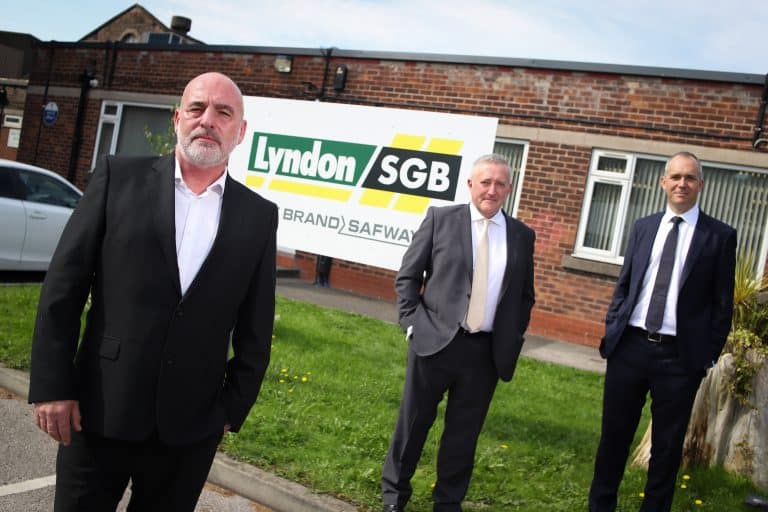
National scaffolding and access giants, Lyndon SGB has launched a new single scaffolding depot in Manchester, as part of its ongoing expansion program.
The firm aims to provide the best multi-sector scaffolding and access solutions nationwide, it said today in a press release. According to the company statement, Lyndon SGB’s Hendham Vale depot on Hazelbottom Road in the north of the city is now its regional office for the North West region. And with a large scaffolding yard on-site, the depot is set to service all Lyndon SGB scaffolding contract activity in the North West. Meanwhile, the company’s Crabtree Lane site on Clayton Industrial Estate in Openshaw has been re-purposed to be focused on Lyndon SGB mast climbing mechanical access activity and to provide regional support to Taylor’s Hoists. This depot will also host a Hünnebeck office, which is also part of the BrandSafway group of companies. The firms recently appointed new Managing Director, Stuart Robinson said: “The launch of this single scaffolding depot in Manchester is the final step in merging the former Lyndon and SGB scaffold depots in Manchester and part of our on-going expansion and development program for the brand.
This process will enable us to offer an unrivalled level of scaffolding service for each region of the U.K. and help us work efficiently and safely on the most prestigious and challenging projects throughout the country.”
Operations Director, Kevin Fitzpatrick, said “We are all very excited to see the already high standards of safety and productivity from the Lyndon SGB Manchester teams rise from the streamlined and focused operational centre at Hendham Vale. The facilities are excellent and everyone in the team is more committed than ever to provide our clients in the North West with the best in temporary access from the new depot.”
Lyndon SGB North West Regional Manager, Jon Cooke, added: “We have been working on this exciting development for some time now and Hendham Vale is going to be a real positive for our operational capability in the region. From this site, we are now in the enviable position of being able to offer the traditional tube and fitting services we are renowned for, alongside three of the world’s leading modular scaffold systems, in HAKI, Layher and our own CUPLOK® fully galvanised, multi-purpose steel system scaffolding.”
The firms recently appointed new Managing Director, Stuart Robinson said: “The launch of this single scaffolding depot in Manchester is the final step in merging the former Lyndon and SGB scaffold depots in Manchester and part of our on-going expansion and development program for the brand.
This process will enable us to offer an unrivalled level of scaffolding service for each region of the U.K. and help us work efficiently and safely on the most prestigious and challenging projects throughout the country.”
Operations Director, Kevin Fitzpatrick, said “We are all very excited to see the already high standards of safety and productivity from the Lyndon SGB Manchester teams rise from the streamlined and focused operational centre at Hendham Vale. The facilities are excellent and everyone in the team is more committed than ever to provide our clients in the North West with the best in temporary access from the new depot.”
Lyndon SGB North West Regional Manager, Jon Cooke, added: “We have been working on this exciting development for some time now and Hendham Vale is going to be a real positive for our operational capability in the region. From this site, we are now in the enviable position of being able to offer the traditional tube and fitting services we are renowned for, alongside three of the world’s leading modular scaffold systems, in HAKI, Layher and our own CUPLOK® fully galvanised, multi-purpose steel system scaffolding.”
 The new Manchester offices and yard servicing the North West is located at: Hendham Vale Industrial Park, Vale Park Way, Manchester M8 0AD. Telephone 0161 230 4061
 TRADGUARD now available across the UK

TRAD UK, the new brand for the combined TRAD Hire & Sales and TRAD Safety Systems companies, is able to supply its proprietary barrier system, TRADGUARD for hire and sale to scaffolding and construction industries across the UK.
The TRADGUARD mesh barrier system has been used on many high-profile projects around the country since its launch in 2014. Suitable for use with reinforced concrete, structural steel, timber frame and civil engineering applications, it’s a lightweight, versatile system that offers significantly enhanced safety to traditional guardrail applications.
Importantly, the TRADGUARD system is light: at just 17.5kg per 2.6m panel, it is the lowest weighing mesh barrier system on the market, allowing individual panels to be manually handled by a single worker, resulting in faster and safer installation. At the heart of the system is the 2.6m x 1.2m mesh barrier panel with integral toe-board. This offers protection which is compliant with BS EN 13374 Class A, giving buyers and site workers confidence when working at height.
TRADGUARD adds to the wide range of scaffolding products now available from TRAD UK at its depots across the UK. Now, scaffolding contractors can access complete systems for their projects, including cost and time-saving products like the PLETTAC METRIX scaffolding system, the Mini Catch Fan, TRAD’s internal stair unit, TRAD Safety Deck and much more. With access to industry-leading expertise and technical understanding, TRAD supports scaffolding contractors and construction companies to buy or hire products that save time and money whilst also improving safety on-site for workers, visitors and the surrounding general public.
 “With approximately 26,000 linear metres of TRADGUARD in our hire fleet, we are perfectly positioned to help scaffolding and construction companies protect their site workers with an affordable, fully compliant proprietary edge protection system,” says Oliver Gwinnell, TRAD UK’s TRADGUARD Product Champion.
“We offer comprehensive training by qualified Working at Height trainers so that the on-site team is confident about installing the product during construction.”
TRAD UK also offers a full design service for the product, including layout and drawings, which is ideal for specialist requirements or challenging sites, and is completely free of charge. Additionally, sales customers can request the system be branded in their corporate colours.
“With approximately 26,000 linear metres of TRADGUARD in our hire fleet, we are perfectly positioned to help scaffolding and construction companies protect their site workers with an affordable, fully compliant proprietary edge protection system,” says Oliver Gwinnell, TRAD UK’s TRADGUARD Product Champion.
“We offer comprehensive training by qualified Working at Height trainers so that the on-site team is confident about installing the product during construction.”
TRAD UK also offers a full design service for the product, including layout and drawings, which is ideal for specialist requirements or challenging sites, and is completely free of charge. Additionally, sales customers can request the system be branded in their corporate colours.
The low-weight system improves site safety and delivers cost-savings
- The UK market’s most lightweight proprietary mesh barrier system
- Can be assembled without specialist knowledge
- Fully compliant to BS EN 13374 Class A
- Greater containment than other guardrail solutions
- Suitable for a wide range of construction types
- Adjustable vertically and horizontally
- Wide range of sockets and attachments
 “With approximately 26,000 linear metres of TRADGUARD in our hire fleet, we are perfectly positioned to help scaffolding and construction companies protect their site workers with an affordable, fully compliant proprietary edge protection system,” says Oliver Gwinnell, TRAD UK’s TRADGUARD Product Champion.
“We offer comprehensive training by qualified Working at Height trainers so that the on-site team is confident about installing the product during construction.”
TRAD UK also offers a full design service for the product, including layout and drawings, which is ideal for specialist requirements or challenging sites, and is completely free of charge. Additionally, sales customers can request the system be branded in their corporate colours.
“With approximately 26,000 linear metres of TRADGUARD in our hire fleet, we are perfectly positioned to help scaffolding and construction companies protect their site workers with an affordable, fully compliant proprietary edge protection system,” says Oliver Gwinnell, TRAD UK’s TRADGUARD Product Champion.
“We offer comprehensive training by qualified Working at Height trainers so that the on-site team is confident about installing the product during construction.”
TRAD UK also offers a full design service for the product, including layout and drawings, which is ideal for specialist requirements or challenging sites, and is completely free of charge. Additionally, sales customers can request the system be branded in their corporate colours. CITB extends support for apprentices through Covid-19

CITB is offering support to help find a new employer for any displaced apprentice as part of a raft of measures to keep skills within the industry.
Any construction apprentice is now eligible to receive CITB support if they lose their job or apprenticeship. This means around 11,000 apprentices across the construction industry, more than the 7,000 currently contracted with CITB, and their levy-registered employers can benefit from:- job redeployment services, including through the Construction Talent Retention Scheme
- reallocation of grant funding to a new employer to help apprentices to complete their training if at risk
- the apprenticeships information and reporting app
- pastoral support
- shared apprenticeship schemes
Trade body President elected onto Build UK board

The first-ever female NASC President has been appointed a Specialist Contractor Director of Build UK following an election process.
The National Access and Scaffolding Confederation (NASC) president Lynn Way, who is also the Financial Director and Company Secretary at Cornwall based Chris Sedgeman Scaffolding is set to help provide strategic direction for the leading construction industry body, Build UK. Speaking of her appointment, Lynn said: “I am absolutely delighted to have been elected by Build UK trade association members to join such a respected and influential group. “I have been very impressed with Build UK’s activities throughout the Coronavirus pandemic and have taken part in a number of their webinars in recent months. “I’m now looking forward to getting further involved, representing the scaffolding industry and ensuring the needs and views of our industry are heard, as well as delivering for the construction industry as a whole.” Lynn continues the NASC’s director-level input at Build UK, following on from former NASC President and TRAD Group CEO Des Moore, who took up the same role in 2017. Build UK is the leading representative organisation for the UK construction industry. By bringing together Clients, Main Contractors, Trade Associations representing over 11,500 Specialist Contractors and other organisations committed to industry collaboration, Build UK represents in excess of 40% of UK construction.Scaffolding Firm and Director Fined For Scaffolders Death