CPA's revised construction outlook points to further weakness in housing and refurbishment, according to Roofing Today's report on the Autumn forecasts.
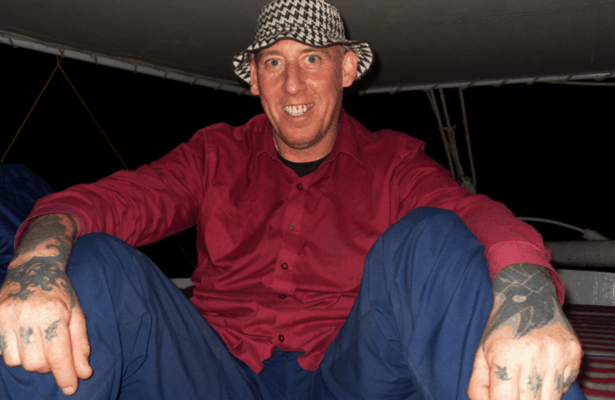
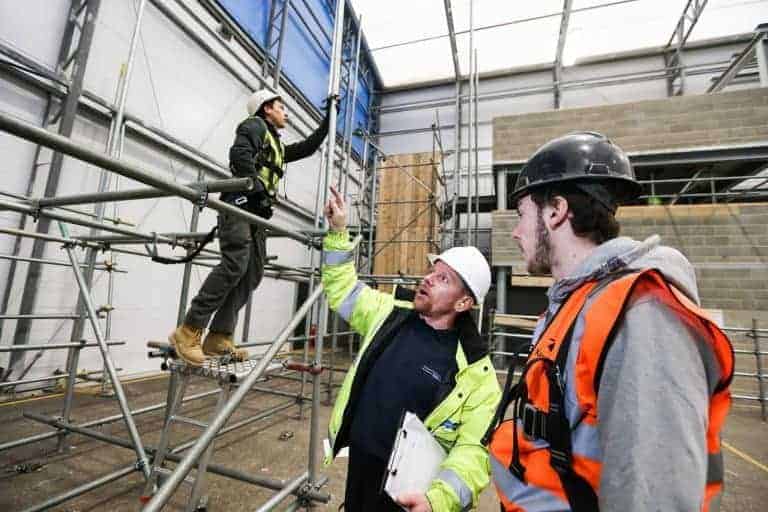
At 21, John Trayfoot blacked out on a roof and fell 8 metres through a skylight into a Brighton timber yard. Now managing director of M R Scaffolding, he starts his company's safety sessions with that story, and with a question: why do experienced people who know the risks still cut corners?
CPA's revised construction outlook points to further weakness in housing and refurbishment, according to Roofing Today's report on the Autumn forecasts.
At 21, John Trayfoot blacked out on a roof and fell 8 metres through a skylight into a Brighton timber yard. Now managing director of M R Scaffolding, he starts his company's safety sessions with that story, and with a question: why do experienced people who know the risks still cut corners?
CPA's revised construction outlook points to further weakness in housing and refurbishment, according to Roofing Today's report on the Autumn forecasts.
At 21, John Trayfoot blacked out on a roof and fell 8 metres through a skylight into a Brighton timber yard. Now managing director of M R Scaffolding, he starts his company's safety sessions with that story, and with a question: why do experienced people who know the risks still cut corners?
CPA's revised construction outlook points to further weakness in housing and refurbishment, according to Roofing Today's report on the Autumn forecasts.
At 21, John Trayfoot blacked out on a roof and fell 8 metres through a skylight into a Brighton timber yard. Now managing director of M R Scaffolding, he starts his company's safety sessions with that story, and with a question: why do experienced people who know the risks still cut corners?
CISRS has tightened up the entry criteria and course requirements for their Scaffold Inspection Training Scheme (SITS).
CISRS say the changes are effective immediately, there will now be a pre-qualification requirement that the delegate/employer must ensure they can provide evidence of a minimum of two years relevant industry experience prior to attending the basic SITS course.
The course, aimed at anyone responsible for carrying out statutory scaffold inspections on basic scaffolding structures in accordance with the Working at Height Regulations 2005 – as well as scaffolders wishing to expand their knowledge.
CISRS say the basic SITS course is one of the most intensive courses within the CISRS scheme, which entails three full days at an accredited training centre to complete.
The course includes practical inspection, theory, report writing, fault finding as well as an update on the latest NASC safety and technical guidance.
CISRS Scheme Manager, Dave Mosley said: “Scaffold inspection is such an important area with far-reaching effects and we feel that those attending the course should be able to verify that they have at least a rudimentary knowledge of scaffolding prior to attending training. They also need to be aware of the responsibility that comes with inspecting scaffolds – hence the pre-qualification change to two years relevant work experience. “In the past, companies would send staff on scaffold inspection courses very early within their career in order to gain some basic knowledge about scaffolding. CISRS feel that in reality a scaffolding awareness/introduction to scaffolding course is more suitable, until they have more of a working knowledge of scaffolding on site.”
As a result of the changes to the Scaffold Inspection Training Scheme, potential delegates will be required submit a CV, employer endorsement and/or proof of prior training at the point of booking a course.
CISRS are also considering the possibility of putting together a short duration scaffolding awareness course, for entry level training purposes.
Lyndon Scaffolding plc (Lyndon), which says it is the UK’s largest independent specialist scaffolding contractor, has confirmed that it has invested in two units of the Elliot Thomas Group, part of which has been reported as going into administration.
“Lyndon Scaffolding is delighted to confirm that we have invested in Rainsford Contracts Ltd. and Taylor’s Hoists formally part of the Elliott Thomas Group,” said a spokesperson for Lyndon.
“Both businesses have excellent trading records, a strong customer base and will benefit from the investment and financial support that Lyndon can offer. We have worked with Taylor’s Hoists and the senior management team for many years and we are looking forward to working ever more closely together to provide a better service to all customers,” said Lyndon’s Managing Director, Rob Lynch.
Taylor’s Hoists is described as a, “non-trading company,” at Companies House, while Rainsford Contracts Ltd is described as, “construction of commercial buildings.” Further details of the transaction have not been released by Lyndon at this time.
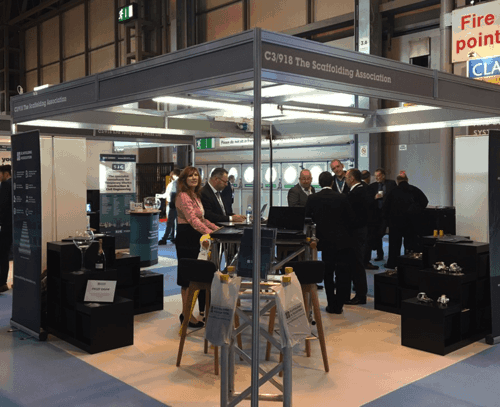
Scaffolding trade body alternative, the Scaffolding Association, announced its highest ever membership levels last week with more than 200 companies now joined in a pledge to raise industry standards.
The Scaffolding Association is a not-for-profit independent trade organisation, which is one of the largest of its kind in the UK. The Association was established to represent scaffolding and access contractors, client organisations, manufacturers and consultants that were not catered for by existing trade bodies.
The trade body alternative say the latest figures concrete the industry’s commitment to raising safety standards, improving skills training and establishing procedures to deliver the highest level of scaffolding competence. The Association’s regulatory procedures and auditing standards exceed the requirements of PAS 91.
In a recent press release, Robert Candy, chief executive of the Scaffolding Association, said: “We now have more than 200 members and this continued growth is extremely encouraging. Our success demonstrates the sector’s absolute commitment to achieving the very highest safety standards, something we’re passionate about.
“To date, we’ve made significant progress in our efforts to drive standards across the industry. The latest membership figures make it clear we’re creating a business framework that scaffolding contractors and clients of all sizes can benefit from and help us all in our quest for a safer, stronger and more professional industry.”
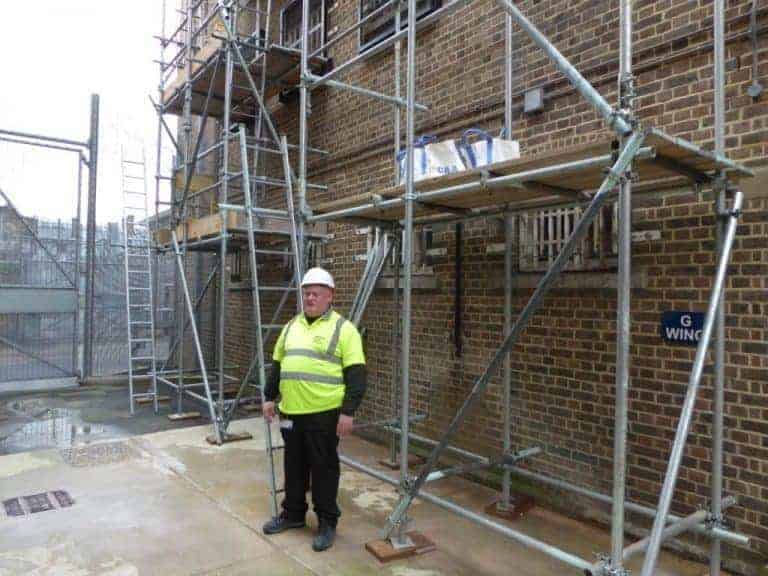
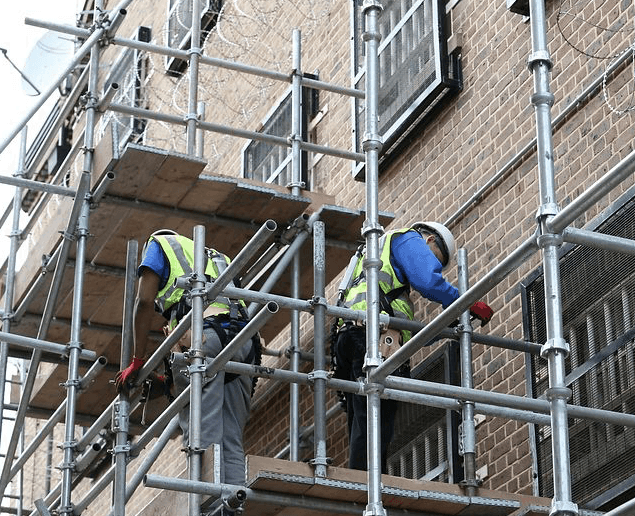
Bounce Back charity launches first of it’s kind scaffolding training centre at HMP Brixton Prison.
Criminal records are often a red flag for employers, often former prison inmates have little choice but to re-offend or consider re-offending. As a former scaffolding employer myself back in the late 1980s to late 1990s I will confess that I employed scaffolders and labourers with criminal records, including armed robbery, and had no problem with them at all. In fact, I will go further and say that these scaffolders often turned out to be better and more diligent employees than those recruited from the population at large. Right now, when skilled scaffolding operatives are in short supply a pool of highly motivated potential employees must be welcome.
In what the UK Ministry of Justice says is the first centre of its kind in the UK, scaffolding training is now on the HMP Brixton prison agenda.The centre was launched at an event at HMP Brixton prison that was opened by Paul Elliott, eminent football governing body ambassador and passionate supporter of youth engagement, and hosted by TV presenter and journalist Raphael Rowe on October 19.
The launch of the latest skills training centre in the Bounce Back portfolio is a very special event for two reasons. As a first in a UK prison all eyes are on it – not only to watch the progress of the 7 metre tower – but to see the impact in terms of skill levels it can deliver. Secondly it is a clear example of a response from the construction industry to an immediate need for scaffolding recruits. Alandale, through its relationship with Land Securities (who had already driven this model in dry lining), came into the prison and set up the training facility for Bounce Back so it could train up potential employees.
Bounce Back is a charity that trains in construction skills in HMP’s Brixton and Wandsworth, as well as CSCS training in a number of other prisons.
It is also a painting and decorating Social Enterprise that employs people as professional decorators on release and works on projects large and small around London and the Home Counties with a team of up to 30 at any one time. Bounce Back says that it trains up to 60 inmates a day across both of its centres and says that it has an 85 per cent success rate on people leaving prison either going into further training or employment. The charity says that it was worked with just under 600 people thus far and reoffending rate is currently monitored at 12 per cent.
“This is a great example of true partnership working – the new Scaffold Centre will meet industry skills gaps and tap into the potential of people in prisons, it’s a win-win situation for everyone’ – people get a second chance, the industry gets skilled workers and our communities become safer by reducing reoffending rates,” said Debbie Akehurst head of economy and communities at Land Securities.
“We have been delighted by the opportunity that this gives our participants to get into employment on release’ says Fran Findlater CEO of Bounce Back. “As we focus on training skills that respond to the need of the construction industry, in this case we have more than fulfilled our objectives – we could easily place 20 or more scaffolders into work and we’ve only been open a couple of months.This is all about getting our participants ready for work on site.It is not about high levels of extensive training, it is to see if individuals have the appetite to go up a scaffolding tower and get involved in the hard work the profession requires. If participants do this, dry lining and painting and decorating in our three centres, we know they will have an aptitude on release.Ultimately this has one end goal – stopping people coming back to prison because they have the skills, confidence and earning potential to manage on the outside.”
Prisons Minister Sam Gyimah said, “Bounce Back is an excellent example of how employers can provide invaluable work opportunities for offenders while in prison to help them turn their lives around. Schemes like these can help to break the cycle of re-offending, which means fewer victims and saves the taxpayer money.”
Bounce Back confirmed that trainees can be good to go for employment as soon as they leave prison as they are able to gain their CSCS (Construction Skills Certification Scheme) cards while still in prison.
Scaffolding, ladders, ropes and associated equipment could always quite reasonably be associated with escape attempts. So I asked about security. “The Governor has considered all eventualities. The positioning of the scaffold has been measured very precisely to ensure escape is impossible,” said a spokesperson for Prisons – Ministry of Justice.
It has today been confirmed that ScaffMag will be featured as the guest publication in the next episode of Have I Got News For You. The show airs at 9pm on Friday 21st October on BBC1.
The TV show Have I Got News For You is based on the week’s news, the series is fronted by guest hosts and features two regular team captains, Paul Merton and Ian Hislop. The show has been running for over 25 years and regularly receives over 8 million viewers per episode.
ScaffMag will feature in the ‘Missing Word’ round as the guest publication, where newspaper headlines from the week are read out with a vital word missing for the panel to guess the word which has been removed. It is tradition for a guest publication to be featured alongside this.
ScaffMag’s Founder and Editor, Daniel Norton said “This is an amazing opportunity for prime time TV exposure for ScaffMag, our advertisers and the scaffolding industry.”“Have I Got News For You has been making fun of the obscure guest publications for twenty-five years, I am sure the panel and the viewers at home will have a good laugh at our expense, however I believe it’s important not to miss this opportunity to raise ScaffMag’s and the UK Scaffolding industry’s profile on prime time TV.”Dont miss the show on Friday 21st October 9pm BBC1
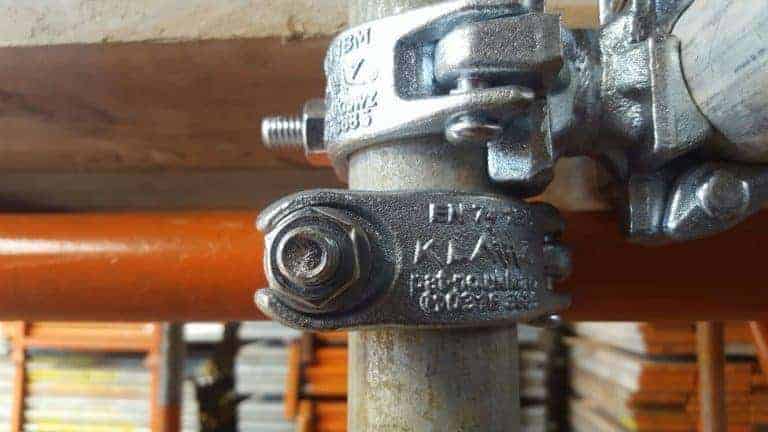
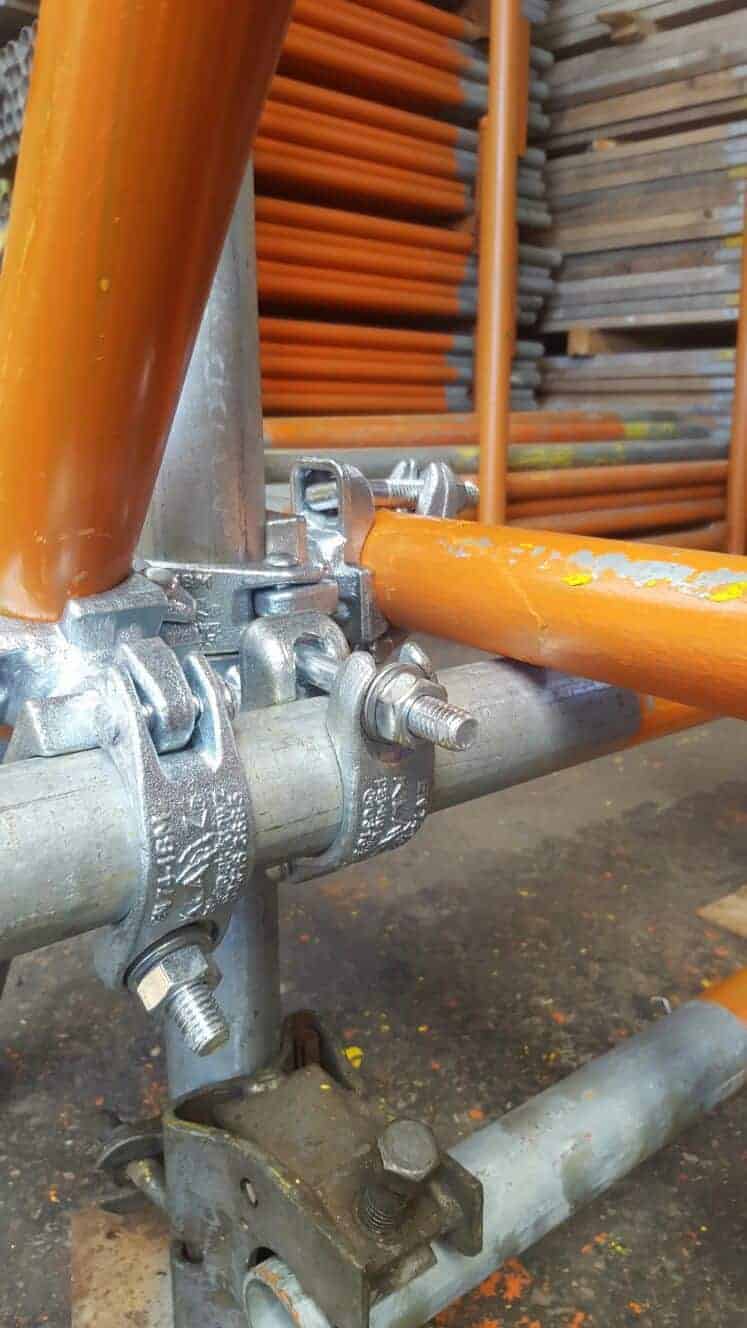
There is a new double on the block designed for tube on tube scaffolds and more. The new drop forged fitting from Klawz Ltd is named KLAWZ and it is fully tested to EN74-1:2005 Class B. Klawz Ltd’s director, Mark Parkin says, “The Klawz doesn’t actually stop at the basic 9.1kN safe working load Class B, with tested slip loadings exceeding 30kN on both steel and Aluminium tube.”
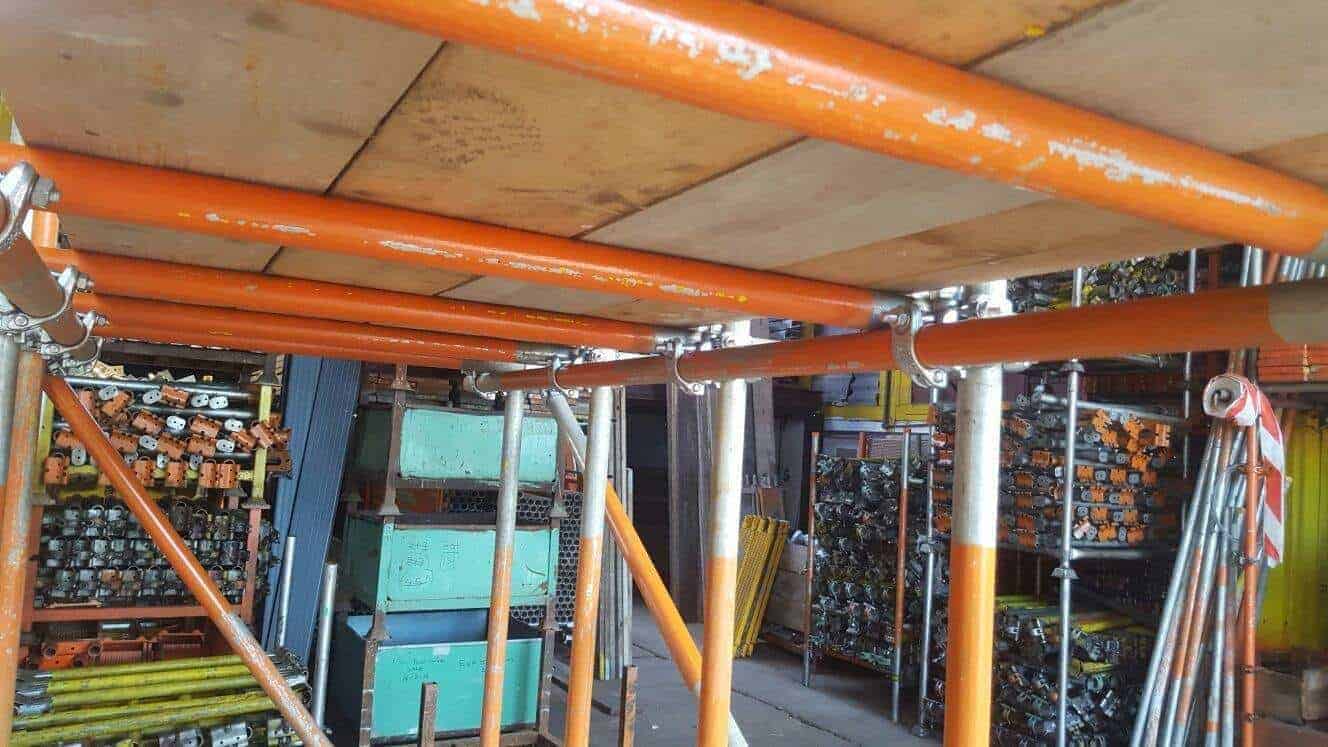
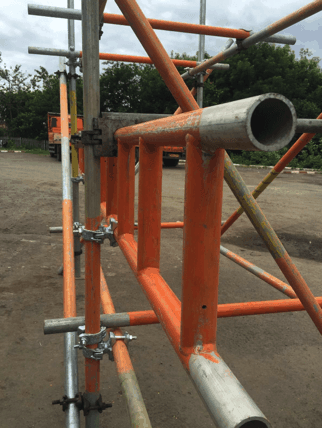
Mark explained the inspiration behind the KLAWZ double. “We decided to design the fitting as we use a lot of prefabricated transom units, the problem is that a traditional double doesn’t keep all the standards inline as the ledger sits further away from it,” he said.
Mark added that KLAWZ was in development, testing and manufacturing for around 18 months before the company was happy to launch the product. “It’s been a long and expensive process with new machinery being bought and additional tooling costs an almost daily event, and all that that before the hours spent with patent solicitors.”
Mark said, “Initial feedback has been very positive with indications that there are huge benefits with this product from design, logistics materials and labour saving. It is the only double that works with a prefabricated transom unit full stop, and offers the benefits of working tube on tube either with transom units or standard tube and fitting scaffolds.”
The cost of a KLAWZ double is £4.95 and Mark said that because it is drop forged it is very robust. “The fitting has been designed, developed and tested in the UK and is manufactured by our partners in a dedicated section of their facility in China”, he said.
Going forward there are no plans to change the fitting. “However,” said Parkin, “we will be conducting additional testing and gathering further data and analysis to justify the capabilities of the fitting beyond the limitations imposed by the EN74 standard.”
In terms of sales Mark said that right now companies are taking batches of KLAWZ to try them out. “We have also in the last week entered into an agreement with one of the UK’s largest scaffolding hire and sale companies, who will be offering KLAWZ for sale through their depots as well as online,” he said.
“We obviously believe in the potential of the fitting, and have a schedule of supplies,” said Parkin. “Our distribution partner generally holds over £3 million of scaffolding products in their facility, so moving forward stock shouldn’t be an issue.” Mark thinks that desired stocking levels will vary depending on the company. “Small firms may only stock a few hundred to use alongside transoms. Those who invest in their business could choose to replace almost all of their doubles with KLAWZ. Price will be an issue for some, but a saving on a purchase is a once only deal, the savings in labour, materials, storage and transport etc. is a benefit you feel every time you put a job up,” he said.
Technical information provided by Klawz Ltd.
KLAWZ perfectly complements the ReadyLok transom unit, allowing seamless transfer between sections of scaffolding constructed with transom units and traditional tube and fitting, by aligning the tube and fitting ledgers with Transom ledger spacing.
Patented KLAWZ ledger spacing arrangement, aligns tube and fitting with ReadyLok transom ledger offset.
Double and triple standards, necessitated by extra leg loading requirements, can be added at any point of a build with single or multiple KLAWZ fittings.
Adding a Deadman when using ReadyLok Transoms can be done with a single KLAWZ fitting directly from the ledger, removing the need to under sling with doubles and punch up, saving tube and fittings.
Aluminium beams suspended from ReadyLok transoms, can be secured directly to the standard with a single KLAWZ fitting, while guaranteeing a perfect parallel attachment effortlessly, and removing the time to plumb it up.
KLAWZ also offers the first EN74 tested answer to designing a “Double on Double” Scaffold.
Allows a tube and fitting scaffold to be designed with high load bearing for both ledgers and transoms.
Patented KLAWZ spacing design results in the ledger and transom sitting together, allowing the scaffold to be boarded out on a single level while maximising node point strength.
Patented Wide Angle adaptation allows the scaffold to be splayed by up to 60 degrees, while maintaining all of the benefits of the “Double on Double” design.
Removes the requirement to use “Aberdeen Transoms” as the strength is provided by the regular transom.
Patented KLAWZ “Wing Design” automatically sets the transom spacing so it sits at the ideal height minimising the need for constant adjustment to level in.
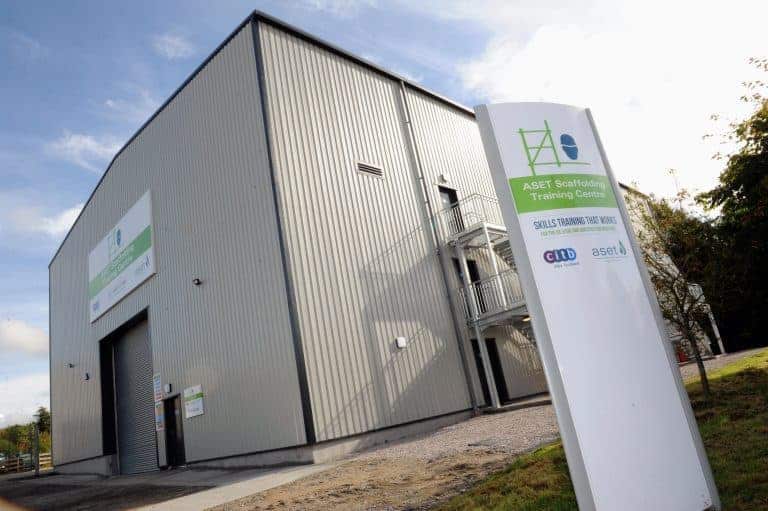
Declared by the Construction and Industry Training Board (CITB) to be the first scaffolding training centre to deliver apprenticeships and commercial courses in the North East of Scotland, a new state-of-the-art facility opened in Clinterty, Aberdeen on October 3.Ian Hughes, strategic partnerships director at CITB Scotland said, “This top quality training centre will offer young people a chance to start a successful career in construction.”
The centre is a partnership between the CITB and ASET International Oil & Gas Training Academy (ASET) and has benefitted from an over £1 million investment. The CITB say that the new centre offers, “High quality professional training and a comprehensive portfolio of CISRS (Construction Industry Scaffolders Record Scheme) and SQA (Scottish Qualifications Authority) accredited scaffolding courses.” And, that, “These will train and upskill the Scottish workforce and benefit both the construction and oil and gas industries.”
Nine apprentices have already started their courses and although it is early days a spokesperson for the CITB said that the Aberdeen location may prove to be particularly attractive to potential apprentices from the Highlands and Islands. “The possibility of a second CISRS accredited centre in Scotland has been discussed at length. We are delighted that ASET and CITB have built an excellent facility and we wish them a very successful future,” said David Mosley, CISRS scheme manager.
Kevin Malone of Dundee-based Skyline Scaffolding Ltd, employs apprentice scaffolder Darren Holt, who has just begun his training at the new facility.
“I was extremely happy when I heard the new centre was opening. It is long overdue, and will certainly be a great boost for scaffolding training in the area,” said Malone.
Atholl Menzies, chief executive at ASET said, “This is an exciting time for ASET and CITB as we now begin to realise our vision of creating a centre of excellence for scaffolding training in the North of Scotland. This purpose–built facility is perfectly positioned to meet the demand for accredited training at introductory and advanced levels – from Dundee to Shetland.
The apprenticeship provision will help to attract new entrants into the industry, making an important contribution to the local economy. The extensive range of commercial courses available will open up new opportunities for employers and individuals alike.
Organisations now have greater choice in selecting the right training options to develop the skills of their workforce, and individuals can choose to develop existing or acquire new skills in readiness for market opportunities in the decommissioning arena.”
The Health and Safety Executive (HSE) confirmed recently that two scaffolders from St. Austell, Cornwall have both received suspended prison sentences following the death of Roger Stoddern, 47, who fell seven metres to his death from the flat roof of a property in St. Mawes, Cornwall.
Image of where Roger Stoddern fell 7m to his death
According to HSE, Stoddern was stacking 3m roofing sheets on the flat roof without edge protection on 24 June 2013 while scaffolding was being dismantled. Stoddern survived the fall and was taken to Derriford Hospital where he died three weeks later because of his severe injuries.
HSE said Truro Crown Court heard that the safety railing around the flat roof had been removed to facilitate the stacking of roofing sheets. The court also heard how one of the defendants replaced the safety rail following Stoddern’s fall to cover up the cause of the incident.
During HSE’s and Devon and Cornwall Police’s investigation HSE said it was found that, “Colin Marshall Scaffolding was not qualified to erect the scaffolding and there was evidence no personal protective equipment, such as harnesses, was used. The condition of the scaffolding also failed to meet current safety standards.”
HSE said founder of the business, Colin Marshall of St. Austell pleaded guilty to Section 2(1) of the Health and Safety at Work etc. Act 1974 and was given a four-month prison sentence suspended for two-years. James Marshall, also of St Austell, Colin’s son and business partner was handed an eight-month sentence suspended for two-years. The pair were ordered to pay costs of £25,661.
In a statement HSE inspector said, “Construction is one of the most dangerous industries in Great Britain and businesses have to take the safety of their workers seriously. Colin Marshall and James Marshall are responsible for the death of Roger Stoddern. It was entirely preventable and should not have happened. The risks of working at height are known. Scaffolders must ensure they use the right protective equipment and have sufficient edge protection in place to prevent workers falling.”
The NASC has launched a promotional film that aims to broaden the safe scaffolding message of the UK’s leading access and scaffolding trade body and to encourage small and medium sized enterprises (SMEs) to become members of the confederation.
The three-minute film features interviews with three different sized NASC member companies, at three separate locations and access and scaffolding jobs across the UK.
Kyle Basterfield, Commercial Director of Kirk Scaffolding Ltd in Blackburn, is interviewed at a conventional tube and fitting scaffold on a large church tower renovation project in rural Lancashire. David McBride, Senior Contracts Supervisory Manager of Turner Access Limited in Glasgow talks about a large-scale housing job using their OCTO system scaffolding for EON Energy Services. And Ian McFarlane, Director of Business & Project Development for XERVON Palmers Limited, is on site at a huge job for for main contractor Galliford Try, providing scaffolding services and access solutions over live railway lines for the extensive renovation of Carlisle train station.
The film was shot by a leading supplier of digital media using the latest equipment and techniques, with the project managed by NASC Marketing Manager, Phil Royle of Royle Media, who said:
“We wanted to create a modern, fast-paced and engaging film about what being an NASC member does for different sizes of scaffolding contracting firms, why they should want to be part of the confederation, what the benefits of being involved are and to give the construction sector a clear visual message of the quality, safe and regulated service our 200+ contracting members offer. “The end result is something accessible, interesting and inspirational for those who watch it, and we hope it will be widely enjoyed and shared within the scaffolding, construction and health and safety industries.”
NASC President Alan Lilley said: “It has been said by many that the NASC is a closed shop – this could not be further from the truth, and this film goes a long way to get that message across. One of my aims during my presidency is to significantly increase the membership by the end of my term in 2017 by raising the profile of the confederation. This film is an important part of that process. Hopefully it will encourage many SME firms to go through the audit process (with our help) and become NASC members.”
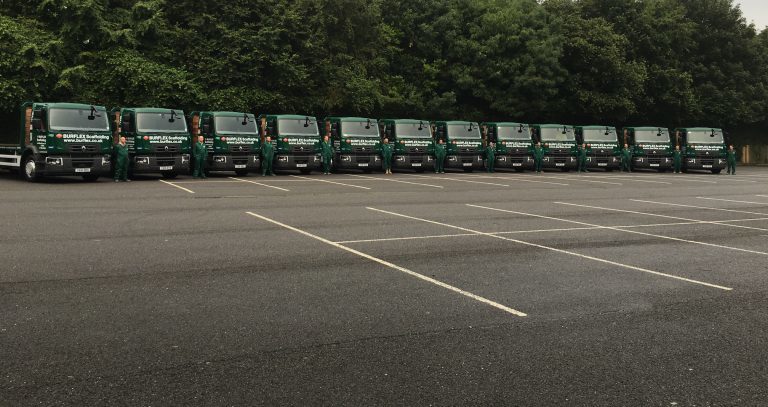
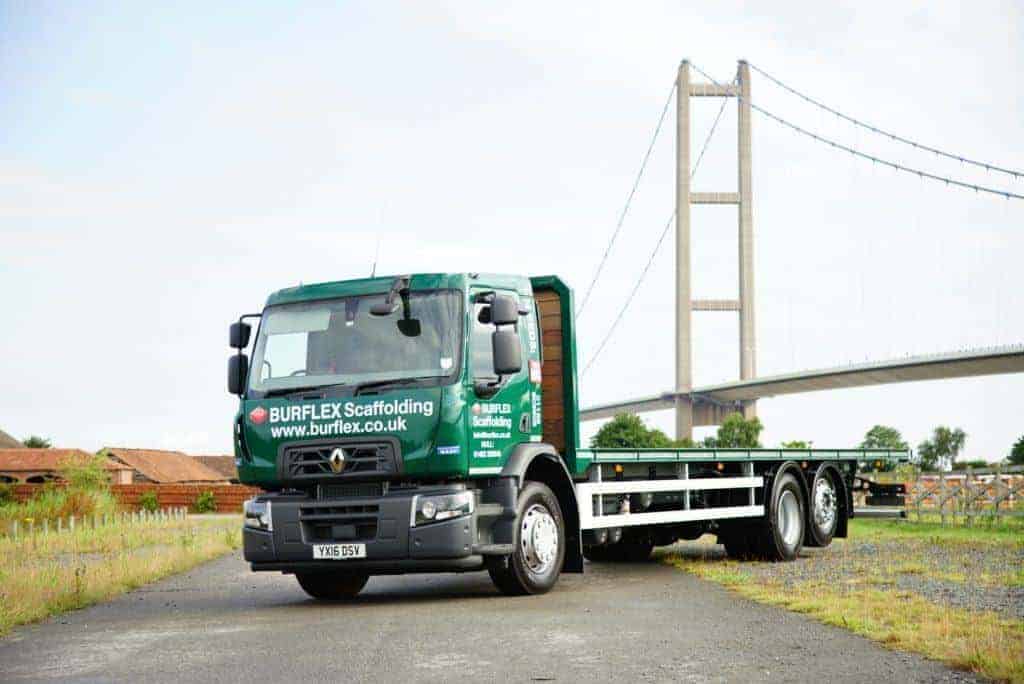
Hull based Burflex (Scaffolding) Ltd. (Burflex) has recently splashed the cash and invested around £1 million in twelve Range D26 wide 6×2 Renault trucks.
The new trucks, which were specified to Burflex’s requirements, join the existing fleet of over 70 vehicles in the Burflex fleet; the company invested in 47 Renault Kangoo vans in 2015. “Investment in the company is a necessity to strengthen our position in the industry. We are constantly expanding our operating areas, so the need for the reliability to deliver the scaffolding to our customer’s sites is paramount to production of the over 150 scaffolders we now employ,” said Steve Cox, Burflex’s managing director.
The 12 new trucks have been acquired under a four-year repair and maintenance contract with Thompson Commercials Ltd., which is also based in Hull. Burflex says that this arrangement allows the company access to maintained vehicles and enhances reliability. Martin Williams (Hull) Ltd. built the truck’s bodies to Burflex’s specifications enabling Burflex to maximise system and conventional scaffolding carrying capability safely and securely.
“The vehicles are running fully loaded on multiple drops and doing a significant amount of miles per day. These trucks will strengthen our capability to maintain our customer’s requirements and deadlines, regardless of distance from any one of our regional depots,” said Rich Fieldhouse, Burflex’s operations manager.
Burflex says that the new truck deal mean that the scaffolding company has invested almost £2 million since 2015 generating 50 additional full-time jobs. Fieldhouse confirmed that all of the new jobs are driving positions. “We don’t find it hard to recruit or retain,” said Fieldhouse.
Fieldhouse explained Burflex’s reasoning why the company decided on Renault. “We invested in a fleet of 50 Renault vans last year and wanted to keep both fleets the same. This was a good deal from a local supplier and was commercially a good deal for Burflex,” he said.
Times have been tough of late but not for Burflex. “We as a company have had year on year growth through the recession and are not experiencing any decline in construction,” said Fieldhouse. We asked Fieldhouse if there are any other expansion plans in the pipeline? “Yes,” said Fieldhouse. “Hopefully in the future. We are currently looking for premises for a new depot.”

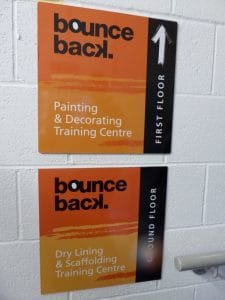 Bounce Back is a charity that trains in construction skills in HMP’s Brixton and Wandsworth, as well as CSCS training in a number of other prisons.
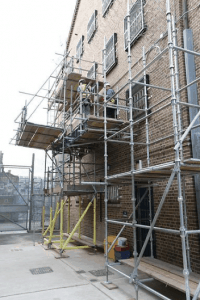 Prisons Minister Sam Gyimah said, “Bounce Back is an excellent example of how employers can provide invaluable work opportunities for offenders while in prison to help them turn their lives around. Schemes like these can help to break the cycle of re-offending, which means fewer victims and saves the taxpayer money.”
 ScaffMag will feature in the ‘Missing Word’ round as the guest publication, where newspaper headlines from the week are read out with a vital word missing for the panel to guess the word which has been removed. It is tradition for a guest publication to be featured alongside this.