It promised to be a highlight of this year’s Health & Safety Expo, and so it proved – six of the UK’s leading health and safety organisations coming together for the first time ever to discuss and debate how to eradicate falls from height in the workplace.
The holy grail panel at this years Health & Safety ExpoTheir conclusion? The need for more cooperation, better coordination, further education and improved long term planning.
Chaired by David Thomas, safety, health and environment director at William Hare Ltd, the panel consisted of:
Peter Bennett, chairman of the Access Industry Forum (AIF)
Joy Jones from the Health and Safety Executive (HSE)
Nigel Bryson OBE from the British Safety Council (BSC)
Barry Holt from the International Institute of Risk and Safety Management (IIRSM)
John Holden from the Institution of Occupational Safety and Health (IOSH)
Roger Bibbings MBE from the Royal Society for the Prevention of Accidents (RoSPA).
Key themes to emerge included better leadership; the need to engage the workforce more directly in safety issues; the avoidance of a ‘tick box’ approach to training; improved targeting, especially of small to medium sized firms in the construction sector, but, above all, the necessity to pool and synchronise resources, knowledge and information.
Roger Bibbings urged all the organisations taking part in the discussion to work together to help fill the void created by the cuts in the HSE’s budget.
Two other AIF-sponsored discussions also attracted capacity audiences and sparked lively question and answer sessions: ‘Successful planning techniques for working at height’ and ‘Maintaining effective work at height policies in a tough economic climate’.
Comments Peter Bennett for the Forum:
“The Holy Grail panel discussion was a ground breaking event which, I am sure, will have positive, long term consequences for the work at height sector in general. The spirit evident in Birmingham augers well for a high degree of cooperation between all the organisations taking part, with a view to reducing the number of deaths and injuries resulting from falls from height.”
Jason Anker
Also making a huge and memorable contribution to the 2011 Knowledge Base programme was motivational speaker, Jason Anker.
Jason was paralysed from the waist down as the result of an avoidable accident while working at height.
Each day he delivered a raw, powerful presentation designed to warn everyone of the life shattering consequences of a fall.
The panel discussions and individual presentations by AIF member organisations IPAF, NASC, PASMA and the Ladder Association, and Jason Anker,
will shortly be available to watch again via online video on the Forum’s website www.accessindustryforum.org.uk
Following its earlier success in providing a bespoke scaffolding and access system for renovation work at Gare Du Nord railway station in Paris, Harsco Infrastructure has now almost completed a second project, at the city’s Gare Saint-Lazare station.Impressed by the capabilities and expertise which Harsco had shown on the first project, main contractor Spie SCGPM asked the company to repeat the process at Gare Saint-Lazare.
The large-scale renovation work on the main station canopy required Harsco to design and construct a 220-ton, 18-metre high MODEX scaffolding structure which covered an area of 3,840 m².
The modular nature of the overall scaffold system allows it to accommodate any shape, ground plan or height requirements with ease. This was particularly beneficial in creating the irregularly spaced walkways which were required by the site workforce.
To counter the confined nature of the site Harsco provided mobile cranes to lift-in the required materials. The complex nature of the various works also required Harsco to adhere to a detailed work schedule, so that all the necessary requirements for safety, minimising noise pollution and reducing disruption to the surrounding area could be satisfied.
One stage of the project required the use of specially skilled workers who were able to access the overhanging sections of the canopy to carry out the renovation work. The canopy renovation was carried out concurrently with other work to refurbish the building main structure, and the construction of a new shopping mall located within the station complex.
Up to 50 Harsco Scaffolders could be made redundant within the next 90 days at TATA Steel Works in Scunthorpe, Lincolnshire.
Rumors have been circulating since Friday after the shock announcement that 1,500 jobs are to go at TATA Steel, 1,200 at Scunthorpe and 300 at the Teeside plant which is due to the down turn in the demand for structural steel.
Parts of the Scunthorpe plant have also been proposed to be mothballed including the Bloom and Billet Mill and the Queen Bess blast furnace.
Demand for structural steel in the UK is only two-thirds of the 2007 level and is not expected to fully recover within the next five years.
The Scaffolders work for Harsco Corporation who supply the scaffolding workforce on the plant and operate in 39 countries and provide construction and industrial maintenance services.
A spokesman for Harsco told ScaffMag that “Following a standard review process which was recently undertaken, Harsco are in discussions with employees and unions regarding the future operating structure.”
“This process is required to bring our operating capacity in line with current production levels and requirements at the plant.”
A SCAFFOLDER who got involved in a vicious fist fight with another man on a city street claimed he was smashed over the head with a bottle and was bleeding from a cut on the head.Patrick McGuinness (28) claimed he was only defending himself after a man picked him up, threw him on the ground and started punching him.
McGuinness said the attack on him arose following an earlier incident in a pub, after he innocently asked another smoker for a cigarette, and was told to “f*** off”.
He also claimed he was delighted when gardai intervened in the dispute, and said he continued to struggle, as he didn’t realise the men standing over him were gardai.
McGuinness, of Melesian Avenue, Swords, was found guilty before Swords District Court of public drunkenness and threatening and abusive behaviour.
Judge Patrick Brady fined McGuinness €450 and ordered him to complete 100 hours’ community service in lieu of 10 weeks in prison.
Garda Leonard Clarke said he was on mobile patrol on Swords Main Street around 2am on November 28 last when he saw McGuinness, wearing a T-shirt and jeans, run across the road towards a group of people standing at a bus stop.
Garda Clarke said McGuinness got involved in a fist fight with another man.
The court heard gardai were forced to take McGuinness to the ground, where he continued to struggle.
Subdue Garda Clarke said he warned McGuinness to stop struggling, but he failed to do so, and he was forced to use OC spray to subdue him.
McGuinness said he was struggling because he thought he was still being attacked.
He claimed he was walking home when he was jumped upon by another individual, following an earlier incident in a Swords pub. Judge Brady said McGuinness’s behaviour was a lot more than self-defence.
It is a city famous for its architecture and ancient temples – where construction methods seem to have remained firmly in the past.This incredible photograph shows the death-defying lengths workmen in the east Indian city of Bhubaneswar are going to in building a new shopping mall.Each of these 15 workers are seen perched precariously on panels of thin wire mesh, as they pass poles up to each other to put up a scaffold.As capital of the Orissa state, Bhubaneswar was one of India’s first planned cities and is currently enjoying a mini-boom in the retail industry.Telecommunications, IT and engineering firms poured into the city in the 1990s – leading to the increase in demand for shopping malls.Alongside Puri and Konark, the city forms the Swarna Tribhuja (The Golden Triangle) and, with more than 600 religious sites, is nicknamed the Temple City of India.
Bhubaneswar was also the base for England’s cricket team during its series of one day internationals in 2008.But the team returned home early following the Mumbai terrorist attacks when gunmen stormed hotels in the city.
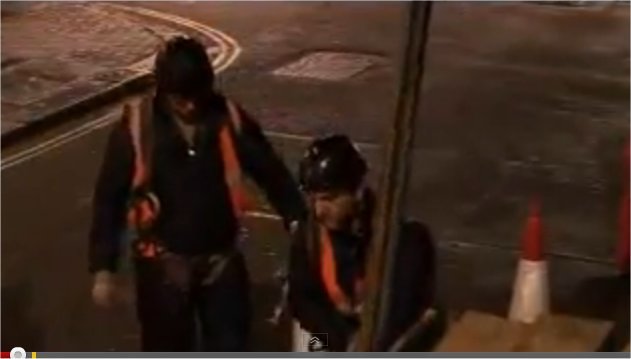
Thieves have stolen scaffolding from outside a Shropshire village church undergoing repairs.Police believe villagers from Stanton Lacy, near Ludlow will have spotted the thieves dismantling the scaffolding believing they were the genuine workmen.
Police Constable Antony Baker, the investigating officer, said: “A large quantity of scaffolding together with planks, brackets and ladders, has been stolen from St Peter’s Church, Stanton Lacy.
“It had been erected to the side of the church for repairs to the roof and was disassembled between 9.30pm last Friday and 8am on Monday. It took two men two days to put up, so the thieves would have been at work for some considerable time.
“Local residents or visitors to the village may well have seen this theft happening without realising a crime was taking place. I would urge witnesses or anyone with information about those responsible, to contact Ludlow police station on 0300-333-3000.”
PC Baker added that some kind of lorry or large van would have been needed to carry the items. “The thieves would also have had some knowledge on how to dismantle the scaffolding and how long it would take. At least two people are likely to have been involved.”
Information can also be given to the anonymous Crimestoppers number, 0800-555-111.
A scaffolder who only discovered he was a father 13 years after his son was born has been hauled before the courts to face allegations he owes more than £34,000 in child support.Scaffolder Adrian Haddon, 37, of Thornton Blackpool, who works for a local scaffolding firm was shocked when he was arrested by Lancashire Police on orders by authorities in Canada where his son lives.
They claim he owes £34,402 in child support from 16 years ago.
Adrian who was a soldier in The Royal Engineers in Canada in 1994 where he met his sons mother, He said “I was shocked”
“I never refused to pay. I wouldn’t refuse it. I just didn’t know he was mine”
“I went back in 1995 and bumped into her. I saw she had a baby but i didn’t know he was mine until a DNA test 3 years ago.
Adrian is now trying to build a relationship with his son who lives in Alberta Canada.
He said “Ive spoken to him on the phone, he wants us to have contact and hopes one day we will meet each other”.
Blackpool magistrates agreed to bail Adrian pending his appearance before a family court next week.
A MAN was paid £30,000 in incapacity and other benefits claiming he was unfit for work while he had jobs in the scaffolding trade.
Leeds Crown Court heard during the period he was claiming disability allowances Adam Routh did work for 12 different employers.
He began claiming income support legitimately in October 2002 and received incapacity and disability living allowance from the following year after reporting he was suffering from epilepsy, depression and osteo-arthritis.
But it was made clear to him should his situation improve and he could work he should declare that, Diana Maudslay prosecuting told the court yesterday.
He notified authorities of a change of address in 2009 but otherwise continued to claim as before.
When he was questioned in 2009 about his dishonesty he said he never did physical work himself in the scaffolding jobs but acted as a supervisor telling others what to do.
He said he held a health and safety certificate which meant he could oversee sites and train others. He also said to be able to go out to work he had to dose himself on morphine and methadone to which he was addicted.
Lyndsey Lobley for Routh said he was an experienced scaffolder before his health problems and was approached to act as a kind of foreman on one job.
He had intended to tell the authorities but the contract ended before he did so and in others he had to leave when it appeared physical work was needed.
Routh, 46 of Garton Terrace, Leeds was jailed for 18 months after he admitted four offences of benefit fraud.
Sentencing him, Judge Alastair McCallum said “You effectively were stealing from the community when you were in well paid employment. Many people in this country would have been delighted to be earning the sort of figures you were.”
Via: Yorkshire Post
The SCCR are putting a report together on the use of scaff steps and we need your input.
1. Does your employer or their customers insist on the scaff step being the only method used on their sites?
2. What other methods of advanced guard rails do you or your company use and what is your opinion on them?
3. If you use a scaff step what type is it, does it sit on the guard rail or on the standard, does it have a ladder to the platform or not?
4. If you use a scaff step do you feel safe using it, do you hemp while standing on the step?
5. Do you think that the scaff step causes extra strain and fatigue to the body?
6. Are you happy with hemping over the guard rail, do you consider this dangerous.
7. Do you use the scaff step on base lifts, if so how do you manage with uneven ground conditions?
8. How are the scaff steps transported from site to site?
9. Do you consider them dangerous in wet or muddy conditions?
10. Have you or have you witnessed an accident or near miss due to the use of the scaff step or hemping over the guard rail?
11. Do you feel that your job is at risk if you complain about using something you consider unsafe or puts extra strain on your body?
12. Do you think that the SG4:05 traversing rule was adequate?
All replies will be treated with the strictest of confidence.
Please reply to
[email protected]
A Hastings scaffolder has today been fined for endangering himself and others after working on a four-storey scaffold with no harness.
Hastings Magistrates’ Court heard Gareth Roser was spotted by a passing Health and Safety Executive (HSE) inspector working without a harness at the building in East Parade, Hastings, on 14 October 2010.
The court was told when the inspector initially saw Mr Roser, who was contracting for Battle-based Giant Scaffolding Ltd, he was approximately eight metres in the air, balancing on scaffolding tubes. However, it emerged that harnesses were available for the workers to use in their van.
Well-established industry guidance requires scaffolders to wear and use a fall arrest harness when more than four metres above ground without a safe platform to stand on and edge protection in place.
Mr Roser, a self-employed scaffolder from St Mary’s Terrace, Hastings, was fined £750 and ordered to pay £643 in costs after admitting a breach of Regulation 4(1) of the Work at Height Regulations 2005.
The court was also told that Giant Scaffolding had repeatedly failed to reply to written questions put to them by the inspector despite a number of warnings.
Giant Scaffolding Ltd, of Ringletts Farm, Whatlington Road, Battle, pleaded guilty to a breach of Regulation 4(1) of the Work at Height Regulations 2005 and a breach of Section 20(2)(j) of the Health and Safety at Work etc Act 1974. It was fined at total of £15,000 with costs of £5,000.
Speaking after the hearing, HSE Inspector, Melvyn Stancliffe, said:
“The simple measure of wearing a harness can save scaffolders from death or serious injury. A basic common sense approach to work is all that’s needed to prevent a possible tragedy.
“In many cases, harnesses are available but some workmen just cannot be bothered to wear them. They should take a moment to think about the consequences.
“It was reckless for Mr Roser to be working in this way. He was exposing himself and members of the public walking below to unnecessary risk. He was seen working in 2008 in similar circumstances and was warned about his future conduct.
“Giant Scaffolding Ltd has also been warned about the dangerous working practices of those working for it.
“These prosecutions show that HSE will not tolerate poor working practices and will take firm action against individuals and contractors who ignore their health and safety obligations.”
Via: HSE
We use cookies on our website to give you the most relevant experience by remembering your preferences and repeat visits. By clicking “Accept”, you consent to the use of ALL the cookies.
This website uses cookies to improve your experience while you navigate through the website. Out of these, the cookies that are categorized as necessary are stored on your browser as they are essential for the working of basic functionalities of the website. We also use third-party cookies that help us analyze and understand how you use this website. These cookies will be stored in your browser only with your consent. You also have the option to opt-out of these cookies. But opting out of some of these cookies may affect your browsing experience.
Necessary cookies are absolutely essential for the website to function properly. These cookies ensure basic functionalities and security features of the website, anonymously.
Cookie
Duration
Description
cookielawinfo-checbox-analytics
11 months
This cookie is set by GDPR Cookie Consent plugin. The cookie is used to store the user consent for the cookies in the category "Analytics".
cookielawinfo-checbox-functional
11 months
The cookie is set by GDPR cookie consent to record the user consent for the cookies in the category "Functional".
cookielawinfo-checbox-others
11 months
This cookie is set by GDPR Cookie Consent plugin. The cookie is used to store the user consent for the cookies in the category "Other.
cookielawinfo-checkbox-necessary
11 months
This cookie is set by GDPR Cookie Consent plugin. The cookies is used to store the user consent for the cookies in the category "Necessary".
cookielawinfo-checkbox-performance
11 months
This cookie is set by GDPR Cookie Consent plugin. The cookie is used to store the user consent for the cookies in the category "Performance".
viewed_cookie_policy
11 months
The cookie is set by the GDPR Cookie Consent plugin and is used to store whether or not user has consented to the use of cookies. It does not store any personal data.
Functional cookies help to perform certain functionalities like sharing the content of the website on social media platforms, collect feedbacks, and other third-party features.
Performance cookies are used to understand and analyze the key performance indexes of the website which helps in delivering a better user experience for the visitors.
Analytical cookies are used to understand how visitors interact with the website. These cookies help provide information on metrics the number of visitors, bounce rate, traffic source, etc.
Advertisement cookies are used to provide visitors with relevant ads and marketing campaigns. These cookies track visitors across websites and collect information to provide customized ads.