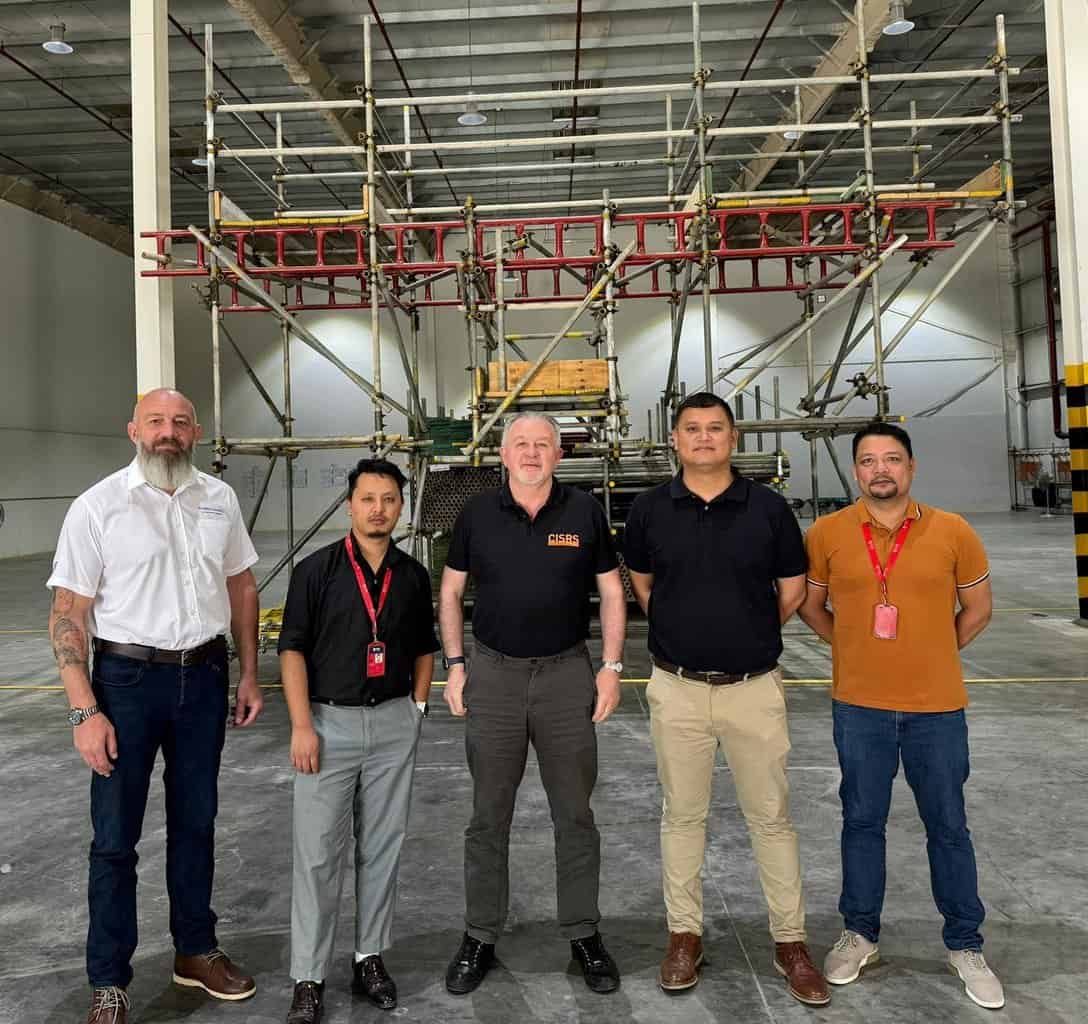
The Construction Industry Scaffolders Record Scheme (CISRS) has been making significant advancements in promoting scaffolding safety standards in Qatar.
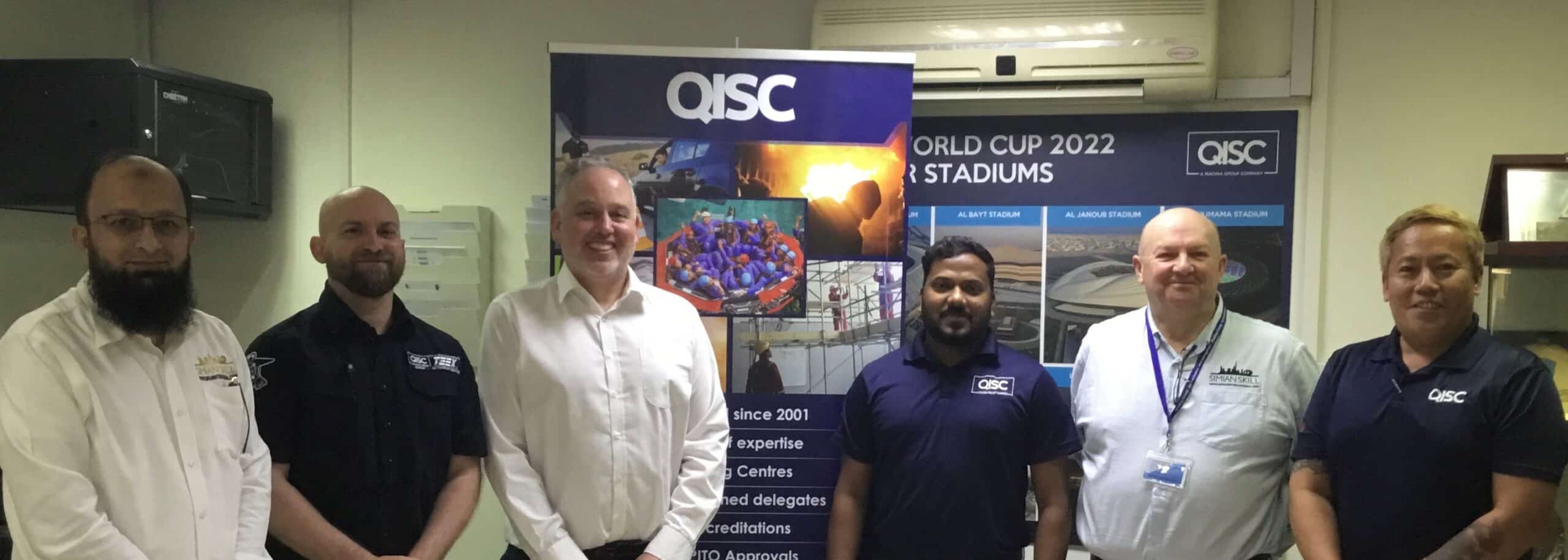
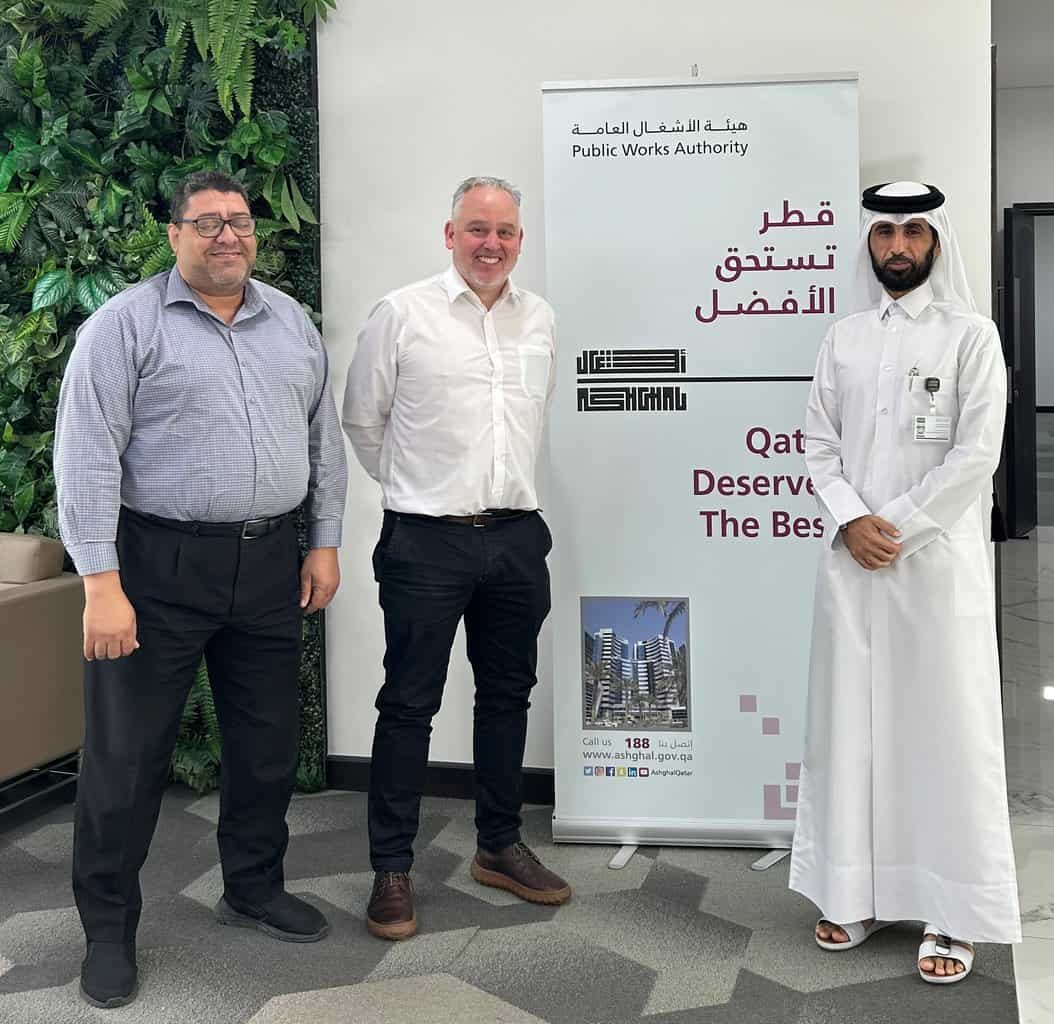
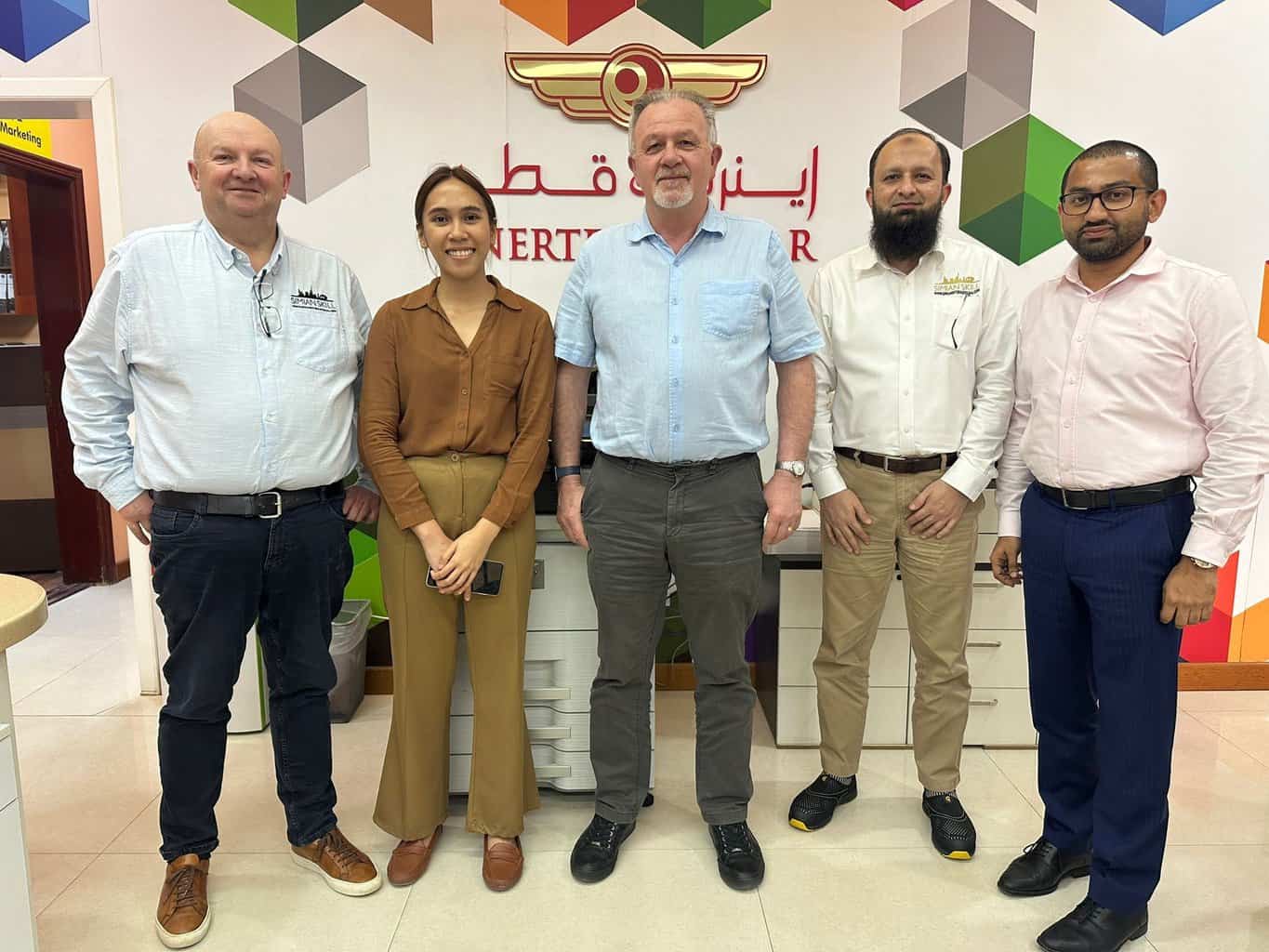
The organisation’s presence in the region over the last four years has resulted in nearly 7000 CISRS-certified scaffolders, marking substantial progress despite the challenges posed by the COVID-19 pandemic.The recent completion of annual audits of four Qatari training centers, namely QISC/Simian International, Enertech/Simian International, Vibrant/3t, and Aecor/Safety and Access, and their successful accreditation renewal, is a testament to their unwavering commitment to providing high-quality scaffolding training under CISRS’s Overseas Scaffolder Training Scheme (OSTS).“Our focus is to build momentum and encourage scaffolders to pursue higher levels of competency within the OSTS framework,” stated Tony Barry, Compliance Director at CISRS. “This benefits all stakeholders in the construction industry.”CISRS Managing Director Dave Mosley further solidified this commitment during a crucial meeting with Ashghal, Qatar’s Public Works Authority. Discussions centred on expanding the OSTS program and enhancing the training provided.
1 of 4
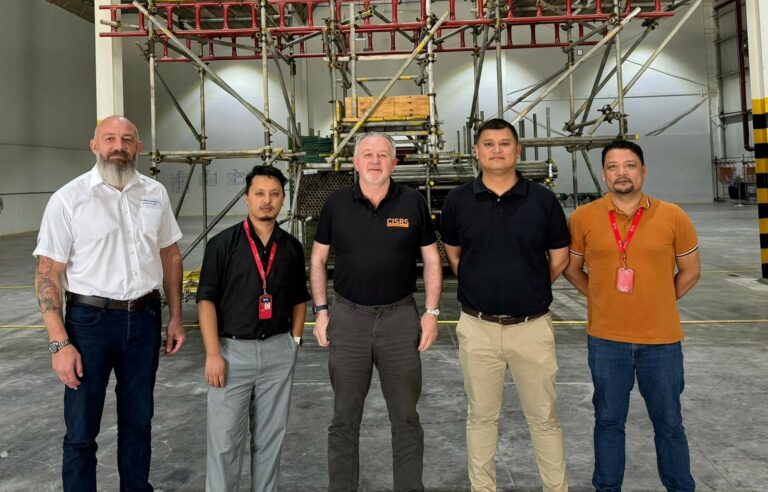
Dave’s visit to the vast QatarEnergy LNG North Field Expansion Onshore Projects (NFXP) site in Ras Laffan provided valuable insights. He met with project teams and scaffolding subcontractors to explore ways to improve supervisor training, shorten recertification periods for lower-level qualifications, and incorporate more system-specific product training.“Seeing the scale of these projects firsthand was crucial,” said Mosley. “It allows us to tailor our training programs effectively to ensure safety and efficiency on Qatar’s ambitious construction projects.”“I would like to say a huge thanks to the NFXP Onshore Project teams and their staff for hosting the meetings, they created a lot of positive discussion.”Following up on the proposed increased systems product training agenda, Dave met with John Brocklehurst, Managing Director of Scafom-rux, who was keen to discuss how best to promote CISRS training for their product both in the UK and via OSTS.
Layher, the renowned provider of system scaffolding solutions, is set to kick off its first Open Morning event of 2024 on Tuesday, May 21st.
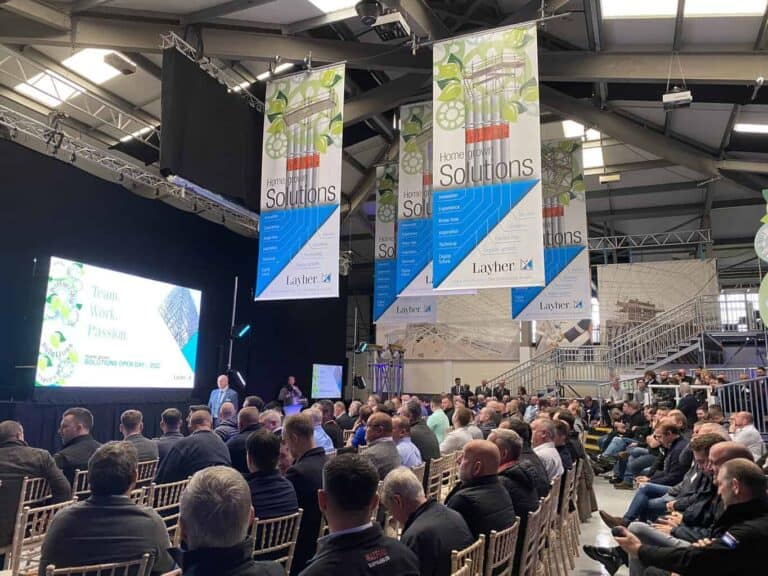
Hosted at Simian Risk’s training centre in Leytonstone, the event promises an immersive experience for attendees to witness Layher’s product demonstrations firsthand, interact with the team, and engage in informal discussions about how Layher can bolster their business operations.
A morning highlight will be a presentation delivered by Layher’s Brand Ambassador, Des Moore. Renowned for his success in generating substantial income streams for TRAD Scaffolding through utilising Layher’s Allround® Scaffolding, Des will share his wealth of experience and insights, emphasising the commercial and business rationale for investing in system scaffolding.
The presentation from Des is expected to shift the conversation from “Should I invest in system scaffolding?” to “When should I invest in Layher’s system scaffolding?”
Reflecting on his recent LinkedIn poll regarding system scaffolding, Des notes, “Although 64% of respondents highlighted the time and cost-saving advantages of system scaffolding, there remains a 19% contingent who perceive it as too expensive. With my experience, I beg to differ.”
Des contends that sceptics of system scaffolding investment will likely reconsider their stance upon understanding its compelling commercial logic.
“While the initial investment may be higher compared to traditional tube and fitting scaffolding, the longevity and durability of system scaffolding far outweigh the costs over a 10-year period,” Des explains.
“When factoring in the savings on labour and the ability of system scaffolding to facilitate entry into new markets, its superiority becomes evident, leading to tangible turnover and margin benefits.”
The Layher Open Day will run from 9 am to 12 pm, with limited places available to ensure attendees have ample opportunity to explore the products and engage with the Layher UK team.
Sean Pike, Managing Director at Layher UK, highlights the importance of these events in fostering meaningful interactions. “We’re committed to providing attendees with a comprehensive understanding of our products and fostering quality conversations,” Sean remarks. “That’s why we’re hosting multiple events throughout the year, with future dates to be announced soon.”
For those unable to attend the Open Day but interested in exploring the commercial advantages of system scaffolding, Des Moore offers the possibility of arranging presentations directly at individual business premises.
This event marks the first of four Open Mornings planned across the UK. It presents a unique opportunity for industry professionals to delve into the practical and financial benefits of Layher’s innovative scaffolding solutions, setting the stage for enhanced efficiency and profitability within the construction sector.
ScaffFloat, a rising star in the scaffolding industry, has been shortlisted for the coveted “Bridge Maintenance Contractor” award at the upcoming National Bridge Awards.
The Cornish firm joins industry heavyweights Network Rail and Balfour Beatty in contention for the prestigious accolade.“This recognition underscores ScaffFloat’s rapid ascent and the growing respect we command within the construction sector,” remarks Toby Budd, Managing Director of ScaffFloat. “Our innovative system and proven track record are gaining attention. I extend my gratitude to our exceptional team for their tireless efforts and unwavering commitment to customer safety.”Based in Bissom near Penryn, ScaffFloat has transformed water-based civil engineering projects with its groundbreaking floating platform constructed from standard scaffolding components. The system has been widely applied in major infrastructure initiatives nationwide, including the recent replacement of 300-ton rail bridge spans in North Wales.Traditional suspended scaffolding poses unique logistical challenges in water-based environments, particularly in remote locations. ScaffFloat’s solution streamlines installation and significantly enhances safety, often delivering cost savings for clients. The system also minimises disruption to bridge traffic and navigable waterways.With approximately 15,000 water-based structures across the UK requiring ongoing maintenance, ScaffFloat’s innovation has the potential to redefine industry standards.The Bridge Awards ceremony will take place this July in London. An esteemed panel of judges comprising engineers, consultants, and key industry stakeholders from both the public and private sectors will determine the winner.
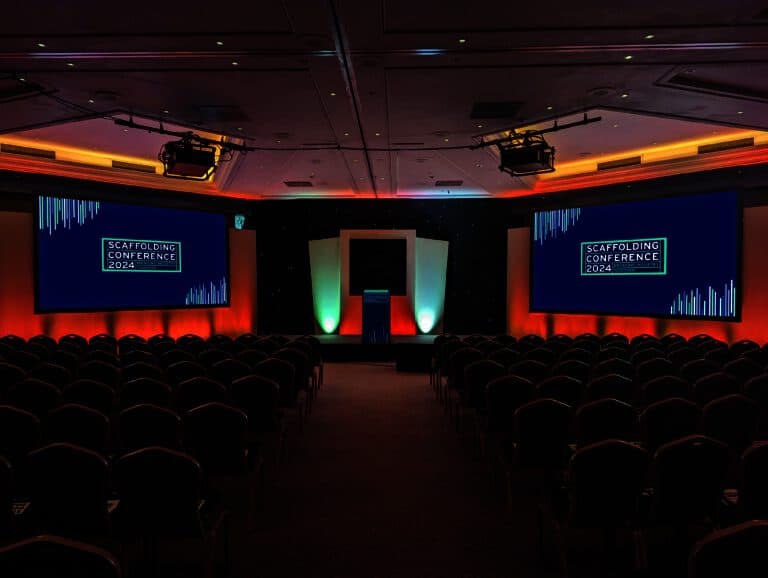
The Scaffolding Association’s annual Scaffolding Conference (#scaffcon24) is gearing up for its third year with an exciting expansion.
The 2024 event will now include an evening dinner dance complete with a live band and DJ, in addition to its popular industry-focused program. This year’s conference finds a new home at the world-famous Belfry Hotel and Resort on Friday, 11th October 2024.The Scaffolding Conference continues its tradition of providing a unique forum for leading experts and professionals in the scaffolding and access industry. Keynote speakers and discussion panels will delve into key scaffolding topics, offering practical insights to those working within the construction sector.“We’re thrilled to expand ScaffCon24 following last year’s positive reception,” said Robert Candy, CEO of The Scaffolding Association. “We want to empower those in the sector to stay ahead in this ever-changing industry. Delegates at The Belfry will benefit from a carefully curated range of speakers and panellists offering insights to drive productivity, growth, and success for scaffolding businesses. The dinner dance adds a fantastic social element to the event.”Early bird savings are available for a limited time, with combined Conference and Dinner Dance tickets priced at £250 plus VAT.To book or learn more, visit the event website at scaffoldconference.co.uk and follow #scaffcon24 on social media. Additionally, the organisers have secured exclusive discounts on accommodations, golf, and spa treatments for attendees looking to extend their stay and experience the Belfry’s exceptional facilities.
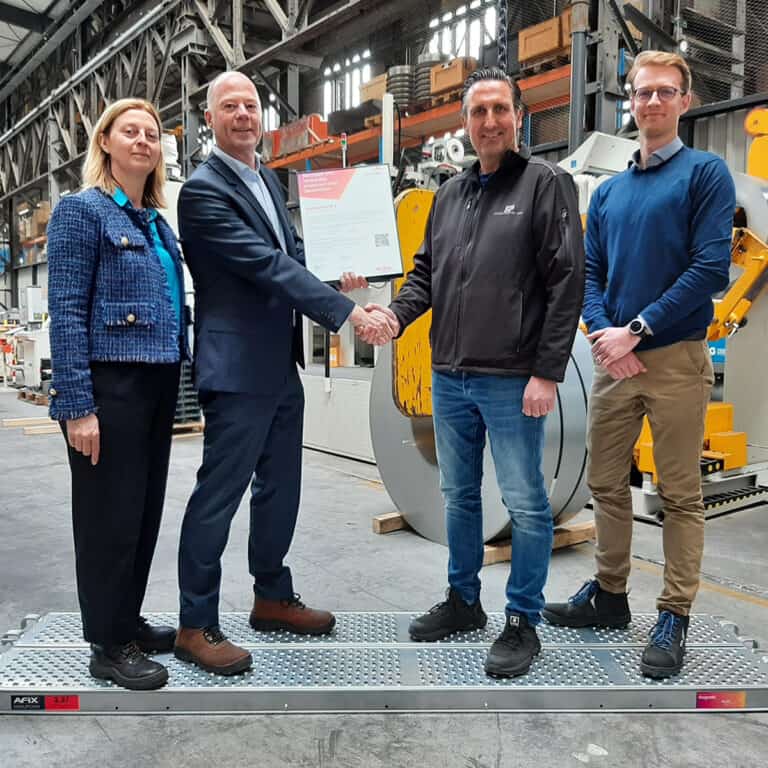
Staalprofiel, an Afix Group company, is actively transforming scaffolding solutions through a commitment to sustainability. As part of its alignment with the EU Green Deal, Staalprofiel has adopted XCarb® recycled and renewably produced Magnelis® steel from ArcelorMittal for its steel decks.Afix Group recognises the construction industry’s need for eco-conscious materials. “XCarb® aligns with our goal of providing sustainable products without sacrificing performance,” stated Gerrie Roos, owner of Staalprofiel.This partnership with ArcelorMittal, a pioneer in sustainable steel production, reinforces Afix Group’s proactive approach to environmental responsibility. The company has pledged to reduce its carbon footprint significantly in the coming years.“Our focus on sustainability is a core element of our business model,” said Stephan Hillaert, CEO of Afix Group. “We are leading the industry by example, offering eco-friendly scaffolding solutions that benefit both our customers and the environment.”Afix Group’s initiative highlights the growing importance of sustainability within the scaffolding sector, serving as a benchmark for other companies seeking to reduce their environmental impact.
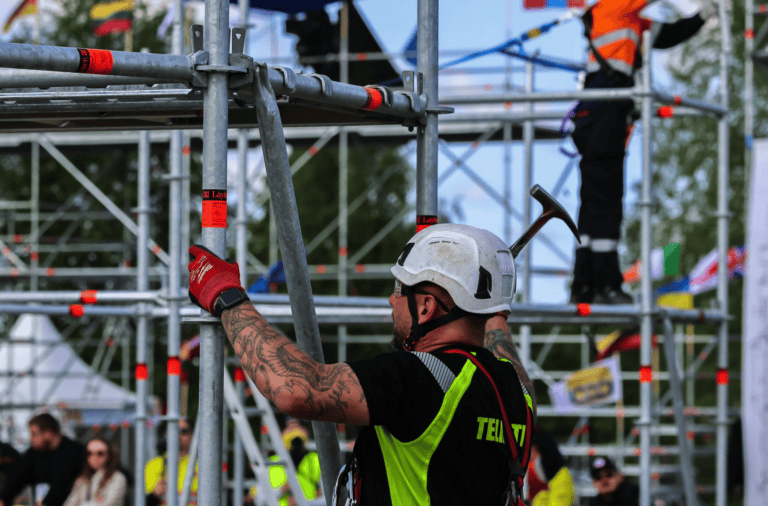
The highly anticipated ScaffChamp 24 international scaffolding competition is getting a major boost, with Leach’s proudly stepping in as a main partner.
This exciting collaboration promises to elevate the upcoming event to new heights of professionalism and style.
UK based leach’s, a renowned name for providing scaffolding and height safety solutions, will be playing a pivotal role in ScaffChamp 24. As a global sourcing partner for organisations in over 80 countries, Leach’s has come on board as a main partner for ScaffChamp to boost the awareness of this incredible event. Leach’s will be holding product demonstrations and showcasing cutting-edge safety equipment throughout the 2-day event.
Grant Harris, Global Sales Manager at Leach’s said: “ScaffChamp shows off the very best in our industry and it made sense for Leach’s to partner with and support this exciting, unique event. It is important that Scaffolder’s get the recognition and credit they deserve and we fully believe that ScaffChamp is fantastic at doing just that. We can’t wait to see who will come out on top as champions and we are already looking forward to future ScaffChamp events!”
As a main sponsor, Leach’s commitment to ScaffChamp 24 underscores their dedication to promoting the advancement of the scaffolding profession. They join a growing list of industry leaders who recognize the importance of this thrilling event for fostering camaraderie and raising the bar of excellence.
A spokesperson for ScaffChamp said: “We are pleased that the vision of ScaffChamp aligns perfectly with Leach’s commitment to scaffolder safety. The event prioritizes demonstrating the importance of adhering to safety instructions. This collaboration underscores our shared dedication to enhancing safety at every level.”
ScaffChamp 24 will take place on May 24th and 25th, 2024, in Vilnius, Lithuania. Get ready for thrilling competitions, world-class scaffolding demonstrations, and an unmatched opportunity for the global scaffolding community to connect.
Click here for ScaffChamp24 Tickets.
Actavo has cemented its reputation for health and safety excellence, securing three prestigious awards from the Royal Society for the Prevention of Accidents (RoSPA).
The company’s dedication to safety is reflected in its achievement of the RoSPA Order of Distinction Award for Actavo Industrial Solutions UK (twenty consecutive years of Gold Awards), the RoSPA President’s Award for Actavo Network & In-Home (thirteen consecutive Gold Awards), and the RoSPA Fleet Safety Gold Medal for Actavo Network & In-Home (eight consecutive Gold Awards for fleet safety excellence with its Irish fleet of over 600 vehicles).Actavo, a leader in scaffolding infrastructure and electricity pylon tower painting services, maintains a strong safety culture throughout its operations.Colm Doherty, Executive Chair at Actavo, commented, “Safety is our number one company value, and reaching this 20-year milestone acknowledges our culture and long-term track record of excellence in keeping our staff and the public safe.”The RoSPA Awards are an internationally recognised symbol of health and safety achievement. Julia Small, RoSPA’s Achievements Director, states, “We congratulate Actavo on winning three prestigious RoSPA Awards and showing an unwavering commitment to keeping employees, clients, and customers safe from accidental harm and injury.”
ScaffChamp organisers are excited to announce ScaffPlan as the official software partner for the second consecutive year of the international scaffolding championship.
The partnership highlights ScaffPlan’s commitment to innovation within the industry, as they will provide cutting-edge 3D design technology for this year’s competition.
ScaffChamp, organised by the Baltic Scaffolders Association, is a prestigious event that showcases the skills and expertise of scaffolders from around the globe. Scheduled for May 24-25, 2024, in Vilnius, Lithuania, the event is expected to attract hundreds of enthusiasts to the venue and thousands of online viewers worldwide.
Event organisers will use ScaffPlan’s industry-leading 3D design software to create complex scaffold designs that will challenge the competing teams. This will ensure precision and safety and push the boundaries of creative scaffold construction for the competition.
ScaffPlan’s MD Simon Boyes said: “ScaffPlan empowers us to design truly ambitious and intricate scaffolds for ScaffChamp 24. We’re excited to see how teams rise to the challenge using this powerful technology,”“The scaffold design chosen by ScaffChamp for their 2024 event is the most complex in the event’s history. Thus, the ability to explore and interact with the 3D model in real time is essential. This will ensure that all components are correctly connected in their respective locations, preventing any time penalties during assembly.”
ScaffChamp’s partnership with ScaffPlan highlights the growing role of technology within the scaffolding industry.
“It’s incredibly valuable to have such a strong partner as ScaffPlan on board for the second year running,” a spokesperson from ScaffChamp said.
“The 3D models of the designs provided for this ScaffChamp will clarify the assembly process for the teams, leaving no room for uncertainty. It’s remarkable how software and meticulous design can illustrate each step of the assembly process so clearly – this plays an important role in increasing safety. This collaboration is a testament to how technology can revolutionise industry practices, making complex tasks more manageable and safer.”
ScaffChamp 24 promises to be an exciting showcase of scaffolding excellence. Tickets for the event are still available from the ScaffChamp website.
In an ambitious restoration effort, the London Temple of the Church of Jesus Christ of Latter-Day Saints in Newchapel, Surrey, known as the Manor House, is witnessing a historic transformation.
Entrusted with the monumental task is Fast Fix Scaffolding, in partnership with Clarke Roofing Southern Ltd as the main contractor, embarking on a 35-week journey to renew the building’s roof and vertical tiling.
At the heart of this project’s success is the strategic use of the Layher Allround System, facilitated by Fast Fix Scaffolding’s expertise, underscoring the vital role of innovative system scaffolding in historic preservation.
The Challenge
With its intricate design and historical significance, the Manor House presented unique challenges. The requirement was twofold: to execute a comprehensive roofing restoration and ensure the building remained operational throughout the process. The scaffolding setup was critical, designed to provide access to the roof and vertical tiling while protecting the building from weather damage during the works.
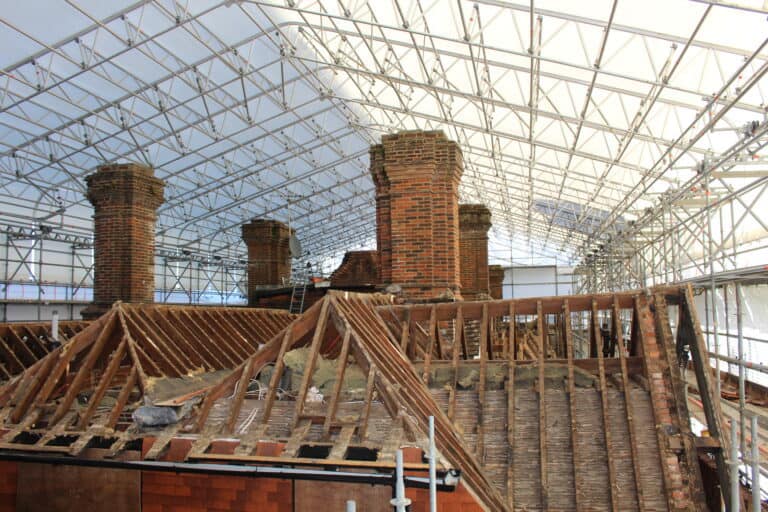
Sean Elliott, Managing Director of Fast Fix Scaffolding, highlighted the complexities, “The size of the clear span for the temporary roof was a significant challenge. Yet, the Layher Keder Roof XL System, supported by Layher UK’s engineering expertise, offered a seamless solution.”
The Layher Solution
For the project, Fast Fix Scaffolding chose Layher’s world-famous Allround Modular Scaffold system and its Keder Rolling Roof for their reliability and flexibility. The system’s ease of installation and capacity to span large areas without compromising structural integrity influenced this choice.
Elliott added, “The entire scaffold, with its protective sheeting and the temporary roof, was a testament to the Layher System’s capability to adapt to the demanding needs of historic restoration.”
Execution and Innovation
Throughout the scaffold build, Fast Fix Scaffolding’s innovative thinking was evident. The Manor House’s constrained access and operational requirements led to the strategic use of smaller scaffold components.
Due to the limited access, with height and width restrictions, smaller scaffold components were employed on the project to ensure these could be unloaded and distributed through a limited archway entrance by a small telescopic forklift to eliminate manual handling as far as was reasonably practicable.
This approach, coupled with Layher UK’s design expertise, ensured a seamless installation process. “The collaboration between Fast Fix Scaffolding, Clarke Roofing, and Layher was instrumental in navigating the project’s challenges, from logistical constraints to ensuring safety and public access,” Elliott noted.
Outcome and Reflections
As the broader project continues, the scaffold and temporary roofing stand as a testament to the effectiveness of the Layher Allround Scaffolding System. The complex tiling and maintenance work continues under the protection and accessibility provided by the scaffold, ensuring the Manor House’s legacy for years to come.
Elliott reflected on the project, “This project reaffirmed the importance of pre-planning and collaboration. The Layher System, particularly the Keder Roofing XL System, was instrumental in our ability to deliver a high-quality solution efficiently.”
Conclusion
The restoration of the Manor House at the London Temple of the Church of Jesus Christ of Latter-Day Saints is more than a construction project; it’s a preservation of history. Through the innovative use of the Layher System, Clarke Roofing Southern Ltd and Fast Fix Scaffolding have demonstrated how modern technology can be harmoniously integrated with historic preservation, setting a benchmark for future restoration projects.
The success of this project lies not only in preserving a building but also in advancing scaffolding solutions for complex architectural endeavours.
ScaffEx24, the scaffolding sector’s groundbreaking new conference, exhibition, and awards ball, has revealed to Scaffmag its initial lineup of powerful speakers.
The event promises to bring together industry leaders and innovators, focusing on opportunities, client relationships, innovation, and training in the scaffolding world.Suzannah Nichol, the influential CEO of Build UK, will headline the speaker series. Nichol, a driving force behind transforming the construction industry, will address what major clients seek in their scaffolding partners. She’ll delve into the Common Assessment Standard and share perspectives on the future direction of the construction sector as a whole.Wayne Connolly, Managing Director of the acclaimed Connolly Scaffolding and incoming President of the NASC, is poised to bring his experience with cutting-edge scaffolding approaches to the conference. Connolly’s insights are sure to inspire those striving for excellence in the field.Adding motivational and behavioural elements to the event, David Meade, renowned speaker on human potential, and David Mosley, Managing Director of CISRS, are set to bring thought-provoking discussions and dynamic energy to the event. All speakers will engage in question-and-answer sessions, fostering open dialogue and paving the way for a more future-focused industry.“ScaffEx24 aims to reshape the scaffolding industry, and this speaker lineup truly reflects that vision,” said Marie Kaffour, Events Manager of ScaffEx24. “We’re spotlighting opportunity, ‘Meet the Buyer’ strategies, innovation, and training – the essential pillars that will drive the scaffolding sector forward.”More speakers will be unveiled monthly as the event approaches. ScaffEx24 strongly encourages industry professionals at all levels to stay informed and stay ahead in the industry by visiting the Scaffex24 website, following social media, and keeping an eye on media partner ScaffMag for the latest announcements.Registration for this free-to-attend conference and expo is now open. Don’t miss this pivotal event in Belfast on November 29th, 2024.
We use cookies on our website to give you the most relevant experience by remembering your preferences and repeat visits. By clicking “Accept”, you consent to the use of ALL the cookies.
This website uses cookies to improve your experience while you navigate through the website. Out of these, the cookies that are categorized as necessary are stored on your browser as they are essential for the working of basic functionalities of the website. We also use third-party cookies that help us analyze and understand how you use this website. These cookies will be stored in your browser only with your consent. You also have the option to opt-out of these cookies. But opting out of some of these cookies may affect your browsing experience.
Necessary cookies are absolutely essential for the website to function properly. These cookies ensure basic functionalities and security features of the website, anonymously.
Cookie
Duration
Description
cookielawinfo-checbox-analytics
11 months
This cookie is set by GDPR Cookie Consent plugin. The cookie is used to store the user consent for the cookies in the category "Analytics".
cookielawinfo-checbox-functional
11 months
The cookie is set by GDPR cookie consent to record the user consent for the cookies in the category "Functional".
cookielawinfo-checbox-others
11 months
This cookie is set by GDPR Cookie Consent plugin. The cookie is used to store the user consent for the cookies in the category "Other.
cookielawinfo-checkbox-necessary
11 months
This cookie is set by GDPR Cookie Consent plugin. The cookies is used to store the user consent for the cookies in the category "Necessary".
cookielawinfo-checkbox-performance
11 months
This cookie is set by GDPR Cookie Consent plugin. The cookie is used to store the user consent for the cookies in the category "Performance".
viewed_cookie_policy
11 months
The cookie is set by the GDPR Cookie Consent plugin and is used to store whether or not user has consented to the use of cookies. It does not store any personal data.
Functional cookies help to perform certain functionalities like sharing the content of the website on social media platforms, collect feedbacks, and other third-party features.
Performance cookies are used to understand and analyze the key performance indexes of the website which helps in delivering a better user experience for the visitors.
Analytical cookies are used to understand how visitors interact with the website. These cookies help provide information on metrics the number of visitors, bounce rate, traffic source, etc.
Advertisement cookies are used to provide visitors with relevant ads and marketing campaigns. These cookies track visitors across websites and collect information to provide customized ads.
 “While the initial investment may be higher compared to traditional tube and fitting scaffolding, the longevity and durability of system scaffolding far outweigh the costs over a 10-year period,” Des explains.
“When factoring in the savings on labour and the ability of system scaffolding to facilitate entry into new markets, its superiority becomes evident, leading to tangible turnover and margin benefits.”
The Layher Open Day will run from 9 am to 12 pm, with limited places available to ensure attendees have ample opportunity to explore the products and engage with the Layher UK team.
Sean Pike, Managing Director at Layher UK, highlights the importance of these events in fostering meaningful interactions. “We’re committed to providing attendees with a comprehensive understanding of our products and fostering quality conversations,” Sean remarks. “That’s why we’re hosting multiple events throughout the year, with future dates to be announced soon.”
For those unable to attend the Open Day but interested in exploring the commercial advantages of system scaffolding, Des Moore offers the possibility of arranging presentations directly at individual business premises.
This event marks the first of four Open Mornings planned across the UK. It presents a unique opportunity for industry professionals to delve into the practical and financial benefits of Layher’s innovative scaffolding solutions, setting the stage for enhanced efficiency and profitability within the construction sector.
“While the initial investment may be higher compared to traditional tube and fitting scaffolding, the longevity and durability of system scaffolding far outweigh the costs over a 10-year period,” Des explains.
“When factoring in the savings on labour and the ability of system scaffolding to facilitate entry into new markets, its superiority becomes evident, leading to tangible turnover and margin benefits.”
The Layher Open Day will run from 9 am to 12 pm, with limited places available to ensure attendees have ample opportunity to explore the products and engage with the Layher UK team.
Sean Pike, Managing Director at Layher UK, highlights the importance of these events in fostering meaningful interactions. “We’re committed to providing attendees with a comprehensive understanding of our products and fostering quality conversations,” Sean remarks. “That’s why we’re hosting multiple events throughout the year, with future dates to be announced soon.”
For those unable to attend the Open Day but interested in exploring the commercial advantages of system scaffolding, Des Moore offers the possibility of arranging presentations directly at individual business premises.
This event marks the first of four Open Mornings planned across the UK. It presents a unique opportunity for industry professionals to delve into the practical and financial benefits of Layher’s innovative scaffolding solutions, setting the stage for enhanced efficiency and profitability within the construction sector. 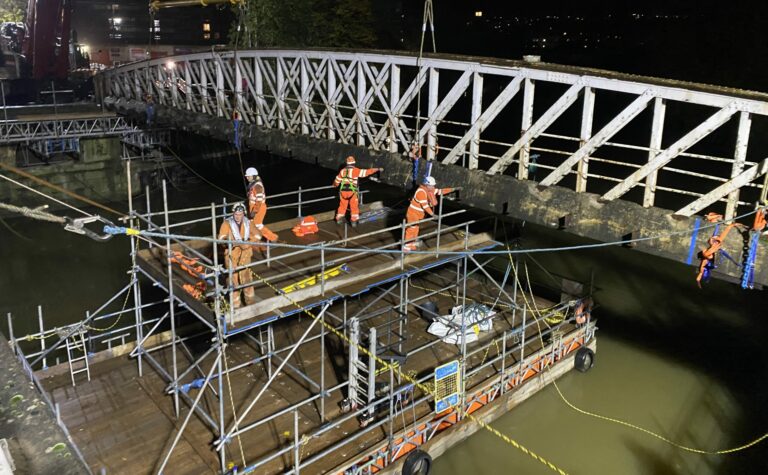


 Sean Elliott, Managing Director of Fast Fix Scaffolding, highlighted the complexities, “The size of the clear span for the temporary roof was a significant challenge. Yet, the Layher Keder Roof XL System, supported by Layher UK’s engineering expertise, offered a seamless solution.”

 This approach, coupled with Layher UK’s design expertise, ensured a seamless installation process. “The collaboration between Fast Fix Scaffolding, Clarke Roofing, and Layher was instrumental in navigating the project’s challenges, from logistical constraints to ensuring safety and public access,” Elliott noted.