In a development aimed at bolstering safety standards in industries involving work at heights, the Working at Height Safety Association (WAHSA) has unveiled new guidelines. The guidelines comprehensively cover the proper selection, use, maintenance, and periodic inspection of single and twin energy-absorbing lanyards, which are critical for preventing accidents and fatalities in work-at-height scenarios.The updated guidance emphasises the importance of understanding both single and twin energy-absorbing lanyards’ specific safety features and application scenarios. It provides detailed advice on ensuring compatibility between lanyards and other personal protective equipment (PPE), facilitating safer work environments for individuals operating at height.Key highlights include recommendations for regular inspections, criteria for decommissioning and replacing lanyards, and insights into the technological advancements in energy absorption materials and designs. The guidance aims to empower employers and safety professionals with the knowledge to select the right lanyard types based on the nature of work, thereby minimising risks and enhancing overall safety.WAHSA’s new guidelines serve as an essential resource for individuals and organisations seeking to adhere to the highest safety standards. Download the official document here to access the complete guidance and implement these critical safety measures in your workplace.
In an ambitious move that signals a significant expansion, I-Scaff Access Solutions has announced the commencement of construction on a new £1.2 million headquarters in Glenrothes, Fife.
This strategic development comes as part of the company’s broader plan to enhance its operational capabilities and service reach across Scotland, particularly the West Coast.
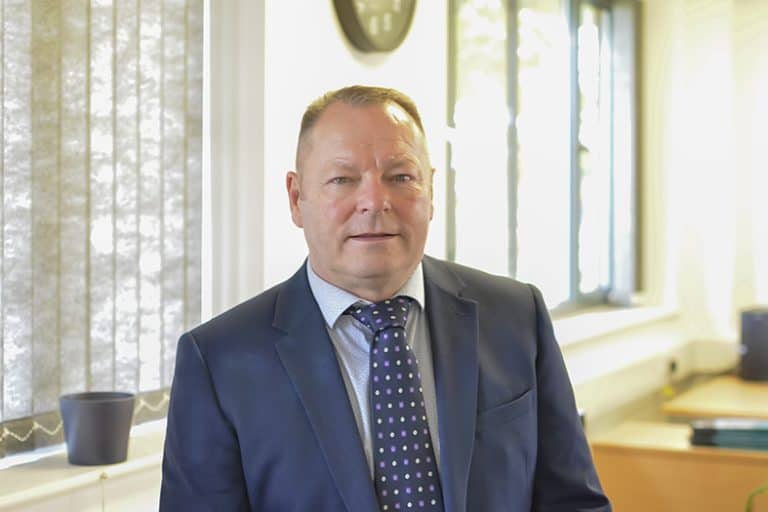
Ross Brown
Ross Brown, Managing Director of I-Scaff, shared insights into the journey towards this momentous milestone. “After an eight-month wait due to planning approvals delayed by Fife Council staff shortages, we’re thrilled to break ground on our new headquarters,” Brown stated. The development, sprawling across 1.5 acres, is a testament to I-Scaff’s commitment to innovation, sustainability, and local collaboration.
Designed by D. Stewart Contracts/ARV Design, the headquarters will be constructed by REALM Construction with a focus on utilising the local supply chain. “REALM has indicated project completion and entry by the end of October 2024,” Brown added, highlighting the anticipated swift progress towards the new facility’s operational status.
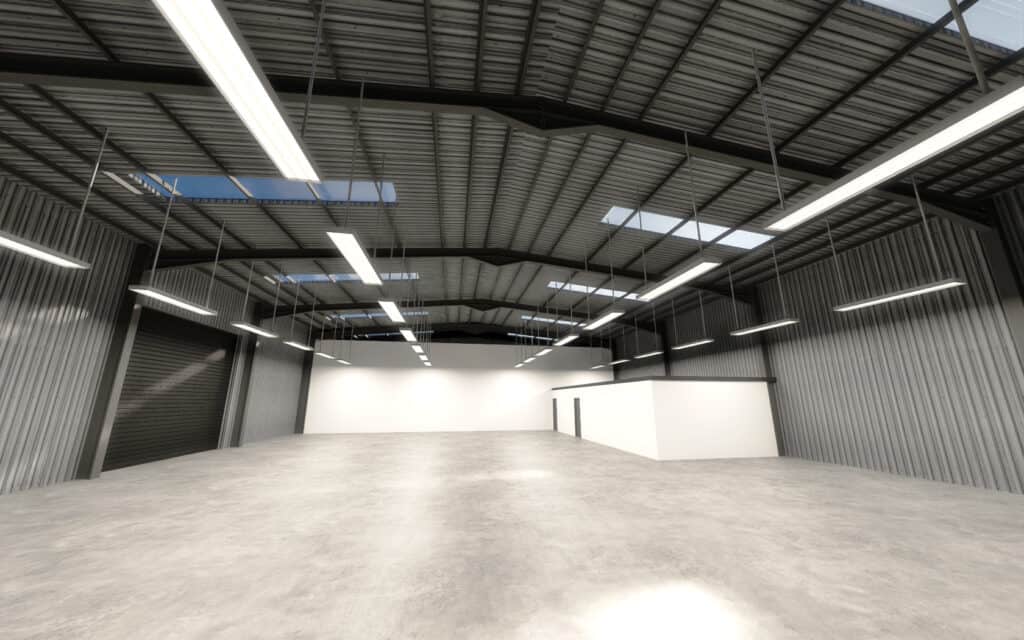
The Glenrothes project will feature a 660m2 bespoke building encompassing new office space, internal storage, a Heavy Goods Vehicle (HGV) service bay, and meeting/training facilities. Additionally, a 5640 m2 concrete yard area is set to streamline the servicing of equipment and vehicle loading operations.
I-Scaff is also exploring opportunities to establish a satellite yard in the Lanarkshire area. This strategic addition aims to service contracts across the West Coast more efficiently and reduce travel requirements for staff commuting to Fife. “Collectively, these efforts are poised to significantly reduce our carbon footprint,” explained Brown.
The decision to anchor the new headquarters in Glenrothes underscores I-Scaff’s dedication to its roots and the local community. “Staying in Glenrothes was crucial for us. We’ve built our business around our staff and local clients. For those reporting to the HQ daily, it was important to maintain their commute,” Brown highlighted.
As I-Scaff Access Solutions embarks on this ambitious project, the company reaffirms its commitment to growth and sustainability and strengthens its position as a leading player in the system scaffolding industry. With these developments, I-Scaff is poised to significantly enhance its service delivery and operational efficiency, marking a new chapter in its illustrious history.
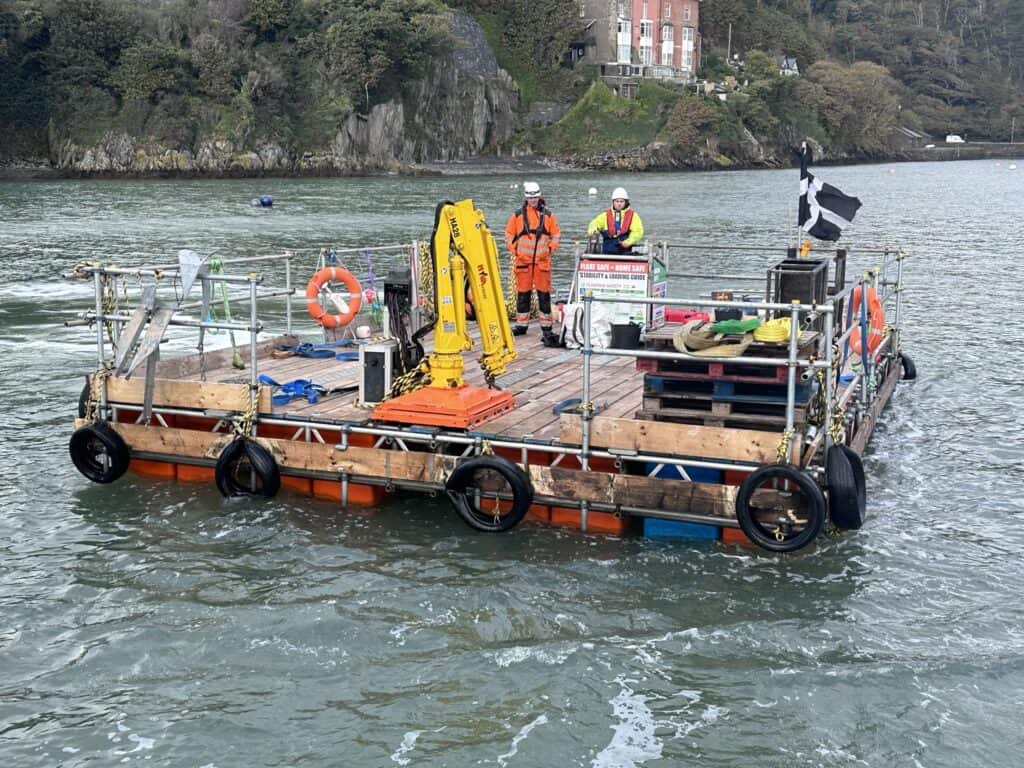
In an impressive demonstration of engineering innovation, the Cornwall-based startup ScaffFloat has recently accomplished a groundbreaking project in Barmouth, North Wales. In collaboration with Pennys Demolition and Alun Griffiths, this effort focused on replacing an old railway bridge for Network Rail across a tidal estuary, demonstrating significant progress in construction methodologies. The operation, marked by its complexity and the hefty weight of 300 tons for the bridge sections, required innovative solutions, and ScaffFloat rose to the occasion.Central to this project was ScaffFloat’s innovative floating scaffold system, which merges 100% recyclable plastic floats with standard scaffold components to craft pontoons, rafts, and workboats. This inventive solution facilitated the movement of 25-ton bridge sections from the old structure to shore and the installation of new deck sections for the bridge.For the undertaking, ScaffFloat supplied a complete marine package, including four heavy lift pontoons, two workboats with diverse capabilities, and a fast workboat, all outfitted with features to ensure operational safety and efficiency.Toby Budd, the Managing Director of ScaffFloat, provided insight into the project’s innovation and the collaborative effort required for its success. He noted the integration of their floating scaffold system into the construction process, which allowed for the efficient and safe relocation of bridge sections across the estuary.ScaffFloat’s expertise in navigating logistical and environmental challenges was evident throughout the demolition and installation phases. The team’s precision and flexibility were vital in managing the complexities presented by the tidal estuary. “The team’s ability to adapt and accurately execute the project plans under varying conditions was critical to overcoming the challenges faced,” Budd mentioned in his reflections on the project.Budd also addressed the difficulties encountered, particularly the unpredictable weather and the constraints imposed by the tide. “One of the most significant challenges was aligning our operations with the tide and weather, demanding accurate timing and adaptability from our team,” he elaborated.Moreover, Budd highlighted the project’s commitment to safety and risk management. He underscored that while there was a solid drive to complete the project, ensuring safety was never compromised. This balance between innovation, teamwork, and safety protocols was instrumental in the project’s completion.The reopening of the railway line and the subsequent operation of a train on December 8 stand as proud achievements for Budd and his team. “The successful conclusion of the project and its contribution to North Wales’ infrastructure are sources of immense satisfaction,” Budd shared.The completion of the Barmouth bridge replacement project by ScaffFloat showcases the company’s innovative approach to construction. It establishes a new benchmark for addressing engineering challenges in marine environments, highlighting the transformative potential of floating scaffold technology in modern construction practices.
Redcar and Cleveland College have unveiled plans for a state-of-the-art £4.7 million All Access Academy, in collaboration with NETA Training, to address the growing demand for skilled scaffolders and workers in other industries.
The initiative, supported by the government’s Levelling Up partnership fund, underscores the college’s commitment to providing comprehensive training opportunities for individuals across Redcar and Cleveland.
Executive Principal of Redcar and Cleveland College, Jason Faulkner, emphasised the significance of the new facility, “This facility will deliver the training of skills that are in huge demand, not just here in the Tees Valley but across the UK.”
The All Access Academy will cater to sectors such as scaffolding, rope access, rigging, lifting, and welding, aligning with the needs of major regional projects, including those by SeAH Wind and BP.
NETA Training Director Sean Johnston highlighted the importance of addressing skills gaps to drive economic growth, “The All Access Academy in Redcar will now build on our commitment to meet the skill demands that will drive our economy,” he said.
With over 45 years of experience, NETA Training is poised to leverage its expertise to develop a local workforce equipped with the necessary skills to thrive in evolving industries.
The 750 square meter training facility on the college’s Corporation Road site in Redcar will offer specialised commercial training, featuring purpose-built scaffolding training areas and an industrial welding training facility. This expansion comes at a crucial time, as the scaffolding industry faces challenges such as an ageing workforce and a shortage of training opportunities.
Dave Mosley, Managing Director of the Construction Industry Scaffolders Record Scheme (CISRS), expressed confidence in the initiative’s ability to address the growing demand for skilled professionals in specialised sectors. “The demand for skilled professionals trained in specialised sectors is higher than ever. NETA has a long history of supplying quality training in the region, and this project shows commitment to qualifying future scaffolding apprentices and trainees.”
Local leaders, including Cllr Alec Brown, Leader of Redcar and Cleveland Borough Council, and Jacob Young, Conservative MP for Redcar, welcomed the investment in the region, highlighting its role in providing education, training, and employment opportunities for residents. Tees Valley Mayor Ben Houchen commended the initiative as a vital component of driving economic growth and ensuring that local workers are equipped to seize emerging opportunities.
In a heartfelt response to a devastating diagnosis within its own ranks, TRAD UK has announced Duchenne UK as its designated charity for the 2024-25 fundraising period. The decision comes in light of two-year-old Thomas Ackers’ diagnosis of Duchenne muscular dystrophy (DMD) last October. Thomas is the son of TRAD UK employees Liam and Danielle Ackers, both integral members of the company’s Stockport depot.DMD is a genetic disorder characterised by muscle weakness and wasting, affecting primarily boys and typically diagnosed in early childhood. The condition arises from a mutation in the dystrophin gene, leading to compromised muscle strength and function. Despite the challenges posed by this diagnosis, Thomas, described as a “fantastic, happy little boy” by his mother, Danielle, is bravely navigating his journey with optimism.The Ackers family and TRAD UK emphasise the importance of ongoing research, funding, and awareness to further treatment innovations and, ultimately, find a cure for DMD. Liam Ackers expressed hope that continued efforts in these areas will yield more drugs, clinical trials, and breakthroughs for children like Thomas.“Funding, research and awareness into DMD and its treatments have made huge strides in recent years. We’re really hopeful that continued funding and research will result in more drugs and clinical trials, and eventually a cure for boys like Thomas with this condition,” Liam said.Thomas’ journey with DMD, though challenging, hasn’t dimmed his spirit. His mother, Danielle, shared, “Thomas absolutely loves Disney films and dances to all the music. We want to support research into DMD so that Thomas and all children like him can keep dancing for as many years as possible!”Colin Dobson, Managing Director at TRAD UK, underscored the company’s support for its employees and their families: “I can’t think of a better cause for our next charity fundraising period. We always say that TRAD is a family, and Liam and Danielle are a key part of our Stockport business. TRAD supports its people through good times and bad, and we’re hoping to raise a considerable amount of money for Duchenne UK this year, to help fund the treatment innovations that will help children like Thomas throughout their lives.”As TRAD UK embarks on its fundraising efforts for Duchenne UK, they invite others to join them in this important cause. A JustGiving page has been set up to facilitate contributions, and the company expresses gratitude for any support received.Please visit the JustGiving page for those wishing to contribute to TRAD UK’s fundraising efforts for Duchenne UK. Your generosity will make a difference in the lives of children like Thomas and their families.
In a move set to streamline scaffolding training and certification processes, the Construction Industry Scaffolders Record Scheme (CISRS) has unveiled its revamped CAP 609 General Information Booklet. Designed to be more user-friendly and informative, the updated booklet offers invaluable insights into the CISRS scheme, catering to the needs of both newcomers and seasoned professionals in the industry.One of the key highlights of the revised booklet is its comprehensive coverage of the new entrant card route, providing clear guidance for individuals embarking on their scaffolding journey. This inclusion is expected to simplify the process for those seeking CISRS training and certification.Targeting scaffolders, employers, and industry stakeholders, the A5 booklet serves as a go-to reference document, offering a detailed overview of the CISRS scheme. It encompasses the entire spectrum of courses, from CISRS COTS (Construction Operatives Training Scheme) to Supervisor & Manager, Inspection, and Scaffolding Awareness training.“The CAP 609 booklet is a vital tool for anyone involved in the scaffolding industry,” remarked a representative from CISRS. “Whether you’re a novice looking to start your training or an experienced professional seeking to update your knowledge, this booklet is an indispensable resource.”Furthermore, to ensure accessibility, CISRS is providing both printed and digital versions of the booklet. The printed copies, along with the ‘Have You Got The Right Card?’ Poster will be available free of charge in the coming weeks. Interested parties can pre-order by contacting [email protected]. Additionally, a PDF version of the booklet is already available for download on the CISRS website.
In the heart of BAE Systems’ Broad Oak facility in Portsmouth, a remarkable refurbishment project is underway, ensuring the modernisation and functionality of a high-security office building. Liddiard Scaffolding Ltd, based in Petersfield, has taken centre stage in erecting the scaffolding necessary for this intricate endeavour, utilising the versatile Layher Allround and Keder Roof scaffolding system.
Dubbed the “Bldg 49 Refurbishment,” the project, managed by Fifth Elevation, entails a meticulous renovation of an office complex accommodating various entities involved in government and defense-controlled operations.
The stringent security measures and complex operational requirements make this undertaking both challenging and crucial.
Steve Chipps, Senior Estimator at Liddiard Scaffolding, sheds light on the intricacies of the project, “Our objective was clear – to facilitate safe access for window replacements, internal refurbishments, and the installation of a temporary roof for weather protection during roof surface replacement.”
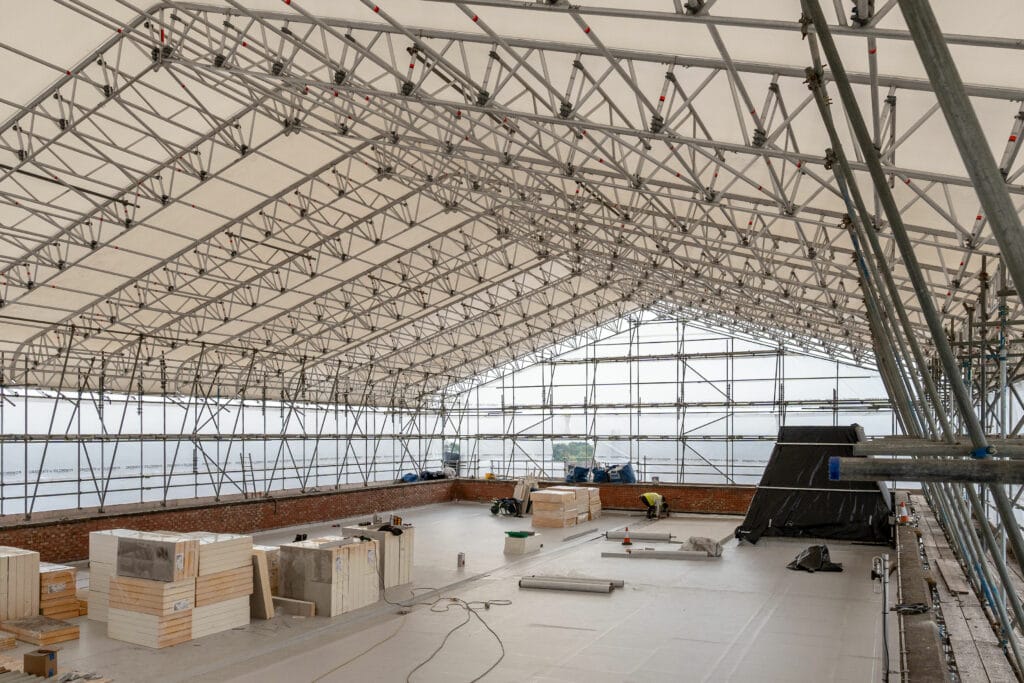
The scale of the project is substantial, with a building perimeter stretching 138 meters and ten lifts installed. Notably, sections of the scaffold towered up to 35 meters, penetrating the warehouse roof, necessitating meticulous planning to ensure structural integrity and safety.
One of the unique challenges encountered was the stringent security protocols within the BAE facility. Chipps emphasises, “Planning was paramount, requiring advanced security clearances for operatives and meticulous coordination for material deliveries and storage.” Additionally, measures were taken to shield certain areas, with windows covered in silver film to maintain confidentiality.
Innovative Solutions with Layher
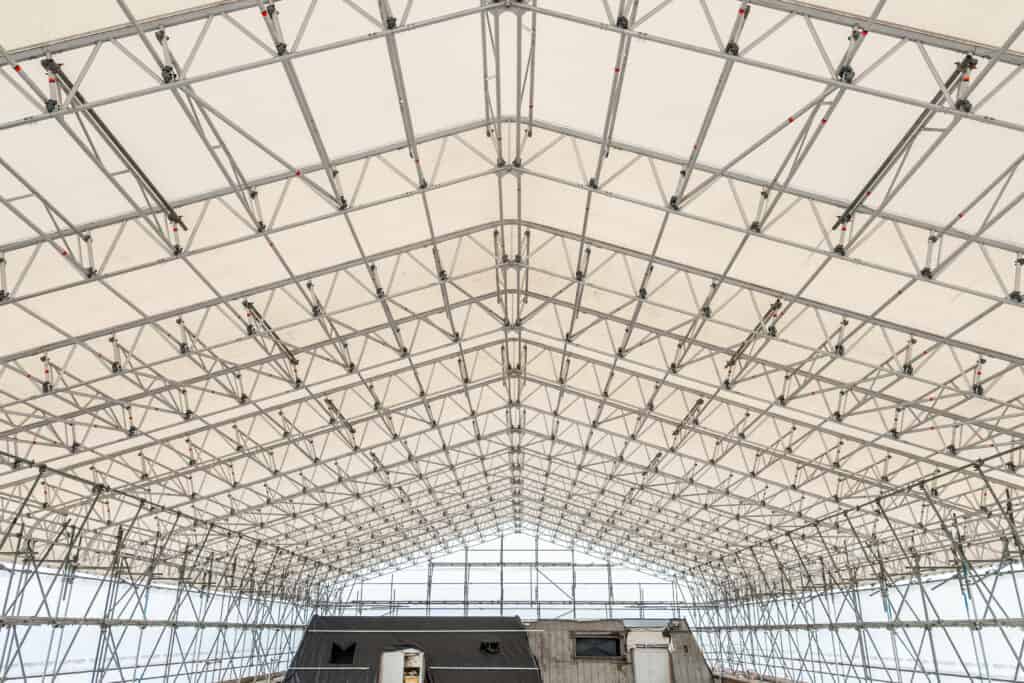
The Layher Keder Roof System proved instrumental in meeting the project’s demands, particularly in providing crucial weather protection. Its innovative design facilitated the construction of a temporary roof, ensuring the safety and integrity of the refurbishment process amidst varying weather conditions.
The modular nature of the Layher system allowed for flexible configurations, showcasing its adaptability to the unique requirements of the project.
Despite the complexities, a collaboration between Layher UK, Liddiard Scaffolding, Fifth Elevation, and BAE Systems was seamless. Chipps notes, “We fostered a partnership approach, ensuring alignment on objectives and addressing challenges proactively.” This close collaboration contributed to the project’s success, with safety being a top priority throughout the execution.
Sections of the scaffold towered up to 35 meters
Reflecting on the project’s outcome, Chipps expresses satisfaction with the results achieved. Despite minor delays, the project was completed on time, showcasing the effectiveness of the collaborative efforts. Notably, Liddiard Scaffolding received accolades for its exemplary safety standards, garnering praise from Fifth Elevation and BAE’s Safety Inspector.
“To date, this project has gone very well, and it’s been a pleasure working with Liddiard’s,” remarked the Health & Safety and Quality Manager from Fifth Elevation.
Collaborative Triumph
In conclusion, the Bldg 49 Refurbishment stands as a testament to the capabilities of Liddiard Scaffolding and the efficacy of the Layher Allround system in meeting the most demanding construction challenges.
As the project nears its completion, it serves as a beacon of excellence in high-security refurbishments, showcasing the seamless integration of Layher’s four core pillars: Service, Support, Solutions, and Supply. This collaborative approach not only ensured the project’s success but also exemplified the commitment to delivering unparalleled service and innovation in the scaffolding industry.
In a strategic move aimed at securing the future of its workforce and maintaining its exceptional service standards, George Roberts (North West) has announced the formation of an Employee Ownership Trust (EOT).
Effective, (February 26, 2024), this ground-breaking decision underscores the company’s commitment to its employees and customers, ensuring business strategy continuity and rewarding its dedicated workforce.
Establishing the EOT promotes employee engagement and commitment while providing long-term benefits from its ongoing success.
According to George Roberts, the move comes after carefully considering various succession plan options, including a third-party sale. Ultimately, the leadership concluded that the EOT would best serve the interests of both employees and customers.
Chairman George Roberts, who founded the business in 1992, expressed his pride in the company’s achievements over the last 32 years. He emphasised the EOT’s uniqueness within the industry and its potential to foster continued growth while allowing the loyal team to share in the company’s success for years to come.
“Since the business was founded in 1992, we have followed the strategy of keeping comprehensive stocks of high-quality products, sold and hired to clients both domestically and internationally via enduring personal relationships,” stated Mr. Roberts.
“I am extremely proud of the company’s achievements and feel strongly that the EOT will allow continued growth and the opportunity for the loyal team within the business to share in its success in the years to come.”
George Roberts will remain Chairman, providing continuity and drawing upon his over 50 years of industry experience. The company boasts a solid and established management team with extensive industry knowledge, supported by a network of technically minded salespeople covering the entirety of the UK.
With a turnover exceeding £50 million, George Roberts (North West) Limited supplies a diverse range of industries, including housebuilding, nuclear, oil & gas, formwork, defence, and general construction sectors.
Operating from a purpose-built 16-acre site in Liverpool, the company serves both domestic and international markets with its scaffolding equipment and systems.
The company’s product range includes tube, fittings, boards, and accessories, along with being a leading distributor of Genuine Layher, K/Lok, K/Stage Systems, Uniscaff Stair Towers, and System Temporary Roofs. Its success is built on a strong brand, unrivalled stock availability, and a reputation for high-quality, fully certified products maintained through an in-house HSEQ regime to ensure consistent conformity to all relevant standards.
Implementing the Employee Ownership Trust marks a significant milestone in the company’s journey, solidifying its commitment to its employees, customers, and continued success in the industry.
In a significant move aimed at enhancing safety and quality standards within the construction industry, the National Federation of Builders (NFB) has formally endorsed the membership standards of the National Access and Scaffolding Confederation (NASC), marking a milestone collaboration between two leading industry bodies.The endorsement comes after an extensive review by the NFB of NASC’s Membership Charter and Audit process, which rigorously evaluates the operational, yard, and site standards of contracting scaffolding or access businesses. NASC’s commitment to maintaining the highest levels of industry standards through regular audits and its publication of respected guidance and annual safety reports has been a cornerstone of its operations for nearly eight decades.Clive DickinClive Dickin, CEO of NASC, expressed his enthusiasm about the endorsement, stating, “It is truly exciting that NFB has formally recognised the value and reliability of our standards, encouraging its members to adhere to the most recognised and tested standards for scaffolding and access. This endorsement underlines our commitment to safety and excellence in the construction industry.”The NFB, known for its dedication to improving standards across the construction sector, views this endorsement as a step forward in its efforts to ensure the safety and well-being of builders, contractors, and housebuilders. Richard Beresford, Chief Executive of the NFB, remarked on the importance of supporting trade bodies that maintain a transparent and rigorous approach to membership standards. “Following our review of NASC’s processes, procedures, and gold-standard technical and safety guidance, we are confident that utilising a NASC member will significantly reduce the risks for all working on construction sites,” Beresford said.The collaboration between NFB and NASC is set to include joint initiatives aimed at promoting best practices for scaffolding and access procurement and usage. These efforts are geared towards informing clients, principal contractors, and their supply chains about the risks associated with working at height and how to mitigate these risks by selecting quality suppliers.
In a proactive move ahead of the UK’s Spring Budget announcement, the Scaffolding Association, represented by its Chief Executive Robert Candy, has made a compelling written submission to HM Treasury. Robert Candy, Chief Executive of the Scaffolding AssociationThis initiative underscores the sector’s anticipation and active engagement with government policies, particularly in the construction industry’s role in the nation’s economic health and housing targets.The Chancellor of the Exchequer’s forthcoming budget is keenly awaited by various sectors, with the Scaffolding Association seizing the opportunity to advocate for measures that bolster scaffolding, access businesses, and the broader construction industry. With the government’s ambitious agenda to construct 300,000 new homes by the end of 2024, the Scaffolding Association has emphasised the critical need for a robust construction industry. This requirement holds regardless of the target’s realisation, considering the continuous demand for new homes and the support required for commercial and domestic construction projects.As highlighted by the Scaffolding Association, challenges confronting the construction sector include the escalating costs of materials and labour, skills shortages, and the imperative to meet net-zero targets. These hurdles, the Association argues, not only jeopardise the survival of businesses within the sector but also threaten the overall progression towards the government’s housing and environmental objectives.The Association’s letter to Chancellor Jeremy Hunt contains specific proposals aimed at addressing these issues. Among the suggestions are adjustments to payment practices, corporation tax, capital expenditure, and overheads related to fleet operations, including fuel duty, vehicle excise duty, and the HGV road user levy. These targeted measures are proposed as mechanisms to alleviate financial pressures on the construction industry and stimulate growth and sustainability.As the budget presentation approaches, the construction industry and its stakeholders are keen to see how the government will respond to these submissions. The suggestions from the Scaffolding Association and similar organisations reflect a broader dialogue about the future of the UK’s construction industry and its alignment with national housing and environmental goals.The full letter to the Chancellor, as shared by the Scaffolding Association, offers a detailed overview of the industry’s current challenges and the proposed solutions. Read the full letter here.
We use cookies on our website to give you the most relevant experience by remembering your preferences and repeat visits. By clicking “Accept”, you consent to the use of ALL the cookies.
This website uses cookies to improve your experience while you navigate through the website. Out of these, the cookies that are categorized as necessary are stored on your browser as they are essential for the working of basic functionalities of the website. We also use third-party cookies that help us analyze and understand how you use this website. These cookies will be stored in your browser only with your consent. You also have the option to opt-out of these cookies. But opting out of some of these cookies may affect your browsing experience.
Necessary cookies are absolutely essential for the website to function properly. These cookies ensure basic functionalities and security features of the website, anonymously.
Cookie
Duration
Description
cookielawinfo-checbox-analytics
11 months
This cookie is set by GDPR Cookie Consent plugin. The cookie is used to store the user consent for the cookies in the category "Analytics".
cookielawinfo-checbox-functional
11 months
The cookie is set by GDPR cookie consent to record the user consent for the cookies in the category "Functional".
cookielawinfo-checbox-others
11 months
This cookie is set by GDPR Cookie Consent plugin. The cookie is used to store the user consent for the cookies in the category "Other.
cookielawinfo-checkbox-necessary
11 months
This cookie is set by GDPR Cookie Consent plugin. The cookies is used to store the user consent for the cookies in the category "Necessary".
cookielawinfo-checkbox-performance
11 months
This cookie is set by GDPR Cookie Consent plugin. The cookie is used to store the user consent for the cookies in the category "Performance".
viewed_cookie_policy
11 months
The cookie is set by the GDPR Cookie Consent plugin and is used to store whether or not user has consented to the use of cookies. It does not store any personal data.
Functional cookies help to perform certain functionalities like sharing the content of the website on social media platforms, collect feedbacks, and other third-party features.
Performance cookies are used to understand and analyze the key performance indexes of the website which helps in delivering a better user experience for the visitors.
Analytical cookies are used to understand how visitors interact with the website. These cookies help provide information on metrics the number of visitors, bounce rate, traffic source, etc.
Advertisement cookies are used to provide visitors with relevant ads and marketing campaigns. These cookies track visitors across websites and collect information to provide customized ads.





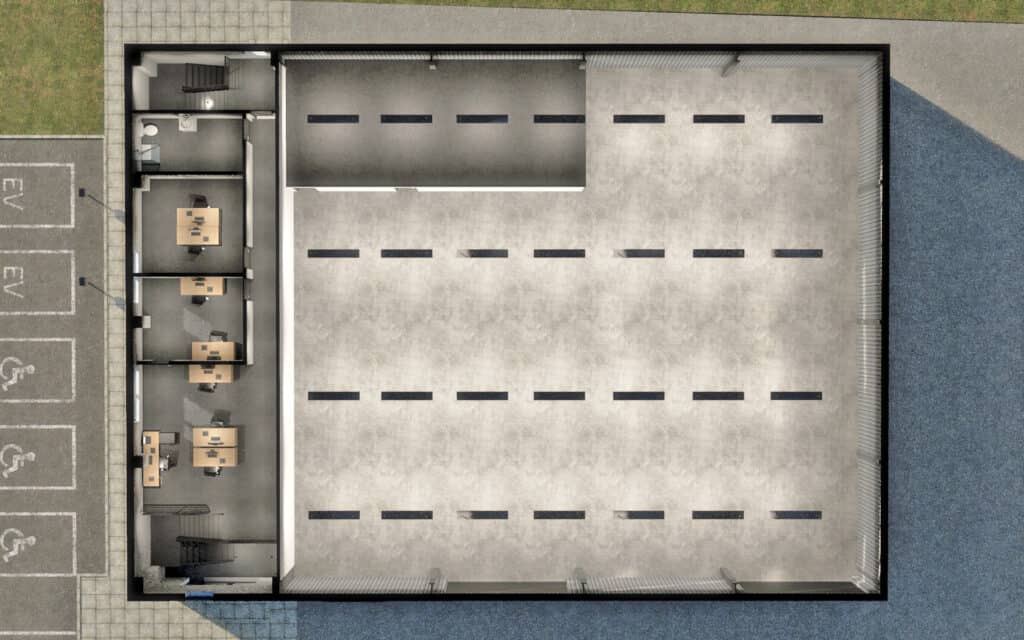
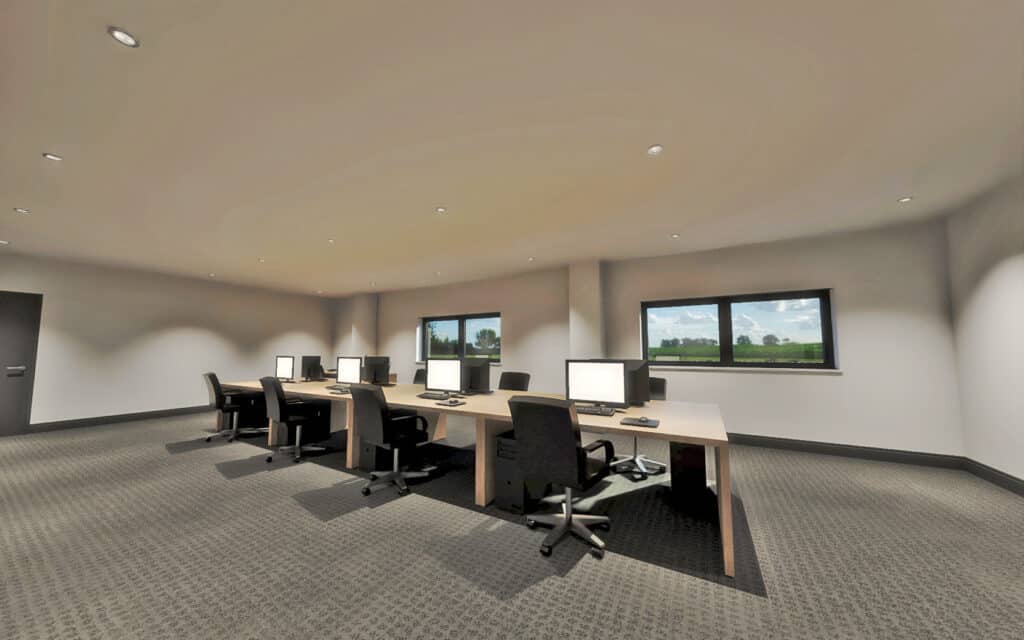 The Glenrothes project will feature a 660m2 bespoke building encompassing new office space, internal storage, a Heavy Goods Vehicle (HGV) service bay, and meeting/training facilities. Additionally, a 5640 m2 concrete yard area is set to streamline the servicing of equipment and vehicle loading operations.
 I-Scaff is also exploring opportunities to establish a satellite yard in the Lanarkshire area. This strategic addition aims to service contracts across the West Coast more efficiently and reduce travel requirements for staff commuting to Fife. “Collectively, these efforts are poised to significantly reduce our carbon footprint,” explained Brown.
The decision to anchor the new headquarters in Glenrothes underscores I-Scaff’s dedication to its roots and the local community. “Staying in Glenrothes was crucial for us. We’ve built our business around our staff and local clients. For those reporting to the HQ daily, it was important to maintain their commute,” Brown highlighted.
As I-Scaff Access Solutions embarks on this ambitious project, the company reaffirms its commitment to growth and sustainability and strengthens its position as a leading player in the system scaffolding industry. With these developments, I-Scaff is poised to significantly enhance its service delivery and operational efficiency, marking a new chapter in its illustrious history.
I-Scaff is also exploring opportunities to establish a satellite yard in the Lanarkshire area. This strategic addition aims to service contracts across the West Coast more efficiently and reduce travel requirements for staff commuting to Fife. “Collectively, these efforts are poised to significantly reduce our carbon footprint,” explained Brown.
The decision to anchor the new headquarters in Glenrothes underscores I-Scaff’s dedication to its roots and the local community. “Staying in Glenrothes was crucial for us. We’ve built our business around our staff and local clients. For those reporting to the HQ daily, it was important to maintain their commute,” Brown highlighted.
As I-Scaff Access Solutions embarks on this ambitious project, the company reaffirms its commitment to growth and sustainability and strengthens its position as a leading player in the system scaffolding industry. With these developments, I-Scaff is poised to significantly enhance its service delivery and operational efficiency, marking a new chapter in its illustrious history. 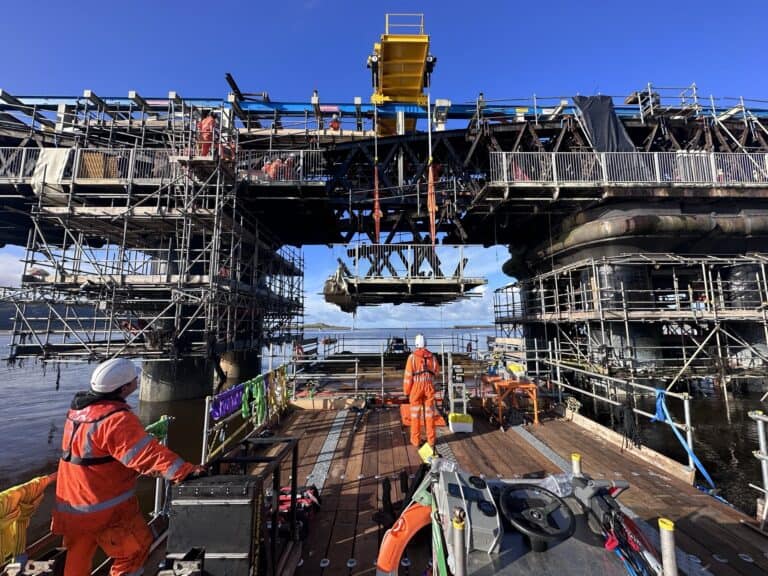

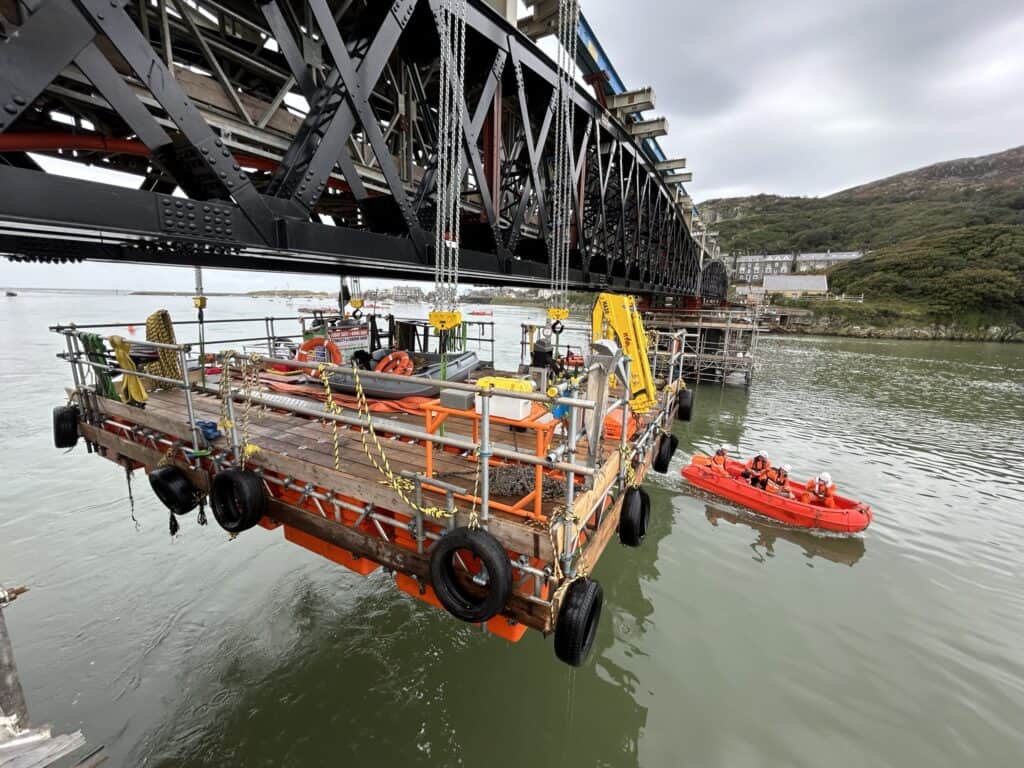
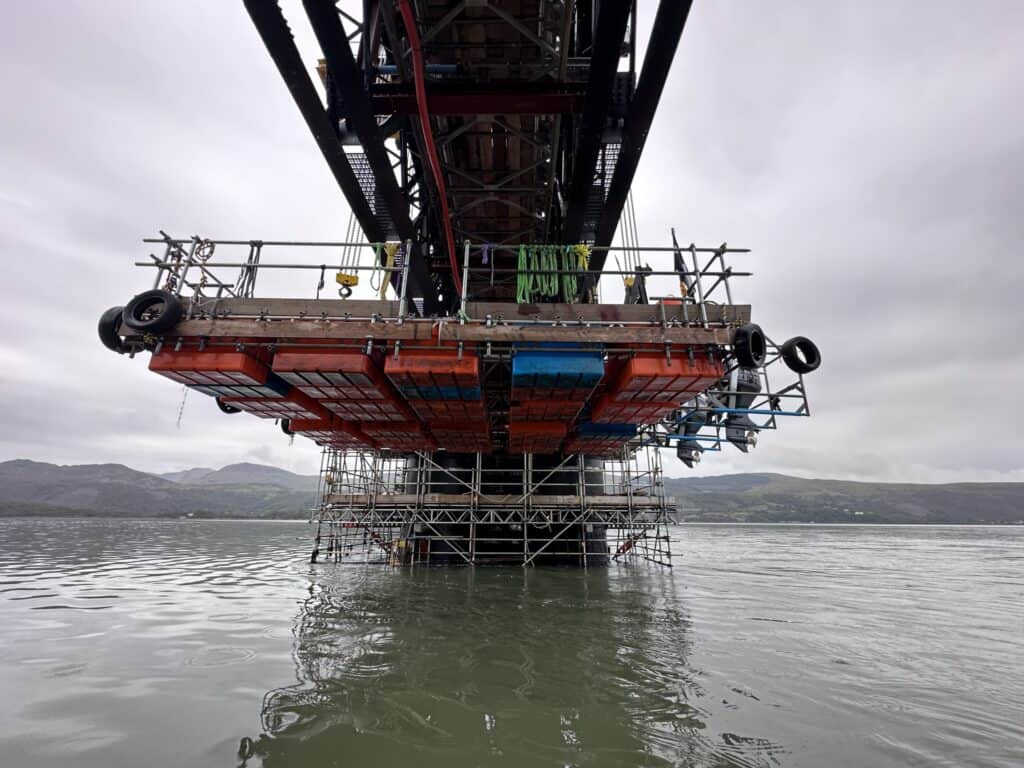 Toby Budd, the Managing Director of ScaffFloat, provided insight into the project’s innovation and the collaborative effort required for its success. He noted the integration of their floating scaffold system into the construction process, which allowed for the efficient and safe relocation of bridge sections across the estuary.
ScaffFloat’s expertise in navigating logistical and environmental challenges was evident throughout the demolition and installation phases. The team’s precision and flexibility were vital in managing the complexities presented by the tidal estuary. “The team’s ability to adapt and accurately execute the project plans under varying conditions was critical to overcoming the challenges faced,” Budd mentioned in his reflections on the project.
Budd also addressed the difficulties encountered, particularly the unpredictable weather and the constraints imposed by the tide. “One of the most significant challenges was aligning our operations with the tide and weather, demanding accurate timing and adaptability from our team,” he elaborated.
Toby Budd, the Managing Director of ScaffFloat, provided insight into the project’s innovation and the collaborative effort required for its success. He noted the integration of their floating scaffold system into the construction process, which allowed for the efficient and safe relocation of bridge sections across the estuary.
ScaffFloat’s expertise in navigating logistical and environmental challenges was evident throughout the demolition and installation phases. The team’s precision and flexibility were vital in managing the complexities presented by the tidal estuary. “The team’s ability to adapt and accurately execute the project plans under varying conditions was critical to overcoming the challenges faced,” Budd mentioned in his reflections on the project.
Budd also addressed the difficulties encountered, particularly the unpredictable weather and the constraints imposed by the tide. “One of the most significant challenges was aligning our operations with the tide and weather, demanding accurate timing and adaptability from our team,” he elaborated.
 Moreover, Budd highlighted the project’s commitment to safety and risk management. He underscored that while there was a solid drive to complete the project, ensuring safety was never compromised. This balance between innovation, teamwork, and safety protocols was instrumental in the project’s completion.
The reopening of the railway line and the subsequent operation of a train on December 8 stand as proud achievements for Budd and his team. “The successful conclusion of the project and its contribution to North Wales’ infrastructure are sources of immense satisfaction,” Budd shared.
The completion of the Barmouth bridge replacement project by ScaffFloat showcases the company’s innovative approach to construction. It establishes a new benchmark for addressing engineering challenges in marine environments, highlighting the transformative potential of floating scaffold technology in modern construction practices.
Moreover, Budd highlighted the project’s commitment to safety and risk management. He underscored that while there was a solid drive to complete the project, ensuring safety was never compromised. This balance between innovation, teamwork, and safety protocols was instrumental in the project’s completion.
The reopening of the railway line and the subsequent operation of a train on December 8 stand as proud achievements for Budd and his team. “The successful conclusion of the project and its contribution to North Wales’ infrastructure are sources of immense satisfaction,” Budd shared.
The completion of the Barmouth bridge replacement project by ScaffFloat showcases the company’s innovative approach to construction. It establishes a new benchmark for addressing engineering challenges in marine environments, highlighting the transformative potential of floating scaffold technology in modern construction practices. 
 Dave Mosley, Managing Director of the Construction Industry Scaffolders Record Scheme (CISRS), expressed confidence in the initiative’s ability to address the growing demand for skilled professionals in specialised sectors. “The demand for skilled professionals trained in specialised sectors is higher than ever. NETA has a long history of supplying quality training in the region, and this project shows commitment to qualifying future scaffolding apprentices and trainees.”
Local leaders, including Cllr Alec Brown, Leader of Redcar and Cleveland Borough Council, and Jacob Young, Conservative MP for Redcar, welcomed the investment in the region, highlighting its role in providing education, training, and employment opportunities for residents. Tees Valley Mayor Ben Houchen commended the initiative as a vital component of driving economic growth and ensuring that local workers are equipped to seize emerging opportunities.
Dave Mosley, Managing Director of the Construction Industry Scaffolders Record Scheme (CISRS), expressed confidence in the initiative’s ability to address the growing demand for skilled professionals in specialised sectors. “The demand for skilled professionals trained in specialised sectors is higher than ever. NETA has a long history of supplying quality training in the region, and this project shows commitment to qualifying future scaffolding apprentices and trainees.”
Local leaders, including Cllr Alec Brown, Leader of Redcar and Cleveland Borough Council, and Jacob Young, Conservative MP for Redcar, welcomed the investment in the region, highlighting its role in providing education, training, and employment opportunities for residents. Tees Valley Mayor Ben Houchen commended the initiative as a vital component of driving economic growth and ensuring that local workers are equipped to seize emerging opportunities.  Dave Mosley, Managing Director of the Construction Industry Scaffolders Record Scheme (CISRS), expressed confidence in the initiative’s ability to address the growing demand for skilled professionals in specialised sectors. “The demand for skilled professionals trained in specialised sectors is higher than ever. NETA has a long history of supplying quality training in the region, and this project shows commitment to qualifying future scaffolding apprentices and trainees.”
Local leaders, including Cllr Alec Brown, Leader of Redcar and Cleveland Borough Council, and Jacob Young, Conservative MP for Redcar, welcomed the investment in the region, highlighting its role in providing education, training, and employment opportunities for residents. Tees Valley Mayor Ben Houchen commended the initiative as a vital component of driving economic growth and ensuring that local workers are equipped to seize emerging opportunities.
Dave Mosley, Managing Director of the Construction Industry Scaffolders Record Scheme (CISRS), expressed confidence in the initiative’s ability to address the growing demand for skilled professionals in specialised sectors. “The demand for skilled professionals trained in specialised sectors is higher than ever. NETA has a long history of supplying quality training in the region, and this project shows commitment to qualifying future scaffolding apprentices and trainees.”
Local leaders, including Cllr Alec Brown, Leader of Redcar and Cleveland Borough Council, and Jacob Young, Conservative MP for Redcar, welcomed the investment in the region, highlighting its role in providing education, training, and employment opportunities for residents. Tees Valley Mayor Ben Houchen commended the initiative as a vital component of driving economic growth and ensuring that local workers are equipped to seize emerging opportunities. 
 Colin Dobson, Managing Director at TRAD UK, underscored the company’s support for its employees and their families: “I can’t think of a better cause for our next charity fundraising period. We always say that TRAD is a family, and Liam and Danielle are a key part of our Stockport business. TRAD supports its people through good times and bad, and we’re hoping to raise a considerable amount of money for Duchenne UK this year, to help fund the treatment innovations that will help children like Thomas throughout their lives.”
As TRAD UK embarks on its fundraising efforts for Duchenne UK, they invite others to join them in this important cause. A JustGiving page has been set up to facilitate contributions, and the company expresses gratitude for any support received.
Please visit the JustGiving page for those wishing to contribute to TRAD UK’s fundraising efforts for Duchenne UK. Your generosity will make a difference in the lives of children like Thomas and their families.
Colin Dobson, Managing Director at TRAD UK, underscored the company’s support for its employees and their families: “I can’t think of a better cause for our next charity fundraising period. We always say that TRAD is a family, and Liam and Danielle are a key part of our Stockport business. TRAD supports its people through good times and bad, and we’re hoping to raise a considerable amount of money for Duchenne UK this year, to help fund the treatment innovations that will help children like Thomas throughout their lives.”
As TRAD UK embarks on its fundraising efforts for Duchenne UK, they invite others to join them in this important cause. A JustGiving page has been set up to facilitate contributions, and the company expresses gratitude for any support received.
Please visit the JustGiving page for those wishing to contribute to TRAD UK’s fundraising efforts for Duchenne UK. Your generosity will make a difference in the lives of children like Thomas and their families. 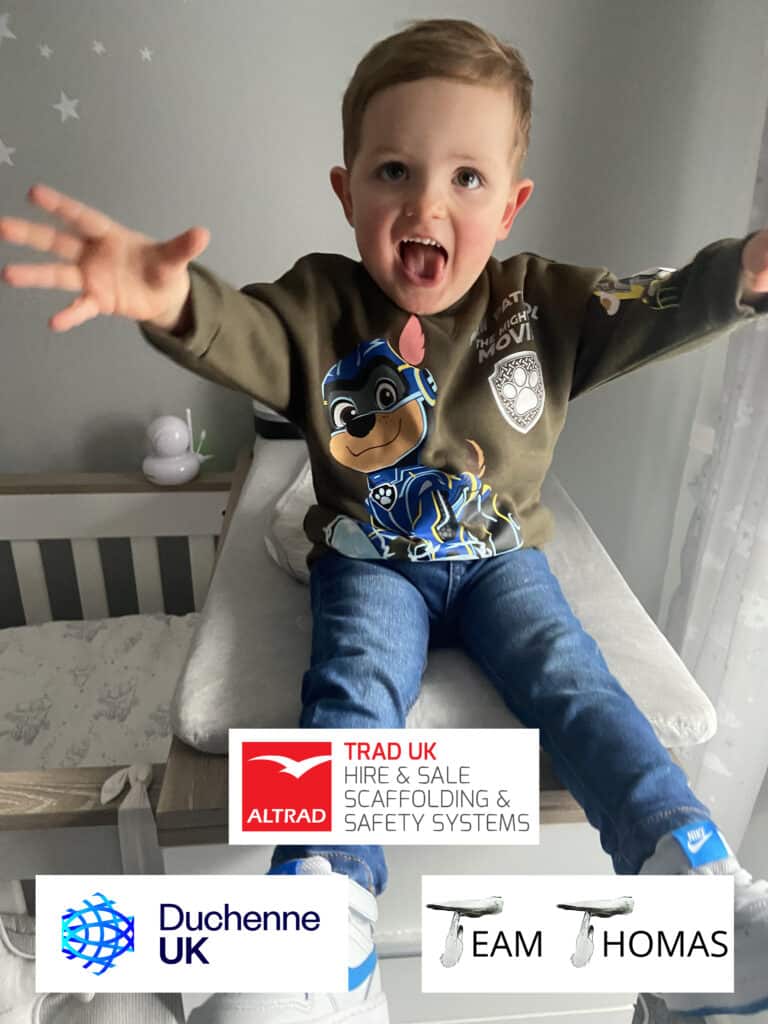 Colin Dobson, Managing Director at TRAD UK, underscored the company’s support for its employees and their families: “I can’t think of a better cause for our next charity fundraising period. We always say that TRAD is a family, and Liam and Danielle are a key part of our Stockport business. TRAD supports its people through good times and bad, and we’re hoping to raise a considerable amount of money for Duchenne UK this year, to help fund the treatment innovations that will help children like Thomas throughout their lives.”
As TRAD UK embarks on its fundraising efforts for Duchenne UK, they invite others to join them in this important cause. A JustGiving page has been set up to facilitate contributions, and the company expresses gratitude for any support received.
Please visit the JustGiving page for those wishing to contribute to TRAD UK’s fundraising efforts for Duchenne UK. Your generosity will make a difference in the lives of children like Thomas and their families.
Colin Dobson, Managing Director at TRAD UK, underscored the company’s support for its employees and their families: “I can’t think of a better cause for our next charity fundraising period. We always say that TRAD is a family, and Liam and Danielle are a key part of our Stockport business. TRAD supports its people through good times and bad, and we’re hoping to raise a considerable amount of money for Duchenne UK this year, to help fund the treatment innovations that will help children like Thomas throughout their lives.”
As TRAD UK embarks on its fundraising efforts for Duchenne UK, they invite others to join them in this important cause. A JustGiving page has been set up to facilitate contributions, and the company expresses gratitude for any support received.
Please visit the JustGiving page for those wishing to contribute to TRAD UK’s fundraising efforts for Duchenne UK. Your generosity will make a difference in the lives of children like Thomas and their families. 

 The Layher Keder Roof System proved instrumental in meeting the project’s demands, particularly in providing crucial weather protection. Its innovative design facilitated the construction of a temporary roof, ensuring the safety and integrity of the refurbishment process amidst varying weather conditions.
The modular nature of the Layher system allowed for flexible configurations, showcasing its adaptability to the unique requirements of the project.
Despite the complexities, a collaboration between Layher UK, Liddiard Scaffolding, Fifth Elevation, and BAE Systems was seamless. Chipps notes, “We fostered a partnership approach, ensuring alignment on objectives and addressing challenges proactively.” This close collaboration contributed to the project’s success, with safety being a top priority throughout the execution.
The Layher Keder Roof System proved instrumental in meeting the project’s demands, particularly in providing crucial weather protection. Its innovative design facilitated the construction of a temporary roof, ensuring the safety and integrity of the refurbishment process amidst varying weather conditions.
The modular nature of the Layher system allowed for flexible configurations, showcasing its adaptability to the unique requirements of the project.
Despite the complexities, a collaboration between Layher UK, Liddiard Scaffolding, Fifth Elevation, and BAE Systems was seamless. Chipps notes, “We fostered a partnership approach, ensuring alignment on objectives and addressing challenges proactively.” This close collaboration contributed to the project’s success, with safety being a top priority throughout the execution.

 The Layher Keder Roof System proved instrumental in meeting the project’s demands, particularly in providing crucial weather protection. Its innovative design facilitated the construction of a temporary roof, ensuring the safety and integrity of the refurbishment process amidst varying weather conditions.
The modular nature of the Layher system allowed for flexible configurations, showcasing its adaptability to the unique requirements of the project.
Despite the complexities, a collaboration between Layher UK, Liddiard Scaffolding, Fifth Elevation, and BAE Systems was seamless. Chipps notes, “We fostered a partnership approach, ensuring alignment on objectives and addressing challenges proactively.” This close collaboration contributed to the project’s success, with safety being a top priority throughout the execution.
The Layher Keder Roof System proved instrumental in meeting the project’s demands, particularly in providing crucial weather protection. Its innovative design facilitated the construction of a temporary roof, ensuring the safety and integrity of the refurbishment process amidst varying weather conditions.
The modular nature of the Layher system allowed for flexible configurations, showcasing its adaptability to the unique requirements of the project.
Despite the complexities, a collaboration between Layher UK, Liddiard Scaffolding, Fifth Elevation, and BAE Systems was seamless. Chipps notes, “We fostered a partnership approach, ensuring alignment on objectives and addressing challenges proactively.” This close collaboration contributed to the project’s success, with safety being a top priority throughout the execution.