In the construction world, transformative projects often serve as the proving ground for innovative techniques and technologies. A perfect embodiment of this can be seen in Mercer Scaffolding‘s use of the world-renowned Layher Scaffolding System in the recent transformation of the former Kitchener Barracks.
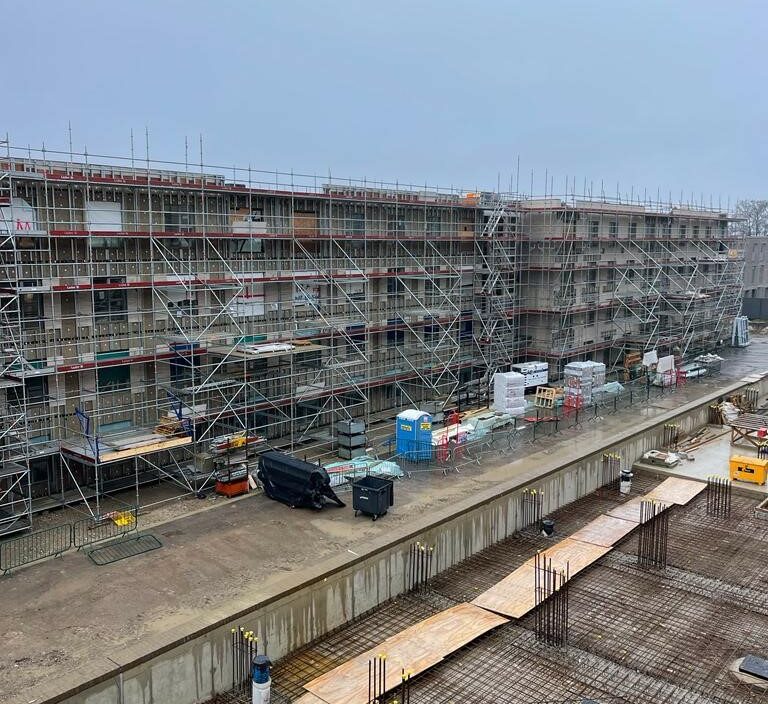
In the heart of Kent, the Kitchener Barracks site has undergone an exciting transformation. Beginning in the summer of 2018, this historic military installation has been reborn as a vibrant residential development offering a mix of 2, 3, 4, and 5-bedroom homes.
Leading the way in this ambitious project was TopHat Developments, the main contractor, who commissioned the skills of Mercer Scaffolding to provide a comprehensive scaffolding solution.
The Layher Allround Scaffolding System was integral to accommodating the new-build element and the project’s ‘cut and carve’ section. Mercer Scaffolding utilised an array of Layher components, including building Independents, Buttresses, Hoist Run-Offs, Bridged Loading Bays, Independent Towers, Stair Towers, Propping, and Internal Birdcages to meet the diverse requirements of the project.
Despite fluctuating team sizes, varying from 3 to 12 scaffolders, Mercer Scaffolding skilfully navigated the project, managing to keep the timeline on track. This was largely possible thanks to the versatility and scalability of the unique Germany-made Layher Allround system.
One of the unique advantages of the Layher system was its ability to support increased imposed loads, providing unhindered access throughout the project. The system allowed the team to erect the entire access scaffold before lifting in modular dwellings, ensuring complete protection.
The project timeline, which could have been tough to meet with traditional scaffolding, was more easily managed because of the in-built flexibility and speed of the Layher system. “Due to the adaptability of the Layher system, it really aided the façade works,” commented Adam Reeve, Commercial Director at Mercer Scaffolding.
The transformation of the Kitchener Barracks from a historic site into a bustling residential hub is a testament to the potential of modern scaffolding solutions like the Layher System.
As Mercer Scaffolding has shown, when experienced scaffolders harness the power of these advanced systems, they can efficiently handle projects of any scale and complexity.
The Kitchener Barracks development, teeming with life and history, stands as a sturdy monument to the power of innovation and adaptation in construction.
International scaffolding management specialists Worldwide Scaffold and Access Limited (WWSA) and UK System Scaffold Hire (UKSSH) have announced the successful completion of their inaugural collaborative project.
The endeavour involved the delivery of four articulated lorry loads of HAKI Universal System Scaffold to Northern Europe, leaving both companies delighted with the outcome.
Their customer Anders Friis, CEO of Friis Scaffolding AB, expressed his utmost satisfaction with the quality of the product and the overall delivery service provided by the partnership.
In a statement, he conveyed his appreciation, saying, “I would like to give you all a very big thank you for a really professional job with this buy of used HAKI scaffold. Everything went extremely well, the service was outstanding, and the quality of the material was just perfect. I would recommend Worldwide Scaffold and Access Ltd to all I know in the scaffolding business, and for sure, we will contact you again for future purchases.”
The HAKI Universal System Scaffold, a versatile modular scaffolding system, finds extensive application in various construction projects, including shipyards, offshore installations, and refineries.
It is widely used in new housing developments throughout the UK. The system offers compatibility with both HAKI Ram and earlier HAKI generations, featuring 7 to 10 basic components that enable the construction of birdcage, circular, and suspended scaffolding.
Notably, its unique ‘hook-on’ method of erection ensures a 60% quicker setup compared to traditional scaffolding systems.
Tony Stevens, Managing Director of WWSA, expressed his satisfaction with the collaboration, highlighting the excellent communication and seamless coordination between the teams. Stevens specifically mentioned the exceptional service provided by IDB freight from Sheffield, who ensured the timely collection of the materials for the customer.
Gary Griffiths, Managing Director of UKSSH, reflected on the evolution of their company, stating, “When we started the company, UK System Scaffold Hire described precisely what we did. But over the years, not only has the sale of genuine HAKI scaffold become an increasingly important part of our business in response to customers’ requests for a ‘mix and match’ combination of hire and sales, but we have also developed an international client base in Europe and the United States.”
Worldwide Scaffold and Access Limited, known for its scaffold and access design, supply, and training services, offers comprehensive support to its international customer base. They can supply HAKI Scaffolding systems for projects worldwide and work closely with project managers to ensure the timely delivery of components to the designated locations.
Furthermore, the company collaborates with a training and competence consultancy to provide on-site assessment and e-learning programs, guaranteeing that clients’ teams are fully competent to work safely with various scaffolding systems.
The successful completion of their first joint project has solidified the partnership between Worldwide Scaffold and Access Ltd and UK System Scaffold Hire. Their delivery of HAKI Universal System Scaffold to Northern Europe has garnered praise for their professionalism, outstanding service, and commitment to quality.
With their collective expertise and dedication to customer satisfaction, the companies are poised to undertake future projects with confidence and success.
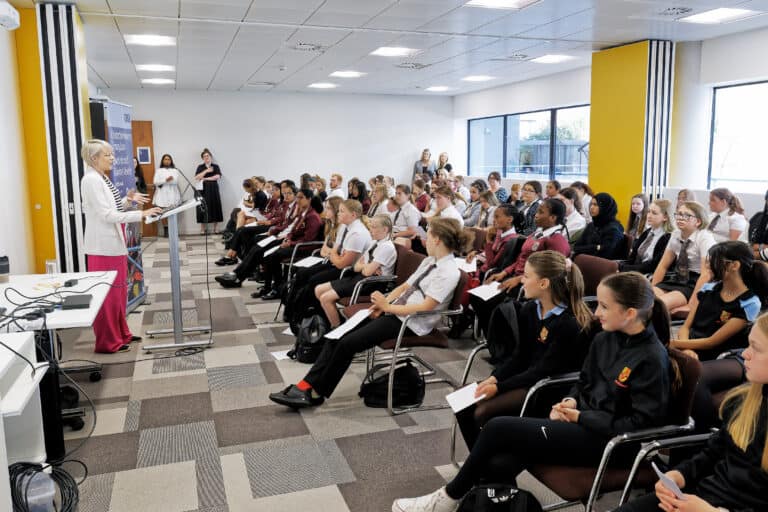
More than 250 schoolgirls from across Wales gathered at three separate Women in Construction events this month, underscoring the CITB’s (Construction Industry Training Board) ongoing commitment to fostering diversity and inclusivity in the sector.Hosted at colleges in Swansea, Cardiff, and Llangefni on July 7th, the attendees were introduced to the various facets of construction through hands-on experiences and personal accounts shared by successful women in the industry.Ranging from Senior Design Managers to Quantity Surveyors, and even budding professionals like Trainee Civil engineers, these women painted a detailed picture of what a typical workday looks like in their respective roles and the journeys they undertook to reach their current positions.Various activity sessions, such as a sustainable construction challenge, a hands-on look at drone technology, and virtual reality experiences simulating work at height, gave the students a taste of the dynamic and evolving nature of the industry. Further activities targeted at debunking stereotypes and misconceptions about the construction sector also took place, pointing students to resources like the Go Construct website for further exploration.The Go Construct initiative, backed by the CITB Levy, provides extensive advice and resources for anyone looking to venture into the construction and built environment sector. The initiative also offers guidance to parents, educators, and career advisors, understanding their influence in shaping a young person’s career choices.Supporting the events were members of the CITB Wales Social Value Network, a platform for collaboration and sharing best practices in the delivery of social value. With women making up just 14% of construction professionals, despite the industry requiring an additional 225,000 workers by 2027, according to the CITB’s recent Construction Skills Network report, such initiatives are key in attracting more women to the sector.Darren Lynch, Leader of Construction at Idris Davies School, lauded the event, saying, “It was genuinely the best careers event I have visited! Our girls were so enthusiastic and took so much from the activities provided. The guest speakers and company representatives were so inspiring.”Likewise, Claire Burns, Assistant Leader for Learning in Science at Cardiff West High School, applauded the efforts to open up the myriad job opportunities within the sector to the students.Julia Stevens, CITB Engagement Director for Wales, affirmed the importance of such initiatives, saying, “It’s essential that we start attracting people from a wider range of backgrounds so that we can recruit from a wider talent pool.” Stevens added that she was thrilled with the turnout and looks forward to continuing the dialogue and work on this important topic.
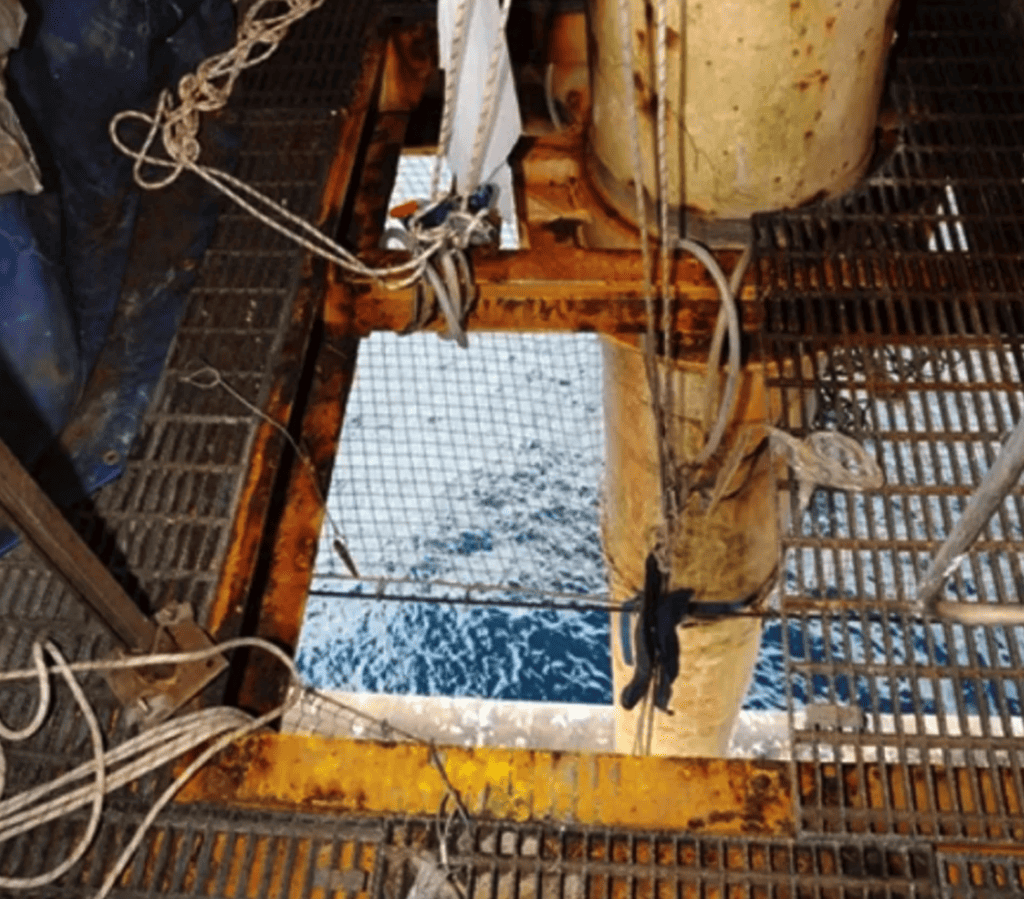
Oil giant BP has been fined £650,000 after being found guilty of breaching health and safety rules, resulting in a scaffolder’s death almost nine years ago.Sean Anderson fell through an open grating on BP’s Unity platform in 2014 while working as part of a contracted maintenance team employed by Cape Industrial Services.Following a two-week trial at Aberdeen’s Sheriff Court, a jury found BP guilty of a breach of safety rules.On sentencing the company to the £650,000 fine, Sheriff Graham Buchanan said that although the death of Sean Anderson had been “tragic and devastating” for his family, it had been an “isolated incident”.Sheriff Buchanan said BP had made “significant efforts” to address the risks involved with an open grating but added: “They were inadequate on this occasion.“The level of harm caused by BP’s breach was high, and that has to be taken into account. I do accept the likelihood of harm arising, in this case, was low.“The fact that a man has died as a result of the offence means the penalty imposed will be significantly higher than one with no loss of life.“The fine imposed must have some economic impact.”Mr Anderson had suffered serious head injuries and been found lying face down in the sea after falling from the Unity platform at around 4 am on 4 September 2014.The 43-year-old father of four had been due to fly home just one hour later.Murdo McLeod, defence advocate for BP, said the company wanted to “convey the company’s deepest condolences to the family of Sean Anderson”.He added: “This was a highly unusual case, and it’s not often that these matters proceed to trial. They are very rare, particularly when these powerful mitigating circumstances exist.“First of all, there’s an excellent safety culture spoken of by witnesses and BP has sought to improve matters by introducing a similar policy with regard to assessment of risk when gratings are not covered.“With regard to the gratings, while there may be an expectation that gratings should be covered, whether this should be done is a matter of opinion and is not clear cut.“This is a very unusual and isolated incident and BP takes this matter very seriously.”“There’s no evidence that a desire to increase profits resulted in the company cutting corners in terms of safety.”The court had heard Mr Anderson, a multi-skilled scaffolder with rope access qualifications, would have known why the safety barrier had been erected and that it was safeguarding an opening on the deck.Mr Anderson fell through the grating. Image credit: Crown OfficeIn the days running up to his death – Mr Anderson had been working as part of the team who had built the hard barrier protecting the fatal decking hole through which he fell.On the night he died, bad weather meant the team carried out no work after stopping for a break at midnight.At around 3:30 am, Sean – a “keen” worker – had asked the installation manager if anything could be done to “keep busy”, promptly rounding up three other men to tidy up the lower deck.What happened next is unclear, but at 4 am, Tony Omar, who had been paired off with Sean to collect rubbish, remembers hearing three bangs and immediately raising the “man overboard” alarm.The court heard that the night’s conditions had been foggy and dark, and Mr Anderson had not been found wearing a life jacket, harness or survival suit. He had been unconscious and was not breathing when pulled from the water.A post-mortem later showed the cause of death was serious injuries to his head and chest sustained due to a “descent into the sea” from the oil installation. It was recorded that he had suffered severe and “predictably immediately” fatal head injuries, with extensive skull fracturing.Toxicology results showed no signs of alcohol, drugs or gas poisoning – and no signs of natural diseases that would have resulted in his death.BP owned the Unity rig, an unmanned pumping station in the Forties Field about 110 miles northeast of Aberdeen in 2014 but has since sold it to INEOS.In a statement, BP said: “We acknowledge the outcome of the court proceedings. This was a tragic incident.“While we know nothing can be said to change the pain felt by Sean Anderson’s family and friends, our deepest condolences remain firmly with them to this day.”In her closing statement, fiscal Kristina Kelly told the jury that BP had a duty to ensure the contractors working on Unity were not exposed to risk, doing so in “so far as is reasonably practicable”.She said: “BP put those workers at risk for the eight days running up to the 4 September 2014; by not having suitable and sufficient control measures in respect of open gratings on Unity.”She said warning signs, or a cover on the grating could have been in place, adding: “Sean Anderson’s family fully expected him to come home safely.”Ms Kelly told the court that BP’s procedures had now changed and any open gratings were now covered, she said these were “mistakes they have now learned from.”
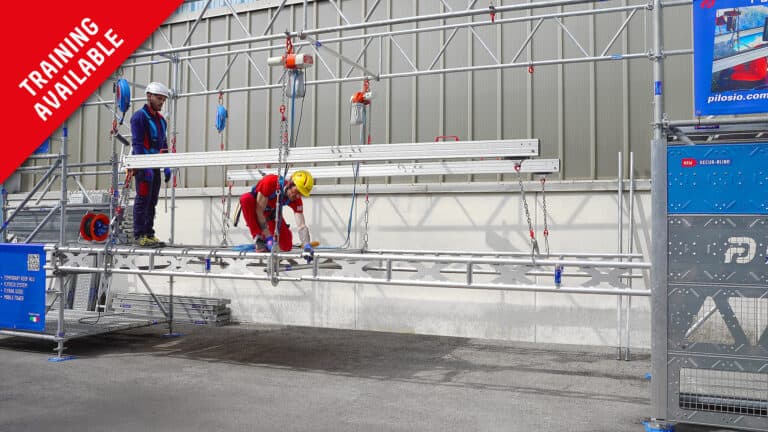
Pilosio, a leading Italian manufacturer of scaffolding and suspended access solutions, held a successful Open Demo Day on July 11th and 12th, revealing its innovative Flydeck system.
The event attracted attendees from major Oil&Gas and Civil companies, offering them an opportunity to witness the simplicity, flexibility, and efficiency of the Flydeck – a new solution for under-deck operations.
Flydeck: The Future of Suspended Access Solutions
The Flydeck system is a modular and temporary suspended structure constructed using a Flyrail Guide, which enables the assembly of beams both longitudinally and transversely.
The Flydeck system ensures operator safety, as work is always conducted above a suspended platform. The system’s simplicity and flexibility make it an efficient, safe, and cost-effective solution for under-deck work.
The Flydeck system includes several key components: beams, decks, suspension chains, and a Flyrail Guide for easy and secure set-up and dismantling. Beams, available in steel or aluminium, come in various lengths up to 6 meters and heights of 25 cm or 45 cm, catering to diverse needs.
A unique connection system employing spigots and exclusive elastic pins makes assembly swift and uncomplicated. The standard load capacity is impressive, reaching up to 3.0 kN/m2 with chains every 4 m2, or 1.5 kN/m2 with chains every 6 m2.
Flyrail Guide
The Flyrail Guide, an integral part of the system, can be moved either manually or with a 220V electric hoist and comes in three length versions: 1.66m x 3, 2.50m x 2, and 5.00m x 1. It allows the Flydeck surface to be set up both longitudinally and transversely.
Flydeck beams have seven different sizes: from 1 to 6 meters in length and two heights: 0.25m and 0.45m. They also feature two types of connections to the decks – the “U” connection and the “O” connection (reversible and 48.3 mm in diameter).
The system allows the choice of decks based on specific needs, with different width and length options and capacities ranging from 300 to 600 kg/sqm.
Upcoming Training Courses
Following the Open Demo Day, Pilosio will be offering two-day training courses starting at the end of July 2023 in Aberdeen. These courses will allow participants to explore all the features and strengths of the Flydeck system.
For further information or to book a demonstration, contact Mrs Francesca Fuser, UK Business Development Manager, at [email protected] or +39 351 292 2236.
Pilosio: Quality, Innovation, and Tradition
With over six decades of experience, Pilosio has built a formidable reputation for producing high-quality scaffolding and suspended access solutions. Their commitment to in-house production has guaranteed operational flexibility and exceptional quality, offering cutting-edge solutions that reshape the construction landscape.
The Flydeck system, a testament to Pilosio’s innovative prowess, sets new industry standards for suspended access solutions.
In response to the concerning skills shortage, the UK government has officially added several construction trades to its shortage occupation list (SOL) while significantly relaxing immigration rules for these roles.
This move is seen as a pivotal step to invite more overseas construction workers to Britain, a recommendation issued by the government’s Migration Advisory Committee (MAC) back in March.
The four occupation codes now formally appended to the SOL encompass a range of construction-related roles. These include:
5312: Bricklayers and masons – all jobs
5313: Roofers, roof tilers and slaters – all jobs
5315: Carpenters and joiners – all jobs
5319: Construction and building trades not elsewhere classified – all jobs.
Being on the SOL implies that individuals in these roles now qualify to apply for work permits in the UK, potentially offering a solution to the ongoing skills shortage within the construction industry.
The Construction Leadership Council (CLC) had previously submitted a 61-page document to the MAC in May, arguing for nine other occupation classifications to be added.
This list included roles such as road construction operatives, mobile machine drivers and operatives, steel erectors, welding trades, and plasterers. However, these occupations did not make the cut this time around.
The Chartered Institute of Building (CIOB) has warmly received this announcement. Eddie Tuttle, the CIOB’s External Affairs Director, expressed his relief and delight, stating, “We very much welcome this announcement which in our view is long overdue. The addition of these roles to the shortage occupation list is something we have called for through the Construction Leadership Council (CLC) and we’re glad the industry’s voice has been heard as the construction sector directly plays a vital role in the UK economy and is an enabler to so many others.”
While Tuttle acknowledged the need for the industry to work harder to attract homegrown talent, he also stressed the immediate skills shortage that needed addressing.
He commented, “Without a good supply of skilled workers from abroad, as well as homegrown talent, projects large and small including the likes of schools, hospitals, new homes and key infrastructure simply won’t happen.”
This news signals a critical turning point in the UK’s construction industry and how it addresses its acute shortage of skilled workers. While the impact of this decision remains to be seen, it undoubtedly offers a ray of hope to an industry that has been grappling with a significant skills shortage.
Operations at the Stanlow oil refinery, owned by Essar Oil UK, are experiencing significant disruption as a major strike over pay grievances commences this week.
At the heart of this industrial action, approximately 450 employees, including a vital force of scaffolders, have begun a walkout backed by the UK’s largest union, Unite.
The workers involved span a variety of professions, with scaffolders playing a crucial role in the ongoing operations of the refinery. Over the years, these workers, along with electricians, crane drivers, welders, pipe fitters, riggers, and steel erectors, have seen a steady decrease in their real-term hourly wages, set by the National Agreement for the Engineering Construction Industry (NAECI).
The crux of the discontent lies in the employers’ refusal to increase bonus payments. This comes amidst Essar Oil UK recording robust operating profits of £253 million during the first half of the 2023 financial year.
Despite these gains, the bonus rate for workers, including scaffolders, remains a mere 80p per hour.
Unite general secretary Sharon Graham expressed solidarity with the workers, stating, “Essar is absolutely awash with cash, and its contractors at the refinery are on extremely lucrative contracts. It is completely unacceptable that these workers, who play such a crucial role, are being refused a reasonable bonus rate. Unite defends our members’ jobs, pay and conditions to the hilt and Stanlow’s workers have their union’s total backing in taking strike action.”
To combat the pay disparity, a continuous overtime ban that includes call-outs and standbys began today (17 July). The first two-day strike action starts on 18 July, with more strikes scheduled for 25, 26 July, and 1, 2, 8, and 9 August. The industrial action will intensify if the dispute remains unresolved, Unite said.
The strike is anticipated to severely impact the Stanlow refinery, the UK’s second-largest, which supplies 16% of the nation’s road fuels and is a significant producer of aviation fuel.
Unite regional officer Lee Brennan emphasised the urgency of the matter, saying, “Over the last five years, our members’ wages, have not kept pace with the cost of living. The NAECI pay award for this year has resulted in a substantial real terms pay cut for the highly skilled and essential workforce. The employers and Essar can absolutely afford to pay a fair bonus rate, and that is what needs to happen.”
Scaffolders and other employees are represented by contractors, including Altrad, Babcock, Bilfinger, Hutchinson Engineering, Pump Supply & Repair Group, Sarens, and Wood Group.
High winds that swept across southern England on Saturday have led to a serious accident in Hackney, East London, where a woman was injured after strong winds caused scaffolding to fall onto her car.
According to the BBC, Emergency services, including the Metropolitan Police, London Fire Brigade, and paramedics, quickly arrived at the scene.
The injured woman, whose identity remains undisclosed, was found inside the damaged vehicle. Medical personnel provided immediate on-site treatment before transporting her to a nearby hospital. Her current condition remains unknown.
The incident followed a wind warning issued for London, which was in effect until midnight on Saturday. In response to the severe weather conditions, all Royal Parks in the city had preemptively closed their playgrounds as a safety measure.
Tom Morgan, a meteorologist with the Met Office, reported that gusts of wind reached speeds of up to 55mph in some parts of southern England, contributing to potentially hazardous conditions.
An investigation into the incident is ongoing as officials work to understand the precise circumstances that led to the scaffolding’s collapse.
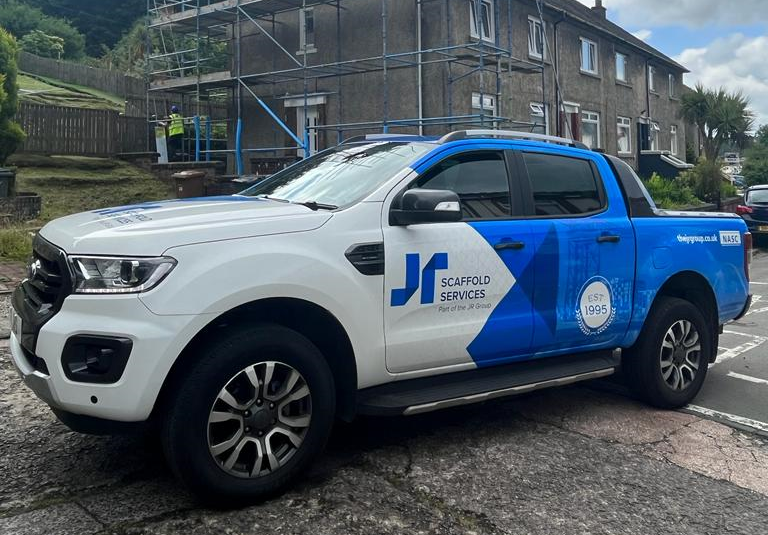
JR Scaffold Services, one of Scotland’s leading scaffolding providers and a JR Group division has secured an initial two-year tender with Home Fix Scotland.
As part of the River Clyde Homes Group, Home Fix Scotland looks after the maintenance of around 6,000 homes across Inverclyde with the newly acquired support of JR Scaffold Services’ expertise.
Under this agreement, the Paisley-based JR Scaffold Services will provide comprehensive scaffolding services, from supply and erection to dismantling.
The services will be offered as and when required by Home Fix Scotland, ensuring a swift and efficient response to any project needs.
A noteworthy aspect of this tender is the inclusion of both the Cuplok and Light Access divisions of JR Scaffold Services, thereby offering Home Fix Scotland a range of flexible options to suit their specific project requirements.
“We were thrilled to hear that we have been awarded the opportunity to work alongside Home Fix Scotland in providing our expertise, skill and experience of all things scaffolding to their properties and projects,” said Evan Horne, a representative from JR Scaffold Services.
With the initial contract spanning two years, there’s also potential for an extended partnership. The agreement stipulates the option of three additional 12-month extensions, suggesting the possibility of a long-lasting business relationship between the two entities.
Horner further added, “We hope this is the beginning of a long-lasting relationship with the team at Home Fix Scotland, assisting them with further projects in Inverclyde, which is just 15 to 20 minutes away from our base of operations.”
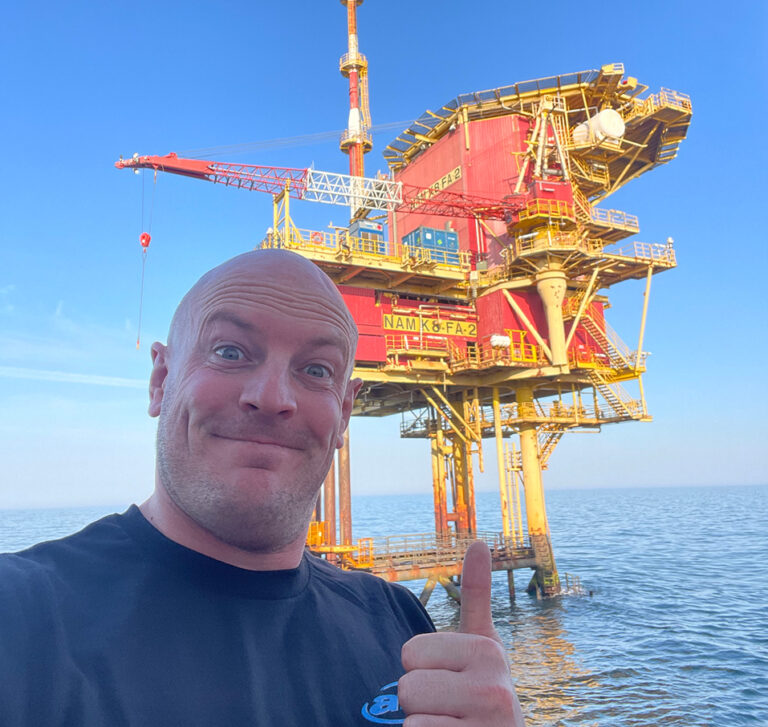
AIS Survivex is hosting a captivating photography competition that showcases the thrill and beauty of working in high-risk industries. The ‘Selfie at Work’ competition encourages professionals in the oil and gas, wind, marine, utility, and construction sectors to capture their daily experiences using the hashtag #PicturePerfectWorkface.AIS Survivex, a subsidiary of 3t Energy Group, trains thousands of workers in the energy sector each year, equipping them with vital skills such as rigging and lifting, rope access, offshore survival, and emergency response. The training covers a range of roles, including wind turbine technicians, mariners, scaffolders, non-destructive testing (NDT) technicians, and blaster-sprayers engaged in offshore oil rig-based work. These industries often involve working in high-risk and remote environments, where comprehensive training and safety protocols are paramount.Aside from celebrating the dedicated professionals working on the frontlines of the energy sector, the competition also aims to demonstrate the diversity of roles and the exciting locations that industry training can lead to. Participants have the opportunity to capture eye-catching selfies against breathtaking backdrops such as vertigo-inducing heights, expansive ocean vistas, colossal oil rigs, and picturesque North Sea sunsets.The prize at stake is nothing short of impressive, as four lucky winners will be offered a training course or package of their choice, potentially worth thousands of pounds each. With a wide range of courses available, the victors can utilize their winnings to enhance their skills, update their knowledge, or even venture into multiple sectors, all without incurring any costs.Linzi Ryan, Head of Marketing at AIS Survivex, expressed the inspiration behind the competition, saying, “Last June, we ran a similar photography competition called ‘Picture Perfect Workplace,’ and we were astounded by the exceptional quality of the hundreds of entries we received. This year, we wanted to make it more personal, aiming to see and celebrate the faces of those working in the oil and gas, wind, marine, and utility and construction sectors.”Ryan continued, “We genuinely want to gain insights into the working lives of our delegates and the incredible places their training has taken them. Whether they are at the top of a wind turbine, on an oil platform in the midst of the ocean, or underground, laying cables, we want to showcase their experiences. The competition is open to anyone employed in these sectors, and the winning selfies will be shared across all our social media platforms.”With an unbeatable prize offering comprehensive training potentially worth thousands of pounds, the competition is undoubtedly worth entering. AIS Survivex urges participants to capture their work environments and send their captivating images via email to [email protected], along with their name, contact details, and the sector they work in, before the closing date of July 19th. The winners will be notified by August 1st, 2023.To learn more about the competition and review the terms and conditions, please visit the official AIS Survivex website at https://www.survivex.com/news/celebrating-national-selfie-day-with-our-biggest-ever-training-giveaway/.
We use cookies on our website to give you the most relevant experience by remembering your preferences and repeat visits. By clicking “Accept”, you consent to the use of ALL the cookies.
This website uses cookies to improve your experience while you navigate through the website. Out of these, the cookies that are categorized as necessary are stored on your browser as they are essential for the working of basic functionalities of the website. We also use third-party cookies that help us analyze and understand how you use this website. These cookies will be stored in your browser only with your consent. You also have the option to opt-out of these cookies. But opting out of some of these cookies may affect your browsing experience.
Necessary cookies are absolutely essential for the website to function properly. These cookies ensure basic functionalities and security features of the website, anonymously.
Cookie
Duration
Description
cookielawinfo-checbox-analytics
11 months
This cookie is set by GDPR Cookie Consent plugin. The cookie is used to store the user consent for the cookies in the category "Analytics".
cookielawinfo-checbox-functional
11 months
The cookie is set by GDPR cookie consent to record the user consent for the cookies in the category "Functional".
cookielawinfo-checbox-others
11 months
This cookie is set by GDPR Cookie Consent plugin. The cookie is used to store the user consent for the cookies in the category "Other.
cookielawinfo-checkbox-necessary
11 months
This cookie is set by GDPR Cookie Consent plugin. The cookies is used to store the user consent for the cookies in the category "Necessary".
cookielawinfo-checkbox-performance
11 months
This cookie is set by GDPR Cookie Consent plugin. The cookie is used to store the user consent for the cookies in the category "Performance".
viewed_cookie_policy
11 months
The cookie is set by the GDPR Cookie Consent plugin and is used to store whether or not user has consented to the use of cookies. It does not store any personal data.
Functional cookies help to perform certain functionalities like sharing the content of the website on social media platforms, collect feedbacks, and other third-party features.
Performance cookies are used to understand and analyze the key performance indexes of the website which helps in delivering a better user experience for the visitors.
Analytical cookies are used to understand how visitors interact with the website. These cookies help provide information on metrics the number of visitors, bounce rate, traffic source, etc.
Advertisement cookies are used to provide visitors with relevant ads and marketing campaigns. These cookies track visitors across websites and collect information to provide customized ads.
 One of the unique advantages of the Layher system was its ability to support increased imposed loads, providing unhindered access throughout the project. The system allowed the team to erect the entire access scaffold before lifting in modular dwellings, ensuring complete protection.
The project timeline, which could have been tough to meet with traditional scaffolding, was more easily managed because of the in-built flexibility and speed of the Layher system. “Due to the adaptability of the Layher system, it really aided the façade works,” commented Adam Reeve, Commercial Director at Mercer Scaffolding.
The transformation of the Kitchener Barracks from a historic site into a bustling residential hub is a testament to the potential of modern scaffolding solutions like the Layher System.
As Mercer Scaffolding has shown, when experienced scaffolders harness the power of these advanced systems, they can efficiently handle projects of any scale and complexity.
The Kitchener Barracks development, teeming with life and history, stands as a sturdy monument to the power of innovation and adaptation in construction.
One of the unique advantages of the Layher system was its ability to support increased imposed loads, providing unhindered access throughout the project. The system allowed the team to erect the entire access scaffold before lifting in modular dwellings, ensuring complete protection.
The project timeline, which could have been tough to meet with traditional scaffolding, was more easily managed because of the in-built flexibility and speed of the Layher system. “Due to the adaptability of the Layher system, it really aided the façade works,” commented Adam Reeve, Commercial Director at Mercer Scaffolding.
The transformation of the Kitchener Barracks from a historic site into a bustling residential hub is a testament to the potential of modern scaffolding solutions like the Layher System.
As Mercer Scaffolding has shown, when experienced scaffolders harness the power of these advanced systems, they can efficiently handle projects of any scale and complexity.
The Kitchener Barracks development, teeming with life and history, stands as a sturdy monument to the power of innovation and adaptation in construction. 
 One of the unique advantages of the Layher system was its ability to support increased imposed loads, providing unhindered access throughout the project. The system allowed the team to erect the entire access scaffold before lifting in modular dwellings, ensuring complete protection.
The project timeline, which could have been tough to meet with traditional scaffolding, was more easily managed because of the in-built flexibility and speed of the Layher system. “Due to the adaptability of the Layher system, it really aided the façade works,” commented Adam Reeve, Commercial Director at Mercer Scaffolding.
The transformation of the Kitchener Barracks from a historic site into a bustling residential hub is a testament to the potential of modern scaffolding solutions like the Layher System.
As Mercer Scaffolding has shown, when experienced scaffolders harness the power of these advanced systems, they can efficiently handle projects of any scale and complexity.
The Kitchener Barracks development, teeming with life and history, stands as a sturdy monument to the power of innovation and adaptation in construction.
One of the unique advantages of the Layher system was its ability to support increased imposed loads, providing unhindered access throughout the project. The system allowed the team to erect the entire access scaffold before lifting in modular dwellings, ensuring complete protection.
The project timeline, which could have been tough to meet with traditional scaffolding, was more easily managed because of the in-built flexibility and speed of the Layher system. “Due to the adaptability of the Layher system, it really aided the façade works,” commented Adam Reeve, Commercial Director at Mercer Scaffolding.
The transformation of the Kitchener Barracks from a historic site into a bustling residential hub is a testament to the potential of modern scaffolding solutions like the Layher System.
As Mercer Scaffolding has shown, when experienced scaffolders harness the power of these advanced systems, they can efficiently handle projects of any scale and complexity.
The Kitchener Barracks development, teeming with life and history, stands as a sturdy monument to the power of innovation and adaptation in construction. 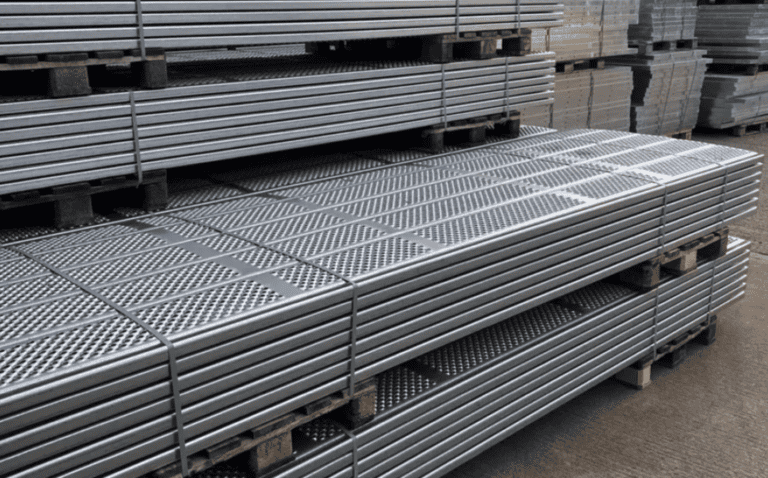
 The HAKI Universal System Scaffold, a versatile modular scaffolding system, finds extensive application in various construction projects, including shipyards, offshore installations, and refineries.
It is widely used in new housing developments throughout the UK. The system offers compatibility with both HAKI Ram and earlier HAKI generations, featuring 7 to 10 basic components that enable the construction of birdcage, circular, and suspended scaffolding.
Notably, its unique ‘hook-on’ method of erection ensures a 60% quicker setup compared to traditional scaffolding systems.
Tony Stevens, Managing Director of WWSA, expressed his satisfaction with the collaboration, highlighting the excellent communication and seamless coordination between the teams. Stevens specifically mentioned the exceptional service provided by IDB freight from Sheffield, who ensured the timely collection of the materials for the customer.
Gary Griffiths, Managing Director of UKSSH, reflected on the evolution of their company, stating, “When we started the company, UK System Scaffold Hire described precisely what we did. But over the years, not only has the sale of genuine HAKI scaffold become an increasingly important part of our business in response to customers’ requests for a ‘mix and match’ combination of hire and sales, but we have also developed an international client base in Europe and the United States.”
Worldwide Scaffold and Access Limited, known for its scaffold and access design, supply, and training services, offers comprehensive support to its international customer base. They can supply HAKI Scaffolding systems for projects worldwide and work closely with project managers to ensure the timely delivery of components to the designated locations.
Furthermore, the company collaborates with a training and competence consultancy to provide on-site assessment and e-learning programs, guaranteeing that clients’ teams are fully competent to work safely with various scaffolding systems.
The successful completion of their first joint project has solidified the partnership between Worldwide Scaffold and Access Ltd and UK System Scaffold Hire. Their delivery of HAKI Universal System Scaffold to Northern Europe has garnered praise for their professionalism, outstanding service, and commitment to quality.
With their collective expertise and dedication to customer satisfaction, the companies are poised to undertake future projects with confidence and success.
The HAKI Universal System Scaffold, a versatile modular scaffolding system, finds extensive application in various construction projects, including shipyards, offshore installations, and refineries.
It is widely used in new housing developments throughout the UK. The system offers compatibility with both HAKI Ram and earlier HAKI generations, featuring 7 to 10 basic components that enable the construction of birdcage, circular, and suspended scaffolding.
Notably, its unique ‘hook-on’ method of erection ensures a 60% quicker setup compared to traditional scaffolding systems.
Tony Stevens, Managing Director of WWSA, expressed his satisfaction with the collaboration, highlighting the excellent communication and seamless coordination between the teams. Stevens specifically mentioned the exceptional service provided by IDB freight from Sheffield, who ensured the timely collection of the materials for the customer.
Gary Griffiths, Managing Director of UKSSH, reflected on the evolution of their company, stating, “When we started the company, UK System Scaffold Hire described precisely what we did. But over the years, not only has the sale of genuine HAKI scaffold become an increasingly important part of our business in response to customers’ requests for a ‘mix and match’ combination of hire and sales, but we have also developed an international client base in Europe and the United States.”
Worldwide Scaffold and Access Limited, known for its scaffold and access design, supply, and training services, offers comprehensive support to its international customer base. They can supply HAKI Scaffolding systems for projects worldwide and work closely with project managers to ensure the timely delivery of components to the designated locations.
Furthermore, the company collaborates with a training and competence consultancy to provide on-site assessment and e-learning programs, guaranteeing that clients’ teams are fully competent to work safely with various scaffolding systems.
The successful completion of their first joint project has solidified the partnership between Worldwide Scaffold and Access Ltd and UK System Scaffold Hire. Their delivery of HAKI Universal System Scaffold to Northern Europe has garnered praise for their professionalism, outstanding service, and commitment to quality.
With their collective expertise and dedication to customer satisfaction, the companies are poised to undertake future projects with confidence and success. 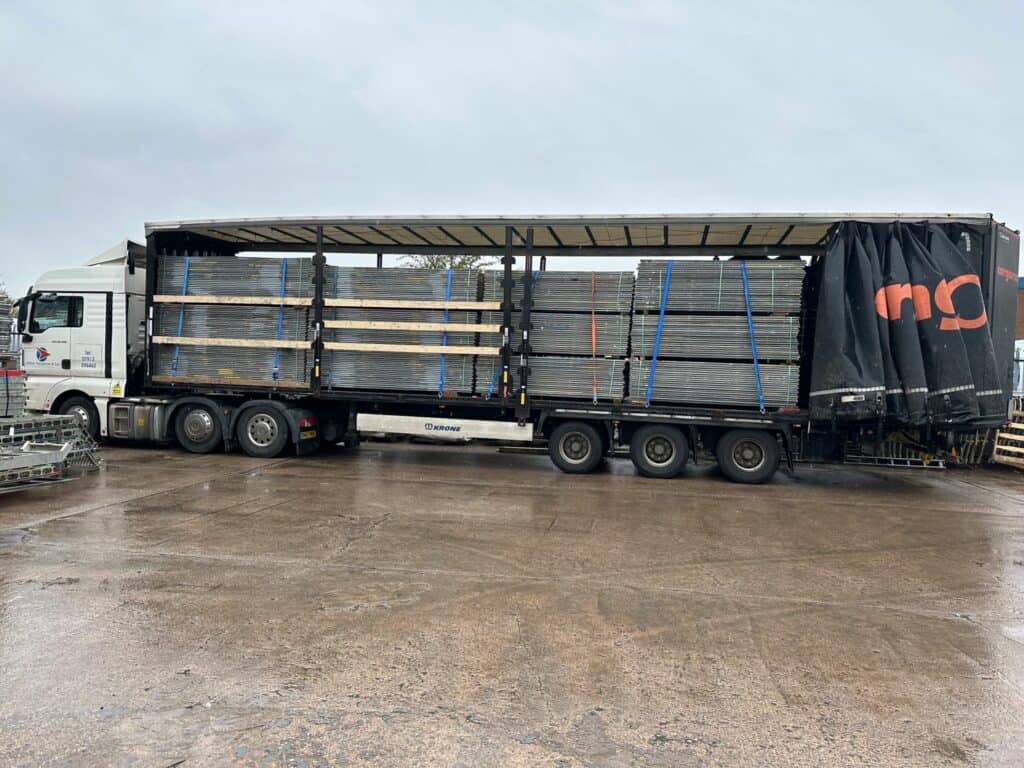 The HAKI Universal System Scaffold, a versatile modular scaffolding system, finds extensive application in various construction projects, including shipyards, offshore installations, and refineries.
It is widely used in new housing developments throughout the UK. The system offers compatibility with both HAKI Ram and earlier HAKI generations, featuring 7 to 10 basic components that enable the construction of birdcage, circular, and suspended scaffolding.
Notably, its unique ‘hook-on’ method of erection ensures a 60% quicker setup compared to traditional scaffolding systems.
Tony Stevens, Managing Director of WWSA, expressed his satisfaction with the collaboration, highlighting the excellent communication and seamless coordination between the teams. Stevens specifically mentioned the exceptional service provided by IDB freight from Sheffield, who ensured the timely collection of the materials for the customer.
Gary Griffiths, Managing Director of UKSSH, reflected on the evolution of their company, stating, “When we started the company, UK System Scaffold Hire described precisely what we did. But over the years, not only has the sale of genuine HAKI scaffold become an increasingly important part of our business in response to customers’ requests for a ‘mix and match’ combination of hire and sales, but we have also developed an international client base in Europe and the United States.”
Worldwide Scaffold and Access Limited, known for its scaffold and access design, supply, and training services, offers comprehensive support to its international customer base. They can supply HAKI Scaffolding systems for projects worldwide and work closely with project managers to ensure the timely delivery of components to the designated locations.
Furthermore, the company collaborates with a training and competence consultancy to provide on-site assessment and e-learning programs, guaranteeing that clients’ teams are fully competent to work safely with various scaffolding systems.
The successful completion of their first joint project has solidified the partnership between Worldwide Scaffold and Access Ltd and UK System Scaffold Hire. Their delivery of HAKI Universal System Scaffold to Northern Europe has garnered praise for their professionalism, outstanding service, and commitment to quality.
With their collective expertise and dedication to customer satisfaction, the companies are poised to undertake future projects with confidence and success.
The HAKI Universal System Scaffold, a versatile modular scaffolding system, finds extensive application in various construction projects, including shipyards, offshore installations, and refineries.
It is widely used in new housing developments throughout the UK. The system offers compatibility with both HAKI Ram and earlier HAKI generations, featuring 7 to 10 basic components that enable the construction of birdcage, circular, and suspended scaffolding.
Notably, its unique ‘hook-on’ method of erection ensures a 60% quicker setup compared to traditional scaffolding systems.
Tony Stevens, Managing Director of WWSA, expressed his satisfaction with the collaboration, highlighting the excellent communication and seamless coordination between the teams. Stevens specifically mentioned the exceptional service provided by IDB freight from Sheffield, who ensured the timely collection of the materials for the customer.
Gary Griffiths, Managing Director of UKSSH, reflected on the evolution of their company, stating, “When we started the company, UK System Scaffold Hire described precisely what we did. But over the years, not only has the sale of genuine HAKI scaffold become an increasingly important part of our business in response to customers’ requests for a ‘mix and match’ combination of hire and sales, but we have also developed an international client base in Europe and the United States.”
Worldwide Scaffold and Access Limited, known for its scaffold and access design, supply, and training services, offers comprehensive support to its international customer base. They can supply HAKI Scaffolding systems for projects worldwide and work closely with project managers to ensure the timely delivery of components to the designated locations.
Furthermore, the company collaborates with a training and competence consultancy to provide on-site assessment and e-learning programs, guaranteeing that clients’ teams are fully competent to work safely with various scaffolding systems.
The successful completion of their first joint project has solidified the partnership between Worldwide Scaffold and Access Ltd and UK System Scaffold Hire. Their delivery of HAKI Universal System Scaffold to Northern Europe has garnered praise for their professionalism, outstanding service, and commitment to quality.
With their collective expertise and dedication to customer satisfaction, the companies are poised to undertake future projects with confidence and success.