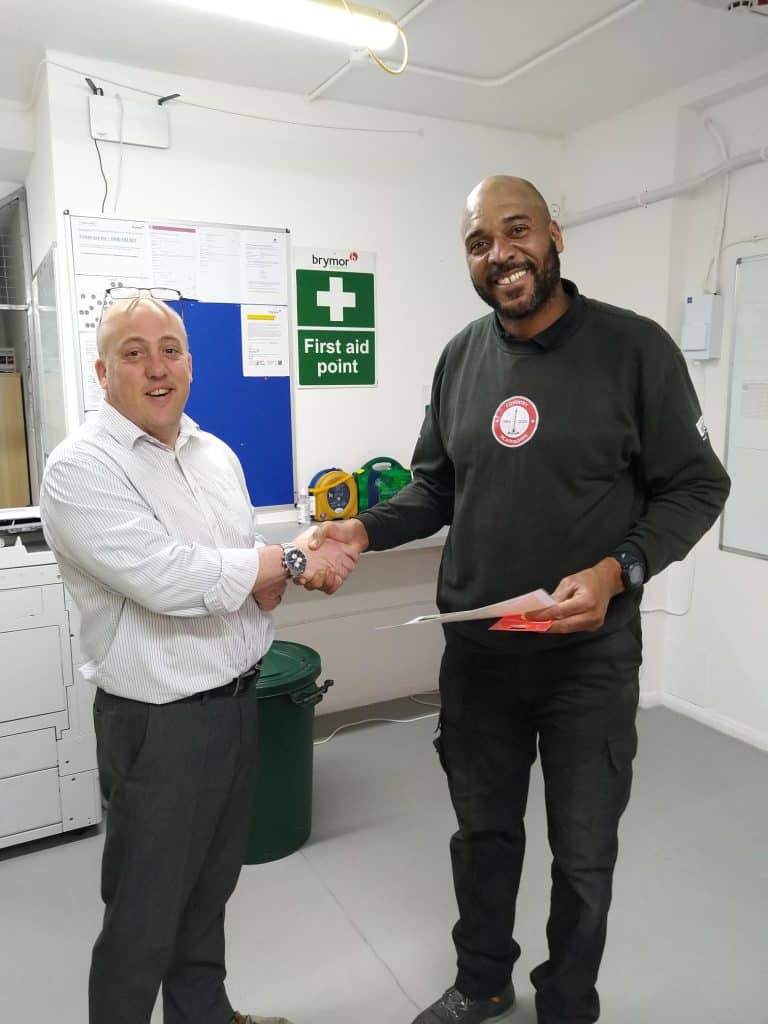
Coventry Scaffolding has been widely praised for its commitment to health and safety after erecting an independent access scaffold to all four elevations of Aspects House, a multi-storey residential tower block in South London. The scaffolding will provide Brymor Group with access to remove defective cladding due to fire safety issues.Despite the contract taking a year to plan due to negotiations and several early challenges to overcome, the scaffolding work has gone without a hitch and run to schedule. The program is set to finish in January 2024 due to additional work which has come to light.The team at Coventry has been recognised for its commitment to health and safety in no less than six separate external safety audits, where the site received a 100% rating each time. Terry Rowe, Brymor’s Site Manager, congratulated the team for their continued hard work towards maintaining the highest standards.Perry Hanifan, Director of Coventry Scaffolding, expressed his pride in the team’s achievement, stating: “As proud members of the National Access and Scaffolding Confederation, we always endeavour to go above and beyond simply meeting the legal regulations, and this recognition goes to further demonstrate our company’s commitment to exceptional health and safety.”The successful completion of the scaffolding work and the high levels of health and safety achieved have been a significant milestone for the project. Removing the defective cladding will help ensure the safety of the residents in Aspects House, and achieving 100% in all safety audits is a testament to the team’s dedication and expertise.
Hydrajaws Ltd, the world’s leading manufacturer of pull testers for load testing fixings, has announced a new distributor in the UAE. Gulf Test Safety Consultancies, a UAE-based Quality, Health and Safety, and Environmental firm with an experienced team of QHSE professionals, has been appointed as an official Hydrajaws distributor from its two locations in Abu Dhabi and Dubai.As part of the partnership, Hydrajaws’ Training Manager, Neil Stone, recently led an online training program for the Gulf Test Safety Consultancies team, providing comprehensive training on the Hydrajaws offering. This included equipment maintenance, safe use of the Hydrajaws tester, and a detailed demonstration of the Hydrajaws Bluetooth Digital Report System and App.Hydrajaws’ MD Stephen Hynes expressed his delight, saying, “We’re thrilled to have Gulf Test Safety Consultancies as one of our official partners. The training was a great success, and we’re excited to work with them to grow their business offering.”Managing Director of Gulf Test Safety Consultancies, Irshad A. Shaikh, commented, “We’re honored to be entrusted with the Hydrajaws brand in UAE. This partnership will further enhance our value to our clients and extend our product offering. We are committed to the distribution of Hydrajaws’ products while delivering local support and logistical services within the UAE.”Hydrajaws’ localised services will ensure customers benefit from a quicker turnaround, reduced shipping costs, and local knowledge. Moreover, they provide the necessary expertise and support to ensure their distributors successfully promote and sell Hydrajaws products and ancillary services.This partnership between Hydrajaws Ltd and Gulf Test Safety Consultancies is expected to create new opportunities for both parties while further strengthening their position in the market.
A strategic partnership between Layher UK and Seán Doyle ScaffoldingLimited (SDS) has proved to be a tower of success after the pair recently collaborated and provided a multi-levelled access package for a high-rise refurbishment project.
SDS, formerly known as Advanced Scaffolding Ltd, based in Alton, Hampshire, is a division of the Seán Doyle Group [SDG] from Ireland. The Group operates a diverse range of leading and dynamic businesses in varying sectors and owns one of the largest scaffold companies in Ireland, Laios Scaffolding.
Sean Doyle, Managing Director/owner of SDG said, “Following on from our success in Ireland, I am delighted to Partner with Layher in the UK, this will greatly enhance the rapid expansion of our business especially in the London Market as we are actively securing new contracts and recruiting additional workforce”.
In its latest major project under new ownership, SDS has made extensive use of the world-renowned Layher Allround system while carrying out a high-rise refurbishment project to Havant Towers, located in Havant, Hampshire.
Built-in 1968, these soaring 10-storey residential tower blocks have provided much-loved homes for many residents for decades; however, the passing of time has taken its toll on the fabric of the structures, and much-needed refurbishment was now required.
To facilitate the refurbishment scheme, main contractor EQUANS and its client Guinness Partnership Ltd called on the services of SDS to provide its workers with safe access to all external elevations of the towers. This was to allow for window renewal or replacement, balcony refurbishment, and vital brick and concrete repairs.
The array of skill and scaffolding services SDS offers existing and potential future clients is clear to see with their use of Layher’s flagship Allround scaffolding system on the Chichester House residential tower block.
Following a series of site surveys, detailed scaffolding designs and calculations provided by engineers from Layher Ltd, scaffolders from SDS set about erecting the modular scaffold system around the perimeter of Chichester House.
“Although our scaffolders are Layher trained, they were still quite new to the system at the start of the project; however, Layher was on hand every step of the way, which was great!” Shawn Richardson, SDS Operations Manager, said.
“Layher’s head scaffolding Instructor, Joe Thompson, attended the project for the first few days helping the lads base the scaffold out, while Clive Rowe Layher’s area sales manager was visiting every other day for the first few weeks, ensuring the project ran smoothly.”
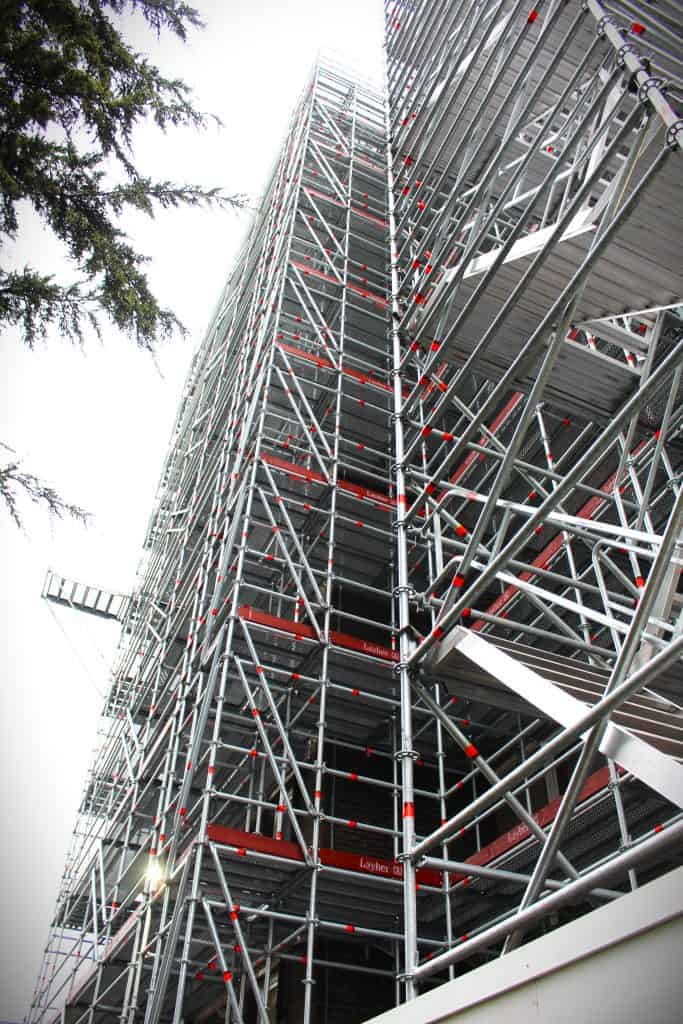
SDS utilised Layher’s range of flexible components and various-sized bays to accommodate the multitude of balconies on each elevation of the tower. Furthermore, scaffolders effortlessly provided workers with a gapless platform around every part of the building to work from using a combination of Layher’s 390mm and 730mm console brackets and the long-established gap deck, which provides gap-free work platforms.
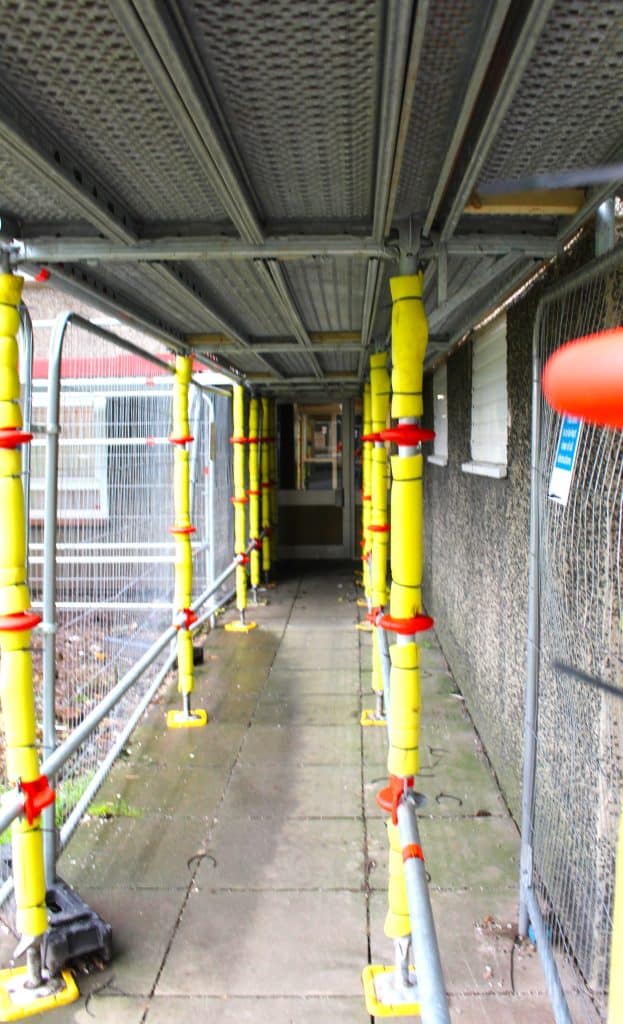
The safety of workers and the public was paramount on the job as the tower blocks continued to be lived in while the refurbishment work was carried out. Layher and SDS devised a plan to mitigate the risk by installing protection fans at strategic locations across the structure to protect the public and tenants entering or exiting the tower block. Additionally, Layher’s 750mm aluminium beams were utilised to form a bridge over the blocks bin storage area so tenants could still access their bins.
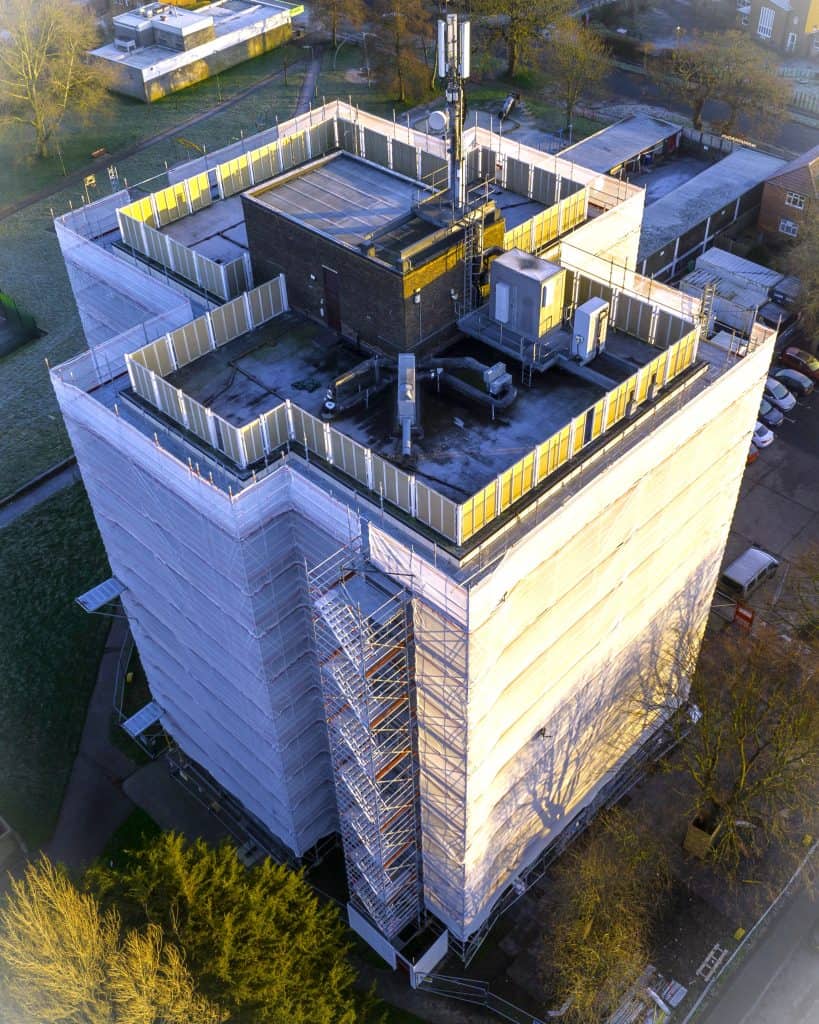
Over the course of eight weeks, SDS provided more than 120 linear meters of safe un-impeded modular access, allowing workers from EQUANS to reach all residents’ balconies and windows with ease.
Through their collaboration and the benefits of the Layher Allround system, Layher UK and SDS has demonstrated their expertise in scaffolding and their commitment to delivering safe and efficient access solutions for their clients. The success of this project is a testament to the strength of their strategic partnership and the quality of their work, and it bodes well for future collaborations between the two companies.
In conclusion, Sean Pike, Managing Director of Layher Ltd, UK, said, “After many years of successful collaboration with Laois Scaffolding & Sean Doyle in Ireland, we are excited about this new cooperation with SDS in the UK and look forward to making many more possibilities together”.
PERI, PDC Scaffolding and PSD have joined forces to deliver a complex recladding project in East London.Essex-based scaffolding contractor, PDC Scaffolding, has recently taken on its largest project to date using PERI’s scaffolding system, PERI UP Flex. Known as Payne Road, this geometrically complex recladding scheme is located in East London and required a scaffolding system that could adapt to the building’s irregular geometry as it increased in height.The solution was a wrap-around design consisting of 221 tonnes of PERI UP Flex scaffolding, providing perimeter access to all 16 storeys to facilitate cladding replacement. Working in collaboration with PERI’s design team, the project’s principal scaffolding designer, PSD Prime Scaffold and Structural Designs Ltd, was able to understand the system’s specifications and capabilities during the planning phase, making the installation process on-site smoother.According to Dion Penman, Scaffolding Project Delivery Manager at PERI, this project was particularly challenging due to the building’s awkward shape. He explains, “The scaffolding arrangement had to be designed to the absolute millimetre to make it work.” However, the PERI UP Flex system was ideal for this type of project because it lends itself to odd shapes, providing contractors unrestricted access around the scaffold to carry out the work.Paul Casey, Managing Director of PDC Scaffolding, highlighted the benefits of the PERI UP system’s flexible components, explaining how the different deck sizes allowed them to accommodate the building’s shape. Furthermore, components like PERI’s console brackets enabled the team to navigate safely around every part of the building, covering all the gaps.“The reason we’ve used the PERI UP system is because it’s the most versatile system out there,” he said. “The different deck sizes available in the range have been beneficial as we’ve been able to install a deck arrangement that accommodates the shape of the building. In addition to the decks, using components like the console brackets meant that we could get around every part of the building safely.”This scaffold marks PDC Scaffolding’s fourth project using the PERI UP system, and the company is investing £2m in the system following its Payne Road project. This continual investment plan will support the company’s recladding and refurbishment projects over the coming years.The collaboration between PDC Scaffolding, PERI, and PSD Prime Scaffold and Structural Designs Ltd has successfully delivered a complex recladding project using PERI UP Flex, demonstrating the system’s versatility and ability to adapt to challenging geometries.
Plettac Metrix system scaffolding from TRAD UK remains one of the most popular system designs in the industry. However, scaffolders must undergo recommended training courses before using the product, says TRAD.
Thankfully, training is readily available from numerous providers across the country.
“I have been training scaffolders on Plettac Metrix since it was introduced,” says David Abraham, MD at Fulcrum Scaffold Safety, which is based in Flintshire and trains scaffolders either in Fulcrum’s own facilities or on a customer site, as long as it meets training safety requirements.
“Our system training is around 30% classroom based and 70% practical, and is a two-day course for scaffolders who have a minimum of CISRS Part 1,” he adds. “Our courses are for a maximum of nine delegates, and scaffolders can either join an open course, or we can put on a dedicated course for any business that needs one. Additionally, Plettac Metrix system specific CISRS Part 1 and Part 2 courses are available, giving scaffolders in-depth training on TRAD’s system.”
Although many scaffolders will have been through Part 1 and Part 2 training to be CISRS certified, they must still do a system training course before they start using the product – and that course must be specific to the product type.
“Many scaffolding companies buy or hire system scaffold to help reduce time and cost on simpler projects,” says Rob Nicholls from Safety & Access Ltd, also a Plettac Metrix training provider. “We always have to put health and safety first – of the scaffolders, other people on site and the wider public. So it’s essential that the people working on a system like Metrix have the right training – system companies like TRAD caveat use of the product with a requirement for formal training, and that’s absolutely the right thing to do.”
As well as the two-day CISRS course, there’s also the opportunity for a five-day base course, which is ideally suited to labourers who may be working on system scaffolding. “We’re likely to see more use of system scaffolding, as companies look for safer, cost-effective ways to work,” says David Abraham. “So we’d expect to be running many more courses for Plettac Metrix and other systems in the future.”
Alan Slater, Head of Technical and Product Support at TRAD UK, agrees with the necessity of training, particularly for safety purposes. “Alongside all the other critical training that our partners offer, the CISRS Part 1 & 2 courses, their System Scaffold Product Training Scheme and the CISRS BASE Plettac Metrix System Course are all specifically designed to help scaffolders and labourers understand and use the system effectively and safely.”
Currently, Fulcrum Scaffold Safety has specific availability for Plettac Metrix training, including CISRS Part 1 Plettac Metrix course from 22nd May to 2nd June, and the CISRS Part 2 Plettac Metrix course from 20th November to 1st December. They also offer CISRS SSPTS Plettac Metrix courses on April 27th-28th, July 27th-28th, and October 12th-13th.
Additionally, W@H Safety Solutions, based in Newcastle, has specific availability for CISRS SSPTS Plattac Metrix courses on March 25th – 26th, April 29th – 30th and May 27th – 28th.
Safety & Access and TRAD UK’s other partners, such as Aspects Total Training in the Midlands, can be contacted directly for availability for customer on-site training, or at their respective facilities. Full details of TRAD UK’s network of training partners for the Plettac Metrix system can be found at https://traduk.co.uk/system/plettac-metrix-trad/
The National Access & Scaffolding Confederation (NASC) has taken a big step towards becoming a greener organisation by virtually running its Spring Regional Meetings. The five meetings, held over Zoom webinars, allowed 300 people to avoid journeys that would have increased carbon emissions, including the NASC staff travelling to locations across the UK. The move aligns with one of the new President, David Brown’s presidential objectives, sustainability.The virtual meetings also provided the opportunity for NASC’s President David Brown and Acting Managing Director Dave Mosley to attend all five meetings and engage with regional issues through live webinar Q&A sessions. In addition, the meetings included presentations on mental health awareness and support and the Chrysalis Programme, which aims to help prisoners change attitudes and consider a career in scaffolding.The meetings also included updates from the NASC Standing Committees, which cover areas including ASITO training, membership and compliance, health and safety, technical, marketing and current affairs, contracts, hire, sales and manufacturing and the ePortal. The standing committee reports also included the launch of the NASC SE1:22 ‘Becoming Net Zero Carbon’ guidance note on the ePortal, with more guidance set to follow in 2023.Member polls were also conducted during the meetings, and arrangements for the 2023 NASC Awards and Ball were discussed, along with plans for the next round of face-to-face regional meetings.Acting NASC Managing Director, Dave Mosley, said: “These virtual meetings have been a great success, saving our busy team and the members lots of time, as well as radically reducing the organisation’s carbon footprint. To strike a good balance, the NASC Autumn Regional meetings will remain on location and in person, but this is a good step in the right direction towards greater sustainability.”NASC President, David Brown, added: “The decision to hold the Spring regionals virtually is one of those small steps towards improving the organisation and membership’s sustainability. The carbon emissions saving has also contributed to a significant cost and time saving, for NASC staff and members alike. These are little wins in the big picture, but wins nonetheless. And it all helps in our mission towards net zero.”
The Health and Safety Executive (HSE) has launched a new campaign to raise awareness of the risks of asbestos, with a particular focus on younger tradespeople, including those in the millennial and Gen Z generations. The campaign, called Asbestos and You, aims to highlight the dangers of the substance and its potential impact on people who work as scaffolders, electricians, plumbers, joiners, and in other trades.The HSE is concerned that younger workers may not take asbestos seriously, as they may believe that the risks only affect older people who worked before the ban on asbestos in 1999. However, five thousand people still die from asbestos-related illnesses every year, and asbestos can still be found in buildings built or refurbished before the year 2000.Asbestos was used extensively in the construction and maintenance of buildings in Great Britain from the 1950s until the ban. Construction workers of all ages could still be exposed to asbestos fibres today, making it essential for everyone in the construction industry to take the risk seriously.Asbestos exposure can cause serious diseases such as mesothelioma, asbestos-related lung cancer, asbestosis, and pleural thickening. If asbestos fibres are inhaled, they can cause significant harm, and symptoms may take 20 to 30 years to develop.HSE’s Chief Executive Sarah Albon stated that asbestos exposure is still the single most significant cause of work-related deaths in Great Britain. Therefore, it is crucial for all workers, regardless of age, to recognise the dangers and take appropriate measures to protect themselves and others from being exposed to asbestos fibres.The Asbestos and You campaign will target all tradespeople, particularly emphasising younger workers in trades such as plastering and joinery. HSE’s head of health and work policy Mike Calcutt said that it is essential for workers to know how to recognise the dangers and take the right actions to protect themselves and others from asbestos fibres.To learn more about the Asbestos and You campaign and for guidance on asbestos, visit the HSE’s website.
It is no secret that Cornish startup ScaffFloat has certainly made waves in the scaffolding industry since it launched its safe floating scaffold access system in 2020. For a Q&A, Scaffmag’s editor Daniel Norton catches up with Toby Budd, founder and managing director of ScaffFloat to find out how it all came to be
DN: Toby, thank you for taking the time to talk to our Scaffmag readers and for taking the time to answer our questions. What inspired you to come up with the idea for ScaffFloat in the first place?
TB: A few years ago we were working on a project to build a folding workboat that fits in a shipping container. We decided to make our own plastic floats for this and it was during the design process my father-in-law asked me to make a netting framework over his fruit bushes to keep the birds out. I figured scaffold and Key Clamps would be easy to use, so I looked on Facebook Marketplace and found a scaffolder down west selling up his business. I drove down and spent a couple of hours chatting with him about beams, tubes, and clips. I had never really looked at scaffolding components before and remember being impressed with the low, mass-produced cost and versatility of the components. I was towing the trailer load of scaffold back up the A30 when I joined the dots and had the idea to make pontoons with scaffold. We moved quickly and launched the first prototype, a 16m x 6.4m ScaffFloat, a few months later after filing a patent and trademark.
DN: Can you tell me about your first job with ScaffFloat?
TB: A local marine contractor, KML, was working in the Port of Felixstowe to demolish an old dolphin. This required access to the steel piles that supported it. Initially, they tried a modular plastic pontoon but it moved around too much in the waves and contractors felt it was unsafe to work from. We mobilised a horseshoe-shaped 4m x 4m ScaffFloat that could fit around the pile. With a dropdown deck section behind the pile, this gave them 365-degree access to the pile from a much more stable platform. It did a great job and stayed for several months. It was a really good first test in the real world.
DN: Since you started your business, how many projects have you been able to deliver?
TB: Well over 50 now. I think in total we have now delivered over 5,000 hours of safe floating access to contractors around the UK.
DN: The idea of ScaffFloat sounds awesome, but what is the business model for the company?
TB: Our floats are available only for hire, and we are very strict about this, even though people constantly ask if they can buy the floats. We do this to maintain control over how the system is used. We make sure that every project has a proper design and stability assessment, and that we have overseen or checked the RAMS. Safety is one of the things our customers like most about ScaffFloat. Therefore, it is vital that we maintain our track record, and to do this we need to retain some control.
DN: I noticed your ScaffFloats are equipped with engines. How did this come about?TB: Putting propulsion on ScaffFloat was a turning point in the business and now 80% of our ScaffFloats go on hire with outboard engine pods. This adds a huge amount of value to what ScaffFloat can do, and once onsite these workboats are incredibly useful.
We now use high thrust 60 hp Yamaha four strokes which meet all the latest emission standards and are very fuel efficient. We tend to run them as a pair for redundancy and manoeuvrability and can get just under a ton of bollard pull from them for towing and pushing. Like wind farm transfer boats, we also rely on ‘pushing on’ as a method of holding position while contractors work from ScaffFloat. This is normally much safer than using lines, particularly in any wave action.
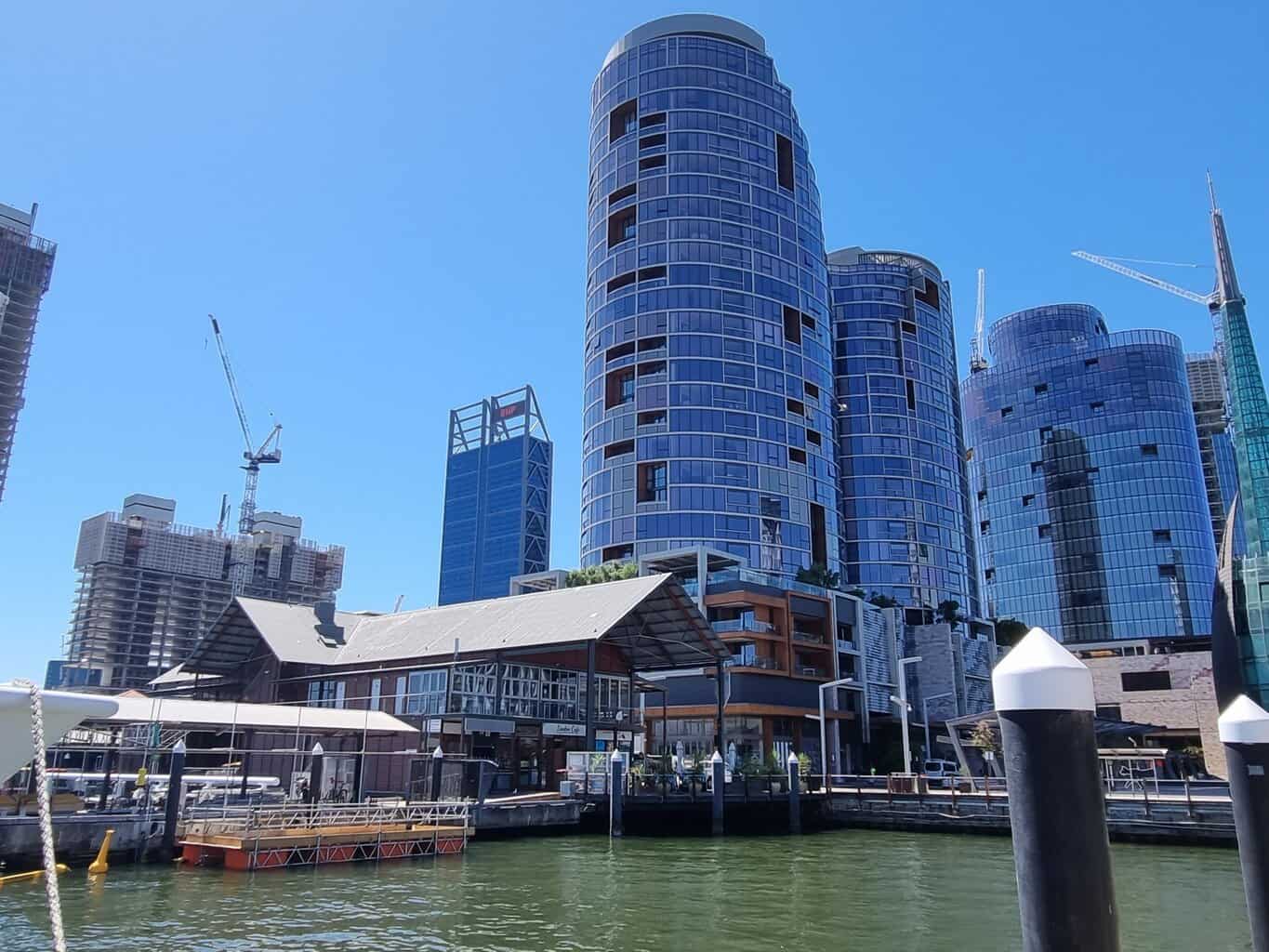
DN: So, do you operate overseas as well?TB: Yes, but not properly. We have floats in Australia, Malta and Cyprus but we have not had the time or resources to develop our international offering properly. We get very regular enquiries from overseas, particularly from Europe, the Middle East, Australia and New Zealand. At the moment we don’t have the framework to push ScaffFloat overseas, and this is one of my priorities this year because the demand is there for sure.
ScaffFloat in Perth, AustraliaDN: Can you tell me what kind of regulations you operate under?
TB: We operate under a range of regulations; for the marine side it is the MCA, PLA & IMO which cover manning, safety equipment, stability standards and minimum freeboards. Most of TG20:13 and other scaffold regulations are not relevant to what we do, but we do use elements of it for things like edge protection. For lifting, we use Lloyd’s Register Code for Lifting Appliances in a Marine Environment and all our cranes are LOLER tested. To assess the structure, if needed, we use EuroCode EN1993-1-1-2005 & DNVGL-T-0378 and also refer to BS5975:2019 for temporary works. On larger projects we can also offer customers an independent Cat 3 check by our partner Richter; this gives our customers reassurance that we have taken a safe and prudent approach to our design and planned method of works.
We have also always been able to satisfy any of our customers’ structural or safety questions. This includes the Royal Navy, BAE systems, Network Rail, Port of London Authority, MCA, numerous Harbour Authorities and Harbour Masters including QHM (Now KHM), Canal & River Trust, Environment Agency and numerous principal contractors like Volker, Dyer Butler, J Murphy, Amco Giffen, Laing O’Rourke, Balfour Beatty, Story & BAM.
DN: What is your approach to working with scaffolding contractors?
TB: We have a really good relationship with a number of scaffolding companies around the UK and over half of our jobs are delivered in partnership with them. Initially, we had the concept of ‘Approved Installers’ where scaffold companies could hire the floats from us and then build and hire on the pontoons. However, this did not work. We quickly realised customers wanted much more than just a pontoon. They wanted our marine experience to manage the floating element of their project. Now, most of the work we do includes personnel, extra equipment like engines and winches, and the management of that part of the project.
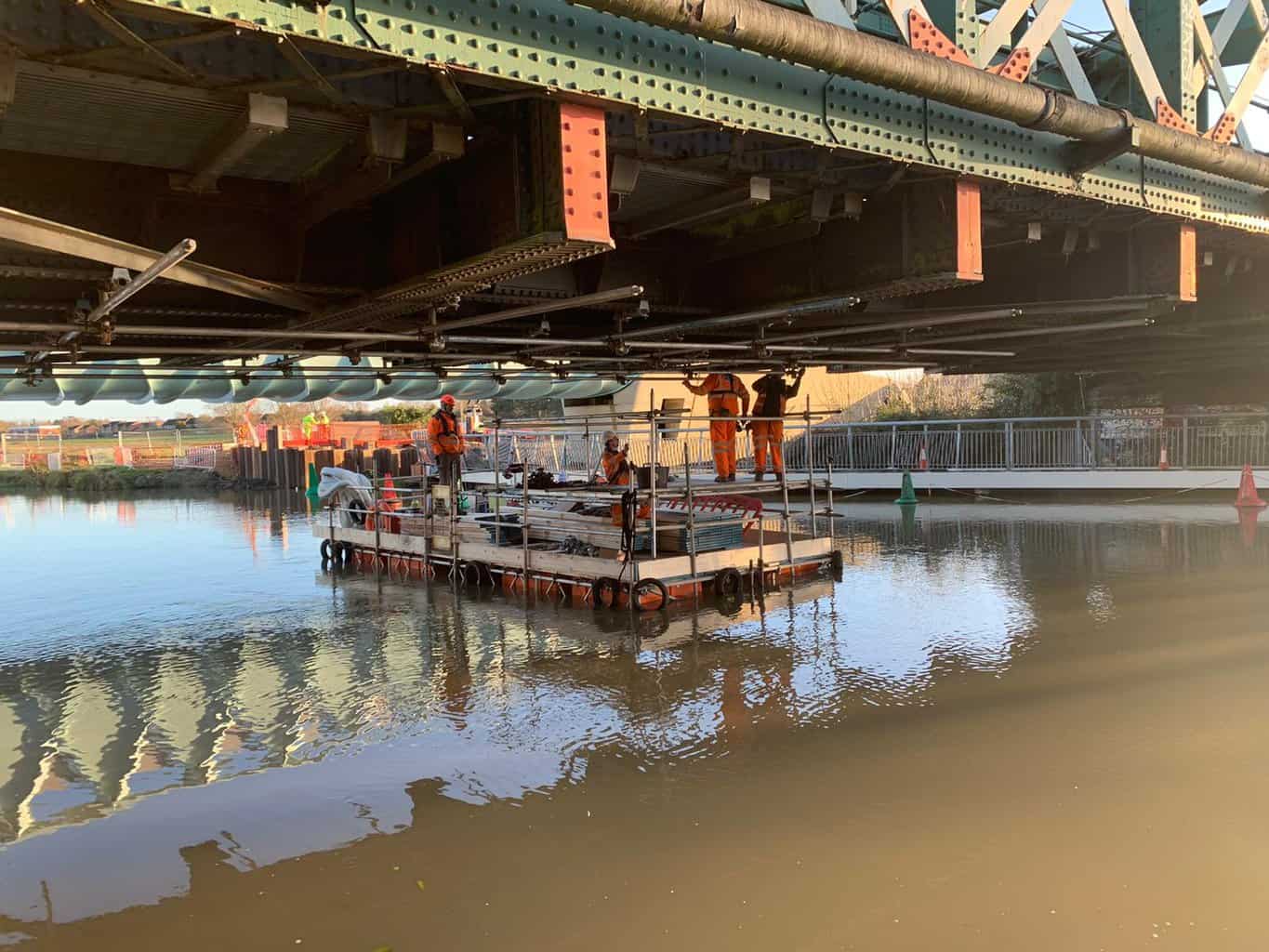
So now we work with scaffold firms in two ways. 1) Bridge Scaffold – We provide floating access, normally from a self-propelled ScaffFloat with a skipper, for them to install a suspended scaffold under the bridge. We can carry the scaffolders and a couple of tons of boards, fittings, beams and tubes onboard and position the ScaffFloat right under the bridge. This saves the scaffolders a significant amount of time compared to if they built from one end. 2) Your Customers – If a scaffolding company has a customer that needs a floating solution, we can work together with them to deliver a ScaffFloat. It is a great partnership because they have the relationship with the customer and also provide scaffolding and help assemble the ScaffFloat. We bring the floats, engines and other equipment and once on hire we can run the floating element of the project.
We are always keen to speak to scaffolding companies that would like to work with us.
DN: It seems to me that you have a pretty good handle on your marketing.
Yes. We get that a lot, which is nice. I have a strong background in simple marketing that works, but the reality is that we can and will do much better in this area going forward. Our website has not been updated for almost a year. We are in the process of setting up a CRM, newsletter, and sales process. We also run no SEO, PPC, or outreach. We have just been too busy. The only thing I have worked hard on is Linkedin, which has been invaluable for us, especially in lockdown. Luckily the product has done very well selling itself. We have grown as much through customers’ positive endorsements and referrals as anything else, which is really pleasing and encouraging. It is abundantly clear already that ScaffFloat is doing a great job of providing a long-needed solution to the well-known problems associated with floating-access works. The surprise so far is just how big the gap is in the market that we are addressing.
DN: Can you tell me how safe ScaffFloat is?
TB: Safety is the cornerstone of what we do. We provide a number of services but the core of what we do is getting contractors access to the work they need to do, and then keeping them safe while they do it. Whether it be cutting, drilling, welding, electricals, coring, surveying, scaffolding or painting, we want the workers that operate from ScaffFloat to be able to work efficiently and safely, and as they are normally used to working from land, a big part of what we do is taking care of them when they work afloat.
DN: What does the future hold for ScaffFloat?
In the medium term, the big focus is on developing processes with particular emphasis on developing our marketing, sales, project management systems and SOPs thus ensuring that the business is well-equipped and resourced to continue its scale-up. We have a great team of dedicated professionals that have enabled us to get this far in such a short period of time. However, in the near future, we plan to expand the team in all of these specialist areas to ensure that human capacity doesn’t become the limiting growth factor. We are also working towards various accreditations including ISO 45001.
Long-term is a very tough question because, given how busy we currently are, it’s proving difficult for me to lift my head up out of the day-to-day to really take a view of where we will be beyond this year’s growth. But if I am being honest with myself I suspect we will ‘outgrow the pot’ we are in within the next year or two. I really love innovation and solving problems, and in some ways, I have reluctantly learned to do the business bit. At the moment we are pumping in value with lots of exciting ‘firsts’ planned for this year, but after that, I suspect the business will shift, become less of a start-up and more of a mature business where it’s about photocopying services and designs and growing to the next level. We have some strong IP and patents and so the future commercial possibilities for our innovative business are clearly very significant.
DN: Last but not least, do you regret anything?
TB: That’s a good question. No. Well, hindsight is a wonderful thing and I am sure I would do some things differently but I am not one for regret. Mistakes are an inevitable and valuable part of the innovation process. You minimise them, fix them, learn from them and move on. Every day is a school day and we’re on a steep learning curve. I don’t know what this year will hold. However, if I look back in our wake and what we have done in the last 12 months, I suspect it’s going to be busy. January revenue is already up tenfold on last year.
This article was first published in the ScaffMag Magazine Issue 18
Engineering construction workers operating under the National Agreement for Engineering Construction Industry (NAECI) have secured a significant cost of living increase by introducing a supplementary payment. Following a series of pay freezes and below-inflation pay rises, industrial tensions had increased across the workforce, but after detailed negotiations between Unite, the UK’s leading union, and the employers’ side of the NAECI agreement, workers will receive an extra £1 for every hour worked between now and 30 June.Unite general secretary Sharon Graham hailed the deal as “a significant increase in pay for workers, who have benefited from making a collective stand and forced their employers to take action on the cost of living crisis.” However, while its union members have accepted the supplementary payment, local disputes over bonus payments involving NAECI workers, including at Drax, Grangemouth, Torness, and Mossmoran, will continue as workers continue to seek further increases in bonus payments.The ongoing local action will put additional pressure on employers to resolve the enduring tensions with the agreement when talks begin later this year for a new pay agreement, which will come into effect in January 2024. Unite national officer Jason Poulter said: “employers must not be under any misapprehension that this will resolve the fundamental issues of fair pay, which underlines this dispute. Local disputes to increase bonus payments will continue and employers must understand that until a fair permanent wage deal is agreed, industrial tensions will remain.”
A former site foreman, Stephen Phillips, has been handed a 12-month suspended sentence after a man tragically died during a school refurb job in 2020. Air conditioning engineer, Gary Skelding, 56, fell from a six-metre-high scaffold when it collapsed at King William’s College on the Isle of Man. Phillips was acquitted of manslaughter in court last year but found guilty of breaching health and safety. Stuart Clague Services (SCS), which previously admitted failing to ensure its employees’ health, safety and welfare, was fined £200,000.Workers from SCS had been renovating the school’s science block.The court heard that a “number of failings” led to the fatality after Phillips chose to place up to 45 plaster fireboards, each weighing more than 35kg, on the scaffolding instead of transporting them into the building individually due to concerns over high winds. Mr Skelding had volunteered to help Phillips, ultimately leading to his fall from the scaffold structure as it collapsed under him. Gary Skelding tragically died aged 56 Judge Sandeep Kainth said that method of lifting the boards “should never have been attempted”.In sentencing SCS, he said the company did not have adequate health and safety systems in place at the time that may have identified the risks. The company has since introduced a digital risk assessment system to alert the site foreman to all potential dangers. Mr Skelding’s widow read a statement to the court, where she said the events of August 4, 2020, changed her life “irreversibly”. Judge Sandeep Kainth noted the “tragic accidents” had brought “grief and misery” to Mr Skelding’s family and friends.In sentencing Phillips, he said: “You have to live with the fact that on your watch a death occurred”, adding: “That’s going to be difficult”.
We use cookies on our website to give you the most relevant experience by remembering your preferences and repeat visits. By clicking “Accept”, you consent to the use of ALL the cookies.
This website uses cookies to improve your experience while you navigate through the website. Out of these, the cookies that are categorized as necessary are stored on your browser as they are essential for the working of basic functionalities of the website. We also use third-party cookies that help us analyze and understand how you use this website. These cookies will be stored in your browser only with your consent. You also have the option to opt-out of these cookies. But opting out of some of these cookies may affect your browsing experience.
Necessary cookies are absolutely essential for the website to function properly. These cookies ensure basic functionalities and security features of the website, anonymously.
Cookie
Duration
Description
cookielawinfo-checbox-analytics
11 months
This cookie is set by GDPR Cookie Consent plugin. The cookie is used to store the user consent for the cookies in the category "Analytics".
cookielawinfo-checbox-functional
11 months
The cookie is set by GDPR cookie consent to record the user consent for the cookies in the category "Functional".
cookielawinfo-checbox-others
11 months
This cookie is set by GDPR Cookie Consent plugin. The cookie is used to store the user consent for the cookies in the category "Other.
cookielawinfo-checkbox-necessary
11 months
This cookie is set by GDPR Cookie Consent plugin. The cookies is used to store the user consent for the cookies in the category "Necessary".
cookielawinfo-checkbox-performance
11 months
This cookie is set by GDPR Cookie Consent plugin. The cookie is used to store the user consent for the cookies in the category "Performance".
viewed_cookie_policy
11 months
The cookie is set by the GDPR Cookie Consent plugin and is used to store whether or not user has consented to the use of cookies. It does not store any personal data.
Functional cookies help to perform certain functionalities like sharing the content of the website on social media platforms, collect feedbacks, and other third-party features.
Performance cookies are used to understand and analyze the key performance indexes of the website which helps in delivering a better user experience for the visitors.
Analytical cookies are used to understand how visitors interact with the website. These cookies help provide information on metrics the number of visitors, bounce rate, traffic source, etc.
Advertisement cookies are used to provide visitors with relevant ads and marketing campaigns. These cookies track visitors across websites and collect information to provide customized ads.
 Perry Hanifan, Director of Coventry Scaffolding, expressed his pride in the team’s achievement, stating: “As proud members of the National Access and Scaffolding Confederation, we always endeavour to go above and beyond simply meeting the legal regulations, and this recognition goes to further demonstrate our company’s commitment to exceptional health and safety.”
The successful completion of the scaffolding work and the high levels of health and safety achieved have been a significant milestone for the project.
Removing the defective cladding will help ensure the safety of the residents in Aspects House, and achieving 100% in all safety audits is a testament to the team’s dedication and expertise.
Perry Hanifan, Director of Coventry Scaffolding, expressed his pride in the team’s achievement, stating: “As proud members of the National Access and Scaffolding Confederation, we always endeavour to go above and beyond simply meeting the legal regulations, and this recognition goes to further demonstrate our company’s commitment to exceptional health and safety.”
The successful completion of the scaffolding work and the high levels of health and safety achieved have been a significant milestone for the project.
Removing the defective cladding will help ensure the safety of the residents in Aspects House, and achieving 100% in all safety audits is a testament to the team’s dedication and expertise. 
 Perry Hanifan, Director of Coventry Scaffolding, expressed his pride in the team’s achievement, stating: “As proud members of the National Access and Scaffolding Confederation, we always endeavour to go above and beyond simply meeting the legal regulations, and this recognition goes to further demonstrate our company’s commitment to exceptional health and safety.”
The successful completion of the scaffolding work and the high levels of health and safety achieved have been a significant milestone for the project.
Removing the defective cladding will help ensure the safety of the residents in Aspects House, and achieving 100% in all safety audits is a testament to the team’s dedication and expertise.
Perry Hanifan, Director of Coventry Scaffolding, expressed his pride in the team’s achievement, stating: “As proud members of the National Access and Scaffolding Confederation, we always endeavour to go above and beyond simply meeting the legal regulations, and this recognition goes to further demonstrate our company’s commitment to exceptional health and safety.”
The successful completion of the scaffolding work and the high levels of health and safety achieved have been a significant milestone for the project.
Removing the defective cladding will help ensure the safety of the residents in Aspects House, and achieving 100% in all safety audits is a testament to the team’s dedication and expertise. 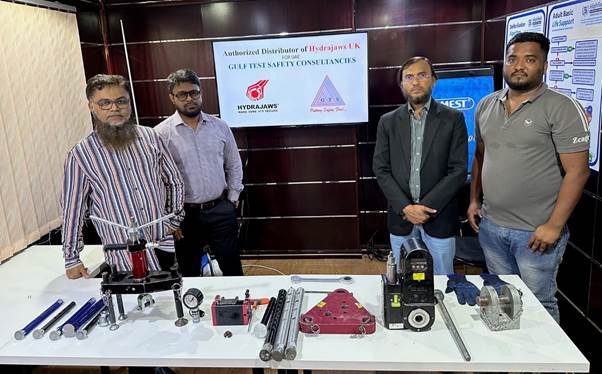

 The array of skill and scaffolding services SDS offers existing and potential future clients is clear to see with their use of Layher’s flagship Allround scaffolding system on the Chichester House residential tower block.
Following a series of site surveys, detailed scaffolding designs and calculations provided by engineers from Layher Ltd, scaffolders from SDS set about erecting the modular scaffold system around the perimeter of Chichester House.
“Although our scaffolders are Layher trained, they were still quite new to the system at the start of the project; however, Layher was on hand every step of the way, which was great!” Shawn Richardson, SDS Operations Manager, said.
“Layher’s head scaffolding Instructor, Joe Thompson, attended the project for the first few days helping the lads base the scaffold out, while Clive Rowe Layher’s area sales manager was visiting every other day for the first few weeks, ensuring the project ran smoothly.”
SDS utilised Layher’s range of flexible components and various-sized bays to accommodate the multitude of balconies on each elevation of the tower. Furthermore, scaffolders effortlessly provided workers with a gapless platform around every part of the building to work from using a combination of Layher’s 390mm and 730mm console brackets and the long-established gap deck, which provides gap-free work platforms.
The array of skill and scaffolding services SDS offers existing and potential future clients is clear to see with their use of Layher’s flagship Allround scaffolding system on the Chichester House residential tower block.
Following a series of site surveys, detailed scaffolding designs and calculations provided by engineers from Layher Ltd, scaffolders from SDS set about erecting the modular scaffold system around the perimeter of Chichester House.
“Although our scaffolders are Layher trained, they were still quite new to the system at the start of the project; however, Layher was on hand every step of the way, which was great!” Shawn Richardson, SDS Operations Manager, said.
“Layher’s head scaffolding Instructor, Joe Thompson, attended the project for the first few days helping the lads base the scaffold out, while Clive Rowe Layher’s area sales manager was visiting every other day for the first few weeks, ensuring the project ran smoothly.”
SDS utilised Layher’s range of flexible components and various-sized bays to accommodate the multitude of balconies on each elevation of the tower. Furthermore, scaffolders effortlessly provided workers with a gapless platform around every part of the building to work from using a combination of Layher’s 390mm and 730mm console brackets and the long-established gap deck, which provides gap-free work platforms.
 The safety of workers and the public was paramount on the job as the tower blocks continued to be lived in while the refurbishment work was carried out. Layher and SDS devised a plan to mitigate the risk by installing protection fans at strategic locations across the structure to protect the public and tenants entering or exiting the tower block. Additionally, Layher’s 750mm aluminium beams were utilised to form a bridge over the blocks bin storage area so tenants could still access their bins.
 Over the course of eight weeks, SDS provided more than 120 linear meters of safe un-impeded modular access, allowing workers from EQUANS to reach all residents’ balconies and windows with ease.
 Through their collaboration and the benefits of the Layher Allround system, Layher UK and SDS has demonstrated their expertise in scaffolding and their commitment to delivering safe and efficient access solutions for their clients. The success of this project is a testament to the strength of their strategic partnership and the quality of their work, and it bodes well for future collaborations between the two companies.
In conclusion, Sean Pike, Managing Director of Layher Ltd, UK, said, “After many years of successful collaboration with Laois Scaffolding & Sean Doyle in Ireland, we are excited about this new cooperation with SDS in the UK and look forward to making many more possibilities together”.
Through their collaboration and the benefits of the Layher Allround system, Layher UK and SDS has demonstrated their expertise in scaffolding and their commitment to delivering safe and efficient access solutions for their clients. The success of this project is a testament to the strength of their strategic partnership and the quality of their work, and it bodes well for future collaborations between the two companies.
In conclusion, Sean Pike, Managing Director of Layher Ltd, UK, said, “After many years of successful collaboration with Laois Scaffolding & Sean Doyle in Ireland, we are excited about this new cooperation with SDS in the UK and look forward to making many more possibilities together”. 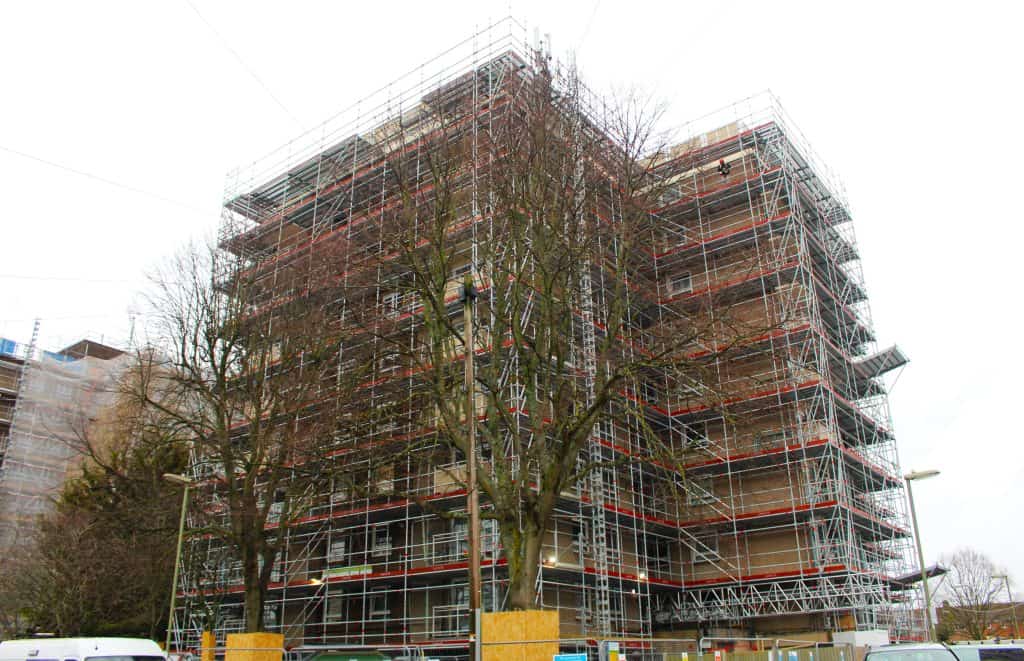 The array of skill and scaffolding services SDS offers existing and potential future clients is clear to see with their use of Layher’s flagship Allround scaffolding system on the Chichester House residential tower block.
Following a series of site surveys, detailed scaffolding designs and calculations provided by engineers from Layher Ltd, scaffolders from SDS set about erecting the modular scaffold system around the perimeter of Chichester House.
“Although our scaffolders are Layher trained, they were still quite new to the system at the start of the project; however, Layher was on hand every step of the way, which was great!” Shawn Richardson, SDS Operations Manager, said.
“Layher’s head scaffolding Instructor, Joe Thompson, attended the project for the first few days helping the lads base the scaffold out, while Clive Rowe Layher’s area sales manager was visiting every other day for the first few weeks, ensuring the project ran smoothly.”
SDS utilised Layher’s range of flexible components and various-sized bays to accommodate the multitude of balconies on each elevation of the tower. Furthermore, scaffolders effortlessly provided workers with a gapless platform around every part of the building to work from using a combination of Layher’s 390mm and 730mm console brackets and the long-established gap deck, which provides gap-free work platforms.
The array of skill and scaffolding services SDS offers existing and potential future clients is clear to see with their use of Layher’s flagship Allround scaffolding system on the Chichester House residential tower block.
Following a series of site surveys, detailed scaffolding designs and calculations provided by engineers from Layher Ltd, scaffolders from SDS set about erecting the modular scaffold system around the perimeter of Chichester House.
“Although our scaffolders are Layher trained, they were still quite new to the system at the start of the project; however, Layher was on hand every step of the way, which was great!” Shawn Richardson, SDS Operations Manager, said.
“Layher’s head scaffolding Instructor, Joe Thompson, attended the project for the first few days helping the lads base the scaffold out, while Clive Rowe Layher’s area sales manager was visiting every other day for the first few weeks, ensuring the project ran smoothly.”
SDS utilised Layher’s range of flexible components and various-sized bays to accommodate the multitude of balconies on each elevation of the tower. Furthermore, scaffolders effortlessly provided workers with a gapless platform around every part of the building to work from using a combination of Layher’s 390mm and 730mm console brackets and the long-established gap deck, which provides gap-free work platforms.
 The safety of workers and the public was paramount on the job as the tower blocks continued to be lived in while the refurbishment work was carried out. Layher and SDS devised a plan to mitigate the risk by installing protection fans at strategic locations across the structure to protect the public and tenants entering or exiting the tower block. Additionally, Layher’s 750mm aluminium beams were utilised to form a bridge over the blocks bin storage area so tenants could still access their bins.
 Over the course of eight weeks, SDS provided more than 120 linear meters of safe un-impeded modular access, allowing workers from EQUANS to reach all residents’ balconies and windows with ease.
 Through their collaboration and the benefits of the Layher Allround system, Layher UK and SDS has demonstrated their expertise in scaffolding and their commitment to delivering safe and efficient access solutions for their clients. The success of this project is a testament to the strength of their strategic partnership and the quality of their work, and it bodes well for future collaborations between the two companies.
In conclusion, Sean Pike, Managing Director of Layher Ltd, UK, said, “After many years of successful collaboration with Laois Scaffolding & Sean Doyle in Ireland, we are excited about this new cooperation with SDS in the UK and look forward to making many more possibilities together”.
Through their collaboration and the benefits of the Layher Allround system, Layher UK and SDS has demonstrated their expertise in scaffolding and their commitment to delivering safe and efficient access solutions for their clients. The success of this project is a testament to the strength of their strategic partnership and the quality of their work, and it bodes well for future collaborations between the two companies.
In conclusion, Sean Pike, Managing Director of Layher Ltd, UK, said, “After many years of successful collaboration with Laois Scaffolding & Sean Doyle in Ireland, we are excited about this new cooperation with SDS in the UK and look forward to making many more possibilities together”. 
 “The reason we’ve used the PERI UP system is because it’s the most versatile system out there,” he said. “The different deck sizes available in the range have been beneficial as we’ve been able to install a deck arrangement that accommodates the shape of the building. In addition to the decks, using components like the console brackets meant that we could get around every part of the building safely.”
 This scaffold marks PDC Scaffolding’s fourth project using the PERI UP system, and the company is investing £2m in the system following its Payne Road project. This continual investment plan will support the company’s recladding and refurbishment projects over the coming years.
The collaboration between PDC Scaffolding, PERI, and PSD Prime Scaffold and Structural Designs Ltd has successfully delivered a complex recladding project using PERI UP Flex, demonstrating the system’s versatility and ability to adapt to challenging geometries.
This scaffold marks PDC Scaffolding’s fourth project using the PERI UP system, and the company is investing £2m in the system following its Payne Road project. This continual investment plan will support the company’s recladding and refurbishment projects over the coming years.
The collaboration between PDC Scaffolding, PERI, and PSD Prime Scaffold and Structural Designs Ltd has successfully delivered a complex recladding project using PERI UP Flex, demonstrating the system’s versatility and ability to adapt to challenging geometries. 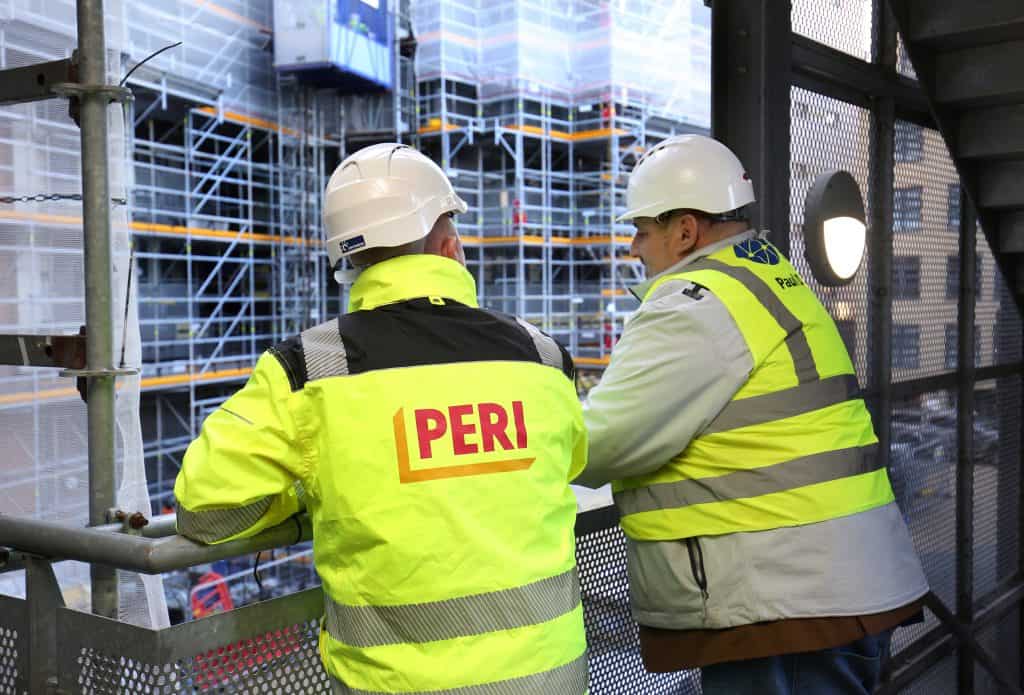 “The reason we’ve used the PERI UP system is because it’s the most versatile system out there,” he said. “The different deck sizes available in the range have been beneficial as we’ve been able to install a deck arrangement that accommodates the shape of the building. In addition to the decks, using components like the console brackets meant that we could get around every part of the building safely.”
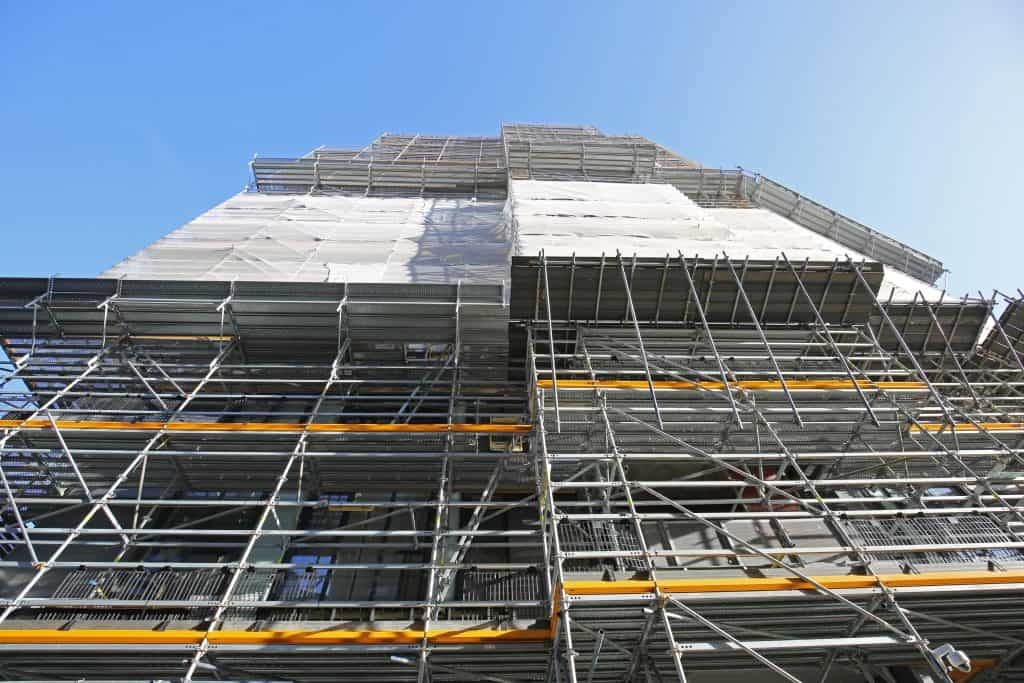 This scaffold marks PDC Scaffolding’s fourth project using the PERI UP system, and the company is investing £2m in the system following its Payne Road project. This continual investment plan will support the company’s recladding and refurbishment projects over the coming years.
The collaboration between PDC Scaffolding, PERI, and PSD Prime Scaffold and Structural Designs Ltd has successfully delivered a complex recladding project using PERI UP Flex, demonstrating the system’s versatility and ability to adapt to challenging geometries.
This scaffold marks PDC Scaffolding’s fourth project using the PERI UP system, and the company is investing £2m in the system following its Payne Road project. This continual investment plan will support the company’s recladding and refurbishment projects over the coming years.
The collaboration between PDC Scaffolding, PERI, and PSD Prime Scaffold and Structural Designs Ltd has successfully delivered a complex recladding project using PERI UP Flex, demonstrating the system’s versatility and ability to adapt to challenging geometries. 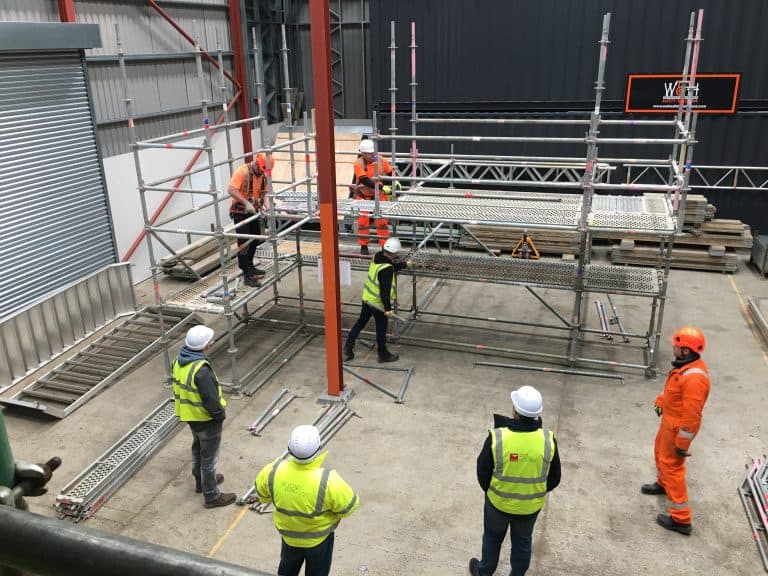
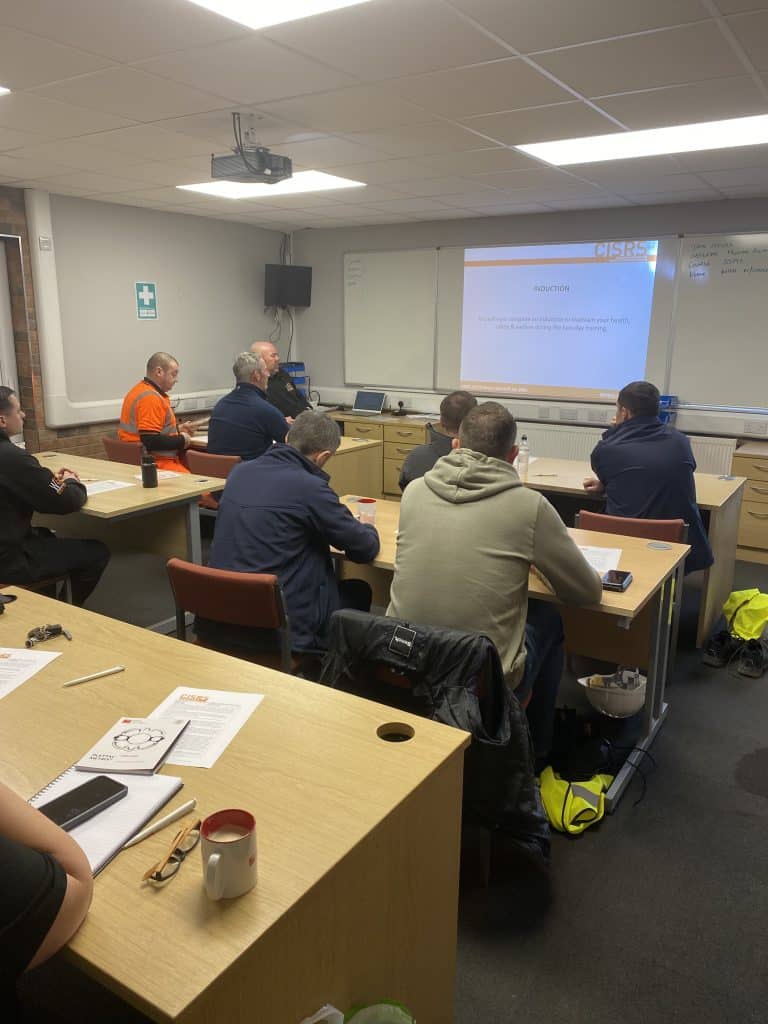 “Many scaffolding companies buy or hire system scaffold to help reduce time and cost on simpler projects,” says Rob Nicholls from Safety & Access Ltd, also a Plettac Metrix training provider. “We always have to put health and safety first – of the scaffolders, other people on site and the wider public. So it’s essential that the people working on a system like Metrix have the right training – system companies like TRAD caveat use of the product with a requirement for formal training, and that’s absolutely the right thing to do.”
As well as the two-day CISRS course, there’s also the opportunity for a five-day base course, which is ideally suited to labourers who may be working on system scaffolding. “We’re likely to see more use of system scaffolding, as companies look for safer, cost-effective ways to work,” says David Abraham. “So we’d expect to be running many more courses for Plettac Metrix and other systems in the future.”
Alan Slater, Head of Technical and Product Support at TRAD UK, agrees with the necessity of training, particularly for safety purposes. “Alongside all the other critical training that our partners offer, the CISRS Part 1 & 2 courses, their System Scaffold Product Training Scheme and the CISRS BASE Plettac Metrix System Course are all specifically designed to help scaffolders and labourers understand and use the system effectively and safely.”
Currently, Fulcrum Scaffold Safety has specific availability for Plettac Metrix training, including CISRS Part 1 Plettac Metrix course from 22nd May to 2nd June, and the CISRS Part 2 Plettac Metrix course from 20th November to 1st December. They also offer CISRS SSPTS Plettac Metrix courses on April 27th-28th, July 27th-28th, and October 12th-13th.
Additionally, W@H Safety Solutions, based in Newcastle, has specific availability for CISRS SSPTS Plattac Metrix courses on March 25th – 26th, April 29th – 30th and May 27th – 28th.
Safety & Access and TRAD UK’s other partners, such as Aspects Total Training in the Midlands, can be contacted directly for availability for customer on-site training, or at their respective facilities. Full details of TRAD UK’s network of training partners for the Plettac Metrix system can be found at https://traduk.co.uk/system/plettac-metrix-trad/
“Many scaffolding companies buy or hire system scaffold to help reduce time and cost on simpler projects,” says Rob Nicholls from Safety & Access Ltd, also a Plettac Metrix training provider. “We always have to put health and safety first – of the scaffolders, other people on site and the wider public. So it’s essential that the people working on a system like Metrix have the right training – system companies like TRAD caveat use of the product with a requirement for formal training, and that’s absolutely the right thing to do.”
As well as the two-day CISRS course, there’s also the opportunity for a five-day base course, which is ideally suited to labourers who may be working on system scaffolding. “We’re likely to see more use of system scaffolding, as companies look for safer, cost-effective ways to work,” says David Abraham. “So we’d expect to be running many more courses for Plettac Metrix and other systems in the future.”
Alan Slater, Head of Technical and Product Support at TRAD UK, agrees with the necessity of training, particularly for safety purposes. “Alongside all the other critical training that our partners offer, the CISRS Part 1 & 2 courses, their System Scaffold Product Training Scheme and the CISRS BASE Plettac Metrix System Course are all specifically designed to help scaffolders and labourers understand and use the system effectively and safely.”
Currently, Fulcrum Scaffold Safety has specific availability for Plettac Metrix training, including CISRS Part 1 Plettac Metrix course from 22nd May to 2nd June, and the CISRS Part 2 Plettac Metrix course from 20th November to 1st December. They also offer CISRS SSPTS Plettac Metrix courses on April 27th-28th, July 27th-28th, and October 12th-13th.
Additionally, W@H Safety Solutions, based in Newcastle, has specific availability for CISRS SSPTS Plattac Metrix courses on March 25th – 26th, April 29th – 30th and May 27th – 28th.
Safety & Access and TRAD UK’s other partners, such as Aspects Total Training in the Midlands, can be contacted directly for availability for customer on-site training, or at their respective facilities. Full details of TRAD UK’s network of training partners for the Plettac Metrix system can be found at https://traduk.co.uk/system/plettac-metrix-trad/ 


 DN: Can you tell me how safe ScaffFloat is?
TB: Safety is the cornerstone of what we do. We provide a number of services but the core of what we do is getting contractors access to the work they need to do, and then keeping them safe while they do it. Whether it be cutting, drilling, welding, electricals, coring, surveying, scaffolding or painting, we want the workers that operate from ScaffFloat to be able to work efficiently and safely, and as they are normally used to working from land, a big part of what we do is taking care of them when they work afloat.
DN: What does the future hold for ScaffFloat?
In the medium term, the big focus is on developing processes with particular emphasis on developing our marketing, sales, project management systems and SOPs thus ensuring that the business is well-equipped and resourced to continue its scale-up. We have a great team of dedicated professionals that have enabled us to get this far in such a short period of time. However, in the near future, we plan to expand the team in all of these specialist areas to ensure that human capacity doesn’t become the limiting growth factor. We are also working towards various accreditations including ISO 45001.
Long-term is a very tough question because, given how busy we currently are, it’s proving difficult for me to lift my head up out of the day-to-day to really take a view of where we will be beyond this year’s growth. But if I am being honest with myself I suspect we will ‘outgrow the pot’ we are in within the next year or two. I really love innovation and solving problems, and in some ways, I have reluctantly learned to do the business bit. At the moment we are pumping in value with lots of exciting ‘firsts’ planned for this year, but after that, I suspect the business will shift, become less of a start-up and more of a mature business where it’s about photocopying services and designs and growing to the next level. We have some strong IP and patents and so the future commercial possibilities for our innovative business are clearly very significant.
DN: Last but not least, do you regret anything?
TB: That’s a good question. No. Well, hindsight is a wonderful thing and I am sure I would do some things differently but I am not one for regret. Mistakes are an inevitable and valuable part of the innovation process. You minimise them, fix them, learn from them and move on. Every day is a school day and we’re on a steep learning curve. I don’t know what this year will hold. However, if I look back in our wake and what we have done in the last 12 months, I suspect it’s going to be busy. January revenue is already up tenfold on last year.
This article was first published in the ScaffMag Magazine Issue 18
DN: Can you tell me how safe ScaffFloat is?
TB: Safety is the cornerstone of what we do. We provide a number of services but the core of what we do is getting contractors access to the work they need to do, and then keeping them safe while they do it. Whether it be cutting, drilling, welding, electricals, coring, surveying, scaffolding or painting, we want the workers that operate from ScaffFloat to be able to work efficiently and safely, and as they are normally used to working from land, a big part of what we do is taking care of them when they work afloat.
DN: What does the future hold for ScaffFloat?
In the medium term, the big focus is on developing processes with particular emphasis on developing our marketing, sales, project management systems and SOPs thus ensuring that the business is well-equipped and resourced to continue its scale-up. We have a great team of dedicated professionals that have enabled us to get this far in such a short period of time. However, in the near future, we plan to expand the team in all of these specialist areas to ensure that human capacity doesn’t become the limiting growth factor. We are also working towards various accreditations including ISO 45001.
Long-term is a very tough question because, given how busy we currently are, it’s proving difficult for me to lift my head up out of the day-to-day to really take a view of where we will be beyond this year’s growth. But if I am being honest with myself I suspect we will ‘outgrow the pot’ we are in within the next year or two. I really love innovation and solving problems, and in some ways, I have reluctantly learned to do the business bit. At the moment we are pumping in value with lots of exciting ‘firsts’ planned for this year, but after that, I suspect the business will shift, become less of a start-up and more of a mature business where it’s about photocopying services and designs and growing to the next level. We have some strong IP and patents and so the future commercial possibilities for our innovative business are clearly very significant.
DN: Last but not least, do you regret anything?
TB: That’s a good question. No. Well, hindsight is a wonderful thing and I am sure I would do some things differently but I am not one for regret. Mistakes are an inevitable and valuable part of the innovation process. You minimise them, fix them, learn from them and move on. Every day is a school day and we’re on a steep learning curve. I don’t know what this year will hold. However, if I look back in our wake and what we have done in the last 12 months, I suspect it’s going to be busy. January revenue is already up tenfold on last year.
This article was first published in the ScaffMag Magazine Issue 18