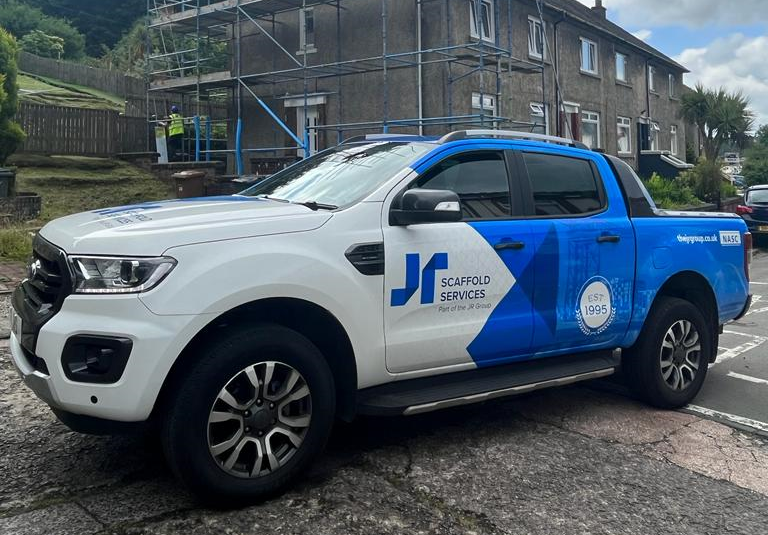
JR Scaffold, a prominent Paisley-based scaffold and construction firm, has secured its role as a crucial delivery partner in the second phase of the Scottish Government’s Warmworks initiative. This decision follows the company’s significant success in the project’s initial phase over the past five years.Having successfully contributed to the Warmer Homes Scotland 2 Scheme (WEH2) framework, JR Scaffold will continue its commitment to aiding the Scottish Government’s goal of providing affordable warmth to households nationwide.Warmworks’ initial phase, initiated in 2015, successfully warmed 35,000 Scottish homes, leading to enhanced living conditions for thousands. JR Scaffold was instrumental in this achievement, supplying efficient scaffold structures to ensure seamless and rapid work execution. Managed by Warmworks, the renewed initiative underscores a commitment to affordable warmth, prioritising zero-emissions heating solutions.Integral to the Warmworks project is an ambitious endeavour to curtail carbon emissions and facilitate Scotland’s evolution into a net-zero society. Warmworks is determined to make the transition to low-carbon living inclusive, emphasizing the introduction of renewable technologies in residences and ensuring that all segments of society, especially those requiring additional assistance, are incorporated.Expressing his satisfaction, John Horne, Managing Director of JR Scaffold, commented, “We are exhilarated to continue as a delivery partner in Warmworks’ second phase. The project holds immense significance, and our team takes immense pride in their role, understanding the profound impact of their contributions on residents.” He added, “Our involvement in the project’s upcoming phase reflects our team’s unwavering commitment to consistently delivering top-notch, professional services throughout Scotland. We eagerly anticipate commencing work.”Established in Govan in 1995 and currently headquartered in Paisley, The JR Group initially operated as a scaffolding enterprise. Today, it stands as one of Scotland’s most expansive building and construction entities, boasting a workforce of approximately 200.
The NASC has ramped up its commitment to alleviating labour shortages in the construction industry, earmarking over £300k in training funds for scaffolding and access businesses.As the construction industry grapples with significant labour shortages, the National Access & Scaffolding Confederation (NASC) is stepping up its support for scaffolding and access businesses across the UK. By the end of the year, NASC will have invested over £120,000 to aid these companies in staff training initiatives.Under the visionary leadership of NASC President David Brown, this considerable training fund is in line with a proactive strategy to bolster recruitment and address the labour crunch prevalent in the scaffolding sector and the broader construction industry. The fund, aimed at enhancing the workforce’s skills, is designed to facilitate recruitment and empower businesses to foster a skilled and resilient team.NASC’s proactive efforts are evident in allocating another £180,000 available for NASC member businesses that apply before November 2024. This further financing will continue to enable training, supporting scaffolding companies needing skilled labour.In partnership with the Construction Industry Training Scheme (CISRS) and Mental Health First Aid England (MHFA), training providers nationwide are ready to deliver reduced-price training to eligible operatives and staff of scaffolding and access businesses. In a significant boost to the initiative, some of the available grants have increased since the scheme’s inception. Currently, firms can access up to £200 per course, with no cap on the number of operatives eligible for training from each company.David BrownPresident David Brown, commenting on the initiative’s progress, highlighted that over 30 businesses have already reaped the benefits of the funds, with a total commitment of £120,000 expected by the year’s close. “With increases in COTS & MHFA course payouts, there is still a substantial amount of funds available for our members. We urge those who have not yet claimed to actively utilise this training pot,” urged Brown.Echoing the importance of training, NASC CEO Clive Dickin emphasised the critical role it plays in the development of scaffolding and access businesses. “NASC members can access training grants through their membership, building dynamic teams that are essential in these challenging times,” stated Dickin.For companies keen to access the training funds, or for those interested in joining the NASC to leverage this initiative, further information can be obtained by contacting the NASC office at (+44) 20 7822 7400 or via email at [email protected].
Renowned scaffolding manufacturer Catari continues its global expansion with the opening of a strategically located depot in Dullek, near Dublin.
This move underscores the company’s commitment to cementing its status as a global scaffold provider and aims to better serve the demands of the Irish construction sector.
Catari Ireland’s establishment is a testament to the invaluable experience the Catari Group has garnered in the Irish market over recent years. Combining the principles of proximity, unwavering support, and swift response times with Catari’s international reputation for high-quality, certified products and value-added engineering solutions, Catari Ireland aims to redefine industry standards.
John Carolan, who will be managing the new depot alongside Ms Jane Carey, commented on this new venture: “The establishment of Catari Ireland is not just about expanding our global presence. It’s about understanding and aligning with the unique demands of the Irish market. We see tremendous potential here and are committed to providing tailored solutions that meet specific client needs.” Both Carolan and Carey come with vast expertise in the Irish scaffolding landscape and echo Catari’s dedication to excellence.
Be a Lucky Scaffolder
The venture has been unveiled under the encouraging motto of “Be a Lucky Scaffolder.” Beyond just a slogan, it resonates with the company’s vision of ensuring that every scaffolder finds reliability, safety, and efficiency in their products.
The Dullek depot is equipped to provide an extensive array of products, from their renowned ringlock system to temporary roof systems and a myriad of free system accessories.
For Catari, this move signifies a significant stride towards gaining broader international recognition. In contrast, for the Irish construction industry, it represents a golden opportunity to collaborate with a globally recognized brand that promises both quality and innovation.
Irish businesses and contractors looking to collaborate can reach out to Catari Ireland via email at [email protected] or phone at 0412132122.
60 people take part in the company’s second annual golf day to raise money for 2023’s chosen charities
TRAD UK held its second charity golf day on September 14th at the PGA National Course at The Belfry. This follows last year’s highly successful golf day at Gleneagles – chosen because it was the home club of former TRAD director, John Paterson.
This year’s event attracted 60 people, with teams coming mainly from clients, alongside some suppliers and a couple of TRAD teams. As well as raising money from team entrance fees, TRAD held a raffle and auction during the evening, with prizes ranging from golf umbrellas to complimentary days at international rugby matches and signed shirts.
“This was a fantastic day at a great course,” said Darren Cooper, TRAD UK’s Depot Head in Birmingham, who organised the event. “We had 15 fantastic teams, and a great day of golf. Congratulations to all the prize winners, and a huge thank you to everyone who took part and helped to boost our charity total for 2023.”
There were several prize winners on the day. TRAD Sales Rep, Wes Bates, won the prize for Nearest the Pin, and Chris Crane from Kong Scaffolding won Longest Drive. Tony Colman from AMP Scaffolding and Billy Farmer of AS Scaffolding also won prizes, and the overall winner was Andrew Smilie, again of AS Scaffolding, who travelled down from Glasgow early that morning to win by two points!
“We’d really like the TRAD Golf Day to become an annual fixture in clients’ calendars,” adds Darren. “We are grateful to have such generous clients, and our chosen charities this year – Marie Curie Cancer Care, Anthony Nolan and Cancer Research UK.”
TRAD UK’s next charity event is the Bournemouth Half Marathon, where runners from some of the company’s southern depots are taking part on behalf of all three charities. If you would like to help TRAD UK in its charity fundraising drive, you can make a donation at: https://app.collectionpot.com/pot/trad23/
A new helpline service is highlighting growing desperation among industry professionals.The newly established mental health helpline for UK construction workers has revealed alarming figures, showing over a third of texts (30.4%) are from individuals contemplating suicide. This striking statistic brings to light the severe mental health crisis overshadowing the industry as the suicide rate among construction workers ascends for the fifth consecutive year.Launched a year ago, the Big Brew’s helpline has become a crucial support mechanism for the struggling construction community, with the award-winning charity Band of Builders steering the helm. The helpline is a significant part of the Big Brew campaign, designed to prompt discussions around mental health within the construction industry, providing a platform for workers to voice their anxieties and fears.As data unfolds, it’s evident that the issue is grave. Texts concerning suicidal thoughts outnumber those related to depression (16.2%), stress and anxiety (15.4%), relationship issues (14.2%), and isolation (14%), highlighting the urgency of addressing the escalating mental health crisis in the sector.Interestingly, 44.2% of those reaching out do so amidst their working hours, with Fridays marking the peak of weekly helpline activities at 22.4%. A considerable 80.6% of the total helpline usage occurs within the working week, further underscoring the pervasive stress and anxiety engulfing workers during their job roles.With the global observance of World Mental Health Day on October 10th, Big Brew campaign organisers are gearing up for enhanced awareness initiatives while reflecting on the crucial data emerging from the helpline service. This data accentuates the widespread mental health crisis the construction sector is grappling with.“The industry’s inherently demanding and high-pressure environment lays the foundation for elevated stress, anxiety, and various mental health afflictions among workers,” comments Gavin Crane, Big Brew spokesperson. Crane emphasises the moral obligation to acknowledge and tackle these challenges, advocating for a healthier and more supportive industry culture. Big Brew plays a pivotal role in fostering safe spaces for open dialogues, stigma reduction, and promoting mental wellbeing.As the third annual Big Brew event beckons, sponsorship from notable firms like Tarmac and CT1 Sealant and Construction Adhesive promises a substantial platform for discussion. Over 300 Big Brew coffee mornings are stated to take place across the UK, with widespread support from the builder’s merchant sector.Band of Builders launched the inaugural Big Brew event in October 2021, making significant strides in not just awareness but also fundraising. The funds amassed were pivotal in establishing online wellbeing services accessible to UK construction industry members and their families.The Big Brew campaign has been gaining traction, drawing national attention with televised features and celebrity endorsements. With the crisis deepening, as evidenced by the helpline data, organisers urge for increased participation in the Big Brew initiative. It’s seen as a vital avenue for fostering community engagement and elevating awareness about mental health issues and available support structures for the UK construction industry workforce.Interested parties can register for hosting a Big Brew event at Band of Builders’ website and partake in the ongoing conversation on social media using the hashtag #GiveYourselfABreak.
The Access and Scaffolding Industry Training Organisation (ASITO) Committee has delved into potential changes to the CISRS Card Scheme rules concerning COTS/Labourer cards.
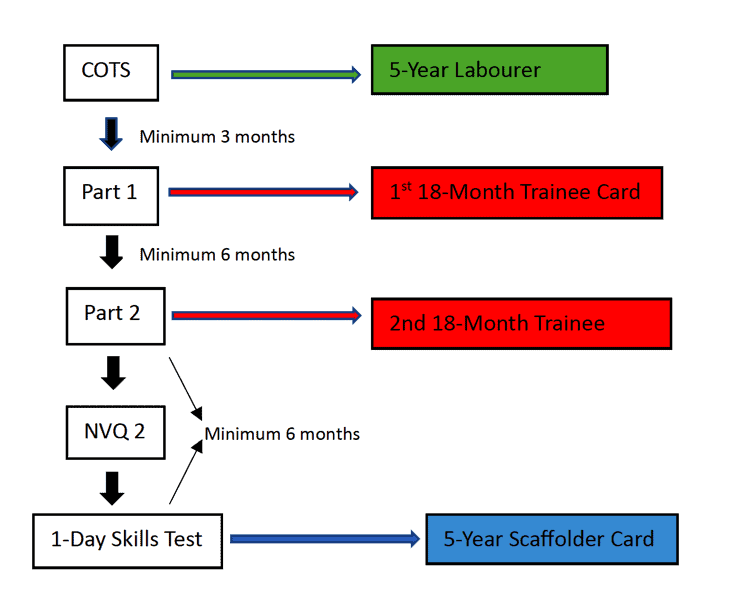
In a recent ASITO meeting held in London, The Construction Industry Scaffolders Record Scheme (CISRS) proposed a change that would mean that all new entrants into the scaffolding sector would be initially issued with a Labourer’s card once they complete the COTS course.
This proposed shift is a marked change from the current procedure, which allows a delegate to apply for either a Labourer or their first Trainee card.
This issue with applying for the trainee card immediately means that the clock is already ticking on the first 18-month card validity period. If new entrants do not get the relevant industry experience in this time their card could expire without them having started their formal training. At this stage they would need complete the Part 1 to obtain their 2nd Trainee card, however, all other relevant training and assessment (Part 2, VQ2, Skills test) would then need to be completed within that 2nd 18-month period.
An operative would now only be eligible to receive their initial 18-month trainee card upon the successful completion of Part 1 training.
the proposed route would have all new entrants receiving a CISRS Labourer card on completion of COTS. The first 18-month Trainee card would then be applied for by the training centre on completion of Part 1.
Dave Mosley, CISRS Managing Director, said, “By making this change, it will ensure that all operatives holding a trainee card, having already completed their Part 1, will have received industry-recognised training, in basing out, erecting and dismantling a range of scaffolds, towers, birdcages, independents etc plus other relevant industry guidance such as SG4, TG20, RAMS, before carrying out these jobs on site.We will review Part 1 content to ensure it remains relevant and achievable for delegates who may now attend courses having had less time “on the spanners.”
CISRS is also proposing to change the time requirement between obtaining the first Labourer card and attending a Part 1 course from 6 to 3 months, allowing those with some industry experience but no formal training to attend the Part 1 and obtain their first trainee card sooner.
The adjustments aim to streamline the entry process and ensure that trainees have a clear, structured path to progress in their careers.
Following a group discussion with those in attendance on the topic, according to sources, there was a unanimous show of hands supporting the proposal, indicating strong support among the committee members present.
However, in an effort to make a well-informed decision and encompass wider viewpoints, CISRS has forwarded the proposal to Scaffmag to gauge the response of a broader audience before making a final decision.
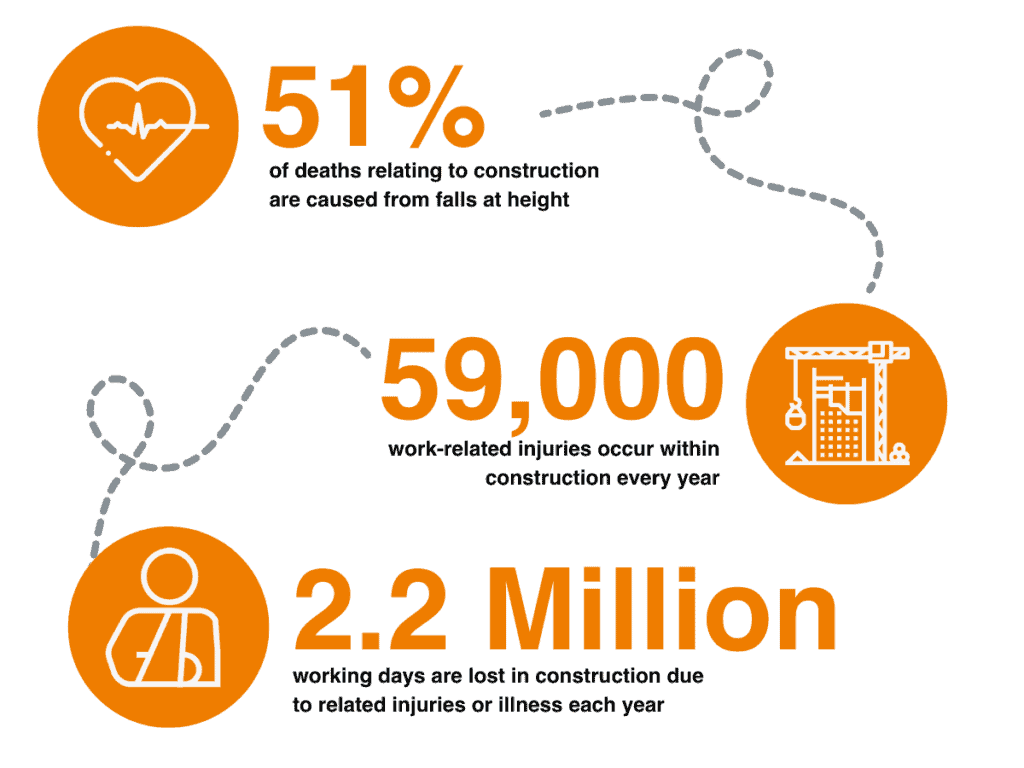
New campaign spotlights the impact of PPE decisions on loved ones.In a deeply resonating move, Leach’s has launched a new campaign that underlines the paramount significance of wearing Personal Protective Equipment (PPE) while at work. Through a heartfelt and memorable mascot, “Otto,” the dog, Leach’s strives to hit the emotional chords of workers, urging them to prioritize safety for both themselves and their loved ones.A poignant Creative Film accompanies the campaign and can be viewed below. The visual narrative is expected to leave a lasting impression on viewers, reiterating the profound impact their PPE choices can have on their family and friends.The campaign doesn’t shy away from highlighting some sobering statistics aimed at creating a clear and undeniable understanding of the stakes. An alarming 51% of fatalities in the construction sector result from falls from height, often tied back to improper PPE use or its complete absence. Additionally, the industry sees approximately 59,000 work-related injuries annually, with many victims never returning to their jobs. Consequently, about 2.2 million working days are forfeited due to these injuries or occupational diseases each year.Leach’s campaign comes at a crucial time when many still opt out of wearing PPE, citing reasons ranging from inconvenience to simple negligence. “Your choices can have a lifelong impact on those you love the most,” reads a part of the campaign’s text. Through the metaphor of Otto, the campaign brings to light the anguish and heartbreak families experience when a loved one is harmed due to the absence of appropriate protection.The cornerstone message of the campaign resonates loud and clear: PPE isn’t just a safety protocol; it’s a lifeline. It not only safeguards workers but ensures they return home every day to those who cherish them most.In a world where occupational hazards are ever-present, Leach’s urges all, “DON’T RISK IT. STAY SAFE. USE PPE.”
In collaboration with multiple scaffolding training centres, CISRS is set to offer heavily subsidised CPD courses across the UK.The Construction Industry Scaffolders Record Scheme (CISRS) has announced a second series of subsidised Continuing Professional Development (CPD) courses for Autumn/Winter 2023. This initiative, undertaken with the backing of several CISRS-accredited training centres, is aimed at providing affordable access to CPD courses for scaffolders and employers across the United Kingdom.Thanks to CISRS’s funding, the participating training centres will offer the courses at a nominal fee of £50 per delegate, marking significant savings for both employers and scaffolders alike. This initiative underscores CISRS’s commitment to fostering education and skills development within the scaffolding sector while easing the financial burden on professionals and companies.Since the inception of the subsidised CPD initiative, CISRS and the associated training centres have rolled out over 120 subsidised courses. These efforts represent a total reinvestment exceeding £450,000 in the industry’s human capital.This year, CISRS has expressed its gratitude towards the training centres for their continual support and collaboration in this significant initiative. These centres remain dedicated to bolstering the programme and ensuring its ongoing success.The forthcoming subsidised CPD courses are scheduled at various centres across the country on the following dates:
Aspects Total Training, Coventry: 2-3 November 2023
CITB NI, Northern Ireland: 4-5 December 2023
CWIC, Swansea: 11-12 December 2023
Construction College Midlands, Birmingham: 4-5 December 2023
Fulcrum Scaffold Safety & Training, Flintshire: 29-30 October 2023
Fulcrum Scaffold Safety & Training, North Shields: 11-12 November 2023
Lawsons Training, Workington: 31 October – 1 November 2023
LTC, Cullompton: 18-19 December 2023
LTC, Plymouth: 6-7 December 2023
NCC East, Bircham Newton: 6-7 November 2023
NCC Scotland, Inchinnan: 4-5 December 2023
NCC South, Erith: 13-14 November 2023
NETA, Stockton: 23-24 November 2023
Richmond Bright, Liverpool: 30-31 October 2023
Safety and Access, Nottingham: 18-19 October 2023
Safety and Access, Immingham: 7-8 December 2023
Safety and Access, London: 18-19 October 2023
Simian, Warrington: 20-21 November 2023
Simian, Waltham Forest: 7-8 November 2023
Simian, Weston Super Mare: 16-17 November 2023
Simian, Anglesey: 14-15 November 2023
Training 2000, Blackburn: 13-14 November 2023
These courses will be available on a first-come, first-served basis. Interested delegates are advised to reach out to the respective training centres directly to inquire about availability and secure their spots. Contact details for each CISRS centre can be located on the official CISRS website at www.cisrs.org.uk.
Rose System Scaffolding announced today that they have secured a prestigious new contract to support the construction of Manchester Royal Infirmary’s new A&E Emergency Department, aptly named Project Red.Set to be carried out in two distinct phases, the expansion project boasts a series of enhancements, most notably six state-of-the-art operating theatres. Additionally, the Emergency Department will witness substantial expansion and upgrades.In alignment with their commitment to delivering customised scaffolding solutions, Rose System Scaffolding is gearing up to provide an array of bespoke services tailored for the project. These include external independent access solutions, roof edge protection, hoist towers, and specialised access to a newly conceived Electrical Infrastructure Building. This particular building is of paramount significance, being responsible for powering the main hospital building.The latest development project underscores Manchester Royal Infirmary’s burgeoning reputation as a regional hub for specialist surgical procedures. The dedicated professionals at Rose System Scaffolding expressed their pride and enthusiasm in playing a pivotal role in this transformative healthcare initiative.
North West-based Teal Scaffold is marking its fifth year of business, reflecting on past successes and eyeing future growth.The company, a subsidiary of the award-winning Sovini Group, was established in 2018 to meet the Group’s comprehensive supply chain requirements within the property and construction sector. Their mandate has since grown, and they have firmly established themselves as key players in the scaffolding industry.Teal Scaffold has notably broadened its service range in the five years since its inception. The company prides itself on having a skilled team that has secured work in heritage, petrochemical, and high-profile refurbishment sectors, with projects including several high-rise apartment complexes.To provide a snapshot of the company’s achievements, Teal Scaffold has clocked in over 200,000 hours of operational expertise on job sites. They have also facilitated access works for new build projects, resulting in the construction of over 200 family homes in the local community, aligning with Sovini Group’s vision of fostering a brighter future.Safety and professionalism stand as cornerstones of the company’s ethos. Teal Scaffold has maintained an impeccable safety record, consistently scoring 100% in external safety audits year after year. In recognition of its commitment to excellence, the company was awarded the full contractor NASC accreditation in 2022, an accolade seen as the gold standard in the industry.The firm has also showcased its prowess by working on iconic heritage towers such as The Liverpool Lyceum, The Walker Art Gallery, and the Midland Railway Building. Their stellar work hasn’t gone unnoticed; the Health and Safety Executive (HSE) highlighted Teal Scaffold’s projects as a paragon of compliance.Dan McGregor, Teal Scaffold’s Head of Operations, expressed his vision for the firm’s future trajectory. “As heritage access experts within the North West, our goal for the upcoming five years is to surpass an annual turnover of £5m,” he remarked. McGregor underscored the company’s commitment to broadening its scaffolding services and hinted at diversifying skills to take on roles as a principal contractor.Adding to the company’s innovative approach, McGregor revealed a promising collaboration: “We are in close coordination with partners like Liverpool John Moore’s University to develop a product that aims to be a game-changer in working at height. We’re brimming with anticipation about its potential.”




 There were several prize winners on the day. TRAD Sales Rep, Wes Bates, won the prize for Nearest the Pin, and Chris Crane from Kong Scaffolding won Longest Drive. Tony Colman from AMP Scaffolding and Billy Farmer of AS Scaffolding also won prizes, and the overall winner was Andrew Smilie, again of AS Scaffolding, who travelled down from Glasgow early that morning to win by two points!
“We’d really like the TRAD Golf Day to become an annual fixture in clients’ calendars,” adds Darren. “We are grateful to have such generous clients, and our chosen charities this year – Marie Curie Cancer Care, Anthony Nolan and Cancer Research UK.”
TRAD UK’s next charity event is the Bournemouth Half Marathon, where runners from some of the company’s southern depots are taking part on behalf of all three charities. If you would like to help TRAD UK in its charity fundraising drive, you can make a donation at: https://app.collectionpot.com/pot/trad23/
There were several prize winners on the day. TRAD Sales Rep, Wes Bates, won the prize for Nearest the Pin, and Chris Crane from Kong Scaffolding won Longest Drive. Tony Colman from AMP Scaffolding and Billy Farmer of AS Scaffolding also won prizes, and the overall winner was Andrew Smilie, again of AS Scaffolding, who travelled down from Glasgow early that morning to win by two points!
“We’d really like the TRAD Golf Day to become an annual fixture in clients’ calendars,” adds Darren. “We are grateful to have such generous clients, and our chosen charities this year – Marie Curie Cancer Care, Anthony Nolan and Cancer Research UK.”
TRAD UK’s next charity event is the Bournemouth Half Marathon, where runners from some of the company’s southern depots are taking part on behalf of all three charities. If you would like to help TRAD UK in its charity fundraising drive, you can make a donation at: https://app.collectionpot.com/pot/trad23/ 
 Band of Builders launched the inaugural Big Brew event in October 2021, making significant strides in not just awareness but also fundraising. The funds amassed were pivotal in establishing online wellbeing services accessible to UK construction industry members and their families.
The Big Brew campaign has been gaining traction, drawing national attention with televised features and celebrity endorsements. With the crisis deepening, as evidenced by the helpline data, organisers urge for increased participation in the Big Brew initiative. It’s seen as a vital avenue for fostering community engagement and elevating awareness about mental health issues and available support structures for the UK construction industry workforce.
Interested parties can register for hosting a Big Brew event at Band of Builders’ website and partake in the ongoing conversation on social media using the hashtag #GiveYourselfABreak.
Band of Builders launched the inaugural Big Brew event in October 2021, making significant strides in not just awareness but also fundraising. The funds amassed were pivotal in establishing online wellbeing services accessible to UK construction industry members and their families.
The Big Brew campaign has been gaining traction, drawing national attention with televised features and celebrity endorsements. With the crisis deepening, as evidenced by the helpline data, organisers urge for increased participation in the Big Brew initiative. It’s seen as a vital avenue for fostering community engagement and elevating awareness about mental health issues and available support structures for the UK construction industry workforce.
Interested parties can register for hosting a Big Brew event at Band of Builders’ website and partake in the ongoing conversation on social media using the hashtag #GiveYourselfABreak.  Band of Builders launched the inaugural Big Brew event in October 2021, making significant strides in not just awareness but also fundraising. The funds amassed were pivotal in establishing online wellbeing services accessible to UK construction industry members and their families.
The Big Brew campaign has been gaining traction, drawing national attention with televised features and celebrity endorsements. With the crisis deepening, as evidenced by the helpline data, organisers urge for increased participation in the Big Brew initiative. It’s seen as a vital avenue for fostering community engagement and elevating awareness about mental health issues and available support structures for the UK construction industry workforce.
Interested parties can register for hosting a Big Brew event at Band of Builders’ website and partake in the ongoing conversation on social media using the hashtag #GiveYourselfABreak.
Band of Builders launched the inaugural Big Brew event in October 2021, making significant strides in not just awareness but also fundraising. The funds amassed were pivotal in establishing online wellbeing services accessible to UK construction industry members and their families.
The Big Brew campaign has been gaining traction, drawing national attention with televised features and celebrity endorsements. With the crisis deepening, as evidenced by the helpline data, organisers urge for increased participation in the Big Brew initiative. It’s seen as a vital avenue for fostering community engagement and elevating awareness about mental health issues and available support structures for the UK construction industry workforce.
Interested parties can register for hosting a Big Brew event at Band of Builders’ website and partake in the ongoing conversation on social media using the hashtag #GiveYourselfABreak. 


 Leach’s campaign comes at a crucial time when many still opt out of wearing PPE, citing reasons ranging from inconvenience to simple negligence. “Your choices can have a lifelong impact on those you love the most,” reads a part of the campaign’s text.
Through the metaphor of Otto, the campaign brings to light the anguish and heartbreak families experience when a loved one is harmed due to the absence of appropriate protection.
The cornerstone message of the campaign resonates loud and clear: PPE isn’t just a safety protocol; it’s a lifeline. It not only safeguards workers but ensures they return home every day to those who cherish them most.
In a world where occupational hazards are ever-present, Leach’s urges all, “DON’T RISK IT. STAY SAFE. USE PPE.”
Leach’s campaign comes at a crucial time when many still opt out of wearing PPE, citing reasons ranging from inconvenience to simple negligence. “Your choices can have a lifelong impact on those you love the most,” reads a part of the campaign’s text.
Through the metaphor of Otto, the campaign brings to light the anguish and heartbreak families experience when a loved one is harmed due to the absence of appropriate protection.
The cornerstone message of the campaign resonates loud and clear: PPE isn’t just a safety protocol; it’s a lifeline. It not only safeguards workers but ensures they return home every day to those who cherish them most.
In a world where occupational hazards are ever-present, Leach’s urges all, “DON’T RISK IT. STAY SAFE. USE PPE.” 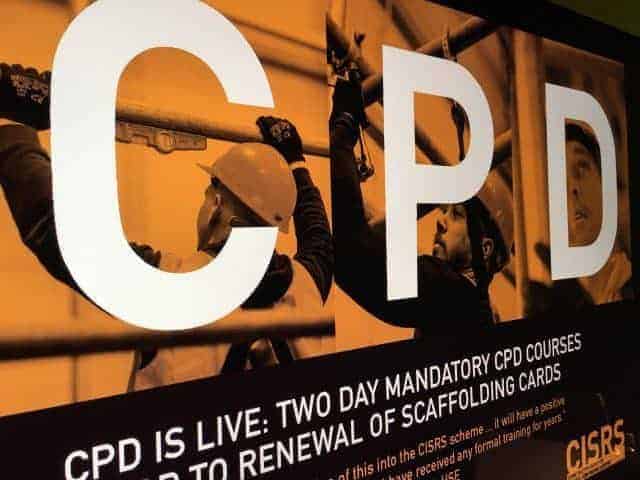
 This year, CISRS has expressed its gratitude towards the training centres for their continual support and collaboration in this significant initiative. These centres remain dedicated to bolstering the programme and ensuring its ongoing success.
The forthcoming subsidised CPD courses are scheduled at various centres across the country on the following dates:
This year, CISRS has expressed its gratitude towards the training centres for their continual support and collaboration in this significant initiative. These centres remain dedicated to bolstering the programme and ensuring its ongoing success.
The forthcoming subsidised CPD courses are scheduled at various centres across the country on the following dates:
 This year, CISRS has expressed its gratitude towards the training centres for their continual support and collaboration in this significant initiative. These centres remain dedicated to bolstering the programme and ensuring its ongoing success.
The forthcoming subsidised CPD courses are scheduled at various centres across the country on the following dates:
This year, CISRS has expressed its gratitude towards the training centres for their continual support and collaboration in this significant initiative. These centres remain dedicated to bolstering the programme and ensuring its ongoing success.
The forthcoming subsidised CPD courses are scheduled at various centres across the country on the following dates: