UK Weather Alert: Storm Agnes Threatens With 80mph Winds

Large parts of the UK are bracing for Storm Agnes, which is set to bring potentially damaging winds of up to 80mph.
The Met Office has issued a yellow wind warning for significant portions of the nation, starting from 10am on Wednesday and lasting until 7am on Thursday. The warning encompasses regions from the southwest of England, stretching to Scotland and extending across to Northern Ireland.
The imminent storm, named ‘Agnes’ by the Met Office, poses a “danger to life,” primarily from the potential of “injuries and danger from flying debris.” Coastal areas are particularly at risk with the office warning of “large waves and beach material being thrown onto sea fronts, coastal roads, and properties.”
The winds, deemed as “significantly disruptive,” may also cause extensive damage to infrastructure, including buildings. Residents should anticipate power outages and travel disturbances due to the storm’s impact.
Mark Sidaway, Deputy Chief Meteorologist at the Met Office, provided further insights into the storm’s progression: “A deep area of low pressure is forecasted to near southwest Ireland early on Wednesday, progressing across northern regions of the UK, and dissipating by early Thursday.”
He stressed the prevailing uncertainty regarding the exact path and might of the weather system. However, he noted, “The most probable scenario presently anticipates gusts ranging from 50 to 60mph affecting inland areas.”
More worrying for those near the coastlines, Sidaway added, “Certain Irish Sea coasts might witness gusts ranging from 65 to 75mph. There remains a slim possibility for gusts reaching a formidable 80mph on the most vulnerable coasts and headlands.”
CISRS Overseas Training Sees Significant Growth in Nepal
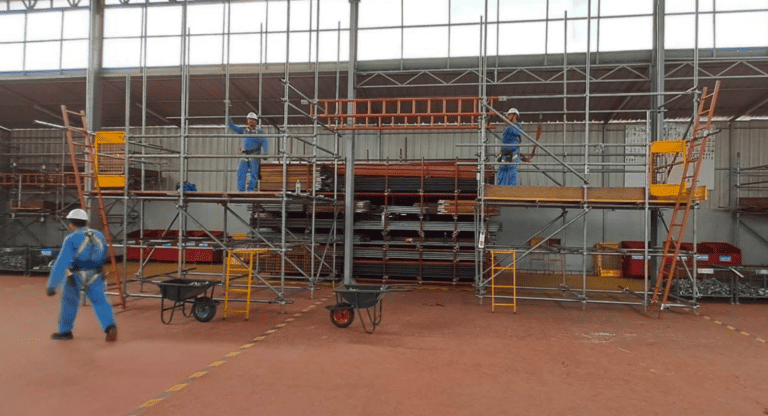
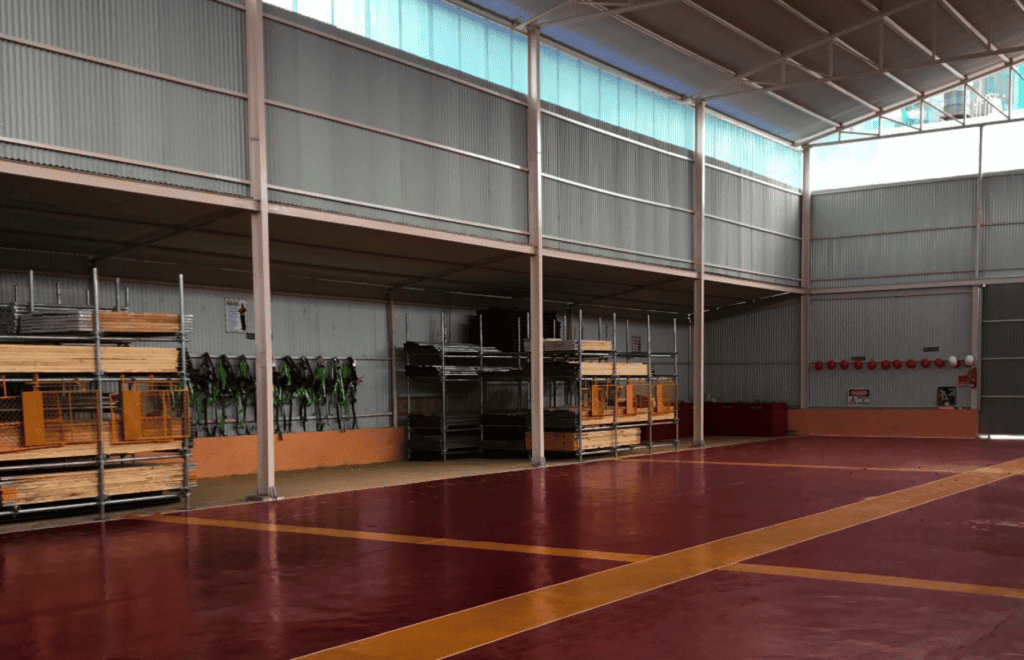
The commitment to the CISRS (Construction Industry Scaffolders Record Scheme) overseas training program ‘continues to thrive’ in Nepal, as auditors return to the UK following two successful annual accreditation compliance audits in Kathmandu.
Safety and Access/Aecor International and Simian/Interscaff centres underwent meticulous checks and evaluations, according to a CISRS press release.
They have been rewarded for their stringent adherence to standards with a commendable clean bill of health. As a result, both organisations have been granted a renewed 12-month accreditation to CISRS.
The increasing significance of the CISRS training in Nepal is evident, with around 1,300 operatives completing the CISRS OSTS (Overseas Scaffolder Training Scheme) since the previous audit.
Ian Fyall, Managing Director of Simian International, expressed his delight in seeing the progression in Nepal, “It’s wonderful to witness the centre’s resilience, bouncing back to regular operations post-Covid. Over the past year, around 500 individuals have been trained at the centre, completing the CISRS OSTS, and subsequently heading to the Middle East, transforming their futures and those of their families. Nepal’s tenacity and warm-heartedness shine through in these achievements.”
The Simian Interscaff Centre stands out, now accredited for a wide range of courses, including CISRS OSTS Levels 1 and 2, Basic and Advanced Inspection, and Scaffolding Supervisor Training.
 Meanwhile, Safety and Access/Aecor International’s instructors didn’t have it easy, undergoing rigorous training to attain the CISRS OSTS Level 3 course accreditation.
Rob Nicholls, Safety and Access’ Learning and Development Manager praised the partnership with Aecor International, “In the span of seven years, we’ve nurtured an invaluable relationship with Aecor International. Their relentless drive for enhancement at their centres is commendable, and achieving Level 3 accreditation in Kathmandu is a testament to this commitment.”
Safety and Access/Aecor International’s dedication isn’t just limited to Nepal. Their training extends to other facilities, with accredited training centres in Abu Dhabi, India, and Qatar.
With 1,300 operatives completing the CISRS OSTS training in Nepal in just the last year, it’s evident that scaffolders from the region are increasingly recognising the value of top-tier training, ensuring they are well-equipped to meet global industry standards.
Meanwhile, Safety and Access/Aecor International’s instructors didn’t have it easy, undergoing rigorous training to attain the CISRS OSTS Level 3 course accreditation.
Rob Nicholls, Safety and Access’ Learning and Development Manager praised the partnership with Aecor International, “In the span of seven years, we’ve nurtured an invaluable relationship with Aecor International. Their relentless drive for enhancement at their centres is commendable, and achieving Level 3 accreditation in Kathmandu is a testament to this commitment.”
Safety and Access/Aecor International’s dedication isn’t just limited to Nepal. Their training extends to other facilities, with accredited training centres in Abu Dhabi, India, and Qatar.
With 1,300 operatives completing the CISRS OSTS training in Nepal in just the last year, it’s evident that scaffolders from the region are increasingly recognising the value of top-tier training, ensuring they are well-equipped to meet global industry standards.
 Meanwhile, Safety and Access/Aecor International’s instructors didn’t have it easy, undergoing rigorous training to attain the CISRS OSTS Level 3 course accreditation.
Rob Nicholls, Safety and Access’ Learning and Development Manager praised the partnership with Aecor International, “In the span of seven years, we’ve nurtured an invaluable relationship with Aecor International. Their relentless drive for enhancement at their centres is commendable, and achieving Level 3 accreditation in Kathmandu is a testament to this commitment.”
Safety and Access/Aecor International’s dedication isn’t just limited to Nepal. Their training extends to other facilities, with accredited training centres in Abu Dhabi, India, and Qatar.
With 1,300 operatives completing the CISRS OSTS training in Nepal in just the last year, it’s evident that scaffolders from the region are increasingly recognising the value of top-tier training, ensuring they are well-equipped to meet global industry standards.
Meanwhile, Safety and Access/Aecor International’s instructors didn’t have it easy, undergoing rigorous training to attain the CISRS OSTS Level 3 course accreditation.
Rob Nicholls, Safety and Access’ Learning and Development Manager praised the partnership with Aecor International, “In the span of seven years, we’ve nurtured an invaluable relationship with Aecor International. Their relentless drive for enhancement at their centres is commendable, and achieving Level 3 accreditation in Kathmandu is a testament to this commitment.”
Safety and Access/Aecor International’s dedication isn’t just limited to Nepal. Their training extends to other facilities, with accredited training centres in Abu Dhabi, India, and Qatar.
With 1,300 operatives completing the CISRS OSTS training in Nepal in just the last year, it’s evident that scaffolders from the region are increasingly recognising the value of top-tier training, ensuring they are well-equipped to meet global industry standards. Scaffolders Join Offshore Workers in Upcoming Strike
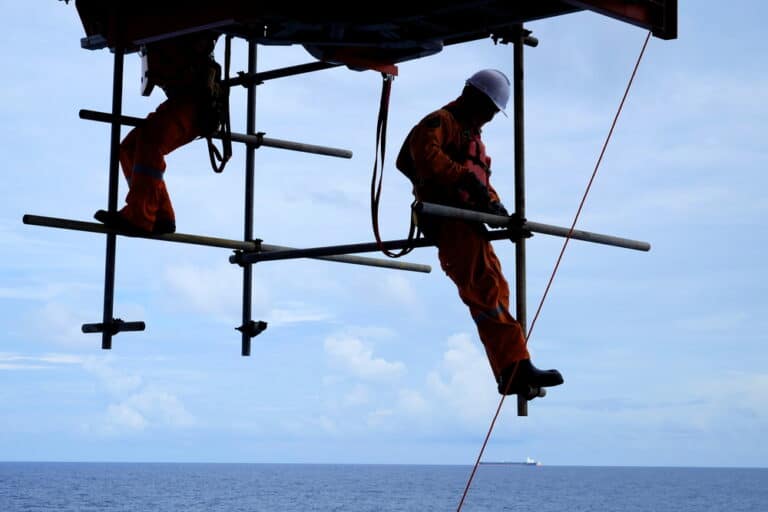
Unite the union has confirmed that scaffolders and around 85 other offshore workers from Petrofac Facilities Management Limited will undertake a six-day strike on installations managed by Ithaca Energy.
The decision comes as a culmination of the continued disagreements over Ithaca Energy’s controversial fourteen days’ clawback’ policy.
Petrofac had proposed a revision of this policy to twelve days, two days less than the original. However, this offer was significantly higher than the industry standard of seven days.
It was reported that the proposal was overwhelmingly turned down by Unite members stationed on various installations including FPF1 platform, Alba FSU, Alba North, Captain FPSO, and Captain WPP.
This rejection stems from the fact that even at twelve days, Petrofac workers would still be subjected to the maximum number of ‘clawback’ days within the offshore sector. This policy implies a potential loss of income amounting to as much as £6,000 per worker, Unite said in a press release.
The impending strike involves a diverse group of offshore workers, including electrical, production, and mechanical technicians. Notably, scaffolders, deck crew, and crane operators are also part of this action.
Scheduled to commence at 6 a.m. on 1 October, the strike will conclude at 5.59 a.m. on 7 October.
Sharon Graham, the general secretary of Unite, voiced her support for the striking workers: “Unite’s Petrofac Ithaca members continue to stand firm in the fight for better jobs, pay and conditions. They have rightly rejected the latest offer as it still imposes the most number of clawback days in the offshore sector on them. This is unacceptable. They have the full support of their union in this new phase of their strike.”
John Boland, a Unite industrial officer, commented on the situation: “Our Petrofac members at Ithaca installations won’t accept being the least favored in terms of clawback days in the offshore sector. This dispute will only resolve when Petrofac and Ithaca prioritize their workers’ concerns. If they fail to do so, Unite, along with its members, will hold them accountable, even if it necessitates strike action to amplify their concerns.”
Scaffold Steel Prices Set for Stabilisation
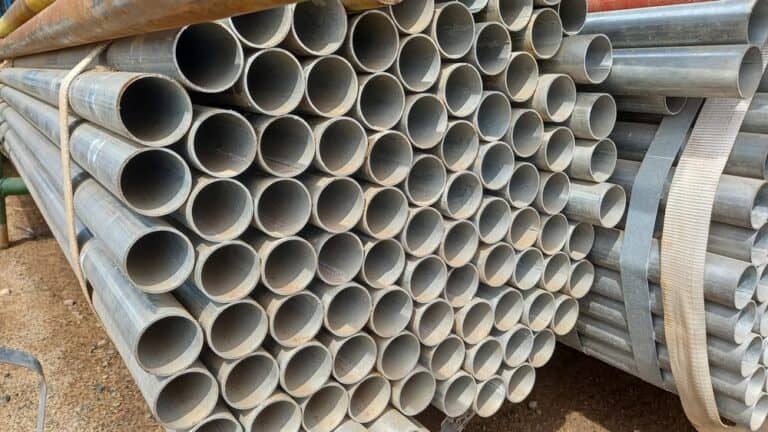
A deceleration in the reduction of steel-based scaffolding product prices is on the horizon, according to a detailed market report by Tube Industries, a leading scaffold tube supplier in the UK.
According to the report, the exchange rate between the British Sterling and the Chinese Renminbi has been a pivotal driver of recent price trends.
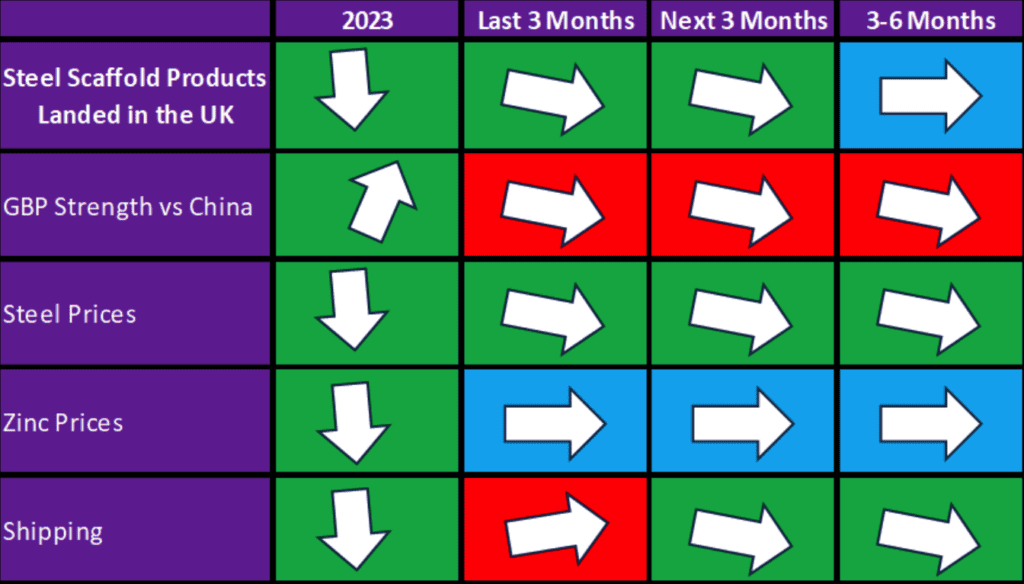
Over the past year, the Renminbi experienced a 12% decline against Sterling, reaching its lowest ebb in decades by mid-July. This fluctuation, combined with the steel and zinc prices reverting to their post-pandemic figures, explains the product price reduction observed through 2023.
The fate of product prices in the immediate future seems intrinsically tied to Sterling’s performance. This week is especially pivotal with the impending release of UK inflation numbers and the latest interest rate decisions, which could further influence prices.

 While Tube Industries has provided initial observations indicating stable port fees and distribution costs through 2023, they’ve hinted at more in-depth research in this domain for their forthcoming reports.
Chinese Steel Market Insights
Over in China, 2023 saw a marked decline in steel prices, ranging between a 15-20% dip from their pandemic peaks. Although they haven’t quite reached their pre-pandemic positions, market predictions suggest a stability phase over the forthcoming 15 months. Zinc, another key player in the pricing game due to its primary role in hot-dip galvanising (a process crucial for scaffolding tubes), has also returned to its pre-pandemic valuation following a 25% decline within this calendar year. On the shipping front, even with an 8.8% fall in Chinese exports in August, global container prices appear to be returning to pre-pandemic norms. An attempt by shipping companies to raise their rates by 20-25% in August 2023 was quickly neutralised by a market downturn, with prices resuming their earlier levels. While Tube Industries has provided initial observations indicating stable port fees and distribution costs through 2023, they’ve hinted at more in-depth research in this domain for their forthcoming reports.
 Lyndon SGB Spearheads Historic Renovation at Rothesay Pavilion
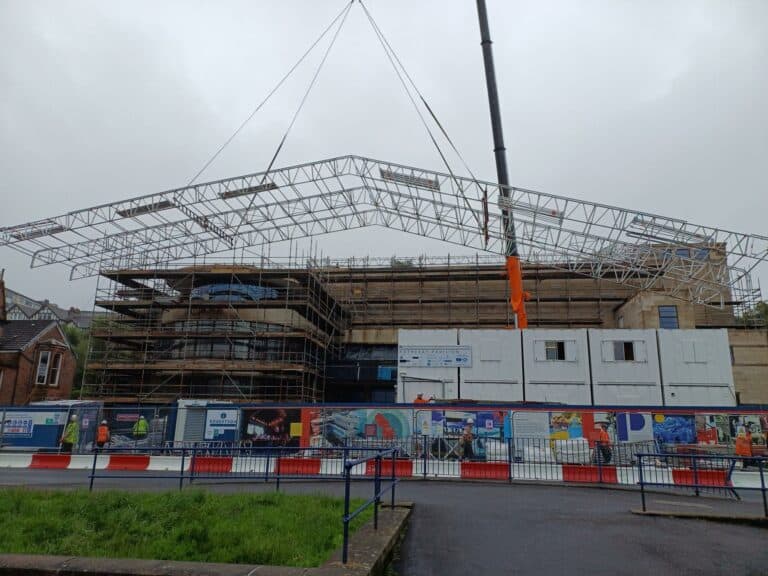
The iconic Category A Listed Rothesay Pavilion, a renowned architectural gem on the Isle of Bute, is undergoing a significant transformation.
The Pavilion, constructed in 1938 and designed by the famed architect James Andrew Carrick of J&R Carrick of Ayr, is receiving state-of-the-art scaffolding, temporary roofing, and hybrid access solutions.
Robertson Central West Limited, the principal contractor, enlisted the expertise of scaffolding giants Lyndon SGB for this monumental task.
The firm is providing temporary works access, scaffolding, and weather protection. Work began in July 2023 and is projected to be completed by December 2024.
Cuplok system scaffold and UniRoof temporary roofing system are the cornerstones of this restoration. The central roof’s expansive design spans an impressive c29.4m. Adding to this architectural marvel are two additional temporary roofs, flanking the main one.
This renovation isn’t merely about enhancing the Pavilion’s aesthetics or utility; it’s an engineering challenge. Due to the Pavilion’s age and design, it’s already at its threshold for load-bearing.
Lyndon SGB’s design and engineering teams worked diligently in-house to ensure that the scaffold and roofing structures would not compromise the building’s structural integrity. This required multiple design iterations as the project evolved.
Six scaffolding operatives have constructed the main access, with a larger team of ten handling the roofing sections. Their combined expertise ensures that the Pavilion remains a beacon of architectural beauty while embracing modern-day enhancements.
Lyndon SGB’s early involvement has proven invaluable. Their track record of managing complex projects, especially those of historical significance, is underscored by the current on-time and on-budget progression of the Rothesay Pavilion Hybrid Access Project.
The Rothesay Pavilion, looking out over the picturesque Firth of Clyde, has always been a sight to behold. With this latest renovation, it promises to be an emblem of how historical beauty can seamlessly merge with modern engineering.
Oil Refinery Workers Mull Strike Over Pay
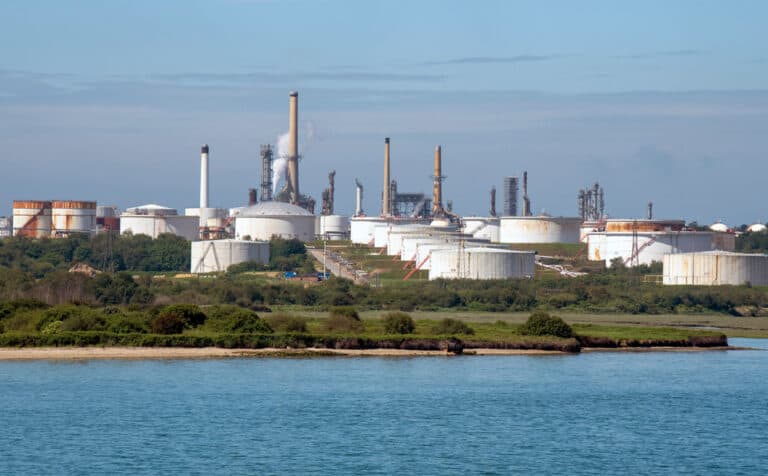
Over 1,000 engineering construction workers stationed at major oil refineries such as Fawley, Stanlow, Grangemouth, and Pembroke are gearing up for potential strike action over pay disputes. Unite, the UK’s leading union, announced today.
The workers, which include scaffolders, are crucial contributors to the oil refineries, as they operate under the National Agreement for the Engineering Construction Industry (NAECI) and are responsible for critical repair and maintenance tasks. Any strike action could result in significant disruption at these refineries.
Many of these workers are aggrieved over what they perceive as a consistent erosion of their pay’s value, which has been evident since the outbreak of the pandemic.
They accepted a pay freeze during the height of the COVID crisis despite the pivotal role they played throughout. However, they claim the subsequent two-year pay deal of 2.5% for both 2022 and 2023 didn’t do justice, especially in light of soaring inflation and the rising cost of living.
While the Engineering Construction Industry Association (ECIA) was initially resistant to reopening wage talks in 2022, they ultimately assented to a non-consolidated supplement in February 2023, set to expire in December.
The union has emphasised the stark contrast between the workers’ dwindling spending power and the flourishing profits seen in the oil industry, which have persisted despite inflationary pressures.
Highlighting the gravity of the situation, Unite general secretary Sharon Graham remarked, “The current offer doesn’t even come close to being adequate, especially when the oil industry is awash with profits. The deteriorating value of workers’ wages over the years is unacceptable.”
She added, “Furthermore, these offers make workers susceptible to the vagaries of the economy and inflation, especially after they’ve already grappled with unpredictable market forces. Unite remains unwavering in its support for our NAECI members. The onus is on the ECIA to propose a fair deal.”
The strike action ballot is slated to wrap up in mid-October, with strike actions potentially kicking off later in the month.
Jason Poulter, Unite national officer, conveyed the palpable resentment among members, saying, “The brewing anger among our members has reached a boiling point, pushing us to consider strike action. The ECIA must recognise the gravity of the situation. If they continue to neglect these grievances, retaining and recruiting talent for NAECI roles will inevitably become even more challenging.”
Poulter further warned, “The onus of any disruption stemming from potential strikes rests squarely on the ECIA’s shoulders. The path forward is clear – present a substantially improved offer, or risk escalating this conflict into full-blown industrial action.”
How System Scaffolding can Speed Up Recladding projects
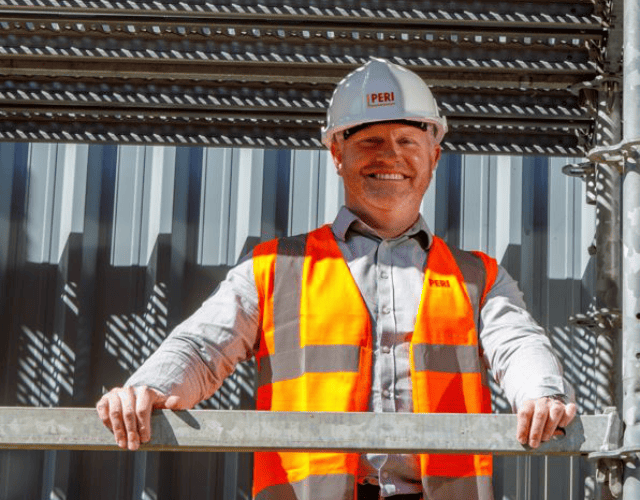
Charles Stratford, Business Development Manager for PERI UP Scaffolding, highlights the importance of utilising system scaffolding to speed up remedial work on high-rises and reduce the disruption caused to residents occupying these buildings.
 With a significant number of high-rise buildings yet to be fully remediated and further potentially unsafe buildings to be assessed, it’s crucial that we provide the right temporary access systems on these projects to shorten programmes and minimise disruption in the future.
 Although protective sheeting for scaffolding provides a safer working environment for contractors, it raises the issue of an entire building being covered for a long period of time, often obstructing windows in the process. While this has been the norm for recladding projects, residents are continually disrupted by poor exposure to natural light in their living environment.
Research shows that poor exposure to natural light for prolonged periods can have an impact on mental health and wellbeing. According to UCLA Health (2022), being in an environment with low levels of natural light can result in ‘poor sleep, low mood and depression’.
In the worst cases, cladding remediation on a high rise building above 18 metres high can take up to two years. Programme extensions and delays like this can be caused by the complexity of the project, labour shortages, means of access and the cost and availability of materials required.
Timber boards, often used for traditional tube and fit scaffolding, is one material which has been affected by economic changes in recent years, with high demand and fewer imports causing price increases and project delays.
In addition to price volatility and supply shortages, the use of timber for façade applications such as recladding seems illogical as it’s a combustible material. Surely using non-combustible materials around buildings that pose a fire risk should be a priority?
We know scaffolding plays a vital role in critical remediation work. With the scope of this work widening as more buildings are assessed, it’s important to work with smarter systems to minimise the cost and duration of remedial works, while improving the safety and wellbeing of all involved.
For example, a conventional scaffolding structure is typically erected to all façade elevations of a building first to enable cladding removal. With modular system scaffolding and planning, flexible build sequences give contractors the option of erecting fewer elevations simultaneously.
This means cladding work can be carried out in phases, so the entire building does not need to be wrapped for the duration of the project, enabling contractors to challenge standard business-as-usual approaches.
The speed of installation and dismantling can be explained by looking at system scaffolding components in more detail.
For instance, PERI UP, like most other system scaffolds, has built-in steel locking decks instead of traditional timber boards which lock into position instantly. No additional components are required for installation. Other safety components, like the advanced guardrail on the PERI UP Easy façade system, enables the next level to be constructed from the working platform below. With integrated safety features like this, we can prevent the need to implement proprietary equipment such as Scaff Steps, resulting in minimal effort and time required to erect the next scaffolding lift.
The common perception is that system scaffolding lacks the flexibility that conventional scaffolding offers. However, system scaffolds have evolved significantly over the years, with standard solutions being equally capable of accommodating complex geometries such as stepped façade elevations and curved building façades.
When comparing the speed of system scaffolds to conventional scaffolding, it’s also worth considering the weight of the material and the number of components being handled manually. Typically, system scaffolding components are lighter. With fewer and lighter components, coupled with advanced build technologies such as built-in advanced guardrail systems (AGS), there is potential for scaffolders to erect more square metres a day.
This was the case on The Link – a residential high-rise building in London requiring façade access for remedial works. It was predicted that access installation would take 16 weeks using traditional scaffolding methods. With the PERI UP Easy system, it was completed in just four weeks, reducing installation time by 75%.
It is also important to note that system scaffolding is made of non-combustible components like steel – a safer alternative to using timber on recladding projects.
Although protective sheeting for scaffolding provides a safer working environment for contractors, it raises the issue of an entire building being covered for a long period of time, often obstructing windows in the process. While this has been the norm for recladding projects, residents are continually disrupted by poor exposure to natural light in their living environment.
Research shows that poor exposure to natural light for prolonged periods can have an impact on mental health and wellbeing. According to UCLA Health (2022), being in an environment with low levels of natural light can result in ‘poor sleep, low mood and depression’.
In the worst cases, cladding remediation on a high rise building above 18 metres high can take up to two years. Programme extensions and delays like this can be caused by the complexity of the project, labour shortages, means of access and the cost and availability of materials required.
Timber boards, often used for traditional tube and fit scaffolding, is one material which has been affected by economic changes in recent years, with high demand and fewer imports causing price increases and project delays.
In addition to price volatility and supply shortages, the use of timber for façade applications such as recladding seems illogical as it’s a combustible material. Surely using non-combustible materials around buildings that pose a fire risk should be a priority?
We know scaffolding plays a vital role in critical remediation work. With the scope of this work widening as more buildings are assessed, it’s important to work with smarter systems to minimise the cost and duration of remedial works, while improving the safety and wellbeing of all involved.
For example, a conventional scaffolding structure is typically erected to all façade elevations of a building first to enable cladding removal. With modular system scaffolding and planning, flexible build sequences give contractors the option of erecting fewer elevations simultaneously.
This means cladding work can be carried out in phases, so the entire building does not need to be wrapped for the duration of the project, enabling contractors to challenge standard business-as-usual approaches.
The speed of installation and dismantling can be explained by looking at system scaffolding components in more detail.
For instance, PERI UP, like most other system scaffolds, has built-in steel locking decks instead of traditional timber boards which lock into position instantly. No additional components are required for installation. Other safety components, like the advanced guardrail on the PERI UP Easy façade system, enables the next level to be constructed from the working platform below. With integrated safety features like this, we can prevent the need to implement proprietary equipment such as Scaff Steps, resulting in minimal effort and time required to erect the next scaffolding lift.
The common perception is that system scaffolding lacks the flexibility that conventional scaffolding offers. However, system scaffolds have evolved significantly over the years, with standard solutions being equally capable of accommodating complex geometries such as stepped façade elevations and curved building façades.
When comparing the speed of system scaffolds to conventional scaffolding, it’s also worth considering the weight of the material and the number of components being handled manually. Typically, system scaffolding components are lighter. With fewer and lighter components, coupled with advanced build technologies such as built-in advanced guardrail systems (AGS), there is potential for scaffolders to erect more square metres a day.
This was the case on The Link – a residential high-rise building in London requiring façade access for remedial works. It was predicted that access installation would take 16 weeks using traditional scaffolding methods. With the PERI UP Easy system, it was completed in just four weeks, reducing installation time by 75%.
It is also important to note that system scaffolding is made of non-combustible components like steel – a safer alternative to using timber on recladding projects.
Why should we focus on recladding?
Following the Grenfell Tower tragedy in 2017, the UK Government addressed the fire safety risks caused by unsafe cladding on high-rise buildings. It has since introduced the most significant building safety reforms in 40 years. The Building Safety Act, which was granted Royal Assent in April 2022, has been a catalyst for major changes in building construction and remedial works. Since the surge of recladding work in the UK, temporary access has been in high demand. Growing pressure to hand these projects over quickly means the speed of installation and removal of temporary access is important to all contractors involved. The speed at which these projects are completed is equally important to the residents occupying the buildings, as their lives are often disrupted due to the work being carried out. With a significant number of high-rise buildings yet to be fully remediated and further potentially unsafe buildings to be assessed, it’s crucial that we provide the right temporary access systems on these projects to shorten programmes and minimise disruption in the future.
Scaffolding Vs Mast climbers
To replace cladding, contractors need access to the façade. In most cases, this requires working at height and at multiple levels simultaneously, making scaffolding the ideal solution. This type of access system enables different trades to carry out tasks at the same time, speeding up the entire process. Additionally, scaffolds are less likely to be affected by high winds as they are not typically weather-dependent. Mast climbers on the other hand offer less protection from the elements, which could mean work is delayed until weather conditions are more favourable. The longer a project is delayed, the costlier it becomes. Another cost to factor in is the power source required for mast climbers to work, which varies depending on the size of the system. Although motorised systems like this have their advantages and can be a good solution for modern facades, they are not always practical when removing EPS cladding systems found on older buildings. This is because EPS cladding comprises lightweight polystyrene insulation which breaks apart during the removal process and is difficult to contain in windy conditions if the access system is not enclosed properly. This type of cladding is thought to be just as prevalent in the UK as the ACM cladding system used on Grenfell Tower. In many cases, mast climbers are limited at lower heights, which suggests that they work best when used in conjunction with scaffolding, as the latter can provide access around the base and the lower floors, offering protection to the public while works continue above.Why the right type of scaffolding access is important
Cladding removal poses a risk of falling objects and debris if the temporary access system is not contained properly. To prevent this risk when using scaffolding, protective sheeting such as Monarflex can be wrapped around the structure.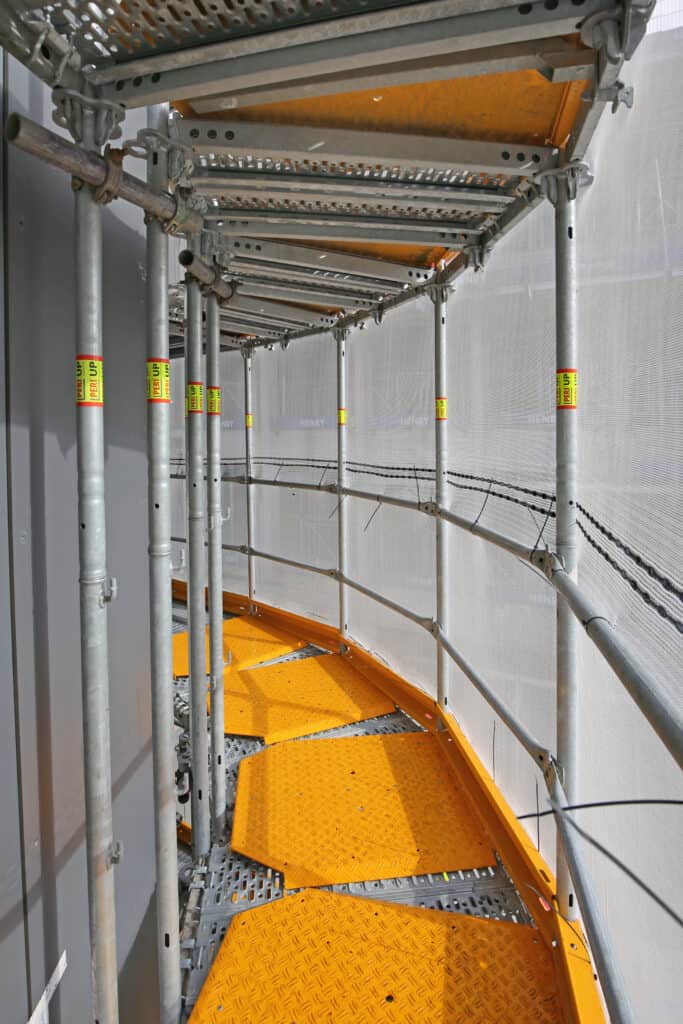 Although protective sheeting for scaffolding provides a safer working environment for contractors, it raises the issue of an entire building being covered for a long period of time, often obstructing windows in the process. While this has been the norm for recladding projects, residents are continually disrupted by poor exposure to natural light in their living environment.
Research shows that poor exposure to natural light for prolonged periods can have an impact on mental health and wellbeing. According to UCLA Health (2022), being in an environment with low levels of natural light can result in ‘poor sleep, low mood and depression’.
In the worst cases, cladding remediation on a high rise building above 18 metres high can take up to two years. Programme extensions and delays like this can be caused by the complexity of the project, labour shortages, means of access and the cost and availability of materials required.
Timber boards, often used for traditional tube and fit scaffolding, is one material which has been affected by economic changes in recent years, with high demand and fewer imports causing price increases and project delays.
In addition to price volatility and supply shortages, the use of timber for façade applications such as recladding seems illogical as it’s a combustible material. Surely using non-combustible materials around buildings that pose a fire risk should be a priority?
We know scaffolding plays a vital role in critical remediation work. With the scope of this work widening as more buildings are assessed, it’s important to work with smarter systems to minimise the cost and duration of remedial works, while improving the safety and wellbeing of all involved.
Although protective sheeting for scaffolding provides a safer working environment for contractors, it raises the issue of an entire building being covered for a long period of time, often obstructing windows in the process. While this has been the norm for recladding projects, residents are continually disrupted by poor exposure to natural light in their living environment.
Research shows that poor exposure to natural light for prolonged periods can have an impact on mental health and wellbeing. According to UCLA Health (2022), being in an environment with low levels of natural light can result in ‘poor sleep, low mood and depression’.
In the worst cases, cladding remediation on a high rise building above 18 metres high can take up to two years. Programme extensions and delays like this can be caused by the complexity of the project, labour shortages, means of access and the cost and availability of materials required.
Timber boards, often used for traditional tube and fit scaffolding, is one material which has been affected by economic changes in recent years, with high demand and fewer imports causing price increases and project delays.
In addition to price volatility and supply shortages, the use of timber for façade applications such as recladding seems illogical as it’s a combustible material. Surely using non-combustible materials around buildings that pose a fire risk should be a priority?
We know scaffolding plays a vital role in critical remediation work. With the scope of this work widening as more buildings are assessed, it’s important to work with smarter systems to minimise the cost and duration of remedial works, while improving the safety and wellbeing of all involved.
Improving the outlook – a ‘system’atic approach
Innovative and modular scaffold systems offer many benefits, such as shorter programme times, reduced preliminary costs, flexible arrangements, minimal components, and a reduced risk of falling objects, slips, trips and falls. System scaffolding encourages best working practices such as early engagement and planning to ensure build sequences are economical and practical. From basing out correctly to minimising the impact on residents at each lift, everything is considered prior to the build. Proper planning thus ensures faster build times and promotes faster removal of scaffolding, presenting a multitude of options to suit the main contractor’s programme.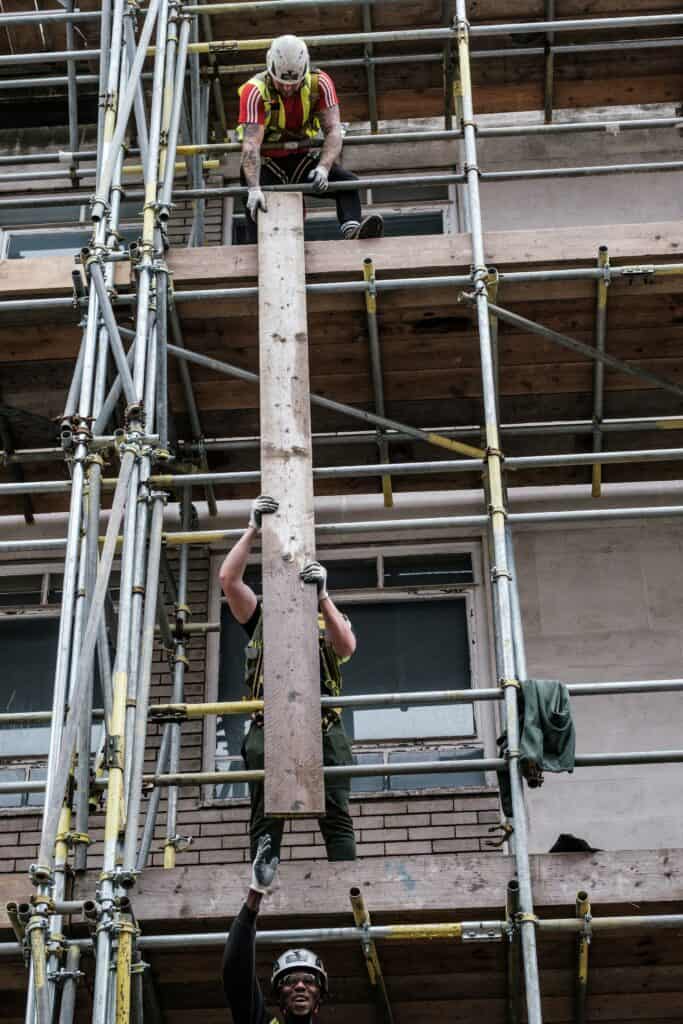 For example, a conventional scaffolding structure is typically erected to all façade elevations of a building first to enable cladding removal. With modular system scaffolding and planning, flexible build sequences give contractors the option of erecting fewer elevations simultaneously.
This means cladding work can be carried out in phases, so the entire building does not need to be wrapped for the duration of the project, enabling contractors to challenge standard business-as-usual approaches.
The speed of installation and dismantling can be explained by looking at system scaffolding components in more detail.
For instance, PERI UP, like most other system scaffolds, has built-in steel locking decks instead of traditional timber boards which lock into position instantly. No additional components are required for installation. Other safety components, like the advanced guardrail on the PERI UP Easy façade system, enables the next level to be constructed from the working platform below. With integrated safety features like this, we can prevent the need to implement proprietary equipment such as Scaff Steps, resulting in minimal effort and time required to erect the next scaffolding lift.
The common perception is that system scaffolding lacks the flexibility that conventional scaffolding offers. However, system scaffolds have evolved significantly over the years, with standard solutions being equally capable of accommodating complex geometries such as stepped façade elevations and curved building façades.
When comparing the speed of system scaffolds to conventional scaffolding, it’s also worth considering the weight of the material and the number of components being handled manually. Typically, system scaffolding components are lighter. With fewer and lighter components, coupled with advanced build technologies such as built-in advanced guardrail systems (AGS), there is potential for scaffolders to erect more square metres a day.
This was the case on The Link – a residential high-rise building in London requiring façade access for remedial works. It was predicted that access installation would take 16 weeks using traditional scaffolding methods. With the PERI UP Easy system, it was completed in just four weeks, reducing installation time by 75%.
It is also important to note that system scaffolding is made of non-combustible components like steel – a safer alternative to using timber on recladding projects.
For example, a conventional scaffolding structure is typically erected to all façade elevations of a building first to enable cladding removal. With modular system scaffolding and planning, flexible build sequences give contractors the option of erecting fewer elevations simultaneously.
This means cladding work can be carried out in phases, so the entire building does not need to be wrapped for the duration of the project, enabling contractors to challenge standard business-as-usual approaches.
The speed of installation and dismantling can be explained by looking at system scaffolding components in more detail.
For instance, PERI UP, like most other system scaffolds, has built-in steel locking decks instead of traditional timber boards which lock into position instantly. No additional components are required for installation. Other safety components, like the advanced guardrail on the PERI UP Easy façade system, enables the next level to be constructed from the working platform below. With integrated safety features like this, we can prevent the need to implement proprietary equipment such as Scaff Steps, resulting in minimal effort and time required to erect the next scaffolding lift.
The common perception is that system scaffolding lacks the flexibility that conventional scaffolding offers. However, system scaffolds have evolved significantly over the years, with standard solutions being equally capable of accommodating complex geometries such as stepped façade elevations and curved building façades.
When comparing the speed of system scaffolds to conventional scaffolding, it’s also worth considering the weight of the material and the number of components being handled manually. Typically, system scaffolding components are lighter. With fewer and lighter components, coupled with advanced build technologies such as built-in advanced guardrail systems (AGS), there is potential for scaffolders to erect more square metres a day.
This was the case on The Link – a residential high-rise building in London requiring façade access for remedial works. It was predicted that access installation would take 16 weeks using traditional scaffolding methods. With the PERI UP Easy system, it was completed in just four weeks, reducing installation time by 75%.
It is also important to note that system scaffolding is made of non-combustible components like steel – a safer alternative to using timber on recladding projects.
Investing in system scaffolding
System scaffolding can support the long-term projection for cladding remediation. With the right planning and training, scaffolding and cladding contractors can save time, labour, and prelim costs, while reducing the impact on residents. After the Grenfell tragedy and the anxiety surrounding the recladding industry, the importance of making the process as smooth and fast as possible is greater than ever. If you have any questions on this topic or would like to use system scaffolding for your project, you can contact Charles Stratford at [email protected] or [email protected].World’s First ScaffFloat Bridge Aids in Hams Hall Demolition
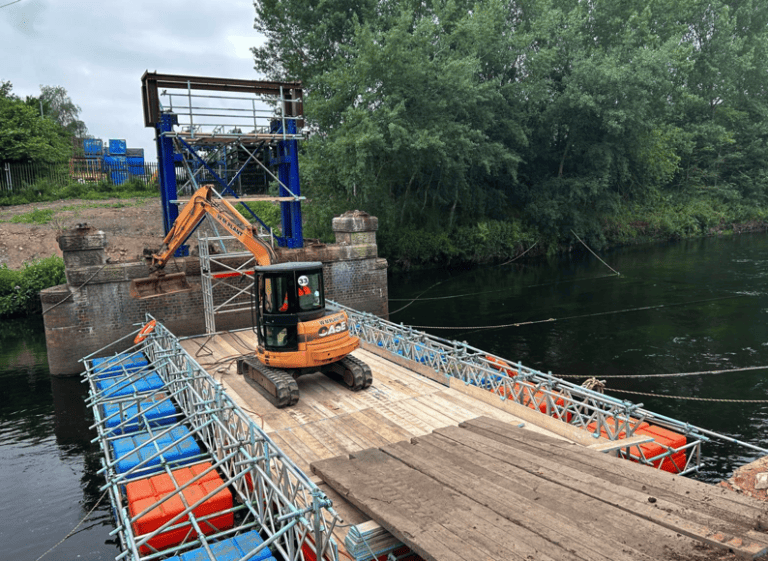
In an industry-first, specialist contractors have utilised a floating bridge crafted entirely from standard scaffolding to complete the demolition of the Hams Hall Bridge over the River Tame in Birmingham.
Following a multiphase demolition project on the disused railway bridge by AR Demolition, the final phase required the brick pier in the middle of the river to be broken out and removed.
To accomplish this, AR Demolition teamed up with the experts at ScaffFloat, a firm already reputed for guaranteeing a safe floating pathway after being involved during the primary bridge demolition phase.
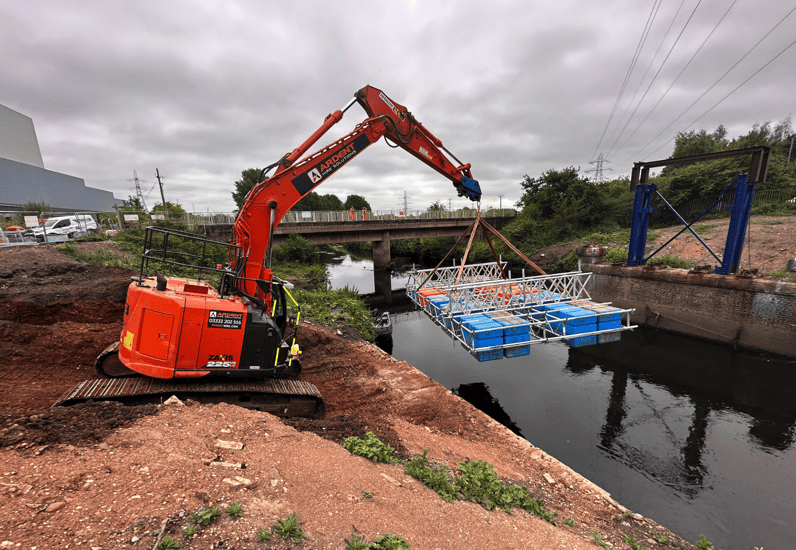
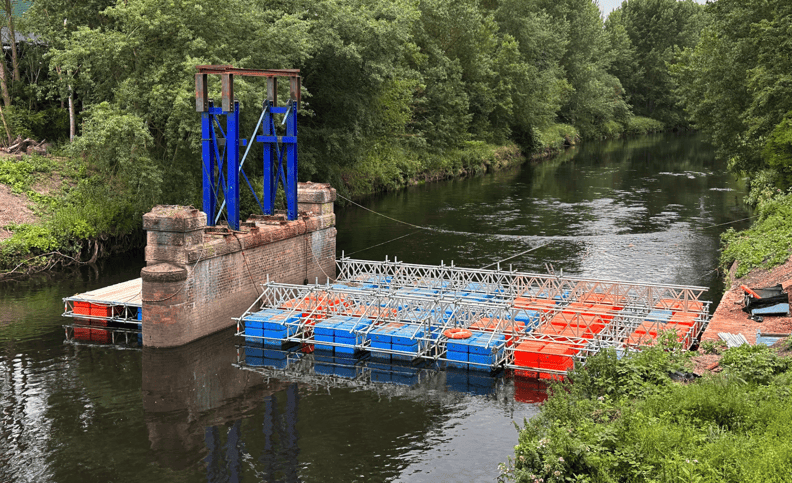
The brief was to provide floating access for a 9t long reach machine to track out from the bank and remove the pier.
The phase presented a myriad of challenges, including restricted river access and low-hanging power cables that ruled out the use of cranes for pontoon section placements. Undeterred, ScaffFloat brainstormed a revolutionary concept, which was later honed into a concrete design by engineers at Richter.
Paul Boddy of Richter elaborated on the collaboration’s depth: “We’ve worked with ScaffFloat over the last three years assisting with schemes for access, moving and storing materials, floating welfare facilities and lifting operations. With this buildup of knowledge and expertise, we had the confidence to help Toby with this next logical way of using ScaffFloat for plant operations.”
The design underwent a meticulous Cat 2 check to validate its structure, buoyancy, stability, and minimum freeboard. The resultant modular pontoon boasted three distinct modules, each 8m in length and 4m in breadth, meticulously crafted using 450mm lattice beams, 13ft scaffold tubes, and 0.5m^3 ScaffFloats. Their relatively lightweight nature at 1.2 tons per module permitted an effortless launch using a 20t swing shovel. Once launched, the modules combined to form the main body of the floating bridge, further fortified with a layer of scaffold boards.

 The Contracts Director of Midlands Scaffolding, Ben Ekins said, “We have been providing scaffold access on the Hams Hall demolition project from the start. We are always trying to come up with innovative solutions to our customers’ problems, and it was great to be able to help solve the last piece in the puzzle by building a floating bridge from scaffold for the pier removal.”
Nathan Taylor, the vigilant Project Manager at AR Demolition, commended the spirit of innovation that permeated the Hams Hall project, saying, “Innovating to provide the right solution is what we do, and working with ScaffFloat at Hams Hall has ensured we delivered a workable solution in challenging conditions.”
This landmark achievement not only sets a high standard for future demolition projects but also highlights the boundless possibilities of scaffolding innovations in modern construction.
The Contracts Director of Midlands Scaffolding, Ben Ekins said, “We have been providing scaffold access on the Hams Hall demolition project from the start. We are always trying to come up with innovative solutions to our customers’ problems, and it was great to be able to help solve the last piece in the puzzle by building a floating bridge from scaffold for the pier removal.”
Nathan Taylor, the vigilant Project Manager at AR Demolition, commended the spirit of innovation that permeated the Hams Hall project, saying, “Innovating to provide the right solution is what we do, and working with ScaffFloat at Hams Hall has ensured we delivered a workable solution in challenging conditions.”
This landmark achievement not only sets a high standard for future demolition projects but also highlights the boundless possibilities of scaffolding innovations in modern construction.
 The Contracts Director of Midlands Scaffolding, Ben Ekins said, “We have been providing scaffold access on the Hams Hall demolition project from the start. We are always trying to come up with innovative solutions to our customers’ problems, and it was great to be able to help solve the last piece in the puzzle by building a floating bridge from scaffold for the pier removal.”
Nathan Taylor, the vigilant Project Manager at AR Demolition, commended the spirit of innovation that permeated the Hams Hall project, saying, “Innovating to provide the right solution is what we do, and working with ScaffFloat at Hams Hall has ensured we delivered a workable solution in challenging conditions.”
This landmark achievement not only sets a high standard for future demolition projects but also highlights the boundless possibilities of scaffolding innovations in modern construction.
The Contracts Director of Midlands Scaffolding, Ben Ekins said, “We have been providing scaffold access on the Hams Hall demolition project from the start. We are always trying to come up with innovative solutions to our customers’ problems, and it was great to be able to help solve the last piece in the puzzle by building a floating bridge from scaffold for the pier removal.”
Nathan Taylor, the vigilant Project Manager at AR Demolition, commended the spirit of innovation that permeated the Hams Hall project, saying, “Innovating to provide the right solution is what we do, and working with ScaffFloat at Hams Hall has ensured we delivered a workable solution in challenging conditions.”
This landmark achievement not only sets a high standard for future demolition projects but also highlights the boundless possibilities of scaffolding innovations in modern construction. GKR Scaffolding Crowned Access & Scaffolding Specialist of the Year

In a night of celebration and recognition for specialists across various industries, GKR Scaffolding clinched the prestigious title of Access & Scaffolding Specialist of the Year at the CN Specialist Awards held at the Hilton Metropole.
Last night’s gala ceremony saw a gathering of approximately 600 attendees; all gathered to honour the best in the specialist sector across 21 distinct categories. The event was graced with an additional touch of excitement as former England rugby international Ugo Monye hosted it.
GKR Scaffolding, already known as a multi-award-winning scaffolding contractor, added another feather to its cap with this esteemed accolade. This victory further establishes the company’s prominence and commitment to excellence in the scaffolding sector.
The CN judges were particularly impressed with GKR’s sustainability credentials, an essential criterion in today’s world, where businesses are increasingly judged by their impact on the environment.
The company was praised for not only adhering to sustainability guidelines but also setting a commendable standard for others in the industry.
Further adding to GKR’s merit, the judges recognised the company’s admirable recruitment strategies and its unwavering commitment to nurturing talent through their dedicated academy.
Their initiatives, aimed at both training newcomers and enhancing the skills of current employees, demonstrate a forward-thinking approach to business and a deep commitment to the welfare of their staff.
 In a post on Linkedin, GKR Scaffolding expressed gratitude upon receiving the award, “We were recognised for our sustainability credentials, our recruitment initiatives and our recognition of employee wellbeing and training.
We were also highly commended for our efforts for the Net Zero Trailblazer award, recognising our sustainability efforts and our hard work to become a Net Zero Carbon Business.
We want to thank our amazing team at GKR for all their hard work and commitment.”
The CN Specialist Awards, held annually, is a hallmark event in the specialist sector, shining a spotlight on the achievements of companies that continually push the envelope in terms of quality, innovation, and commitment to their respective fields.
With this latest win, GKR Scaffolding continues its trajectory of success, solidifying its place as a leader in the scaffolding industry.
In a post on Linkedin, GKR Scaffolding expressed gratitude upon receiving the award, “We were recognised for our sustainability credentials, our recruitment initiatives and our recognition of employee wellbeing and training.
We were also highly commended for our efforts for the Net Zero Trailblazer award, recognising our sustainability efforts and our hard work to become a Net Zero Carbon Business.
We want to thank our amazing team at GKR for all their hard work and commitment.”
The CN Specialist Awards, held annually, is a hallmark event in the specialist sector, shining a spotlight on the achievements of companies that continually push the envelope in terms of quality, innovation, and commitment to their respective fields.
With this latest win, GKR Scaffolding continues its trajectory of success, solidifying its place as a leader in the scaffolding industry.
 In a post on Linkedin, GKR Scaffolding expressed gratitude upon receiving the award, “We were recognised for our sustainability credentials, our recruitment initiatives and our recognition of employee wellbeing and training.
We were also highly commended for our efforts for the Net Zero Trailblazer award, recognising our sustainability efforts and our hard work to become a Net Zero Carbon Business.
We want to thank our amazing team at GKR for all their hard work and commitment.”
The CN Specialist Awards, held annually, is a hallmark event in the specialist sector, shining a spotlight on the achievements of companies that continually push the envelope in terms of quality, innovation, and commitment to their respective fields.
With this latest win, GKR Scaffolding continues its trajectory of success, solidifying its place as a leader in the scaffolding industry.
In a post on Linkedin, GKR Scaffolding expressed gratitude upon receiving the award, “We were recognised for our sustainability credentials, our recruitment initiatives and our recognition of employee wellbeing and training.
We were also highly commended for our efforts for the Net Zero Trailblazer award, recognising our sustainability efforts and our hard work to become a Net Zero Carbon Business.
We want to thank our amazing team at GKR for all their hard work and commitment.”
The CN Specialist Awards, held annually, is a hallmark event in the specialist sector, shining a spotlight on the achievements of companies that continually push the envelope in terms of quality, innovation, and commitment to their respective fields.
With this latest win, GKR Scaffolding continues its trajectory of success, solidifying its place as a leader in the scaffolding industry. Bilfinger Expands European Footprint with Fluor’s Stork Acquisition
In a strategic move to bolster its footprint in the industrial services sector, Bilfinger has inked a deal to acquire key units of the Stork group, an affiliate of the US-based Fluor Corporation.
The deal, which encompasses major segments in the Netherlands and Belgium, also includes select entities in Germany and one in the United States.
Upon completion, the transaction will incorporate over 2,700 seasoned professionals to Bilfinger’s workforce and is expected to boost its revenue by an impressive 500 million euros.
The finalised agreement was confirmed yesterday evening, with the acquisition scheduled to culminate in the initial half of 2024.
This latest purchase aligns seamlessly with Bilfinger’s prior announcements to amplify its core business, particularly in areas where the group has already established a significant presence. The Netherlands and Belgium, regions known for their high performance, will witness a fortified Bilfinger market presence and an expanded array of services post-acquisition.
The assimilation of Stork will catapult the total count of Bilfinger’s skilled professionals in Belgium and the Netherlands to over 4,600. Stork,
with its robust technical prowess and expansive geographical reach, will dovetail with Bilfinger’s competencies, setting the stage for an enhanced service suite geared towards bolstering efficiency and sustainability for clientele in the process industry. This move will also broaden Bilfinger’s customer base.
Bilfinger Group’s CEO, Thomas Schulz, voiced his enthusiasm, stating, “With this acquisition, we are methodically executing our strategy and upholding our commitments. We eagerly anticipate the inclusion of our proficient future colleagues from Fluor’s industrial service business, Stork.” He further underscored the strategic alignment of the deal, noting its potential to augment Bilfinger’s European market stance, delivering substantial value for stakeholders and reinforcing the group’s trajectory towards profitable growth.
However, the completion of the transaction remains contingent upon gaining the nod from competition authorities and obtaining counsel from the relevant works councils.
Upon obtaining these approvals, Bilfinger has charted plans for a full-fledged integration of the new business into its fold by mid-2025. The storied European legacies of both companies, coupled with their impeccable market standings and stringent health, safety, environment, and quality (HSEQ) standards, are anticipated to facilitate a seamless transition.
Furthermore, Bilfinger has earmarked funds to bolster the combined workforce through robust training and educational initiatives.