How To Finance An Electric Van As A Sole Trader

With the sale of new petrol and diesel vehicles to be banned in 2030, larger companies like Royal Mail have taken steps to transition towards a fully electric fleet. With the cost of living crisis at the forefront of everyone’s minds, it presents the question of whether tradespeople and small businesses will also be able to make this switch.
The government has a number of plug-in grants available for vehicle dealerships and manufacturers, which allows them to offer discounted prices on new low-emission vehicles. This includes small vans under 2,500kg and larger vans up to 4,250kg. Businesses can claim a total of 1000 grants and the limit resets each year. The grant will pay for 35% of the price of smaller vans up to £2,500 and larger vans up to £5000.
Senior Editor, Dan Powell of used-car dealership AutoVillage gives his advice on the four main options available to those seeking to purchase an electric vehicle: Leasing, Contract Hire, Personal Contract Purchase and Hire Purchase. Below, he explains each option and the associated pros and cons.
Business partners fined after worker falls from unsafe scaffold

Two construction business partners have been fined after a sub-contractor suffered multiple fractures when he fell from an unsafe scaffold.
In December 2018, sub-contractors were installing a roof light on a boot room extension as part of the refurbishment of a house on St James Road, Tunbridge Wells, Kent.
They were not provided with a safe route to the work area from the scaffolding, as there was a board spanning a large gap and step up from the first lift of a scaffold on to the boot room roof. The board was not secured in place.
An investigation by the HSE found the scaffold had not been inspected by a competent person every seven days and there was insufficient edge protection around the work area to prevent people falling a distance liable to cause serious injury.
Two of the partners of Orchard Construction in Kent pleaded guilty to breaching the Health and Safety at Work Etc Act 1974.
At Maidstone Magistrates’ Court, Martin Hayes was fined £2,066 and ordered to pay costs of £7,500. Timothy Hayes was fined £2,800 and similarly ordered to pay costs of £7,500.
After the hearing, HSE inspector Nicola Wellard commented: “This incident could have been so easily avoided by simply ensuring that the scaffold was inspected by a competent person every seven days and any noted deficiencies rectified.
“Companies should be aware that HSE will not hesitate to take appropriate enforcement action against those who fall below the required standards.”
Centre Square Helps Businesses Scale New Heights

JMAC Scaffolding says working on a new landmark development will both build its reputation and provide a foundation for its apprentices’ careers.
The Stockton-based firm is one of a dozen Northeast businesses involved in the construction of the four-storey 6 Centre Square in the heart of Middlesbrough.
When it is finished early next year it will become the regional HQ of insurance giant AXA UK and 450 of its staff will move there.
They will join around 1,000 office workers who are already based in Centre Square’s two completed buildings.
Work on the new multi-million-pound building began in January. The main contractor is Bowmer+Kirkland and the combined value of contracts awarded to sub-contractors, such as JMAC, is nearly £5m.
JMAC Construction Director Aaron Kitson said securing the Centre Square contract represented a major breakthrough for his company: “We’d wanted to work with Bowmer+Kirkland for a long time and we were also determined to be involved in one of the biggest projects in Middlesbrough, which is right on our doorstep.”
JMAC was founded by James McCarthy Senior in 1981. His grandson Luis is the current managing director for JMAC Group, which includes JMAC Scaffolding and JMAC Safety Systems. The group employs 170 people from the Teesside area, including five apprentices, and plans to recruit a further five apprentices later this year. JMAC are looking to increase the apprentice intake to 15 per year.
“Our best scaffolders are ones that we’ve homegrown. We bring them through, we train them ourselves and within five years we shouldn’t have any problems with a shortage of skilled labour,” said Mr Kitson, who joined the company as a scaffolder and rose through the ranks to become a director.
All of the apprentices start their careers with a stint at JMAC’s yard. There – as well as beginning their training – the company makes sure they demonstrate the right attitude and work ethic. “We can’t teach that,” said Mr Kitson.
“You have to enjoy what you do, otherwise it’s a long day – particularly in the winter.” With the most workplace deaths caused by falling from a height, safety training for the young scaffolders is a priority.”
The new recruits spend time with different teams of experienced scaffolders working across JMAC’s residential, industrial and commercial contracts, such as Centre Square.
Eighteen-year-old apprentice Tom Payne from Hartlepool said: “You’re learning something new every day.” Louie Peebles, also 18, who lives in Stockton, said: “It’s outdoors. It’s very physical. The people and supervision are nice and friendly. I get on with them really well and they’re willing to teach you.” Cameron Blyth, 17, from Billingham, said: “I wasn’t that keen on heights when I started, but I’m getting used to them now.”
The Centre Square development was launched six years ago by developer Ashall Projects in partnership with Middlesbrough Council.
Managing Director Mark Ashall said: “The benefits are already being felt – from the young scaffolders starting out on their careers to the firms of professional services and consultants looking forward to growing their businesses after moving into Centre Square.
“We are creating high quality and sustainable office environments which are proving highly attractive to employers who have quickly transformed Centre Square into the business hub of Teesside. They are providing well-paid jobs and that new spending power will also benefit the shops and restaurants which are just a short walk from the offices.”
Although AXA has taken much of the space in 6 Centre Square, 14,000 sq ft is still available. Details of the next phase of the development are due to be announced soon. Outline planning permission is already in place.
KAEFER bags new maintenance contracts in Northern Ireland

KAEFER UK & Ireland has secured new maintenance contracts with EP Kilroot Ltd. and EP Ballylumford Ltd. to provide both electrical and scaffolding services to their power stations in Northern Ireland.
Kilroot is a dual-fuelled power station on the east coast of Northern Ireland, and Ballylumford is the largest power station in Northern Ireland, consisting of two Combined Cycle Gas Turbines (CCGT) and two OpenCycle Gas Turbines (OCGT).
Together both power stations provide over 45% of Northern Ireland’s electricity demand.
During the two-year contracts, KAEFER UK & Ireland’s Belfast office will support both sites with electrical and Scaffolding services including access solutions, electrical installation, electrical maintenance, fault finding and engineering services to support the operation of both stations.
Richard Dee, KAEFER’s Business Development Manager for Ireland said, “These contract wins further strengthen and underpin our relationship as a key supplier and partner to EPUKI in Ireland & the UK.”
Jessica Barrass EP UK Investments Procurement Manager for Northern Ireland said “The teams at both Ballylumford and Kilroot stations are looking forward to working safely and effectively with KAEFER at our sites.”
KAEFER UK & Ireland is a leading provider of technical industrial services, part of the global KAEFER group of companies.
Have your say on Scaffolder Apprenticeships, urges trade association

Scaffolding Association is urging the industry to have its say on whether the Scaffolder Apprenticeship end-point assessment confirms that apprentices have achieved occupational competence.
The scaffolding sector’s largest trade association, the Scaffolding Association, is urging the industry to complete two short surveys giving their views on the effectiveness of the scaffolder apprenticeship.
Each survey should take no more than ten minutes to complete, and your feedback will help ensure that the apprenticeship meets the training needs of scaffolding businesses (End-Point Assessment Stage).
It will also allow the industry to comment on whether the occupation is similar or a duplicate of other apprenticeship standards (Standard Stage).
Download the EPA Stage for the Scaffolder Apprenticeship here.
Download the Standard Stage for the Scaffolder Apprenticeship here.
Your feedback will be considered as part of the assessment process and help inform the final approval decision – a process overseen by the Institute for Apprenticeships and Technical Education (IfATE).
Complete the EPA Stage Survey here.
Complete the Standard Stage Survey here.
Robert Candy, Chief Executive of the Scaffolding Association, said: “It’s vitally important that industry takes the opportunity to feed into this process which only occurs every three years and particularly the EPA Stage, given that duplication with other standards is unlikely because of the specialist nature of this occupation”.
He added: “it is disappointing that the Scaffolder Apprenticeship Trailblazer Group has made no effort to communicate this opportunity to industry and even more so, that the IfATE do not have robust processes and procedures in place to ensure that trailblazer groups do more to communicate these opportunities to the sectors they represent”.
Robert concluded: “If it wasn’t for the association’s recently established contact with the IfATE, the largest trade association in this sector would have no knowledge of this limited consultation window. To time this with the middle of the holiday season is also unacceptable – concerns we will be raising with relevant ministers.
Teal Scaffold bags contract on major refurbishment project

North West-based Teal Scaffold has been appointed as the scaffolding contractor for a major £5million improvement scheme in Latchford, Warrington.
Following a competitive tender programme, Teal Scaffold, part of the Sovini Group has begun erecting the bespoke access solution on the nine-story high Kingsway House.
The 1960’s high-rise, which contains 51 one and two-bedroom apartments, is owned by the regeneration group, Torus.
HMS- the construction and contracting arm of the Torus Group – has been appointed to conduct the remodelling of the high-rise block which will be fitted with new windows, kitchens, bathrooms, front doors, balconies, and a lift.
The building will also benefit from a new wall insulation system, with the external walls finished with non-combustible render, incorporating stone wool insulation.
Scaffolders from Teal Scaffold are in the process of installing a bespoke Tube and Fit solution, which incorporates a system staircase design and passenger hoist to facilitate the regeneration work.
Torus Asset Project Manager, Ste Simm, says: “The £5million investment in Kingsway House demonstrates Torus’s commitment to investing in our existing homes. The refurbishment will create a modern block that will not only look great, but will also help to reduce carbon emissions, whilst benefiting tenants by improving energy efficiency, and making their homes warmer. The excellent service Teal Scaffold is providing facilitates the essential refurbishment works on the building.”
Head of Operations at Teal Scaffold, Dan McGregor added: “We are delighted to collaborate with Torus and HMS on this project. Our organisations are like-minded and share strong sense of social responsibility. The Kingsway House contract demonstrates our aptitude, skills, and experience for competing at the highest level in the sector.”
Teal Scaffold has continued to secure work across the social housing sector since their inception, securing high-profile contracts along the way.
MG Scaffolding joins rapidly growing RSK Group

The RSK Group has announced the acquisition of MG Scaffolding, a large contract scaffolding company servicing the Midlands and South-East of England.
The business is the latest in a series of acquisitions made by RSK as they continue to expand their service offering in line with growing market demands.
MG Scaffolding was established in 2002 by Carl Fallon and has grown into one of the largest independent suppliers of scaffolding services in the region.
The scaffolding business which employs 125 people has branches in Gloucester, Oxford and Birmingham and services primarily construction, housing and civil engineering clients.
RSK Group owns over 150 companies, including fellow scaffolding businesses, TBF Scaffolding as well as several businesses working with housebuilders and the wider construction industry.
Managing Director, Martin Pritchard said: “We are delighted to be joining the RSK group. We see this as a fantastic opportunity to partner with a recognised leader in the construction industry who are well equipped to provide both consultancy and contracting solutions. This acquisition will help MG Scaffolding accelerate its growth and will enable us to offer a wider range of services to our existing, and new clients.
“We have a combined desire to grow the business further and the commitment to MG Scaffoldings leadership and work together as part of the wider RSK business is a combination that provides a future that we very much look forward to.”
Alan Ryder, CEO of RSK Group, said: “MG Scaffolding have an experienced leadership team who have developed great relationships with large housebuilders and construction companies. Residential housing, by way of an example, is a sector that we expect to remain buoyant for many years as we continue to build homes for our growing population. I’m pleased to have the team on board and looking forward to helping the business move from strength to strength.”
Scaffolding firm trials money saving fuel additive

An Oxfordshire scaffolding business has begun trials using a ground-breaking fuel conditioner in a bid to reduce its fuel consumption.
Forward-thinking scaffolding and access firm Allsafe Scaffolding which runs a fleet of 44 vans and HGV’s has partnered with fuel technology expert SulNOx to run and evaluate an innovative fuel additive.
Over a period of up to three months, Allsafe will use SulNOxEco Fuel Conditioner in three of its vehicles to see if they get more miles out of a full tank of fuel.
As part of a five-year ‘green mission’, Allsafe is taking steps to imbed sustainability in its business to decrease its social and environmental impact. The company believes working with SulNOx Group will have an immediate impact.
Andrew Simmonds, Managing Director at Allsafe, said: “As a large scaffold contractor we run a sizeable fleet comprising 44 vans and Heavy Goods Vehicles (HGVs), so we are always looking for new ways to minimise our environmental impact. Reducing carbon emissions is one of the ways we can achieve this.
With so much scrutiny on the construction industry and so many of our esteemed customers working towards a greener way to build, we are actively trying to play our part and ultimately have a positive impact locally.
On top of that, with fuel prices remaining high, we are actively looking at improving the efficiency of our ever-growing fleet. The SulNOxEco Fuel Conditioner ticks both boxes for us and we are excited to see the results of the evaluation and explore how it could benefit us in the long-term.”
SulNOxEco is a unique, advanced fuel additive made from natural, biodegradable ingredients that have been shown to improve fuel efficiency and reduce the production of harmful emissions including CO2 and fine particulate matter.
Ben Richardson, Chief Executive of SulNOx Group, said: “We are delighted to be partnering with Allsafe as they look to reduce their environmental impact and improve the efficiency of their vehicles.
Our technology is verified with real-world data from numerous tests and trials, so we know the impact we can have across many industries. Particularly in construction and commercial transportation, moving to a wholly electric fleet or using alternatives from traditional fuels is currently not a viable option. We offer a credible and scalable solution for the here and now, vital for climate goals, that can make a significant difference to air quality and emissions, and potentially give commercial users a green edge over competitors.”
Teal Scaffold are making a difference to Merseyside’s social housing sector

North West based, Teal Scaffold is playing a pivotal role in the regeneration project of four social housing tower blocks in Woolton, South Liverpool.
The Riverside Housing Group acquired four high-rise properties which are home to 230 tenants, as part of a successful stock transfer from affordable housing firm, The Guinness Partnership back in 2021.
Following the acquisition, a high number of essential boiler repairs were identified by Riverside’s maintenance and repairs firm Evolve Facility Services. The tower blocks, inclusive of 170 flats were the latest properties to benefit from Evolve’s investment works programme.
Given the business’s outstanding reputation in the industry and prior experience on large-scale high-rise projects, the award-winning maintenance firm acquired Teal Scaffold’s high-quality services.
Considering the complexities around the removal of the old boiler fluid Teal partnered with Buckley Design Solutions (BDS), a specialist scaffold design firm.
Ahead of Evolve’s planned start date in March, Teal commenced the erection of their unique 360° Layher connection technology in February.
The bespoke solution which reaches 37 metres, ensures that Evolve’s Gas Team can work safely on their boiler replacement programme – ensuring clients homes are safe, secure, and well maintained.
Facilitating the essential refurbishment work, Teal Scaffold has erected and dismantled scaffold for two of the four tower blocks with a scheduled completion date of October.
Head of Operations at Teal Scaffold, Dan McGregor said: “This is a significant project to be involved in and one that boosts our credentials in the social housing sector. We pride ourselves on the quality of our work and our aim is to raise the standard of scaffolding across the housing sector and beyond. We believe our latest project with Evolve Facility Services achieves this.”
Director of Operations at Evolve Facility Services, Terry Shrimpton added: “This has been a challenging project to deliver. The collaboration between Evolve and Teal Scaffold has been first class. The feedback from our team regarding the firm has been excellent and we are looking forward to working with them on more projects in the future.”
CITB announces £800,000 investment to improve access to training
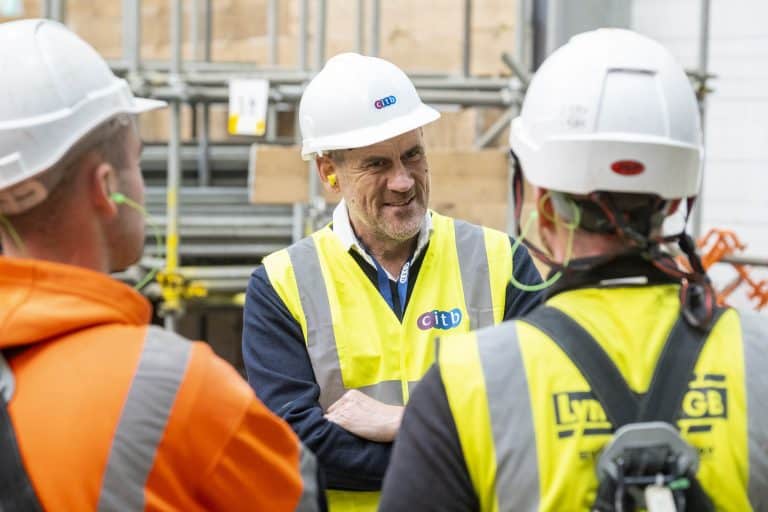
CITB has today announced an investment of more than £800,000 for the launch of a new employer network pilot project, which could revolutionise the way the construction sector access and receive funding for training in the future.
Over 3,800 levy-registered construction businesses will be eligible to benefit from the pilot, offered across five locations in England, Scotland and Wales.
While the pilot is open to businesses of all sizes, there is a primary aim to simplify the process for small and micro businesses, helping to place them at the heart of local training provision.
Through the support of established and experienced delivery partners, the pilot enables employers to recognise their training priorities and receive guidance on how best to find and fund the training most appropriate to them.
This transformative way of working provides a huge opportunity for employers to not only voice their training requirements, but also play a fundamental role in deciding how funds are used in their local area.
As part of this new model, construction businesses will not need to access the grant scheme, as CITB is supporting the employer network to help organise and fund training directly.
Many of the current requirements around training being “in scope” will also be relaxed to ensure the pilots can be as reflective of the employer’s needs as possible. Therefore, training can predominantly be in anything that helps a business work better, whether that’s a construction skill; a health and safety course; a business skill; or a future skill need, such as net zero.
Tim Balcon, CITB Chief Executive, said: “I’m really excited about this pilot – this is about putting employers in the driving seat to identify and address their local skills challenges and how best CITB can align our funding and resources to support their skills needs. I would encourage employers in the pilot areas to get involved and use their voice to shape and engage with the local training provision.
“The pilots are being funded by CITB and delivered by local organisations with a pedigree in finding and delivering training in their area.”
The five pilot areas covered are:
Inverness in Scotland, provided by Scottish Civils Training Group
Norfolk in England, provided by Norfolk Construction Training Group
Lincoln in England, provided by Lincoln Group Training Association
South West Wales, provided by Cyfle Building Skills
The final pilot is specifically for Civil Engineering firms in the Midlands, provided by CECA Midlands.
Anthony Rees, Regional Manager, Cyfle Building Skills Ltd, said: “We are delighted to be part of the employer network pilot scheme for the region. This will be a great opportunity for construction employers from the south-west Wales area to develop their workforce with relevant training. The pilot scheme will help construction organisations to engage with other local employers, our three local training groups, and industry stakeholders, and give them the opportunity to have their say on how funds are spent to develop their training needs.”
John Farley, Chair, Norfolk Construction Training Group, said: “As an extremely active training group, we are delighted to be a part of the new employer network pilot, aimed at encouraging the wider construction community to engage in training.
“We identify that training is essential for the industry to grow and thrive – this programme is an exciting opportunity to make that happen.
“We feel once implemented it will have a serious impact with employers and improve much needed skill levels within the local area.”
Herman Kok, Chair, Lincoln Group Training Association, added: “As chair of Lincoln Group Training Association (LGTA) l am excited and looking forward to delivering the employer network pilot and delivering innovative training support for Lincoln-based construction companies and their supply chain. We are grateful for the support we receive from CITB for these activities.”
Through a more collaborative approach, the hope is to tackle specific local skills shortages and improve ease of access to training, particularly for smaller businesses without dedicated office admin or training staff.
This pilot forms a part of CITB’s continuous efforts to create a skilled, competent, and inclusive workforce, now and in the future.