|
Getting your Trinity Audio player ready...
|
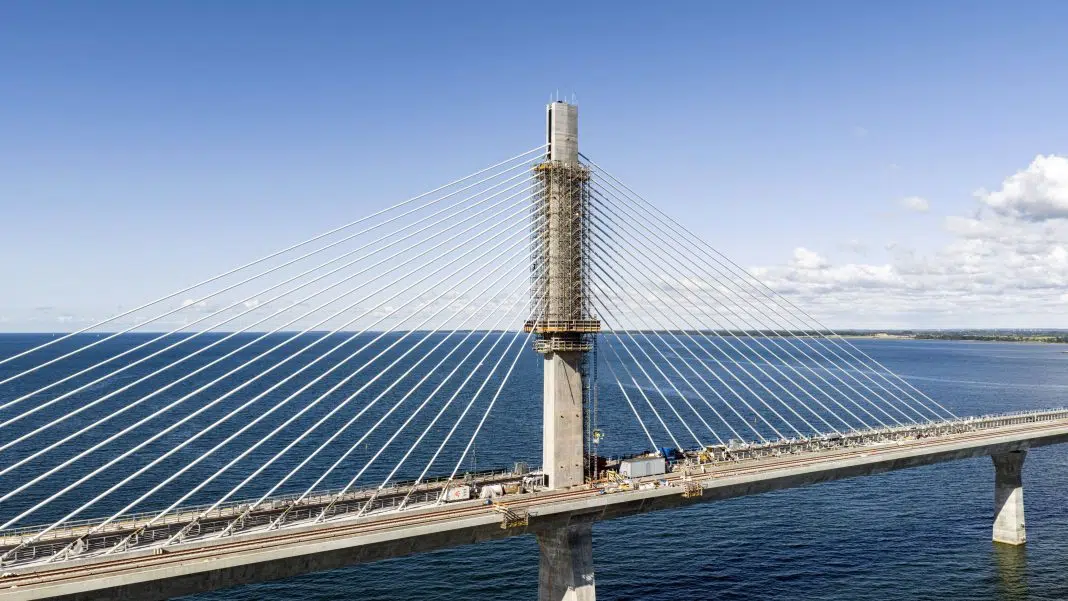
Denmark’s new Storstrøm Bridge is entering its final construction phase, with the 3.8km crossing set to become the country’s third-longest bridge when it opens to road traffic later this year.
The project forms part of a wider north–south transport corridor linking Scandinavia with Central Europe. Together with the Fehmarnbelt Fixed Link, it is designed to improve cross-border passenger and freight connections by both road and rail.
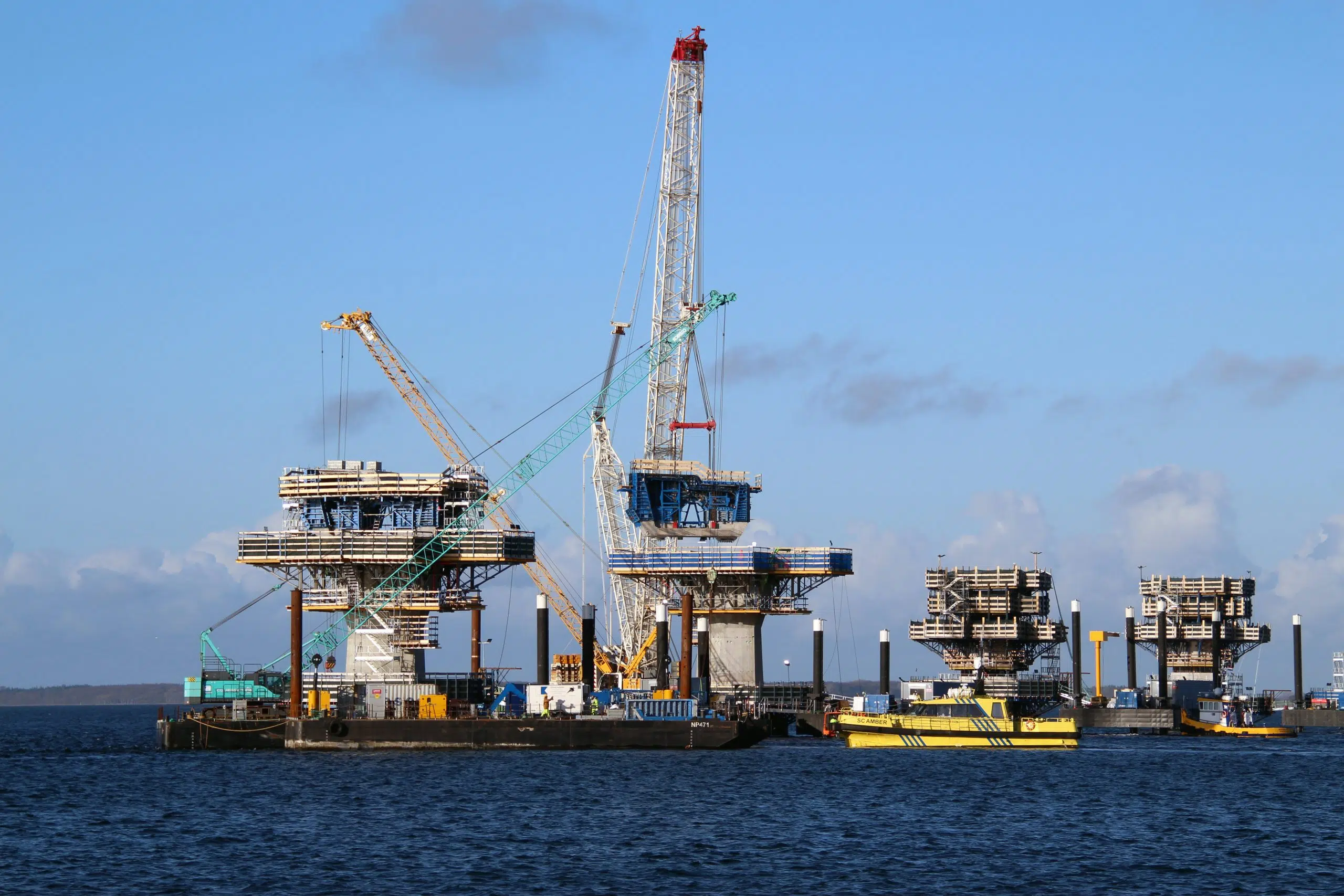
Formwork and access specialist Doka has been involved in the scheme since 2019, supporting several key stages of the build. Its scope has included solutions for the approach bridges on both sides, prefabricated onshore pierheads, cantilever structures linking precast bridge segments to the pylon, and the climbing formwork used during construction of the main tower.
At the centre of the structure is a 102m cable-stayed pylon, which transfers all structural forces into the foundations below. The pylon’s variable geometry, integrated recesses and casing pipes for stay cables presented significant technical challenges during construction, particularly under exposed coastal wind conditions.
Aurelia Penza, Technical Manager at Itinera, said the project required a system capable of adapting to changing geometries while maintaining stability under high wind loads.
The final structural phase of the cable-stayed section was supported by a purpose-built working platform anchored to the pylon and erected in stages using load-bearing towers. Integrated stair towers provided access throughout the closing works.
The bridge is expected to open to road traffic in 2026, with rail services scheduled to follow.
For the wider access and temporary works sector, the project highlights the level of engineering coordination now required on large-scale European infrastructure schemes.