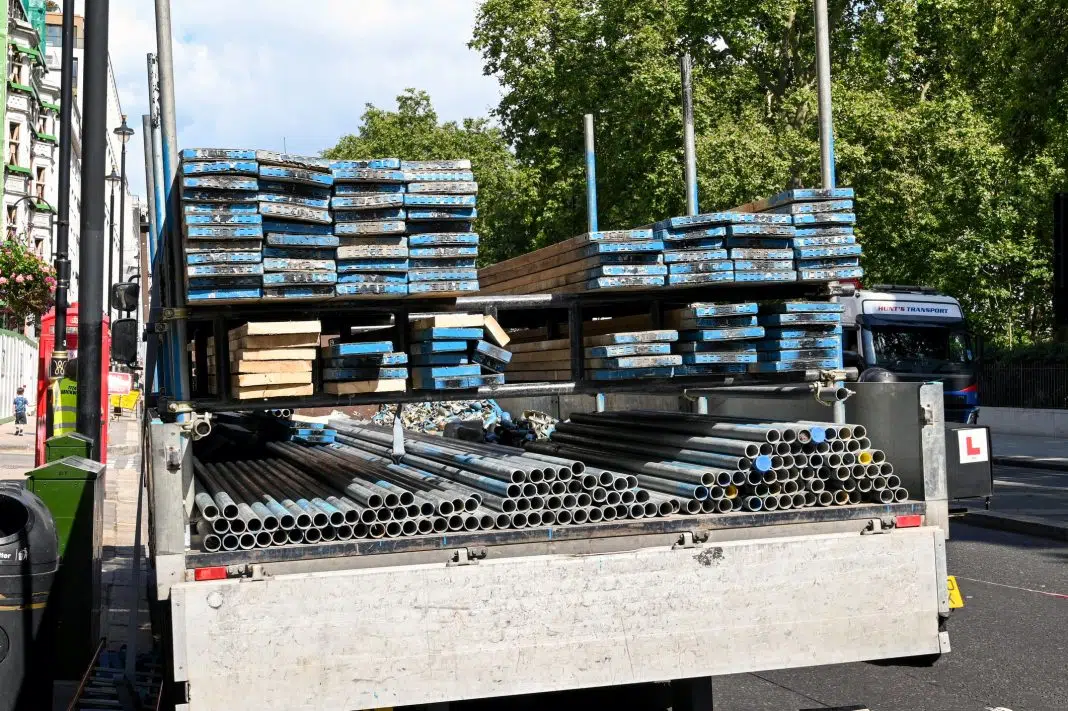
New safety standards covering the transport of scaffolding and other construction materials have been introduced following the death of a schoolboy killed by an unsecured load.
Harry Dennis, aged 11, died after scaffolding fell from a vehicle and struck the car he was travelling in with his father in Hooe, East Sussex, in December 2022.
The Transport Minister, Lilian Greenwood, confirmed the updated guidance was brought in “in direct response” to a campaign led by Harry’s mother, Maria Dennis.
The revised guidance, overseen by the Driver and Vehicle Standards Agency, places greater emphasis on risk assessments, load restraint and the covering of loose materials. It also introduces clearer requirements for transporting specialist loads, including asbestos waste and precast concrete.
The DVSA said the case highlighted “just how critical” proper load security is, warning that failures can have fatal consequences not only for drivers, but for other road users.
Harry was a passenger in his father’s car when the scaffolding fell from a truck on 15 December 2022. He was taken to hospital but died two days later.
The driver of the vehicle, Russell Le Beau from Eastbourne, later admitted causing death by dangerous driving and was sentenced to four years in prison in 2023.
Hastings MP Helena Dollimore, who presented a petition signed by around 2,000 people to Parliament last year, said she hoped the new standards would raise awareness of the dangers posed by unsecured loads.
She described Maria Dennis’s campaign as an effort to ensure “a tragedy such as this never happens again”.
The DVSA confirmed the updated guidance applies not only to heavy goods vehicles, but also to vans and other light commercial vehicles commonly used across the construction and scaffolding sector.
Industry bodies have repeatedly warned that poor load restraint remains a recurring safety issue, particularly where scaffold components are transported between sites without adequate planning or checks.
The Department for Transport said the updated guidance is intended to reinforce existing legal duties on operators and drivers, rather than introduce new offences, but stressed that failure to comply could still result in enforcement action.