Band of Builders has launched a year-round bursary to help young construction entrants and apprentices with tools, PPE, workwear and essential equipment.
SAA supports education following any changes to Queensland’s scaffolding code and calls for stability assessments to account for wind exposure and public safety.
Band of Builders has launched a year-round bursary to help young construction entrants and apprentices with tools, PPE, workwear and essential equipment.
SAA supports education following any changes to Queensland’s scaffolding code and calls for stability assessments to account for wind exposure and public safety.
Band of Builders has launched a year-round bursary to help young construction entrants and apprentices with tools, PPE, workwear and essential equipment.
SAA supports education following any changes to Queensland’s scaffolding code and calls for stability assessments to account for wind exposure and public safety.
Band of Builders has launched a year-round bursary to help young construction entrants and apprentices with tools, PPE, workwear and essential equipment.
SAA supports education following any changes to Queensland’s scaffolding code and calls for stability assessments to account for wind exposure and public safety.
Billy Jones, Managing Director of Millcroft, discusses why a degree in scaffolding engineering is vital for attracting talent and professional respect for the sector
For thousands of construction sites up and down the country, scaffolding requirements are relatively routine, enabling companies to erect a standard solution they’ve used countless times before. But at the more complex end of the market where Millcroft operates, the safety, access, logistical and operational elements of the project can involve much more complicated structural and engineering challenges, requiring creativity and expertise.
At Millcroft, we are very fortunate to have a technical director, Peter Holmes, who started within the scaffolding industry as a youngster and has trained and studied while working in a scaffolding environment. Peter has lived and breathed scaffolding engineering for more than 40 years: from being a junior draughtsman on day release through to gaining an HND in structural engineering. Thanks to his wealth of experience and engineering knowledge, he is the talented, safe pair of hands behind complex Millcroft projects as diverse as the prestigious heritage and restoration works at The Royal Navy College’s Painted Hall at Greenwich and our recent multi-site infrastructure project for Crossrail.
But the scaffolding sector does not have the luxury of decades to train and nurture a new generation of specialist engineers. To design the increasingly innovative structures across sectors including construction, demolition, rail, heritage and industry – we need these skills now.
And yet, there is still no dedicated, tailored degree-level qualification designed to bring the next generation of scaffolding engineers into the sector. Isn’t it about time there was?
Attracting Talent
Peter’s route to becoming a skilled scaffolding engineer is not unusual. Many of his peers began as draughtsmen or scaffolders on site and combined the knowledge they gained in their early career with further study in engineering to gain the experience and technical expertise needed to design complex solutions.
But the demands on scaffolding companies for flexible, cost-effective solutions, and the technologies available to aid the design process have changed significantly over the past few years. Scaffolding is a dynamic, creative environment that has the potential to attract high calibre talent at graduate level and provide a rewarding career for design engineers. When young people interested in engineering look around for a university course, however, they find their choice is to opt for civil or structural engineering, so there is no obvious conduit to steer engineering talent into scaffolding. Moreover, even for those young engineers who do pursue a career in scaffolding via the structural/civil engineering route, the lack of a tailored university course means that they still have a lot of scaffolding-specific knowledge to acquire. After years of study to gain their core skills, this is off-putting for some.
For the talented individuals that might come through by working their way up from a junior role in a scaffolding business, the lack of a scaffolding degree is similarly frustrating. These potential design engineers, who hold so much scaffolding knowledge, only have the option to take a civil or structural engineering degree which is tailored to careers in other disciplines.
Professional Respect
Amongst the challenges we face now as a sector is the need for clients to understand the complexity of what we do. We also need them to give us the freedom to respond creatively to their briefs and offer us the opportunity to advise them as a professional discipline. These are all integral elements to the dynamic between a client or main contractor and a civil or structural engineering specialist. For scaffolding companies, however, even those with a track record of complex projects like Millcroft, the professional respect afforded other types of engineering services is much harder won.
It is much harder to evidence the years of study and the expertise within the engineering design department because there is no scaffolding engineering degree available to back up the specialism. This is not because the level of skill and professionalism offered by scaffolding companies is any less than that provided by civil and structural engineering practices: far from it. Scaffolding engineers design projects just as complicated and safety-critical. What it means is that scaffolding companies can often be seen less as a professional service and more as a supplier. Fundamentally, the need for a scaffolding engineering degree is not just about changing the way we train our future design teams; it’s about changing perceptions of our industry; both for the clients we serve and for the talent we want to attract.
Education with Vision
With our own CITB-accredited training centre on site, we’re passionate about training at Millcroft. From the leadership team through to the young people who have recently joined us as part of the Kickstart scheme, we’re committed to making training and professional development part of everyone’s career journey.
However, we do not have the resources or authority to create a degree in scaffolding engineering ourselves; that needs to come from an education provider with the vision to create a vocationally-focused, creative and credible course. What the scaffolding sector can do is lobby for that to happen and give the idea our full support.
This article was first published in the ScaffMag Magazine Issue 13Find industry job vacancies.
Enigma Industrial Services is providing job placements for young people to help Kickstart their careers within the scaffolding industry.
The Covid pandemic has placed the global economy into the worst recession since the Second World War, and it’s contributed to the highest unemployment figures for many years throughout the UK, particularly amongst the younger generation.
To try to address the situation, the Government-funded Kickstart Scheme launched recently will help create job opportunities for 16 to 24 years old’s who are at risk of long-term unemployment.
The Government hopes employers throughout the UK will be encouraged to provide job placements for young people so they can gain experience within the workplace to help kickstart their careers.
The Enigma Industrial Services, Derby Depot, have recently provided 4 Kickstart trainees with 6-month placements and are extremely pleased with the progress and contributions they have made so far to support the team on-site and wider business.
To further assist and support their professional development and help to equip them with new skills, Enigma has inducted all 4 Kickstart trainees into the COTS programme provided in-house.
To further develop their skills and knowledge, Enigma has provided all four trainees with the opportunity to undertake a series of online training modules provided by “The QSHE Training Academy” a structured internal learning platform containing additional online training modules.
The new Kickstart trainee recruits can study over 30 modules to improve their understanding of Health and Safety in the workplace.
On successful completion of course modules, the Kickstart trainees become recognised “Knights of the Academy” and are awarded certificates for their achievements.
This extra tuition and support will better equip them for the workplace and provide them with additional valuable transferrable skills.
Darren Williams, Enigma Industrial Services, Operations Director, commented: “We believe young people actively seeking work deserve a chance to succeed. It’s great to see our new Kickstart placement trainees proactively embracing the additional training provided by Enigma. I am confident the new skills they have learnt to improve their Health & Safety understanding and knowledge whilst engaging with the Enigma Academy – Training Platform, will present them with future opportunities to progress their careers within the organisation or elsewhere.”
The revolutionary Macdeck safety decking system is set to become even more versatile across the industry thanks to a brilliantly designed new component.
It represents the perfect balance between precision and inventiveness, something at which Stockton-on-Tees JMAC Safety Systems excel.
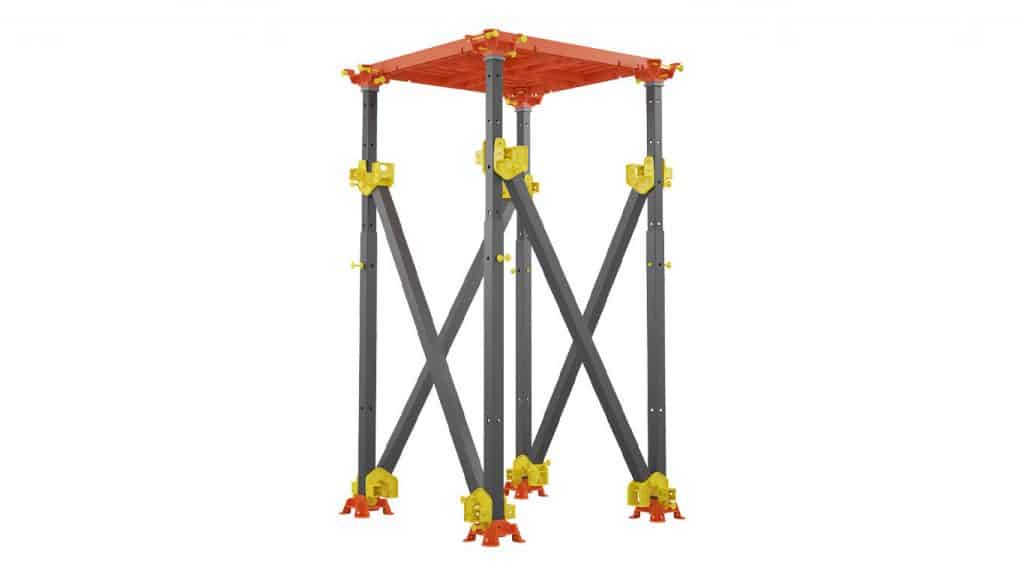
Many believe the MacDeck System is already a market leader in terms of safety – and now the MacBrace is a simple addition allowing the former to become totally free-standing when built in line with the manufacturer guidelines.
It means the system can be erected without the need of supporting walls – a common requirement in today’s construction market with low-level living spaces at single-story and protruding porches.
When the MacBrace is used in conjunction with their new Eco Extendable Leg; the MacDeck system can be utilised on a much broader range of build projects.
In fact, the MacBrace component was designed and tested in partnership with key supply chain partners and scaffold design engineers, with physical testing carried out at Teesside University. This was all made possible following the feedback received from both current clients and the JMAC management team.
Aaron Foley, General Manager at JMAC Safety Systems explained: “Our MacDeck Safety Decking system boasts a load capacity of 2.0kn per m2 and is the strongest injection moulded panel manufactured worldwide.“MacDeck is light weight and easy to handle, with only three main components. It is quick and simple to erect and dismantle. The system can be installed by one person, whilst easily erecting 60m2 within an hour.“All operatives using the MacDeck System must be adequately trained to ensure the system is installed in a safe and efficient manner. We offer free training to all customers wishing to purchase the MacDeck System. We will ensure all your operatives are competent before they undertake any work on site.“We have always believed the future of our business resides in the future of our ideas. We adopt a culture of ‘kaizen’ continuous improvement. The pandemic was the perfect opportunity for us to engage our creative capabilities and design something to adds value to our current MacDeck Safety Decking System.”
New product development is a strenuous and long process for most companies, but not for the visionary people at this dynamic north-eastern Company.
In terms of the system itself, JMAC Safety Systems recommend every 5th bay is fully braced in either direction or on each end bay, as a minimum.
To find out how to integrate the MacBrace into your MacDeck Safety Decking System, please contact the JMAC Hire & Sales team on 01642 563 69 www.jmacsafetysystems.co.uk
The Brogan Group have finished the tall building challenge, raising £2,000 for the Lighthouse Charity.
Brogan Group have finished the tall building challenge, raising £2,000 for the Lighthouse Charity, which provides emotional, physical, and financial wellbeing support to construction workers and their families.
Volunteers from the Construction Access company in the UK and Ireland clocked up over 2,800km walking or running a set distance each week for 8 consecutive weeks.
The distance was based on a multiple of the height of 8 Tall buildings Brogan Group have provided Access on. These were Boland’s Quay Dublin, Apex House, Wembley, West Tower, Liverpool, Capital Gate Splash, UAE, Walkie Talkie Tower and the Scalpel in London and the mighty Burj Khalifa in the UAE. A lighthouse was included in the mix in honour of the charity itself.
The Lighthouse Club charity specializes in mental health support and Brogan Group has recently committed to supporting its own workers by signing up to the Building Mental Health Charter with Building Mental Health. This is a cross-industry group that enable all parts of the construction sector to access mental health support, provide awareness and training and put in place a structure and systems to support people working in and around our industry.
Bill Hill, CEO of the Lighthouse Construction Industry Charity said, “As well as being one of our valued Company Supporters, Brogan has also undertaken a fantastic fundraising challenge for us which is great news. They’re also helping us raise awareness of the importance of positive mental health in the industry which is crucial to our mission that no construction worker or their family should feel alone in a crisis”.
Brogan Group work with organisation’s like the Lighthouse Club on training up their own Mental health ‘First Aiders’ that support the wider staff at Brogan Group.
The UK’s largest scaffolding trade association has spoken out about the government’s cash boost to create a new flexible approach to apprenticeships.
The government has recently announced a £7m funding pot to support flexible apprenticeship opportunities.
Sectors including the construction industry can now bid for a share of the fund to support the creation of new flexible apprenticeships, intended to unlock opportunities for people to develop the skills they need to get good jobs.
Current rules insist that apprenticeships must be at least 12 months long, so some sectors have found it challenging to benefit.
It is hoped the fund will help to establish a small number of agencies that will set up new flexi-job apprenticeships so an apprentice can work across a range of projects and with different employers to gain the knowledge, skills and behaviours they need to be occupationally competent.
Robert Candy, Chief Executive of the Scaffolding Association said “The construction industry suffers from significant skills shortages and desperately needs training solutions that work for each of the many diverse sectors that contribute to its overall success.This cash boost from Government is welcome but the money must benefit the companies and individuals that need it the most and not line the pockets of training companies and agencies.”
From small and compact to intricate and large, there’s a certain family company in the UK able to focus on their amazing scaffolding and rigging experience together, so millions can watch some of our biggest events on stage and television. Grahame Anderson has been zooming in to find out more.
Mention scaffolding to anyone and it’s more than likely they’ll think of those structures placed around buildings during a construction project. There is in fact much more to the craft than meets the eye for the layman especially. Just picture some big sporting events, special outside broadcasts, concerts or outside meetings, and the chances are you’ll spot some kind of support rigging. And of course, all put together by highly skilled scaffolders with safety at the forefront.
As a family business, Focus Rigging has been doing just that for more than 13 years slowly diversifying along the way.
Managing Director Gary McMahon told me: “At Focus our team are highly experienced within the Media and Events industry with a combined knowledge of more than 200 years which allows us to have a refreshing and unique perspective on management, production and provisioning of temporary structure solutions to a highly demanding industry where safety, stringent time constraint and budget awareness are a priority.“We will deliver any project on time and within budget, utilising our strategically placed depots in London, Manchester and Bristol enabling us to successfully service the U.K, Ireland and mainland Europe with ease.”The Open Golf
Focus Rigging are an impressive business with some major clients added to an already first-class CV. These include both ITV and the BBC, Sky Sports, The Jockey Club, BT, Amazon, Matchroom, Arsenal and Chelsea football clubs, Wimbledon, The Royal Albert Hall and both The Premier League and Football Association. All of this achieved through seven family members.
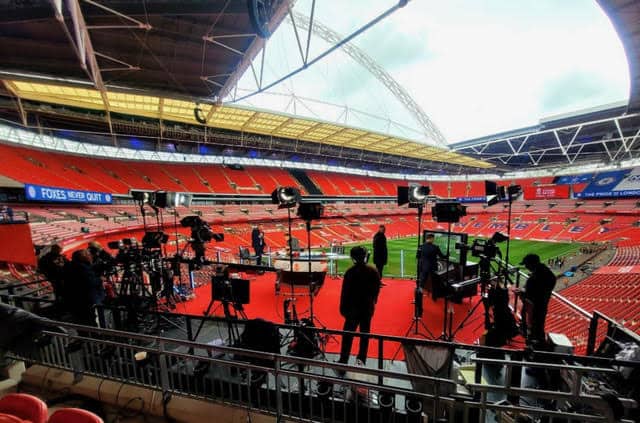
Aintree Grand National: Entrance BridgeWembley Stadium FA Cup Final 2021: Studio Platforms For BBC & BT
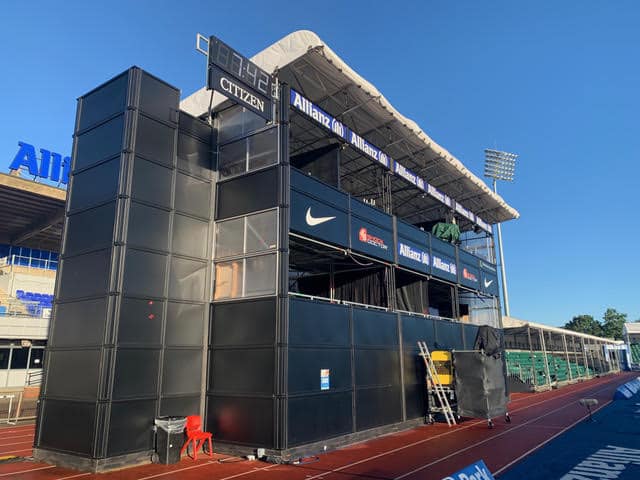
Owned by Gary and Andrew McMahon they began life primarily as a TV Scaffolding company – and yes, the industry plays a huge role in bringing all manner of outside broadcasts to the masses. Something we perhaps take for granted as Gary explained: “It’s an important market and something we’re immensely proud to be involved in. In fact, we now cover staging, trussing, bespoke carpentry and various fabrications. The projects we’ve been involved with have taken us all over Europe, working in France, Italy, Holland, Germany, Lithuania, Estonia, Slovenia, Sweden, Slovakia, Malta, The Czech Republic and Spain. We’ve a head Office in Hemel Hemstead and two smaller teams working from yards in both Bristol and Manchester.“The wonderful thing is there’s never a dull moment with plenty of variety to keep everyone fully animated. It really is a labour of love for us all. We love every moment of this job.”Saracens RFC: Temporary Media Gantry
Focus provides a personal service to all clients from the initial phone call to the handover of the project. It helps of course to always deal with the same person who oversees every element of the job. It all means customers can rest assured they always have someone close at hand to rely on.
Each job is different so it’s difficult to choose a stand-out event in the sense they are all of the highest quality. OR put it another way, Six Nations rugby matches to the FA Cup Final, long running tv dramas carrying amazing backdrops to major concerts, The Derby, international test cricket and much more. We think you’ll get the picture. Just take a look at some of these social media comments to get a real flavour of the very essence of Focus Rigging:
“Top class job by the team at ‘The Oval’ today……Some amazing views of London as well as the cricket for @skysportscricket & @ctvob to capture.”“After 8 days of blood sweat & tears we have now left Windsor.Immensely honoured to be part of another huge Royal event albeit a very sad & emotional occasion for the nation.So very, very proud of the team who went above & beyond in challenging circumstances??#teamfocus.”“6m x 6m ‘Presentation Platform’ with bespoke glass balustrade installed today at @aintreeracecourse for the @thejockeyclub“Looking forward to seeing all the presentations take place on this structure next week.”“Day 2 completed at Twickenham Stadium Studio Platform and Beauty Shot rig now all in place and handed over to the @itvsport & @telegenicob teams to work their magic @sixnationsrugby @englandrugby.”
So the next time you see those pundits doing their stuff in what looks like a well-designed studio, put a little focus on what it took to set everything up for your enjoyment. Chances are Focus Rigging will have played a part.
This article was first published in the ScaffMag Magazine Issue 13
July saw the official opening of The London Academy of Sustainable Construction in the heart of Waltham Forest. Cllr Simon Miller from the London borough of Waltham Forest was charged with carrying out the ceremony as a host of proud guests looked on. It’s the newest centre in their portfolio.
This superb centre will continue to deliver the full CISRS scaffolding Curriculum to the highest standards for a range of clients. But it will also maintain a sharp focus on benefiting the residents of Waltham Forest, in the form of Pre-employment Training Schemes (PETS), Green Energy Skills Training, Modern Methods of Construction, Construction Engineering, Digital Construction and Apprenticeships.
SIMIAN MD Simon Hughes explained: “After what has been an incredibly challenging 18 months or so, it’s hugely rewarding to officially launch our newly branded London Academy of Sustainable Construction.Big thanks to the Simian team, our partners and Waltham Forest Council for their efforts in getting us to where we are today. Our intention is for LASC to become a benefit to the whole Waltham Forest community, and we have already seen some fantastic employment results for residents, but we aim to build on this and get more and more local people skilled and ready for work in the construction and green energy sectors”.
In fact, the day was cause for a double celebration as Cllr Clyde Loakes also took time to launch the new Green Skills Hub, set to benefit the whole community. The green energy skills hub courses are being developed at LASC as part of the Green Energy Skills Training Alliance (GESTA), a joint initiative between London Borough of Waltham Forest Council, Waltham Forest College, and SIMIAN. The training is planned to meet the skills need for the installation and maintenance of energy efficiency technology for new build construction and the retrofit of existing properties.
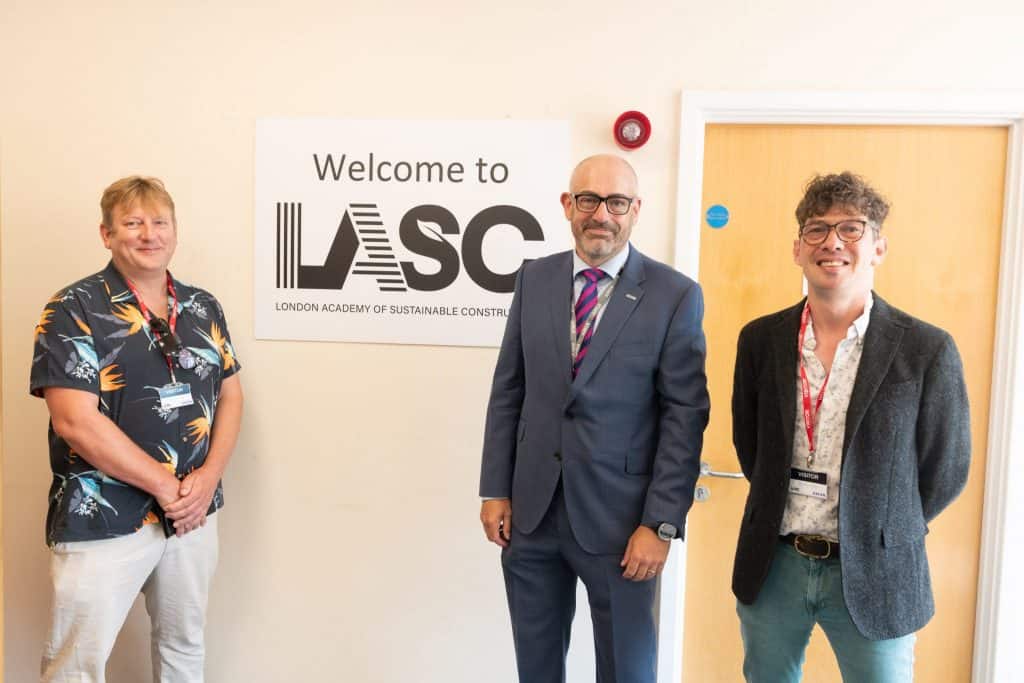
(L to R) Cllr Clyde Loakes (Deputy Chair of the LGA’s Environment Board), Simon Hughes (SIMIAN MD), Cllr Simon Miller.
Neil Bewick, Centre Manager at LASC said: “This delivery marks a significant step forward for the development of our Green Energy Skills Training at the London Academy of Sustainable Construction here in Waltham Forest. Air source heat pump technology is a low carbon heating option for both new build construction and retrofit of existing social housing and private properties. We are keen to support the emergence of this energy efficient technology by providing skills training for installers not only in the borough of Waltham Forest but the wider pan-London and southeast region.”
As a company SIMIAN was established in 2005 by a team of scaffolding industry experts with unsurpassed knowledge, expertise and experience. SIMIAN has rapidly grown to become one of the UK’s leading training and consultancy organisations.
They deliver training courses designed for all levels of personnel from apprenticeships for those just starting out in their career through to courses for advanced level scaffolders, inspectors and supervisors.
It’s worth noting their highly skilled team of scaffolding consultants are dedicated to instilling a safe operating culture throughout global construction, infrastructure and industrial environments.
Construction output fell by 1.3% in June 2021, following a decline in repairs and maintenance work.
Materials price rises and shortages have also been blamed for the fall.
The Office for National Statistics reported that June output was 0.3% below the February 2020 pre-coronavirus pandemic level. New work was 2.1% below the pre-pandemic level, while repair and maintenance was 3.1% above.
Despite three monthly falls in growth for the months within quarter 2 (Apr to June) 2021, quarterly growth increased by 3.3% which, apart from quarter 3 (July to Sept) 2020, was the strongest quarterly growth since quarter 3 2013 (3.6%).
Fraser Johns, finance director at Beard, said: “For output to drop for the third consecutive month to below pre-pandemic levels, should start to ring some alarm bells. As an industry we’ve been saying for months now that the pandemic bounce-back could potentially be scuppered by a combination of the serious materials shortage, rising prices, labour shortages and now not enough HGVs on the roads to supply building sites. It’s not the kind of prediction anybody wants to be right about, but today’s stats demonstrate that these issues are really beginning to bite.“At the same time, it is encouraging to see quarterly levels of growth up 3.3% in Q2 compared to Q1, driven in part by new orders, but it is some way below the growth in the economy overall at 4.8%. And of course, that first quarter was spent still under lockdown.“Right now, we have to work together with suppliers, surveyors, customers and consultants to be proactive about the issues we face and take a multi-step approach to things like procurement to manage our way out of this current decline.”
Scaffolding erected over a railway bridge in Warrington collapsed overnight causing travel chaos for weekend commuters.
All trains between Warrington and Liverpool were cancelled on Sunday morning (8th Aug) after the scaffolding collapsed near Warrington Central Station.
Due to ongoing repair works a large span scaffolding bridge erected on Bewsey Street seems to have buckled and collapsed onto the railway line.
Local media report that the scaffold “fell in on itself early Sunday morning amid stormy conditions.”
Northern Rail laid on replacement buses throughout the day. A spokesman said: “Due to an obstruction near to the track, trains were unable to call at stations between Mossley Hill and Warrington Central.”
Several cranes were rushed to the site to help remove the scaffold. Disruption on the line continued until 7 pm on Sunday.
French giants the Altrad Group has agreed on a deal to acquire and take over the scaffolding and construction product suppliers Actavo Hire & Sales.
The Altrad Group has announced that on the 5th August 2021 it struck a deal to acquire Actavo Hire and Sales from the Actavo Group for an undisclosed sum.
Actavo Hire and Sales, which is based in Wakefield, West Yorkshire, has twenty-six Hire & Sales branches in the UK and four branches in Ireland. They offer a wide range of specialised scaffolding and building equipment for hire and sales.
Ran Oren Altrad Group Co-CEO said: “This acquisition sees our first venture into Ireland as well as extending our product offering and service in the UK. I am pleased to welcome Actavo Hire & Sales into the Altrad Group and we look forward to the next chapter building on the previous success of the company as part of the Altrad Group.”
Founded in 1985, France headquartered Altrad Group has over the years rapidly expanded through a series of strategic acquisitions to provide industrial services and scaffolding solutions.
The Group employs around 42,000 people worldwide and owns established international brands including Cape, Hertel and Prezioso Linjebygg.
In recent years the Altrad Group has acquired a number of well-established industry firms including Generation, Beaver 84, and TRAD.




 In fact, the MacBrace component was designed and tested in partnership with key supply chain partners and scaffold design engineers, with physical testing carried out at Teesside University. This was all made possible following the feedback received from both current clients and the JMAC management team.
Aaron Foley, General Manager at JMAC Safety Systems explained: “Our MacDeck Safety Decking system boasts a load capacity of 2.0kn per m2 and is the strongest injection moulded panel manufactured worldwide.
“MacDeck is light weight and easy to handle, with only three main components. It is quick and simple to erect and dismantle. The system can be installed by one person, whilst easily erecting 60m2 within an hour.
“All operatives using the MacDeck System must be adequately trained to ensure the system is installed in a safe and efficient manner. We offer free training to all customers wishing to purchase the MacDeck System. We will ensure all your operatives are competent before they undertake any work on site.
“We have always believed the future of our business resides in the future of our ideas. We adopt a culture of ‘kaizen’ continuous improvement. The pandemic was the perfect opportunity for us to engage our creative capabilities and design something to adds value to our current MacDeck Safety Decking System.”
New product development is a strenuous and long process for most companies, but not for the visionary people at this dynamic north-eastern Company.
In terms of the system itself, JMAC Safety Systems recommend every 5th bay is fully braced in either direction or on each end bay, as a minimum.
To find out how to integrate the MacBrace into your MacDeck Safety Decking System, please contact the JMAC Hire & Sales team on 01642 563 69
In fact, the MacBrace component was designed and tested in partnership with key supply chain partners and scaffold design engineers, with physical testing carried out at Teesside University. This was all made possible following the feedback received from both current clients and the JMAC management team.
Aaron Foley, General Manager at JMAC Safety Systems explained: “Our MacDeck Safety Decking system boasts a load capacity of 2.0kn per m2 and is the strongest injection moulded panel manufactured worldwide.
“MacDeck is light weight and easy to handle, with only three main components. It is quick and simple to erect and dismantle. The system can be installed by one person, whilst easily erecting 60m2 within an hour.
“All operatives using the MacDeck System must be adequately trained to ensure the system is installed in a safe and efficient manner. We offer free training to all customers wishing to purchase the MacDeck System. We will ensure all your operatives are competent before they undertake any work on site.
“We have always believed the future of our business resides in the future of our ideas. We adopt a culture of ‘kaizen’ continuous improvement. The pandemic was the perfect opportunity for us to engage our creative capabilities and design something to adds value to our current MacDeck Safety Decking System.”
New product development is a strenuous and long process for most companies, but not for the visionary people at this dynamic north-eastern Company.
In terms of the system itself, JMAC Safety Systems recommend every 5th bay is fully braced in either direction or on each end bay, as a minimum.
To find out how to integrate the MacBrace into your MacDeck Safety Decking System, please contact the JMAC Hire & Sales team on 01642 563 69