
HSE issues safety alert over dodgy face masks
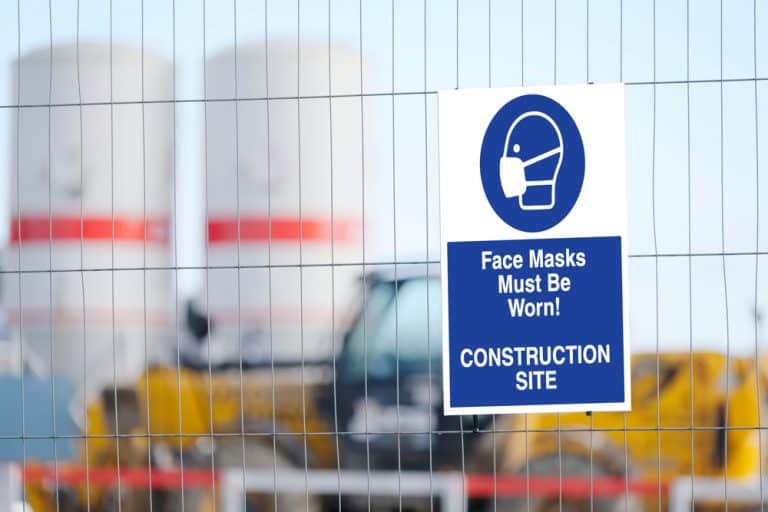
The Health and Safety Executive has issued a safety alert over dodgy Chinese face-masks which are flooding the UK market.
The HSE has stated that these sub-standard face-masks should not be used as PPE (Personal Protective Equipment) in the workplace. Within the HSE’s safety alert titled Use of facemasks designated KN95 it said: “A substantial number of face masks, claiming to be of KN95 standards, provide an inadequate level of protection and are likely to be poor quality products accompanied by fake or fraudulent paperwork. These face masks may also be known as filtering facepiece respirators. The government agency continued to explain that KN95 is a performance rating under the Chinese standard GB2626:2006, the requirements of which are broadly the same as the European standard BSEN149:2001+A1:2009 for FFP2 facemasks. However, there is no independent certification or assurance of their quality and products manufactured to KN95 rating are declared as compliant by the manufacturer. Personal protective equipment (PPE) cannot be sold or supplied as PPE unless it is CE marked. The only exception is for PPE that is organised by the UK Government for use by NHS or other healthcare workers where assessments have been undertaken by HSE as the Market Surveillance Authority. The HSE stress that KN95 masks must not be used as PPE at work as their effectiveness cannot be assured.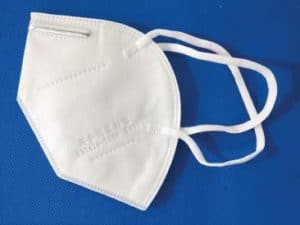
CIOB calls for Covid testing stations on major construction sites
The Chartered Institute of Building (CIOB) has called on the Government to set up Covid-19 testing stations on major building sites.
The institute said it would help the industry bounce back quickly and safely by ensuring any outbreaks are tracked and traced quickly. The recommendation for large construction sites in Britain to be integrated into the new NHS Test and Trace system is one of a number of recommendations submitted to the UK Parliament’s Business, Energy and Industrial Strategy Select Committee. The professional body said: “The construction industry is set to play a key role in restarting the economy and facilitating national recovery, and it is, therefore, crucial that the industry receives the support it needs to return to work and cope with the ongoing impacts of the coronavirus pandemic.” More than 86% of construction sites in England and Wales are open. The CIOB said major sites would make good locations for testing stations. Eddie Tuttle, director of policy, research and public affairs, said: “This will help the construction sector – which is a vital part of the UK economy – to get back to full strength with confidence. It will also help improve public trust in the sector, which has been battling to keep essential infrastructure projects moving. Under our proposals, the public will be sure that construction is doing everything it can to keep the virus under control.”Trade body signs ground-breaking partnership deal

The Scaffolding Association and UK construction sales leads and market intelligence provider Builders’ Conference has penned a groundbreaking partnership.
Under the terms of the agreement, every audited & assessed member company of the Scaffolding Association will be granted access to Builders’ Conference premium information as part of their subscription fee.
This comprises approximately 11,000 UK construction projects and includes the unique ability to promote their own business by using Builders’ Conference technologically advanced real-time platform Serino.
The contract will bring much-needed evidence-based, accurate construction project information to all audited and assessed businesses at the Scaffolding Association at a time when new construction projects across the UK have seen a significant decline due to the COVID-19 pandemic.
As part of the contract, every audited and assessed member of the Scaffolding Association will receive a secure unique company login that allows access to construction project information across the UK, a unique “expression of interest” tab, a bespoke report writing feature and an easy to use businesses intelligence and diary system that is compatible with Microsoft Outlook.
Every company will also be able to promote its own business by adding a company logo to its online profile as well as images of projects carried out. Furthermore, the company profile can include details of the activities of the business together with areas worked throughout the UK, all of which is visible to thousands of companies and their decision-makers.
“We are absolutely delighted that the Scaffolding Association has become the first trade body to sign such a ground-breaking partnership. It shows their forward-thinking and their desire to provide maximum value to their members in these extraordinary times. We have a passion for sharing validated information and never before has our independent, verified real-time construction information and research been more important in allowing the construction industry to emerge from this difficult period,” says Builders’ Conference CEO Neil Edwards.
“We look forward to working closely with the Scaffolding Association to develop our platform to meet the needs of everyone and the wider construction industry”.
The Scaffolding Association CEO Robert Candy said, “Despite the turbulent times COVID-19 has brought to the industry we have continued to grow as an organisation and we are really pleased to be entering into this new partnership with Builders’ Conference.
Providing our assessed & audited members with the facility to access this type of project data, while showcasing their individual business capabilities is the perfect addition to our membership offering. Cultivating strategic relationships with organisations that operate with a similar mindset to us is really important, and we look forward to working with Neil and his team moving forward.”
TRAD Group To Create Six ‘Super Depots’
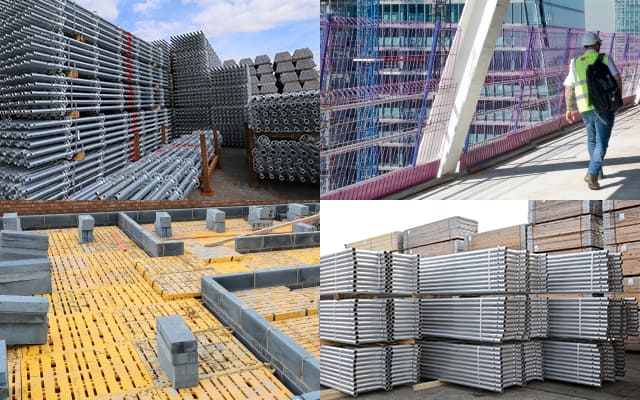
The TRAD Group has announced that it will be restructuring TRAD Safety Systems and TRAD Hire & Sales to become TRAD UK.
The move will create six super-depots in major conurbations across the UK – in London, Glasgow, Manchester, Leeds, Birmingham and Andover. This new development will bring increased technical and sales expertise, as well as catering for increased levels of online services. They will also be providing an extended range of products from the ALTRAD Group giving customers an even wider online choice as well as simplifying online payment. Des Moore, TRAD Group CEO told ScaffMag: “We had already planned to combine both companies’ operations in Glasgow and Stockport before the COVID-19 lockdown.” “Like most of the construction industry, we have experienced a reduction in business over the past three months, which has necessitated us considering ways to reduce operational costs.” “However, we feel that this move will enable us to increase our offering and levels of service and support to customers by combining the products, knowledge and expertise of both companies.” “We are building resilience into our company and our operations to ensure that we emerge from the impact of COVID-19 even stronger. As we look ahead to 2021, when the TRAD Group celebrates its 50th anniversary, we believe that this move to increase our capabilities and product offering will benefit both us and our customers in the short and the long term.”Scaffolders Business Success Despite Lockdown
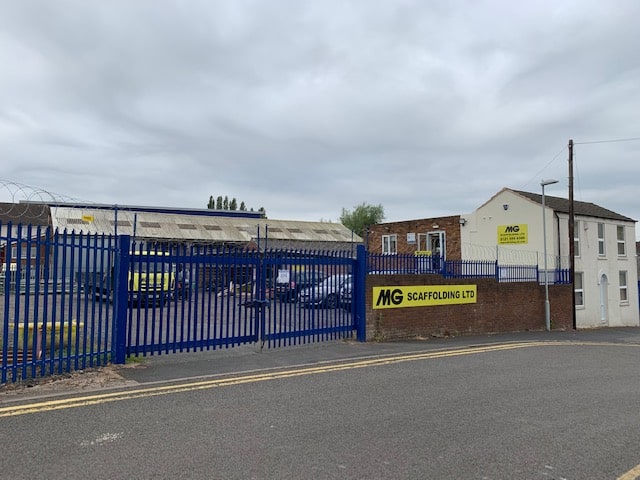
MG Scaffolding continues to increase its market share with larger premises despite the COVID-19 lockdown.
MG Scaffolding (Oxford) Ltd has posted another successful trading year for 19/20 as they continue to expand. Established in 2002 the NASC members opened their third depot in Rowley Regis, Birmingham in 2018 to run alongside its two established depots in Cheltenham, Gloucestershire and Banbury, Oxfordshire. Due to the success of the depot and increase in turnover, the firm has told ScaffMag its Birmingham depot has relocated to larger premises in Brierley Hill to service its ongoing and new clients. MG Scaffolding (Oxford) Ltd has become one of the largest independent stockists of scaffold equipment, resourcing high profile projects in the Midlands and throughout the South of England. Since the COVID-19 government lockdown rules eased, the business has secured new projects in all three depots, which has helped the business plan for the short term future in these difficult and uncertain times. The firm has said it directly employs a workforce of around 100 CISRS scaffold operatives and continually invests in training to deliver the best services possible for its clients. Carl Fallon, Managing Director of MG Scaffolding (Oxford) Ltd puts the success of the business down to the management’s teams in place at each of the depots and the skills of the workforce whom many have been with the business since the early foundation years of establishment and growth. “If we did not have the effective management teams in place who we have to put our trust and faith in, we would not be able to implement the disciplines and controls our industry requires in delivering our services,” Carl said. “Having said that we also require our scaffold teams to deliver the safe systems of works we are renown for and this requires a positive professional attitude in working to the highest standards that give our client base the confidence to use and rely upon our services.”Workers start to remove melted scaffolding on Notre-Dame

Work to remove the melted scaffolding from the Notre-Dame cathedral in Paris is now underway.
Scaffolding was already encasing much of the 850-year-old world-famous cathedral when a huge fire broke out in April last year. The roof and spire were destroyed in the inferno and the giant scaffolding that included over 50,000 scaffold tubes became a tangled melted mess. Now, this week workers are tasked with the delicate job of cutting the melted steel tubes away after building another complex scaffold structure over the fire-damaged cathedral. Officials have said, two five-man teams hanging from ropes 40 to 50 meters in the air will be using electric saws to safely cut away the scaffolding piece by piece.
CITB to Reopen and Resume Face to Face Training at NCCs

National Construction Colleges (NCCs) in England are set to reopen with face to face training in July.
The CITB has today told ScaffMag it’s reopening their construction colleges at Bircham Newton, Erith and Kings Norton in July to restart face to face training.The CITB said they have been carefully monitoring the evolving COVID-19 position and the information which is being regularly issued from the UK Government.
CITB Chief Executive Sarah Beale said: “Our priority will continue to be learner and colleague safety, therefore we will start to deliver training through a phased approach, with pilot courses initially being offered from July onwards.
We will continue to monitor and review our procedures to ensure that the appropriate level of safety is maintained.”
The CITB we will be making direct contact with NCC apprentices in the coming weeks to confirm the restart of their learning.
NCC Inchinnan training centre in Scotland will, for now, remain closed, the CITB said but will continue to monitor the Scottish Government advice.
New Design For The Humble Scaffold Fitting
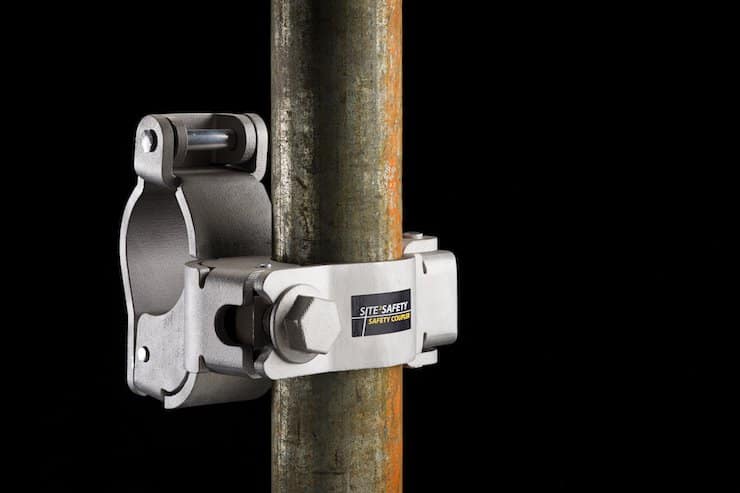
A revolutionary new scaffold fitting with potential safety and speed benefits has been developed.
Not for more than 100 years has the right angle coupler, aka ‘the double’ had this much of a makeover. But on seeing the new design would its original inventor dubbed the ‘Grandfather of Scaffolding‘ Daniel Palmer-Jones be turning in his grave? Developed by StrucTemp and LUMA-ID the new design is the brainchild of Shiraz Dudhia a civil engineer and Managing Partner of the structural and temporary works firm StrucTemp. Shiraz has 35+ years in the industry and was the Director of Engineering and Temporary Works for Balfour Beatty, responsible for all its UK operations. At any one time, he had more than 350+ projects, many of which had scaffolding on the sites. Over the course of his career on visiting construction sites, he was fed-up with the bolts that stick out on current fittings asking “has nobody come up with anything better than this?” Explaining his frustration and working with the design, prototyping and manufacturing company Luma-ID, Shiraz and the team has spent two years perfecting the idea into a new fitting design. “A main feature of the design is there are no protruding bolts and thus there is no risk to injury to personnel and the public”, Shiraz told ScaffMag. “It would be great to use for edge protection too as there are no protrusion bolts.” The new scaffold fitting also boasts massive speed benefits with a shortened thread that allows scaffolders to tighten the coupler to a close in as little as two seconds using a traditional spanner. The bolt and washer are also integral with the coupler so no risk of missing bolts or washers. Shiraz added: “Its easier to handle and couple than current scaffold couplers. It enables scaffolding to be coupled together in 2 clicks and thus easier and faster to fix than traditional scaffolding which would aid in reducing repetitive strain injury on scaffolders wrist joints.”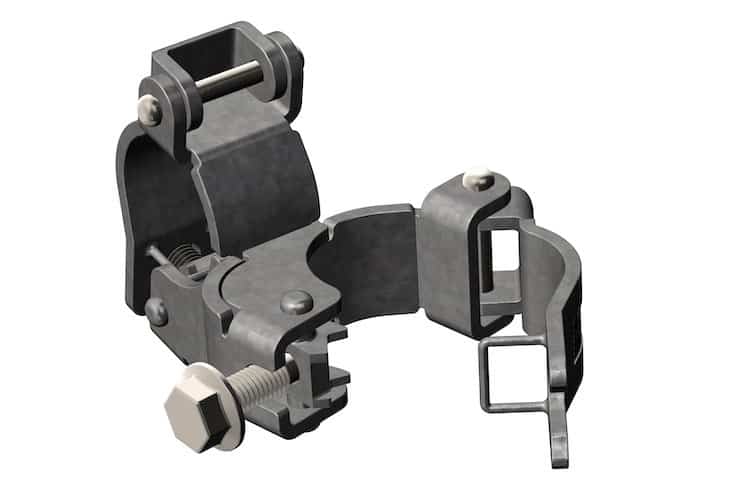 The newly developed scaffold fitting received much interest from the industry when it was unveiled in London at the Futurebuild trade show in January.
ScaffMag understands it’s yet to be decided on what process will be used to manufacture the new scaffold fitting.
The newly developed scaffold fitting received much interest from the industry when it was unveiled in London at the Futurebuild trade show in January.
ScaffMag understands it’s yet to be decided on what process will be used to manufacture the new scaffold fitting. How do we stop scaffolders being killed or seriously injured from falls from height?

Why in 2019 and 2020 are scaffolders still being killed and seriously injured through falls from height?
It was the image of a young scaffolder being put into the back of an ambulance after falling from a roof working on a saddle scaffolding on 25th November 2019 in Morecambe Lancashire that the question needs to be asked, how do we stop these young scaffolders from being injured? As the Chairman of The Association of Northern Scaffolding Contractors (ANSC) I immediately brought this accident to the attention of our Safety Working Group. With the help of Spanset and George Roberts, we have developed a safe system of work for any scaffolder working on a roof undertaking saddle scaffolds. Unfortunately with the Covid-19 lockdown, we have not been able to put this into practice.