Crossway commence work on complex truss out project

Scaffolding contractor Crossway commence work on the historic Coopers Buildings in Liverpool.
Crossway have reported that the scaffolding structure currently being erected in Liverpool City Center is the most complex scaffold the firm has undertaken to date. As the Coopers Building is on one of the busiest shopping precincts in Liverpool, it was decided that the scaffold could not be founded from the ground but had to be cantilevered from the building.
Working for construction firm Williams Tarr Construction, Crossway have developed a scheme which incorporates their Dessa Beams for the project as the beams can carry a higher load than others on the market.
In a recent Crossway newsletter Design Engineer, Dale Hopper from RDG Engineering has said: It is the most complex design they have ever undertaken in terms of transferring the loads from the scaffolding into the structure of the building. The loads had to be transferred to the strong points of the building using steel soldiers and beams to spread the loads.
Crossway have also incorporated a lifting gantry into the project at roof level to enable heavy stonework to be lifted into position with use of chain blocks which are able to move vertically and horizontally in four directions.
Source: James Lomas.
decided that the scaffold could not be founded from the ground but had to be cantilevered from the building.
Working for construction firm Williams Tarr Construction, Crossway have developed a scheme which incorporates their Dessa Beams for the project as the beams can carry a higher load than others on the market.
In a recent Crossway newsletter Design Engineer, Dale Hopper from RDG Engineering has said: It is the most complex design they have ever undertaken in terms of transferring the loads from the scaffolding into the structure of the building. The loads had to be transferred to the strong points of the building using steel soldiers and beams to spread the loads.
Crossway have also incorporated a lifting gantry into the project at roof level to enable heavy stonework to be lifted into position with use of chain blocks which are able to move vertically and horizontally in four directions.
Source: James Lomas.
Simian Skill Middle East Gaines CISRS Re-accreditation

CISRS Simian Skill Middle East Overseas Training Scheme (OSTS) Centre Re-accredited
Simian Skill’s Overseas Training Scheme (OSTS) centre in Al Qorz, near Dubai in the United Arab Emirates (UAE) has gained CISRS accreditation – for the third year running. The news has been announced following a recent visit and strict audit by CISRS scheme Manager, David Mosley to the purpose-built training centre, just five miles from the Burj Al Arab. Simian Skill’s Senior Instructor Andrew Sharp and local instructor and interpreter, Abid Gul oversaw the CISRS audit with Mr Mosley – showcasing the centre’s training facilities, whilst undertaking both CISRS (OSTS) Level 1 Scaffolder and CISRS (OSTS) Supervisor courses during the visit. The training centre offers a full range of CISRS courses including Level 1, 2, 3 Scaffolding, Basic Scaffold Inspection, Scaffolding Supervisor, plus Layher, Cuplok and Kwikstage system product training. Advanced Scaffold Inspection will be added to their portfolio in the coming months. In a press release by CISRS it states that Over the past year the centre has dealt with over 300 OSTS card applications, with trainees coming from the UAE, Saudi Arabia and the surrounding areas and also from as far afield as the Ivory Coast, Philippines and Nigeria. The CISRS scheme has attracted delegates from large companies within the region such as Qatar Gas, Safco Saudi Arabia, Al Mubdee Scaffolding Dubai and Harsco. Simian Skill Operations Director, Ian Fyall said: “Simian are delighted to receive their CISRS accreditation for the third year running, its great to be working with CISRS and helping to grow the brand in the Middle East. It’s no easy task when there are so many other schemes to work against offering less days and less practical training. However we persevere as we know it will become the scheme of choice over time, as it has over the last 40 years in the UK.” CISRS Scheme Manager, Dave Mosley added: “Simian Skill have been instrumental in helping to establish the OSTS scheme within the region – playing an important role in passing the landmark of 2500 OSTS card holders, and cementing CISRS as the scaffolding training scheme of choice in the, UAE and beyond. The Simian Skill Training Centre facilities are excellent, as is the standard of teaching. We wish the centre every success in producing many more OSTS qualified scaffolders, supervisors and inspectors over the coming years.”48.3 Scaffolders Champions League

Six UK leading scaffolding firms will battle it out at this years 48.3 Scaffolders Champions League.
The football season maybe coming to a close but for the Scaffold industry it’s only just beginning! The testosterone will be pumping on Thursday 14th May when six leading scaffolding companies battle it out in the 48.3 Scaffolder’s Champion League at Goals, in Beckenham! Phil Smith, Regional Manager at Lyndon Scaffolding came up with the idea to launch a 7 a side scaffolding football tournament bringing together Lyndon, Anglewest, Formark, GKR, Millcroft and TRAD for an evening of friendly competition! Phil, a former ‘Spanner D’Or’ winner added “We have played a few of the London Scaffold companies before and had some really good games, this time I thought it would be a great idea to have competition where more teams can be involved. It’s a great chance to see industry friends and colleagues, and enjoy a bit of banter outside of work. Everyone at Lyndon is really looking forward to it”. As proud sponsors of the event 48.3 are looking forward to watching the team’s battle it out for the 48.3 Scaffolder’s Champion League trophy, seeing who is more premier league than Sunday league! Everyone is welcome to come and cheer on the teams! When: 14th May 2015 at 17:30 – 20:30 Where: Goals Beckenham North Copers Cope Road, Beckenham, Kent, BR3 1NZ Teams:- Lyndon Scaffolding Plc
- GKR Scaffolding Ltd
- Trad Scaffolding Ltd
- Formark Scaffolding Ltd
- Anglewest Scaffolding Ltd
- Millcroft Plc
Efficiency reduces price of Supadek

Tilon Composites, the United Kingdom’s leading manufacturer of fibre reinforced polymer composite products, has announced a huge reduction in the market price of its Supadek scaffold boards, which are used widely throughout the scaffolding and access industry.
The price reduction has been possible thanks to a number of production, operating and distribution efficiencies that Tilon has realised through recent investment and years of experience manufacturing a range of products from recycled plastic. These include noise barriers, composite decking, industrial partitioning and safety barriers.
Key to these efficiencies has been the installation of a new plastics recycling line at Tilon’s South Wales facilities, which has given the company greater control over the cost and supply of the raw materials used in the production of Supadek.
The new recycling facility underlines the company’s commitment to assuring the environmental credentials and sustainability of Supadek and other Tilon products and means that the company can now provide recycled plastics as raw material to other like-minded manufacturers.
However, changes to operational procedures and distribution of the product have also made a significant contribution to the reduction in overall costs, which has resulted in Tilon being able to offer Supadek boards at a far more competitive price than was previously achievable.
Tilon’s managing director, Stephen O’Leary, explains, “Our experience and knowledge in the manufacture of fibre reinforced polymer composites from recycled plastics has grown immeasurably in the ten years since Supadek was launched.
“This enhanced expertise has seen our turnover increase six or seven-fold during that time and has enabled us to identify areas in which efficiencies can be made.
“Our latest improvements have targeted manufacturing and operations, and have resulted in much lower costs of production without making any alterations to the product.
“The efficiencies mean that we are now able to offer the market the same product at a vastly improved price as well as facilitating a more transparent pricing structure. Customers should see savings of at least 33%!”
Contacting Tilon Composites:
UK Sales Manager for Supadek Chris King can be contacted direct on Mobile: +44 (0) 7867416033 or please visit http://tiloncomposites.com/supadek/Cape secures two year contract extension with BP worth £100M

Cape plc, has announced that a new two year contract extension has been secured with BP with an estimated value of £100 million.
The contract will secure around 500 jobs for Cape employees providing a range of core services, including access, insulation, coating, passive fire protection and platform services on six North Sea assets and the Forties Pipeline Systems. Joe Oatley, Chief Executive, Cape plc: “We are delighted to be awarded this further contract by BP, which will allow us to continue to invest in our people through our apprentice, intern and graduate programmes. Cape has a longstanding relationship with BP and we look forward to continuing to work with this important client to deliver our critical industrial services across their assets in the North Sea”.ADS Security Installations Ltd
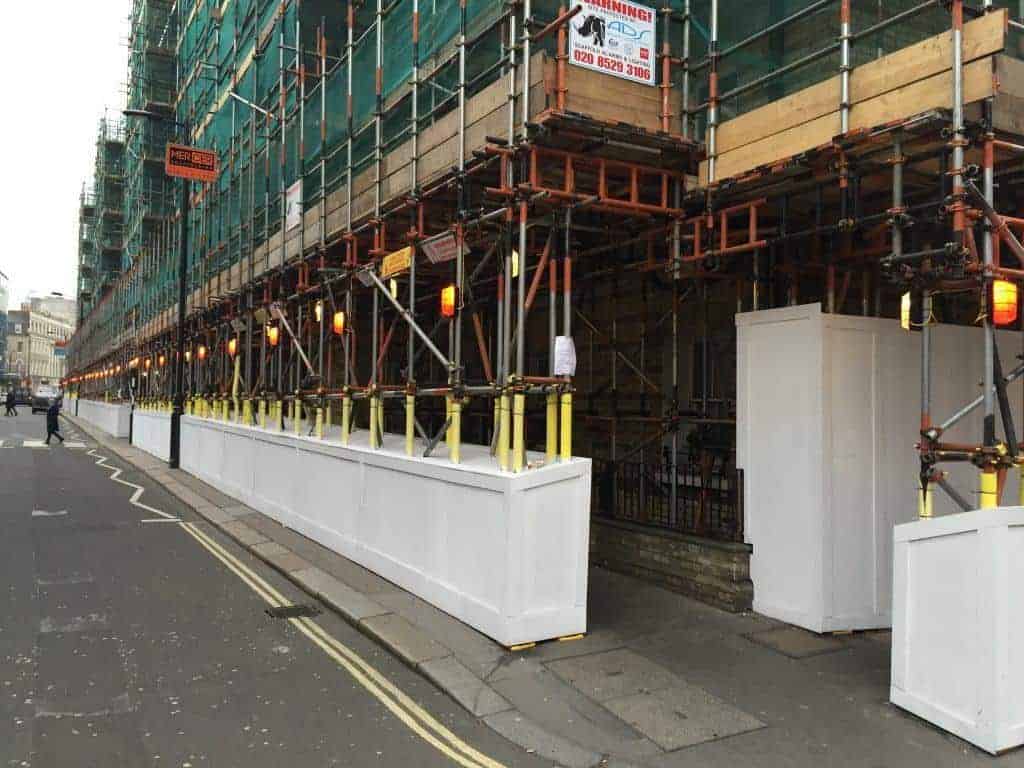
Welcome to ADS Security Installations Ltd, we are a family run company offering a complete site security service. With over 15 years experience in the security industry we have a wealth of knowledge in this industry. We are based in London & Hertfordshire and although the majority of our work is London based we cover anything within a 100 mile radius of London.
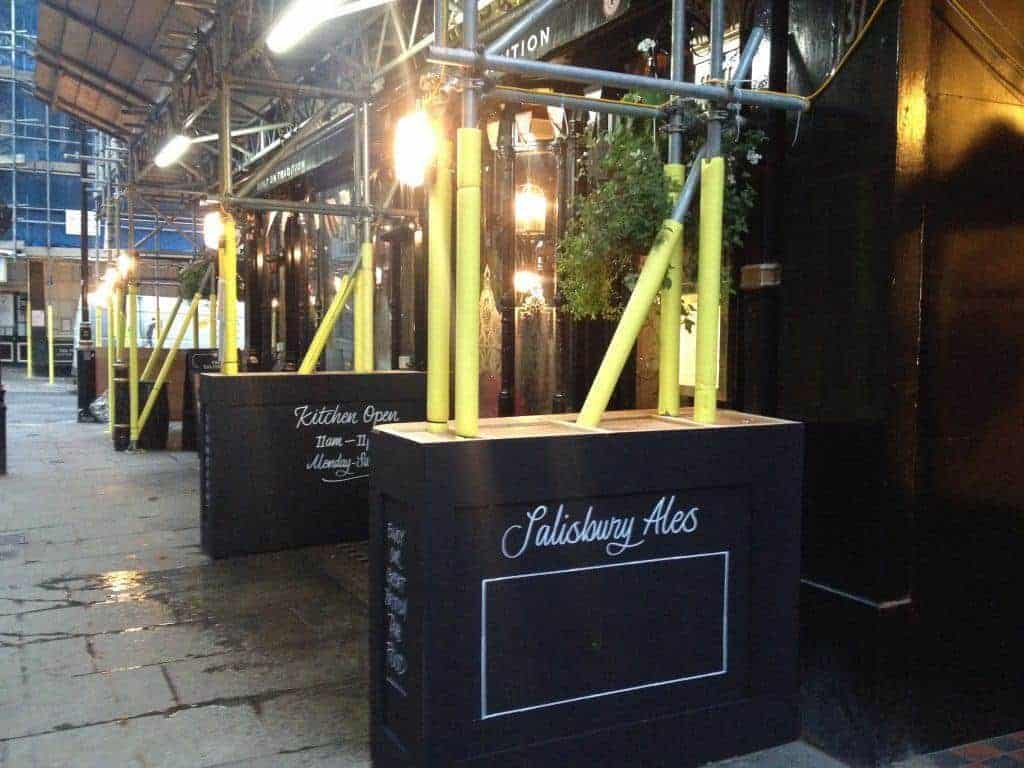
As a family run company we pride  ourselves on the more personal approach, reliability and presentation. We believe presentation is a key factor in our industry as the majority of the time it is our alarms, lighting, hoarding etc that your customer see’s first. With this in mind we take great pride in our work and ensure all our clients are satisfied with our high level of service.
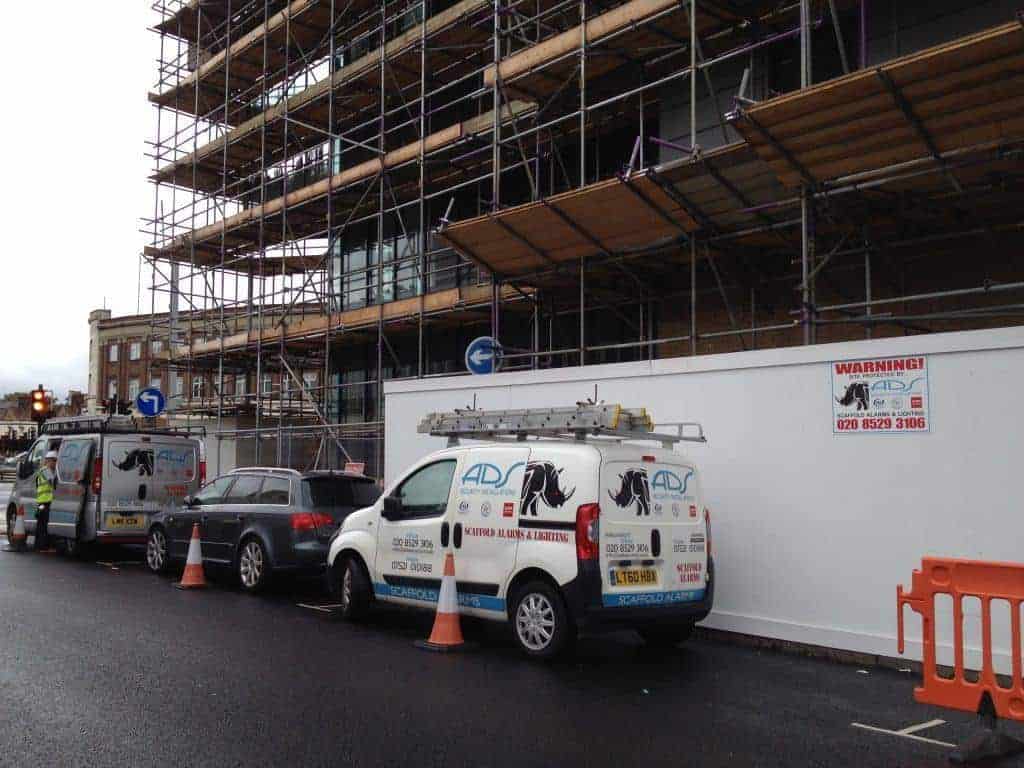
Here at ADS we are constantly innovating new products and offering new ideas relating to the site security industry. As a result we are the only scaffold alarm company to use LCD keypads on all our hardwired installations & all CPU’s are mounted in secure IP rated enclosures. We feel this keeps us steps ahead of our competitor’s which are still currently using analogue alarm systems and mounting them on a piece of wood. We prefer to use the more user friendly equipment, also our alarms look nice and tidy when installed in any home, office, site etc. ADS Security Installations makes it’s own high industry standards and make sure they are adhered too at all times. All equipment is regularly tested and complies with all UK & EU regulations and all installations meet the requirements of approved insurance installations.
ourselves on the more personal approach, reliability and presentation. We believe presentation is a key factor in our industry as the majority of the time it is our alarms, lighting, hoarding etc that your customer see’s first. With this in mind we take great pride in our work and ensure all our clients are satisfied with our high level of service.
Here at ADS we are constantly innovating new products and offering new ideas relating to the site security industry. As a result we are the only scaffold alarm company to use LCD keypads on all our hardwired installations & all CPU’s are mounted in secure IP rated enclosures. We feel this keeps us steps ahead of our competitor’s which are still currently using analogue alarm systems and mounting them on a piece of wood. We prefer to use the more user friendly equipment, also our alarms look nice and tidy when installed in any home, office, site etc. ADS Security Installations makes it’s own high industry standards and make sure they are adhered too at all times. All equipment is regularly tested and complies with all UK & EU regulations and all installations meet the requirements of approved insurance installations.
 Our business model is to offer our customer’s a professional and reliable service that doesn’t cost the earth. As we offer multiple services we can provide discounted prices on complete site security services, making us a one stop shop for all your site / scaffold security needs!!! We believe in treating all customer’s the same whether it is a small homeowner or a large contracting / scaffold firm. After all a poor installation is as good as no installation at all. We pride ourselves on our quick response, customer satisfaction and knowledge of the scaffold / construction site industry.
Safety is also a key part of our business and a a result of this we are Safe Contractor approved. Also all our operatives are CSCS & ROSPA ( safe working at height ) certified.
Our prices reflect our individuality and we are able to offer huge trade discounts for the larger, longer term contracts. We believe our prices are amongst the best you will see and we are so confident that we will offer a price match guarantee on all scaffold alarms & hoarding in London and surrounding areas.
WE OFFER A 20% DISCOUNT FOR ALL NEW CUSTOMER’S!!!
Please get in touch for your no obligation quotation and remember to look out for the Rhino on a site near you!!!
Contact info:
Website: www.adssecurity.co.uk
email: [email protected]
office: 020 8529 3106
mobile: 0752 1010 188
twitter: @scaffoldalarms
Our services include:
Scaffold / site alarm systems
Scaffold / site lighting ( 110v, 12v, battery operated )
Scaffold / site hoarding ( built to your exact requirements )
Alarm monitoring
Manned response & key holding.
Security fencing ( GS7 ) & Heras fencing.
Temporary electrics ( installed by 17th edition qualified electrician )
Scaffold yard – alarms & CCTV
Our business model is to offer our customer’s a professional and reliable service that doesn’t cost the earth. As we offer multiple services we can provide discounted prices on complete site security services, making us a one stop shop for all your site / scaffold security needs!!! We believe in treating all customer’s the same whether it is a small homeowner or a large contracting / scaffold firm. After all a poor installation is as good as no installation at all. We pride ourselves on our quick response, customer satisfaction and knowledge of the scaffold / construction site industry.
Safety is also a key part of our business and a a result of this we are Safe Contractor approved. Also all our operatives are CSCS & ROSPA ( safe working at height ) certified.
Our prices reflect our individuality and we are able to offer huge trade discounts for the larger, longer term contracts. We believe our prices are amongst the best you will see and we are so confident that we will offer a price match guarantee on all scaffold alarms & hoarding in London and surrounding areas.
WE OFFER A 20% DISCOUNT FOR ALL NEW CUSTOMER’S!!!
Please get in touch for your no obligation quotation and remember to look out for the Rhino on a site near you!!!
Contact info:
Website: www.adssecurity.co.uk
email: [email protected]
office: 020 8529 3106
mobile: 0752 1010 188
twitter: @scaffoldalarms
Our services include:
Scaffold / site alarm systems
Scaffold / site lighting ( 110v, 12v, battery operated )
Scaffold / site hoarding ( built to your exact requirements )
Alarm monitoring
Manned response & key holding.
Security fencing ( GS7 ) & Heras fencing.
Temporary electrics ( installed by 17th edition qualified electrician )
Scaffold yard – alarms & CCTV
 ourselves on the more personal approach, reliability and presentation. We believe presentation is a key factor in our industry as the majority of the time it is our alarms, lighting, hoarding etc that your customer see’s first. With this in mind we take great pride in our work and ensure all our clients are satisfied with our high level of service.
Here at ADS we are constantly innovating new products and offering new ideas relating to the site security industry. As a result we are the only scaffold alarm company to use LCD keypads on all our hardwired installations & all CPU’s are mounted in secure IP rated enclosures. We feel this keeps us steps ahead of our competitor’s which are still currently using analogue alarm systems and mounting them on a piece of wood. We prefer to use the more user friendly equipment, also our alarms look nice and tidy when installed in any home, office, site etc. ADS Security Installations makes it’s own high industry standards and make sure they are adhered too at all times. All equipment is regularly tested and complies with all UK & EU regulations and all installations meet the requirements of approved insurance installations.
ourselves on the more personal approach, reliability and presentation. We believe presentation is a key factor in our industry as the majority of the time it is our alarms, lighting, hoarding etc that your customer see’s first. With this in mind we take great pride in our work and ensure all our clients are satisfied with our high level of service.
Here at ADS we are constantly innovating new products and offering new ideas relating to the site security industry. As a result we are the only scaffold alarm company to use LCD keypads on all our hardwired installations & all CPU’s are mounted in secure IP rated enclosures. We feel this keeps us steps ahead of our competitor’s which are still currently using analogue alarm systems and mounting them on a piece of wood. We prefer to use the more user friendly equipment, also our alarms look nice and tidy when installed in any home, office, site etc. ADS Security Installations makes it’s own high industry standards and make sure they are adhered too at all times. All equipment is regularly tested and complies with all UK & EU regulations and all installations meet the requirements of approved insurance installations.
 Our business model is to offer our customer’s a professional and reliable service that doesn’t cost the earth. As we offer multiple services we can provide discounted prices on complete site security services, making us a one stop shop for all your site / scaffold security needs!!! We believe in treating all customer’s the same whether it is a small homeowner or a large contracting / scaffold firm. After all a poor installation is as good as no installation at all. We pride ourselves on our quick response, customer satisfaction and knowledge of the scaffold / construction site industry.
Safety is also a key part of our business and a a result of this we are Safe Contractor approved. Also all our operatives are CSCS & ROSPA ( safe working at height ) certified.
Our prices reflect our individuality and we are able to offer huge trade discounts for the larger, longer term contracts. We believe our prices are amongst the best you will see and we are so confident that we will offer a price match guarantee on all scaffold alarms & hoarding in London and surrounding areas.
WE OFFER A 20% DISCOUNT FOR ALL NEW CUSTOMER’S!!!
Please get in touch for your no obligation quotation and remember to look out for the Rhino on a site near you!!!
Contact info:
Website: www.adssecurity.co.uk
email: [email protected]
office: 020 8529 3106
mobile: 0752 1010 188
twitter: @scaffoldalarms
Our services include:
Scaffold / site alarm systems
Scaffold / site lighting ( 110v, 12v, battery operated )
Scaffold / site hoarding ( built to your exact requirements )
Alarm monitoring
Manned response & key holding.
Security fencing ( GS7 ) & Heras fencing.
Temporary electrics ( installed by 17th edition qualified electrician )
Scaffold yard – alarms & CCTV
Our business model is to offer our customer’s a professional and reliable service that doesn’t cost the earth. As we offer multiple services we can provide discounted prices on complete site security services, making us a one stop shop for all your site / scaffold security needs!!! We believe in treating all customer’s the same whether it is a small homeowner or a large contracting / scaffold firm. After all a poor installation is as good as no installation at all. We pride ourselves on our quick response, customer satisfaction and knowledge of the scaffold / construction site industry.
Safety is also a key part of our business and a a result of this we are Safe Contractor approved. Also all our operatives are CSCS & ROSPA ( safe working at height ) certified.
Our prices reflect our individuality and we are able to offer huge trade discounts for the larger, longer term contracts. We believe our prices are amongst the best you will see and we are so confident that we will offer a price match guarantee on all scaffold alarms & hoarding in London and surrounding areas.
WE OFFER A 20% DISCOUNT FOR ALL NEW CUSTOMER’S!!!
Please get in touch for your no obligation quotation and remember to look out for the Rhino on a site near you!!!
Contact info:
Website: www.adssecurity.co.uk
email: [email protected]
office: 020 8529 3106
mobile: 0752 1010 188
twitter: @scaffoldalarms
Our services include:
Scaffold / site alarm systems
Scaffold / site lighting ( 110v, 12v, battery operated )
Scaffold / site hoarding ( built to your exact requirements )
Alarm monitoring
Manned response & key holding.
Security fencing ( GS7 ) & Heras fencing.
Temporary electrics ( installed by 17th edition qualified electrician )
Scaffold yard – alarms & CCTV BREAKING: Two Men Injured In Scaffolding Collapse at Leeds Victoria Gate Development
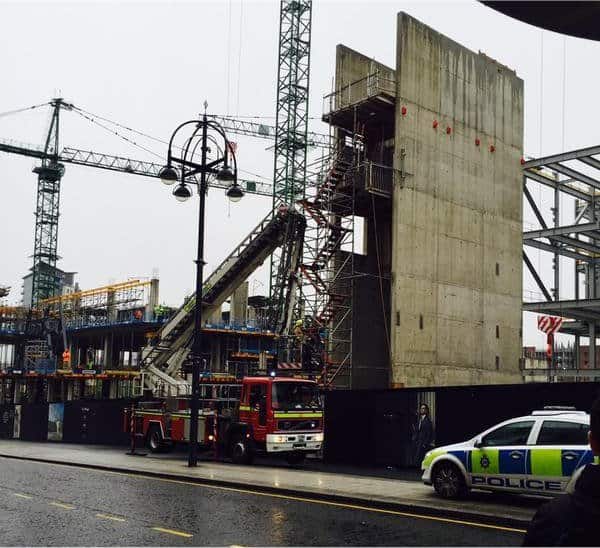
A man is in serious condition after two men were taken to hospital in Leeds when scaffolding collapsed at a construction site this morning.
One man has been reported to have fallen from height and a colleague was rescued from the top of the scaffold at Victoria Gate development in Leeds at around 8am this morning (5th May). Det Insp Andy Welbourn, of West Yorkshire Police, said the man that fell had “serious injuries”. The Health and Safety Executive was aware of the incident, he added. The development is to include a John Lewis store along with 30 other shops and an 800-space multi-storey car park. The development is due to open in 2016.
Not sure what’s going on at #leeds #victoriagate but hope no one is injured… pic.twitter.com/IQ3Xu9bETW
— Hazel Millichamp (@Hazelina) May 5, 2015
Scaffolding firm admits responsibility for death of dad

A Merseyside scaffolding firm has admitted responsibility for the death of a Liverpool dad who fell while working on the roof of the companies yard.
Kings Scaffolding of Netherley, Liverpool pleaded guilty to the corporate manslaughter of Adrian Smith on September 13, 2012. The 43-year-old died after an incident at the firm’s headquarters at Wheathill Industrial Estate in Holt Lane. Police said he was found lying on the ground with serious head, neck and upper body injuries at around 9.45am. The dad-of-three was taken to Whiston hospital in a critical condition but died overnight. A director from J&P Scaffolding, trading as Kings Scaffolding, appeared at Liverpool Crown Court on Tuesday 28th April 2015. The business admitted unlawfully killing Mr Smith “in gross breach of its duty to take reasonable care for his safety at work”. The charge said that Kings “exposed Mr Smith to a risk of death from carrying out repairs to the roof of the company premises and thereby caused his death”. It said the way the company was managed and organised led to Mr Smith’s death, in that it: – Instructed or permitted employees to work at height on an unsafe roof without proper safety measures being in place – Failed to put in place appropriate safety measures for working at height – Failed to perform a risk assessment for the carrying out of the repairs – Failed to instruct specialist contractors to carry out the repairs to the roof Judge Clement Goldstone, QC, said Kings would be sentenced by Mr Justice Turner on June 18 2015. David King, a manager at the firm, told local media everyone at the company was “devastated” by Mr Smith’s death. He said: “We accept this occurred and we wanted to do what was right and plead guilty to it. We didn’t want his family having to go through a trial. “This is a sad set of circumstances and we are all devastated that it happened as a family. Adrian was a good friend of ours. “We work with blue chip companies up and down the country. We are number one approved by Liverpool City Council. “Our safety record is excellent but something has occurred on our premises when he has gone to look at a skylight and fell through it. It is tragic.” The firm was previously fined £75,000 and told to pay £58,920 in costs over an accident in 2002, when three labourers were seriously injured when its scaffolding collapsed. Kings admitted health and safety breaches in 2005 relating to the 2002 incident, which involved work at a shop in Lower House Lane, West Derby. Mr King said the business was operating under different management at that time. Scaffolding was secured to brickwork on the building that was to be removed, and only four ties, rather than the recommended seven, were used. John Ollerhead, Leonard Davies and John McCabe, who were not Kings employees, were using the scaffold to repair the gable wall of the shop when it collapsed on October 26, 2002. Mr Ollerhead suffered permanent brain damage, Mr Davies was left unable to walk without assistance and Mr McCabe suffered hand injuries and a broken cheek bone.Don’t use shrink wrap on your next project!
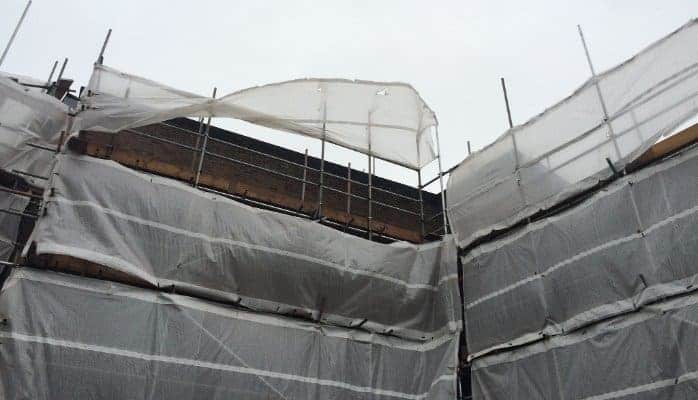
“I think you probably should not use shrink wrap sheeting for your next project” says company Director.
Steve Irlam of Rhino Shrink Wrap Martial Supplies has recently blogged about the advantages and disadvantages of using Shrink Wrap Sheeting. Within his informative article below Steve also highlights the responsibilities contractors face when using this specialised material. Traditional scaffold sheeting, like ‘Monarflex’, has long been available and provides some weather protection and a degree of ‘containment’ for many projects. Applied to the scaffolding in 2-3m wide strips, this product is low cost, widely available and every scaffolder has a ‘rough’ idea how to fit it. Shrink wrap sheeting, used for the last 15 years by the majority of the top 100 scaffolders and contractors in the UK on bridges, railways, power stations, airports – (anywhere where the sheeting detaching could have serious consequences for safety or the environment) is a more specialised activity. Because of this, scaffolders and contractors normally only consider shrink wrap when they are looking for a higher level of performance in one or more of the following areas; Containment – Activities such as shot blasting, generate residues which can be harmful to the environment. Because individual shrink wrap sheets are joined using a heat welding process, they create a ‘continuously bonded skin’ around a project. Traditional plastic sheeting and duct tape will not ‘cut it’ anymore for responsible contractors. Weather resistance – One of the first large scale uses for shrink wrap sheeting in the UK was the encapsulation and containment of scaffolding around the Forth Rail Bridge in Scotland where wind speeds could exceed 100mph. The environmental problems caused by detached sheeting and toxic paint residues being deposited in the Firth of Forth were prevented by using shrink wrap. Since then, shrink wrap sheeting has been used extensively by a wide range of clients such as Network Rail, National Grid and ‘heritage’ projects; anywhere detached sheeting could have serious implications. With a high performance product comes the responsibility to ensure that the scaffolding structure is engineered to withstand wind loads, (including point loadings). It is important that the specialist shrink wrap installers work together with scaffold designers, scaffolders and contractors.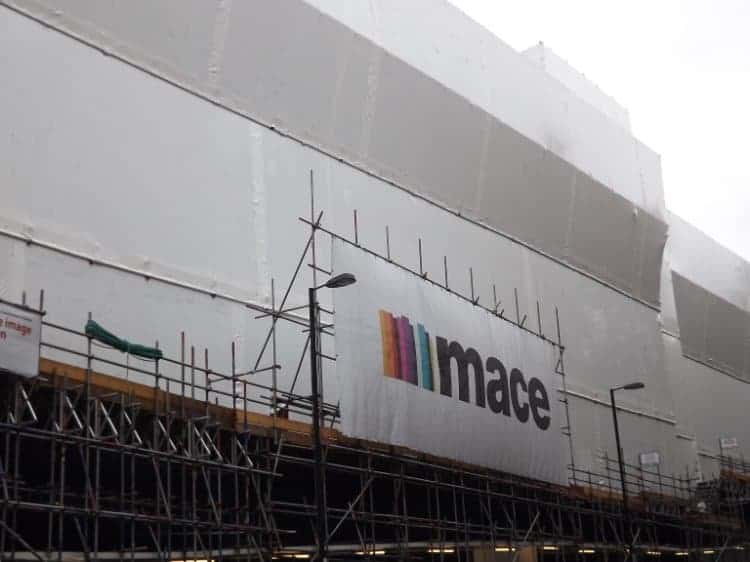 Appearance – The smart & professional appearance of scaffold sheeting, can be a benefit to contractors, particularly on high profile sites in urban areas such as Central London. Additionally, where scaffolding is erected around buildings which are occupied, such as hospitals or apartments, the noise of traditional scaffold sheeting flapping can cause complaints. Because shrink wrap sheeting is heat shrunk very tightly around the scaffolding, this problem can be minimised.
Despite the benefits of shrink wrap for scaffolding encapsulation and containment, here are 5 reasons you might not want to use shrink wrap on your next project;
1. YOU CAN’T WAIT FOR A WEATHER WINDOW
Once fitted and heat shrunk ‘drum tight’, scaffold shrink wrap is very resilient to wet and windy weather. However, to fit shrink wrap sheeting over and around a scaffolding structure successfully needs good weather during installation to get the best results, particularly to get that ‘signature’ drum tight finish from the heat shrink process.
2. YOU ARE ON A VERY TIGHT BUDGET
Although shrink wrap sheeting material costs from only £1.35/m2, shrink wrap will never be able to undercut traditional scaffold sheeting on price alone. With scaffold shrink wrap there will always be some extra labour costs for fitting by trained teams. Clients who need the extra performance of scaffold shrink wrap, generally understand the extra costs involved. If you just need a ‘bit of sheeting’ for a client who wants the lowest price at all costs then probably a traditional scaffold sheeting product like Monarflex is a better option. When using a shrink wrap scaffold sheet always make sure you obtain an up to date specification and flame retardant certificate, a ‘cheap’ shrink wrap may not have been engineered specifically for scaffolding use.
3. THE SITE WON’T ALLOW HOT AIR GUNS
The ability of scaffold shrink wrap to withstand high winds derives from it’s ability to be heat shrunk ‘drum tight’ around the scaffolding structure and to do this requires hot air to be blown across the surface of the sheet by a hot air gun! Shrink wrapping guns are usually powered by propane gas as this creates a powerful heat source that is able to shrink large areas rapidly. Industrial grade electric heat guns are available but compared to a propane gas shrink wrap gun the electric tools are slow, heavy and expensive tools and are not considered of practical use for the shrink wrapping of scaffolding.
4. YOU NEED TO MAKE LOTS OF ADAPTIONS
Traditional reinforced scaffold sheeting is easily removed and so ideal for situations where lots of adaptions are needed to the scaffolding structure. Once the shrink wrap has been heat welded into place, it cannot easily be removed and refitted.
5. THE SCAFFOLDING STRUCTURE IS NOT FLUSH
To get the full benefits from shrink wrapping, the scaffold structure should be ‘flush’ with no protruding ledgers, transoms or standards. This is particularly true where a high level of environmental containment is needed (such as a shot blasting and painting). Protruding tubes make fitting a sheet difficult and it can be time consuming to tape around each scaffold tube protrusion. If the structure cannot be built flush, or you do not want to cut any tubes then a traditional sheeting might be a better option.
In summary, shrink wrap sheeting is definitely not for every scaffolder or contractor.
Used correctly, shrink wrap sheeting can be very effective but like any tool, with a high level of performance comes a responsibility to ensure that the product is fitted properly and with proper regard to planning to ensure safe outcomes.
I hope you find this information useful. If you think others would too, please share!
I don’t claim to be an ‘expert’, I am always learning something, but the information in this article is based on many years personal experience setting up and running multiple shrink wrap installation teams and supplying materials to scaffold companies and construction contractors.
You can find more ‘how to’ guides, shrink wrapping case studies and product information at www.rhinoshrinkwrap.com
By Steve Irlam
See the original blog here
Appearance – The smart & professional appearance of scaffold sheeting, can be a benefit to contractors, particularly on high profile sites in urban areas such as Central London. Additionally, where scaffolding is erected around buildings which are occupied, such as hospitals or apartments, the noise of traditional scaffold sheeting flapping can cause complaints. Because shrink wrap sheeting is heat shrunk very tightly around the scaffolding, this problem can be minimised.
Despite the benefits of shrink wrap for scaffolding encapsulation and containment, here are 5 reasons you might not want to use shrink wrap on your next project;
1. YOU CAN’T WAIT FOR A WEATHER WINDOW
Once fitted and heat shrunk ‘drum tight’, scaffold shrink wrap is very resilient to wet and windy weather. However, to fit shrink wrap sheeting over and around a scaffolding structure successfully needs good weather during installation to get the best results, particularly to get that ‘signature’ drum tight finish from the heat shrink process.
2. YOU ARE ON A VERY TIGHT BUDGET
Although shrink wrap sheeting material costs from only £1.35/m2, shrink wrap will never be able to undercut traditional scaffold sheeting on price alone. With scaffold shrink wrap there will always be some extra labour costs for fitting by trained teams. Clients who need the extra performance of scaffold shrink wrap, generally understand the extra costs involved. If you just need a ‘bit of sheeting’ for a client who wants the lowest price at all costs then probably a traditional scaffold sheeting product like Monarflex is a better option. When using a shrink wrap scaffold sheet always make sure you obtain an up to date specification and flame retardant certificate, a ‘cheap’ shrink wrap may not have been engineered specifically for scaffolding use.
3. THE SITE WON’T ALLOW HOT AIR GUNS
The ability of scaffold shrink wrap to withstand high winds derives from it’s ability to be heat shrunk ‘drum tight’ around the scaffolding structure and to do this requires hot air to be blown across the surface of the sheet by a hot air gun! Shrink wrapping guns are usually powered by propane gas as this creates a powerful heat source that is able to shrink large areas rapidly. Industrial grade electric heat guns are available but compared to a propane gas shrink wrap gun the electric tools are slow, heavy and expensive tools and are not considered of practical use for the shrink wrapping of scaffolding.
4. YOU NEED TO MAKE LOTS OF ADAPTIONS
Traditional reinforced scaffold sheeting is easily removed and so ideal for situations where lots of adaptions are needed to the scaffolding structure. Once the shrink wrap has been heat welded into place, it cannot easily be removed and refitted.
5. THE SCAFFOLDING STRUCTURE IS NOT FLUSH
To get the full benefits from shrink wrapping, the scaffold structure should be ‘flush’ with no protruding ledgers, transoms or standards. This is particularly true where a high level of environmental containment is needed (such as a shot blasting and painting). Protruding tubes make fitting a sheet difficult and it can be time consuming to tape around each scaffold tube protrusion. If the structure cannot be built flush, or you do not want to cut any tubes then a traditional sheeting might be a better option.
In summary, shrink wrap sheeting is definitely not for every scaffolder or contractor.
Used correctly, shrink wrap sheeting can be very effective but like any tool, with a high level of performance comes a responsibility to ensure that the product is fitted properly and with proper regard to planning to ensure safe outcomes.
I hope you find this information useful. If you think others would too, please share!
I don’t claim to be an ‘expert’, I am always learning something, but the information in this article is based on many years personal experience setting up and running multiple shrink wrap installation teams and supplying materials to scaffold companies and construction contractors.
You can find more ‘how to’ guides, shrink wrapping case studies and product information at www.rhinoshrinkwrap.com
By Steve Irlam
See the original blog here