UK Construction Industry Outlook 2024: Key Trends and Challenges Revealed
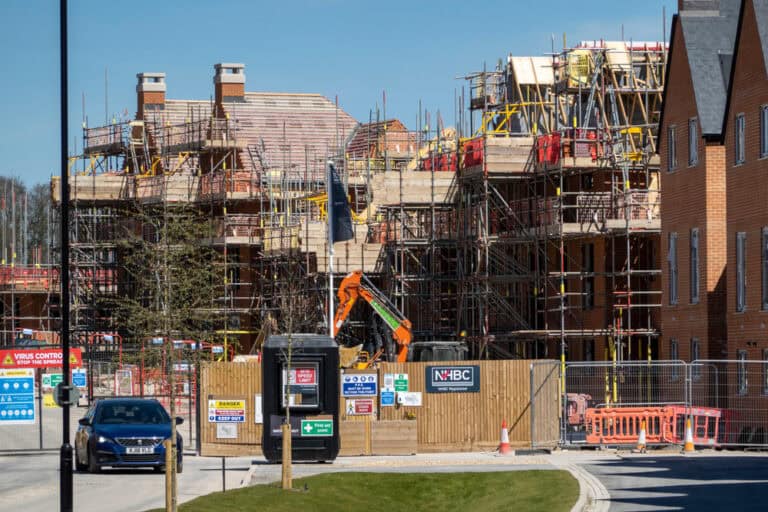
The UK construction industry outlook for 2024 presents a complex picture, with key declines in planning approvals and contract awards, according to the latest Glenigan report.
The report shows that detailed planning approvals have dropped sharply by 37% year-on-year, reflecting a challenging environment for new projects.
Main contract awards also fell by 7% compared to last year, while the value of new project starts remained flat overall. Despite these challenges, growth in the private housing and industrial sectors offers some hope for the future.
UK Construction Industry Outlook 2024: Key Trends and Challenges Revealed
The UK construction industry outlook for 2024 presents a complex picture, with key declines in planning approvals and contract awards, according to the latest Glenigan report.
The report shows that detailed planning approvals have dropped sharply by 37% year-on-year, reflecting a challenging environment for new projects.
Main contract awards also fell by 7% compared to last year, while the value of new project starts remained flat overall. Despite these challenges, growth in the private housing and industrial sectors offers some hope for the future.
Project Starts Hold Steady, But Major Developments Struggle
The report reveals that project starts have largely remained steady year-on-year, averaging £9.75 billion per month. However, there is a clear split between large and small projects. Major developments (those worth £100 million or more) have suffered a 23% decline compared to the previous quarter, while smaller projects (under £100 million) saw a 7% rise. “The latest data provides a somewhat positive outlook for the industry, with a rise in private housing and infrastructure starts underpinning a 7% rise in construction starts against the preceding three months,” said Allan Wilén, Glenigan’s Economics Director. However, he cautioned that the government’s decision to postpone various road and rail projects could limit future growth in infrastructure.Sector-by-Sector Overview
Private housing has been a bright spot, with project starts rising 30% compared to the previous quarter. “Increased confidence among developers, with an expected upturn in housing market activity, is expected to lead to a rise in private housing starts,” the report states. Despite this, the sector remains 4% down on a year ago, and social housing continues to struggle, with project starts dropping 21% compared to last year. The industrial sector showed impressive growth in the UK construction industry outlook 2024 report, with a 45% increase in project starts over the last three months. This is a notable 27% rise compared to last year, driven by projects like the £60 million development in Hillingdon, London. On the other hand, office construction has taken a hit, with starts down 47% compared to the previous quarter and 42% year-on-year. “Office starts performed poorly,” the report notes, as demand for new office spaces remains subdued. Retail projects also faced a tough period, with a 25% decline compared to the previous quarter and a 21% drop year-on-year.Infrastructure Projects Boosted by Key Developments
Civil engineering projects showed a more positive outlook, with an 18% rise in starts, underpinned by large infrastructure investments. Notable developments, such as the Old Oak Common Station in London, have helped infrastructure to start rising by 36% compared to last year. Wilén pointed out that infrastructure starts are encouraging but warned that “the government’s decision to postpone various road and rail projects may mean this upturn is short-lived.”Regional Disparities
The report highlights significant regional variations in construction activity. The East Midlands led the way, with a 65% rise in project starts compared to the previous quarter. Northern Ireland and the South West also performed well, with growth rates of 32% and 20%, respectively. However, the UK construction industry outlook 2024 was less positive for regions like Yorkshire and the Humber, Wales, and the North East, all of which experienced sharp declines in construction activity. The North East, for instance, saw a 35% fall in project starts compared to the previous quarter, while Yorkshire and Wales both experienced double-digit declines year-on-year.Economic Outlook Remains Uncertain
Although the UK economy grew by 0.6% in the second quarter of 2024, inflationary pressures and uncertainty around government spending on infrastructure continue to weigh on the sector’s outlook. The report notes that while fuel and material costs have begun to stabilise, inflation remains a concern. Manufacturers have seen input costs ease over the past year, which could help alleviate some pressure on construction costs. “Recent months have seen a drop in material costs compared to a year ago,” the report states, although it warns that wage inflation could still push up prices in the service sector.National Scaffolding Week Set to Return, Celebrating Industry Successes

The scaffolding industry is preparing to mark the return of National Scaffolding Week (NSW), which runs from 7th to 11th October 2024. Now in its second year, the initiative brings together key figures from across the sector, with the aim of celebrating its successes and driving future growth.
FIRST LAUNCHED in 2022, NSW has quickly become a significant event in the scaffolding calendar, highlighting the industry’s vital role within the UK economy. The sector is estimated to contribute £2.86 billion annually, supporting more than 34,000 operatives and over 6,000 businesses. The week will serve as a platform for companies and professionals to showcase their achievements, promote innovation, and address the challenges facing the industry.A Week of Events and Recognition
The highlight of NSW will be the Scaffolding Conference and Dinner Dance, scheduled for 11th October at The Belfry. This event will bring together leaders from across the scaffolding industry to discuss the future of the sector, share ideas, and recognise the outstanding achievements of individuals and teams through the #ScaffStar awards. These awards aim to celebrate the unsung heroes within scaffolding who have made exceptional contributions to the industry. In addition, a CITB skills and funding webinar on 8th October will offer practical advice to businesses. The session will provide insights into available funding options and strategies to address skills shortages, a key issue for many in the construction sector.Supporting Charity and Future Talent
This year, NSW is also partnering with CRASH Charity, which supports construction projects for homeless people and those in need of hospice care. Funds will be raised through a raffle at the ScaffCon24 after-party, offering attendees the chance to support a worthy cause. NSW organisers are encouraging businesses and individuals to get involved, whether through participating in events, engaging in social media campaigns, or promoting the industry to future talent. The campaign aims to tackle key issues such as workforce development and the need for new talent in the sector.A Call to Action
Speaking ahead of the event, Robert Candy, Chief Executive of the Scaffolding Association, emphasised the importance of collaboration within the sector. “National Scaffolding Week is about recognising the essential role our industry plays in the economy, but also about coming together to ensure we have a skilled workforce for the future.” Stakeholders are being urged to take part in the week’s activities, with resources available via the NSW website, including a downloadable toolkit and email footers to help promote the initiative. Businesses can sign up as official supporters of the event at no cost, ensuring their participation in this industry-wide effort. For more information on how to get involved in National Scaffolding Week, visit www.nationalscaffoldingweek.com or www.scaffoldconference.co.uk.Galliford Try Surpasses Profit and Revenue Forecasts Amid Strong Growth
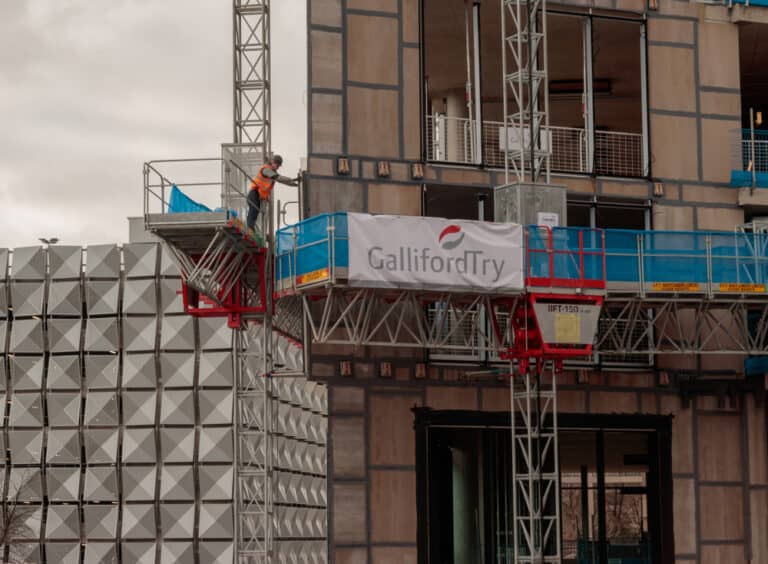
Construction firm Galliford Try has exceeded expectations with both revenue and profit growth, as a surge in building and infrastructure projects bolstered the company’s performance.
The Uxbridge-based company reported a 27.2% increase in revenues for the year ending June 30, reaching £1.77 billion.
Shares in the firm rose by 4.3% in early trading on Thursday as executives expressed confidence in the company’s future prospects. Galliford Try’s chief executive, Bill Hocking, pointed to a “strong pipeline” of new opportunities and praised the firm’s focus on careful risk management and contract selection, saying, “Our strong progress, well ahead of plan, provided us with the confidence to reset our ambitions over the mid-term.”
The company’s building division posted a 17.7% increase in revenues, totalling £938.3 million. This growth was attributed to projects that had been delayed by public sector procurement issues and inflationary pressures, which are now back on track.
Galliford Try’s infrastructure division, which focuses on highways and environmental projects, saw an even larger increase of 38.8%, with revenues climbing to £819.8 million.
Pre-exceptional profits before tax surged by almost 40% to £32.7 million, reflecting the company’s year-on-year solid performance. Hocking emphasised that Galliford Try would continue to focus on “delivering strong performance,” supported by its robust balance sheet and solid client relationships.
Julie Palmer, partner at Begbies Traynor, commended the company’s resilience in a challenging year for the construction sector, noting the rise in insolvencies across the industry. “Galliford Try has adeptly weathered the storm, delivering a solid performance,” she said, adding that the results are particularly impressive in light of the sector’s economic pressures.
Despite concerns about potential challenges in the wider construction market, the company remains optimistic, buoyed by its current order book and future opportunities.
HAKI Safety Expands Geodesy Offerings in Norway
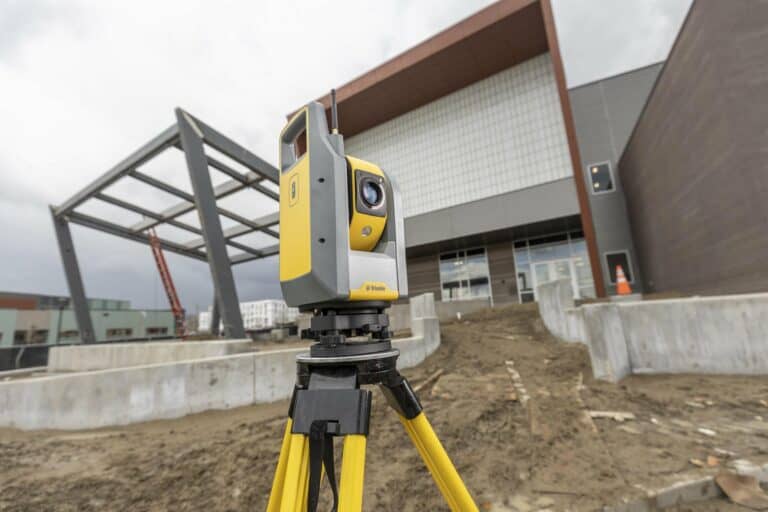
HAKI Safety has broadened its geodesy product range in Norway, thanks to its subsidiary, Norgeodesi, securing the sales rights for Trimble’s BuildingPoint instruments and software.
This development positions the company to offer advanced total station equipment to a broader range of customers who require precise measurement and surveying solutions.
Norgeodesi, already an authorised distributor of Trimble’s surveying instruments in Norway, is renowned for providing specialised equipment for the construction, civil engineering, and surveying sectors. With this new expansion, the company will offer Trimble’s BuildingPoint technology, further enhancing its portfolio for customers in industries such as construction and public infrastructure projects.
Joh Einar Solhaug, Managing Director of Norgeodesi at HAKI Safety, expressed his excitement about the opportunity to introduce this advanced technology to new markets:
“I am delighted to have the opportunity to market and sell Trimble’s BuildingPoint on the Norwegian market. Norgeodesi has delivered products for surveying and road and tunnel projects for many years. With the expanded Trimble product range, we can target new customers and sectors, broadening our markets. We also see synergies with HAKI Safety’s other product ranges for temporary workplaces, which creates added value for our customers.”
Norgeodesi has a long history of expertise in the geodesy field, having been an authorised distributor of the Swedish Geodimeter since 1983, prior to its acquisition by Trimble in 2000. This established relationship allows the company to provide state-of-the-art equipment and comprehensive services, including technical support, maintenance, and training.
The expansion of Norgeodesi’s Trimble offerings is expected to strengthen its presence in key sectors, particularly municipal and public works and private construction and engineering firms across Norway.
Data Report Highlights Sector-Wide Impact of ISG’s Sudden Collapse

The sudden collapse of ISG has sent ripples through the UK construction industry, leaving numerous projects in jeopardy and sparking concern across the sector.
In response, Glenigan has released an in-depth report shedding light on the extent of the impact and the potential opportunities for companies able to adapt to the situation.
 The collapse has had a particularly strong impact on London, where 24 projects, collectively valued at £1.863 billion, have been halted. This includes two data centre developments, each worth over £150 million, which are now stalled. The effects are not limited to the capital, with businesses across the country facing uncertainty and financial strain.
Glenigan’s regional analysis highlights the significant disruption but also points to the commercial opportunities for agile suppliers to step in. “This situation presents a major problem for both contractors and subcontractors, many of which will be left seriously out of pocket, putting a large number of jobs on the line,” Glenigan reports.
The collapse has had a particularly strong impact on London, where 24 projects, collectively valued at £1.863 billion, have been halted. This includes two data centre developments, each worth over £150 million, which are now stalled. The effects are not limited to the capital, with businesses across the country facing uncertainty and financial strain.
Glenigan’s regional analysis highlights the significant disruption but also points to the commercial opportunities for agile suppliers to step in. “This situation presents a major problem for both contractors and subcontractors, many of which will be left seriously out of pocket, putting a large number of jobs on the line,” Glenigan reports.
The Numbers Behind the Crisis
According to Glenigan’s analysis, ISG had a substantial presence in the UK construction market. A third of its project pipeline was dedicated to public sector work, while industrial, commercial, and private housing projects accounted for over £2.8 billion of its active contracts. Several high-profile developments have been thrown into uncertainty, including:- Fujifilm Diosynth Biotechnologies Facility in Billingham, valued at £200 million
- Slough Data Centre Campus Phase 2 in Berkshire, worth another £200 million
- Institute of Neurology for UCL in London, at £158 million
Regional Fallout
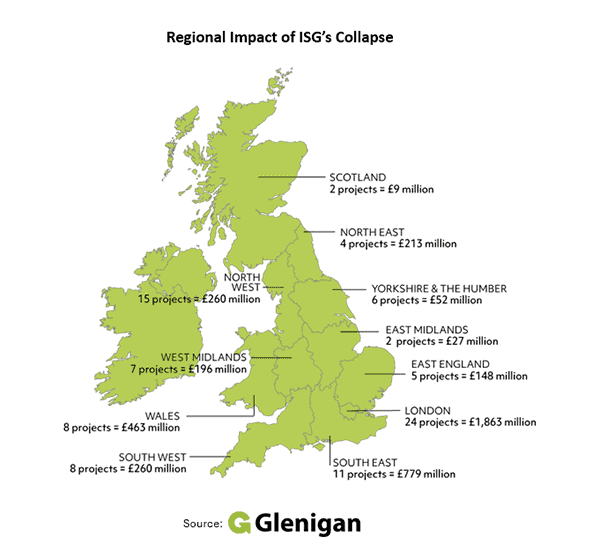 The collapse has had a particularly strong impact on London, where 24 projects, collectively valued at £1.863 billion, have been halted. This includes two data centre developments, each worth over £150 million, which are now stalled. The effects are not limited to the capital, with businesses across the country facing uncertainty and financial strain.
Glenigan’s regional analysis highlights the significant disruption but also points to the commercial opportunities for agile suppliers to step in. “This situation presents a major problem for both contractors and subcontractors, many of which will be left seriously out of pocket, putting a large number of jobs on the line,” Glenigan reports.
The collapse has had a particularly strong impact on London, where 24 projects, collectively valued at £1.863 billion, have been halted. This includes two data centre developments, each worth over £150 million, which are now stalled. The effects are not limited to the capital, with businesses across the country facing uncertainty and financial strain.
Glenigan’s regional analysis highlights the significant disruption but also points to the commercial opportunities for agile suppliers to step in. “This situation presents a major problem for both contractors and subcontractors, many of which will be left seriously out of pocket, putting a large number of jobs on the line,” Glenigan reports.
Opportunities Amid the Uncertainty
Despite the immediate challenges, Glenigan’s data suggests there could be openings for companies able to quickly pivot. “There is a commercial opportunity for agile suppliers to step into the breach, ensuring many of these projects do not fall behind and involved subcontractors are supported,” Glenigan stated. While the full extent of ISG’s collapse is still unfolding, it’s clear that the construction industry faces significant challenges in the months ahead. However, for those companies prepared to respond rapidly, there may be room to navigate through the disruption and take on new projects, potentially offsetting some of the broader industry impacts.Data Report Highlights Sector-Wide Impact of ISG’s Sudden Collapse
The sudden collapse of ISG has sent ripples through the UK construction industry, leaving numerous projects in jeopardy and sparking concern across the sector.
In response, Glenigan has released an in-depth report shedding light on the extent of the impact and the potential opportunities for companies able to adapt to the situation.
The collapse has had a particularly strong impact on London, where 24 projects, collectively valued at £1.863 billion, have been halted. This includes two data centre developments, each worth over £150 million, which are now stalled. The effects are not limited to the capital, with businesses across the country facing uncertainty and financial strain.
Glenigan’s regional analysis highlights the significant disruption but also points to the commercial opportunities for agile suppliers to step in. “This situation presents a major problem for both contractors and subcontractors, many of which will be left seriously out of pocket, putting a large number of jobs on the line,” Glenigan reports.
The Numbers Behind the Crisis
According to Glenigan’s analysis, ISG had a substantial presence in the UK construction market. A third of its project pipeline was dedicated to public sector work, while industrial, commercial, and private housing projects accounted for over £2.8 billion of its active contracts. Several high-profile developments have been thrown into uncertainty, including:- Fujifilm Diosynth Biotechnologies Facility in Billingham, valued at £200 million
- Slough Data Centre Campus Phase 2 in Berkshire, worth another £200 million
- Institute of Neurology for UCL in London, at £158 million
Regional Fallout
The collapse has had a particularly strong impact on London, where 24 projects, collectively valued at £1.863 billion, have been halted. This includes two data centre developments, each worth over £150 million, which are now stalled. The effects are not limited to the capital, with businesses across the country facing uncertainty and financial strain.
Glenigan’s regional analysis highlights the significant disruption but also points to the commercial opportunities for agile suppliers to step in. “This situation presents a major problem for both contractors and subcontractors, many of which will be left seriously out of pocket, putting a large number of jobs on the line,” Glenigan reports.
Opportunities Amid the Uncertainty
Despite the immediate challenges, Glenigan’s data suggests there could be openings for companies able to quickly pivot. “There is a commercial opportunity for agile suppliers to step into the breach, ensuring many of these projects do not fall behind and involved subcontractors are supported,” Glenigan stated. While the full extent of ISG’s collapse is still unfolding, it’s clear that the construction industry faces significant challenges in the months ahead. However, for those companies prepared to respond rapidly, there may be room to navigate through the disruption and take on new projects, potentially offsetting some of the broader industry impacts.Data Report Highlights Sector-Wide Impact of ISG’s Sudden Collapse
The sudden collapse of ISG has sent ripples through the UK construction industry, leaving numerous projects in jeopardy and sparking concern across the sector.
In response, Glenigan has released an in-depth report shedding light on the extent of the impact and the potential opportunities for companies able to adapt to the situation.
The collapse has had a particularly strong impact on London, where 24 projects, collectively valued at £1.863 billion, have been halted. This includes two data centre developments, each worth over £150 million, which are now stalled. The effects are not limited to the capital, with businesses across the country facing uncertainty and financial strain.
Glenigan’s regional analysis highlights the significant disruption but also points to the commercial opportunities for agile suppliers to step in. “This situation presents a major problem for both contractors and subcontractors, many of which will be left seriously out of pocket, putting a large number of jobs on the line,” Glenigan reports.
The Numbers Behind the Crisis
According to Glenigan’s analysis, ISG had a substantial presence in the UK construction market. A third of its project pipeline was dedicated to public sector work, while industrial, commercial, and private housing projects accounted for over £2.8 billion of its active contracts. Several high-profile developments have been thrown into uncertainty, including:- Fujifilm Diosynth Biotechnologies Facility in Billingham, valued at £200 million
- Slough Data Centre Campus Phase 2 in Berkshire, worth another £200 million
- Institute of Neurology for UCL in London, at £158 million
Regional Fallout
The collapse has had a particularly strong impact on London, where 24 projects, collectively valued at £1.863 billion, have been halted. This includes two data centre developments, each worth over £150 million, which are now stalled. The effects are not limited to the capital, with businesses across the country facing uncertainty and financial strain.
Glenigan’s regional analysis highlights the significant disruption but also points to the commercial opportunities for agile suppliers to step in. “This situation presents a major problem for both contractors and subcontractors, many of which will be left seriously out of pocket, putting a large number of jobs on the line,” Glenigan reports.
Opportunities Amid the Uncertainty
Despite the immediate challenges, Glenigan’s data suggests there could be openings for companies able to quickly pivot. “There is a commercial opportunity for agile suppliers to step into the breach, ensuring many of these projects do not fall behind and involved subcontractors are supported,” Glenigan stated. While the full extent of ISG’s collapse is still unfolding, it’s clear that the construction industry faces significant challenges in the months ahead. However, for those companies prepared to respond rapidly, there may be room to navigate through the disruption and take on new projects, potentially offsetting some of the broader industry impacts.Data Report Highlights Sector-Wide Impact of ISG’s Sudden Collapse
The sudden collapse of ISG has sent ripples through the UK construction industry, leaving numerous projects in jeopardy and sparking concern across the sector.
In response, Glenigan has released an in-depth report shedding light on the extent of the impact and the potential opportunities for companies able to adapt to the situation.
The collapse has had a particularly strong impact on London, where 24 projects, collectively valued at £1.863 billion, have been halted. This includes two data centre developments, each worth over £150 million, which are now stalled. The effects are not limited to the capital, with businesses across the country facing uncertainty and financial strain.
Glenigan’s regional analysis highlights the significant disruption but also points to the commercial opportunities for agile suppliers to step in. “This situation presents a major problem for both contractors and subcontractors, many of which will be left seriously out of pocket, putting a large number of jobs on the line,” Glenigan reports.
The Numbers Behind the Crisis
According to Glenigan’s analysis, ISG had a substantial presence in the UK construction market. A third of its project pipeline was dedicated to public sector work, while industrial, commercial, and private housing projects accounted for over £2.8 billion of its active contracts. Several high-profile developments have been thrown into uncertainty, including:- Fujifilm Diosynth Biotechnologies Facility in Billingham, valued at £200 million
- Slough Data Centre Campus Phase 2 in Berkshire, worth another £200 million
- Institute of Neurology for UCL in London, at £158 million
Regional Fallout
The collapse has had a particularly strong impact on London, where 24 projects, collectively valued at £1.863 billion, have been halted. This includes two data centre developments, each worth over £150 million, which are now stalled. The effects are not limited to the capital, with businesses across the country facing uncertainty and financial strain.
Glenigan’s regional analysis highlights the significant disruption but also points to the commercial opportunities for agile suppliers to step in. “This situation presents a major problem for both contractors and subcontractors, many of which will be left seriously out of pocket, putting a large number of jobs on the line,” Glenigan reports.
Opportunities Amid the Uncertainty
Despite the immediate challenges, Glenigan’s data suggests there could be openings for companies able to quickly pivot. “There is a commercial opportunity for agile suppliers to step into the breach, ensuring many of these projects do not fall behind and involved subcontractors are supported,” Glenigan stated. While the full extent of ISG’s collapse is still unfolding, it’s clear that the construction industry faces significant challenges in the months ahead. However, for those companies prepared to respond rapidly, there may be room to navigate through the disruption and take on new projects, potentially offsetting some of the broader industry impacts.Data Report Highlights Sector-Wide Impact of ISG’s Sudden Collapse
The sudden collapse of ISG has sent ripples through the UK construction industry, leaving numerous projects in jeopardy and sparking concern across the sector.
In response, Glenigan has released an in-depth report shedding light on the extent of the impact and the potential opportunities for companies able to adapt to the situation.
The collapse has had a particularly strong impact on London, where 24 projects, collectively valued at £1.863 billion, have been halted. This includes two data centre developments, each worth over £150 million, which are now stalled. The effects are not limited to the capital, with businesses across the country facing uncertainty and financial strain.
Glenigan’s regional analysis highlights the significant disruption but also points to the commercial opportunities for agile suppliers to step in. “This situation presents a major problem for both contractors and subcontractors, many of which will be left seriously out of pocket, putting a large number of jobs on the line,” Glenigan reports.
The Numbers Behind the Crisis
According to Glenigan’s analysis, ISG had a substantial presence in the UK construction market. A third of its project pipeline was dedicated to public sector work, while industrial, commercial, and private housing projects accounted for over £2.8 billion of its active contracts. Several high-profile developments have been thrown into uncertainty, including:- Fujifilm Diosynth Biotechnologies Facility in Billingham, valued at £200 million
- Slough Data Centre Campus Phase 2 in Berkshire, worth another £200 million
- Institute of Neurology for UCL in London, at £158 million
Regional Fallout
The collapse has had a particularly strong impact on London, where 24 projects, collectively valued at £1.863 billion, have been halted. This includes two data centre developments, each worth over £150 million, which are now stalled. The effects are not limited to the capital, with businesses across the country facing uncertainty and financial strain.
Glenigan’s regional analysis highlights the significant disruption but also points to the commercial opportunities for agile suppliers to step in. “This situation presents a major problem for both contractors and subcontractors, many of which will be left seriously out of pocket, putting a large number of jobs on the line,” Glenigan reports.