Construction workers at Stanlow oil refinery in Cheshire have reached an agreement for an enhanced bonus payment after initial plans for industrial action. This agreement involves more than 450 construction workers, including scaffolders associated with the National Agreement for the Engineering Construction Industry (NAECI) and employed by various contractors at the facility.As reported previously, the strike was initially scheduled for Tuesday, 18 July. However, it was cancelled after employers expressed a willingness to enter into renewed discussions about the bonus rate. Following these discussions, the hourly bonus rate was adjusted from 80 pence to £2.37, representing a notable increase.Unite general secretary Sharon Graham provided insights into the outcome, remarking, “This negotiation process showcased the importance of collective dialogue and collaboration. From the outset, our stance was rooted in the belief that a re-evaluation of the bonus payment was plausible, and the final agreement resonated with this viewpoint.”The bonus rate issue at Stanlow is among several other similar situations affecting NAECI-affiliated workers across the UK. Given the current economic landscape and rising inflation rates, workers have sought pay adjustments, especially since there have been hesitations from employers nationally to augment basic wage rates.Lee Brennan, a regional officer for Unite, acknowledged the role of union representatives in the process, noting, “Their consolidated efforts, even while representing workers from diverse employers, were pivotal. It’s through such collective endeavors that negotiation outcomes often find middle ground.”The GMB union’s involvement was also noted in the recent discussions at the refinery.
Industrial Textiles and Plastics (ITP) Ltd, a leading manufacturer of scaffold sheeting and related materials, has announced the appointment of Matt Thompson as Sales Director. The move comes as part of ITP’s strategic plan to support continued growth and expansion across various markets.Thompson brings over two decades of expertise from the construction industry to his new role at ITP. He previously served as UK Commercial Director at Zip-Clip, a renowned manufacturer of high-specification suspension and bracing systems. His comprehensive understanding of the construction industry’s supply chain and effective sales strategy will be instrumental in expanding ITP’s market presence across its diverse product portfolio.Marc van der Voort, managing director at ITP, welcomed the appointment, stating, “Matt will provide a dynamic presence to drive the continued development of our business across a wide range of markets, including construction, environmental protection, petrochemical, marine and offshore. His ability to engage with our broad customer base will be invaluable.”Thrilled by his appointment, Thompson expressed his eagerness to join ITP. He noted, “ITP has been at the forefront of advances in industry standards in the UK, advocating and driving improvements in fire safety in the building envelope and scaffolding solutions. With their vast experience and commitment to product development, ITP is a market-leading manufacturer with a global presence and a platform that is great for building relationships with new and existing clients.”ITP has consistently expanded its product range, offering hundreds of materials in various sizes, specifications, and uses. The company is based in Easingwold, North Yorkshire, where its factory facilitates in-house processing of materials, including surface coating, finishing, and large-format flexographic or digital printing.
Over 300 scaffolders working at the Hinkley Point nuclear power station have initiated unofficial strike action, voicing their concerns about pay rates and shift patterns at the site. According to Construction Enquirer, the workers, employed by BYLOR, a joint venture between Bouygues TP and Laing O’Rourke, began their protest on Wednesday and are now planning to take one day a week off work as a form of unofficial strike.Tensions have been escalating on-site for some time, with workers expressing dissatisfaction over their current compensation package. One worker, speaking to the Construction Enquirer, said, “We have been wanting the mechanical rate, our travel pay is way below what the MEH Alliance get. This week we just made a stand, it’s not a happy camp here.”This recent unrest comes on the heels of last week’s walkout by around 125 mechanical and electrical workers under the MEH Alliance. The catalyst for this walkout was an employer’s decision to slash travel allowances by 50%. The MEH Alliance consists of Altrad, Balfour Beatty Bailey, Cavendish Nuclear, and Doosan Babcock.In response to the workers’ actions, it is understood that the MEH Alliance contractors have agreed to restore travel allowances to their original level. However, it remains unclear whether this action will serve to quell the growing discontent among the BYLOR-employed scaffolders at Hinkley Point.As one of the largest construction projects in Europe, any disruptions at Hinkley Point could have far-reaching implications for the broader UK energy sector.
G-DECK has unveiled a brand new scaffold staircase solution that promises enhanced safety and efficiency in construction.
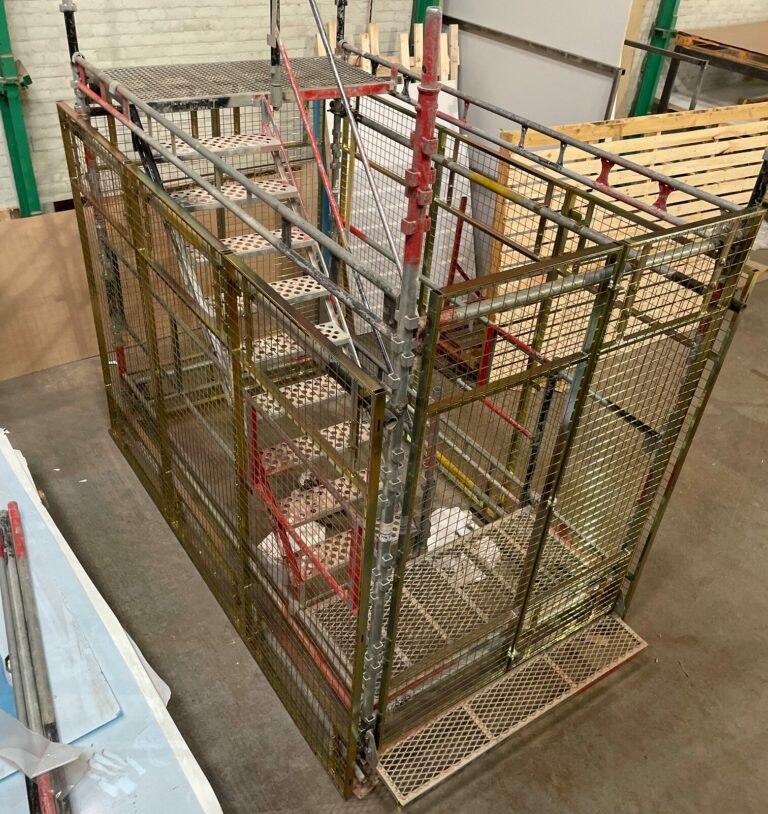
In a landmark development for the construction industry, G-DECK, a now well-known leader in safety systems and products, has launched its ground-breaking NO-TIES G-DECK Temporary Scaffold Staircase Surround.
Equipped with a Tower Security Gate and Quick Hook-On Panels, its makers promise it will transform on-site safety and streamline construction processes.
Temporary scaffold staircases have emerged as crucial elements in the protection of construction site staircases, allowing workers safe and straightforward access to different levels.
However, conventional securing methods often pose inefficiencies and excessive labour demands. The meticulously designed NO-TIES G-DECK Temporary Scaffold Staircase Surround aims to counteract these drawbacks, promoting a safer, more productive work environment.
In a bid to curb unauthorised access, the new scaffold solution incorporates a robust Tower Security Gate, hence reinforcing the on-site safety measures. Meanwhile, the UK Registered design quick hook-on latch and spigot connect system facilitates easy and secure assembly, removing the necessity for scaffold clamps or additional support.
The result is a hassle-free installation and removal process that conserves invaluable time and resources.
Constructed with premium steel and coated with a secret zinc solution, the G-DECK Surround promises exceptional stability and durability, rendering it suitable for construction projects of varying scales.
The product not only complies with the industry safety standards but also offers customisation options such as powder-coating in company-specific colours and addition of logo plates for branding and ownership identification.
Gaz Bains, Founder of G-DECK, expressed his excitement over the new product. “We are thrilled to introduce the NO-TIES G-DECK Temporary Scaffold Staircase Surround, a result of our commitment to innovation and safety,” Bains said.
“With this game-changing product, we aim to transform the construction industry by providing a seamless, secure, and efficient security solution for temporary staircases.”
The NO-TIES G-DECK Temporary Scaffold Staircase Surround is now available for purchase. For further information, visit www.gdecking.com
Engineering construction workers affiliated with the Blue Book agreement have resoundingly declined the final pay rise offer proposed by contractors. The proposal, which was presented last month by contractors under the National Agreement for Engineering Construction Industry (NAECI), would affect a workforce of approximately 7,000. The offer follows a 75p per hour cost of living increment agreed upon half a year ago.The current two-year pay proposal stipulates an 8.5% increase in hourly rates and travel allowance for 2024. A subsequent 3.5% increase would follow in 2025, with the potential for up to a 5% rise if the consumer price index stays above 3.5%. Contractors, however, caution that future economic uncertainty in the UK has deterred investment and development, leading to fewer major new builds on the immediate horizon.John Simpson, Managing Director of the Engineering Construction Industry Association, emphasised the challenging financial circumstances of the industry in a letter to the GMB and Unite unions. He noted: “Commercial margins within engineering construction remain extremely tight. While we hope that some of the energy transition projects will reach a final investment decision within the next year, the prospect of NAECI ‘boots on the ground’ on these projects is likely further off than either party would prefer.”
Possible Industrial Action
With a staggering 92% of Unite’s members voting against the wage offer and 98% of these members indicating readiness for strike action, unions are now contemplating the possibility of industrial action. James Poulter, Construction Officer at Unite, declared, “Given these results, on a full and final offer, we are now formally disputing overpay. As such, we will be preparing for a ballot of our members for lawful industrial action.”Poulter expressed that, despite the disagreement, the union remained open to further negotiations and urged for dialogue between parties as soon as possible. “An offer to meet and negotiate further will remain on the table throughout the process of preparing for and the balloting of members. I will confirm expected dates of ballots in due course; this is expected to take place between August and September,” he added.The looming potential of industrial action underscores the escalating tensions between the engineering construction workforce and contractors. If unresolved, this dispute could cause significant disruption to the UK’s construction industry in the coming months.
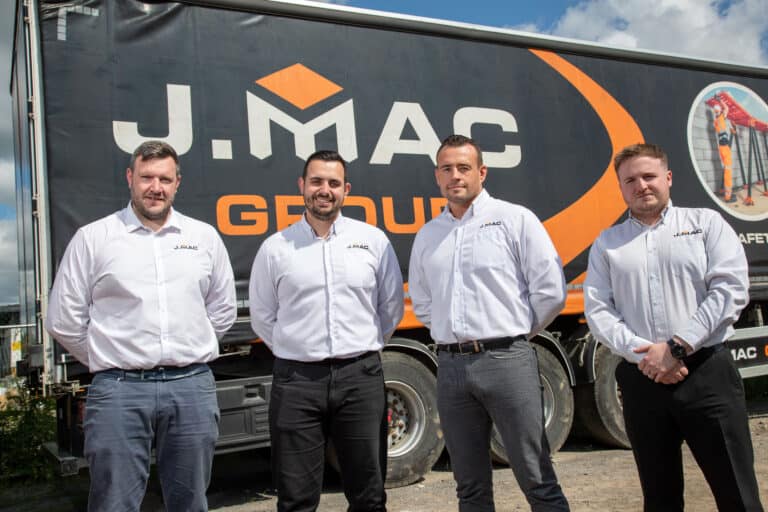
Teesside-based company JMAC, a prominent player in the scaffolding access and multi-discipline industrial services sectors, has announced a significant restructuring within its family-owned business. The four distinctive brands previously operated independently under the company’s banner will now be consolidated into a single brand known as the JMAC Group.This consolidation represents a noteworthy shift in the business landscape for access and multi-discipline services across the United Kingdom. The four integrated brands – JMAC Scaffolding, JMAC Industrial Services, JMAC Hire & Sales, and JMAC Contracting Services – are each anticipated to bring their unique expertise to the newly combined group.The new group structure promises exciting growth potential and is expected to broaden career opportunities within the company. “Our goal is to fully realise and support our workforce’s ambitions, which align with our ambitious expansion plans,” stated Luis McCarthy, JMAC’s Managing Director.An essential part of JMAC’s restructuring strategy involves the formation of specialised business support teams. These teams, covering commercial, financial, HSEQ (Health, Safety, Environment, and Quality), management, logistics, and administration sectors, are expected to reinforce the company’s ability to continue its trend of successful operations in the industry.The newly assembled JMAC Group Level Board of Directors will consist of Luis McCarthy as Managing Director, Ryan Payne and Mark Holmes as Directors in charge of individual business units, and James Young as the Group Commercial Director. This board has indicated its commitment to pursue innovative business strategies.As part of its repositioning efforts, JMAC Group has announced plans for a complete rebranding initiative, including the launch of a new website in the coming months. This move is predicted to provide a fresh perspective on the company’s identity and its place in the market.“Launching JMAC Group is a major event for our family-run business. Our employees have played a key role in its success. Their ambition and belief in our vision to change the way the access and multi-discipline services industry operates have been fundamental,” said McCarthy about the restructuring.The unification of JMAC Group represents a critical turning point for the company and, potentially, for the broader access and multi-discipline services industry. The company aims to uphold its tradition of excellence while utilising its collective expertise to foster innovation in the sector.
When it comes to challenging feats of engineering and problem-solving, few projects can compete with the recent emergency access operation on the M62 Ouse Bridge. An urgent call for suitable access to reach important bearing joints for repairs on the bridge required an immense collaborative effort between the client, National Highways, the main contractor, Winvic Construction, and their sub-contractor MR Scaffolding (Anglia) Ltd, along with their supplier Layher Ltd, UK.
The hero of this story? Norwich-based M.R. Scaffolding (Anglia) Ltd, who expertly rose to the occasion, showcasing an impressive fusion of efficiency, skill, and innovation, utilising Layher Ltd’s own design department.
A Tale of Two Scaffolds
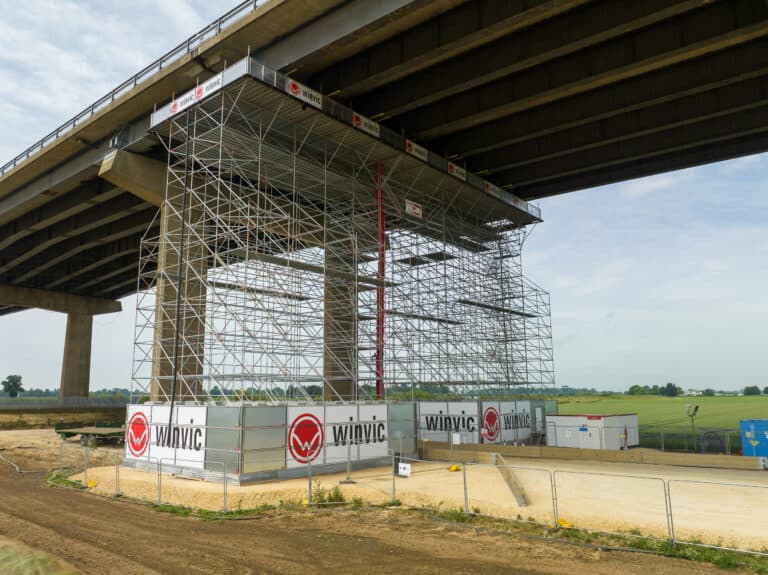
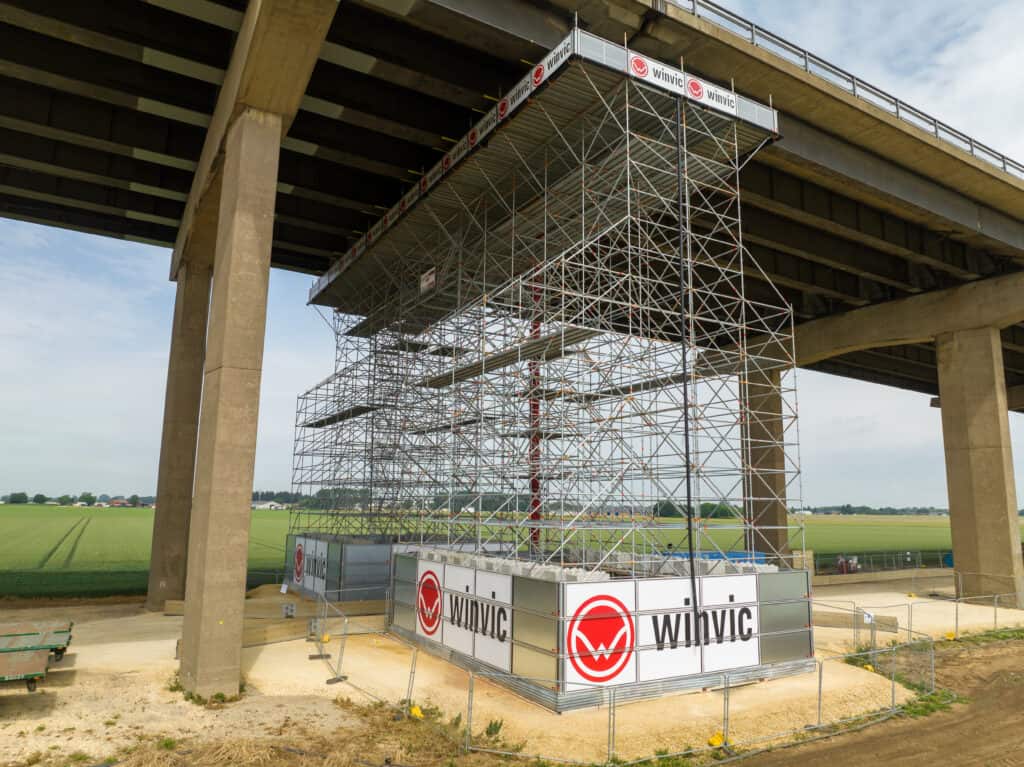
The M62 Ouse Bridge, a major road artery between Goole and Howden in the East Riding of Yorkshire, urgently needed access for bearing joint inspection and vital repairs. The response? Two colossal freestanding Layher Allround cantilever birdcage scaffolds, each reaching a height of 22 meters, standing proudly beneath the east and westbound joints of the bridge. The company responsible for this herculean effort was none other than M.R. Scaffolding (Anglia) Ltd.
“Right from the beginning, the design brief was clear cut,” said Alan Regan, M.R. Scaffolding’s Managing Director. “Our mission was to create two freestanding structures 22m high, that didn’t physically tie into the bridge.”
Despite a daunting 15 day erection deadline, the team of scaffolders from M.R. Scaffolding (Anglian) Ltd displayed impressive skill, efficiency and safety by erecting both structures simultaneously, in a mere 10 days.
Regan detailed the project’s logistics, saying, “We assigned a team of 12 scaffolders to this project. Given the time restrictions, it was imperative to erect both scaffolds simultaneously. We divided our team strategically, allocating seven personnel to one scaffold and five to the other. As the scaffolding construction progressed, we effectively utilised Crane lorries to transport materials, facilitating a seamless and efficient workflow.”Incredible Drone Footage Captured by Sky Revolutions
Damien Shawcroft, M.R Scaffolding (Anglia) Ltd’s chargehand scaffolder, who was part of the project, shared his experience: “Being the chargehand on this project, I had the privilege of collaborating with a stellar team, consisting of Tomasz, Luke, Ollie, Mackenzie, and Robert. We were responsible for one side of the bridge, with the second team, under Matt’s leadership, tackled the other. Observing each other’s progress across the river spurred a friendly rivalry that added to the excitement of the project.From the start, it was a challenging project knowing our time scale and the amount of material we needed to move. But everyone pulled together as a team to make it happen. As we got higher, everyone adapted to their positions and gave it 100% with laughter and hard work; we made it happen,” Shawcroft reflected.
Shawcroft concluded by expressing his gratitude towards his colleagues, “It was a pleasure to work with the guys and I look forward to our next project.”
A Design Twelve Months in the Making
These impressive structures didn’t, however, emerge out of thin air. They were born from the innovative design philosophy of Layher Ltd, UK and it took twelve meticulous months to craft.
The Layher Allround Lightweight System was chosen for the project – renowned for its flexibility, reliability, and lightness, making it the go-to solution for large-scale infrastructure projects.
“Right from the beginning, we decided to employ the Layher Allround Lightweight scaffolding system for numerous reasons,” explained Regan. “One of its notable advantages is its efficiency; it requires significantly fewer components and less manpower compared to the traditional Tube & Fitting scaffolding approach, thereby boosting our construction speed considerably.”
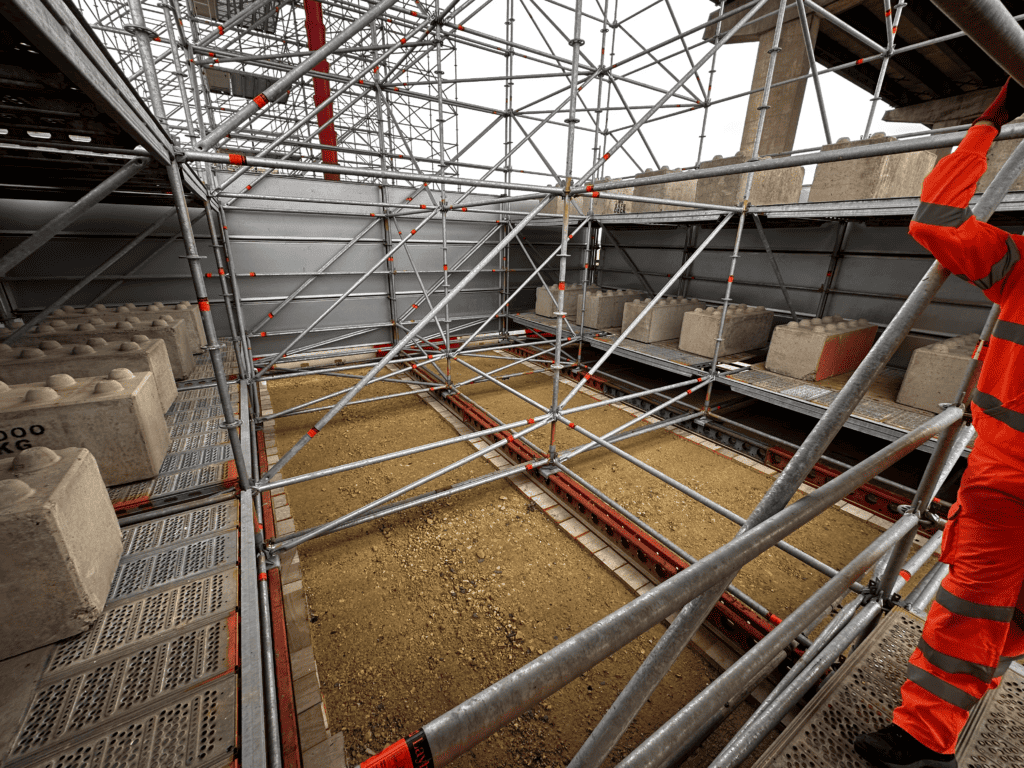
The now complete freestanding scaffolds, comprising 125 tonnes of Layher Allround Lightweight and a staggering 160 tonnes of kentledge, were a testament to the team’s collaboration of design, dedication and engineering prowess.
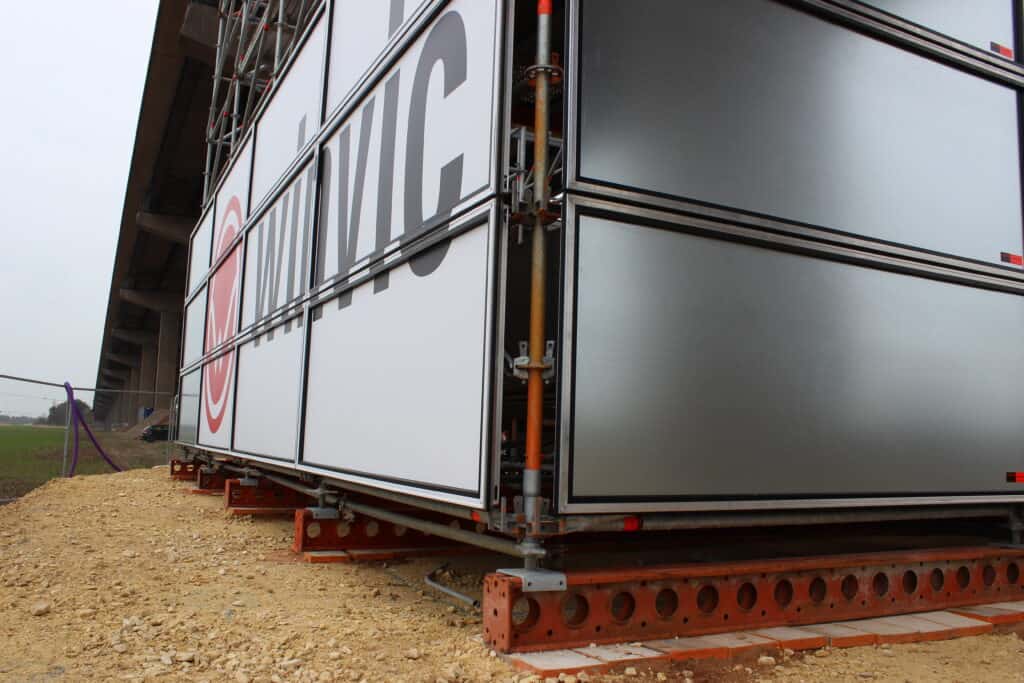
Enhancing the safety and security of the project, more than 350 Layher Protect Panels are installed at the base of both structures. These panels, known for their robustness, provided an additional layer of protection, further demonstrating the attention to detail and commitment to safety shared by all parties involved.
Groundwork Challenges & Ingenious Innovations
The team faced a significant hurdle before even the first Allround scaffold part was erected. During the planning phase, an extensive ground survey by geoengineers revealed that the ground was unstable and incapable of supporting the immense weight of the scaffolds. But the combined expertise of Winvic Construction, M.R. Scaffolding (Anglia) and Layher Ltd, UK meant this problem was far from insurmountable.
The necessary excavation and backfill of hardcore were promptly carried out, ensuring a stable and secure base for the scaffolding to stand on. “To ensure the ground could adequately bear the load, each scaffold was built upon a solid foundation of 500 sole boards, reinforced with strongback soldiers. It was essential that each sole board was precisely measured to 500mm,” explained Regan.
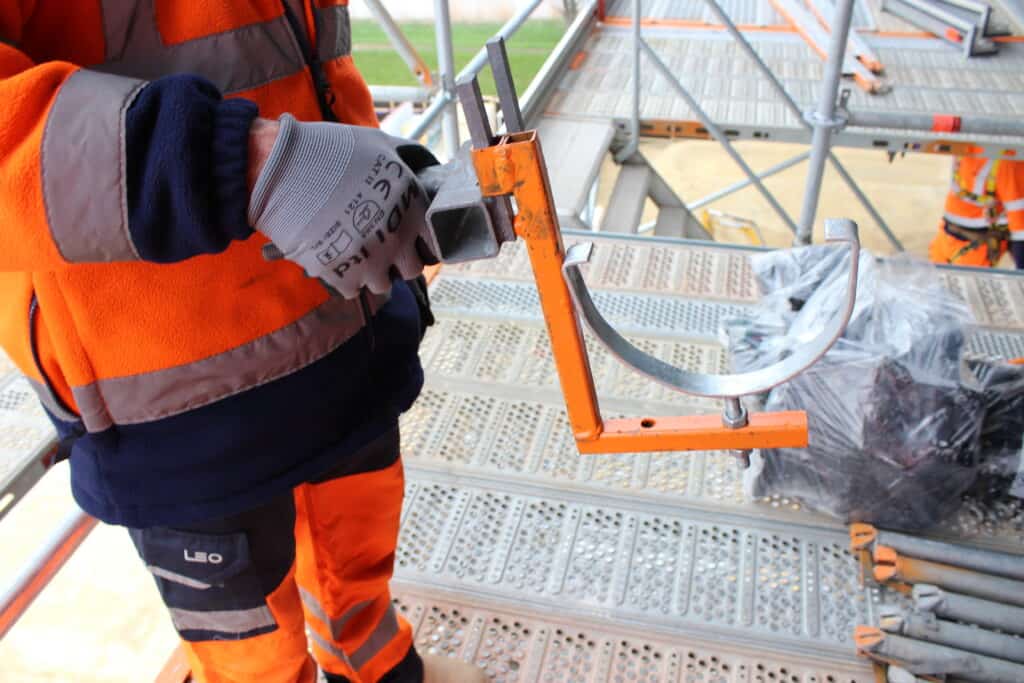
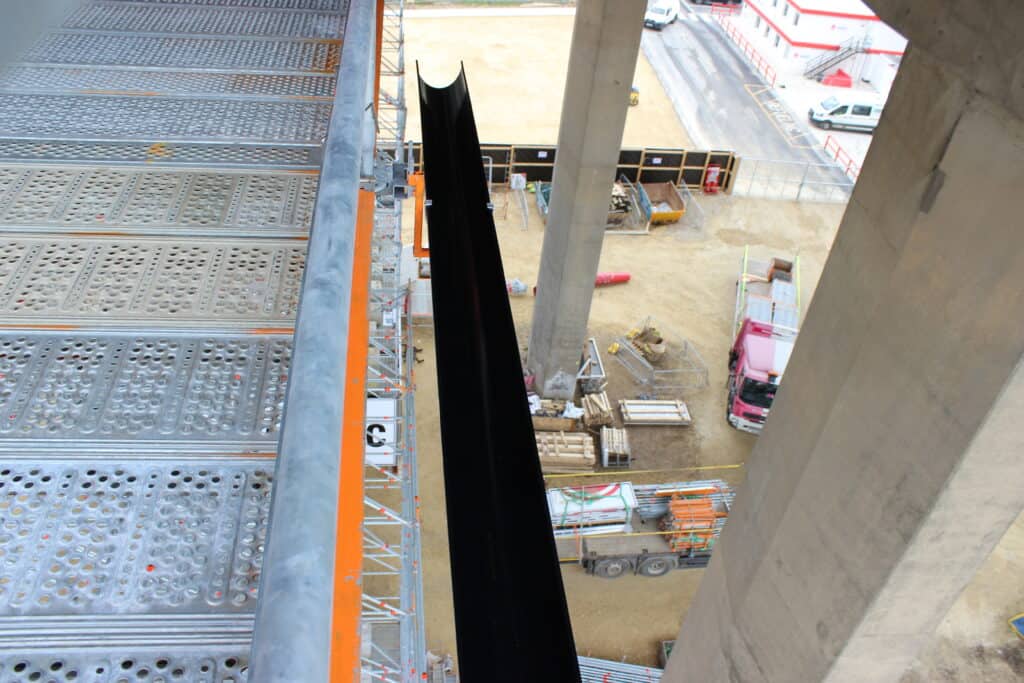
Moreover, in the process of facilitating access for contractors to the bearing joints, a significant amount of water was planned to be used due to the hydro demolition process. To mitigate the risk of ground subsidence, M.R. Scaffolding (Anglia) Ltd ingeniously devised a unique guttering system to divert water away from the scaffold foundations.
M.R. Scaffolding (Anglia) Ltd ingeniously devised a unique guttering system
The firm also installed a unique rubber matting on the working platform of both scaffolds, reflecting their innovative approach to problem-solving and a commitment to maintaining the integrity of their work.
Collaboration and Innovation at Its Best
The success of this project was, undoubtedly, the result of the remarkable collaboration between M.R. Scaffolding (Anglia) Ltd, National Highways, Winvic Construction, and Layher Ltd, UK. The bridge’s urgent need for repair work saw these teams come together in an effort that seamlessly combined expertise, innovation, and sheer dedication.
For M.R. Scaffolding (Anglia) Ltd, this was their first venture with Winvic Construction, setting the tone for what we hope will be a long-lasting and prosperous relationship. They have unquestionably demonstrated their ability to tackle large, complex, and urgent scaffolding projects with aplomb.
An Engineering Triumph
As the dust settles on this monumental project, two things become clear. Firstly, M.R. Scaffolding (Anglia) Ltd has cemented its reputation as a leading scaffolding contractor capable of delivering high-quality solutions under intense pressure. Secondly, Layher Ltd, UK’s superior design capabilities and its renowned scaffolding system have shone through, proving once again why they are the leading innovators in their field.
Erected in late March 2023, these massive structures remain as monuments to the collaborative spirit and engineering expertise of all involved.
The M62 Ouse Bridge project stands as a testament to the power of effective collaboration, robust design, and expert execution. And as for M.R. Scaffolding (Anglia) Ltd and Layher Ltd, UK? They’ve certainly set the bar high for future endeavours.
The Transport Minister of Queensland, Mark Bailey, has demanded a comprehensive “safety reset” at the largest public transport project in the state, the $6.3bn Cross River Rail project, following an accident where a scaffolder fell from scaffolding.
Work on the project came to a halt on Wednesday as thousands of workers united in a walk-off, protesting for improved safety measures. The union action was triggered by an accident on Tuesday that resulted in Nation Kouka, a 54-year-old scaffolder, falling approximately 12 metres at the Dutton Park site of the project.
Kouka is currently in critical condition at Princess Alexandra Hospital.
Bailey stated that the incident has significantly impacted his confidence in the project’s safety measures. “There’s no doubt that this is a wake-up call. We’ve got to take the opportunity to make sure that this is the one and only incident,” he said on Wednesday.
The minister acknowledged the worries of workers and expressed his empathy. He commented, “If I was working on this project, I’d be concerned. No doubt about that.”
Investigations into the incident have been launched by both Queensland police and Workplace Health and Safety Queensland.
The Construction, Forestry, Maritime, Mining and Energy Union (CFMEU) has claimed that this is not an isolated incident, and the project site has seen multiple safety concerns. The union’s state secretary, Michael Ravbar, said that there had been numerous safety incidents, including previous falls and near misses.
More than 300 safety enforcement notices have been issued for the Cross River Rail project, some of which were associated with fines.
Ravbar criticised the handling of the safety issues and demanded Bailey’s resignation over the incident, saying, “Safety-wise, it’s probably the worst I’ve seen in my time, and I’ve been around a bit.”
Bailey countered the union’s allegations, maintaining that he wasn’t aware of any previous employee fall on the project. He said, “This is one of the bigger construction projects across the country so safety issues will come up from time to time. Whenever we’re aware of them, we move to act on them as quickly as we can.”
A spokesperson for the Cross River Rail Authority reinforced the importance of safety at the site and said work would not resume until Workplace Health and Safety Queensland and the onsite contractor deems it appropriate.
The rail project, due for completion in 2026, now faces an uncertain timeline as workers remain off-site and safety inspections take place.
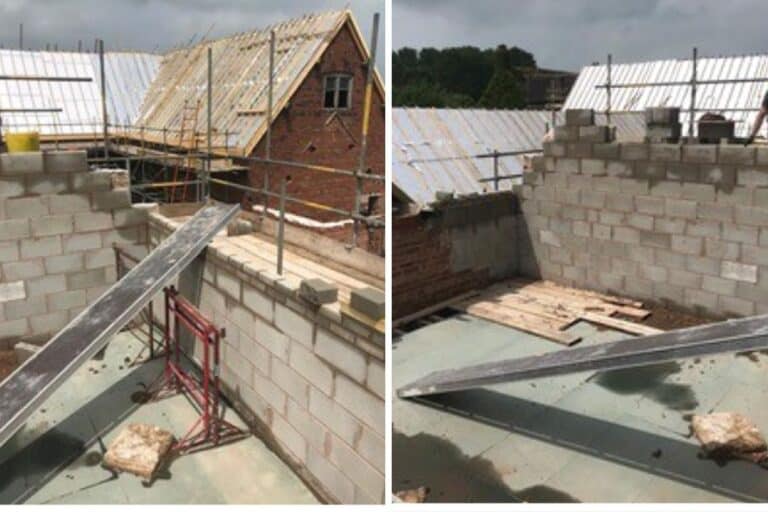
A Shropshire-based construction company has been fined £12,000 after a bricklayer sustained serious injuries in a near-fatal workplace accident. The Health and Safety Executive (HSE) ordered the company, which was overseeing the conversion of agricultural barns into houses in Telford, to also pay costs of £4,139 at Cannock Magistrates’ Court on 21 July 2023.Scott Ife, a 30-year-old bricklayer from Bridgnorth, suffered a fractured skull and damage to his facial nerve after falling through a stairwell opening on 8 June 2020. At the time of the incident, Mr Ife was 27 years old and working on a two-storey extension to the property.The court heard that Mr Ife and a colleague set up a working platform using Youngman boards on the first floor. Due to an unprotected stairwell opening, one end of the boards was left unsupported. Tragically, while pointing up the blocks to form the gable walls, Mr Ife lost his balance, fell onto the unsupported boards, and through the stairwell opening. The accident caused him to plummet four-and-a-half metres onto the concrete floor below, leading to a three-day hospitalisation.The HSE investigation that followed uncovered numerous safety failings by 2 Counties Construction (Midlands) Ltd. These included a lack of suitable controls to prevent falls into the building and through stairwell openings, inadequate planning, poor selection of equipment for working at height, and insufficient site management arrangements.“This incident could and should have been easily avoided,” said HSE inspector David Brassington. “Work at height needs to be properly planned and managed to ensure that appropriate precautions are used. We are fortunate that the injuries resulting from these failings were not more serious.”2 Counties Construction (Midlands) Ltd, based in Broomhall, Worcester, pleaded guilty to breaching the Construction (Design and Management) Regulations 2015.
The UK construction industry is facing an increasingly bleak outlook as the rise in mortgage interest rates and the cost of living crisis send shockwaves through the sector. According to the Construction Products Association (CPA), the industry is now on the brink of a severe recession, primarily driven by significant declines in private housing new build and private housing repair, maintenance, and improvement (RMI) – two crucial sectors within the construction domain.The CPA’s Summer Forecasts, recently published, paint a grim picture for the industry’s immediate future. The projections indicate that the UK construction output is set to plummet by 7.0% in 2023, and any prospects of recovery in 2024 are expected to be meagre, with growth predicted at just 0.7%.These latest forecasts starkly contrast the optimism of the previous year. The CPA had initially predicted a growth rate of 1.6% for 2023 and a further 2.5% for 2024. However, unforeseen economic shocks, including Liz Truss becoming prime minister and Russia’s invasion of Ukraine, have drastically altered the landscape.The CPA’s quarterly forecasts have progressively worsened since last summer, with each update pointing to a grimmer economic outlook. In the most recent update, it projected a decline of 7.0% in construction output for 2023, indicating a worsening situation.The construction industry’s largest sectors, private housing new build, and private housing RMI are expected to bear the brunt of the recessionary pressures. Private housing output, a significant contributor to the UK economy worth £41 billion annually, is anticipated to be hit the hardest. As a result, private housing starts are predicted to fall by 25% in 2023, with output and completions also experiencing a substantial 19% decline. The CPA foresees a slow recovery in the sector, commencing in the second half of 2024, with a projected rise of 2%.The private housing RMI sector, worth £29 billion to the UK economy, has already faced challenges due to rising inflation, interest rates, and falling real wages. Consequently, the sector’s output is expected to contract by 11% in 2023 before showing signs of growth at 2% in 2024, which aligns with the expected recovery in household finances.Despite the gloomy outlook for private housing, infrastructure activity is expected to remain relatively robust due to ongoing major projects like HS2, the Thames Tideway Tunnel, and Hinkley Point C. However, the infrastructure sector may encounter headwinds, partially offset by government delays to new roads and rail projects and budgetary constraints for councils.The CPA’s economics director, Professor Noble Francis, expressed concern over the government’s lack of commitment and investment in the construction industry, given its critical role in employment and vital infrastructure provision.Though the CPA’s forecasts indicate an imminent recession, other indicators, such as the Purchasing Managers’ Index (PMI), have shown the construction industry’s resilience in the first half of the year. However, if the CPA’s predictions are accurate, a decline in the PMI may be imminent.As the UK construction industry navigates uncertain waters, stakeholders hope for proactive measures and investments to stabilize the sector and support its significant contribution to the nation’s growth and productivity.
We use cookies on our website to give you the most relevant experience by remembering your preferences and repeat visits. By clicking “Accept”, you consent to the use of ALL the cookies.
This website uses cookies to improve your experience while you navigate through the website. Out of these, the cookies that are categorized as necessary are stored on your browser as they are essential for the working of basic functionalities of the website. We also use third-party cookies that help us analyze and understand how you use this website. These cookies will be stored in your browser only with your consent. You also have the option to opt-out of these cookies. But opting out of some of these cookies may affect your browsing experience.
Necessary cookies are absolutely essential for the website to function properly. These cookies ensure basic functionalities and security features of the website, anonymously.
Cookie
Duration
Description
cookielawinfo-checbox-analytics
11 months
This cookie is set by GDPR Cookie Consent plugin. The cookie is used to store the user consent for the cookies in the category "Analytics".
cookielawinfo-checbox-functional
11 months
The cookie is set by GDPR cookie consent to record the user consent for the cookies in the category "Functional".
cookielawinfo-checbox-others
11 months
This cookie is set by GDPR Cookie Consent plugin. The cookie is used to store the user consent for the cookies in the category "Other.
cookielawinfo-checkbox-necessary
11 months
This cookie is set by GDPR Cookie Consent plugin. The cookies is used to store the user consent for the cookies in the category "Necessary".
cookielawinfo-checkbox-performance
11 months
This cookie is set by GDPR Cookie Consent plugin. The cookie is used to store the user consent for the cookies in the category "Performance".
viewed_cookie_policy
11 months
The cookie is set by the GDPR Cookie Consent plugin and is used to store whether or not user has consented to the use of cookies. It does not store any personal data.
Functional cookies help to perform certain functionalities like sharing the content of the website on social media platforms, collect feedbacks, and other third-party features.
Performance cookies are used to understand and analyze the key performance indexes of the website which helps in delivering a better user experience for the visitors.
Analytical cookies are used to understand how visitors interact with the website. These cookies help provide information on metrics the number of visitors, bounce rate, traffic source, etc.
Advertisement cookies are used to provide visitors with relevant ads and marketing campaigns. These cookies track visitors across websites and collect information to provide customized ads.

 Constructed with premium steel and coated with a secret zinc solution, the G-DECK Surround promises exceptional stability and durability, rendering it suitable for construction projects of varying scales.
The product not only complies with the industry safety standards but also offers customisation options such as powder-coating in company-specific colours and addition of logo plates for branding and ownership identification.
Gaz Bains, Founder of G-DECK, expressed his excitement over the new product. “We are thrilled to introduce the NO-TIES G-DECK Temporary Scaffold Staircase Surround, a result of our commitment to innovation and safety,” Bains said.
“With this game-changing product, we aim to transform the construction industry by providing a seamless, secure, and efficient security solution for temporary staircases.”
The NO-TIES G-DECK Temporary Scaffold Staircase Surround is now available for purchase. For further information, visit www.gdecking.com
Constructed with premium steel and coated with a secret zinc solution, the G-DECK Surround promises exceptional stability and durability, rendering it suitable for construction projects of varying scales.
The product not only complies with the industry safety standards but also offers customisation options such as powder-coating in company-specific colours and addition of logo plates for branding and ownership identification.
Gaz Bains, Founder of G-DECK, expressed his excitement over the new product. “We are thrilled to introduce the NO-TIES G-DECK Temporary Scaffold Staircase Surround, a result of our commitment to innovation and safety,” Bains said.
“With this game-changing product, we aim to transform the construction industry by providing a seamless, secure, and efficient security solution for temporary staircases.”
The NO-TIES G-DECK Temporary Scaffold Staircase Surround is now available for purchase. For further information, visit www.gdecking.com 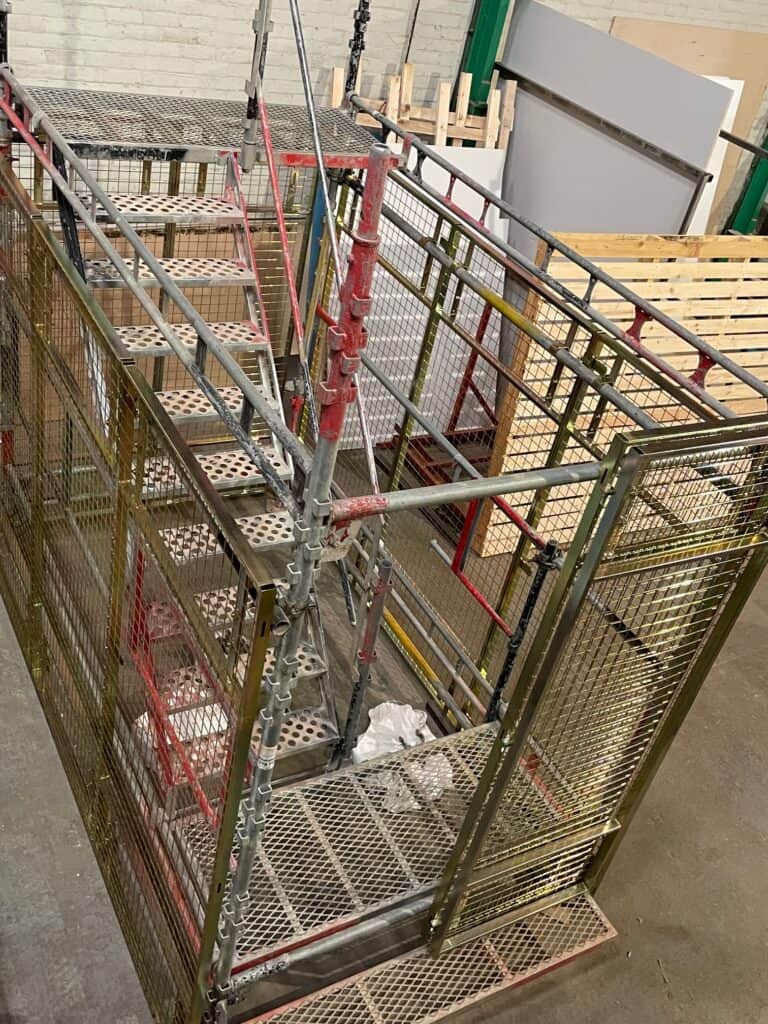 Constructed with premium steel and coated with a secret zinc solution, the G-DECK Surround promises exceptional stability and durability, rendering it suitable for construction projects of varying scales.
The product not only complies with the industry safety standards but also offers customisation options such as powder-coating in company-specific colours and addition of logo plates for branding and ownership identification.
Gaz Bains, Founder of G-DECK, expressed his excitement over the new product. “We are thrilled to introduce the NO-TIES G-DECK Temporary Scaffold Staircase Surround, a result of our commitment to innovation and safety,” Bains said.
“With this game-changing product, we aim to transform the construction industry by providing a seamless, secure, and efficient security solution for temporary staircases.”
The NO-TIES G-DECK Temporary Scaffold Staircase Surround is now available for purchase. For further information, visit www.gdecking.com
Constructed with premium steel and coated with a secret zinc solution, the G-DECK Surround promises exceptional stability and durability, rendering it suitable for construction projects of varying scales.
The product not only complies with the industry safety standards but also offers customisation options such as powder-coating in company-specific colours and addition of logo plates for branding and ownership identification.
Gaz Bains, Founder of G-DECK, expressed his excitement over the new product. “We are thrilled to introduce the NO-TIES G-DECK Temporary Scaffold Staircase Surround, a result of our commitment to innovation and safety,” Bains said.
“With this game-changing product, we aim to transform the construction industry by providing a seamless, secure, and efficient security solution for temporary staircases.”
The NO-TIES G-DECK Temporary Scaffold Staircase Surround is now available for purchase. For further information, visit www.gdecking.com 
 These impressive structures didn’t, however, emerge out of thin air. They were born from the innovative design philosophy of Layher Ltd, UK and it took twelve meticulous months to craft.
The Layher Allround Lightweight System was chosen for the project – renowned for its flexibility, reliability, and lightness, making it the go-to solution for large-scale infrastructure projects.
“Right from the beginning, we decided to employ the Layher Allround Lightweight scaffolding system for numerous reasons,” explained Regan. “One of its notable advantages is its efficiency; it requires significantly fewer components and less manpower compared to the traditional Tube & Fitting scaffolding approach, thereby boosting our construction speed considerably.”
The now complete freestanding scaffolds, comprising 125 tonnes of Layher Allround Lightweight and a staggering 160 tonnes of kentledge, were a testament to the team’s collaboration of design, dedication and engineering prowess.
Enhancing the safety and security of the project, more than 350 Layher Protect Panels are installed at the base of both structures. These panels, known for their robustness, provided an additional layer of protection, further demonstrating the attention to detail and commitment to safety shared by all parties involved.
These impressive structures didn’t, however, emerge out of thin air. They were born from the innovative design philosophy of Layher Ltd, UK and it took twelve meticulous months to craft.
The Layher Allround Lightweight System was chosen for the project – renowned for its flexibility, reliability, and lightness, making it the go-to solution for large-scale infrastructure projects.
“Right from the beginning, we decided to employ the Layher Allround Lightweight scaffolding system for numerous reasons,” explained Regan. “One of its notable advantages is its efficiency; it requires significantly fewer components and less manpower compared to the traditional Tube & Fitting scaffolding approach, thereby boosting our construction speed considerably.”
The now complete freestanding scaffolds, comprising 125 tonnes of Layher Allround Lightweight and a staggering 160 tonnes of kentledge, were a testament to the team’s collaboration of design, dedication and engineering prowess.
Enhancing the safety and security of the project, more than 350 Layher Protect Panels are installed at the base of both structures. These panels, known for their robustness, provided an additional layer of protection, further demonstrating the attention to detail and commitment to safety shared by all parties involved.

 The team faced a significant hurdle before even the first Allround scaffold part was erected. During the planning phase, an extensive ground survey by geoengineers revealed that the ground was unstable and incapable of supporting the immense weight of the scaffolds. But the combined expertise of Winvic Construction, M.R. Scaffolding (Anglia) and Layher Ltd, UK meant this problem was far from insurmountable.
The necessary excavation and backfill of hardcore were promptly carried out, ensuring a stable and secure base for the scaffolding to stand on. “To ensure the ground could adequately bear the load, each scaffold was built upon a solid foundation of 500 sole boards, reinforced with strongback soldiers. It was essential that each sole board was precisely measured to 500mm,” explained Regan.
Moreover, in the process of facilitating access for contractors to the bearing joints, a significant amount of water was planned to be used due to the hydro demolition process. To mitigate the risk of ground subsidence, M.R. Scaffolding (Anglia) Ltd ingeniously devised a unique guttering system to divert water away from the scaffold foundations.
The team faced a significant hurdle before even the first Allround scaffold part was erected. During the planning phase, an extensive ground survey by geoengineers revealed that the ground was unstable and incapable of supporting the immense weight of the scaffolds. But the combined expertise of Winvic Construction, M.R. Scaffolding (Anglia) and Layher Ltd, UK meant this problem was far from insurmountable.
The necessary excavation and backfill of hardcore were promptly carried out, ensuring a stable and secure base for the scaffolding to stand on. “To ensure the ground could adequately bear the load, each scaffold was built upon a solid foundation of 500 sole boards, reinforced with strongback soldiers. It was essential that each sole board was precisely measured to 500mm,” explained Regan.
Moreover, in the process of facilitating access for contractors to the bearing joints, a significant amount of water was planned to be used due to the hydro demolition process. To mitigate the risk of ground subsidence, M.R. Scaffolding (Anglia) Ltd ingeniously devised a unique guttering system to divert water away from the scaffold foundations.
 These impressive structures didn’t, however, emerge out of thin air. They were born from the innovative design philosophy of Layher Ltd, UK and it took twelve meticulous months to craft.
The Layher Allround Lightweight System was chosen for the project – renowned for its flexibility, reliability, and lightness, making it the go-to solution for large-scale infrastructure projects.
“Right from the beginning, we decided to employ the Layher Allround Lightweight scaffolding system for numerous reasons,” explained Regan. “One of its notable advantages is its efficiency; it requires significantly fewer components and less manpower compared to the traditional Tube & Fitting scaffolding approach, thereby boosting our construction speed considerably.”
The now complete freestanding scaffolds, comprising 125 tonnes of Layher Allround Lightweight and a staggering 160 tonnes of kentledge, were a testament to the team’s collaboration of design, dedication and engineering prowess.
Enhancing the safety and security of the project, more than 350 Layher Protect Panels are installed at the base of both structures. These panels, known for their robustness, provided an additional layer of protection, further demonstrating the attention to detail and commitment to safety shared by all parties involved.
These impressive structures didn’t, however, emerge out of thin air. They were born from the innovative design philosophy of Layher Ltd, UK and it took twelve meticulous months to craft.
The Layher Allround Lightweight System was chosen for the project – renowned for its flexibility, reliability, and lightness, making it the go-to solution for large-scale infrastructure projects.
“Right from the beginning, we decided to employ the Layher Allround Lightweight scaffolding system for numerous reasons,” explained Regan. “One of its notable advantages is its efficiency; it requires significantly fewer components and less manpower compared to the traditional Tube & Fitting scaffolding approach, thereby boosting our construction speed considerably.”
The now complete freestanding scaffolds, comprising 125 tonnes of Layher Allround Lightweight and a staggering 160 tonnes of kentledge, were a testament to the team’s collaboration of design, dedication and engineering prowess.
Enhancing the safety and security of the project, more than 350 Layher Protect Panels are installed at the base of both structures. These panels, known for their robustness, provided an additional layer of protection, further demonstrating the attention to detail and commitment to safety shared by all parties involved.
 The team faced a significant hurdle before even the first Allround scaffold part was erected. During the planning phase, an extensive ground survey by geoengineers revealed that the ground was unstable and incapable of supporting the immense weight of the scaffolds. But the combined expertise of Winvic Construction, M.R. Scaffolding (Anglia) and Layher Ltd, UK meant this problem was far from insurmountable.
The necessary excavation and backfill of hardcore were promptly carried out, ensuring a stable and secure base for the scaffolding to stand on. “To ensure the ground could adequately bear the load, each scaffold was built upon a solid foundation of 500 sole boards, reinforced with strongback soldiers. It was essential that each sole board was precisely measured to 500mm,” explained Regan.
Moreover, in the process of facilitating access for contractors to the bearing joints, a significant amount of water was planned to be used due to the hydro demolition process. To mitigate the risk of ground subsidence, M.R. Scaffolding (Anglia) Ltd ingeniously devised a unique guttering system to divert water away from the scaffold foundations.
The team faced a significant hurdle before even the first Allround scaffold part was erected. During the planning phase, an extensive ground survey by geoengineers revealed that the ground was unstable and incapable of supporting the immense weight of the scaffolds. But the combined expertise of Winvic Construction, M.R. Scaffolding (Anglia) and Layher Ltd, UK meant this problem was far from insurmountable.
The necessary excavation and backfill of hardcore were promptly carried out, ensuring a stable and secure base for the scaffolding to stand on. “To ensure the ground could adequately bear the load, each scaffold was built upon a solid foundation of 500 sole boards, reinforced with strongback soldiers. It was essential that each sole board was precisely measured to 500mm,” explained Regan.
Moreover, in the process of facilitating access for contractors to the bearing joints, a significant amount of water was planned to be used due to the hydro demolition process. To mitigate the risk of ground subsidence, M.R. Scaffolding (Anglia) Ltd ingeniously devised a unique guttering system to divert water away from the scaffold foundations.
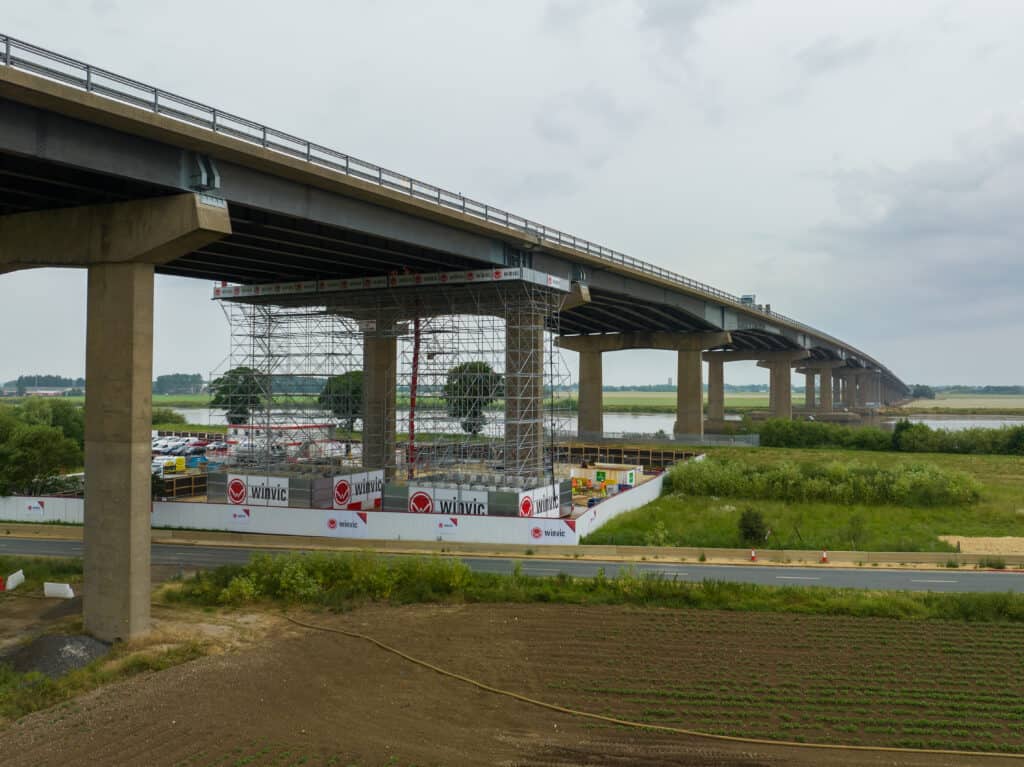 As the dust settles on this monumental project, two things become clear. Firstly, M.R. Scaffolding (Anglia) Ltd has cemented its reputation as a leading scaffolding contractor capable of delivering high-quality solutions under intense pressure. Secondly, Layher Ltd, UK’s superior design capabilities and its renowned scaffolding system have shone through, proving once again why they are the leading innovators in their field.
Erected in late March 2023, these massive structures remain as monuments to the collaborative spirit and engineering expertise of all involved.
The M62 Ouse Bridge project stands as a testament to the power of effective collaboration, robust design, and expert execution. And as for M.R. Scaffolding (Anglia) Ltd and Layher Ltd, UK? They’ve certainly set the bar high for future endeavours.
As the dust settles on this monumental project, two things become clear. Firstly, M.R. Scaffolding (Anglia) Ltd has cemented its reputation as a leading scaffolding contractor capable of delivering high-quality solutions under intense pressure. Secondly, Layher Ltd, UK’s superior design capabilities and its renowned scaffolding system have shone through, proving once again why they are the leading innovators in their field.
Erected in late March 2023, these massive structures remain as monuments to the collaborative spirit and engineering expertise of all involved.
The M62 Ouse Bridge project stands as a testament to the power of effective collaboration, robust design, and expert execution. And as for M.R. Scaffolding (Anglia) Ltd and Layher Ltd, UK? They’ve certainly set the bar high for future endeavours.