Scaffolding Memorabilia: Thanks for the Memory
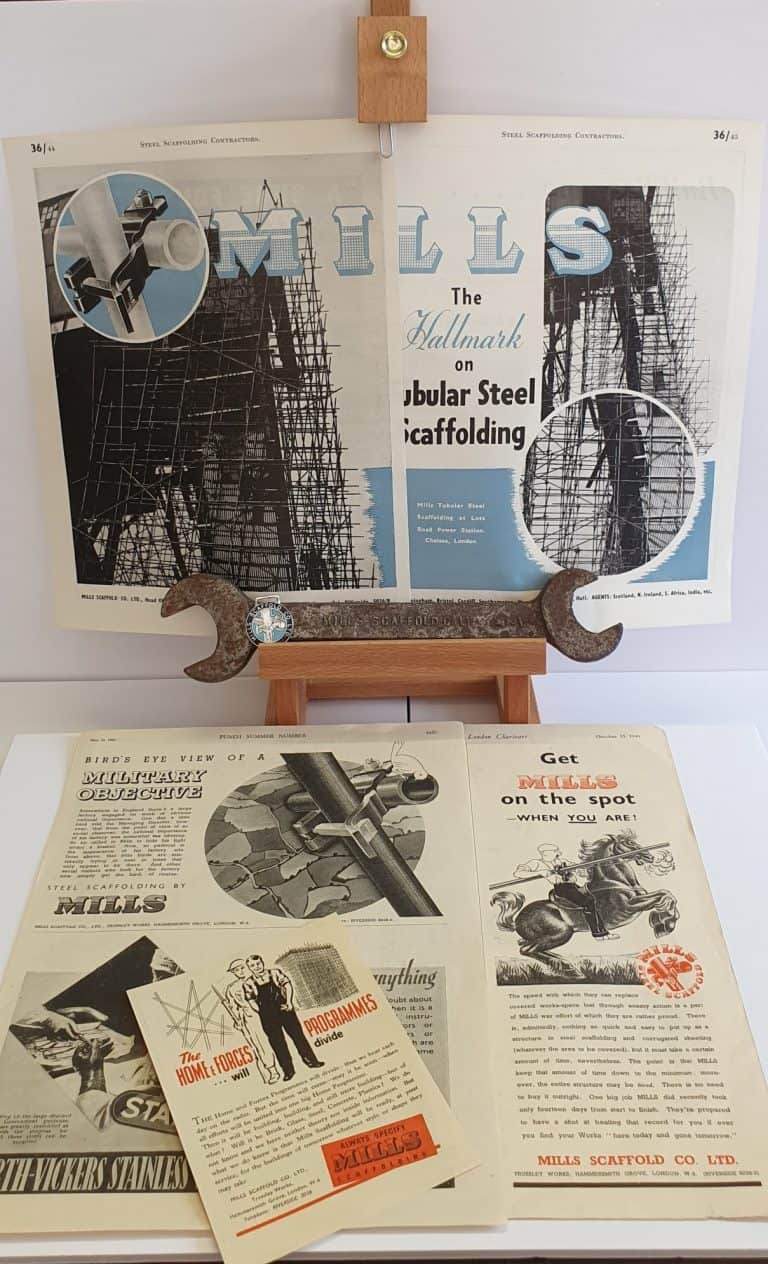
Paul Corfield is without question a highly skilled man within the scaffolding industry, not least because he’s passionate about his craft. But his work runs much deeper than that as an avid collector of scaffolding memorabilia. Scaffmag was keen to delve deeper into his archive.
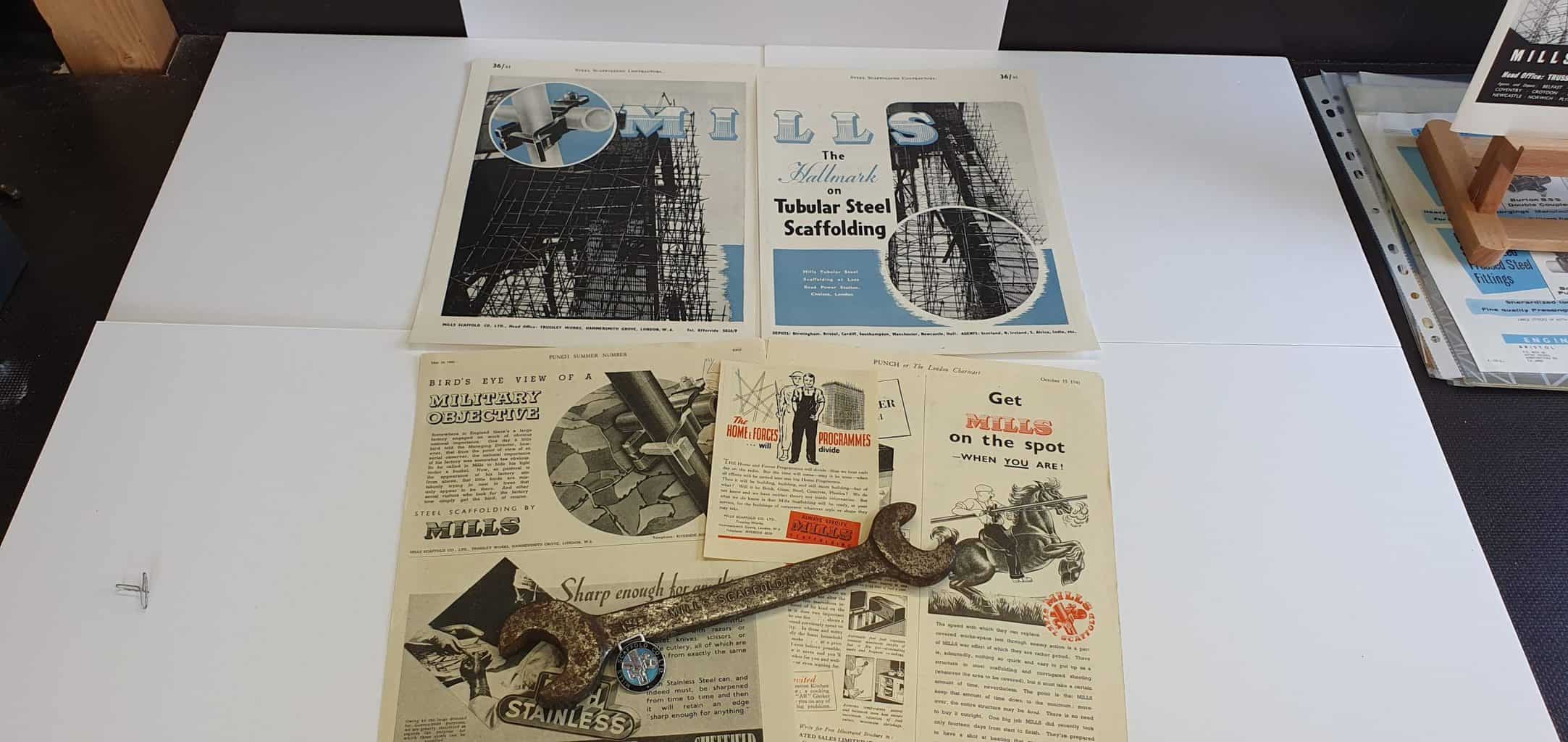
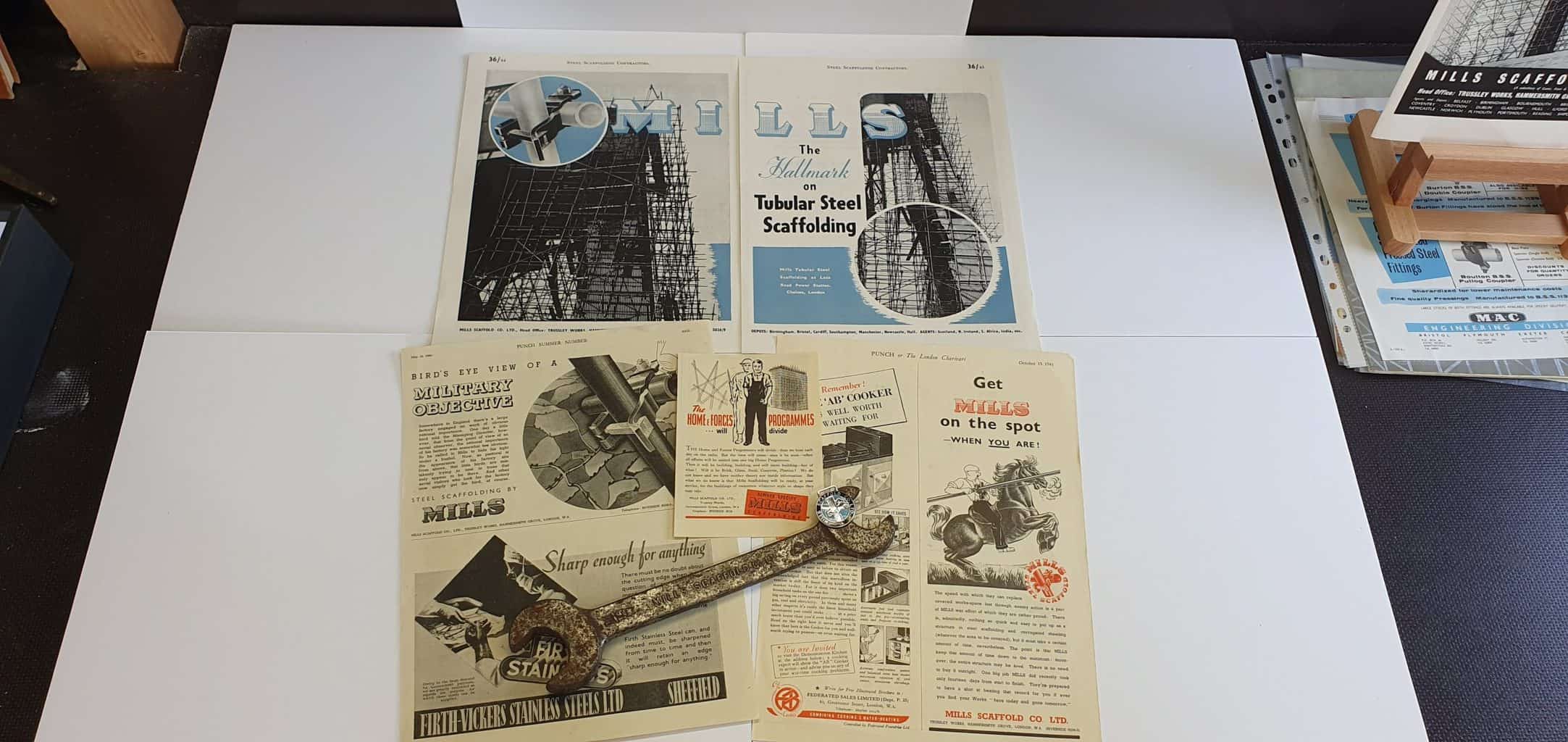
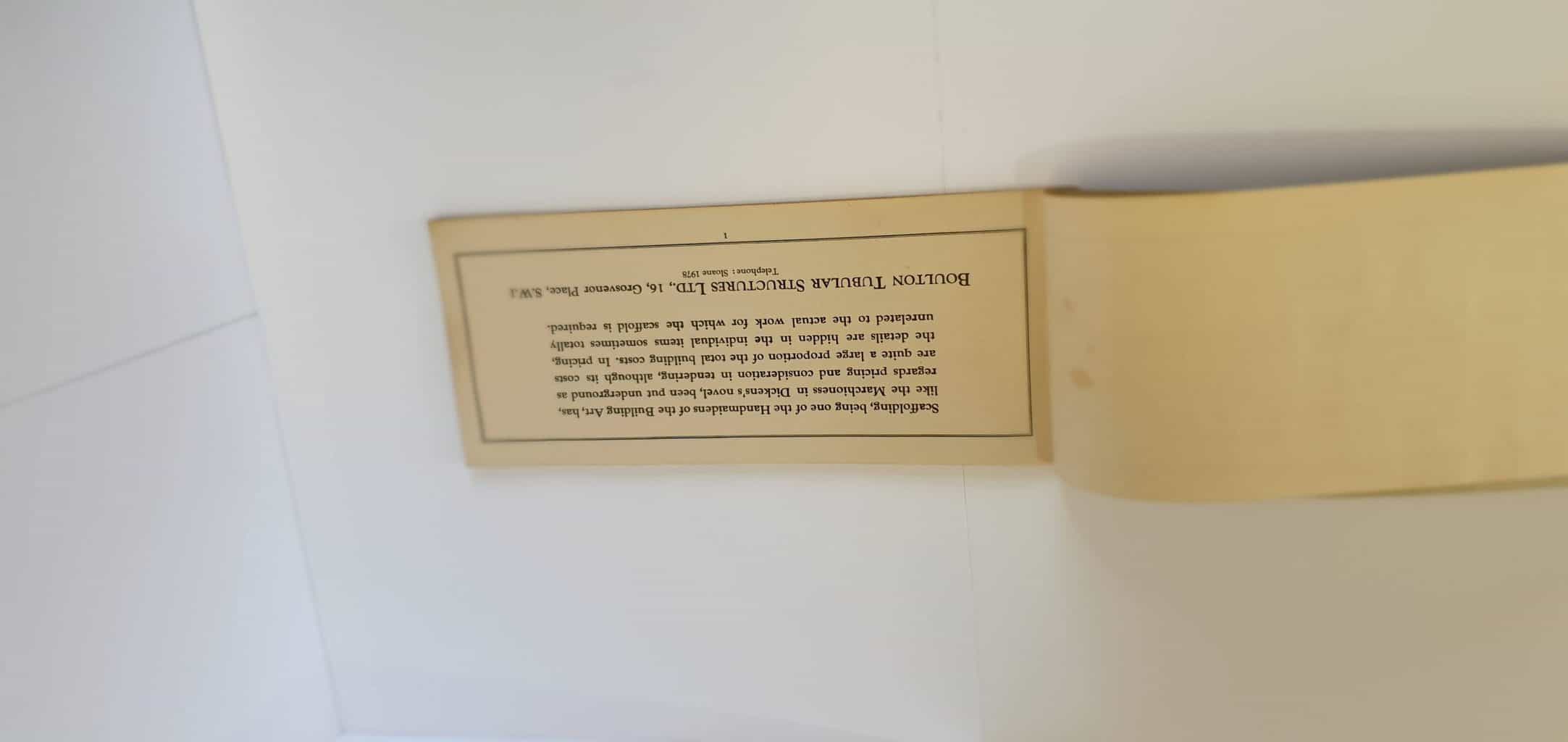
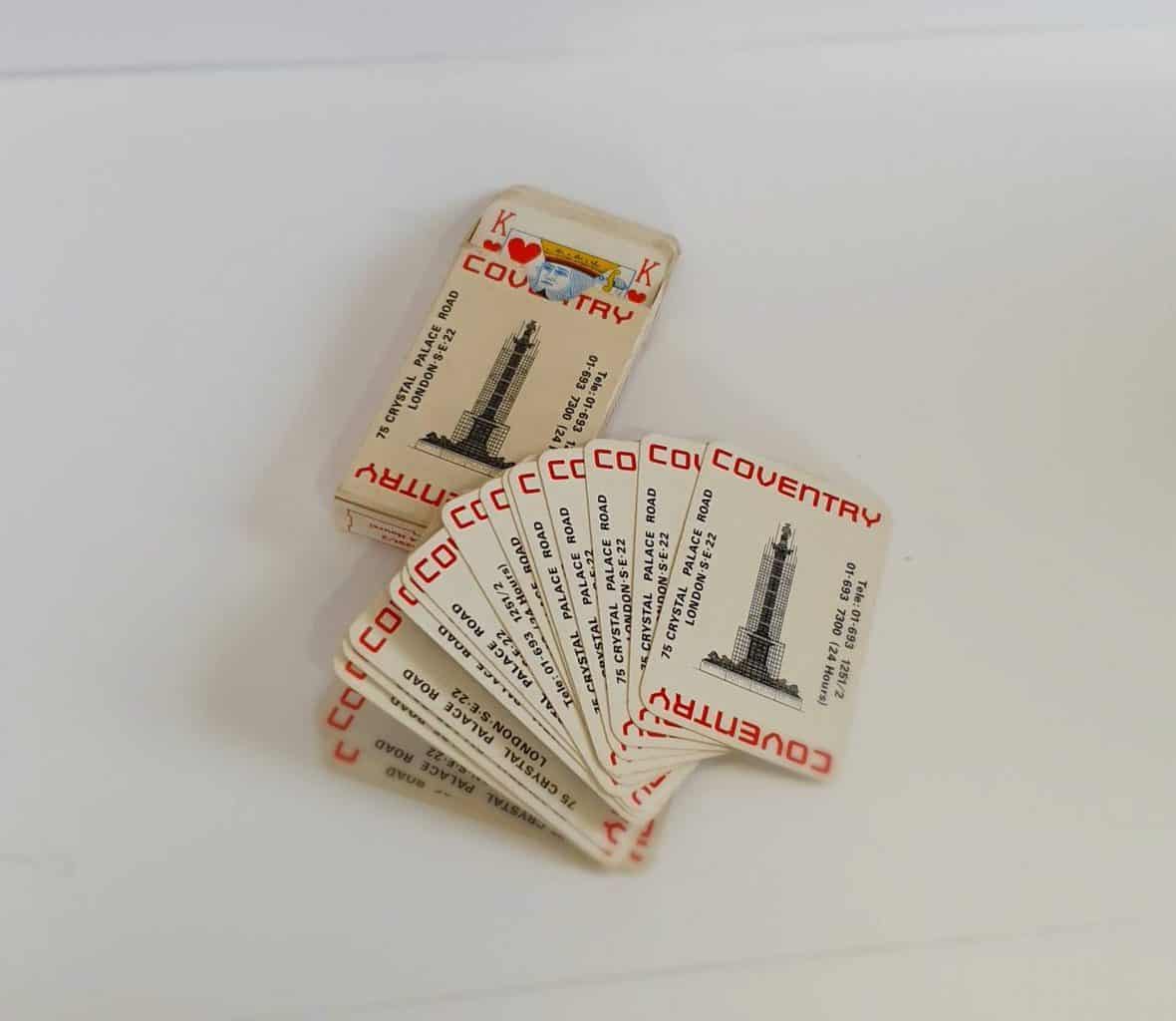
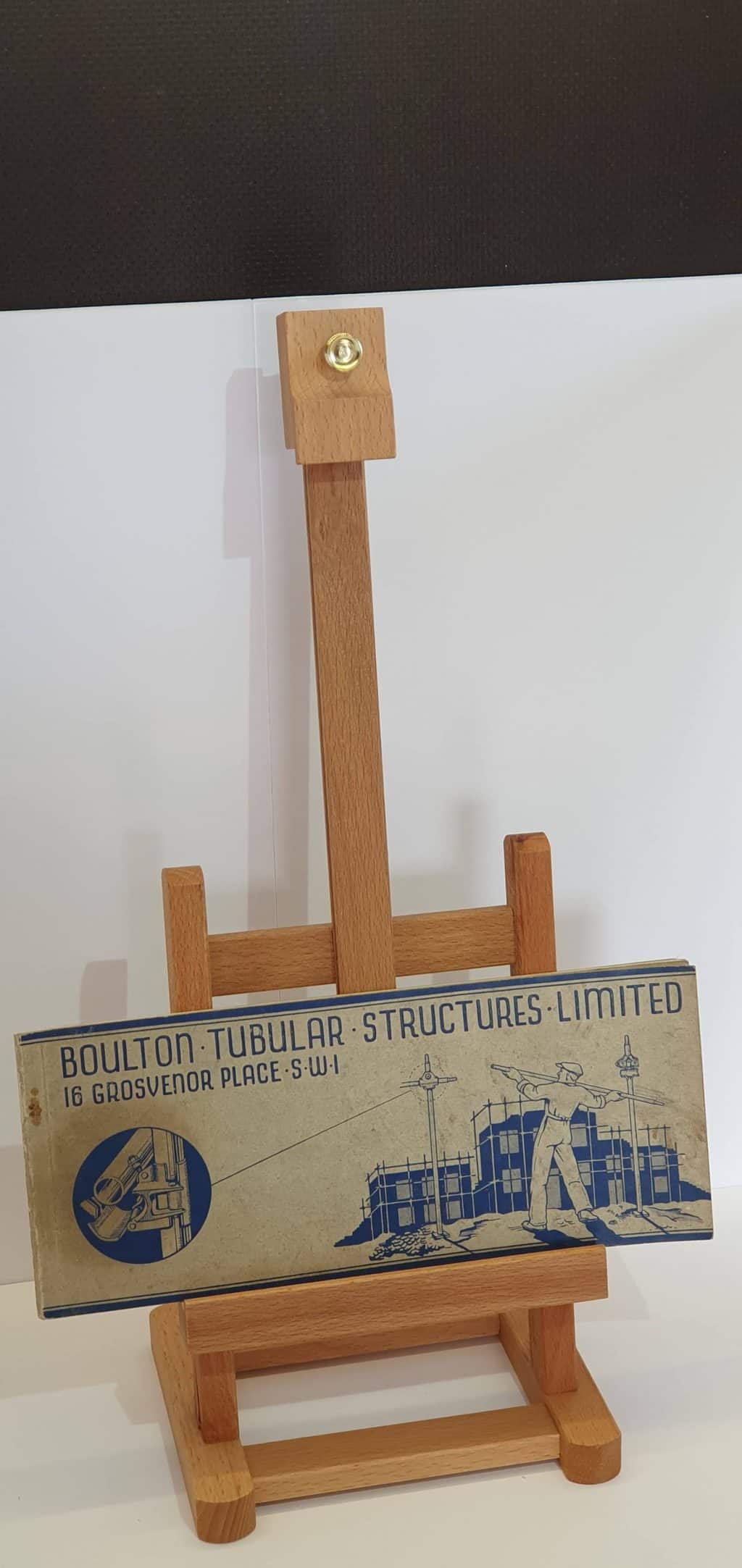
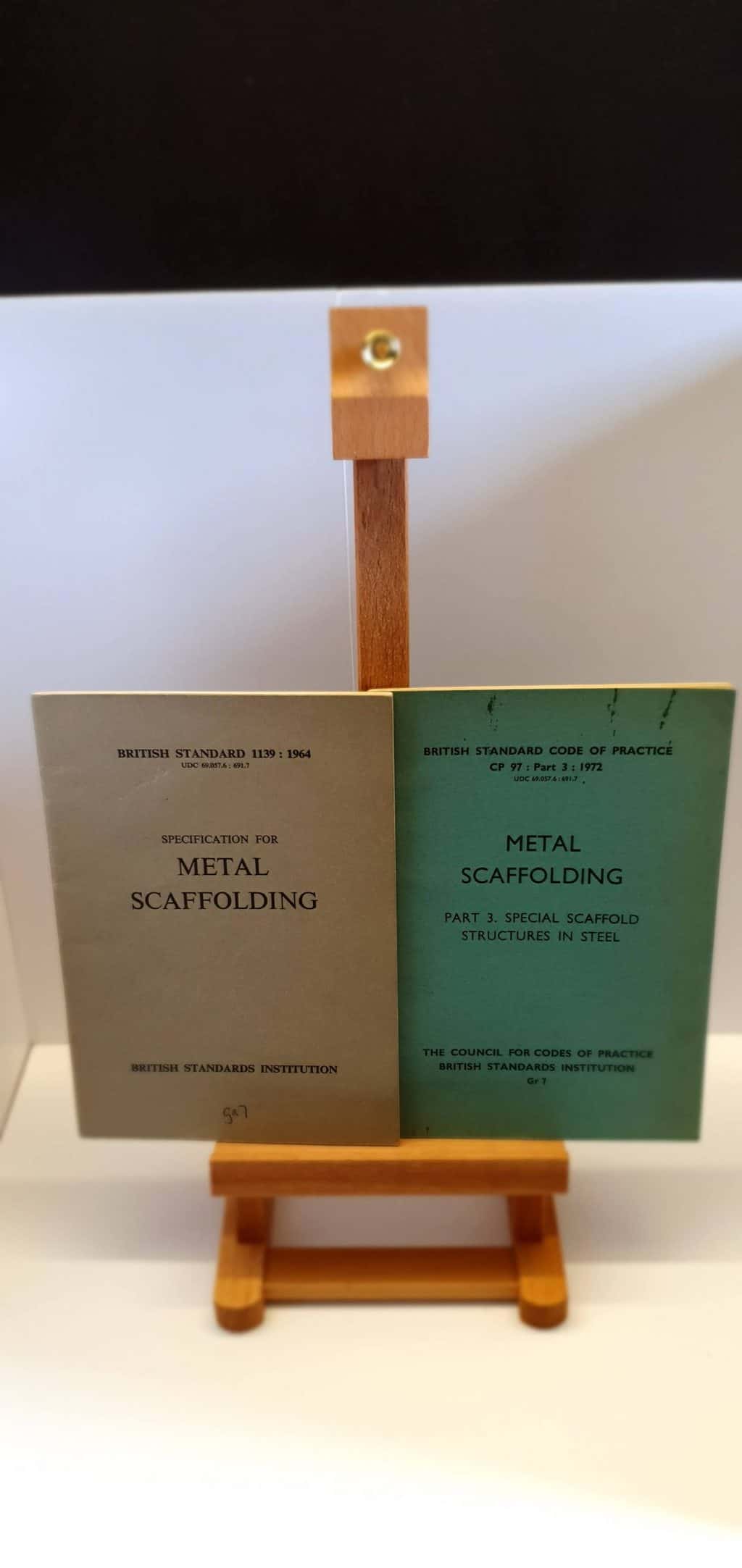
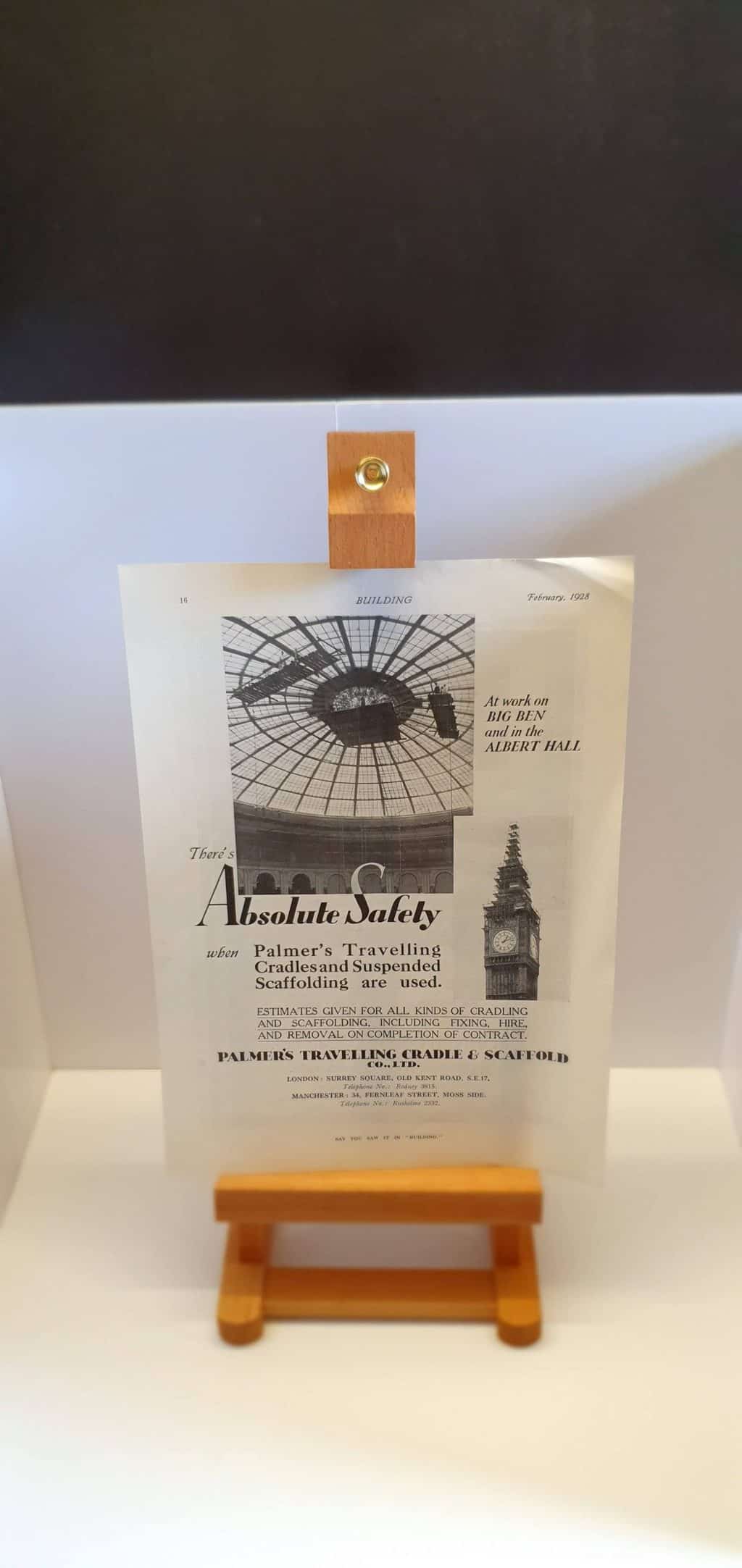
(See below for a selection of Paul’s Scaffolding Memorabilia Archive)
They used to play thanks for the memory whenever the great Bob Hope took to the stage – but it’s a tune Paul Corfield could easily have in his head any day on-site. There’ll be no jokes from him of course, because his colourful hobby is a serious business.
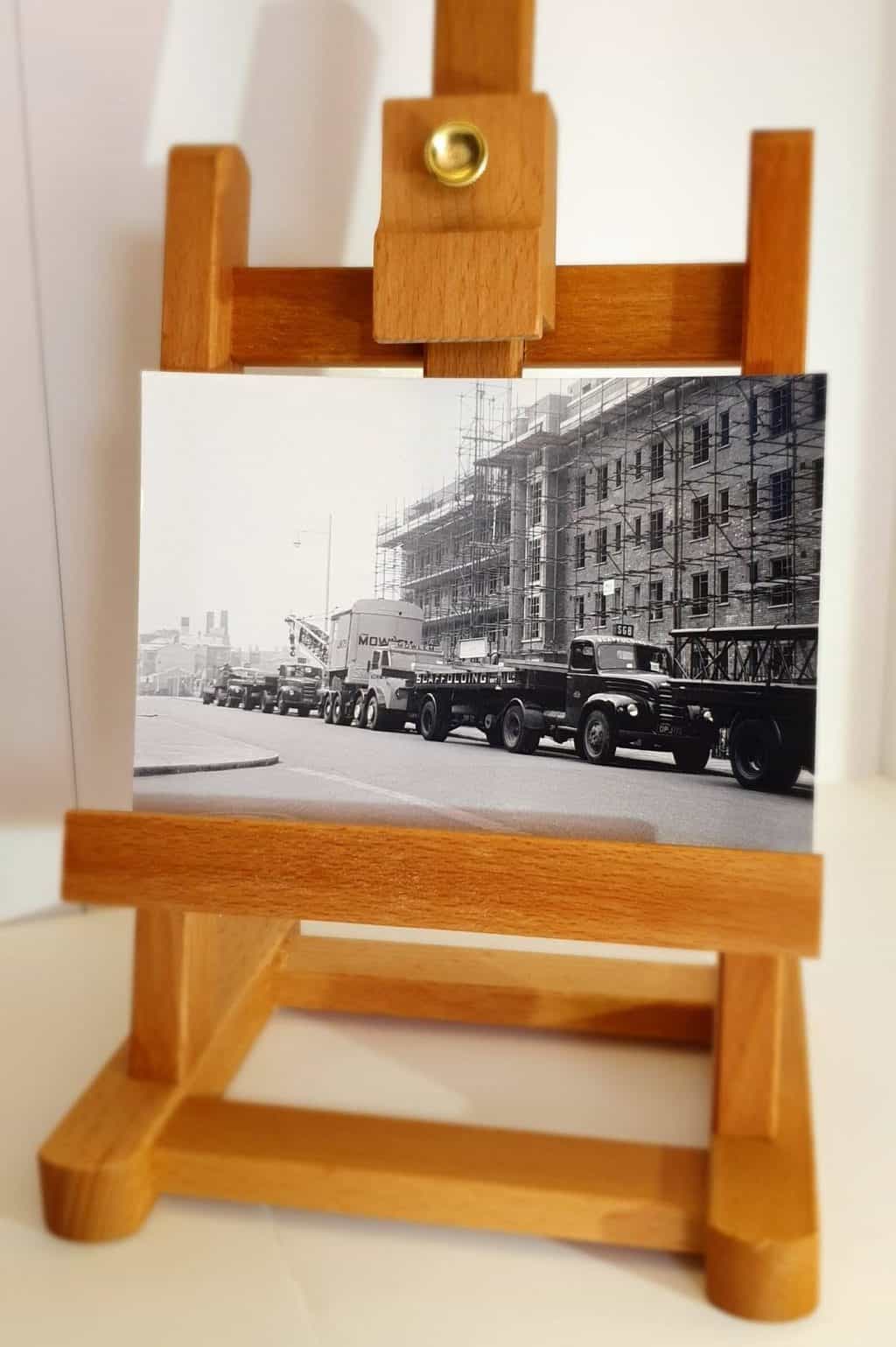
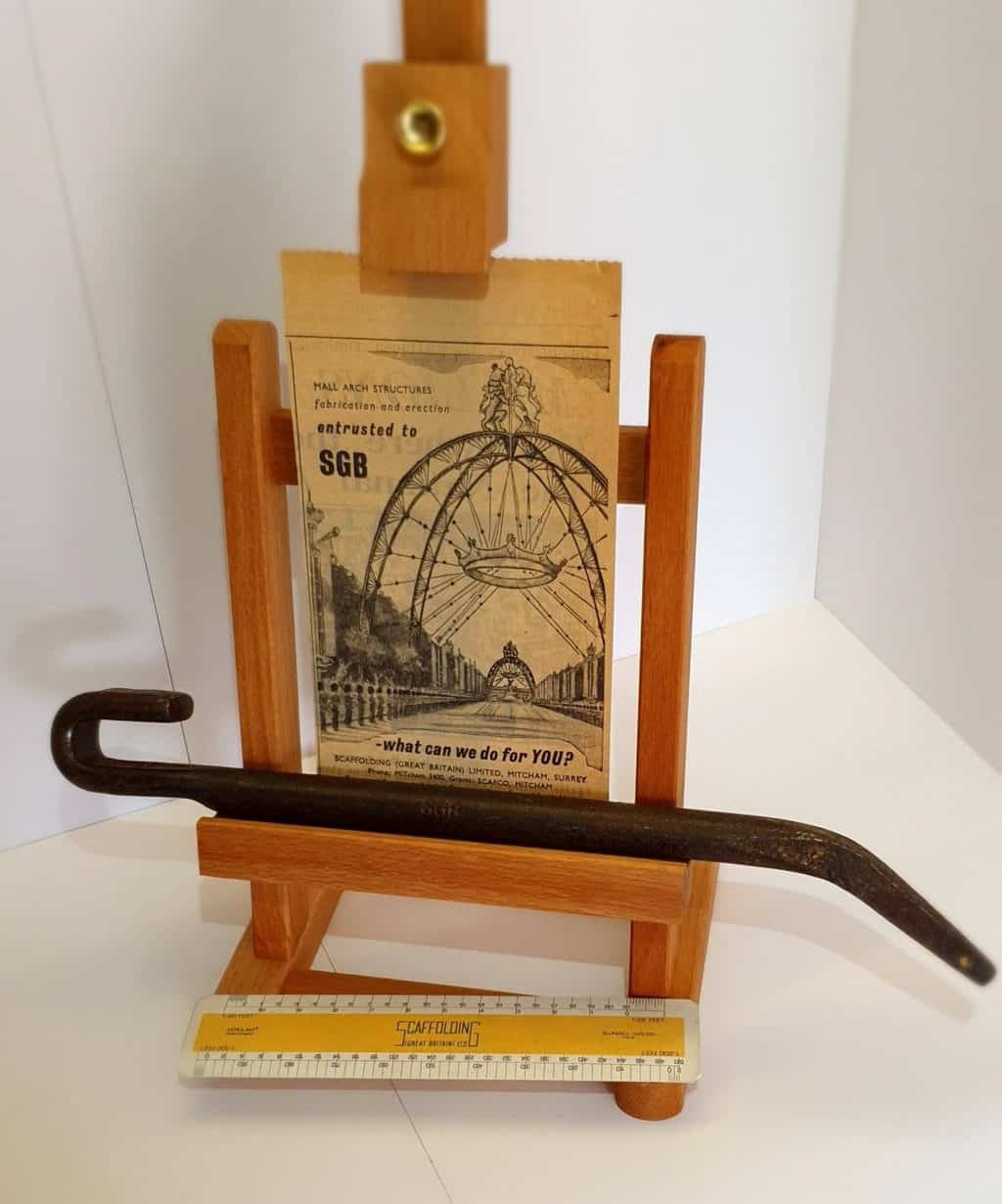
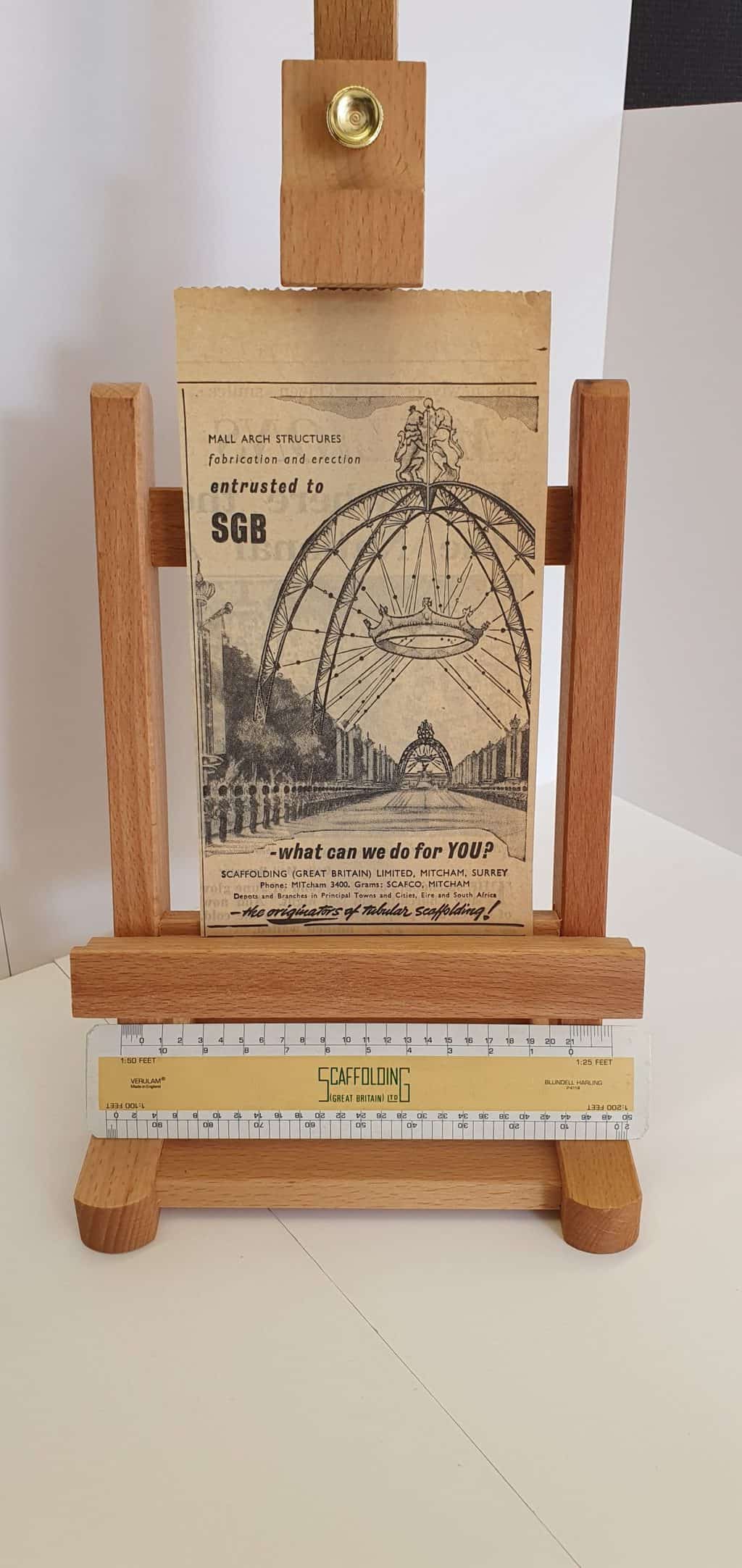
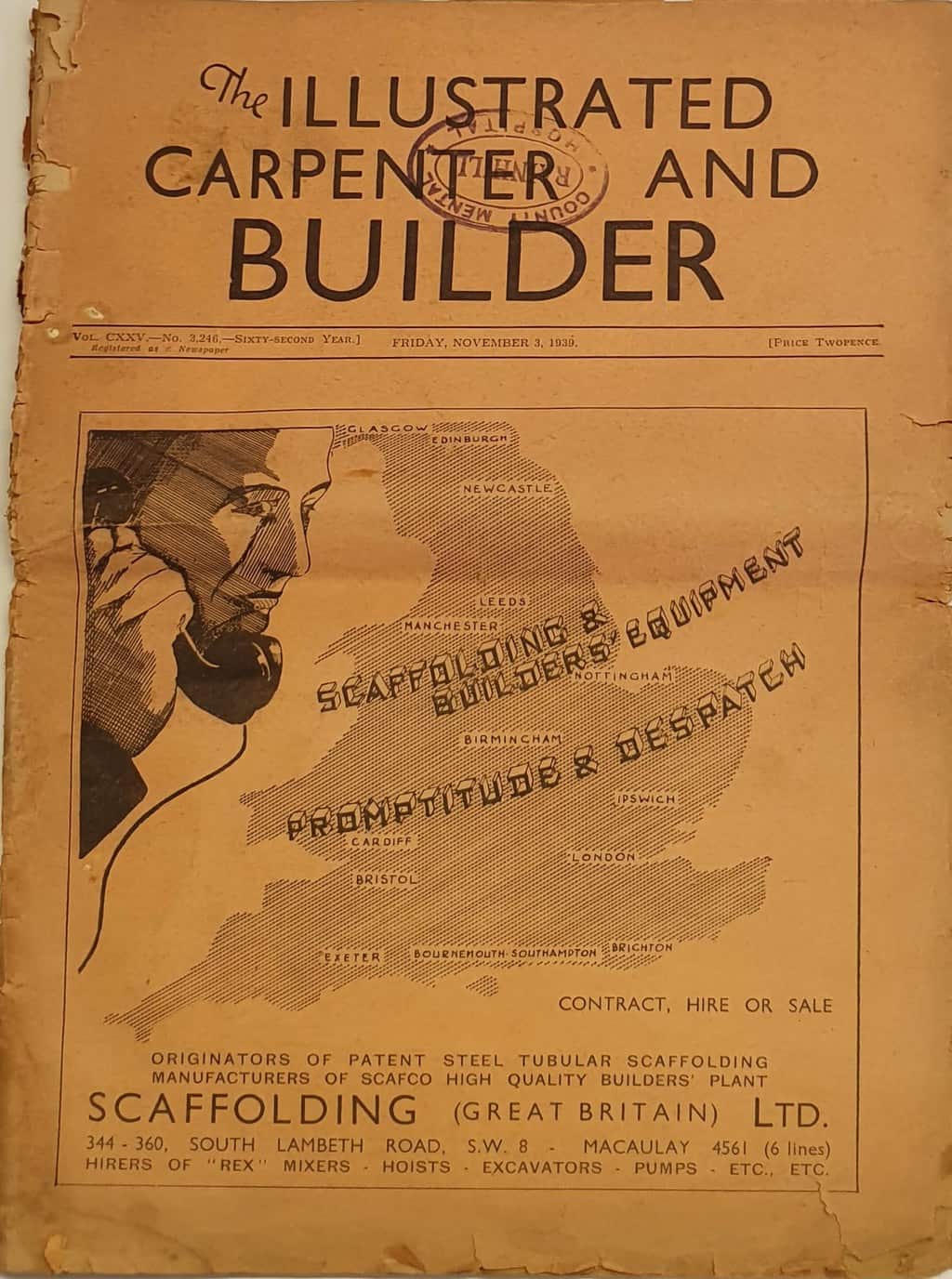
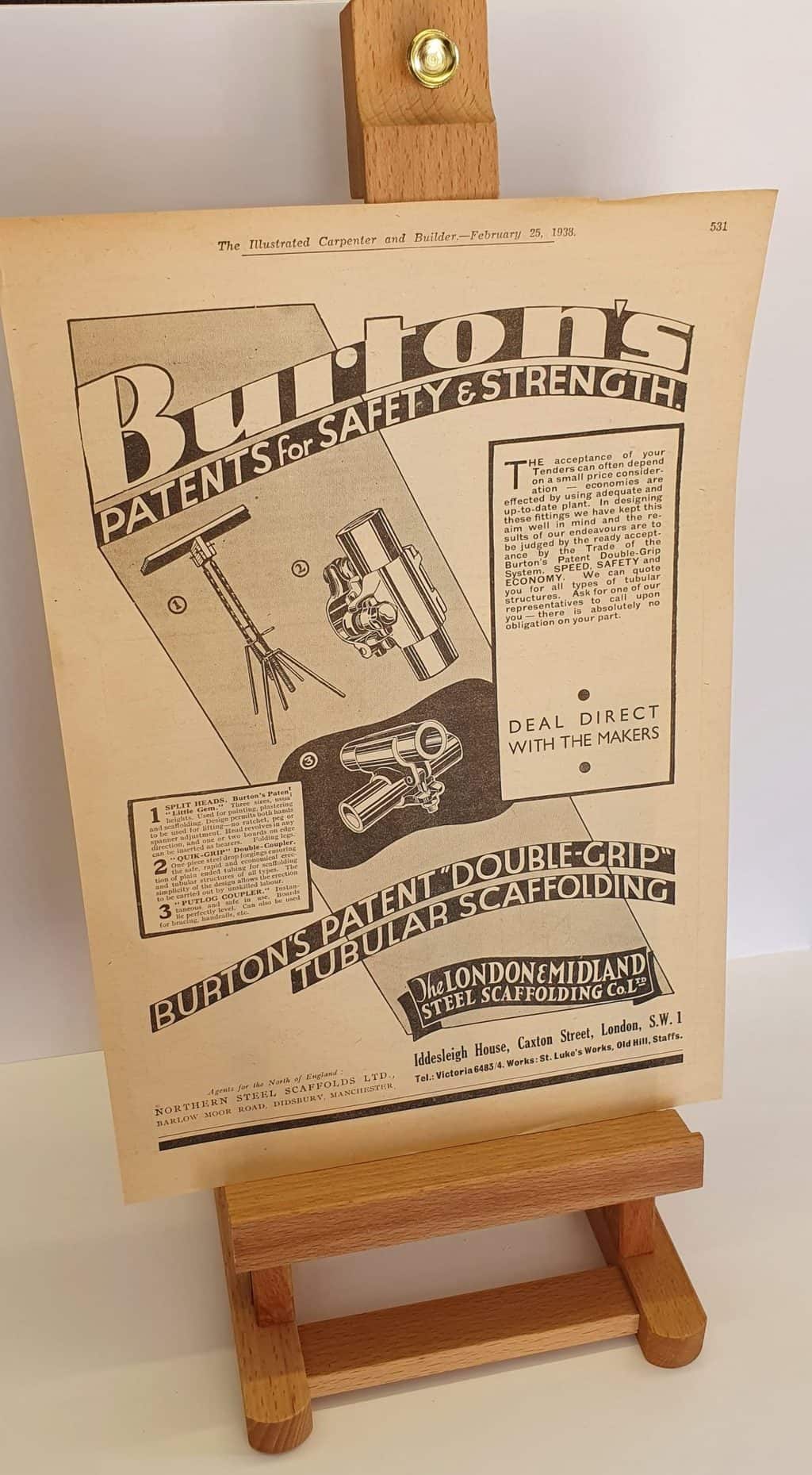
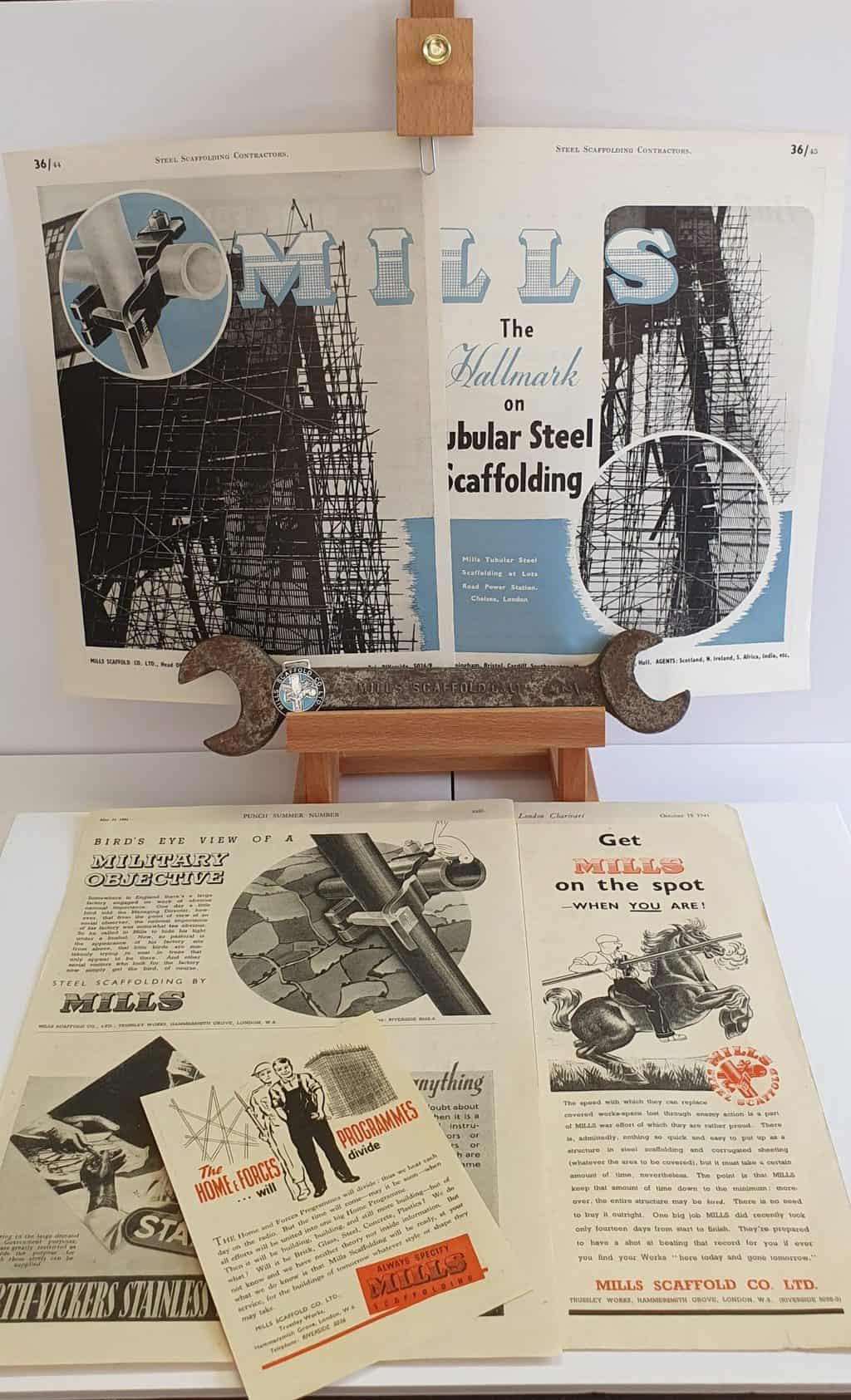
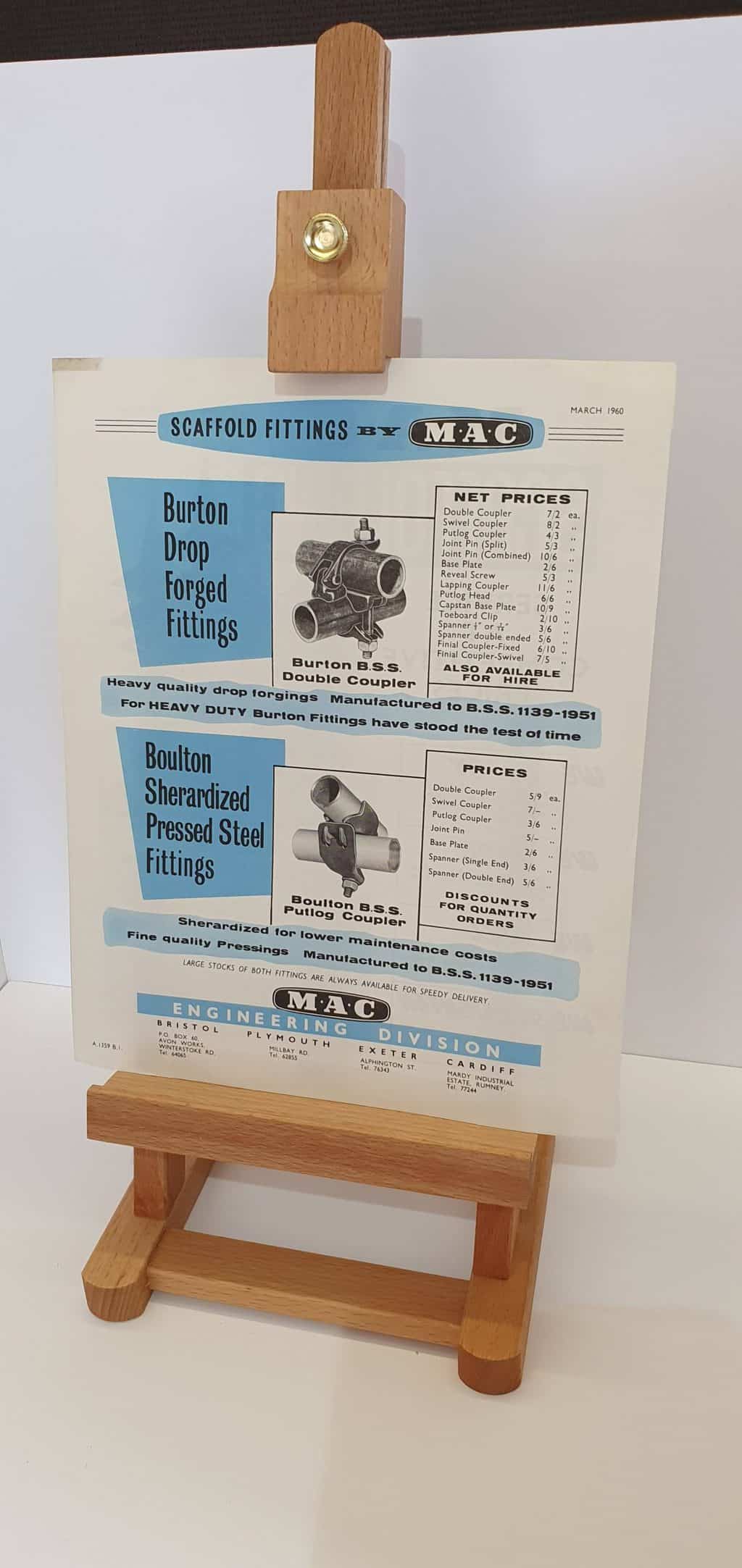
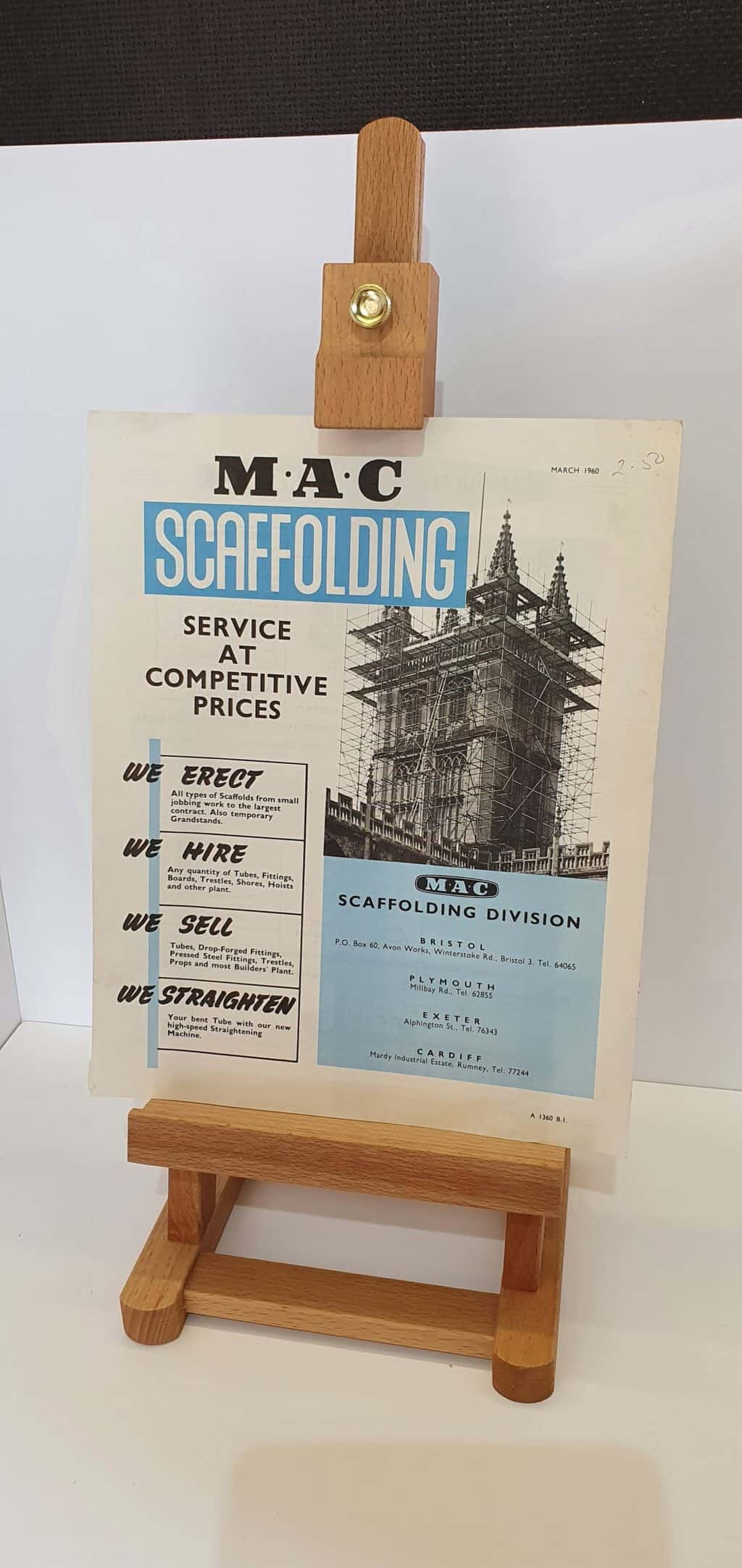
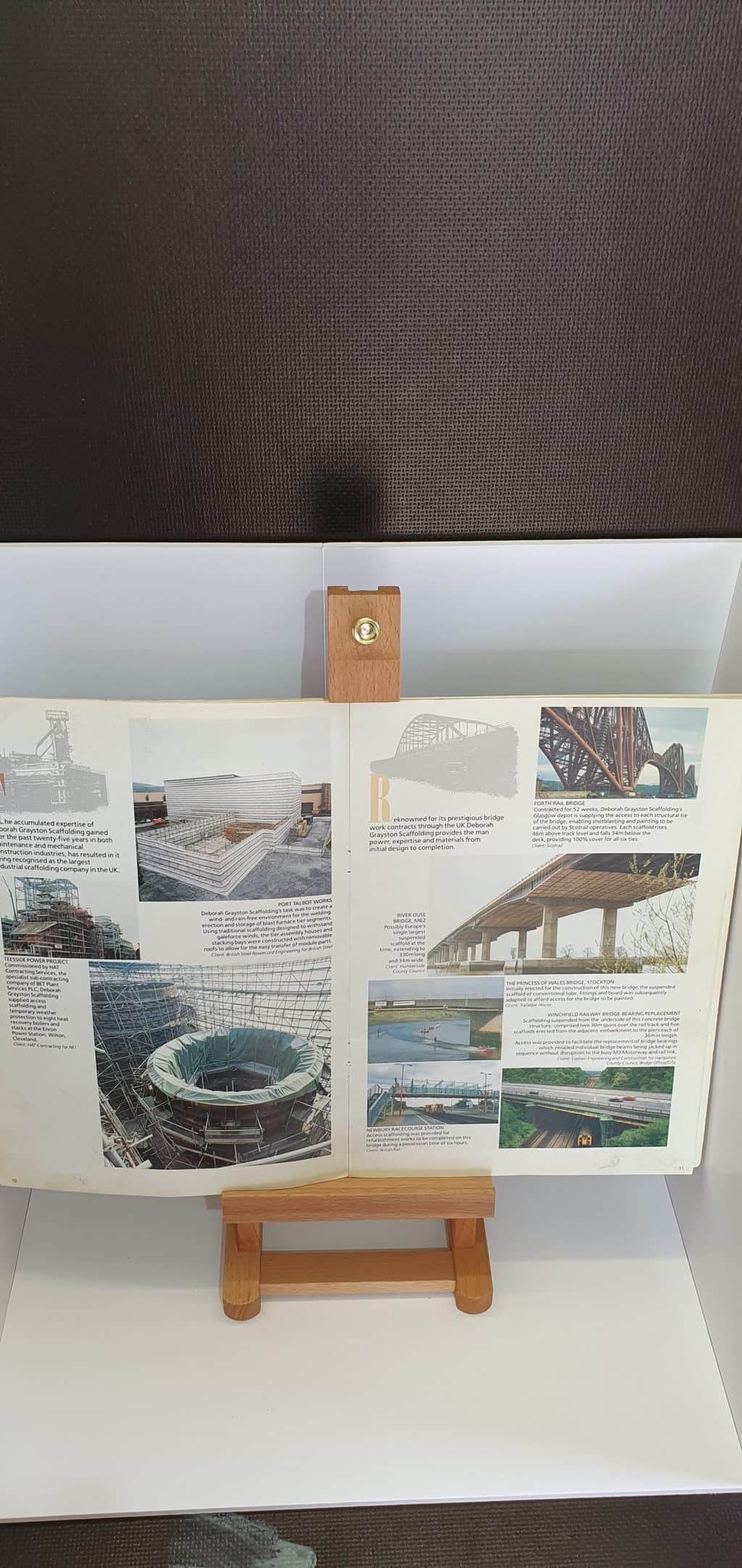
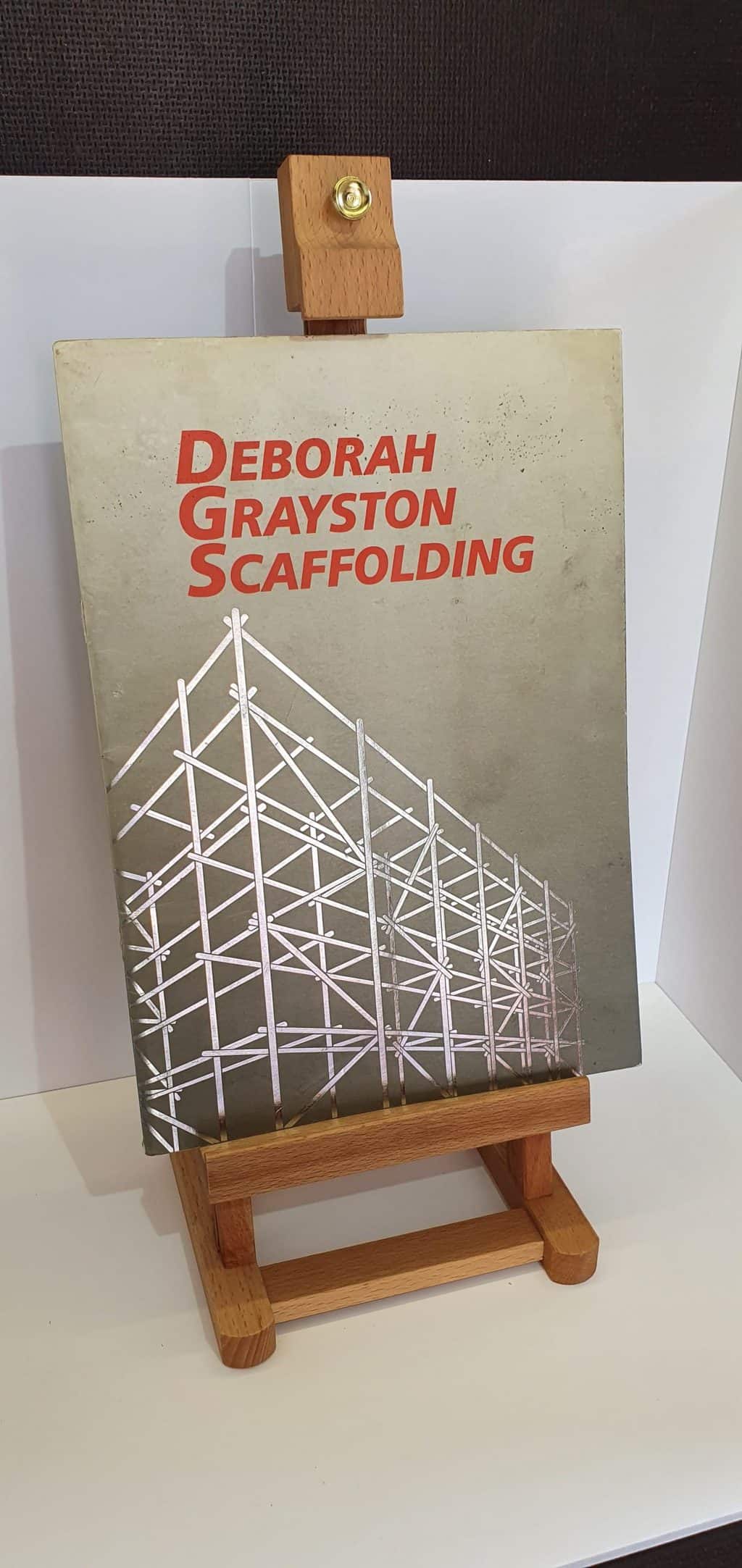
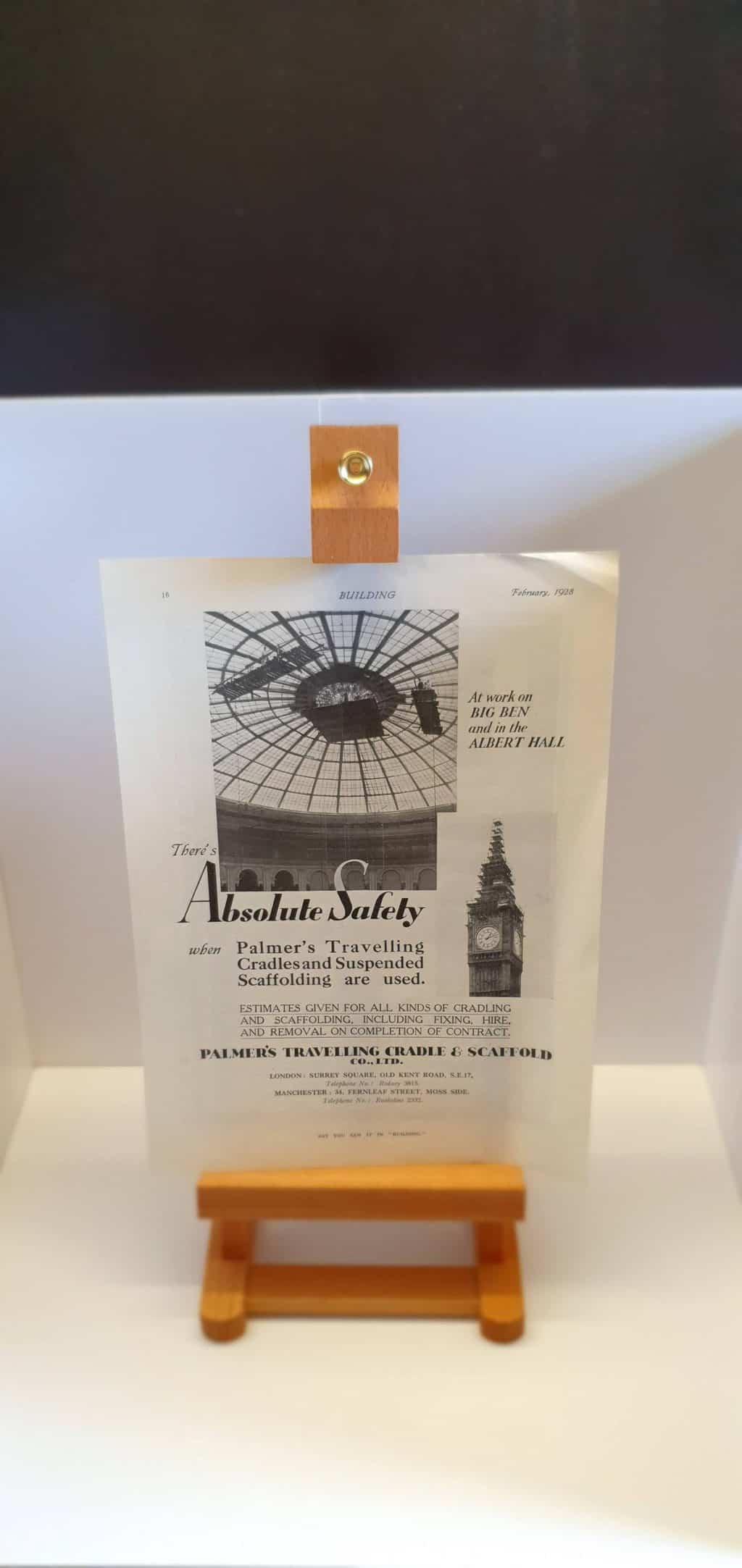
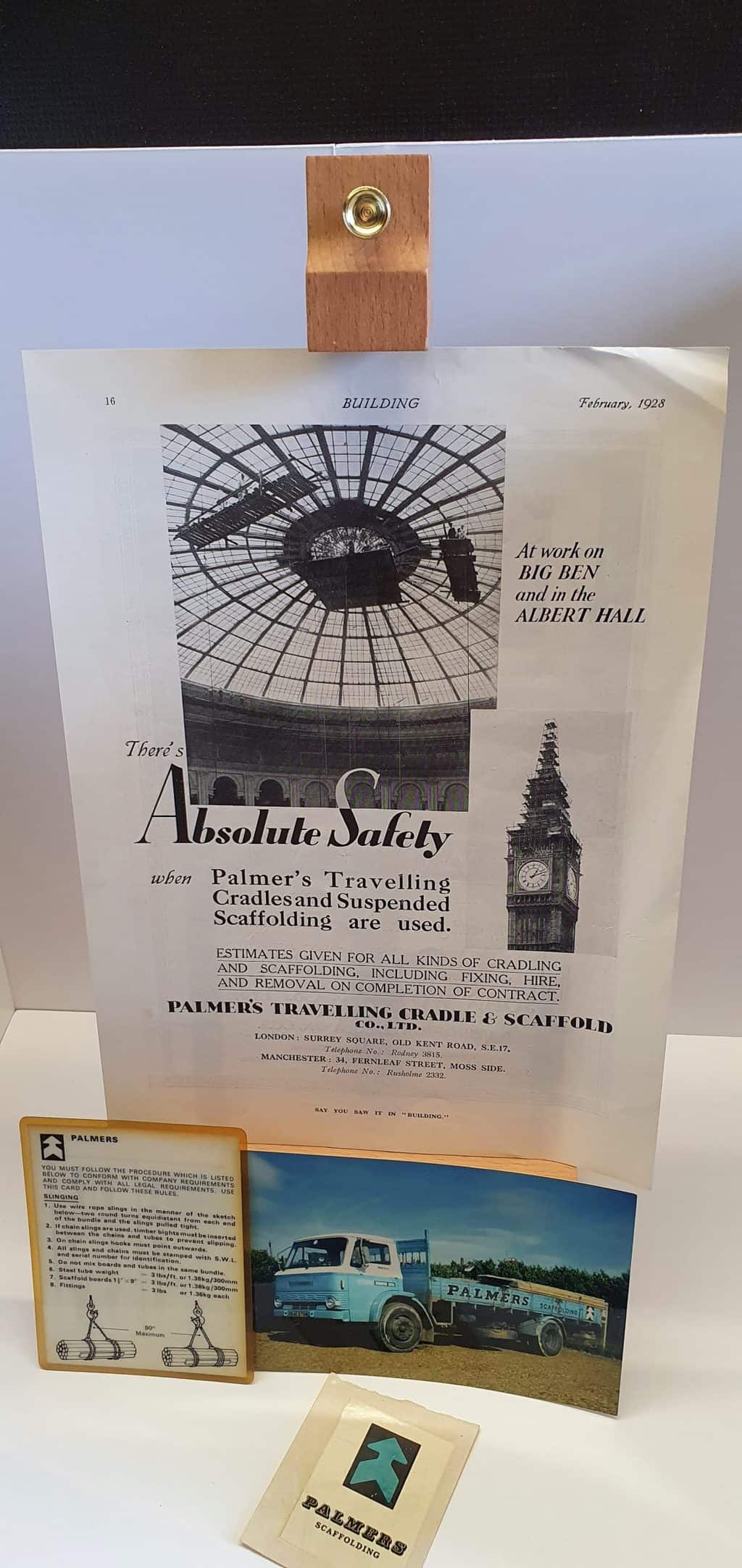
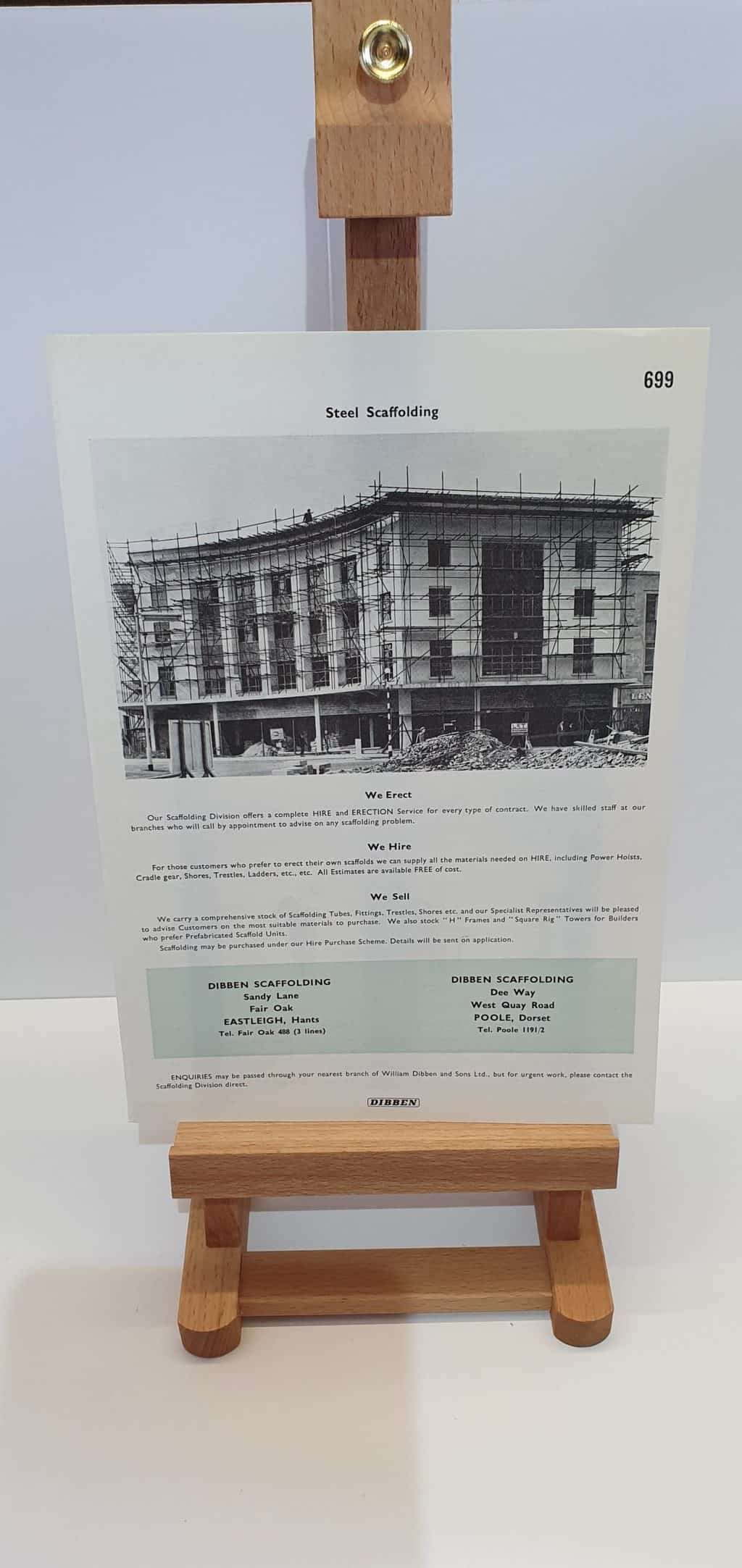
From an old Big Ben Spanner to documented ships scaffolding, Boulton Tubular Structures to The illustrated Carpenter and Builder, Palmers Travelling Cradle to the most glorious images from a bygone age, Paul has assembled a unique industrial collection. If you love your scaffolding history, this is the place for you.
Paul explained: “I started working weekends and in my school holidays with my Father, Ian, when I was 12/13. The day after I finished school I was full time on-site. It should have been Palmers Scaffolding in Manchester but the depot closed it, so officially it was Ace Scaffolding.”
Across the year’s Paul sub-contracted to a number of large firms such as SGB, Deborah Graystons, Kwikform and like any decent scaffolder (his own words), TRAD in London around the turn of the century. He now finds himself working for Lyndon Scaffolding in both London and Manchester.
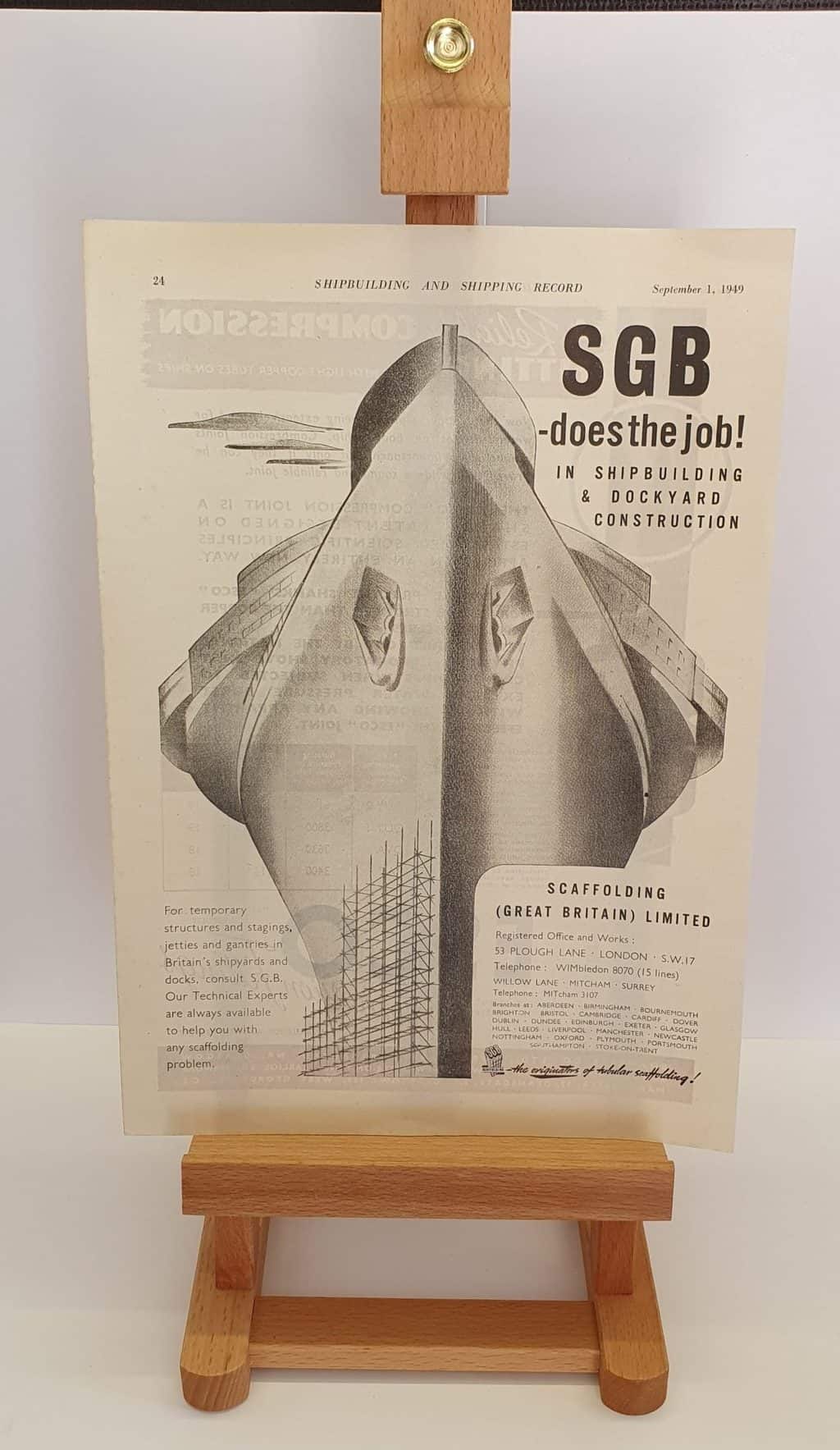
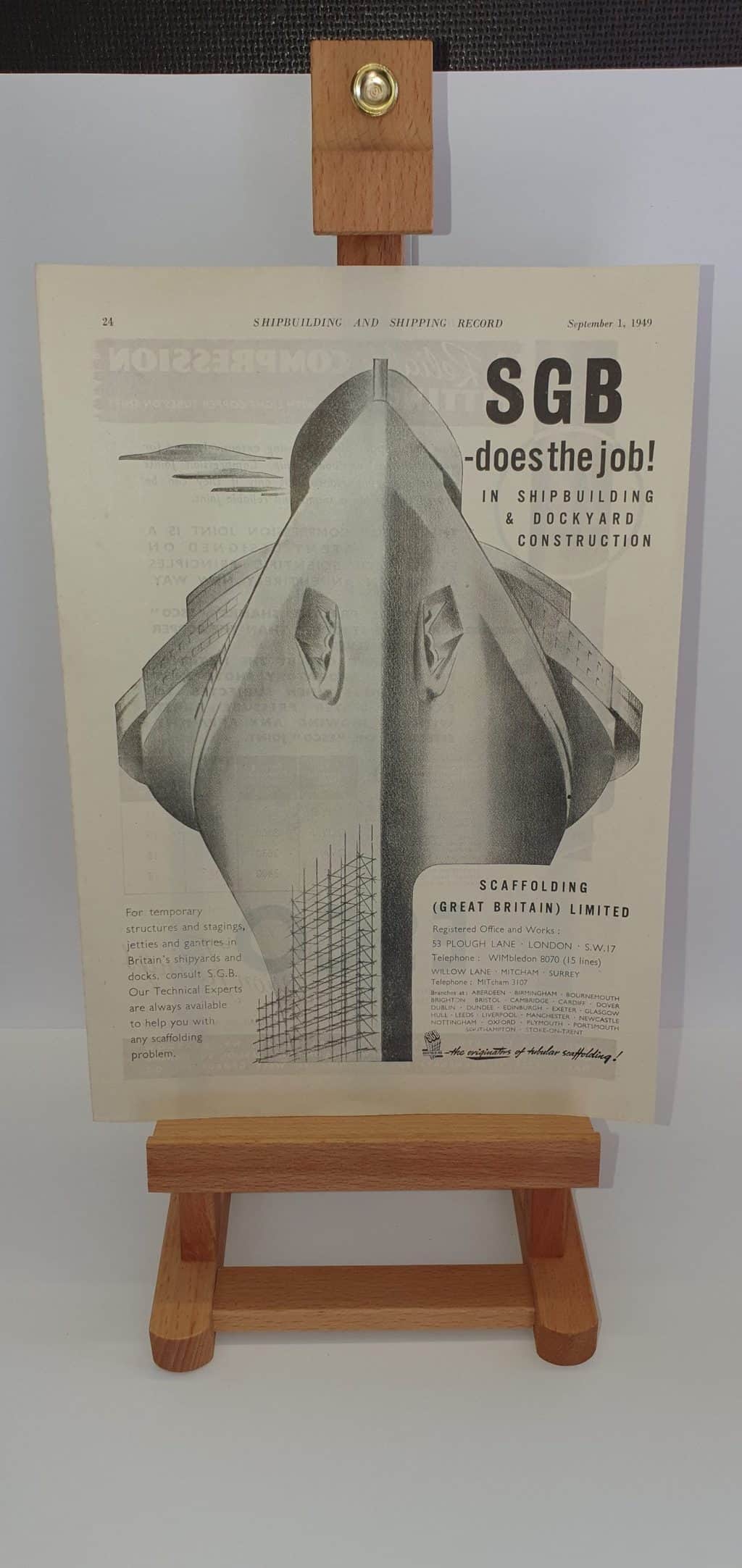
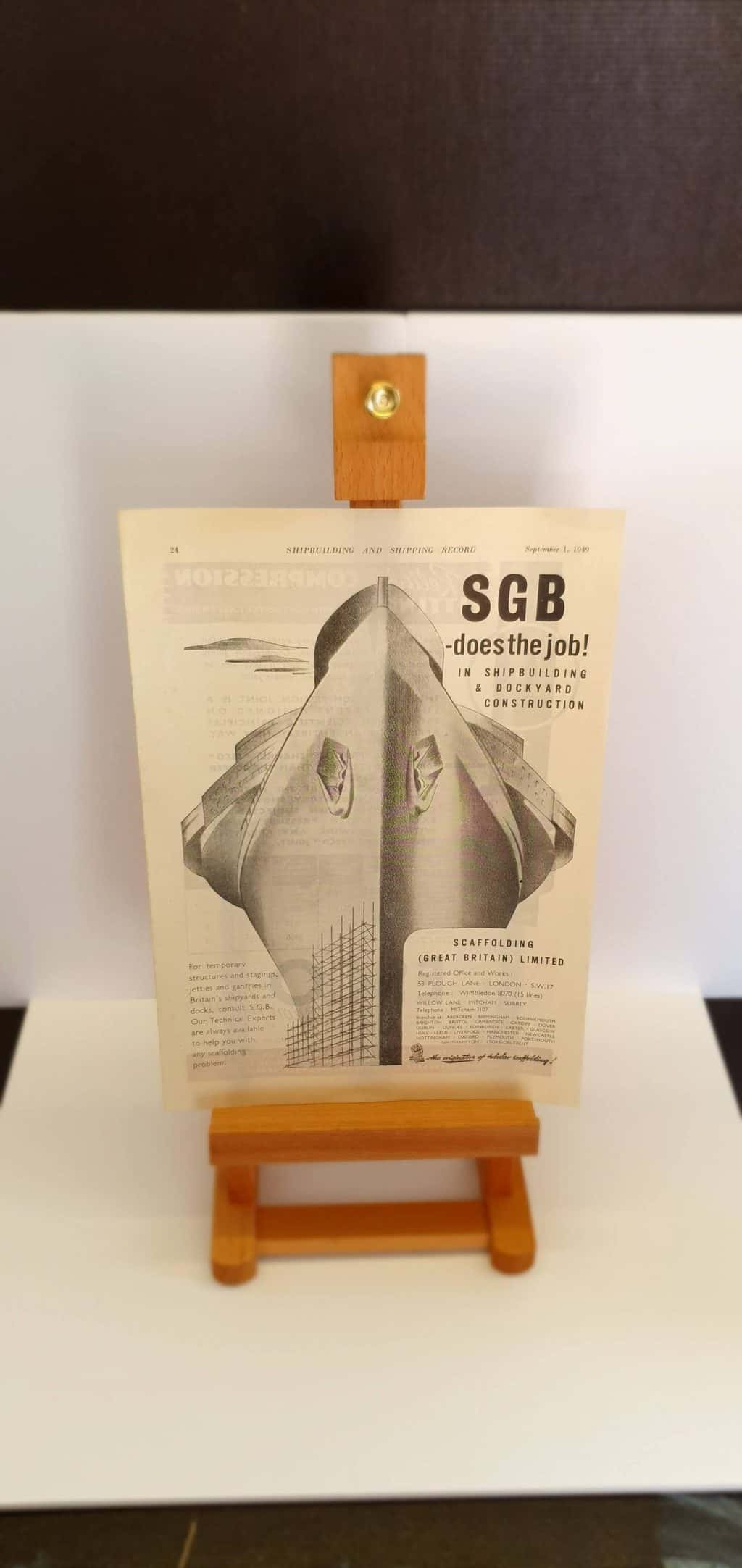
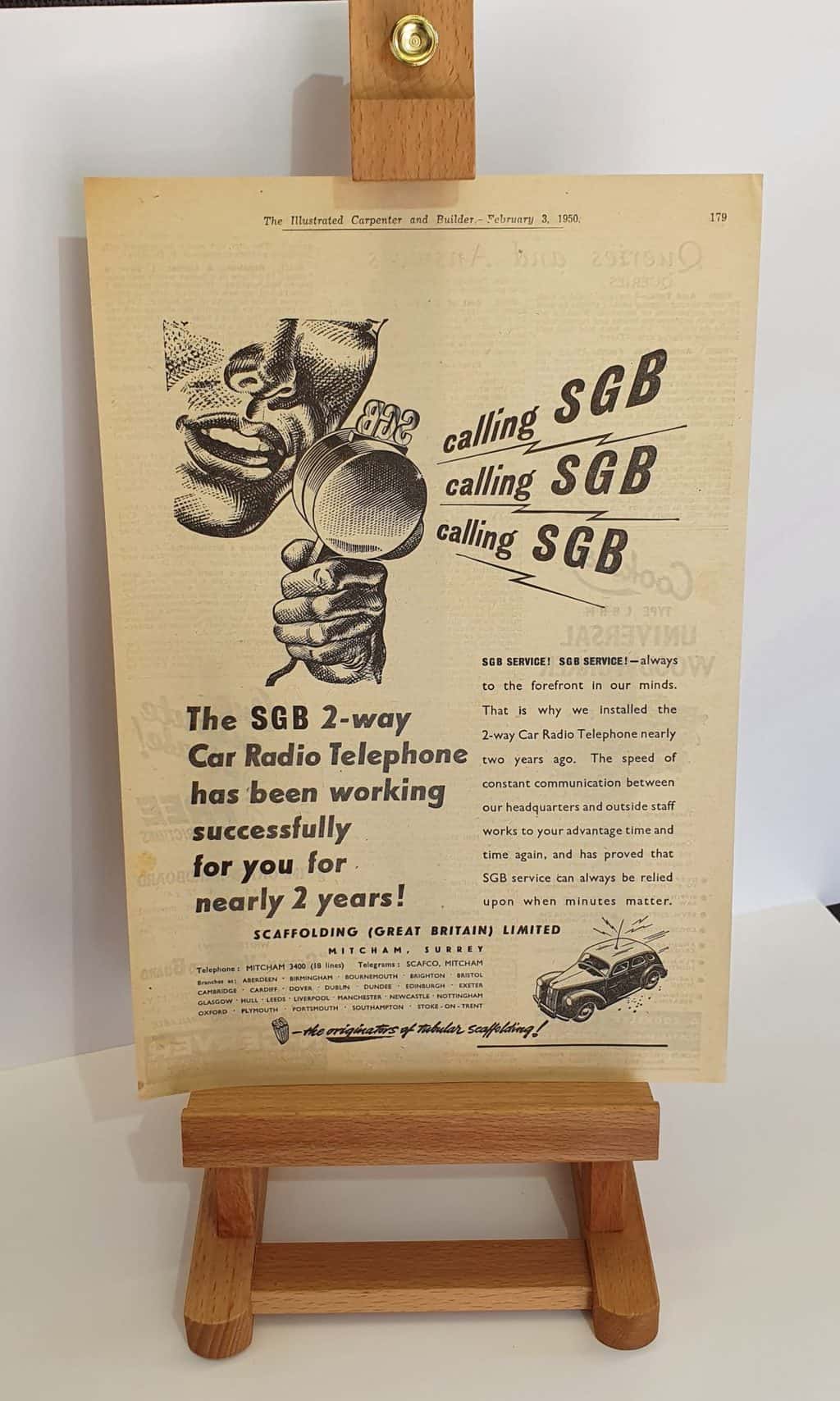
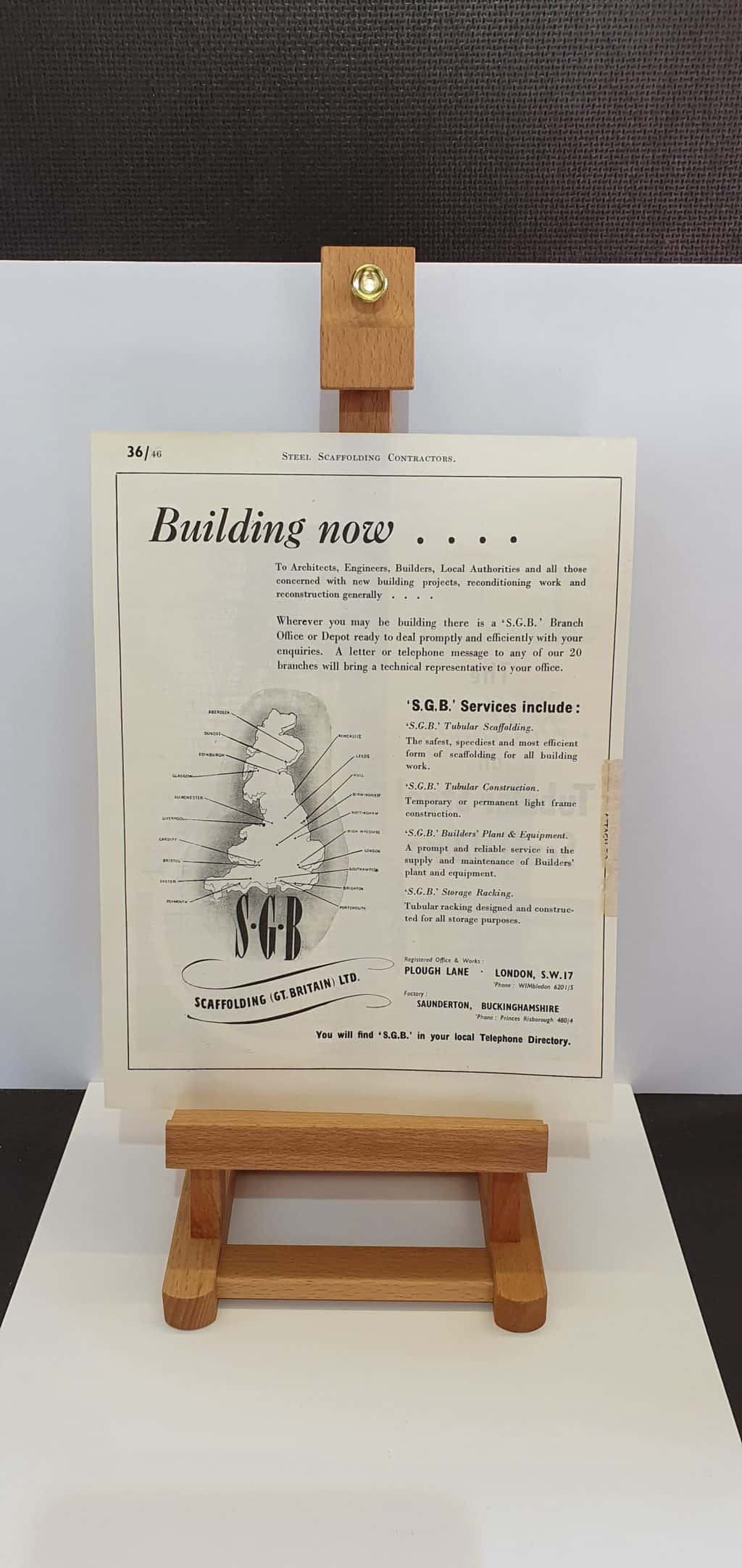
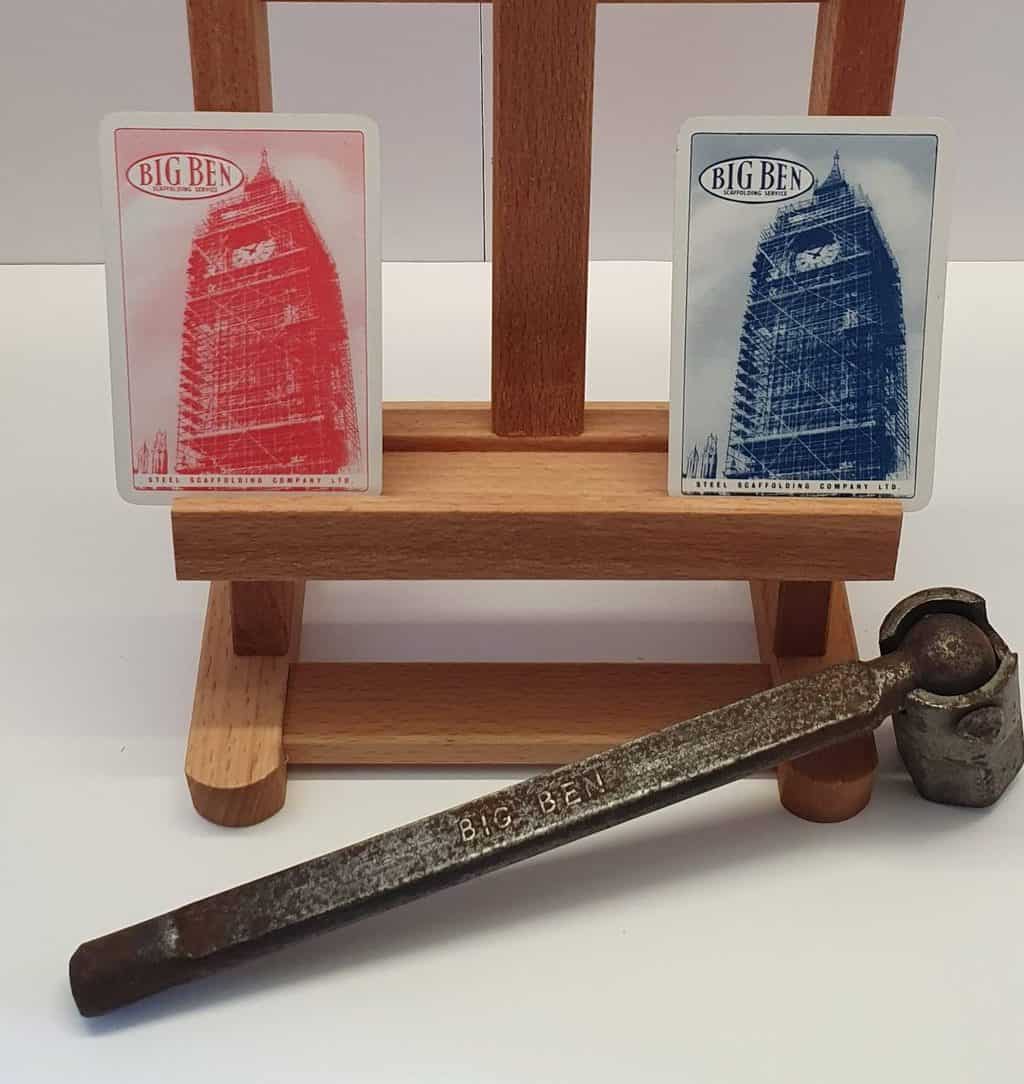
My collection started around six years ago when my father gave me his old Big Ben spanner and a couple of books. From there I went onto old newspaper advertisements, mainly SGB ones.
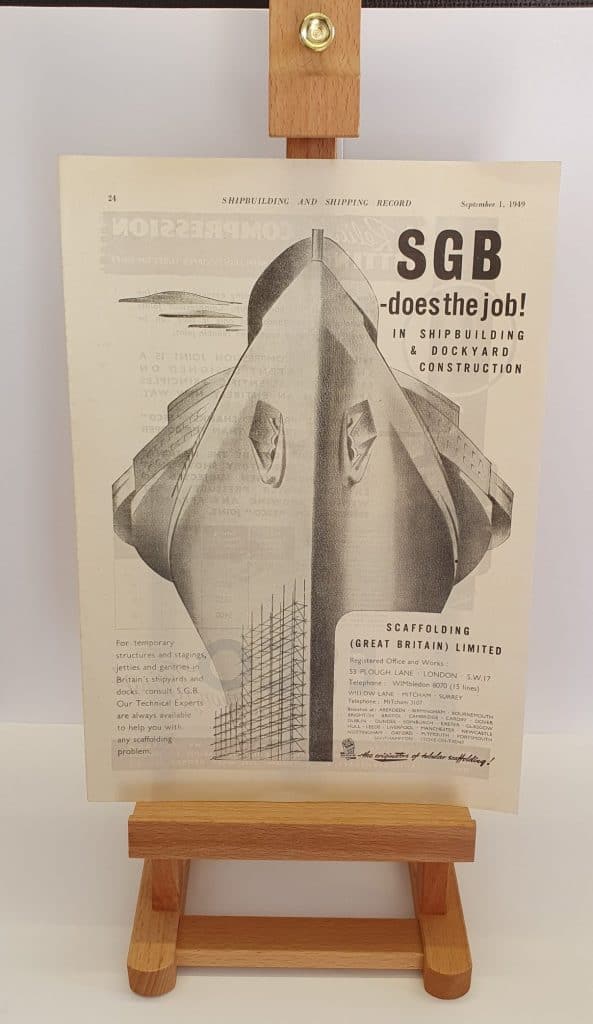
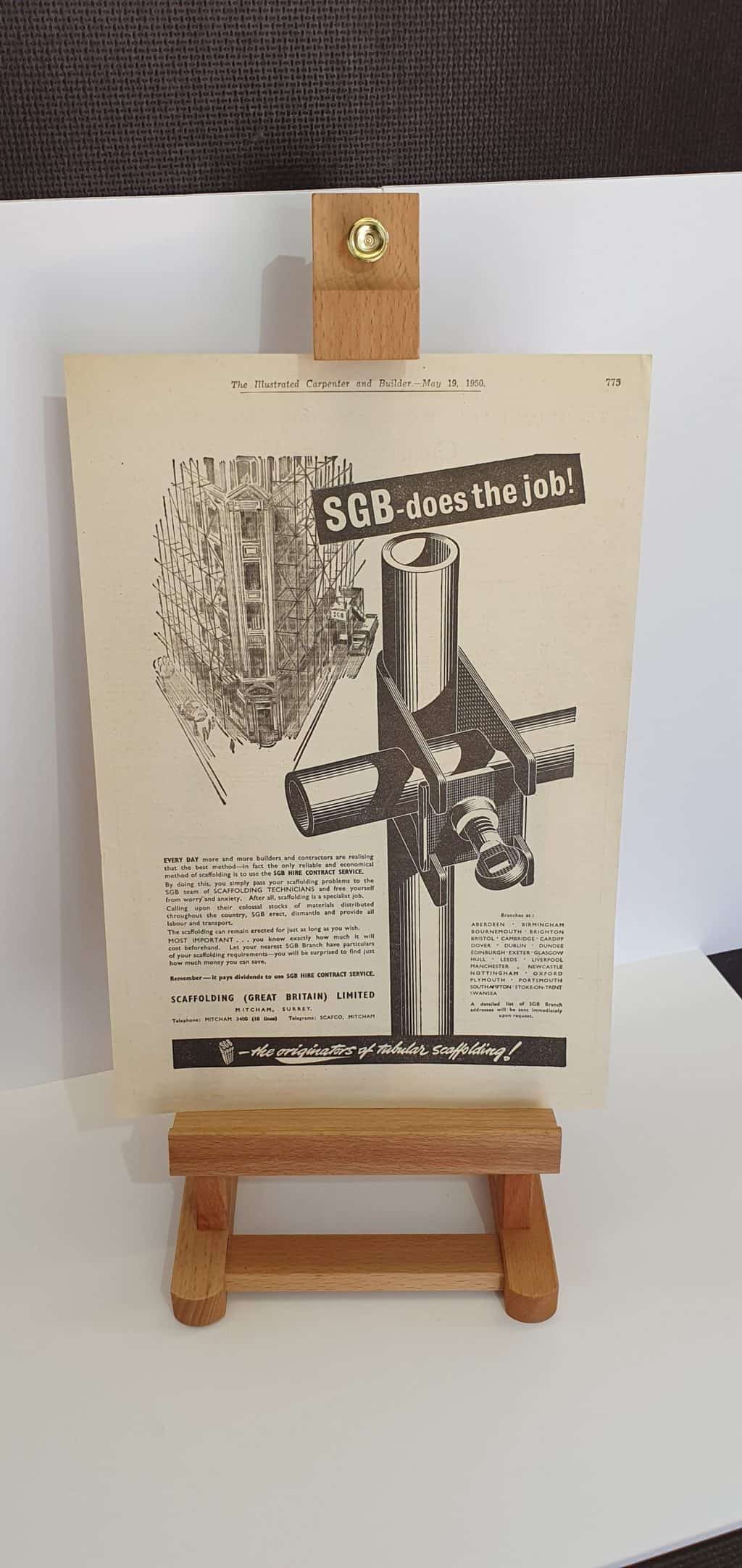
So if Paul found himself on a desert island what would he keep with him? “Hands down the SGB adverts, he says. “In particular the “SGB DOES THE JOB” close up of the band and plate, as their strapline is “the originators of tubular scaffolding”.
“The fact we still use the band and plate today is a testament to the company and a big reason why this is one of my favourites. I still have an original SGB Podger on my belt some 100 years after they were first used.”
And if you thought car phones are still relatively new think again. Did you know
The SGB two way car radiotelephone was working successfully in the 1930’s? Paul has the proof.
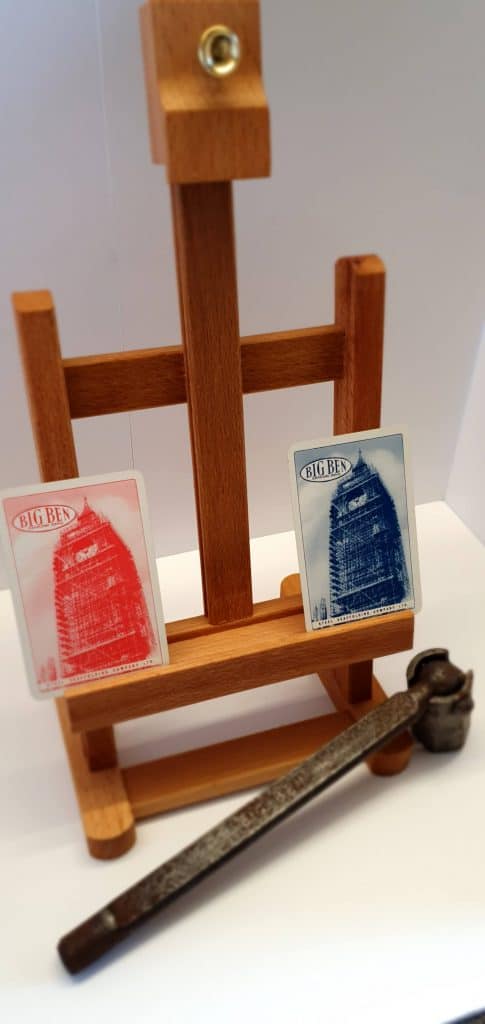
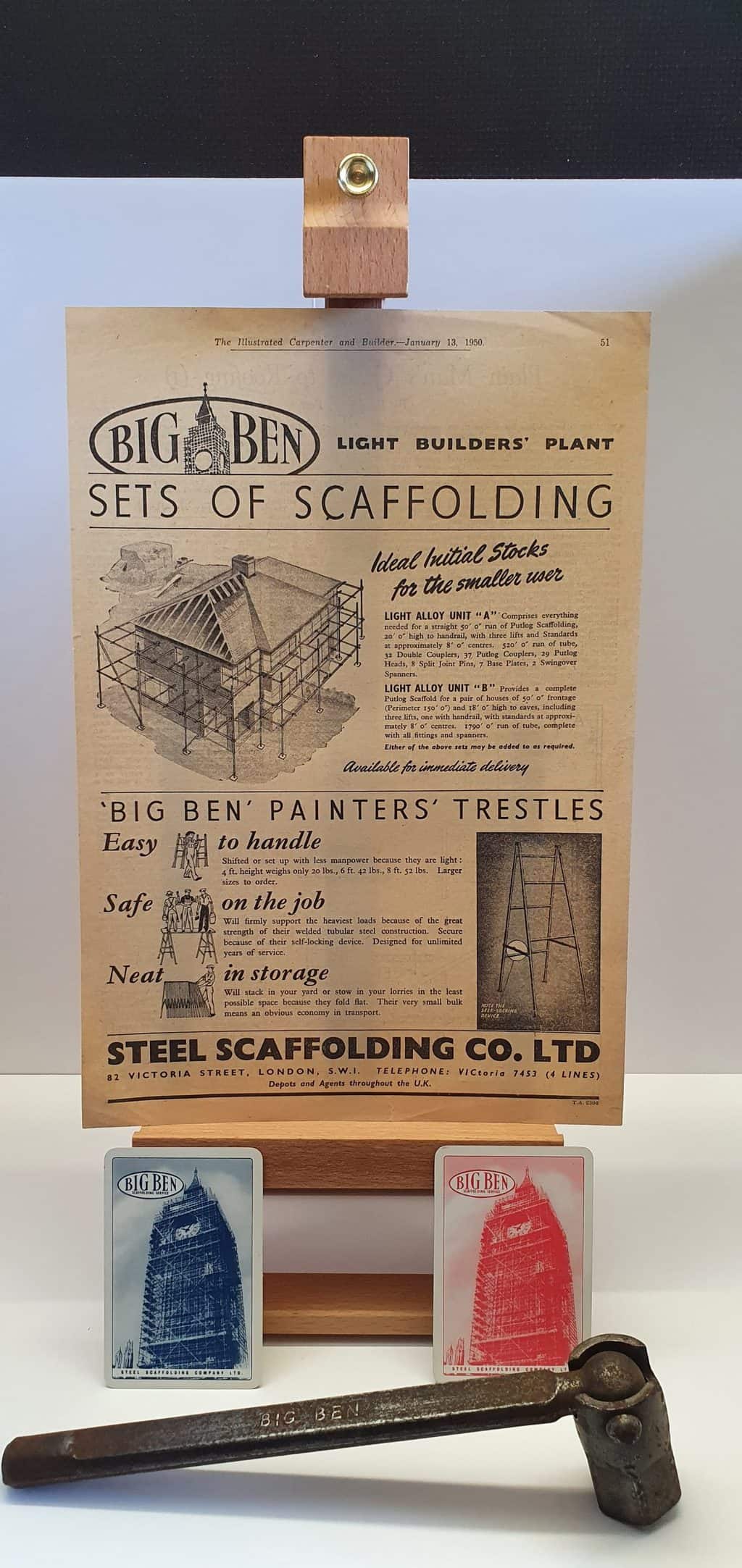
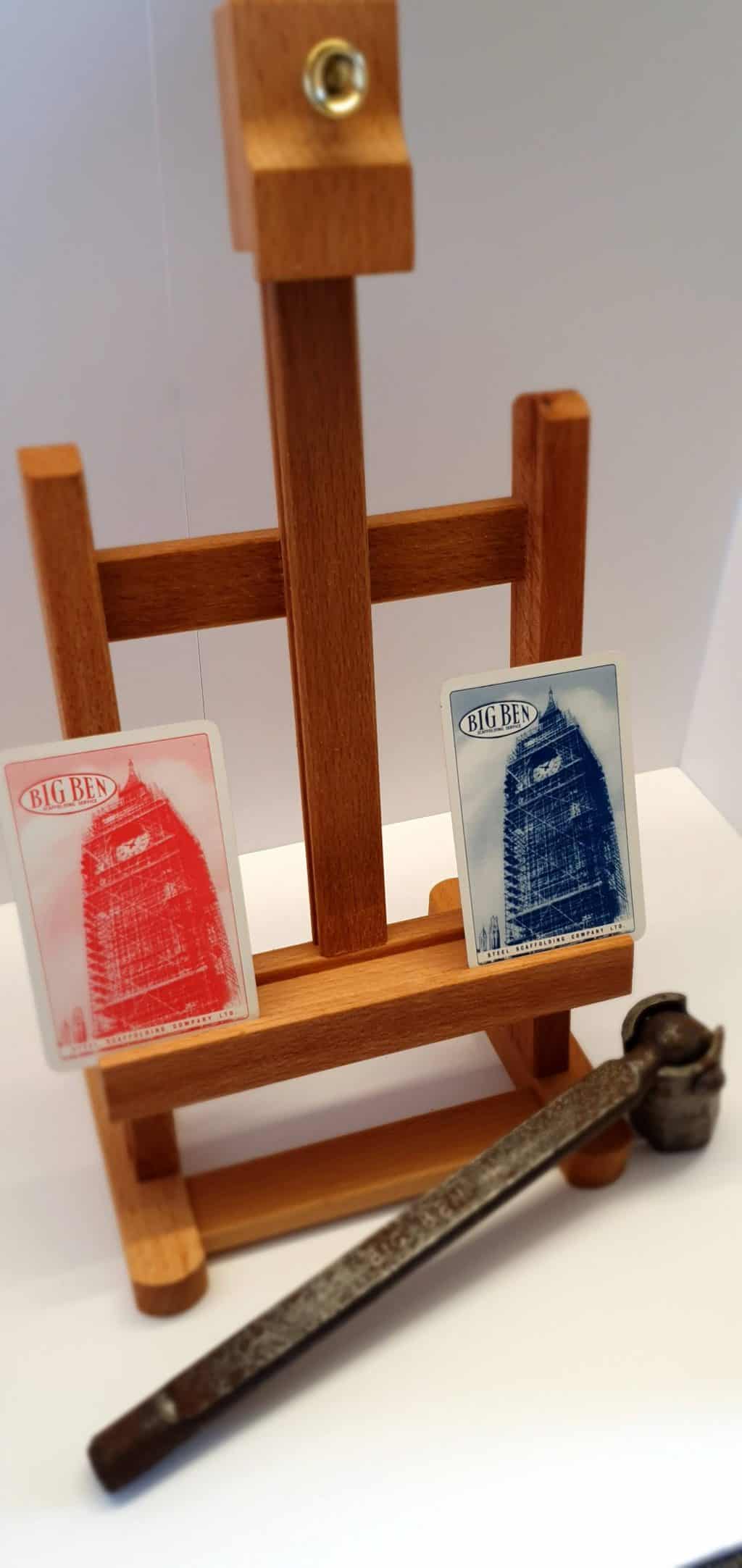
And if he had to throw a spanner into the works, how about The Big Ben Collection of three original tools. You wouldn’t really want to clock off, but if you did there’s always a couple of playing cards to pass the time and an advert.
He told me: “It says a lot about the company that Leach’s Scaffold Supplies have a full line of products named after the Big Ben Scaffolding Company.”
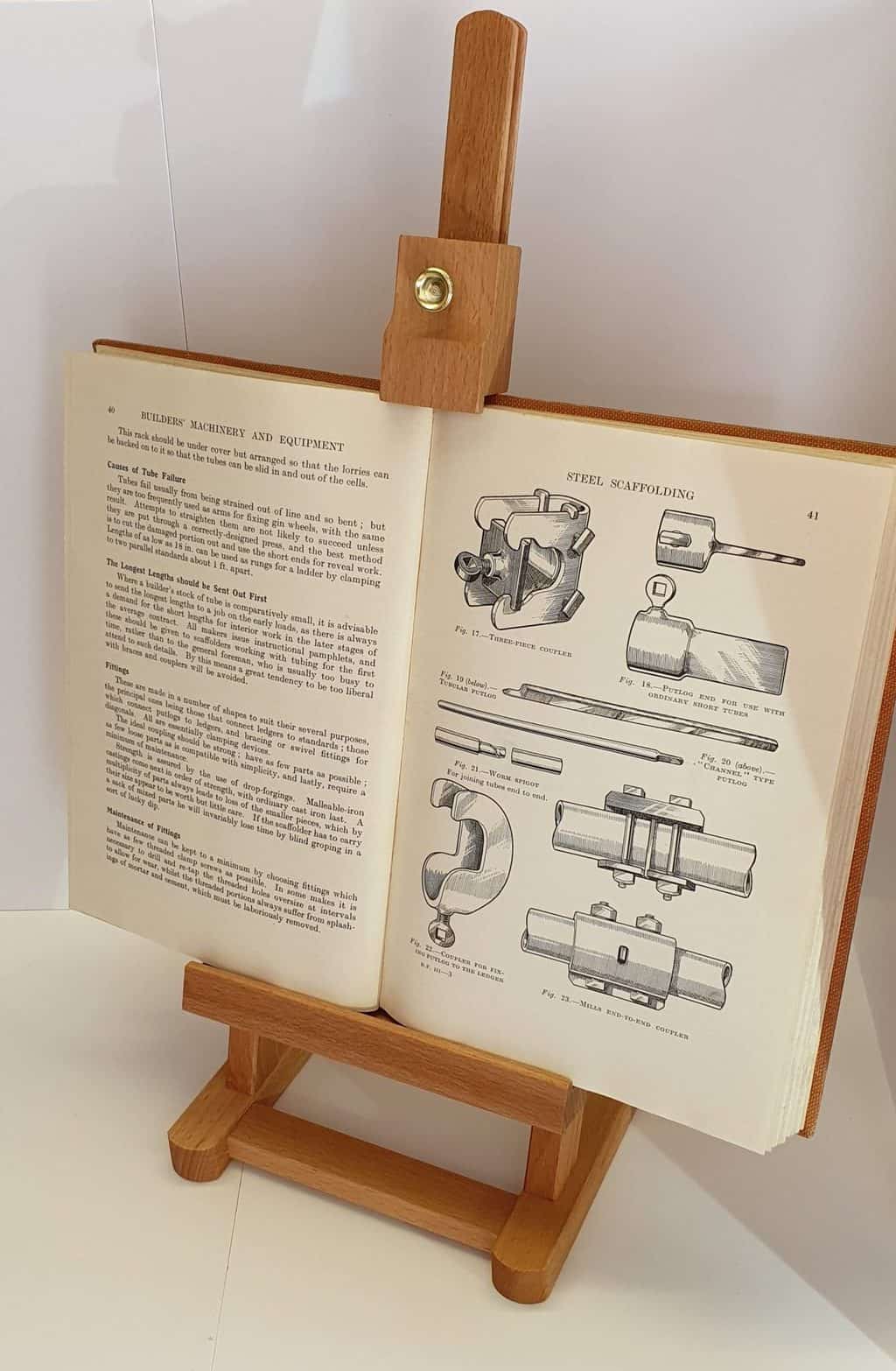
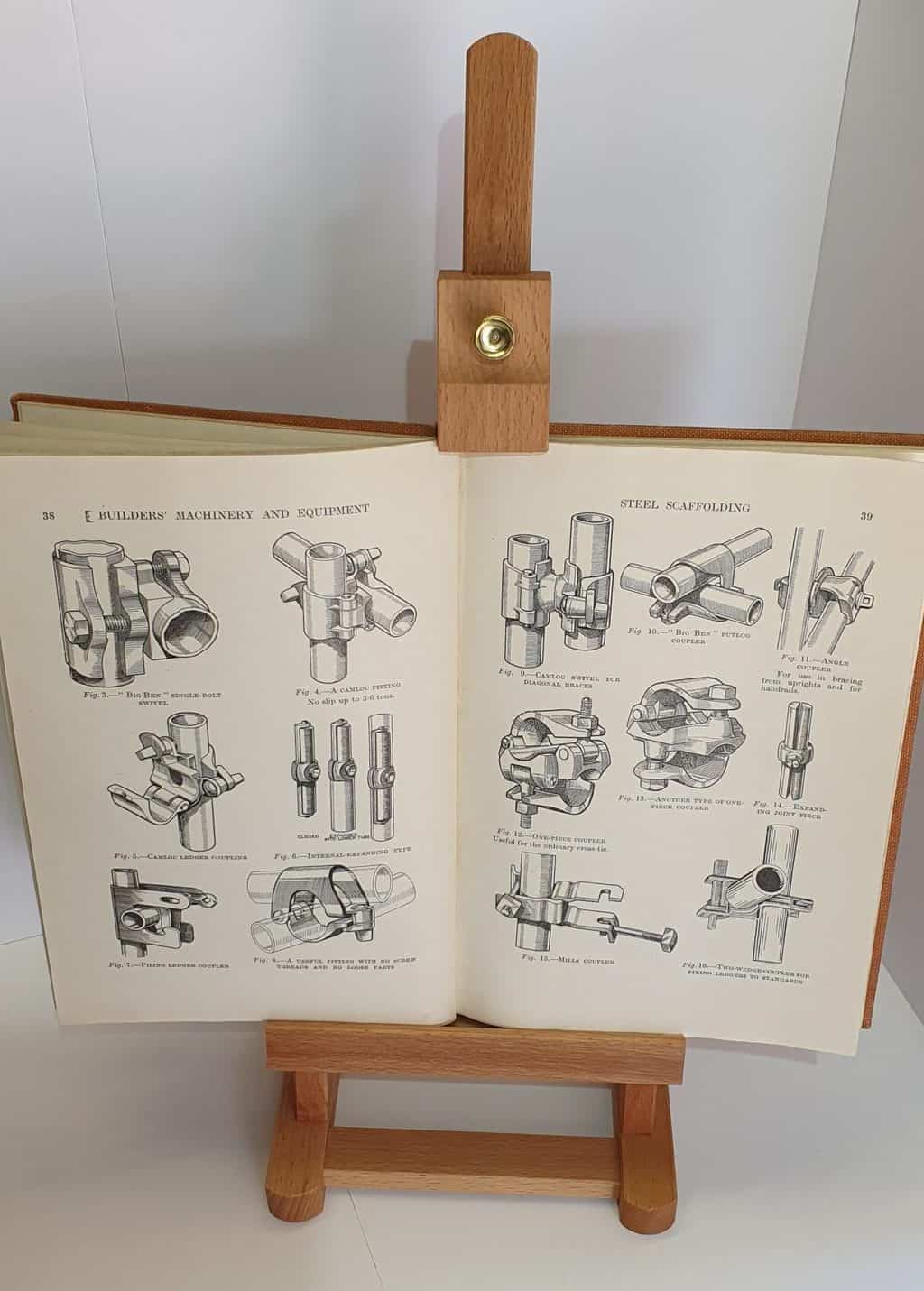
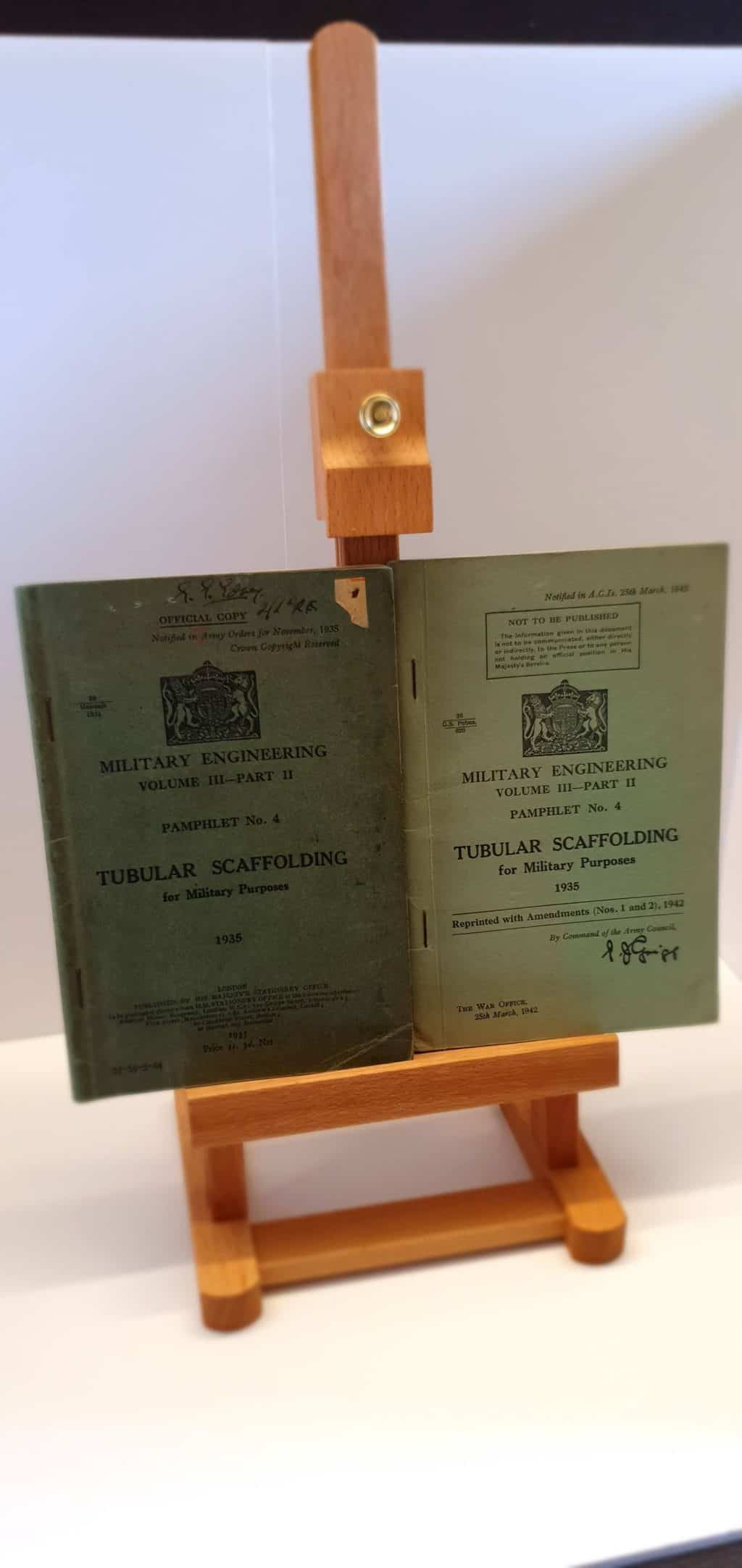
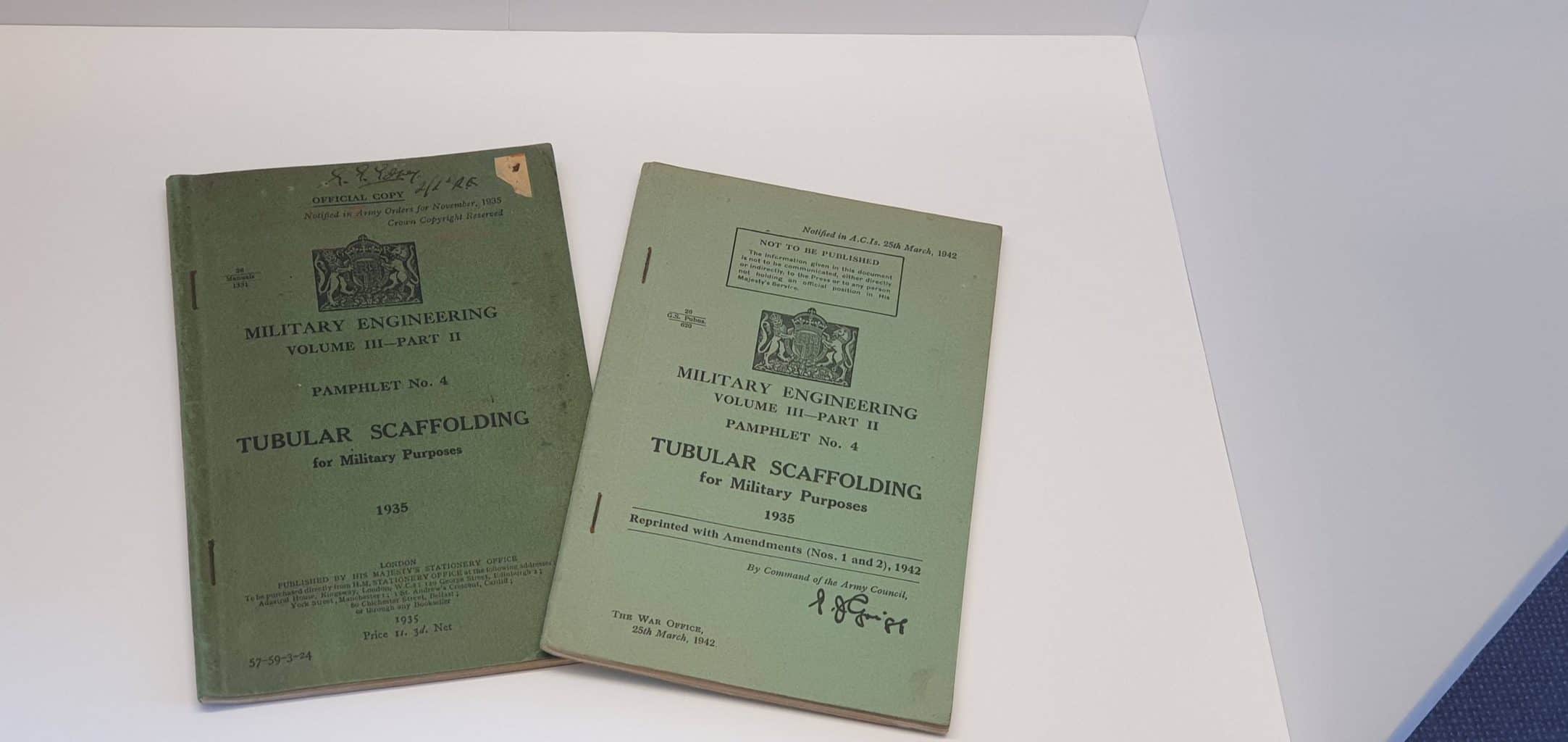
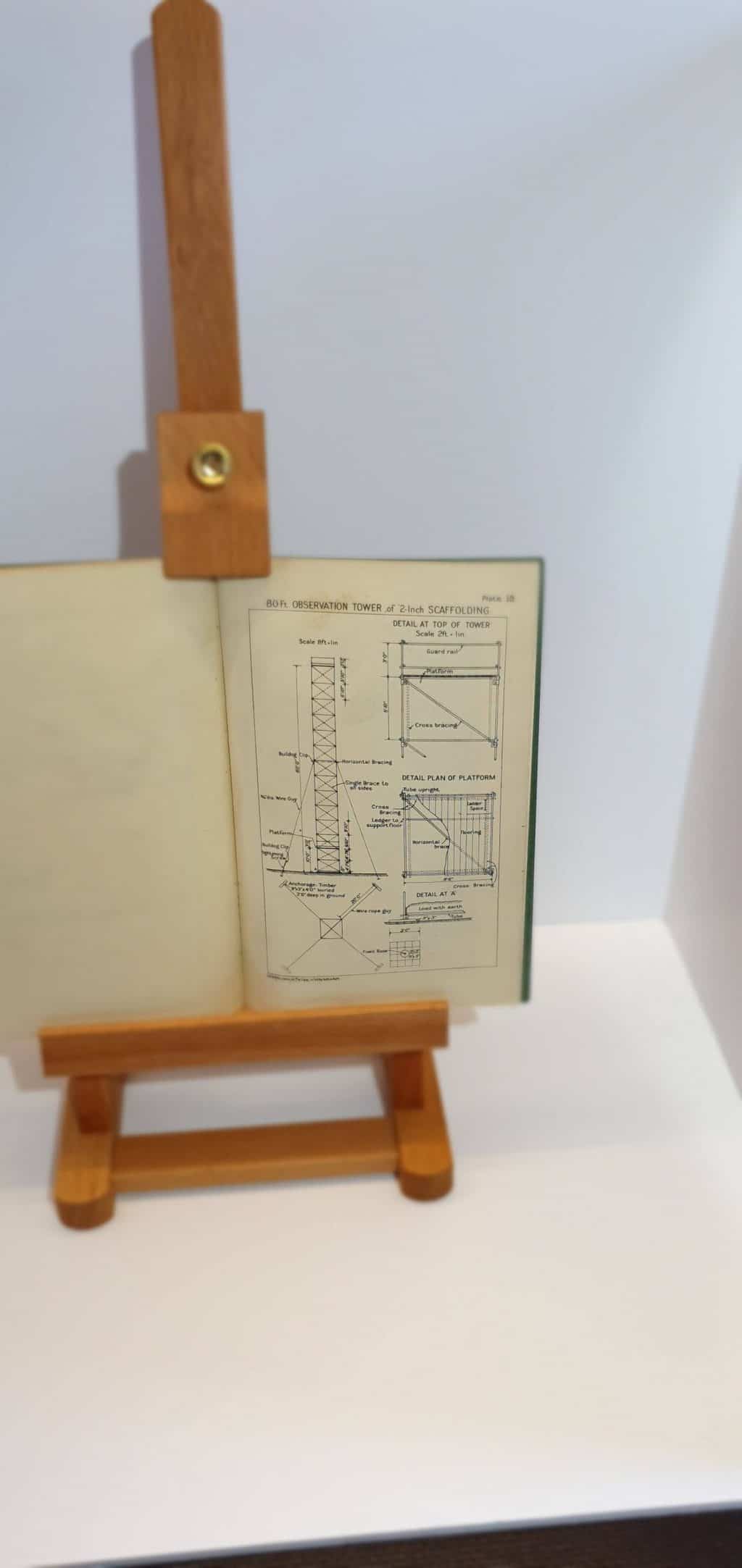
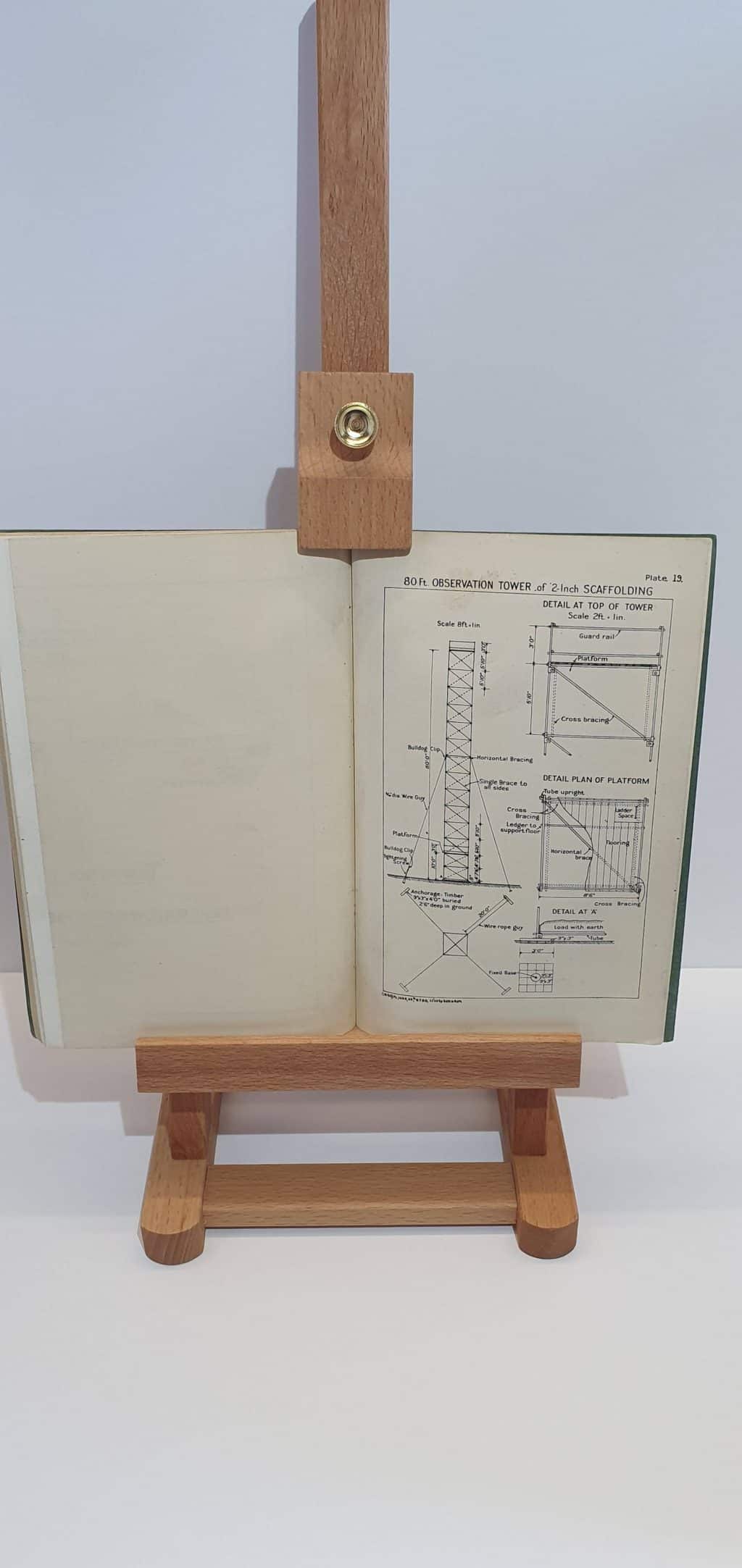
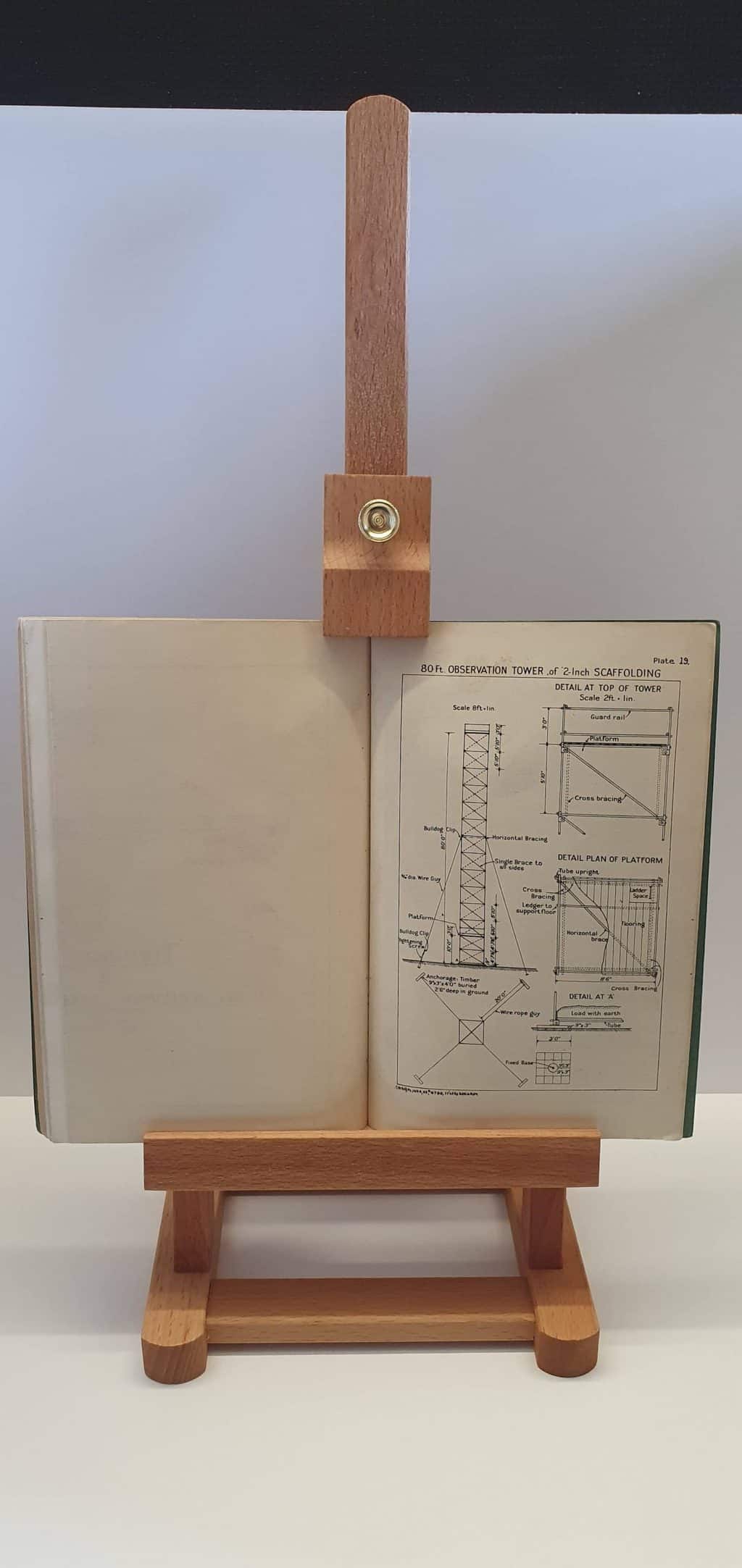
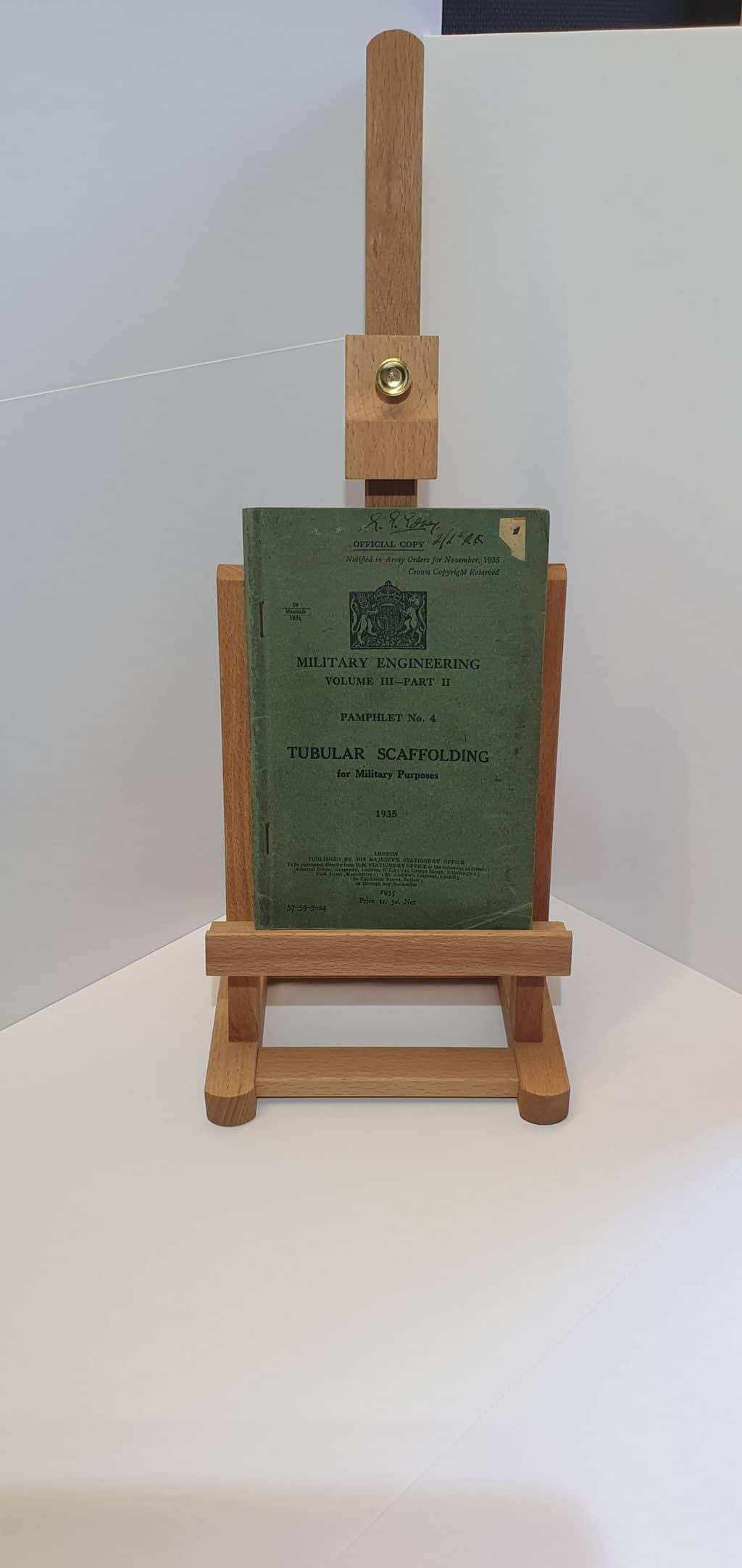
As for a third favourite choice, he adds: “I love the two Military Engineering booklets, very detailed with weights and measurements, images of fittings and fold-out ‘plates.’ These are drawings for specific scaffolds such as observation towers and heavy-duty trench supports.”
“I actually have well over 50 individual pieces which I plan to frame in my Covid lockdown built man cave, aptly called “the band and plate”, amongst the music and Darts paraphernalia.
“Anyone who is interested in the contents of the individual books and brochures are more than welcome to get in touch as I will scan and share the contents.”
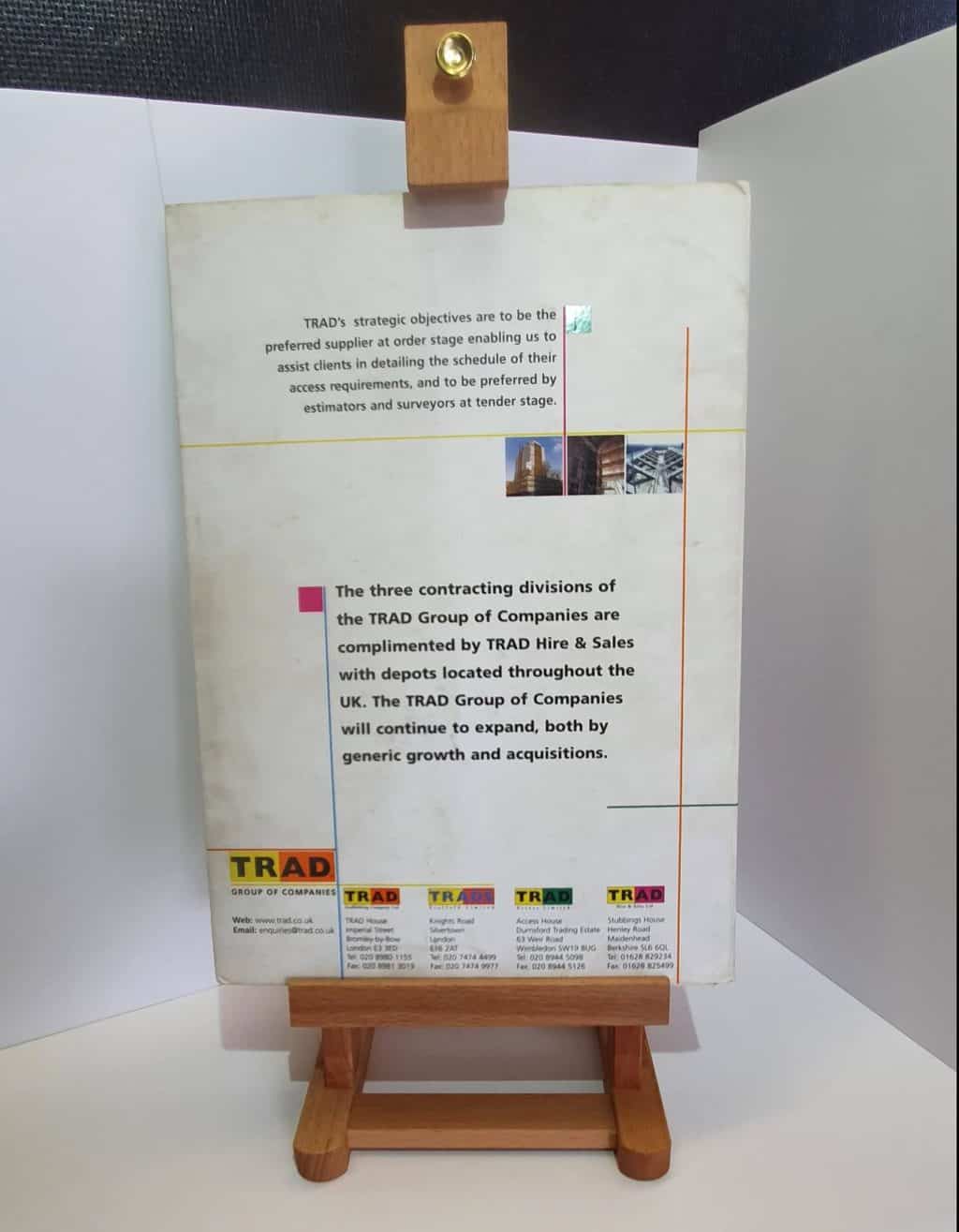
There’s also a superb array of TRAD project reports lovingly put together. Paul has no idea how much the collection could be worth.

“It’s not something that has ever crossed my mind, it’s a very niche collection, I don’t envisage me looking stunned on Antiques Roadshow any time soon.
“The truth is all of this collection and my knowledge and appreciation of the scaffolding industry would not of happened if it wasn’t my father, Ian. I will be ever grateful because he taught me all he knew.”
He laughs: “My Mrs, on the other hand, is always told not to bend any envelopes arriving from eBay.”
Bob Hope raised plenty of smiles of course, and this where both men have a lot in common. When it comes to the scaffolding industry, this amazing collection comes with a beautifully constructed message. ‘Thanks for the memory’.
This article was first published in the ScaffMag Magazine Issue 10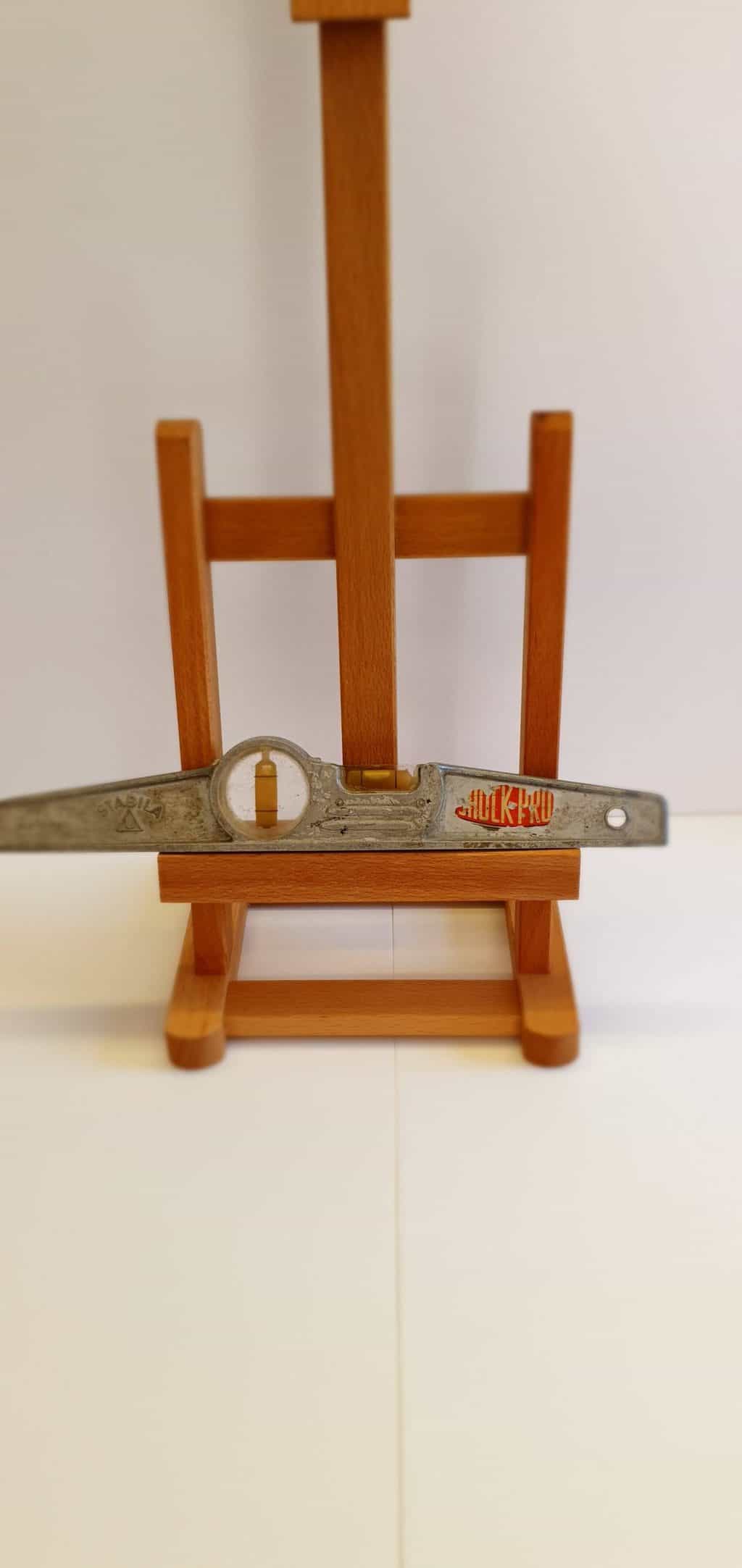






SIMIAN Sign New Joint Venture Partnership
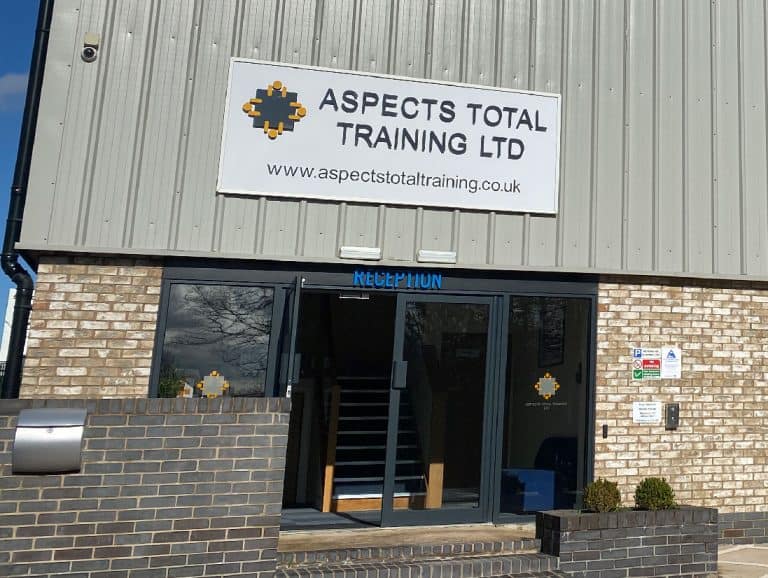
SIMIAN, the UK’s largest privately owned scaffolding training provider, and Aspects Total Training Limited, have announced the formation of a new joint-venture partnership.
The initiative will see SIMIAN take over the day-to-day operation of Aspects’ centre in Coventry, as a hub to support its training operations in the Midlands region. Michelle McFall, Aspects’ Director said: “We are extremely pleased to formally agree a partnership with Simian and we are looking forward to benefitting from the wealth of industry knowledge and expertise they bring to the venture. We are confident that the centre will release its full potential and build on the early success we have enjoyed. Our agreement opens up opportunities for the centre and will enable the JV to develop and realise our long-term objectives at a faster pace, and this will ultimately be for the benefit of the scaffolding industry in and around the Midlands region.”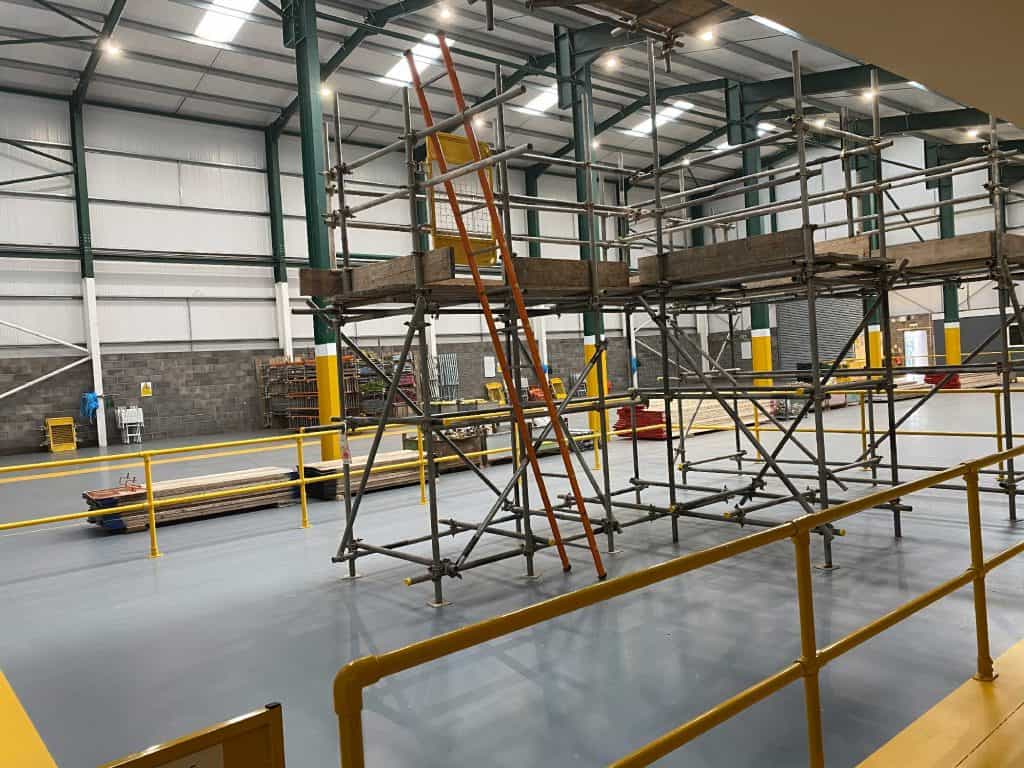
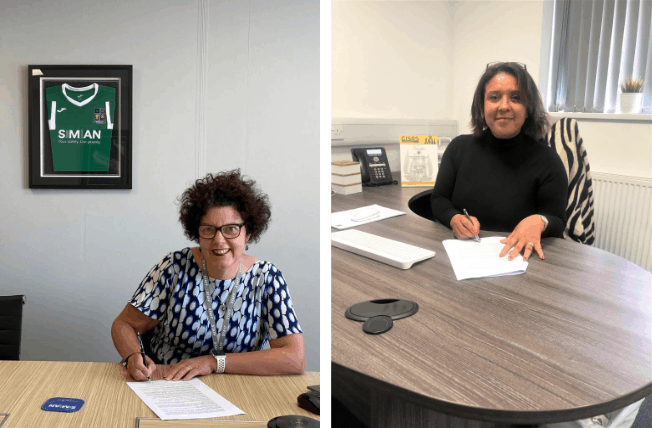
Introducing The Klasp, A Next Generation Scaffold Fitting
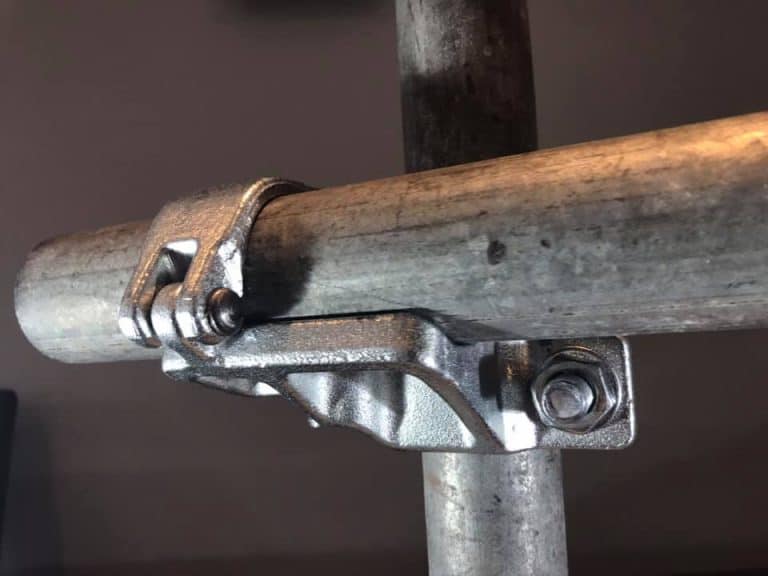
Julian Bland the creator of The Klasp is certainly something of a scaffolding innovator both designing and bringing to market a fitting guaranteed to help revolutionise the industry. Grahame Anderson has been finding out more.
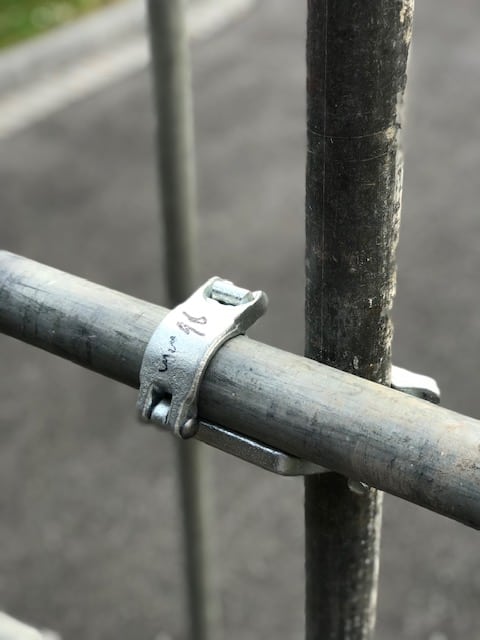
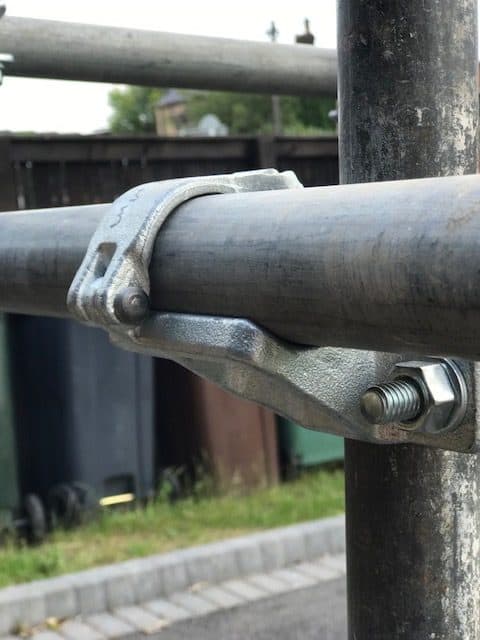
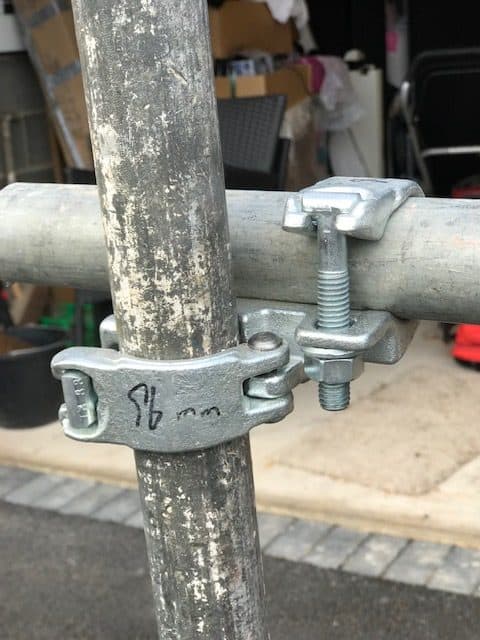
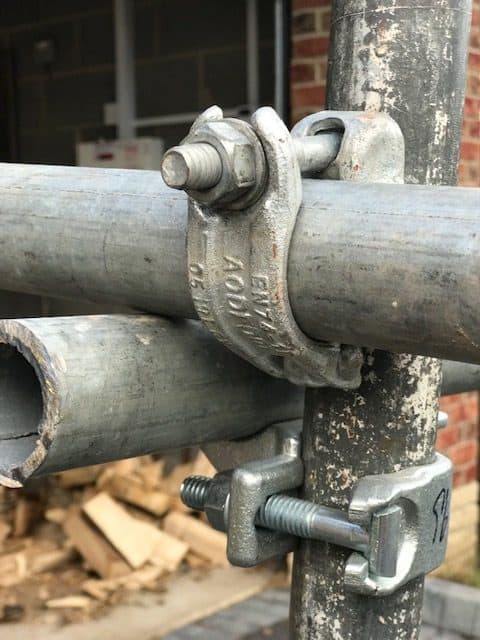
Plastic armadillos could become a thing of the past thanks to an innovative fitting called The Klasp developed by Julian Bland from Bland Scaffolding in Barnsley. In an area steeped in scaffolding folklore, it comes as no surprise to find such a cutting edge accessory emanating from the experience of working in the industry. In fact, as the century moves on at pace, this is yet one more product set to raise the bar of health and safety even further. And that, of course, can only be to the benefit of workers the length and breadth of the UK. Julian explained: “Things have really moved on in health and safety but I have seen some areas for improvement and decided to design a fitting removing the need for clumsy, annoying, expensive plastic armadillos. I never liked the process and knew I could make something better. “I knew it had to work well and be strong enough to take any hammer a scaffolder would throw at the fitting. And of course, it had to carry a usable weight. “Around six years ago I started working on this design and I’ve seen it evolve into the most beautifully designed fitting out there and I’m very confident it will be a great asset to the scaffolding industry.” ‘The Klasp,’ holds the tube in place creating a totally safe erection process. It also wraps around the tube to leave zero catchment areas and is tied with safely hidden nut recesses. Julian added: “Plastic armadillos are expensive to install and remove and maintain. If they get pulled off they need to be replaced and pass seven-day inspections. When sheeting or netting or power cladding are applied to a scaffold, our design eliminates the need to replace the sheeting due to the bolts ripping holes in the sheets as the wind blows. “Any scaffolding company knows it’s very expensive and annoying to re-sheet a scaffold due to this damage.”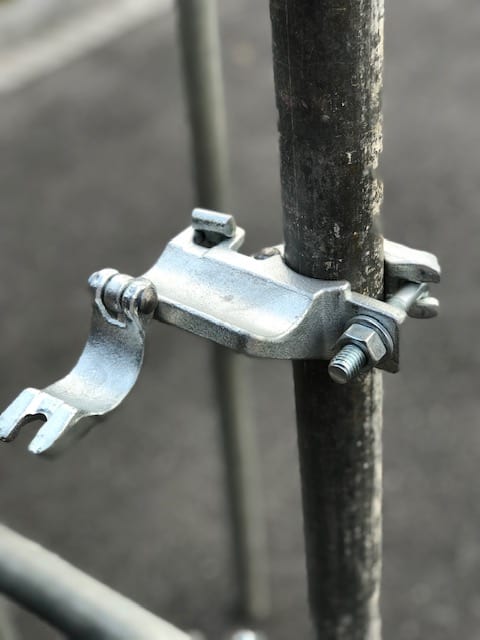


The Wonder Of Wombwell
Bland scaffolding was formed in the early 80s by Julian’s father who was well known in the area. Along with his brother Jason, the boys did something of their own thing in learning the ropes. After years of working on both the railways and National Grid they have seen health and safety go from strength to strength Julian joked: “No longer is it like the early days where if you were doing a 200ft hanger with a harness you were classed as a pussy. “When my dad Terry Bland started scaffolding at 18 he went on to help build companies like Deborah scaffolding along with Turners and Whitlam scaffolding back in the day in the formidable Wombwell area of Barnsley. “To be honest, it was a fantastic area in which to learn the art of scaffolding, and there were some real characters working in the industry as well.”Working With China
All of this has gone into the creation of The Klasp, and it’s not just confined to these shores says Julian: “We are working with one of China’s largest manufacturing plants with this product and currently on the 3rd mould design, close to obtaining Class B certification. Currently the design team are making the final changes to achieve Class B and hope to have the final fitting tested in China, ready for the market place here in the UK next year.”Saving Time And Money
And the message from Julian is clear to every scaffolding company across the land when it comes too affordability. He added: “I know every scaffolding company out there will be wondering what the price point will be but when you factor in what this fitting does, it will soon be the best investment you made.” Once Class B certification is met, The Klasp can be used as a ledger fitting and a STANDARD double can be used to allow double on double erecting where the transom sits on top of the ledger. This allows the lift to be boarded out saving lots of time and money for any company – a potent combination of course. In terms of price, the company hope to achieve around £5 and less for high numbers along with a fall in price more once manufacturing numbers are met. They currently have patents on a swivel design which will follow production of The Klasp. And you know what they say in business-‘momentum is everything’.Highly Driven
Julian Bland is certainly highly driven and determined to put something back into the industry he clearly loves so much. What’s more, other impressive designs are on the way. It seems the only bland thing about scaffolding is genuine ingenuity. For more information visit: https://www.jjbproducts.co.uk/ This article was first published in the ScaffMag Magazine Issue 10Overseas Scaffolding Training Recommences
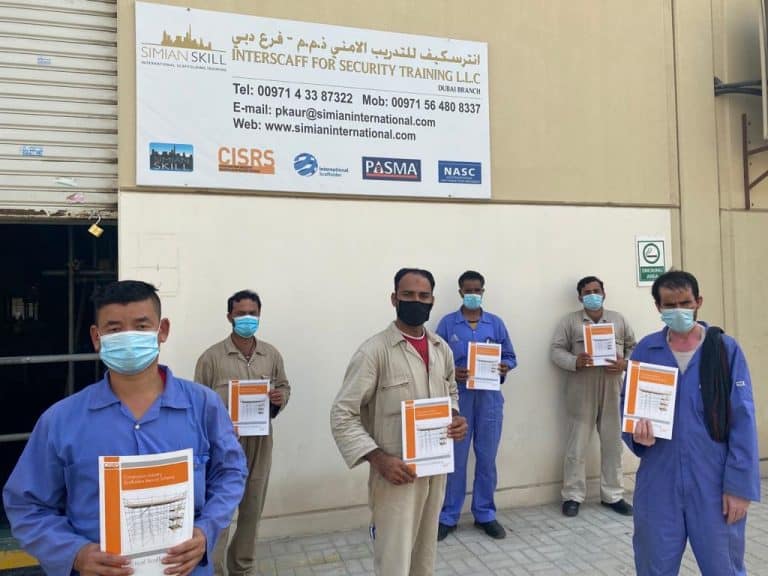
Overseas scaffolding training is slowly beginning to recommence at a number of training centres across the globe, CISRS has reported.
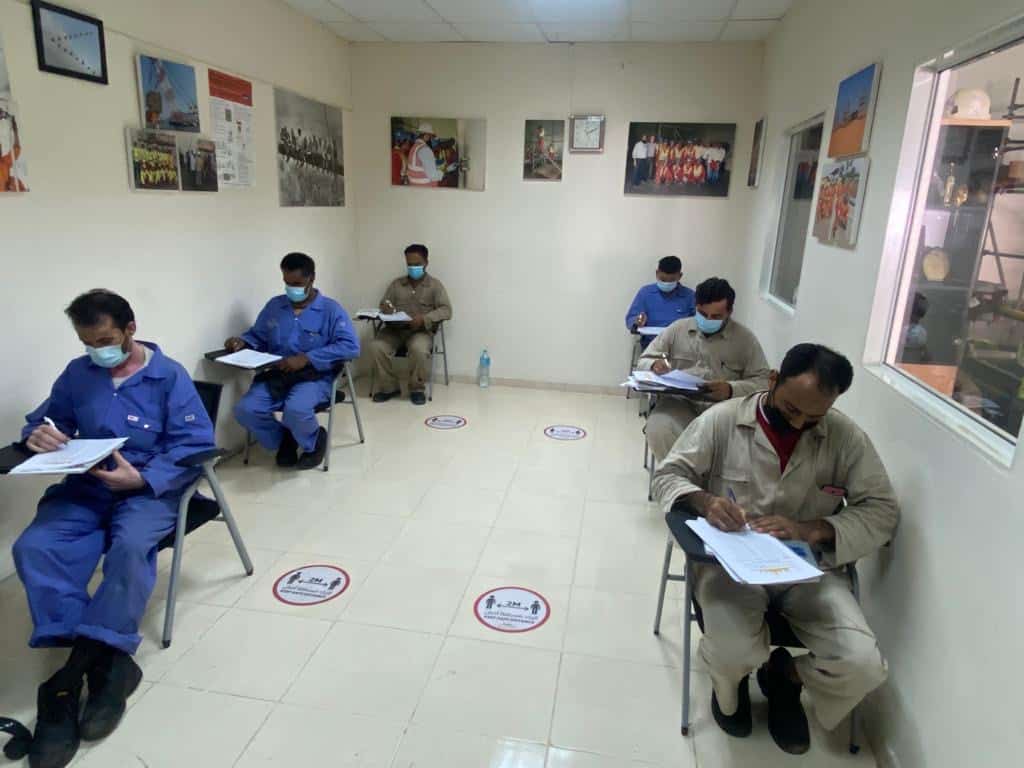
Simian International’s Overseas Scaffolder Training Scheme (OSTS) centre in Dubai and the Simian/QISC partnership in Qatar have both reopened, having been closed. for several months due to the Covid-19 pandemic.
Abid Gul, Simian Skill’s Senior CISRS Instructor in Dubai, said: “We’re delighted to be back training, having been closed since the first week of March. We are running at a limited capacity with a maximum of six delegates at a time, in line with the social distancing rules in the UK and the UAE.
“All delegates, successfully completed the course and closely followed the COVID procedures we have put in place.”
Dave Mosley, CISRS Managing Director, said: “It’s fantastic news that Simian International OSTS centres in Dubai and Qatar are back in operation.
“We want all centre staff and course delegates to remain safe and healthy as such they have had to submit detailed COVID specific RAMS and procedures prior to training taking place. I think we are all looking forward to getting back to some form of normality and recommencing training in other locations as soon as it’s safe to do so.”
The Safety & Access / PERI Malaysia partnership has also recommenced training having recently completed two CISRS Scaffold Inspection training courses at their centre in Selangor.
CISRS and the OSTS providers are keeping a keen eye on the Covid-19 situation internationally, with several OSTS partner centres preparing to reopen as soon as local guidelines allow.
UKSSH and H & H Contract Scaffolding Reap The Full Rewards Of System Scaffold

The old saying that the devil’s in the detail can be particularly relevant to scaffolding projects. Getting the basics right saves costs and drives up profit – and in this new Covid-19 era, choosing the right products can also help you comply with social distancing requirements and keep projects on track.
UK System Scaffold Hire’s work with Oxfordshire based H & H Contract Scaffolding on the impressive expansion project for Arts University Bournemouth is a case in point.
Even before the March shutdown, Andy Thomas, MD of H&H Contract Scaffolding was saying that he was benefitting from the “UKSSH difference”.
“UK System Scaffold Hire made a substantial contribution to the success of the project and helped to control costs simply by getting the basics right – it may sound like damning with faint praise, but in our experience, their attention to detail sets them apart from other hire companies. For instance, UKSSH supplied us with one of their Site Support Team for a couple of days at the start of the project to work with our Scaffold Team to ensure everything ran smoothly.
“Every site poses its own challenges – in this case, it was the need to break down deliveries to two separate locations. Steve Huntley of UKSSH spent considerable time on-site to understand the logistical requirements and arranged for deliveries to be banded in stillages and clearly labelled, so that all components for, say, loading towers stayed together.
Steve and H&H Site Manager, Peter March, even came up with the idea of trial building awkward areas of the building scaffold and giving them comical names like “Juliet Corner”, to ensure when that phase went ahead the site scaffolders were familiar with the requirements and UKSSH yard staff could pick and label the correct kit for site.”
“As scaffold contractors, the greatest cost on any job is the wage bill for skilled scaffolders – and the greatest drain on profits is the amount of down-time when highly trained scaffolders are waiting for the right materials to be delivered. On a project the size of AUB, the impact of poor logistical management is huge.
“UKSSH understand the importance of scheduling component deliveries in accordance with the build programme rather than by the lorry load, they understand the importance of adhering to delivery schedules – and when the components do arrive on site they are in good working order. It’s a commitment to service that differentiates UKSSH from the competition and helped us to hit deadlines and control costs”.
Even before Covid-19, it was difficult to put a precise cost against the benefits, but on a project like AUB the savings can easily amount to well over 500-man hours.
UKSSH deliver social distancing “by design”.
However, now that the site has reopened, those benefits are greater than ever: Accurate deliveries mean that the process of getting materials to the correct location requires fewer operatives; UKSSH has supplied additional stairtowers to enable a one-way system to be introduced on-site and because the Haki system is based around a 3-metre ledger beam it automatically means that scaffolders operate beyond minimum social distancing requirements.
For further information please contact:
UKSSH
Tel: 01246 820900
Altrad Generation to Close Wakefield Training Centre
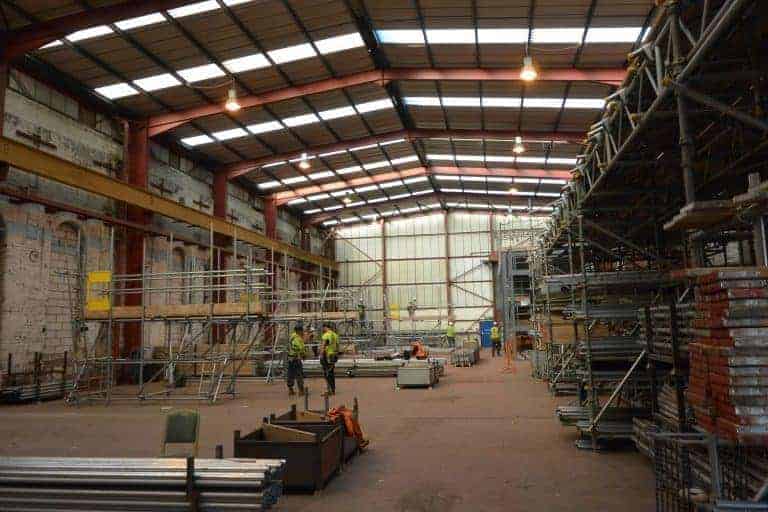
Altrad Generation has officially announced the planned closure of its Yorkshire based scaffolding training centre.
In a statement released to Scaffmag today, Altrad Generation’s Wakefield Training Centre is to close its doors for the final time on the 28th of August 2020. A business review showed the ongoing impact of the COVID-19 virus highlighted that the firm is unable to provide effective scaffolding training safely and economically, both now and in the future. The statement supplied reads:The global COVID-19 crisis has created an unprecedented economic environment across all sectors and countries. These challenges have forced us to review our operations and how we continue to serve our customers safely.
The need to ensure staff and customers remain safe has disproportionately affected scaffolding and construction training. Our review and assessment of the ongoing impact of the COVID-19 virus highlighted we are unable to provide effective scaffolding training safely and economically, both now and in the future.
We have explored all options, but with great regret have taken the difficult decision to announce the closure of our Wakefield Training Centre.Since opening in 2006 it has grown into a centre of excellence for scaffolding training. This is down to the team’s hard work and passion: providing training and support for more than 10,000 individual scaffolders and apprentices. They have also been tackling the industry skills shortage through the national #GiveConstructionaTry initiative.
In spite of our success, COVID-19 affected the number of courses and delegates we can support coupled with a significant downturn in bookings.
We have maintained operations to ensure Wakefield’s closure does not impact any delegates who have either started courses or were due to complete their course in recent months. Courses that were halted midway through March this year due to the Covid-19 lockdown were completed under new social distancing guidance during July and August.
We are currently liaising with our training course and apprenticeship partners to help place apprentices with alternative providers. Where possible we have also been contacting learners and employers individually to complete portfolios. This includes internal and external verification so that portfolios can be taken and used elsewhere if needed.
If delegates portfolios are not able to be completed by the time of our planned closure on the 28th August, we are contacting known employers to give them the opportunity for collection. We will continue to store any uncollected portfolios for a further six months until February 2021 when they will be destroyed.
Any courses that were paid for and not delivered at any time are being refunded.
Whilst the training centre closes its doors on the 28th August we will retain a dedicated email address [email protected] for any enquiries or questions relating to past delegates.
We are currently reviewing 3rd party training vendors to continue providing customer training and support. These discussions are ongoing and will be making a further announcement at the end of this process.
Finally, I would like to thank all our customers, delegates and staff who have attended and continue to support us.
Industry charity offers free wellbeing training for all in construction

As a direct result of the wellbeing issues presented to their 24/7 Construction Industry Helpline, the Lighthouse Construction Industry Charity has announced that they are delivering £20,000 of free mental health and wellbeing training to the industry for the remainder of 2020.
One of the key findings of the charity’s recently published 2019 Impact Report was that 62% of emergency financial grants were to pay for daily living costs, paying bills and clearing rent arrears and debt. Financial wellbeing is one of the key factors affecting mental health and the introduction of ‘bang on budget’ financial management sessions, aim to directly address these issues.
The fallout of Covid-19 has also seen an increasing number of redundancies across the industry and the charity has augmented its wellbeing programme to include two sessions aimed at improving employability with ‘At the Interview’ and a ‘CV Workshop’.
Bill Hill, CEO of the Lighthouse Construction Industry Charity said: ”A crucial element of our strategy is to pro-actively support the industry’s mental wellbeing and ensure the widespread availability of construction focussed training programmes. These range from hour long interactive wellbeing sessions through to the full two day MHFA England approved Mental Health First Aider course. This will ensure that companies have easy access to a robust wellbeing strategy to support every level of their organisation from the boots on the ground workforce through to senior management. We are a CITB approved training organisation (ATO) which means that our courses are delivered to a defined and industry-agreed training standard and most are CPD accredited ensuring they contribute to personal career and professional development.”
The charity is also offering it’s Company Supporters priority access to the MHFA England half day Mental Health Awareness course and two day Mental Health First Aider courses.
Bill Hill added, “Offering these courses free of charge removes the final barrier for many smaller construction organisations to access these valuable and much needed training courses. Our focus is to continually develop and expand our pro-active wellbeing education and training programme, alongside the immediate reactive support provided by our 24/7 Construction Industry Helpline and accompanying app. Thanks to the generosity of our industry’s support, we can make our charitable services accessible to everyone so that we can achieve our mission in ensuring that no worker or their family are alone in a crisis.”
Free Wellbeing Sessions
- Work, life balance – what is good ‘work life balance’ and how to achieve it.
- Coping with stress – causes and coping mechanisms.
- Mindfulness – what is mindfulness and how can you implement it
- Resilience – building resilience and keeping it growing.
- Meditation – an introduction to meditation from a construction professional
- Bang on Budget – looking after your finances, budgeting and debt management
- CV Workshop – Showcasing your attributes and getting an interview
- At the Interview – Tips and skills to shine on the day
Free MHFA England approved Mental Health Training for Company Supporters
- Half Day Mental Health Awareness
- Two Day Mental Health First Aider
Find out more and book your free courses now
Benefits of Mental Health and Wellbeing Training
- Build employees’ confidence to have open conversations and break the stigma
- Encourage people to access support early, for a faster recovery
- Empower those with a long term mental health issue or disability to thrive in work
- Promote a mentally healthy environment, stopping preventable issues and allowing people to thrive and become more productive
- Embed a long term positive culture across the whole organisation, so that employees recognise their mental and physical health are supported as equal parts of the whole person? ?
Survivex has new manager at the helm
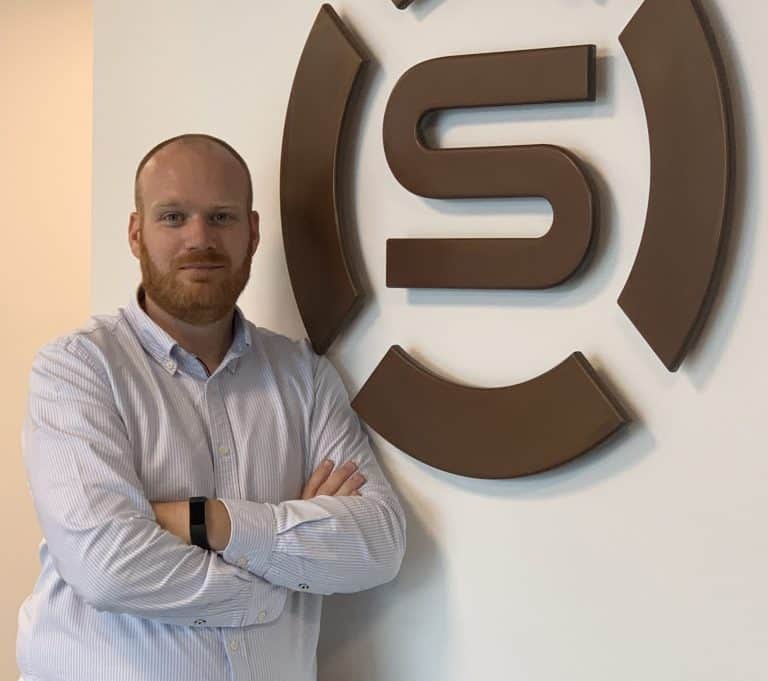
Training provider, Survivex, has appointed a new general manager to oversee day-to-day operations and support key training management service clients.
Jamie Purves comes to Survivex from drilling contractor, Valaris, where he was regional training and competency manager responsible for personnel working in the North Sea and Norway regions. Having worked in training and competency for almost 20 years, Jamie has extensive experience of the sector. Initially starting out as an instructor, he quickly progressed his career into management, working for Wood-owned, M&O Global, as training manager at its OPITO-approved technical training centre in Egypt. Following this, Jamie moved to the Philippines with Site Group International where he became general manager at a 30-hectare government-approved training facility helping young people gain invaluable skills for future employment. Jamie is currently in the final year of an MBA at Robert Gordon University in Oil and Gas Business Administration. His first priority will be to look at how 3t Energy Group’s technology expertise and technology-led training tools can be incorporated into the customer experience to enhance learning and improve efficiencies for clients. Jamie said: “Joining Survivex and the 3t Energy Group is extremely exciting. The Group’s vision to transform training through technology and help businesses work smarter, safer and more efficiently matches my own so this opportunity is a perfect fit for me. “I had experience of Survivex through my previous roles so was well aware of its outstanding reputation, fantastic facilities and knowledgeable instructors and was keen to join the team. “Survivex and the wider 3t Energy Group works very closely with its clients to truly understand their needs and provides everything from world-leading, industry-approved training to cloud-hosted software to manage training and technology-led tools such as simulators, virtual and augmented reality and mobile apps. The Group is really pushing the boundaries of educational technology and training and I’m really looking forward to being part of this journey helping businesses in Aberdeen and beyond improve their workforce management.” Paul Knowles, Vice President at 3t Energy Group, said: “We are delighted to welcome Jamie to Survivex and the 3t Energy Group. He has a fantastic track record in management and of building strong client relationships. Jamie also has unrivalled experience of training and competency from both the client’s side and a service-provider’s perspective. “The disruption caused by the Coronavirus has meant many companies are looking at how technology can be used to deliver training and we are uniquely positioned to be able to help and shape this through our internationally-renowned technology-led training solutions. With Jamie at the helm, Survivex will continue its world-class reputation in traditional training, as well as looking at new ways to enhance the training experience for all clients.”Layher and Friends Chart Concert Success
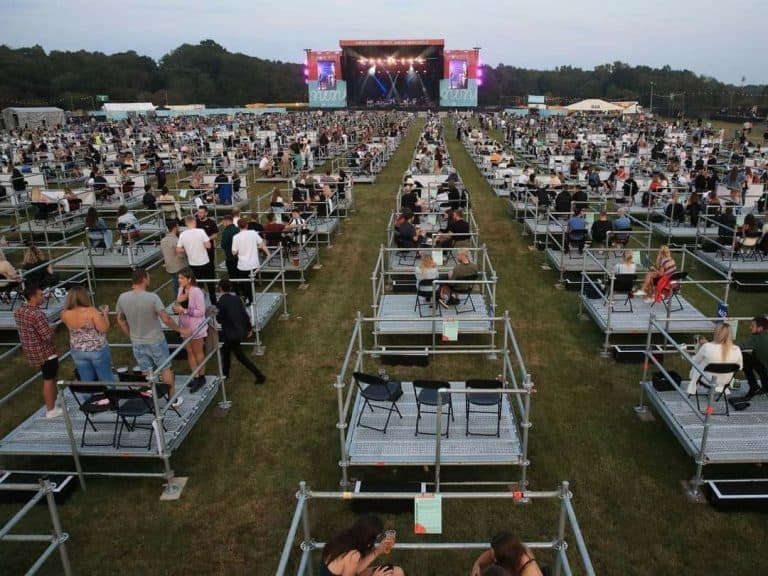
The world’s first socially distanced concert proved to be a huge hit thanks to a successful Layher partnership.
It was all-round sweet music to Layher UK as the popular Sam Fender took to the stage at Gosforth Park in Newcastle. In fact, it was certainly with a little help from my friends SSD Concerts, ES Global Ltd and Overlay Events Ltd, their latest project proved to be a huge hit.
A World First
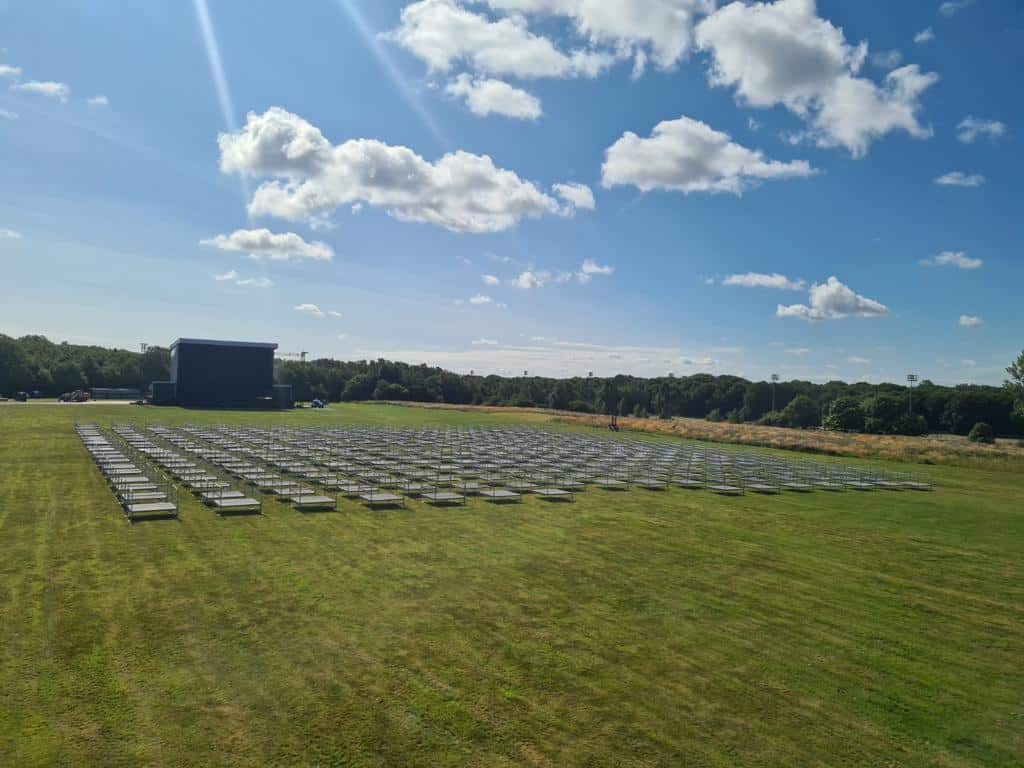
This was the world’s first socially distanced concert produced across a number of months with the recent coronavirus pandemic in mind. But in order to ensure everyone was kept safe in groups of five, seated comfortably in separate raised metal platforms, some innovatively designed scaffolding was required. This, of course, is where Layher excels – and so it proved thanks to a 10-man team working over three days at the Virgin Money Unity Arena on Tyneside for a crowd of 2,500.
The whole thing was built upon timber spreaders to prevent sinkage on the grass in wet weather conditions. What’s more, double edge protection was fitted to the perimeter to create safe social distanced enclosures and protect against any fall from height. The Layher platforms measured 2072mm x 2072mm on the plan and were kept two and three metres apart, leaving lots of space for fans to move about.
78 Tons Of Scaffolding
Garreth Hannon, Overlay Events Director told me: “The whole job took 78 tons of scaffolding and associated equipment. We used a fully perforated steel deck platform surface to allow water and mud to drain naturally through the Layher decked surface.
“Layher LALO anti-lift preventors were used to secure the steel decks into the ‘U’ weight-bearing Transom to prevent wind uplift and to combat deck movement from bounce and reverberation if users were jumping and or dancing.
“Layher dome caps placed on all vertical uprights helped to prevent debris being pushed down the tube and protect against clothes from snagging on naked tube ends. All platforms were lasered in to create plumb and evenly distanced access routes north, west, south and east.
“The modular nature of the product, coupled with competent Layher CISRS installers saw great labour efficiencies.”
In terms of the two height variants used, these included low-level platforms 167mm x 150 and high-level platforms at 500mm x 150 requiring a rear step and railing.
Highly Recommended
Mark Hornbuckle, ESG Senior Project Manager added: “We’d been working together on this since March, and while we could have opted for our own system, Layher came highly recommended after their work on the hospital in Cardiff. To erect 500 pods in just a few days was an amazing achievement. Everything was non-slip and kept very clean.
“Concert goers were allowed to take off their mask once in their pod. We provided trays from the bar so one person could carry them over – and there was also waitress service for both food and drink.
“Obviously you couldn’t have such a set up for a rock concert, but other events like this could be very practical if restrictions were decreased to say a single metre. We’ve seen fantastic interest across the globe in this event, and even had enquiries from the United States. It was truly amazing.”
Happy Sponsors
A spokesperson for Virgin Money, commented: “We are delighted to play a part in bringing back live music events as we start to emerge from lockdown.
“This feels like a unique opportunity to celebrate music and all the wonderful emotions that come with experiencing it live alongside other music fans.”
The venue will go on to host gigs involving Sir Van Morrison, The Libertines , Maximo Park, Bill bailey and Jimmy Carr.
It seems Layher and friends are currently number one with concert fans in the North-East.