
Man killed in collision with flatbed scaffolding lorry reversing across major road

An inquest has heard that a man died of his injuries after his car was in collision with a flatbed scaffolding lorry that was reversing across a major road in Dorset.
The man who was 73, was driving a silver Vauxhall Astra, he died following the crash with an Iveco flatbed scaffolding lorry, in Dorchester Road, Upton on Monday October 14. The Daily Echo reports that emergency services attended the scene and took the man to Poole Hospital, he died the following afternoon. The passenger in the man’s car, a woman in her 80s, and the driver of the lorry, a man in his 50s, were uninjured. Police have launched an investigation into the man’s death. An inquest was opened and adjourned on Friday at the coroner’s court in Bournemouth. Inspector Joe Pardey, of the traffic unit, called for information after the crash. He said: “At this difficult time, our thoughts are with the family of the man who died. “I would urge any witnesses who have not already spoken to police to please contact us. I am particularly keen to speak to the driver of a dark-coloured Ford Fusion that was in the area at the time and may have witnessed the collision. “I am also appealing to anyone who was travelling in the area at the time of the collision and may have relevant dashcam footage to come forward.”Trade body signs Armed Forces Covenant
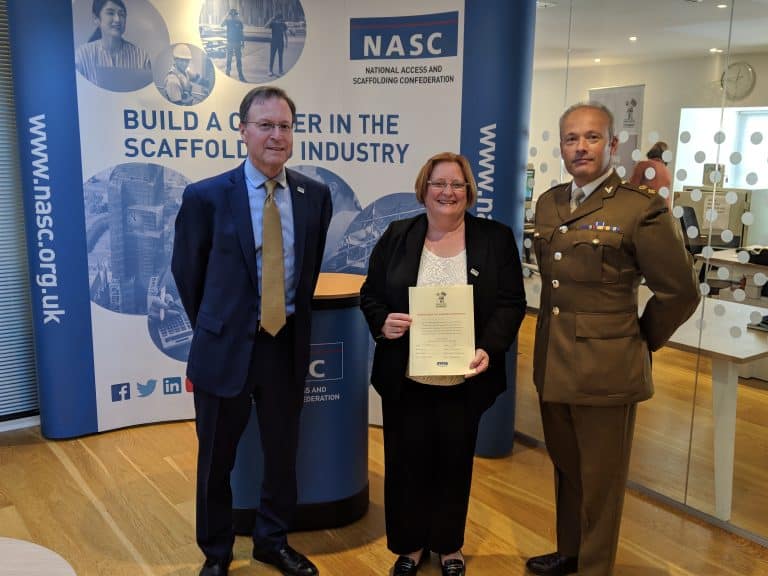
The National Access and Scaffolding Confederation NASC has further strengthened its connection with the military by signing the Armed Forces Covenant.
By signing the Armed Forces Covenant, the UK Scaffolding Trade Body has made a formal commitment to promoting careers within the scaffolding industry and training opportunities to ex-military personnel.
The NASC has said, the signing cements an existing NASC objective to engage more regularly with the Armed Forces. The trade body has also said they have created a £150,000 funding pot dedicated to the training of ex-services personnel.
NASC Vice President Lynn Way said: “We are proud to have signed the Armed Forces Covenant, making our commitment to encouraging Armed Forces personnel into taking up roles within the scaffolding industry official.
“In the past year, we have begun promoting the variety of highly-skilled, well-paid and rewarding careers available in our industry to the Armed Forces community and have outlined plans to increase these efforts in the coming years.
“We recognise the skill sets of ex-servicemen and women, which is why we’ve created a funding pot to provide an extra incentive to consider a career in scaffolding. We believe this pot will help them transition as seamlessly as possible from the Forces to the scaffolding industry, providing many individuals with a long-term career and the UK scaffolding industry with the workforce it needs to continue to thrive.”
New Leeds depot unveiled by Infiniti Scaffolding
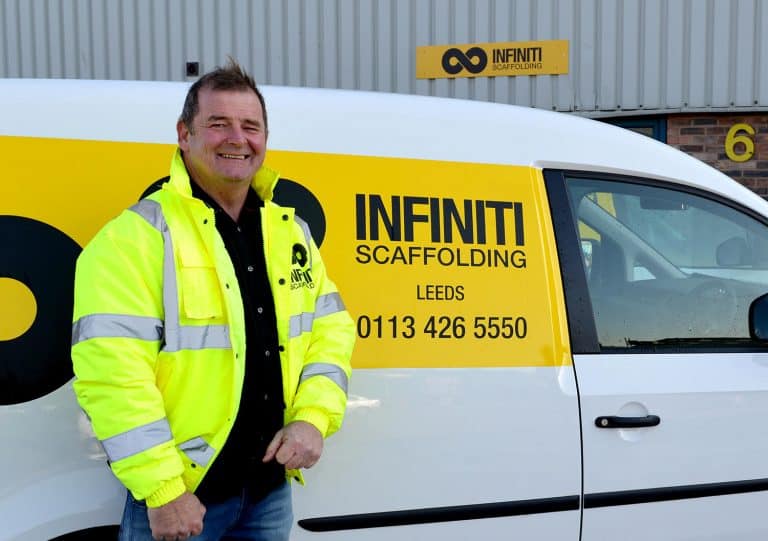
Infiniti Scaffolding’s new Leeds depot was unveiled this week, as the construction services group celebrated a number of new contracts wins across Yorkshire and the North.
The new 4,000sqft depot, at Prospect Park, Grangefield Industrial Estate, in Pudsey, Leeds, includes a warehouse, storage yard and a small office, and will support the company’s Scarborough HQ.
“This new depot represents a significant investment for us,” said Joe Naylor, Infiniti Scaffolding director, “but it is absolutely essential in allowing Infiniti Scaffolding to serve our growing list of commercial, industrial and private roofing, construction and scaffolding clients.
“We have been successful at gaining new work in the region which would have been unfeasible to service from Scarborough alone. As clients want us to work for them further afield, Infiniti Scaffolding has had to grow to meet that demand; we expect further investments to follow.”
Recent Infiniti Scaffolding contracts include for Mitie Group on Leeds and Huddersfield job centres; Wharfedale Homes in Harrogate; the entertainment centre in York; ENGIE in Helmsley, and William Hare in Bury, Manchester and Skipton.
Established in 2015, the group employs about 40 staff including skilled scaffolders, scaffold inspectors, expert builders, roofers, general labourers and drivers, as well as an experienced administration and office team.
Five year disqualification for Dundee scaffolding firm
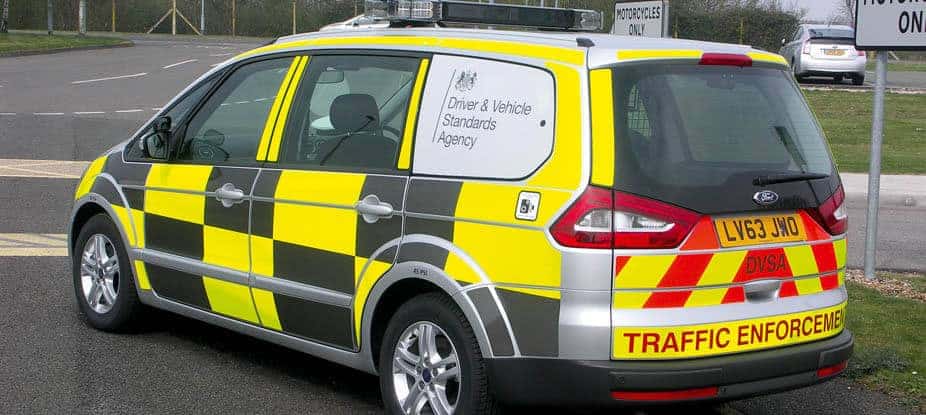
AFS Scaffolding Ltd has lost its licence to operate commercial vehicles after it gained an unfair competitive advantage over other businesses.
The Traffic Commissioner for Scotland, Claire Gilmore, has disqualified a Dundee based scaffolding company and its director for five years following the repeated unlawful use of a vehicle.
The industry regulator concluded AFS Scaffolding Ltd poses “a significant risk to road safety” and that director Ross Findlay “deliberately and repeatedly” operated a vehicle without the required operator’s licence.
Ms Gilmore’s decision follows a public inquiry into the business, which looked at the company’s illegal use of a vehicle before it was given an operator’s licence.
Businesses are required to hold a valid licence to run commercial vehicles over 3.5 tonnes and must meet certain standards to keep that licence.
AFS Scaffolding Ltd’s application for an operator licence was considered at an inquiry before the Deputy Traffic Commissioner for Scotland in February this year, following allegations that it had been using a vehicle unlawfully.
Mr Findlay gave assurances to the Deputy Commissioner that the unlawful use had been infrequent and happened as a result of error rather than a deliberate attempt to avoid the licensing regime. After considering the application in detail, the company was told it could start running vehicles on 29 March.
However, evidence subsequently gathered by the Driver and Vehicle Standards Agency (DVSA) revealed the company had actually continued to use the vehicle unlawfully before its operator’s licence came into force.
In evidence at the latest public inquiry, Mr Findlay said one of the journeys was an emergency job to stabilise someone’s chimney.
He told the Deputy Traffic Commissioner that the vehicle in question had been parked up for lengthy period prior to the licence being granted, but inspections revealed it had travelled significant mileages. In fact, over 10,000km was recorded in the vehicle between 10 December 2018 and 25 March 2019, when the company did not have a licence.
Other concerns raised at the inquiry related to vehicle safety standards, including a vehicle that was not checked properly and sent out with a tyre worn below the legal limit. The defect was categorised as safety critical.
In a written decision following the inquiry, the Traffic Commissioner said she was unable to rely on the Mr Findlay’s evidence.
“[He] knew he needed a licence to operate, and also that the licence granted by the Deputy Traffic Commissioner did not come into force until 29 March 2019. He therefore deliberately and repeatedly operated the vehicle without a licence.
“Unlawful operation for such a lengthy period undoubtedly resulted in this operator gaining an unfair competitive advantage.”
She added that it was a serious case involving breaches of trust which went to the heart of the licensing regime.
The disqualification orders against AFS Scaffolding Ltd and Mr Findlay will prevent them from applying for or holding an operator’s licence until September 2024 at the earliest
GKR Scaffolding launch Psychological Safety Programme to address industry’s blame culture
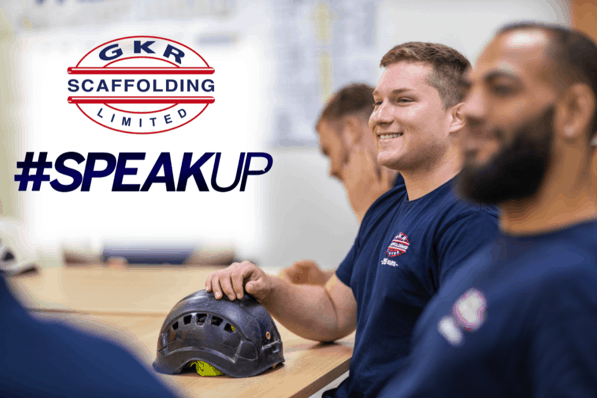
At an industry event this month marking the company’s 25 years in business, GKR Scaffolding made a call to some of construction’s largest contractors to join their movement to change the blame culture that is stifling progress in our industry.
Citing research from Harvard Professor, Amy Edmondson and also Google’s Project Aristotle which investigated team performance in high-risk and innovative industries, GKR highlighted why psychological safety builds high-performance teams.
GKR defines psychological safety as creating an environment of trust where everyone feels comfortable discussing mistakes, asking for help and sharing ideas without fear of reprisals.
Edmondson’s and Google’s research proves that high performing teams record-making more mistakes, creating a learning cycle for continuous improvement. Although this has obvious implications for improving safety, there are also benefits to productivity and innovation due to the openly sharing ideas.
The non-operational by-product of this is an improvement in mental wellbeing due to staff feeling included and not working in a culture of fear, but it also aids diversity. Diverse workforces need psychological safety to create genuine inclusion.
The business will be launching their #SpeakUp campaign internally in November based on their research into what makes people work safer, to a high technical quality and supports general wellbeing, whilst still driving people to work to extremely high standards.
Workshops will run through the GKR Academy for all employees responsible for managing others both on-site and in offices. These workshops will simulate situations to highlight the benefits of building psychological safety into modern management styles as well as covering the tools and techniques to drive this.
It is also integrated within staff communications sessions, appraisals and objectives, as well as promoted via the Share-Learn-Improve reporting process used by staff to highlight near misses and observations of good practice.
Helen Gawor, Business Strategy Director, said:
“We are addressing many challenges within our industry – a need for diversity, being slower to innovate, low productivity and poor mental health. We have historically focussed on these challenges through individual initiatives, but all these initiatives can only succeed if we improve psychological safety.
Our blame culture is the elephant in the room. We want everyone to feel confident about speaking up. This could be to share great ideas and highlighting good practice as well as questioning work that may be wrong or reporting something that is unsafe.”
Peter Cullen, Health & Safety Director, said:
“Principal contractors have the huge task of bringing different businesses with different capabilities and different ways of working together as one team. Because of our legacy blame culture, we stifle learning and create a hero culture based on self-preservation. All because people fear the consequences of mistakes so don’t speak up.
We hypothesise that psychologically safe supply chains will improve project performance, but it needs to be embraced by the principal contractor. We all need to change how we manage our people, communicate with each other and the KPIs used to measure success. Reporting RIDDORS, for example, actively discourages reporting due to the potential consequences faced. This discourages reporting for learning.”
The initiative has been welcomed by industry representatives and GKR will be sharing their learning and resources with contractors to build momentum in removing the blame culture from construction.
GKR believe that #SpeakUp initiatives take behavioural safety to a whole new level, driving culture change to improve productivity, safety, an ability to innovate and the mental wellbeing of our whole industry. Ultimately building the high-performance environment construction needs to create for the future.
Scaffolding firm is a flying success at business showcase event
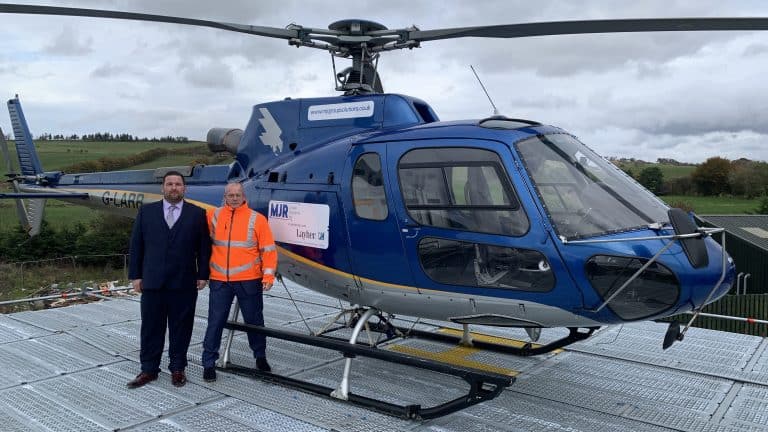
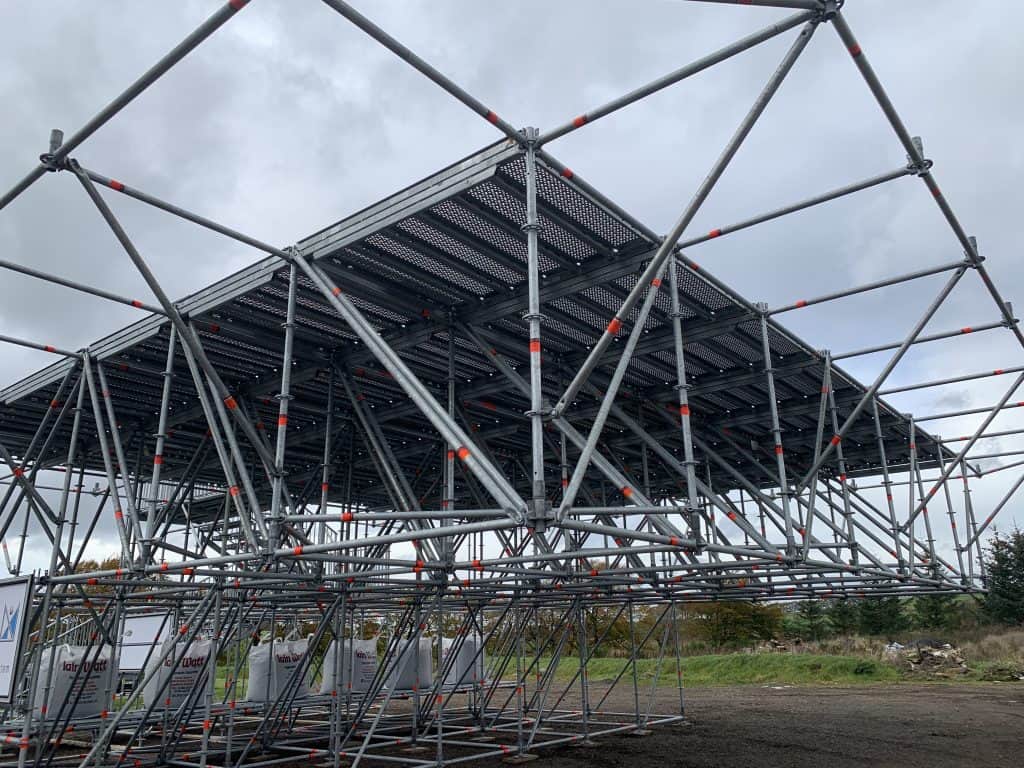
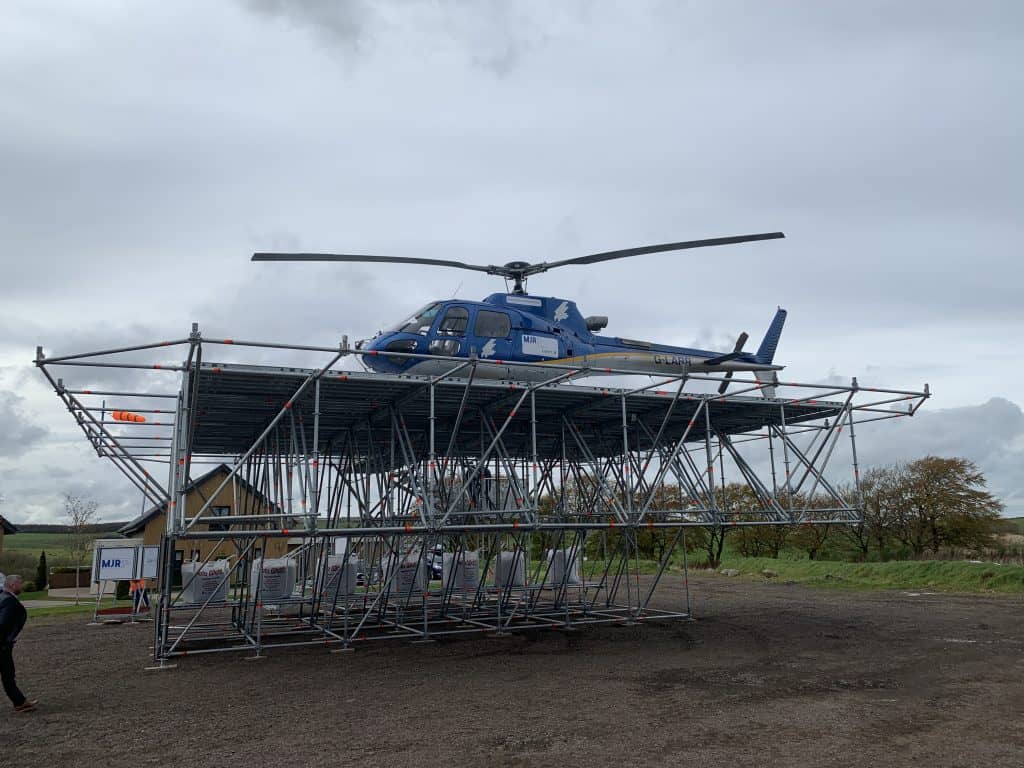
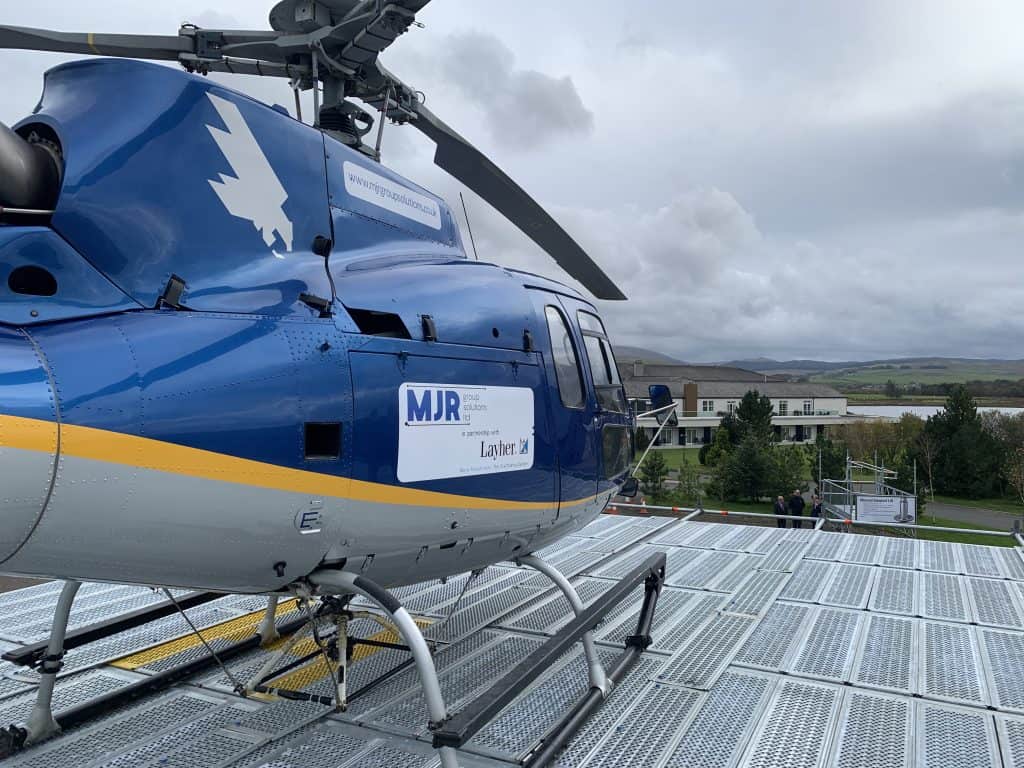
Scottish scaffolding firm MJR Group Solutions held a business showcase event on Wednesday that included landing a helicopter on a custom-designed cantilevered scaffold helipad.
A number of invited guests from Scotlands construction industry converged on Wednesday at the swanky Lochside Hotel in New Cumnock, Scotland.
Guests attending the business showcase event were able to learn more about the recently established Kilmarnock-based scaffolding firm, and its new strategic alliance with system scaffold giants Layher UK.
Both, MJR Group Solutions Director, Richard Russell and Layher UK Managing Director, Sean Pike held presentations on the day showcasing its business and gave details of its strong partnership with Layher and what it means for its current and future clients.
Alongside the informative presentations, MJR laid on practical demonstrations of its new choice of system and its features.
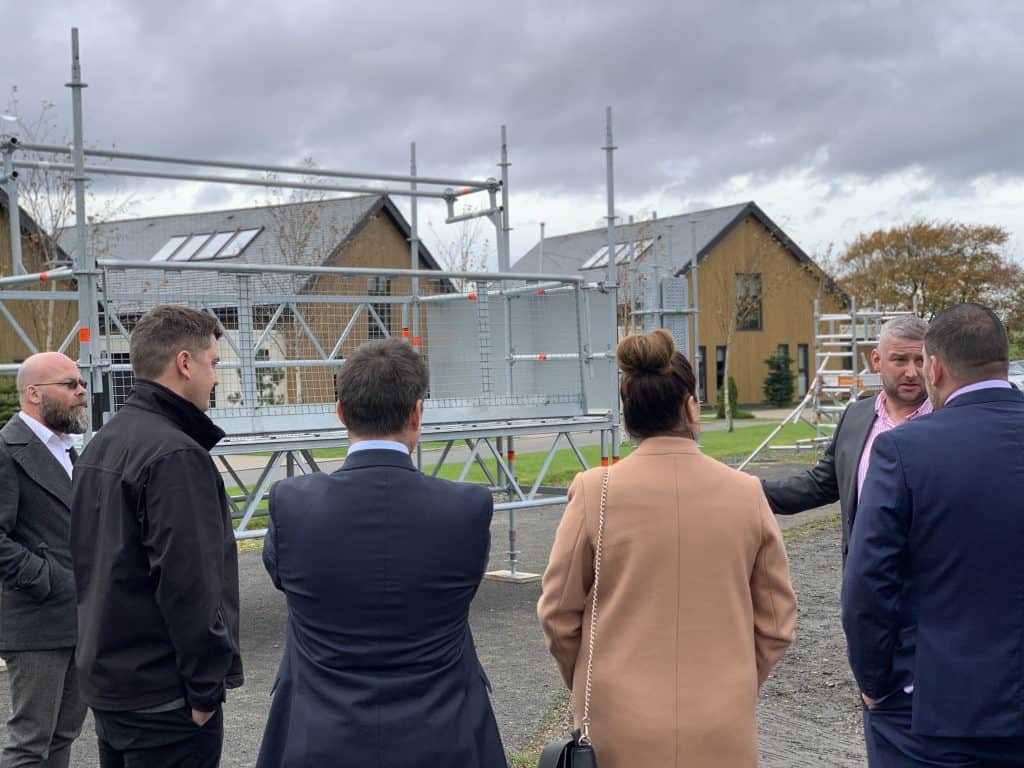
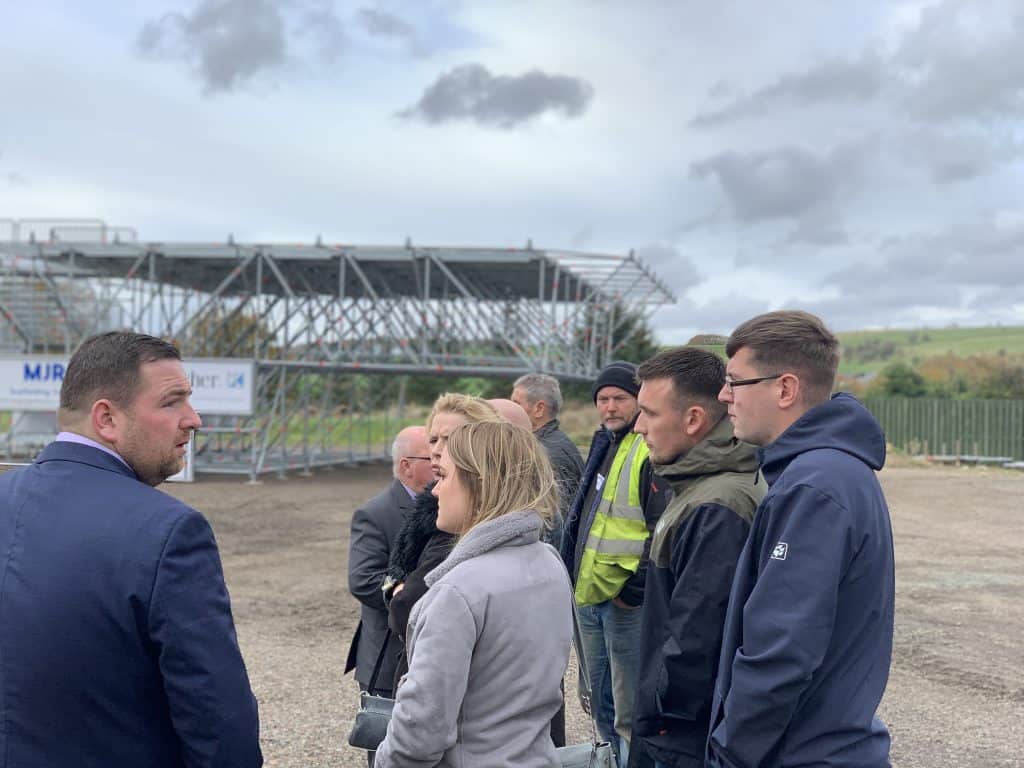
The business showcase event comes just weeks after the news that MJR Group Solutions made a £1M investment in the Layher system. The business switched from the use of Cuplock to exclusively using Layher on all its projects across Scotland.
Although it wasn’t mentioned at the event, ScaffMag understands that the firm has now taken steps to further build its business with the establishment of a new Scaffold & Access Hire Division. MJR is set to supply its rental clients the Layher range of scaffolding and access solutions from its two yards in Central Scotland.
The Helipad
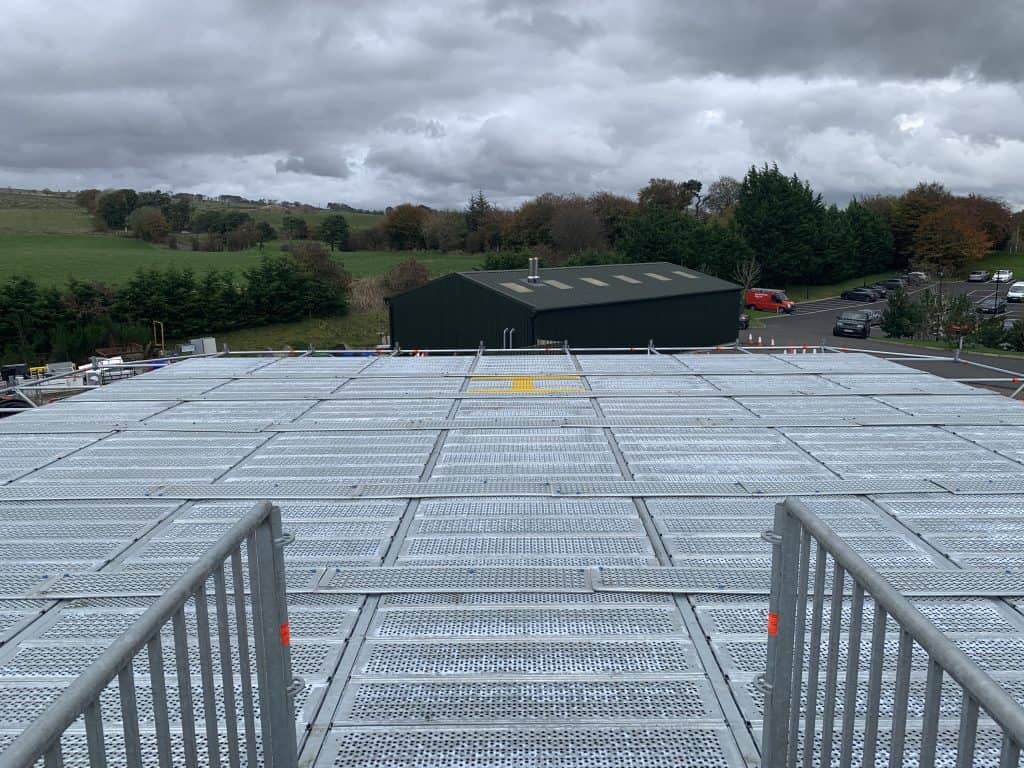
To round off the event and to show that the ‘possibilities are endless’ with its new system, a helicopter flew in and landed on a pre-erected designed 4 meter high, cantilevered Layher helipad.
Many believe it could be the first-ever scaffold helipad erected anywhere in the UK.
MJR Group Solutions Managing Director, Ryan Orr said: “The event was to show that as a company we want to build a strong relationship with our clients, current and future, and ensure that they have the chance to really understand that the services that we offer and the systems we use.
I strongly believe that currently in the construction industry there is not enough understanding of how a different scaffold system and company ethos can positively, or negatively, impact a construction project. Our event aims to help grow understanding, plus show the creative side of our business with the helicopter landing pad.”
Notre Dame still at risk from tons of fire-damaged scaffolding

Experts have said the Notre Dame cathedral is still at risk from the fire-damaged scaffolding that hangs above it.
Over 550 tons of fused and melted scaffold is currently hanging in the balance over the Paris monument’s roof that was destroyed in a huge fire six months ago. French authorities have said that the tangled mess of scaffolding poses the biggest challenge to efforts to ensure that Notre Dame’s vaulted ceiling doesen’t collapse. The scaffold needs to be dismantled without pieces falling into the building, says Christophe-Charles Rousselot, the head of the Notre-Dame Foundation. ScaffMag understands that it will take several months to remove the fire-damaged scaffold. Another scaffold will be built above it, where workers will rappel down to carefully cut and remove the tubes one by one.
CITB safety test cheats caught in police raids

Three safety test workers have been arrested after being caught giving answers to candidates for cash.
According to reports, the cheating was exposed by counter-fraud raids on test centres in Cheshire, Essex and London by the CITB, police and the Home Office. CITB audits found that staff was giving correct answers in exchange for money. A member of staff at the Cheshire centre admitted to authorities they helped its candidates choose the correct answers, while a “considerable amount” of cash was found without a plausible explanation. In Essex, staff members admitted being supplied with a large number of candidates, many of whom the administrators were paid to give the right answers to during the test. Six candidates were also suspected of being in the country illegally and were detained, while the centre was suspended from carrying out further tests. It’s believed many candidates paid up to £500 to take the £21 construction health, safety & environment (HS&E) test. In London, the Metropolitan Police, supported by CITB investigators, arrested a man suspected of facilitating corrupt tests for other candidates. CITB said it would now review just over 2,500 tests conducted by the three centres in the past year and then decide whether or not to revoke them. Ian Sidney, CITB fraud manager, said: “CITB has considerable experience in auditing test centres all over the country, and works with the Home Office, police and other law enforcement agencies where necessary on behalf of the construction industry to ensure a safe working environment for all. “If anyone has information about fraudulent testing within construction they can contact CITB anonymously on [email protected]” So far in 2019, CITB has terminated 17 test centres involved in delivery of fraudulent tests or CITB qualifications.Trade Organisation to hold its third Contract Law Seminar
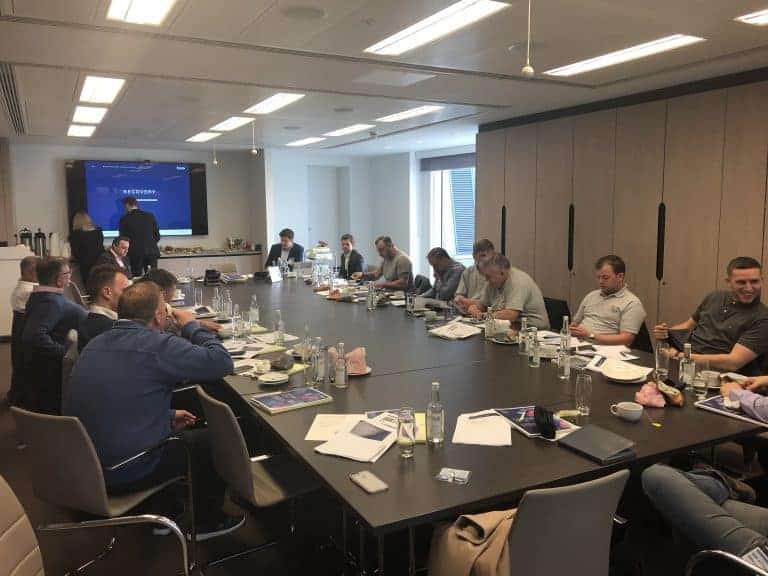
The Scaffolding Association and Birketts LLP Solicitors are set to co-host its Northern Contract Law Seminar in Leeds.
The Scaffolding Association (SA) has again joined forces with Birketts LLP Solicitors to run a seminar on Contract Law and relevant contract issues called “How not to make a rod for your own back…” The event will take place at the Malmaison Leeds on Thursday 21st November 2019 from 10am to 3pm. Although there is a small cost involved, the SA has said it includes bacon rolls on arrival (from 9.30am) and lunch. Places are limited to 25 on a first come first served basis with a discount for members of the SA. Speaking about the last Contract Law Seminar held in Birmingham Mark Parkin, Head of Operations, TIGER Specialist Access Limited said: “I thought the seminar was very well put together and a great way to chat with Birketts and also interact with our industry peers. I feel this is a necessary insight to an increasingly difficult market for any companies involved in scaffolding.” ScaffMag understands that topics will include:- Knowing your contract – what to look out for and the risks if you don’t
- How much control do you have?
- Payment notices – the payment scheme and how it applies to you
- Variations/changes – risk management, fixed price contracts etc
- What happens if you don’t get paid? – suspending your works or termination
- Dispute resolution – adjudication and insolvency
- Open panel discussion at the end for YOUR questions