GKR launches support initiative for Mental Health & Wellbeing
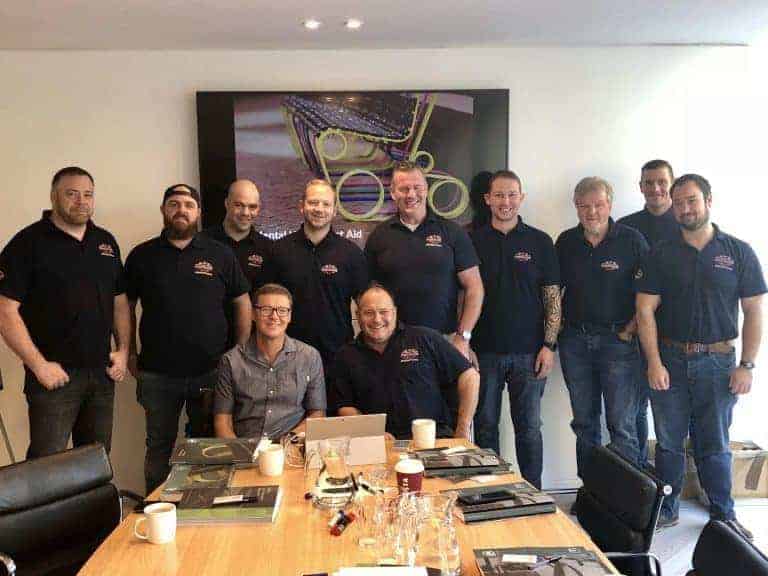
GKR Scaffolding has today announced an enhanced support and awareness programme for mental health, accessible to its entire staff via its Betterfuture – Better Mental Health initiative.
It has been widely reported that the construction industry has a problem with mental health. In response, GKR has spent the last year raising awareness of mental health amongst staff.
To mark World Mental Health Day, the company owners and the Senior Leadership Team have all signed the Building Mental Health Charter as a sign of commitment to the workforce in every division.
The business commits to reducing the stigma around mental health, and to provide assistance and signpost people to the support they need.
Opening up the conversation about mental health has already had a profound impact. It has encouraged some of those needing support to step forward, highlighting the importance of not only raising awareness but also having a support infrastructure in place.
The Betterfuture: Better Mental Health programme has been built using the framework introduced by Building Mental Health; an industry-wide initiative joining construction businesses with active and freely available support, information and advice.
GKR is about to train its second round of Mental Health First Aiders, on its way to ensuring the business has as many MHFA’s as physical first aiders. With a growing number of MHFAs in place, GKR are taking the programme beyond building awareness.
Using the Lighthouse Construction Industry Charity Helpline, anyone needing assistance is signposted to appropriate support. Additionally, it has been recognised that lifestyle and general wellbeing plays a huge part in influencing mental health. GKR is actively promoting information on these influencers to help individuals support their own mental health.
Information and advice on triggers such as sleep, nutrition, fitness, drug and alcohol use, financial health and work/life balance is being rolled out to staff, working towards a Wellbeing Week that will be hosted in early 2019.
Health & Safety Director, Peter Cullen said: “As an industry, we’ve focused very much on safety in the last decade, and less so on health. By acknowledging the fact we have a mental health issue and putting support frameworks in place, it gives us an opportunity to discuss other aspects of our people’s wellbeing.
On top of the obvious things like diet and fitness, huge consideration needs to be given to some of the areas that genuinely cause our staff concern, such as work-related stress, fatigue and worries over personal finances. Our programme takes mental health beyond just raising awareness and offers a full circle of support to address everyone’s overall wellbeing.”
SMART Scaffolder Launches Upgraded Inspection and Handover Apps
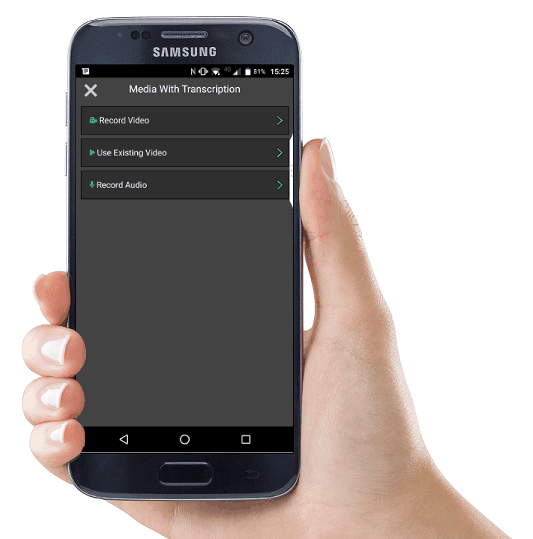
Developed by CADS, version 4.0 of the ground-breaking scaffolding apps is a major upgrade, the makers say. The new version now has enhanced functionality that allows users to record diary notes, photos, audio and video against a scaffold during the weekly inspection or as part of the handover to a client.
The apps also now allow users to download a transcript from the recorded audio or the video. This enables you to record inspection or handover notes audibly into your smart phone or tablet simply using the app (say on a wet, rain-soaked site) and these notes will be transcribed into a document.
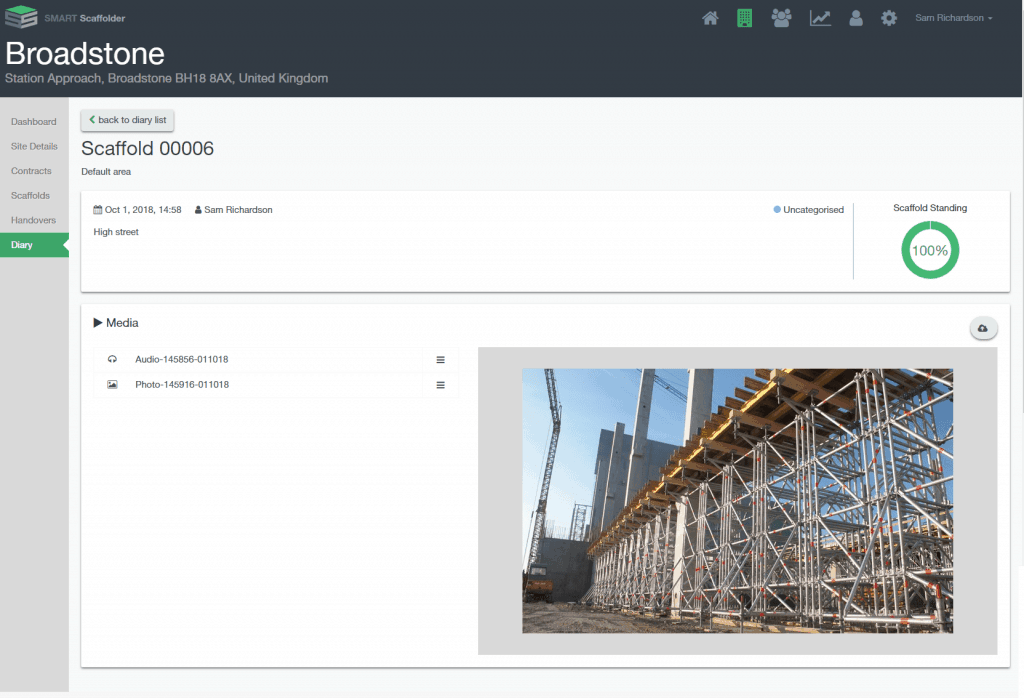
 Notes can then be sent back to the desktop management console by the app and logged against the scaffold being inspected or handed over, where they can be filtered by category, e.g. blocked access, theft of boards etc. Users can read the transcript or listen/watch the full recording and make edits accordingly.
The added functionality to the scaffolding apps allows for even better, more accurate inspections and handovers of scaffolding and access jobs. The apps are now even more efficient, modern and environmentally responsible. The paperless set-up is backed up by cloud-based technology for accurate and auditable storage of reports with no need for rekeying.
The new SMART Inspector and Handover app functionality allows users to:
Notes can then be sent back to the desktop management console by the app and logged against the scaffold being inspected or handed over, where they can be filtered by category, e.g. blocked access, theft of boards etc. Users can read the transcript or listen/watch the full recording and make edits accordingly.
The added functionality to the scaffolding apps allows for even better, more accurate inspections and handovers of scaffolding and access jobs. The apps are now even more efficient, modern and environmentally responsible. The paperless set-up is backed up by cloud-based technology for accurate and auditable storage of reports with no need for rekeying.
The new SMART Inspector and Handover app functionality allows users to:
 Ian Chambers, Sales & Marketing Director at SMART Scaffolder said: “We are constantly evolving our market-leading scaffolding software solutions and this Version 4.0 is a major step change in two of our most popular products. As ever, the software update is aimed at making life easier and more efficient in all of its many uses for all of our many users.
“We are sure the apps will be welcomed by existing converts to the many benefits of the SMART Scaffolder product range as well as newcomers.”
Ian Chambers, Sales & Marketing Director at SMART Scaffolder said: “We are constantly evolving our market-leading scaffolding software solutions and this Version 4.0 is a major step change in two of our most popular products. As ever, the software update is aimed at making life easier and more efficient in all of its many uses for all of our many users.
“We are sure the apps will be welcomed by existing converts to the many benefits of the SMART Scaffolder product range as well as newcomers.”
Notes can then be sent back to the desktop management console by the app and logged against the scaffold being inspected or handed over, where they can be filtered by category, e.g. blocked access, theft of boards etc. Users can read the transcript or listen/watch the full recording and make edits accordingly.
The added functionality to the scaffolding apps allows for even better, more accurate inspections and handovers of scaffolding and access jobs. The apps are now even more efficient, modern and environmentally responsible. The paperless set-up is backed up by cloud-based technology for accurate and auditable storage of reports with no need for rekeying.
The new SMART Inspector and Handover app functionality allows users to:
- Record the progress of the scaffold build or dismantle
- Record any problems, such as lack of access or conflict with other works
- Record any variation requests
- Record to show that the site is clear when you have completed the job
- All of this is sent back from the app to the management console, so those in the office can track the progress of the work and be aware of issues.
 Ian Chambers, Sales & Marketing Director at SMART Scaffolder said: “We are constantly evolving our market-leading scaffolding software solutions and this Version 4.0 is a major step change in two of our most popular products. As ever, the software update is aimed at making life easier and more efficient in all of its many uses for all of our many users.
“We are sure the apps will be welcomed by existing converts to the many benefits of the SMART Scaffolder product range as well as newcomers.”
Ian Chambers, Sales & Marketing Director at SMART Scaffolder said: “We are constantly evolving our market-leading scaffolding software solutions and this Version 4.0 is a major step change in two of our most popular products. As ever, the software update is aimed at making life easier and more efficient in all of its many uses for all of our many users.
“We are sure the apps will be welcomed by existing converts to the many benefits of the SMART Scaffolder product range as well as newcomers.” New Identity Revealed as Allied Scaffolding Becomes Allied Access

Allied Access celebrated the launch of its new identity and branding at an event that was designed to make the industry to sit up and take notice.
The North West based Allied Access, formerly known as Allied Scaffolding undertook the rebranding event on Thursday (4th October) to reflect its changing business. Although scaffolding remains at the heart of the business, mast climbers and hoists will now be a significant part of Allied’s access portfolio. With an increasing number of clients choosing a combined approach, and more complex projects demanding a mix of access solutions, Allied Access will now be ideally placed to offer a responsive, efficient and reliable service. Even though the rebrand event had its important message of Allied’s changing business to communicate, its message to attendees of the event also included something the company believes critically important – Safety. Allied Access said inviting Jason Anker MBE as their keynote speaker was a bold move. Jason’s story is without question polar opposite to being uplifting. Confined to a wheelchair after a fall from an untied ladder, Jason’s mission is to raise awareness and to help prevent what happened to him happening to anyone else. However, there were light-hearted moments at the launch event provided by guest speaker Barrie McDermott, Rugby legend and Sky Sports pundit, who entertained guests with his trademark blend of insight and entertainment. Pete Ferris, Allied Access’s Commercial Director said: “Our new identity is bigger, brighter and bolder, reflecting the business we are now and the business we are going to be. The launch event was a great success and it was fantastic to see so many of our clients attend. For some, it was the first time they had heard about our humble origins. “We’ve changed a lot since the early days back in the 1980s, and we’ll continue changing to meet the needs of our clients.”First CISRS Approved Scaffolding Training Centre Opens In Doha
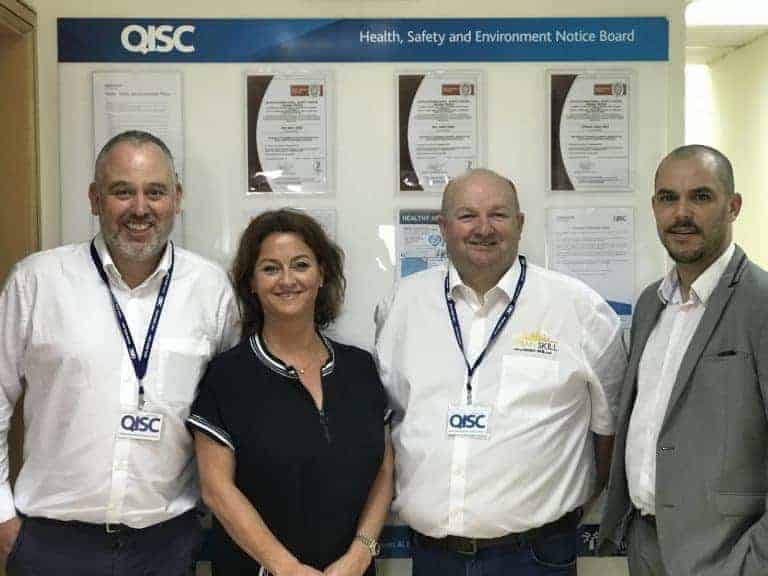
The overseas arm of CISRS the (OSTS) Overseas Scaffolding Training Scheme has once again increased it’s reach in the Middle East with the addition of a newly accredited training centre in Qatar.
International training provider Simian has partnered up with the Qatar International Safety Centre (QISC) allowing a range of scaffolding courses to be provided at its facility in Doha. Delegates visiting the center will be able to carry out Level 1 and 2, Inspection, Supervisor training and System Product Training with materials provided by Peri.
The news of this new training facility comes in quick succession after CISRS only announced the opening of an additional accredited centre in Saudi Arabia last month.
David Mosley, CISRS Scheme Manager, said: “I’d like to congratulate QISC and Simian International for their efforts in developing a fantastic training centre in Doha. We carried out a pre-accreditation visit to this centre in May 2018 and gave advice on steps that would need to be taken to pass our inspection.
“I am delighted to see that every recommendation has been carried out, we appreciate this can be an expensive exercise and shows a great level of commitment to providing high-quality scaffolding training in the area and should be applauded.”
Ian Fyall, Overseas Operations Director at Simian International, said: “We’re really pleased to open this centre in partnership with QISC. We believe the courses will prove popular as there’s already been a lot of interest from the Qatar Government, The Legacy committee and the oil and gas industry.
“On a wider note, this is now our sixth overseas CISRS centre, following those in UAE, Oman, Saudi Arabia, Chennai and Nigeria. We always look to partner with companies that have a strong brand like Babcock, TAFE and Falck and are delighted to add QISC to the list.”
Gareth Kirby, Training Manager at QISC, added: “We are delighted to become the first CISRS-approved training centre in Doha and are very much looking forward to working with both Simian International and PERI in the delivery of the CISRS OSTS, which commences this month.
“QISC has invested heavily this year in the development of our extensive course range and on improvement to our facilities. This included the recent opening of our a new 200sqm indoor practical training area at Street 45.
“The facility, the first of its kind in Qatar, will now be home to CISRS, PASMA, IPAF and OPITO training courses, allowing us to train all year round, even throughout the summer months. Congratulations to the team of staff who have worked tirelessly on the achieving CISRS approval, this furthermore cements our place as the leading provider of training in Qatar.”
Interserve sells Scaffolding and Painting Division
Interserve has entered into an agreement to sell its industrial scaffolding and hard services business for £3.6m to Enigma Industrial Services Holdings Ltd.
The division being sold provides scaffolding services to housebuilders and other contractors as well as its SIP (Scaffolding, Insulation & Painting) services to large industrial sites.
Interserve says the £3.6 million purchase price is payable upon completion with the potential for a further cash injection of £1 million subject to the Business achieving certain financing targets for the financial years 2018 and 2019. The money from the sale will be used to reduce Interserve’s debt.
For the year ended 31st December 2017, Interserve Industrial Services Limited (IISL) reported an operating loss of £4m and had gross assets of £47.3m. The transaction will result in a loss on disposal of £8.4m for Interserve.
Together with the closure of IISL power activities earlier this year, this sale concludes Interserve’s exit from its industrial contracting activities.
Managing Director Scott Hardie holds on to his position and will continue to lead the business. Debbie White, Chief Executive Officer at Interserve said: “We are pleased to announce the sale of the access and hard services business as part of Interserve’s strategy to focus on core customer segments.”HAKI Scaffolding Unveils New Stair Chart

Following the 2018 release of a number of updated versions in the product range, HAKI Scaffolding has released a new Stair Chart PDF – reviewing the full range of its market-leading stair tower systems.
The handy one-page PDF chart is designed for all sector users of the HAKI Stair Tower range – which are designed and built to meet global working at height regulations simply, safely and adaptably.
It includes:
- HAKI Symmetrical Stair Tower, now in Mk2 revised format.
- HAKI Public (& Events) Access Stair Tower (PAS), released in 2018.
- HAKI Compact Stair Tower, updated in 2018. &
- HAKI Traditional Stair Tower.
- HAKI Twin Stair Tower.
Nuclear plant Hinkley Point C continues to power ahead

New photos and film footage released by EDF shows the scale and construction progress of the new nuclear power station.
The construction of Hinkley Point C began two years ago after the government signed a deal with French firm EDF and its Chinese partner CGN. More than 3,200 people are now working on the project in Somerset. EDF has said it would be a ‘significant moment and major milestone’ when a 4,500 tonne concrete platform supporting the reactor buildings was completed in 2019. The project is also setting its sights further ahead with preparation for the MEH phase (Mechanical, Electrical and HVAC – heating, ventilation and air conditioning). Yesterday (Thursday 27 September) four major UK contractors signed the “MEH Alliance” to work together on the complex installation of cabling and pipework in the power station’s 2,500 rooms. The innovative approach means that Altrad, Balfour Beatty Bailey, Cavendish Nuclear and Doosan Babcock will pool their expertise to work as a single entity. The alliance aims to create new industrial capacity and jobs by manufacturing specialist pipework in Britain. Hinkley Point C Managing Director, Stuart Crooks said: “Everyone working on the project should be proud of what they have achieved so far. Unions, contractors and suppliers are successfully working together with a complete focus on quality and safety. Innovation and experience from other projects is helping us boost productivity and get ready for the next stages. I am also proud of the positive impact that Hinkley Point C is having on the South-West. We are determined to create a positive legacy here for people, communities, jobs and skills.” The power station will supply the UK with reliable low carbon electricity to meet 7% of the country’s needs. The project is mobilised for an objective of initial delivery for unit 1 at the end of 2025.Video: Motorbike rider wiped out as scaffolding falls four storeys

A video published by the Mail Online shows the utterly horrifying moment a motorbike rider is knocked unconscious when a steel scaffolding frame falls on his head as he passes a four storey high construction site.
The Mail reports the footage was captured on CCTV in the Sultanpet area of Bangalore, India. As the 38-year-old rider, known only as Chandan, rode to his office on August 31 the film shows how the piece of scaffolding knocks him out.
His helmet flies off and he falls to the floor while shocked onlookers rush to his aid.
The man was rushed to a local hospital. Despite the horrific accident, his condition is said to be improving under the care of hospital staff, who say that he is now out of danger.
Godiva wins sustainability award at Coventry Telegraph Business Awards
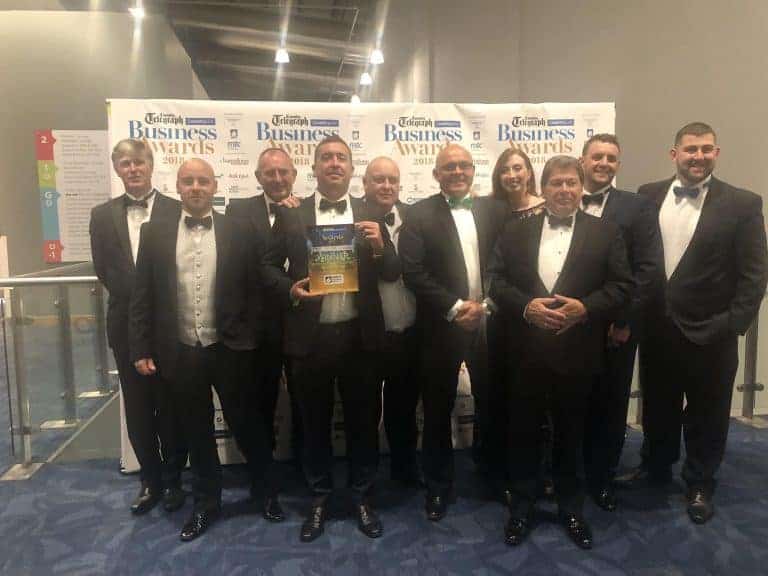
Godiva Access and Scaffolding was the proud recipient of the Sustainability award at last night’s (25 September) Coventry Telegraph Business Awards.
The Coventry Telegraph Business Awards aim to celebrate success, recognise achievement and highlight the innovative people and companies in Coventry and Warwickshire who are putting the region on the map by boosting the economy while making a positive contribution to the local community. Godiva was crowned the winner of the Sustainability Award in recognition of its commitment to making its processes more and more environmentally friendly year on year. Additionally, judges were impressed by how it had used sustainability to improve its performance and by the investments made into its products and services to make themselves more sustainable as a company. Karl De Groot, managing director at Godiva, said: “We are absolutely delighted to win this award. We have worked really hard to ensure our work is as sustainable as possible and this is something that takes the whole teams’ commitment to achieve. A huge congratulations to everyone who’s contributed to this success. “Thank you also to the Coventry Telegraph for hosting and to the Liberty House Group for sponsoring the award.” The event took place at the Ricoh Arena and was attended by hundreds of Coventry and Warwickshire’s business elite.Cornish scaffolding firm to feature on TV show ‘Grand Designs’
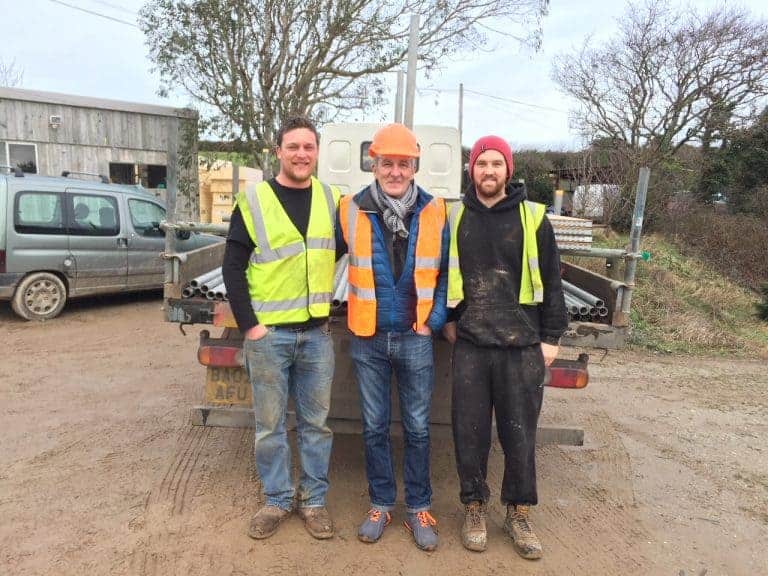
Cornish scaffolding company 7 Bays Scaffolding (SW) Ltd is set to feature on the popular Channel 4 Grand Designs television show.
The episode, which is due to air on Wednesday 26th September at 9pm, will showcase an impressive property in North Cornwall and the highly skilled tradesmen that helped to make the owners’ dream a reality. The ‘Padstow episode’ sees presenter Kevin McCloud follow the construction journey of a beautiful surf retreat near St Mawgan in North Cornwall. Owners Harry and Briony plan to build an ambitious steel and glass surf house which is inspired by The Ben Rose House which was famously featured in the cult 80s film, Ferris Bueller’s Day Off. 7 Bays Scaffolding (SW) Ltd was delighted to be selected as the scaffolding company to support such an ambitious project and see it to fruition. Company owner Adam Luce says, “We relish working on exciting build projects such as this. 7 Bays Scaffolding are experts when it comes to working on specialist scaffolding projects and architects recognise us as the ‘go to’ firm for scaffolding excellence. To have our work featured on a prestigious television show such as Grand Designs is awesome, and we can’t wait to see the show air on Wednesday!”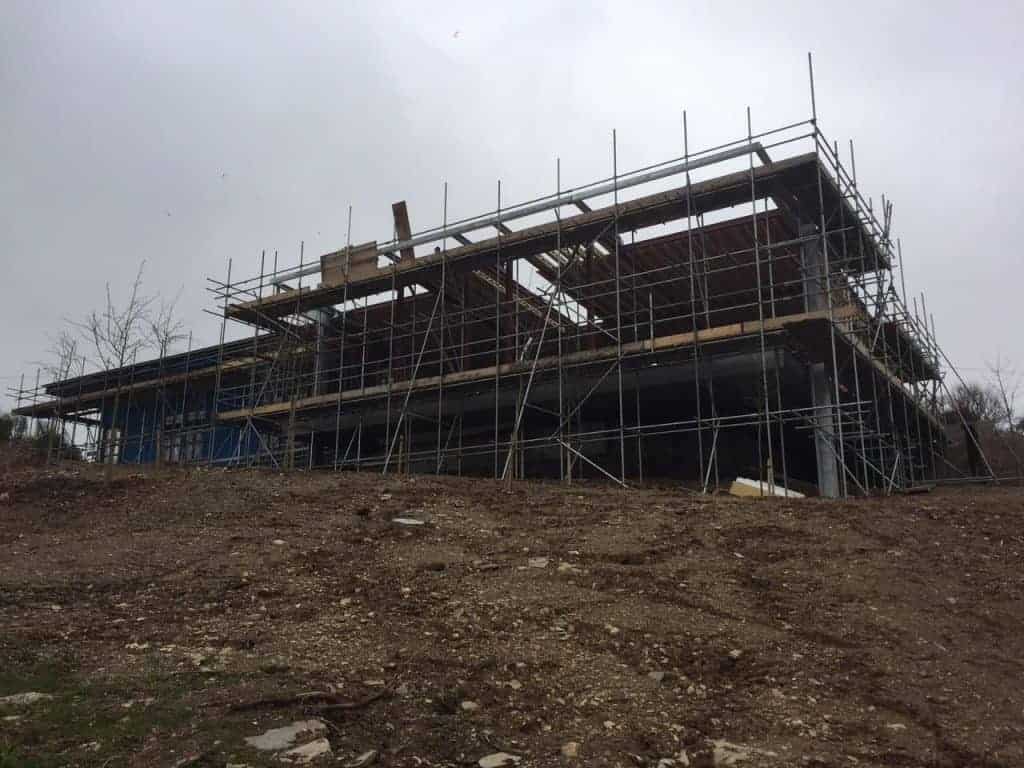 Grand Designs is one of Channel 4’s biggest factual series and has grown into a global phenomenon with millions of viewers the world over.