Scaffold sheeting firm supports construction of ‘Jenga’ hotel

0
Yorkshire-based manufacturer, ITP Ltd, has secured a contract to supply scaffold sheeting for the construction of a unique building showcasing the very latest in architectural design at the Leonardo Hotel in central Manchester.  One of the UK’s most ambitious and eye-catching hotel projects, the development features biodiverse facades inspired by Milan’s Bosco Verticale (Vertical Forest) and is known as the ‘Jenga’ hotel, due to its design resembling stacked blocks of the classic game, Jenga. Located at 1 Adair Street, near Piccadilly Station, the striking £35m build will be 14 storeys tall and comprise over 110,000 sq ft, with 275 rooms. Designed by local architect, Roger Stephenson of Stephenson Studio, the Leonardo Hotel project was recently featured in the BBC 2 series Manctopia: Billion Pound Property Boom, and gained significant attention for its innovative design, winning an award from the Manchester Society of Architects prior to its construction. Main contractor, Bowmer & Kirkland, is overseeing a scheme featuring 17 external planted tiers referred to in planning documents as ‘Jenga blocks.’ The tiers will be filled with trees, shrubs, ferns, grasses and perennials tailored to suit the microclimate of each space in a similar way to Bosco Verticale, the pioneering eco-friendly residential complex created in 2014 by Stefano Boeri Architetti. Award-winning scaffold company, IBN Scaffold Access Ltd, chose ITP’s Powerclad Standard Flame Retardant scaffold sheeting to provide robust weather protection and containment during construction. Compliant with all relevant regulations, the product’s flame retardant performance has been certified to the highest standard Certifire TS 62 and 63 by independent testing bodies Exova Warrington. The 4-star hotel is due to open to the public in 2022 and will be operated by Fattal Hotel Group under the Leonardo Hotels brand. The build will make up part of developer Capital & Centric’s Piccadilly East neighbourhood which will see further apartments created in the area alongside a hotel at Ducie Street warehouse. It is hoped that the project will promote Manchester’s architectural reputation on an international level. David Brown, Managing Director of IBN Scaffold Access Ltd, said: “The Leonardo Hotel is one of various high-profile city centre developments which IBN Scaffold Access Ltd are currently supporting, and we are excited to be involved in this impressive project. ITP’s Powerclad offers tried and tested strength, durability and fire retardancy. The system is in keeping with the exceptionally high standards that clients expect from our scaffolding solutions.” ITP Account Manager, Caroline Collins, added: “ITP are proud to supply our products for another innovative architectural project. We are looking forward to seeing the completed Leonardo Hotel – it promises to be a very impressive sight on Manchester’s skyline.”

Budding scaffolder Todd on road to become fully qualified

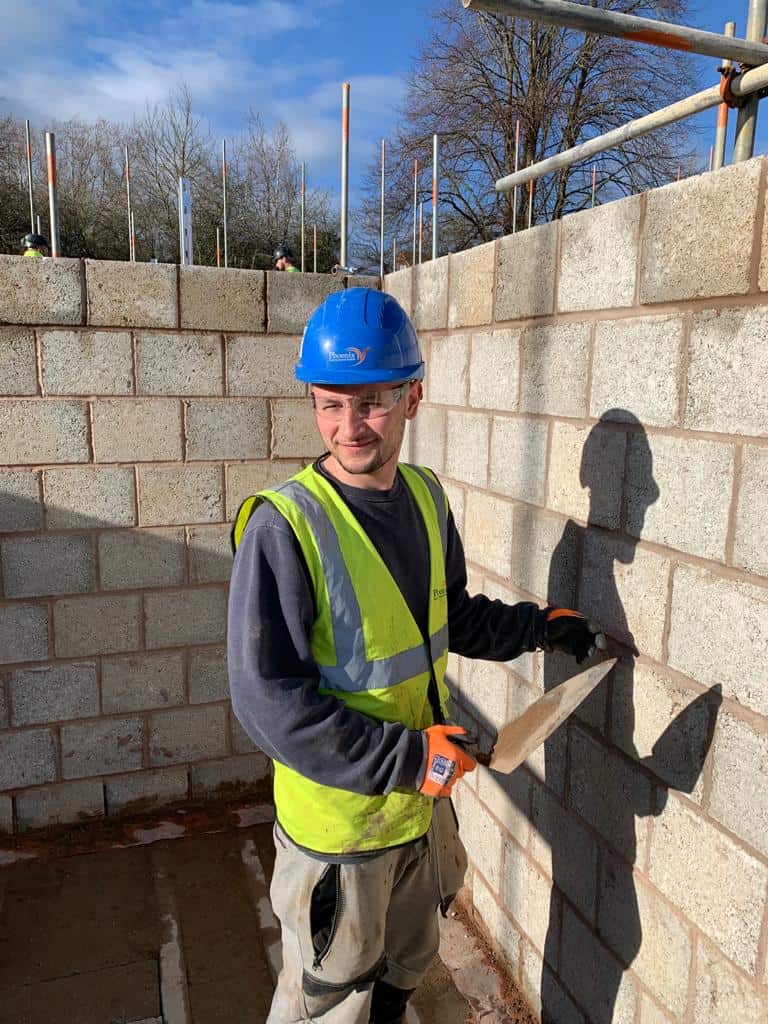
A wannabe scaffolder living with Down’s Syndrome has been accepted onto an apprenticeship course to become fully qualified within the industry. 32-year-old Todd Scanlon from Swindon who works for Coles Scaffolding Ltd has been awarded a place on a scaffolding training scheme at Weston College in what is believed to be a UK first. His boss Martyn Coles has told the Swindon Advertiser that he has been fighting for Todd to be heard to further his training for nearly two years. “I wanted to show that Todd is more than capable of achieving what he wants to achieve.” “It’s often been the case that it’s the unknown, no-one with Todd’s condition has challenged training providers so they say no because they’re looking at things that could go wrong rather than thinking ‘well, actually this lad can do it’,” he said. Budding scaffolder Todd is set to continue through the course at his own pace, with no deadline while receiving one-to-one support. He then aims to get his NVQs to eventually become a fully-qualified scaffolder. “It would be phenomenal, there’s a good chance he will do it, no-one’s done this ever, so it’s trail and error. “But no-one with Down Syndrome in the whole of the construction industry has done this, so we are setting the benchmark.” Martyn and Todd have been campaigning for construction to become a more inclusive industry since Todd joined his firm three years ago. They’ve gone on to see a lot of success in changing attitudes towards hiring people with disabilities, including Down’s Syndrome. As reported previously, Todd won a national award for ‘best apprentice’ at the On The Tools Awards in 2019 and in 2021 the firm won a special recognition award at the construction industry’s Total Awards. “At first, I think they were hesitant towards him working in the industry, still negative people, but a lot of people, the majority of people have seen him and seen what he’s capable of, and seen it’s not just a gimmick or a quick thing.” “What Todd’s message is showing is that anyone can achieve their goals if they want to and have the right people around them, all of the lads have been amazing with him and helping him.”

CITB launches apprenticeship support suite

0
Construction employers are set to receive a suite of apprenticeship support resources, as CITB urges employers to rethink their recruitment methods. To mark National Apprenticeship Week, a series of apprenticeship toolkits have been launched to support construction employers with hiring an apprentice. Acting as a one-stop-shop for support and guidance, the website toolkits simplify access to information and reduce the obstacles that often deter employers from looking into the process. Starting at the beginning of the journey, they will detail the various routes to hiring an apprentice across England, Scotland, and Wales. From there, there’s a choice of four other sections to explore, including support available from CITB. This could be practical support, assisting employers with completing paperwork, or financial support, with a breakdown on how to claim funding for an apprentice. National Apprenticeship Week is an annual week-long celebration of apprenticeships across England and Wales. Now in its fifteenth year, the event brings businesses and apprentices together and highlights the positive impact apprenticeships can have on individuals, businesses, and the economy. This year’s theme, ‘Build the Future,’ is particularly relevant to the construction sector, with the industry facing some major challenges, including the need to recruit an additional 217,000 workers by 2025. This places greater emphasis on apprenticeships as one way the construction industry can secure a pipeline of future talent, but also highlights the need to tackle the many challenges faced when considering recruiting an apprentice. Additionally, the challenges extend to recruiting new entrants in general, as CITB’s recent report, Rethinking Recruitment, encourages employers to consider alternative methods. A key part of this will be ensuring a fair recruitment process to widen the talent pool and bring in the new perspectives required to fill the skills gap. With much of the industry relying on word-of-mouth methods to recruit, the toolkits include advice on writing apprenticeship adverts, interview guidance and links to additional resources on integrating Fairness, Inclusion and Respect principles, to create a more diverse and inclusive workplace. With 70% of SMEs in construction being micro businesses with less than 10 employees, time was identified as a key factor in the design stages of the toolkits. Each section has clear, easy-to-follow headings meaning employers can scan and skip sections to find the information they want quickly. Alan Wilson, Head of Apprenticeships & Careers Products at CITB, said: “Apprenticeships are vital to the construction industry, but it’s important to remember they can also be a fantastic addition to any business, in general. Hiring an apprentice can be a great way to pass on an important trade to the next generation, help your business grow, and even increase productivity. “For these reasons, it’s extremely important that all employers understand what an apprenticeship is and the different types available. The new toolkits are a brilliant support system, covering a huge amount of advice and tips that can often be a daunting and time-consuming task to figure out on your own.”

Panthera Group scores UK first Green Loan

0
After launching EnviroHoard™, the UK’s first net zero carbon verified hoarding system in 2021, Panthera Group has now become the first business in the UK to secure a Green Business Loan for SMEs from HSBC bank. The ‘Green Loan’ scheme was launched by HSBC bank on Monday 24th January to encourage businesses to become more sustainable and to help finance green activities to meet customer demands for environmentally products and services. Panthera Group applied for the scheme to support its plans for scaling up its net zero carbon hoarding system, EnviroHoard™. The company has been at the forefront of sustainability in the construction sector over the last few years; investing substantially in the development of EnviroHoard™ during the downturn of 2020. Launched in 2021 the company has been on a programme of continuous development ever since; making a further carbon reduction in its low carbon concrete block during the year. Now, the loan supplied by HSBC will enable the company to speed up its growth plans for EnviroHoard™ across the UK. The commitment to sustainability is further evidenced within Panthera’s own business operations which became carbon neutral in January 2021. Managing Director, Neal James, is also looking at improving these credentials even further; “The HSBC loan will enable us to roll out EnviroHoard™ nationally and at much quicker speed. This will help even more contractors to reduce their projects’ carbon impact. The business is looking at electric trucks, sustainable heating systems and keeping an eye on hydrogen-powered vehicles for the plant fleet which will help towards our ultimate goal in eliminating the carbon footprint of the business.”

ScaffFloat to create jobs after £200k investment

Floating scaffold pontoon manufacturer is looking to expand overseas after landing a £200,000 investment. Cornish company ScaffFloat which also trades as WorkFloat is set to grow and create new jobs from the investment. The Penryn-based firm manufactures self-propelled bespoke pontoons designed to integrate with scaffolding, and easily transportable workboats for use in commercial marine engineering. The firm has secured a £140,000 equity investment from the Cornwall & Isles of Scilly Investment Fund (CIOSIF) as part of a £200,000 funding round, including match-funding from private investors, led by appointed CIOSIF fund manager The FSE Group. The investment will be used to support the overall growth of the business, enabling further product development, increased marketing activity and expansion into overseas markets. The business is also set to create a number of new jobs within the company. The marine platform market is currently dominated by a choice between heavy-duty, non-mobile products, or those offering mobility but that are less robust with limited capabilities. WorkFloat says it has identified a market-gap by providing and is providing a solution that is mobile, resilient and fully functional. The company also provides marine management services to ensure its clients get the most out of its products. Demand for Workfloat’s products is strong with the company recently supporting prestigious projects including maintenance for Queen Elizabeth-class aircraft carriers, Network Rail bridges, Highways England assets and the Environment Agency. ScaffFloat allows UK scaffolding firms to offer floating access solutions Toby Budd, chief executive and founder of ScaffFloat / WorkFloat, said: “Over the past three years we have worked hard to create a cost-effective, transportable work platform to overcome the issues with the current market offering. “Our products are gaining traction across the UK and overseas and this funding will allow us to maximise the opportunities available to us, continuing to grow our business globally whilst maintaining our roots firmly in the South West. “Having CIOSIF on board as an investor, with the added benefit of the FSE team’s corporate finance and governance experience, will be extremely beneficial in scaling and professionalising our operation.” Ralph Singleton, head of funds Cornwall at The FSE Group, said: “Workfloat has a credible management team led by Toby whose experience in the marine sector, as well as in successfully building and exiting a portfolio of small businesses, places the business in a strong position for growth. “The business is well-supported by credible private investors who understand the commercial marine space and the team continues to develop innovative, award-winning products to address a known gap in a niche market.”  

UK Scaffolders acquire first LIFTBOT robotic scaffolding hoists

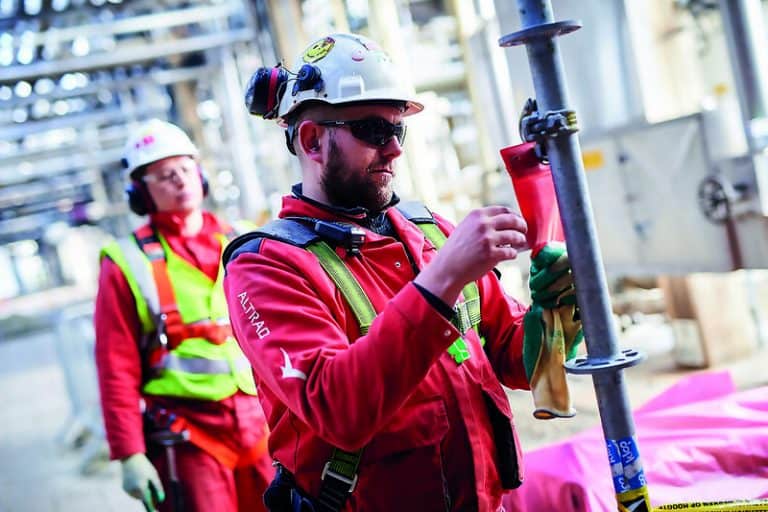
KEWAZO, the manufacturer of LIFTBOT robotic scaffolding hoists powered by Data Analytics, has delivered its first robots to leading industrial service providers Altrad UK and Bilfinger UK. After successful UK pilot projects with LIFTBOT the robotic material hoist in September 2021, Bilfinger UK and Altrad UK acquired their first systems in January 2022. The robots are now in constant deployment at the UK’s largest petrochemical refinery. The CE-certified robotic scaffolding hoist LIFTBOT was introduced into the industry in 2021. It has been used since then by various scaffolding companies and key industrial service providers, including the German market-leader Bilfinger arnholdt. According to KEWAZO, more than 80% of scaffolding projects are still built completely manually. Traditionally, the material is man-chained up from the ground to the assembly level. This approach is labour-intensive, unsafe, and unergonomic, the firm said. By automating vertical material transport, LIFTBOT helps to increase assembly efficiency on average by 44%, and all this while enhancing safety. LIFTBOT’s rotating transportation platform enables unloading of scaffolding material in an ergonomic position inside the scaffolding while keeping guardrails in place. KEWAZO engineers have already trained both Altrad UK and Bilfinger UK scaffolders on how to use their LIFTBOTs. This recently enabled Bilfinger UK to use their system to erect scaffolding around 40-meter-high on some reactors. The 8-week project would have typically required at least eight scaffolders, whereas working with LIFTBOT reduced this number to only three.
“This kind of innovation within the Access industry is long overdue and it is great to be leading the way by bringing it to our valued UK Clients.”
Alex Curry, Bilfinger UK’s Executive Director On-shore MMO, said: “Bilfinger have worked with KEWAZO since 2019 to help develop the LIFTBOT robotic scaffold hoist, so it is great for us to have one in the UK and it’s already delivering real productivity and safety improvements on a Major Project at the UK’s largest Refinery.  Within 24 hours of arrival in the country, the LIFTBOT was quickly assembled, Bilfinger scaffolders were trained, and they had safely lifted over 1300kg of scaffold materials in just 6 hours! This kind of innovation within the Access industry is long overdue and it is great to be leading the way by bringing it to our valued UK Clients.” According to KEWAZO, one of the main advantages of LIFTBOT is its fast and easy mobilization. Its use of batteries instead of cables, compact size, and 20-minute installation without the need for additional scaffolding anchoring – all enable LIFTBOT to be deployed on jobs where scaffolding would otherwise be built completely manually and to much physical strain. Another asset of LIFTBOT is the introduction of high-tech innovation into the scaffolding industry. Scaffolding is often seen as a commodity and most customers make their decision based on cost. Deploying the latest innovation in the industry can help scaffolding contractors to stand out. Altrad UK and Bilfinger UK now have this competitive advantage at hand, allowing them to strengthen their market-position even further.
“Altrad has improved safety by eliminating risk and has enhanced the wellbeing of its people.”
Colin Murphy, Head of Technical Authorities, Altrad UK, Ireland, and Nordics, added: “Altrad are characterised by curiosity, a trait that helps them find solutions to the most complex of challenges. They work collaboratively with their clients to always find a better way, and never stop asking ‘what if?’. By using a LIFTBOT to support the construction of larger access structures, Altrad has improved safety by eliminating risk and has enhanced the wellbeing of its people by reducing manual handling activities, whilst also increasing productivity.” KEWAZO, the manufacturer of LIFTBOT robotic scaffolding hoists, has delivered its first robots to Altrad UK and Bilfinger UK. LIFTBOT integrates sensors that ensure safe operation and collects data crucial to processes such as transported weight, current scaffolding height, and efficiency. This data can be accessed on any browser or a smartphone via the Data Analytics web-platform KEWAZO ONSITE. This creates transparency of on-site operations, enabling a more proactive data-driven management not only of individual projects but also of companies overall. Automated update-notifications via email, SMS, or WhatsApp detailing the project-progress promotes this theme even further. Thus, foremen, construction managers, or other stakeholders can keep track of set targets effortlessly. Alongside Germany and Benelux, KEWAZO considers the UK as one of the key markets and has consequently established a robust support-infrastructure that enables a reliable customer service in terms of maintenance, training, and assistance.

Vital text service launches to provide wellbeing support

The Lighthouse Construction Industry Charity has added another route to vital wellbeing support by launching their text HARDHAT to 85258 service to provide immediate support to the construction community. This latest addition to the charity’s extensive portfolio of support services launched on 1st February and underpins their mission that no construction worker or their family should be alone in a crisis. The text HARDHAT to 85258 service will complement their existing 24/7 Construction Industry Helpline and Helpline App and offers immediate support to those who feel more comfortable texting with someone rather than holding a one to one telephone conversation. Just like the charity’s helpline, the text HARDHAT to 85258 service is available at any time of the day or night and offers free, anonymous and confidential support to anyone in the industry who is feeling overwhelmed, stressed, anxious, suicidal or simply struggling with everyday life. Individuals can access support simply by texting the word HARDHAT to 85258. This will put them in touch with trained volunteers who will ask for a little more information about what the problem is, with the individual sharing what they feel comfortable with. The volunteers listen without judgement and can provide support and guidance on a huge variety of issues including; feeling anxious, relationship problems, loneliness and isolation, abuse, addiction, depression, bullying and harassment, self-harm, and suicidal thoughts and feelings. The text conversation will only finish when the volunteer has helped the person to reach a calm and safe place. They will also be able to provide a plan so that users can understand how to help themselves going forward and signpost to further resources or tools to provide more expert support. Bill Hill, CEO of the Lighthouse Construction Industry Charity said, “Our new text HARDHAT to 85258 service comes at a time when many are still struggling on a daily basis with debt, anxiety and family issues. Some things are returning to normality but there are still far-reaching consequences and underlying problems that remain as a result of the Covid 19 pandemic. These pressures are in addition to the normal stresses and strains of working in an industry where two workers take their own life every single working day and a fifth of all work-related illness is due to stress, anxiety or depression.  Last year our charity supported 2788 families, an increase of 23% on the previous year and we delivered £1,077,015 of charitable giving to our construction community. This support ranged from making sure there was a meal on the table for families and paying household bills, helping with debt and financial issues, and providing quick access to professional counselling sessions. We know that there are many people who feel embarrassed or unable to reach out for help by calling someone.  Introducing our text HARDHAT to 85258 service is yet another route to access support before situations escalate out of control. We cannot stress enough that it really doesn’t matter how small or large you think your problem is, there is always support available and we can provide that help through the channels that people feel most comfortable with. That could be by using our free Construction Industry Helpline App, calling our 24/7 Construction Industry Helpline and talking to someone and now we have our text HARDHAT to 85258 service.”  If you need help or support now, or know someone that does, you can call the charity’s 24/7 Construction Industry Helpline on UK 0345 605 1956, ROI 1800 939 122, visit www.lighthouseclub.org or text HARDHAT to 85258.

Industry workers call for 10% pay rise

0

Unions, led by Unite are calling on the Construction Industry Joint Council (CIJC) for a 10% pay increase in a bid to redress pay cuts and the rise in the cost of living faced by its members.

The union argues that with a construction output of £110 billion per annum, employers can easily afford to reward workers with wages that keep pace with living costs.

Unite has warned that unless the industry begins offering decent wages it will result in the continuing failure to attract new starters.

Unite general secretary Sharon Graham said: “Construction workers are highly skilled and are essential to the UK’s future prosperity. But they are fed up with years of wage attacks. So with growth across the sector now forecast, we’re simply asking that our members get their fair share of rewards.

“This pay claim reflects the urgent need to restore this workforce’s pay to at least a level that matches inflation, and we will not accept anything less. Unite is the union which always puts the jobs, pay and conditions of its members first and the union will be taking radical measures to ensure that construction workers secure a fair pay rise.”

The CIJC is the largest agreement in the construction sector and governs the pay and conditions of in the region of 500,000 workers (principally those in civil engineering and the biblical trades).

The union side is seeking a uniform pay increase which will see all workers covered by the agreement, from craft workers to labourers, see their pay rise by the same percentage.

Sick pay increase

In addition, the unions are seeking a considerable increase in industry sick pay and holiday entitlement to bring the CIJC in line with other construction agreements.

The pay claim comes at a time when the construction industry is experiencing a severe and worsening skills shortage, a result of the failure to train new entrants. Poor CIJC pay rates makes a career in the industry unattractive to new starters.

Unite national officer for construction Jerry Swain said: “For this industry to succeed and attract new entrants then pay rates must reflect workers’ skills and living costs.


Scaffolder seriously injured in temporary-roof fall

0
A scaffolding contractor has been sentenced after a scaffolder fell from height while dismantling a temporary roof scaffold resulting in serious injuries. Brighton Magistrates Court heard how, on 15 August 2019, Darren Barnett was dismantling a temporary-roof scaffold at a site in Hailsham, East Sussex, when he fell through the scaffolding landing on to the roof of the property below, before rolling down and on to the ground. Mr Barnett fell approximately eight meters in total and sustained two brain haemorrhages, six vertebra fractures, a fractured shoulder blade and multiple rib fractures. An investigation by the Health and Safety Executive (HSE) found the company had failed to properly plan the works in respect of giving consideration to how the temporary roof should be dismantled safely. Furthermore, Mr Barnett was only provided with a single lanyard harness that was not suitable for such works, rather than a twin lanyard harness. Zendrill Ltd based in Gillingham, Kent pleaded guilty to breaching Health and Safety Regulations and the Work at Height Regulations 2005. The company was fined £16,667 and ordered to pay costs of £6,767 and a victim surcharge of £170. Speaking after the hearing, HSE inspector Ross Carter said: “The case highlights the importance of following industry guidance in order to design and dismantle scaffolding in a safe manner with the correct equipment made available to those undertaking the work. “If a suitable safe system of work had been in place prior to the incident, the life changing injuries sustained by Mr Barnett would have been prevented.”

Brogan Group celebrate 1.5M hours accident free

0
The Brogan Group has achieved more than 1.5 million continuous hours accident-free across its powered access and scaffolding divisions, equivalent to 17 people’s entire working lifetimes. FIVE HUNDRED Brogan site workers across the UK, Ireland and the Middle East, worked through the entirety of 2021 without a reportable incident, in an industry sector that is statistically four times as dangerous as the average workplace. Brogan Group is an international group of access companies headquartered in the UK with offices in Ireland, Saudi Arabia & the UAE. “This is the fourth time in the last decade that Brogan has completed an entire calendar year without a reportable incident. 2021 joins 2011, 2015 and 2016 in our record books,” says James Lewis, Group HSQE Director. 50% of the fatal incidents in the UK construction industry as a whole are from falls at height but Brogan Group, who largely work at height, have thankfully had no fatalities. The firm’s All Accident Incidence Rate is on average 3x lower than the Industry NASC Scaffolding incident average. James added: “These exceptional levels reflect our best practices and reinforce our ultimate aim of ensuring that our workforce is kept safe whilst working on our behalf and that they return home safely each day. We are keen to continue on such a positive note with the support of all of our workforce.”