NASC has been recognised for its crisis management efforts during the COVID-19 pandemic.
The scaffolding and access trade body has been shortlisted for the Trade Association Forum Best Practice award in the Crisis Management (Covid-19 Member Support) category.
The award category recognises trade associations across the board that moved quickly and effectively to safeguard and support their members and the wider scaffolding sector throughout the Coronavirus pandemic.
NASC says its entry focuses on the various ways in which they kept scaffolding sector businesses up-to-date and informed, including the creation and distribution of its daily Covid-19 e-bulletins, the establishment of a dedicated Coronavirus News section of its website, and the production and dissemination of free to download Guidance for Scaffolding Operations during the Coronavirus (Covid-19) pandemic, and an associated Toolbox Talk.
Robin James, NASC Managing Director, said: “We are delighted to have been named as a finalist in this category. During the first few months of the pandemic, a lot of often complex information was being announced and implemented by Government on an almost daily basis.“The NASC team worked tirelessly to communicate this information to members and the scaffolding industry at large in a clear and effective way, enabling businesses to make important commercial decisions with confidence. The team also worked proactively to support the scaffolding industry, producing its Guidance for Scaffolding Operations During the Coronavirus (Covid-19) Pandemic and Toolbox Talk of the same name, and regularly reviewing and updating these resources as Government guidance changed.“Beyond that, efforts were made to call each and every NASC Contractor member to gain a better understanding of the challenges they were facing, offer any assistance, and ensure they were aware of the various support streams offered by the Government as well as the new NASC Operational Guidance.“As the trade body for access and scaffolding in the UK, keeping members and indeed non-members informed of ever-changing rules and Government support schemes during the Covid-19 pandemic was of paramount importance to us. I am delighted with how the team stepped up for the scaffolding industry during this unprecedented and extremely challenging period.”
A scaffolder has received serious injuries after a scaffold tube he was lifting hit an overhead power line – sending 48,000 volts through his body.
Steven Gillmore the 36-year-old scaffolder also fell from height following the electric shock. He has remained in hospital in a serious but stable condition since the incident happened in Crawley on November 29.
“The injuries he sustained will result in life-changing conditions”, his partner Vicky Blackman said.
She has been travelling to the burns unit at Chelsea and Westminster Hospital to visit him where he remains receiving treatment.
Doctors are unsure of the severity of his internal burns and how much of his hands and arms are going to survive. But surgeons have said it will be a long and rough road to recovery for Steven.
One of his friends, Kieran Friend, 45, launched a fundraising campaign to help Mr Gilmore’s family as he remains in hospital.
So far over £14,000 has been raised in donations for the scaffolder and his family.
“I’m over the moon with the amount of money raised so far,” Mr Friend said to Kent Online.
“I never knew it would have gotten this high so thank you to all who have put in.“But the more I think about things and his recovery – which is going to take months not weeks – the family will definitely need a lot more money than we have already raised.”To donate to the fundraiser click here.
Millcroft has beaten strong competition to be awarded a five-year programme of scaffolding works for HS2 in central London.
The contract will involve design, installation, adaptations and project management of access and safety scaffolding requirements.
Working for HS2’s Main Works Civils Contractor, Skanska Costain STRABAG JV (SCS JV), Millcroft will leverage the company’s extensive experience in the rail sector to provide bespoke scaffolding solutions for ventilation shafts, head houses, bridges, abutments and tunnelling works.
The full scope of works is yet to be finalised, but Millcroft’s in-house design department will work collaboratively with the client to understand the mission-critical programme and safety requirements at each site and deliver solutions aligned to the needs on construction and engineering teams.
Millcroft will establish a dedicated HS2 team in place for the project, including project management, design and logistics expertise. The move will enable the company to maintain an agile approach to answering the project’s changing needs as the work progresses, supporting industry-leading health and safety standards for SCS JV.
Millcroft has already taken on an additional 10 staff on-site, and are likely to recruit considerably more as the project continues.
The contract win builds on Millcroft’s wide-ranging track record on prestigious rail projects. The company was shortlisted in the Construction News Specialist Awards for its work on the cut line modifications to Euston Station as part of the HS2 terminus infrastructure. Millcroft was also shortlisted in the Health, Safety & Wellbeing Excellence (Project Category) in the 2021 Construction News Awards for the company’s work on the Crossrail Elizabeth Line terminus project at Paddington Station.
The company will also bring previous experience of working with large tunnel boring machines (TBM) to the new HS2 contract, having previously worked for the Align JV on HS2 infrastructure works with the ‘Florence’ and ‘Cecilia’ TBMs.
Billy Jones, managing director of Millcroft commented: “HS2 is the biggest rail project in Europe and the most important UK infrastructure investment in a generation, so we are delighted to be continuing to play a role in delivering this prestigious programme.“Our experience in rail, and specialist knowledge of the challenges and safety considerations it involves, have been instrumental in our success in winning this contract. We will work closely with Costain Skanska Strabag to ensure we respond quickly to site requirements and are proactive in providing design expertise.”
Wages for subcontractors in construction have reached the highest level since December 2019 and the highest on record across many parts of the UK.
According to research by the industy’s biggest payroll firm Hudson Contract found that subbies in London, the South East, the South West and Wales are earning the most.
Average weekly earnings increased by 1.8 per cent to £944 during last month, the highest November pay levels on record. Compared with the same period last year, earnings increased by 4.7 per cent.
Workers in the East Midlands saw average weekly earnings rise to over £1000 per week, a 9% increase on 2020 earnings.
Ian Anfield, managing director of Hudson Contract, said: “Our analysis shows we are back in the normal cycle where people work more hours in the run-up to Christmas. Storms Arwen and Barra may have lost us a few days and contractors are fighting to get the materials they need but we are still within the most productive time of the year. The festive season is coming up and people know January will be slow with bad weather.“The strong performance in the South West and Wales reflects the increasing investment in housing and infrastructure as part of the government’s ‘levelling up’ agenda. In London and the South East, growing demand for new housing and home improvements is feeding through to labour requirements and rates are catching up.“Looking ahead, the removal of the red diesel rebate in April will hit groundworks contractors and quarrying companies the hardest and likely drive up material prices across the construction industry. The smaller and more agile firms on short-term contracts are able to react quickly and put their rates up as are the self-employed.”
November was a particularly good month for surfacing contractors, who enjoyed record earnings at £888 per week – the equivalent of £42,600 per annum.
The Prime Minister announced that England is moving to Plan B following the rapid spread of the Omicron COVID-19 variant.
In a live press conference to the nation on Wednesday, Boris Johnson described the move as ‘proportionate and responsible’ which would ‘buy time to get yet more boosters into more arms’.
The government’s Plan B will see the additional restrictions introduced over the next week:
From Friday, the legal requirement to wear a face-covering will be extended to most public indoor venues, although it will not include hospitality settings
From Monday, the guidance to work from home where it is possible to do so will be reintroduced
Daily tests will be introduced for close contacts, rather than a requirement to self?isolate, to minimise disruption.
Following the news conference Build UK quickly urged construction sites to continue to minimise the risk of spreading the COVID-19 virus to keep workers safe and sites open.
Build UK also informed its members the CLC’s Site Operating Procedures and guidance on the Use of Face Coverings in Construction are now under review following the PM’s announcement.
A GIANT INFLATABLE RAT has joined British Steel scaffolders and strike campaigners outside a South Shields company.
Scaffolders and Unite the union has accused Rope Access Trade Solutions of supplying workers to help British Steel break a strike by scaffolders employed by Actavo (UK) at its site in Scunthorpe.
The protest took place outside Rope Access Trade Solutions South Shields address this morning (Wednesday 8 December).
The union has warned British Steel that engaging with the firm could be in breach of criminal law which prevents workers from being supplied to cover the duties of workers engaged in lawful industrial action.
62 scaffolders have been on continuous strike action for 9 weeks in a long-running dispute with their employer Actavo (UK). They are significantly underpaying their workers.
Unite says this breaks a national agreement that sets fair rates for the job and prevents a race to the bottom for construction workers. But Unite says that the client, British Steel, must also take responsibility for this long-running dispute.
Unite General Secretary Sharon Graham said: “We believe Rope Access Trade Solutions have been engaged by British Steel specifically to carry out works which would normally be done by our members who are on lawful strike. This may well be in breach of criminal law. We also have evidence that other workers are being pressured into working for British Steel’s scaffolding contractor Actavo. “The workers on strike have their union’s steadfast support. Any attempt to break this strike will be fiercely resisted. My priority is to defend Unite members’ jobs, pay and conditions.“Unite will not allow employers to use strike breakers to help erode workers’ pay. We will fight tooth and nail to stop the race to the bottom.”Striking scaffolders at British Steel. Credit: Twitter/United Scaffs
The dispute, which began in 2019, is a result of the scaffolders not being paid in line with the National Agreement for the Engineering Construction Industry (NAECI).
The rates for the workforce are currently between 10-15 per cent (depending on specific roles) below these rates.
The workers maintain over 500 scaffolding structures at the British Steel site.
Lighthouse Construction Industry Charity Christmas event has raised a massive £210,000 to help support the construction community.
It was a long anticipated event in the construction calendar and expectations were high as over 1000 guests were welcomed through the doors of the Westminster Park Plaza on Friday 3rd December for the Lighthouse Construction Industry Charity’s annual lunch in London.
Former cricketer Chris Cowdrey was MC forr the day and opened proceedings with Charity CEO, Bill Hill saying how good it was to be back which was met with huge applause and cheers.
The fun started with a ‘heads and tails’ competition and the lighthouse lotto. The top two winners of the lighthouse lotto very generously donated their prize money straight back to the charity. A gourmet three course meal was enjoyed by everyone and later in the afternoon competition was hot for some fantastic live auction prizes, all of which helped towards raising an amazing £210,000 from the event.
The event also gave the charity the opportunity to announce their partnership with the Careys Foundation and a specially liveried truck was on display at the venue promoting the charity’s helpline and the new partnership.
Normally, each year, the Charity awards the ‘Peter Capel’ Cup to recognise organisations that have made a substantial contribution to the Charity’s work and with nominations in 2020 to consider as well, competition for the prized accolade was stronger than ever. Well deserved winners were HQR London (High Quality Residential) who despite not being able to hold their annual summer ball last year, still managed to raise over £64,000 for the charity.
Andrew Crispin (founder and Trustee of HQR London) said, “HQR London are delighted to have been awarded the Peter Capel Cup for the second time since the HQR Charitable Trust was conceived six years ago. It was our absolute pleasure to accept the Award on behalf of our members who have collectively been able to provide year on year support and our aim is to continue doing so over the coming years.
The Lighthouse Club provides much needed emotional and financial support to so many workers and their families who are in crisis in our industry. An industry that we all know and love, which makes it an easy choice for me, my fellow HQR’s Trustees; Darren Size and Chris Butler and our members to continue our support”.
Top celebrities from the world of sport were lined up to entertain the guests and rugby legends Mark Regan and Paul Wallace kicked off with amusing tales from their British and Irish Lions tours.
TalkSPORT’s presenter Laura Woods then took to the stage with Ally McCoist, Sam Torrance and Darren Gough who followed with equally funny stories of playing with Gazza at Rangers FC from Ally, childhood memories from the golf course from Sam and antics on and off the pitch and ‘strictly’ dance floor from Darren. The crowd demanded more and got more with the VIP guests egging each other on to tell more daring stories!
Tenor Martin Toal rounded off the afternoon with a rousing performance which had people up on their feet cheering for more with enthusiastic napkin waving.
Bill Hill, CEO of the Lighthouse Construction Industry Charity said, “We were so disappointed at having to cancel last year’s event and so the pressure was on this year to make it an afternoon to remember. It certainly lived up to that and I am staggered that even during these difficult times, our event raised over £210,000 to help us support our construction community in need and to make a real difference to people who have nowhere else to turn.We would also like to take this opportunity to thank all the volunteers that helped on the day and our sponsors who make these events possible.The money raised will go towards continuing our vital helpline services, supporting our national awareness campaign “Help Inside The Hard Hat” and developing the Building Mental Health programme, so that we can continue to support our construction families in need and make a real difference to people who have nowhere else to turn.”
The festivities continued well into the evening with guests embracing the Christmas spirit and making the most of the networking opportunities.
The timber industry expects there to be no more mass shortages in 2022.
The Timber Trade Federation (TTF) has reported that more than 3.32 million m3 of timber and panel imports were imported in Q3 of 2021, as the market achieves greater balance between supply and demand after nearly a year of record imports.
Statistics show these import levels are more than 23% over Q3 2020 and, significantly, more than 10% higher than the last time Q3 volumes exceeded three million m3 – in 2007.
Softwood is being imported in larger amounts from a more diverse range of countries over the past quarter, with Latvia, Finland, and Germany growing to account for 61% (1.1 million m3)of the 1.8 million m3 of softwood imported in Q3 2021.
Other timber products, including hardwood, plywood, particleboard, OSB and MDF, have also seen clear increases in Q3 2021 as compared with the previous year.
While some goods continue to be under pressure amidst buoyant demand, and logistics issues, the timber supply chain overall has proven resilient, with the timber industry in a strong position to meet demand in 2022.
Nick Boulton, TTF head of technical and trade policy, said: “These latest statistics continue to reflect the incredible demand for timber products seen over the past year which have kept the UK on track to surpass previous import records.“After this record period the stock levels have returned back towards their pre-pandemic levels and the logistics supply chain is struggling to find sufficient space for further volume – so much so that in Sweden we are seeing some sawmills reduce their overall production volumes.“However, while we can see stock levels returning, the UK market is clearly in a different place compared to where it was two years ago, with the likes of HGV driver shortages, port delays and Brexit changes likely to continue to impact the market in the coming months.“Despite these challenges, these past 21 months have proven that the timber supply chain is resilient. We are in a strong position to meet growing demand for sustainable, low-carbon construction materials – both now and in the future.“As a low-carbon, low-energy construction material, timber is likely to grow as the material of choice among climate conscious architects, engineers, developers and planners in the UK.“With the tightest period of tension between supply and demand likely behind us, we can expect a return to more ‘regular’ activity in 2022.”
The number of job adverts in the UK has hit a new record of over 3.5 million in the run-up to Christmas according to a new report.
The Recruitment and Employment Confederation (REC) said that 210,000 new job adverts were posted in the UK last week alone. After three of the best weeks for new adverts on record – over 270,000 new adverts were posted in the first week of November.
According to the data, there was a particular rise in demand last week for Scaffolders, dentists and vets as the UK’s labour shortage shows no sign of easing.
Evidence of the growth in job ads can also be seen on our own Scaffolding Jobs Board with many scaffolding businesses rushing to hire staff ahead of Christmas.
Well-known industry firms like WellMax, Rilmac, JDC, MR Scaffolding and QFS are all urgently seeking qualified scaffolders for a flurry of new projects across the UK.
The ongoing labour shortages had been predicted previously with the CBI in September fearing the shortages could last for years.
REC’s new report shows that scaffolder job adverts increased by 6.9% and five out of the UK’s top ten hiring hotspots were in Scotland last week.
Neil Carberry, Chief Executive of the REC, said: “The growth in job adverts shows no signs of slowing as we reach the Christmas peak. We’ll have to wait and see how this week’s news on the Omicron variant affects the market.“More broadly, this is very much a candidate’s market now. Firms need to think about how they will attract staff facing greater competition than ever before. Professional recruiters are a vital tool for businesses at times like these, helping them to find the best staff by reviewing their workforce plans and reaching out to new pools of candidates. Government can help by working with business organisations on skills, immigration and unemployment policies that boost labour supply, helping businesses grow and the UK to prosper.”
The winners of SkillBuild ’21 – the “UK’s construction Olympics” – have been described as having “the skills everyone is crying out for”.
Fifty-three competitors from across the UK took part in SkillBuild, the annual construction contest, held this year at the National Construction College in Bircham Newton.
Over three intense days of competition the best construction trainees & apprentices from across the UK were tested, against the clock, in their chosen trades.
The SkillBuild medallists were announced on Friday at an online national celebration event and crowned (virtually) by TV presenter Steph McGovern from her Packed Lunch studio.
Announcing the medallists Steph said:“The winners would be part of the best contact book you could ever have. If you’re looking for a bricklayer, you’re going to go for one of the country’s best. These are the skills that everyone is crying out for.”
Sam Dean, 19, from Ashton-in-Makerfield won the gold medal in the plastering competition. Sam, who has just finished his apprenticeship, has been working for Chorley-based IB Plastering Ltd for two years.
Sam said:“SkillBuild was a good experience. I was nervous going into the competition, but the judges were helpful.“SkillBuild taught me not to panic, rush or concentrate on what others are doing, but to go at my own speed and get the job right.” Sam says he enjoys being a plasterer and would like to run his own company one day “employ people and make lots of money!”
SkillBuild is managed by the CITB, in collaboration with WorldSkills UK.
Commenting on this year’s competition CITB Chief Executive Tim Balcon said:“SkillBuild brings the best out of the UK’s most promising construction trainees and apprentices. It teaches them to use their skills under pressure, to work to deadlines and to produce high quality work. The talent on display in this year’s competition was a credit to competitors and their trainers. It augurs well for industry, too.“There are great opportunities for skilled construction workers in the UK. Demand for labour is high as the economy recovers from the pandemic. CITB estimates that over 40,000 new construction jobs will be created between now and 2025. It’s important that we increase the number of people in construction, the example of SkillBuild competitors will help do that. I wish all the competitors the very best in their careers.”Deputy CEO of WorldSkills UK, Ben Blackledge, says that success in UK-wide finals is a litmus test for the future of the economy. He said:“These young people are a real inspiration. They are an example to us all and are to be congratulated. To have excelled after such a difficult year shows their dedication and drive is second to none. Skills are the lifeblood of every economy, creating high quality jobs, rewarding careers, inward investment and growth.”SkillBuild Gold medal winners (from England):
Bricklaying: Mitchell Proctor. Preston’s College
Carpentry: Charlie Reeve. E N Suiter
CBM Furniture and Cabinet making: Michael Jack. Talbot Burnley College
Joinery: Sam Abbott. North Warwickshire & South Leicestershire College – Harrowbrook Plastering: Sam Dean. Wigan and Leigh College – Pagefield Centre
Stonemasonry: Lewis Evans. Bath College – Radstock
Gold medal winners (from Wales)
FSW – Foundation Skills: Woodworking: Ben Thewlis. Coleg Gwent – Newport
Gold medal winners (from Scotland)
Painting and Decorating: Nicole Smith. Bell Group UK
Gold medal winners (from Northern Ireland):
Plastering & Drywall systems: Ignas Kurasovas. Errigal Contracts
Wall & Floor tiling: Aaron Gillespie. Southern Regional College – Newry Campus
The full list of Gold, Silver, Bronze & Highly Commended contestants is on the Go Construct site.
We use cookies on our website to give you the most relevant experience by remembering your preferences and repeat visits. By clicking “Accept”, you consent to the use of ALL the cookies.
This website uses cookies to improve your experience while you navigate through the website. Out of these, the cookies that are categorized as necessary are stored on your browser as they are essential for the working of basic functionalities of the website. We also use third-party cookies that help us analyze and understand how you use this website. These cookies will be stored in your browser only with your consent. You also have the option to opt-out of these cookies. But opting out of some of these cookies may affect your browsing experience.
Necessary cookies are absolutely essential for the website to function properly. These cookies ensure basic functionalities and security features of the website, anonymously.
Cookie
Duration
Description
cookielawinfo-checbox-analytics
11 months
This cookie is set by GDPR Cookie Consent plugin. The cookie is used to store the user consent for the cookies in the category "Analytics".
cookielawinfo-checbox-functional
11 months
The cookie is set by GDPR cookie consent to record the user consent for the cookies in the category "Functional".
cookielawinfo-checbox-others
11 months
This cookie is set by GDPR Cookie Consent plugin. The cookie is used to store the user consent for the cookies in the category "Other.
cookielawinfo-checkbox-necessary
11 months
This cookie is set by GDPR Cookie Consent plugin. The cookies is used to store the user consent for the cookies in the category "Necessary".
cookielawinfo-checkbox-performance
11 months
This cookie is set by GDPR Cookie Consent plugin. The cookie is used to store the user consent for the cookies in the category "Performance".
viewed_cookie_policy
11 months
The cookie is set by the GDPR Cookie Consent plugin and is used to store whether or not user has consented to the use of cookies. It does not store any personal data.
Functional cookies help to perform certain functionalities like sharing the content of the website on social media platforms, collect feedbacks, and other third-party features.
Performance cookies are used to understand and analyze the key performance indexes of the website which helps in delivering a better user experience for the visitors.
Analytical cookies are used to understand how visitors interact with the website. These cookies help provide information on metrics the number of visitors, bounce rate, traffic source, etc.
Advertisement cookies are used to provide visitors with relevant ads and marketing campaigns. These cookies track visitors across websites and collect information to provide customized ads.



 Ian Anfield, managing director of Hudson Contract, said: “Our analysis shows we are back in the normal cycle where people work more hours in the run-up to Christmas. Storms Arwen and Barra may have lost us a few days and contractors are fighting to get the materials they need but we are still within the most productive time of the year. The festive season is coming up and people know January will be slow with bad weather.
“The strong performance in the South West and Wales reflects the increasing investment in housing and infrastructure as part of the government’s ‘levelling up’ agenda. In London and the South East, growing demand for new housing and home improvements is feeding through to labour requirements and rates are catching up.
“Looking ahead, the removal of the red diesel rebate in April will hit groundworks contractors and quarrying companies the hardest and likely drive up material prices across the construction industry. The smaller and more agile firms on short-term contracts are able to react quickly and put their rates up as are the self-employed.”
November was a particularly good month for surfacing contractors, who enjoyed record earnings at £888 per week – the equivalent of £42,600 per annum.
Ian Anfield, managing director of Hudson Contract, said: “Our analysis shows we are back in the normal cycle where people work more hours in the run-up to Christmas. Storms Arwen and Barra may have lost us a few days and contractors are fighting to get the materials they need but we are still within the most productive time of the year. The festive season is coming up and people know January will be slow with bad weather.
“The strong performance in the South West and Wales reflects the increasing investment in housing and infrastructure as part of the government’s ‘levelling up’ agenda. In London and the South East, growing demand for new housing and home improvements is feeding through to labour requirements and rates are catching up.
“Looking ahead, the removal of the red diesel rebate in April will hit groundworks contractors and quarrying companies the hardest and likely drive up material prices across the construction industry. The smaller and more agile firms on short-term contracts are able to react quickly and put their rates up as are the self-employed.”
November was a particularly good month for surfacing contractors, who enjoyed record earnings at £888 per week – the equivalent of £42,600 per annum. 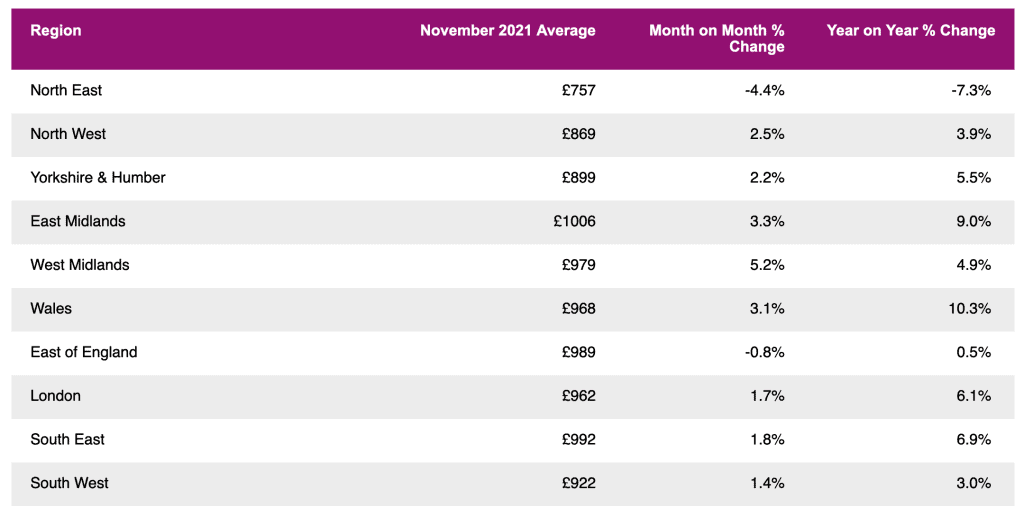 Ian Anfield, managing director of Hudson Contract, said: “Our analysis shows we are back in the normal cycle where people work more hours in the run-up to Christmas. Storms Arwen and Barra may have lost us a few days and contractors are fighting to get the materials they need but we are still within the most productive time of the year. The festive season is coming up and people know January will be slow with bad weather.
“The strong performance in the South West and Wales reflects the increasing investment in housing and infrastructure as part of the government’s ‘levelling up’ agenda. In London and the South East, growing demand for new housing and home improvements is feeding through to labour requirements and rates are catching up.
“Looking ahead, the removal of the red diesel rebate in April will hit groundworks contractors and quarrying companies the hardest and likely drive up material prices across the construction industry. The smaller and more agile firms on short-term contracts are able to react quickly and put their rates up as are the self-employed.”
November was a particularly good month for surfacing contractors, who enjoyed record earnings at £888 per week – the equivalent of £42,600 per annum.
Ian Anfield, managing director of Hudson Contract, said: “Our analysis shows we are back in the normal cycle where people work more hours in the run-up to Christmas. Storms Arwen and Barra may have lost us a few days and contractors are fighting to get the materials they need but we are still within the most productive time of the year. The festive season is coming up and people know January will be slow with bad weather.
“The strong performance in the South West and Wales reflects the increasing investment in housing and infrastructure as part of the government’s ‘levelling up’ agenda. In London and the South East, growing demand for new housing and home improvements is feeding through to labour requirements and rates are catching up.
“Looking ahead, the removal of the red diesel rebate in April will hit groundworks contractors and quarrying companies the hardest and likely drive up material prices across the construction industry. The smaller and more agile firms on short-term contracts are able to react quickly and put their rates up as are the self-employed.”
November was a particularly good month for surfacing contractors, who enjoyed record earnings at £888 per week – the equivalent of £42,600 per annum. 




 Andrew Crispin (founder and Trustee of HQR London) said, “HQR London are delighted to have been awarded the Peter Capel Cup for the second time since the HQR Charitable Trust was conceived six years ago. It was our absolute pleasure to accept the Award on behalf of our members who have collectively been able to provide year on year support and our aim is to continue doing so over the coming years.
The Lighthouse Club provides much needed emotional and financial support to so many workers and their families who are in crisis in our industry. An industry that we all know and love, which makes it an easy choice for me, my fellow HQR’s Trustees; Darren Size and Chris Butler and our members to continue our support”.
Top celebrities from the world of sport were lined up to entertain the guests and rugby legends Mark Regan and Paul Wallace kicked off with amusing tales from their British and Irish Lions tours.
Andrew Crispin (founder and Trustee of HQR London) said, “HQR London are delighted to have been awarded the Peter Capel Cup for the second time since the HQR Charitable Trust was conceived six years ago. It was our absolute pleasure to accept the Award on behalf of our members who have collectively been able to provide year on year support and our aim is to continue doing so over the coming years.
The Lighthouse Club provides much needed emotional and financial support to so many workers and their families who are in crisis in our industry. An industry that we all know and love, which makes it an easy choice for me, my fellow HQR’s Trustees; Darren Size and Chris Butler and our members to continue our support”.
Top celebrities from the world of sport were lined up to entertain the guests and rugby legends Mark Regan and Paul Wallace kicked off with amusing tales from their British and Irish Lions tours.
 Andrew Crispin (founder and Trustee of HQR London) said, “HQR London are delighted to have been awarded the Peter Capel Cup for the second time since the HQR Charitable Trust was conceived six years ago. It was our absolute pleasure to accept the Award on behalf of our members who have collectively been able to provide year on year support and our aim is to continue doing so over the coming years.
The Lighthouse Club provides much needed emotional and financial support to so many workers and their families who are in crisis in our industry. An industry that we all know and love, which makes it an easy choice for me, my fellow HQR’s Trustees; Darren Size and Chris Butler and our members to continue our support”.
Top celebrities from the world of sport were lined up to entertain the guests and rugby legends Mark Regan and Paul Wallace kicked off with amusing tales from their British and Irish Lions tours.
Andrew Crispin (founder and Trustee of HQR London) said, “HQR London are delighted to have been awarded the Peter Capel Cup for the second time since the HQR Charitable Trust was conceived six years ago. It was our absolute pleasure to accept the Award on behalf of our members who have collectively been able to provide year on year support and our aim is to continue doing so over the coming years.
The Lighthouse Club provides much needed emotional and financial support to so many workers and their families who are in crisis in our industry. An industry that we all know and love, which makes it an easy choice for me, my fellow HQR’s Trustees; Darren Size and Chris Butler and our members to continue our support”.
Top celebrities from the world of sport were lined up to entertain the guests and rugby legends Mark Regan and Paul Wallace kicked off with amusing tales from their British and Irish Lions tours.
 TalkSPORT’s presenter Laura Woods then took to the stage with Ally McCoist, Sam Torrance and Darren Gough who followed with equally funny stories of playing with Gazza at Rangers FC from Ally, childhood memories from the golf course from Sam and antics on and off the pitch and ‘strictly’ dance floor from Darren. The crowd demanded more and got more with the VIP guests egging each other on to tell more daring stories!
Tenor Martin Toal rounded off the afternoon with a rousing performance which had people up on their feet cheering for more with enthusiastic napkin waving.
Bill Hill, CEO of the Lighthouse Construction Industry Charity said, “We were so disappointed at having to cancel last year’s event and so the pressure was on this year to make it an afternoon to remember. It certainly lived up to that and I am staggered that even during these difficult times, our event raised over £210,000 to help us support our construction community in need and to make a real difference to people who have nowhere else to turn.
We would also like to take this opportunity to thank all the volunteers that helped on the day and our sponsors who make these events possible.
The money raised will go towards continuing our vital helpline services, supporting our national awareness campaign “Help Inside The Hard Hat” and developing the Building Mental Health programme, so that we can continue to support our construction families in need and make a real difference to people who have nowhere else to turn.”
The festivities continued well into the evening with guests embracing the Christmas spirit and making the most of the networking opportunities.
TalkSPORT’s presenter Laura Woods then took to the stage with Ally McCoist, Sam Torrance and Darren Gough who followed with equally funny stories of playing with Gazza at Rangers FC from Ally, childhood memories from the golf course from Sam and antics on and off the pitch and ‘strictly’ dance floor from Darren. The crowd demanded more and got more with the VIP guests egging each other on to tell more daring stories!
Tenor Martin Toal rounded off the afternoon with a rousing performance which had people up on their feet cheering for more with enthusiastic napkin waving.
Bill Hill, CEO of the Lighthouse Construction Industry Charity said, “We were so disappointed at having to cancel last year’s event and so the pressure was on this year to make it an afternoon to remember. It certainly lived up to that and I am staggered that even during these difficult times, our event raised over £210,000 to help us support our construction community in need and to make a real difference to people who have nowhere else to turn.
We would also like to take this opportunity to thank all the volunteers that helped on the day and our sponsors who make these events possible.
The money raised will go towards continuing our vital helpline services, supporting our national awareness campaign “Help Inside The Hard Hat” and developing the Building Mental Health programme, so that we can continue to support our construction families in need and make a real difference to people who have nowhere else to turn.”
The festivities continued well into the evening with guests embracing the Christmas spirit and making the most of the networking opportunities. 

 Commenting on this year’s competition CITB Chief Executive Tim Balcon said: “SkillBuild brings the best out of the UK’s most promising construction trainees and apprentices. It teaches them to use their skills under pressure, to work to deadlines and to produce high quality work. The talent on display in this year’s competition was a credit to competitors and their trainers. It augurs well for industry, too.
“There are great opportunities for skilled construction workers in the UK. Demand for labour is high as the economy recovers from the pandemic. CITB estimates that over 40,000 new construction jobs will be created between now and 2025. It’s important that we increase the number of people in construction, the example of SkillBuild competitors will help do that. I wish all the competitors the very best in their careers.”
Deputy CEO of WorldSkills UK, Ben Blackledge, says that success in UK-wide finals is a litmus test for the future of the economy. He said: “These young people are a real inspiration. They are an example to us all and are to be congratulated. To have excelled after such a difficult year shows their dedication and drive is second to none. Skills are the lifeblood of every economy, creating high quality jobs, rewarding careers, inward investment and growth.”
SkillBuild Gold medal winners (from England):
Bricklaying: Mitchell Proctor. Preston’s College
Carpentry: Charlie Reeve. E N Suiter
CBM Furniture and Cabinet making: Michael Jack. Talbot Burnley College
Joinery: Sam Abbott. North Warwickshire & South Leicestershire College – Harrowbrook Plastering: Sam Dean. Wigan and Leigh College – Pagefield Centre
Stonemasonry: Lewis Evans. Bath College – Radstock
Gold medal winners (from Wales)
FSW – Foundation Skills: Woodworking: Ben Thewlis. Coleg Gwent – Newport
Gold medal winners (from Scotland)
Painting and Decorating: Nicole Smith. Bell Group UK
Gold medal winners (from Northern Ireland):
Plastering & Drywall systems: Ignas Kurasovas. Errigal Contracts
Wall & Floor tiling: Aaron Gillespie. Southern Regional College – Newry Campus
The full list of Gold, Silver, Bronze & Highly Commended contestants is on the Go Construct site.
Commenting on this year’s competition CITB Chief Executive Tim Balcon said: “SkillBuild brings the best out of the UK’s most promising construction trainees and apprentices. It teaches them to use their skills under pressure, to work to deadlines and to produce high quality work. The talent on display in this year’s competition was a credit to competitors and their trainers. It augurs well for industry, too.
“There are great opportunities for skilled construction workers in the UK. Demand for labour is high as the economy recovers from the pandemic. CITB estimates that over 40,000 new construction jobs will be created between now and 2025. It’s important that we increase the number of people in construction, the example of SkillBuild competitors will help do that. I wish all the competitors the very best in their careers.”
Deputy CEO of WorldSkills UK, Ben Blackledge, says that success in UK-wide finals is a litmus test for the future of the economy. He said: “These young people are a real inspiration. They are an example to us all and are to be congratulated. To have excelled after such a difficult year shows their dedication and drive is second to none. Skills are the lifeblood of every economy, creating high quality jobs, rewarding careers, inward investment and growth.”
SkillBuild Gold medal winners (from England):
Bricklaying: Mitchell Proctor. Preston’s College
Carpentry: Charlie Reeve. E N Suiter
CBM Furniture and Cabinet making: Michael Jack. Talbot Burnley College
Joinery: Sam Abbott. North Warwickshire & South Leicestershire College – Harrowbrook Plastering: Sam Dean. Wigan and Leigh College – Pagefield Centre
Stonemasonry: Lewis Evans. Bath College – Radstock
Gold medal winners (from Wales)
FSW – Foundation Skills: Woodworking: Ben Thewlis. Coleg Gwent – Newport
Gold medal winners (from Scotland)
Painting and Decorating: Nicole Smith. Bell Group UK
Gold medal winners (from Northern Ireland):
Plastering & Drywall systems: Ignas Kurasovas. Errigal Contracts
Wall & Floor tiling: Aaron Gillespie. Southern Regional College – Newry Campus
The full list of Gold, Silver, Bronze & Highly Commended contestants is on the Go Construct site.  Commenting on this year’s competition CITB Chief Executive Tim Balcon said: “SkillBuild brings the best out of the UK’s most promising construction trainees and apprentices. It teaches them to use their skills under pressure, to work to deadlines and to produce high quality work. The talent on display in this year’s competition was a credit to competitors and their trainers. It augurs well for industry, too.
“There are great opportunities for skilled construction workers in the UK. Demand for labour is high as the economy recovers from the pandemic. CITB estimates that over 40,000 new construction jobs will be created between now and 2025. It’s important that we increase the number of people in construction, the example of SkillBuild competitors will help do that. I wish all the competitors the very best in their careers.”
Deputy CEO of WorldSkills UK, Ben Blackledge, says that success in UK-wide finals is a litmus test for the future of the economy. He said: “These young people are a real inspiration. They are an example to us all and are to be congratulated. To have excelled after such a difficult year shows their dedication and drive is second to none. Skills are the lifeblood of every economy, creating high quality jobs, rewarding careers, inward investment and growth.”
SkillBuild Gold medal winners (from England):
Bricklaying: Mitchell Proctor. Preston’s College
Carpentry: Charlie Reeve. E N Suiter
CBM Furniture and Cabinet making: Michael Jack. Talbot Burnley College
Joinery: Sam Abbott. North Warwickshire & South Leicestershire College – Harrowbrook Plastering: Sam Dean. Wigan and Leigh College – Pagefield Centre
Stonemasonry: Lewis Evans. Bath College – Radstock
Gold medal winners (from Wales)
FSW – Foundation Skills: Woodworking: Ben Thewlis. Coleg Gwent – Newport
Gold medal winners (from Scotland)
Painting and Decorating: Nicole Smith. Bell Group UK
Gold medal winners (from Northern Ireland):
Plastering & Drywall systems: Ignas Kurasovas. Errigal Contracts
Wall & Floor tiling: Aaron Gillespie. Southern Regional College – Newry Campus
The full list of Gold, Silver, Bronze & Highly Commended contestants is on the Go Construct site.
Commenting on this year’s competition CITB Chief Executive Tim Balcon said: “SkillBuild brings the best out of the UK’s most promising construction trainees and apprentices. It teaches them to use their skills under pressure, to work to deadlines and to produce high quality work. The talent on display in this year’s competition was a credit to competitors and their trainers. It augurs well for industry, too.
“There are great opportunities for skilled construction workers in the UK. Demand for labour is high as the economy recovers from the pandemic. CITB estimates that over 40,000 new construction jobs will be created between now and 2025. It’s important that we increase the number of people in construction, the example of SkillBuild competitors will help do that. I wish all the competitors the very best in their careers.”
Deputy CEO of WorldSkills UK, Ben Blackledge, says that success in UK-wide finals is a litmus test for the future of the economy. He said: “These young people are a real inspiration. They are an example to us all and are to be congratulated. To have excelled after such a difficult year shows their dedication and drive is second to none. Skills are the lifeblood of every economy, creating high quality jobs, rewarding careers, inward investment and growth.”
SkillBuild Gold medal winners (from England):
Bricklaying: Mitchell Proctor. Preston’s College
Carpentry: Charlie Reeve. E N Suiter
CBM Furniture and Cabinet making: Michael Jack. Talbot Burnley College
Joinery: Sam Abbott. North Warwickshire & South Leicestershire College – Harrowbrook Plastering: Sam Dean. Wigan and Leigh College – Pagefield Centre
Stonemasonry: Lewis Evans. Bath College – Radstock
Gold medal winners (from Wales)
FSW – Foundation Skills: Woodworking: Ben Thewlis. Coleg Gwent – Newport
Gold medal winners (from Scotland)
Painting and Decorating: Nicole Smith. Bell Group UK
Gold medal winners (from Northern Ireland):
Plastering & Drywall systems: Ignas Kurasovas. Errigal Contracts
Wall & Floor tiling: Aaron Gillespie. Southern Regional College – Newry Campus
The full list of Gold, Silver, Bronze & Highly Commended contestants is on the Go Construct site.