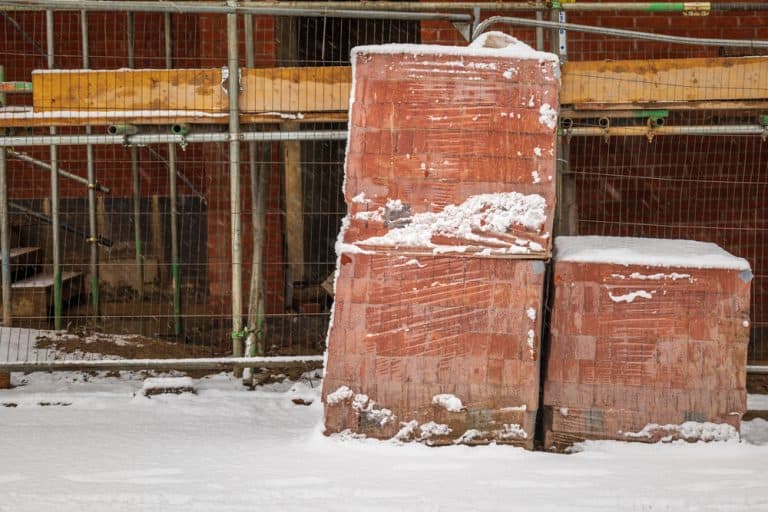
Winter is on the horizon and if recent years have taught us anything, we must prepare for the unexpected in terms of weather.
Undoubtedly, there are more hazards on-site during the winter season. We’re being subjected to more storms and larger quantities of rain, and there is an ever-present risk of freezing temperatures, snow and ice. Taking the right precautions is essential to successfully enable workers to carry out their work safely.
Much progress has been made in our journey towards improved site safety. But it’s also clear that, as an industry, there’s more to be done. According to the Health & Safety Executive, there were 81,000 workers who suffered from work-related injuries in 2020, and sadly, 40 fatal injuries. This represented a slight increase on the yearly average.
Worker safety and comfort has never been more important and every tradesperson needs to get home safely at the end of the working day.
That’s why we’ve put together the following handy suggestions to help prepare you and your worksite for the colder weather.
Wind and rain protection
If you’re working on a scaffold in winter, it’s likely you’ll be exposed to some quite unsavoury conditions from time to time. Heavy-duty scaffold sheeting does a fantastic job of keeping out the wind and rain, helping you focus on the task at hand.
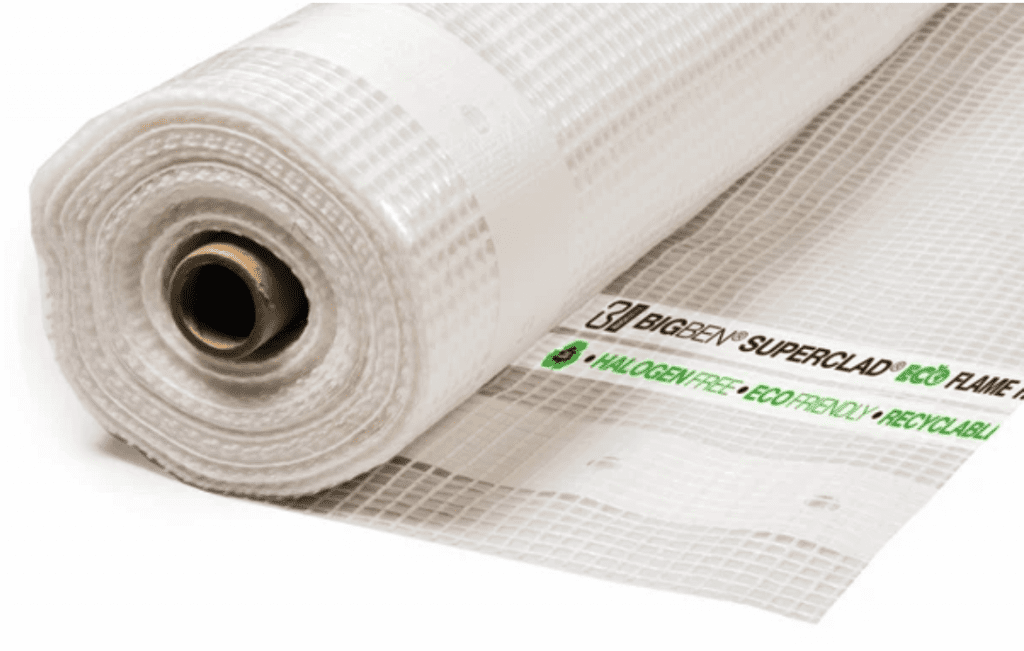
Our recommendation: BIGBEN® Superclad® Eco Flame Retardant Premium Scaffold Sheeting
Premium by name, premium by nature… this is top quality scaffold sheeting. It does a superb job of protecting workers in poor weather. It’s flame retardant too and approved to EN13501-1, meaning you can rest assured this scaffold sheeting will reduce the threat of fires spreading.
Furthermore, it’s recyclable. This is crucial as businesses like yours begin the shift to a more sustainable way of operating. Eco-friendly scaffold sheeting is the perfect way to protect people, projects and planet.
Stop the drop! Tether your tools
Cold, wet, and numb hands could increase the likelihood of dropping your tools, and the results can be catastrophic. Of course, accidents happen, but the right preparation can ensure even if you do drop a tool, no one else will pay the price. Tool tethering ensures you’re attached to the tools you’re using, protecting those around you from that free-falling spanner.
Our recommendation:BIGBEN® Scaffolders Deluxe Tool Safety Belt comes with Tethered Scaffold Tool set
This safety belt is a deluxe piece of kit. Complete with a premium set of tools including the BIGBEN Induction Magnetic Level and IMN Safety Ring Box 7/16” Spanner with Poker Handle, each tool is accompanied with high-quality corresponding frogs and tethers. We call this safer scaffolding.
Ultimate hand safety
Speaking of cold hands… proper hand protection is vital.
We can all relate to the feeling of freezing hands. A good pair of gloves protects them during everyday tasks and keeps them warm. But you need to do be able to do the job well too. You need to keep your hands warm, and have ample dexterity. If you must take off your gloves to carry out the work, then you’ve probably got the wrong pair.
Our recommendation:Koolgrip II Thermal Work Gloves
They are long lasting gloves that ensure warmth, durability and safety all day. They are also EN388:2016 Certified, meaning they are proven to protect against mechanical risks such as abrasions, cuts and impacts. This is a really strong pair of gloves that perform superbly in both wet and dry conditions, with excellent insulating capacities to keep hands warm in cold environments.
Keep your scaffold boards in place
When stormy weather blows in, the last thing you need is unsecured scaffold boards that become displaced. This is extremely hazardous and could result in a board dislodging and striking fellow workers, or misplaced footing causing falls and trips. A good set of board clamps will ensure your scaffold boards remain in place during the bad weather.
Our recommendation: Board Retaining Clamps
Scaffold boards can be quickly and securely locked in the correct position with these Board Retaining Clamps. With considerable resistance to both lateral and upward movement, we highly recommended their use in wintery conditions.
Be seen, keep warm, stay dry
The wrong attire can result in productivity plummeting. When visibility is low and the cold sweeps in, not only is it important you’re highly visible to reduce the risk of being struck by moving vehicles, but you need to stay warm and dry too.
A good hi-vis jacket is perfect to help you achieve this. The more comfortable the worker, the easier it is to do the job.
Our recommendation:BIGBEN® Hi-Vis Waterproof Winter Jacket
The BIGBEN Hi-Vis Waterproof Jacket is stylish, functional and ensures you’ll stand out from the crowd. This jacket is of premium quality and includes many outstanding features, such as the new Insulatex heat reflective lining panel which reflects heat back into the body ensuring maximum warmth and comfort. It’s a must have for your winter workwear wardrobe.
Don’t forget your feet!
Winter footwear must offer great protection, but also be durable and comfortable. A decent pair of safety boots will improve productivity as you’ll feel better on your feet for longer. During the winter, you’ll want to stop the cold setting in too so you’ll need something fully waterproof and insulated.
Our recommendation: Caiman Waterproof Safety Boots
The Caiman is a stand-out choice here. This boot is waterproof and breathable. Its lightweight composite midsole and toecap make the Caiman incredibly light and comfortable, helping reduce wearer fatigue. It’s also fully waterproof with a bellows tongue and waterproof lining to ensure breathability.
Let’s make scaffolding safer this winter
Working on scaffold sites is incredibly dangerous in the winter months. It’s important workers are prepared for the weather, and that businesses put safety at the core of their operations by implementing strict safety precautions.
Our aim is to keep you safe and help reduce the number of injuries on site this winter.
So, stay safe out there, and if you need support to prepare for winter, visit www.leachs.com or give our friendly team a call and we’ll be happy to advise on a bespoke range for your needs. Call +44 (0)1432 346 890 today.
First of its kind to come to market, the fully-integrated steel and plastic system offers comprehensive protection for fall prevention.
The TRAD Group (TRAD), which is one of the UK’s leading scaffolding and access companies, has launched its latest addition to its TradDeck system.
The hybrid scaffolding connector is designed to allow the system to adapt to using a 48.3mm (OD) steel scaffold tube as a leg.
TRAD has a long history of innovation. It was the first company to offer an adjustable decking solution to the market, and has continued to develop the product to maintain its position as a market-leading system.
The company says that this latest development further extends the flexibility of the system, whilst maintaining site safety and cost-effective equipment.
“This new addition to our TradDeck offering gives our customers a greater flexibility to adapt the TRAD safety deck to suit their site requirements,” says Alex Ackers, Regional Manager at TRAD UK.
“I’m pleased have been working with the development team over the last few months to bring to market a product that can really change the way sites and scaffolders use our system. Always at the forefront of design and innovation, this development really sets our product apart from the competition while maintaining the TRAD brand as the go-to name for quality.”
The new hybrid system has been designed for use with standard scaffold or key clamp fittings and is fully compatible with scaffold jacks or base plates. It allows for the option to mix steel and plastic legs, offering complete flexibility to decking design and erection, and is a free-standing system solution using corner bays, with a range of bay configurations to suit varying room sizes.
The hybrid system is also fully compatible with existing base and head units and conforms to load class 3 of BS EN12811-1
“In our 50th year of trading, we are as committed as ever to design and innovation at TRAD,” comments Des Moore, CEO at TRAD Group.
“We have more exciting new products to launch during the coming months and have every intention of living up to our long-standing reputation for bringing modern, improved products to the scaffolding market.”
You can buy or hire the new hybrid system from any of TRAD UK’s six depots around the UK – Glasgow, Leeds, Stockport, Birmingham, Andover and London.
Click to find out more about the new hybrid system.
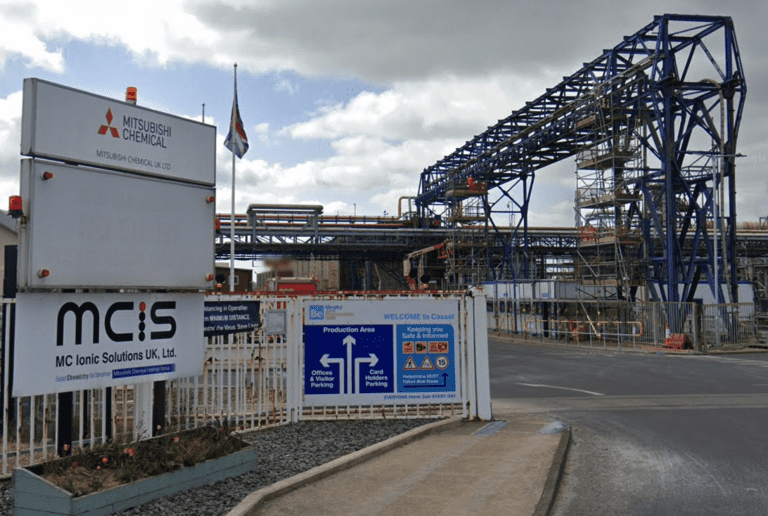
Scaffolders working on a chemical plant have postponed their strike action after talks with bosses lead to a new improved pay offer.
Around 25 Altrad scaffolders based at Mitsubishi Chemicals in Billingham, Stockton-on-Tees are back on the tools today after earlier strike action lead to a new “improved pay offer” for the workers.
The scaffolders who were working for less than £12.50 an hour walked out on mass on 4 November. The official strike was planned to run until 4 December and involved scaffolders, insulators and painters who voted unanimously for strike action.
As previously reported Unite the union said the basic pay for a scaffolder at the chemical plant is £12.06 an hour, when the rate for their job under the National Agreement for the Engineering Construction Industry (NAECI) is £17.45 an hour.
A spokesperson for Unite the union told Scaffmag this morning: “The improved pay offer is now being balloted on by members. The strikes have been postponed and the ballot result will be known on 19 Nov.”
The Mitsubishi Chemicals plant produces battery electrolytes and methacrylates, which are base chemicals for the manufacture of acrylic plastics. The strike caused major disruption at the plant, the scaffolders, insulators and painters are involved with the sites maintenance and repair schedule.
In an earlier statement Unite regional officer Neil Howells said: “In a sign of good faith, our members have agreed to suspend strike action at the Billingham plant to allow last-minute negotiations to be held. “If an agreement that meets our members expectations is not reached, however, the rest of the scheduled action will continue.”
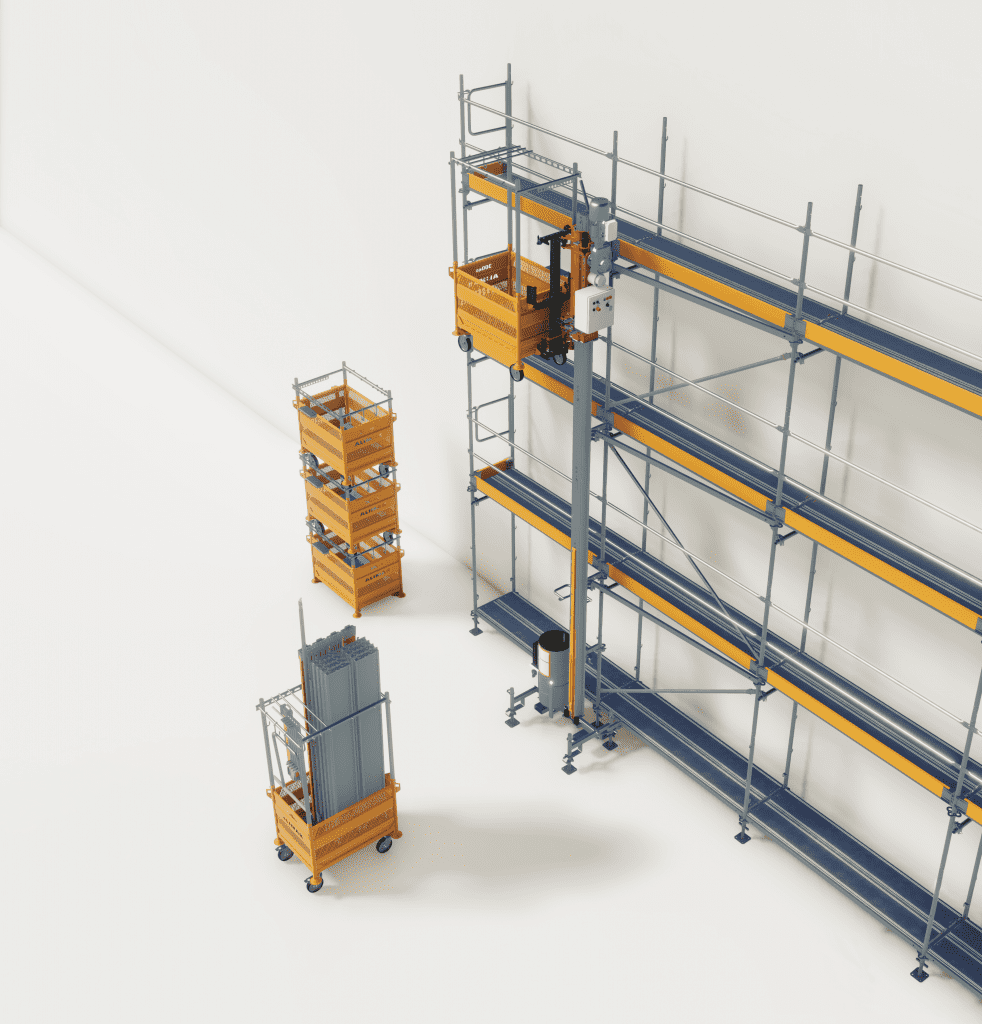
The Alimak Group has launched a new scaffolding product for the construction industry, making the scaffolding process as efficient and safe as possible.
The new product is called the Alimak STS 300 and has been designed in conjunction with PERI in Germany.
The new Scaffold Transportation System is an innovative scaffolding transportation system that offers a range of features that enhances safety in combination with efficiency.
It provides scaffolders more productive erection and dismantling time, as well as better ergonomics, and it also supports horizontal movement on the ground level which makes it more user friendly and efficient.
The Alimak STS 300 is designed to fit the PERI UP scaffold perfectly. PERI UP scaffold secures scaffolders are always in a guarded position when installing or dismantling scaffold.
Some Lifting tools currently on the market do negatively impact this safe position of scaffolders, except when using the Alimak STS 300, Alimak said in a statement.
“We are continuously focusing on adding customer value and are very pleased to be able to launch this new scaffolding product, which will not only improve productivity and efficiency for our customers but also provide a safer, smoother and overall better scaffolding working environment for scaffolders,” says David Batson, Executive Vice President for the Construction division at Alimak Group.
The Alimak STS 300 is designed to fit the PERI UP scaffold perfectly. Credit: Alimak Group.
Thomas Imbacher, responsible Board Member for Innovation & Marketing of PERI AG said “We are very pleased to have this partnership with Alimak Group. The Alimak STS 300 will enable scaffolders to improve their entire logistic process, starting from the warehouse towards the jobsite and backwards. Due to the innovative approach, waiting times decrease and it is easy to assemble and dismantle scaffolding with a team of two scaffolders.”
According to a statement, initially, the Alimak STS 300 will only be available in Germany but will be gradually rolled out to more markets, globally.
The UK’s biggest supplier of fuel cards is launching a new service that can offset 100% of the carbon its customers currently release from the 1 billion litres of fuel they use each year.
UK Fuels, owned by Radius Payment Solutions, has partnered with UK-government endorsed carbon offsetting company Forest Carbon to invest in renewable energy projects.
The new carbon offsetting service will benefit the 76,000 British businesses of all kinds that use fuel cards from UK Fuels, the 500,000 drivers who work for them and of their customers.
Businesses that take up the new service can reduce their carbon footprint and support their social and environmental responsibilities while avoiding the risk of wasted investment in ineffective offsetting schemes.
UK Fuels has pledged not to take any profits from the new biodegradable ‘Radius Future’ fuel card. Companies will pay 1 penny on each litre of standard fuel, which will be invested by both Forest Carbon and UK Fuels.
Renewable energy projects will include wind, hydro, waste-to-energy and solar power in countries including India, China, Turkey and Guatemala, says UK Fuels. And the projects have been chosen for their ability to achieve immediate carbon neutrality.
Its customers footprints will be calculated using UK government conversion factors that correlate litres of diesel and petrol to the equivalent emissions in tonnes of CO2, and businesses that participate can request a certificate showing their carbon offsetting record.
Forest Carbon
Forest Carbon, whose other partners include Microsoft, Siemens, Stagecoach and Ofcom, played a pivotal role in establishing national quality assurance standards that guarantee the ecological impact and carbon sequestration rates of any project.
Their new woodland schemes are certified by the Woodland Carbon Code, which is supported by the UK government and internationally recognised by ICROA whilst their peatland programmes are certified by the Peatland Code which is supported by the IUCN. These certification codes guarantee that each tonne of carbon stored is permanent and incremental.
Through planting over 13 million trees since 2006, Forest Carbon is already removing nearly 3 million tonnes of CO2 from the atmosphere, as well as providing other benefits to society including flood mitigation and enhanced biodiversity.
A previous project by Forest Carbon in Baspa, India generates hydro-electric. Credit: UK Fuels
UK Fuels Managing Director Jonathan Haseler commented: “As a company, our whole strategy is now focused on planning for sustainable travel in the future. This includes investing in electric vehicle charging solutions and green energy. If every customer takes up Radius Future, together they could accelerate Britain towards the goal of net zero emissions by 2050.”
To make the service as inclusive as possible, UK Fuels will offer the same carbon offsetting service with any of the other branded fuel cards it provides, which include all the big energy companies plus smaller chains and supermarkets. Businesses that choose this alternative approach will still see their offset carbon itemised on each invoice.
Companies interested in carbon offsetting the diesel or petrol they use can find out more by visiting ukfuels.co.uk/radius-future
A sunken protest pontoon has been installed today at COP26 for the Climate Coalition thanks to a partnership between ScaffFloat and scaffolding specialists i-Scaff.
The protest pontoon was erected for press photos this morning (9 November) at the ongoing United Nations Climate Change Conference (COP26) in Glasgow. Leaders and negotiators from around the world are meeting to discuss making fundamental changes to try to avoid global warming.
Toby Budd, Managing Director at ScaffFloat said: “The pontoon was mobbed at short notice and installed with the help of our local Approved Installer, i-Scaff, who are one of Scotland’s largest independent specialist scaffold contractors.The duo installed an 8m x 4m scaffold platform that was sunk just below the waters surface, and supported by a set of plastic ScaffFloats on deck. “This gave the impression of a ‘flooded’ floor which the charity utilised for a creative photo showing world leaders meeting on a flooded stage,” Tony said.
Ross Brown, MD at i-Scaff said ”We love helping our customers find innovative solutions to their problems, and this has been a great example of the sort of work we can do. We worked in partnership with the ScaffFloat team who did all the design, project management, RAMS and on water safety, whilst we supplied the scaffold and an experienced scaffolder to help with the build.”Image credit: ScaffFloatToby added, ”This is such a great example of how we add value. Initially, the client only wanted a floating pontoon with a banner, then we suggested we sink the pontoon to create this great photo opportunity. We knew the objective was press coverage so worked hard to give them a photo that would get traction in the worlds media – and within an hour it was on BBC News Glasgow Daily Times Sky News to name but a few.”
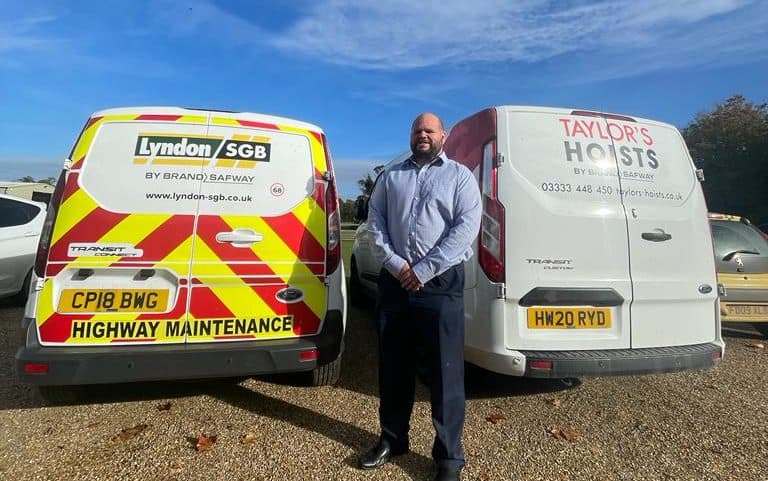
Taylor’s Hoists boss Paul Price has taken on an extra role as Lyndon SGB’s Mechanical Access Director.
Lyndon SGB has today announced that Paul Price, Taylor’s Hoists Managing Director is now the all-new Mechanical Access Director at Lyndon SGB. He is taking control of the nationwide MASTCLIMBERS™ operations, alongside his on-going leading role at Taylor’s Hoists.
Paul has been with Taylor’s Hoists for almost its entire 15-year history and has been MD there since before the BrandSafway takeover of Lyndon SGB in early 2019.
He is now heading up the Lyndon SGB Mechanical Access Division – which brings a new focus to the nationwide provision of both the hoist and MASTCLIMBERS™ divisions, under one roof, with various regional bases serving UK-wide construction client needs.
Lyndon SGB says the mechanical access division of the business will integrate with the core scaffolding, QuikDeck® suspended access and safety services available including its new Rapid EPS edge protection system that offers its clients nationwide ‘hybrid access’ solutions.
Speaking about the new role, Paul said: “It was a pleasure to accept the role as Mechanical Access Director leading Lyndon SGB MASTCLIMBERS™ as well as Taylor’s Hoists, as one. After taking on the job, I met with the mechanical access teams in Glasgow and Manchester and witnessed first-hand the skill, dedication and effort each branch can offer their customers. We have decades of experience in both hoist and MASTCLIMBERS™, superb customer service and the very best machines – giving our clients the best possible mechanical access solutions nationally. “Our mechanical access teams always strive to treat each customer like they are number one – no matter if they only have small single MASTCLIMBERS™ or 10 large twin MASTCLIMBERS™ and multiple hoists on their project. And this level of service quality goes back to the drawing board and in-house design teams, not just the on-site delivery and completion from our many skilled operatives.“Having been part of Taylor’s Hoists growth in UK construction for 15+ years and the BrandSafway era, my expectations are very high, but I already know that the Lyndon SGB MASTCLIMBERS™ team is able to meet and deliver these high standards from what I have witnessed over the last month. We are all very excited about the future and the exciting projects we are currently and will be working on, in the whole of the UK. “My vision is that we continue to perfect the great service we already offer, continue to invest in the newest, greenest fleets and ancillaries – assisting our clients with their mechanical access needs, however complex. I look forward to growing and aligning the mechanical access business with the great, large-scale team we already have to support our goal – to be the best access provider in the country.”
Lyndon SGB says, In the first month since Paul took on the new role, there have already been some significant changes – netting great rewards for Lyndon SGB, MASTCLIMBERS™ and Taylor’s Hoists customers countrywide.
The NASC, Q.F.S Scaffolding and system scaffolding giants HAKI will represent the scaffolding industry at the UK’s leading construction show.
With a super-sized shared stand, the trio aims to showcase the scaffolding and access industry at the award-winning show that is widely viewed as one of the best festivals of construction.
London Build features 500+ speakers across 6 conference theatres, hundreds of exhibitors and free to attend networking events.
The two-day show takes place from Wednesday 17 November at Olympia in London. Q.F.S Scaffolding, HAKI and the NASC will be found on Stand E14.
NASC’s Health & Safety Advisor, Stephen Allen-Tidy said: “We’re delighted to partner with Q.F.S and HAKI, long-standing NASC Contractor and Supplier members, respectively. Between us, we’ll be able to answer any scaffolding questions London Build visitors may have – from equipment and erection through to compliance and industry guidance.”
David Probert, Sales Director at HAKI UK, added: “HAKI are thrilled to be exhibiting at London Build 2021 in conjunction with the NASC and QFS. This is a great opportunity to showcase the scaffolding and access industry and to demonstrate its collaborative approach.“By having the UK industry trade body, a leading contractor and a global supplier of system scaffold all on one stand, visitors to London Build will be able to see how the scaffolding industry works together.”
More on London Build 2021 here.
Slow paying customers could stop SME’s reaching a greener future says the Small Business Commissioner.
The Small Business Commissioner Liz Barclay has called for big businesses to help their smaller suppliers with the transition to net-zero and suggested that they should share the benefits.
As the COP26 Summit in Glasgow enters its second week, the commissioner who took over in July appeared to criticise big firms, in a statement released by her office.
“My team and I focus on helping small businesses struggling to deal with the poor payment practices of larger firms. These often include late payments, short-notice contract variations or, even non-payment for work.These have a negative impact on the cash flow of a small business and aren’t acceptable. Given some of the wider challenges small businesses face post-Covid around debts, loan repayments and rising costs, waiting to get paid could stop them taking steps towards carbon reduction.”
The statement continued, calling on bigger customers to commit to simple and quick payment processes, giving priority to paying small business invoices, and giving practical help to their small suppliers.
Robert Candy, Chief Executive of the Scaffolding Association – the UK’s largest scaffolding trade association welcomed the message commenting: “The Scaffolding Association advocates moving towards a sustainable future, but businesses, particularly SME’s, cannot do this without help and support. Some of this needs to come from the government but industry must also do its bit and changing the behaviour of big businesses has a vital part to play in this.
He added, “Given that the construction sector accounts for 20% of the UK’s SME’s and has more than any other industry sector, this approach for us, is even more critical.”
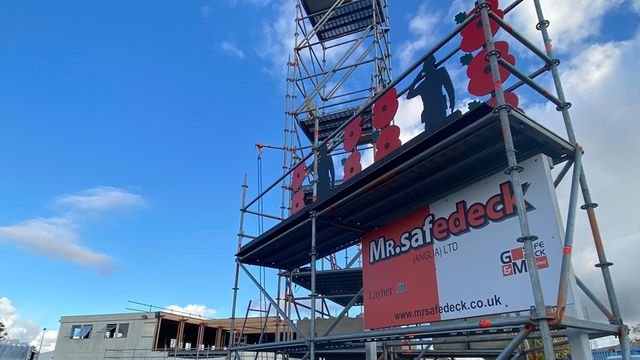
A yard worker at a scaffolding company in Norfolk has made an eye-catching memorial for Remembrance Day.
Yardman Michael Barnard, 68, better known as Barney, who works for Mr Safedeck based in Gorleston, Norfolk has created an impressive scaffolding display for Remembrance Day.
He and he and his colleagues regularly create special displays for passersby to enjoy, reports Eastern Daily Press.
Inspired by his grandfather who served in the First World War and his father who served in the Second World War, Mr Barnard erected a Remembrance Day display on Monday with poppies and saluting soldiers.
Credit: James Weeds – Eastern Daily PressCredit: James Weeds – Eastern Daily Press
He made the display in his spare time using recycled materials after his Halloween display received local praise.
Mr Barnard said: “We got a few good responses for the Halloween one and people asked us to keep going.”“I thought it would be nice to show veterans they have our support.”
We use cookies on our website to give you the most relevant experience by remembering your preferences and repeat visits. By clicking “Accept”, you consent to the use of ALL the cookies.
This website uses cookies to improve your experience while you navigate through the website. Out of these, the cookies that are categorized as necessary are stored on your browser as they are essential for the working of basic functionalities of the website. We also use third-party cookies that help us analyze and understand how you use this website. These cookies will be stored in your browser only with your consent. You also have the option to opt-out of these cookies. But opting out of some of these cookies may affect your browsing experience.
Necessary cookies are absolutely essential for the website to function properly. These cookies ensure basic functionalities and security features of the website, anonymously.
Cookie
Duration
Description
cookielawinfo-checbox-analytics
11 months
This cookie is set by GDPR Cookie Consent plugin. The cookie is used to store the user consent for the cookies in the category "Analytics".
cookielawinfo-checbox-functional
11 months
The cookie is set by GDPR cookie consent to record the user consent for the cookies in the category "Functional".
cookielawinfo-checbox-others
11 months
This cookie is set by GDPR Cookie Consent plugin. The cookie is used to store the user consent for the cookies in the category "Other.
cookielawinfo-checkbox-necessary
11 months
This cookie is set by GDPR Cookie Consent plugin. The cookies is used to store the user consent for the cookies in the category "Necessary".
cookielawinfo-checkbox-performance
11 months
This cookie is set by GDPR Cookie Consent plugin. The cookie is used to store the user consent for the cookies in the category "Performance".
viewed_cookie_policy
11 months
The cookie is set by the GDPR Cookie Consent plugin and is used to store whether or not user has consented to the use of cookies. It does not store any personal data.
Functional cookies help to perform certain functionalities like sharing the content of the website on social media platforms, collect feedbacks, and other third-party features.
Performance cookies are used to understand and analyze the key performance indexes of the website which helps in delivering a better user experience for the visitors.
Analytical cookies are used to understand how visitors interact with the website. These cookies help provide information on metrics the number of visitors, bounce rate, traffic source, etc.
Advertisement cookies are used to provide visitors with relevant ads and marketing campaigns. These cookies track visitors across websites and collect information to provide customized ads.
 Premium by name, premium by nature… this is top quality scaffold sheeting. It does a superb job of protecting workers in poor weather. It’s flame retardant too and approved to EN13501-1, meaning you can rest assured this scaffold sheeting will reduce the threat of fires spreading.
Furthermore, it’s recyclable. This is crucial as businesses like yours begin the shift to a more sustainable way of operating. Eco-friendly scaffold sheeting is the perfect way to protect people, projects and planet.
Stop the drop! Tether your tools
Cold, wet, and numb hands could increase the likelihood of dropping your tools, and the results can be catastrophic. Of course, accidents happen, but the right preparation can ensure even if you do drop a tool, no one else will pay the price. Tool tethering ensures you’re attached to the tools you’re using, protecting those around you from that free-falling spanner.
Our recommendation: BIGBEN® Scaffolders Deluxe Tool Safety Belt comes with Tethered Scaffold Tool set
Premium by name, premium by nature… this is top quality scaffold sheeting. It does a superb job of protecting workers in poor weather. It’s flame retardant too and approved to EN13501-1, meaning you can rest assured this scaffold sheeting will reduce the threat of fires spreading.
Furthermore, it’s recyclable. This is crucial as businesses like yours begin the shift to a more sustainable way of operating. Eco-friendly scaffold sheeting is the perfect way to protect people, projects and planet.
Stop the drop! Tether your tools
Cold, wet, and numb hands could increase the likelihood of dropping your tools, and the results can be catastrophic. Of course, accidents happen, but the right preparation can ensure even if you do drop a tool, no one else will pay the price. Tool tethering ensures you’re attached to the tools you’re using, protecting those around you from that free-falling spanner.
Our recommendation: BIGBEN® Scaffolders Deluxe Tool Safety Belt comes with Tethered Scaffold Tool set
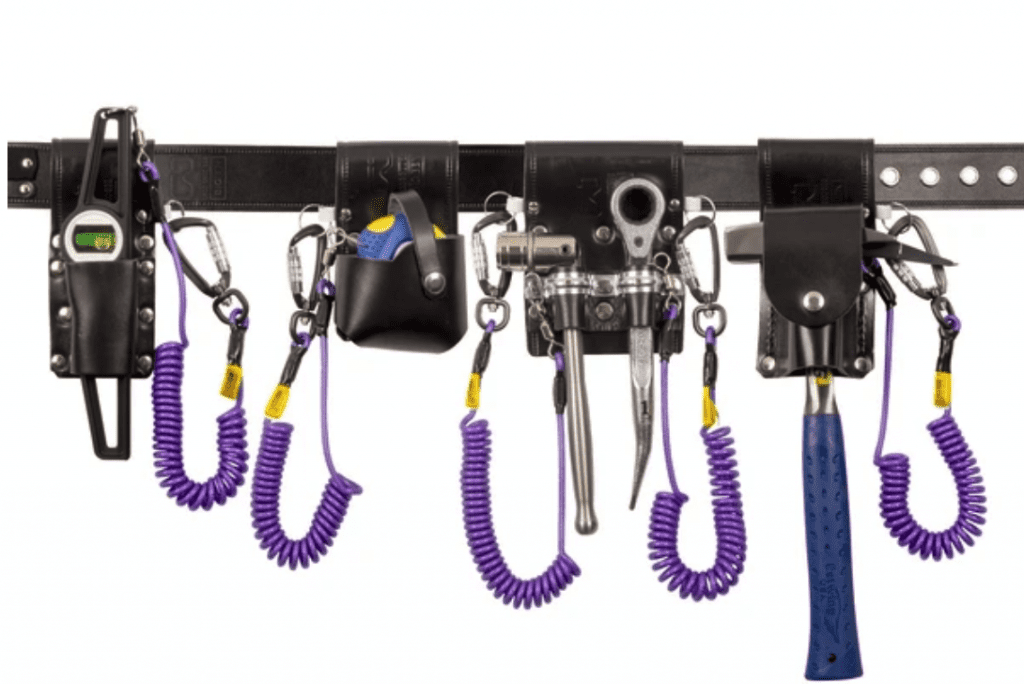 This safety belt is a deluxe piece of kit. Complete with a premium set of tools including the BIGBEN Induction Magnetic Level and IMN Safety Ring Box 7/16” Spanner with Poker Handle, each tool is accompanied with high-quality corresponding frogs and tethers. We call this safer scaffolding.
Ultimate hand safety
Speaking of cold hands… proper hand protection is vital.
We can all relate to the feeling of freezing hands. A good pair of gloves protects them during everyday tasks and keeps them warm. But you need to do be able to do the job well too. You need to keep your hands warm, and have ample dexterity. If you must take off your gloves to carry out the work, then you’ve probably got the wrong pair.
Our recommendation: Koolgrip II Thermal Work Gloves
This safety belt is a deluxe piece of kit. Complete with a premium set of tools including the BIGBEN Induction Magnetic Level and IMN Safety Ring Box 7/16” Spanner with Poker Handle, each tool is accompanied with high-quality corresponding frogs and tethers. We call this safer scaffolding.
Ultimate hand safety
Speaking of cold hands… proper hand protection is vital.
We can all relate to the feeling of freezing hands. A good pair of gloves protects them during everyday tasks and keeps them warm. But you need to do be able to do the job well too. You need to keep your hands warm, and have ample dexterity. If you must take off your gloves to carry out the work, then you’ve probably got the wrong pair.
Our recommendation: Koolgrip II Thermal Work Gloves
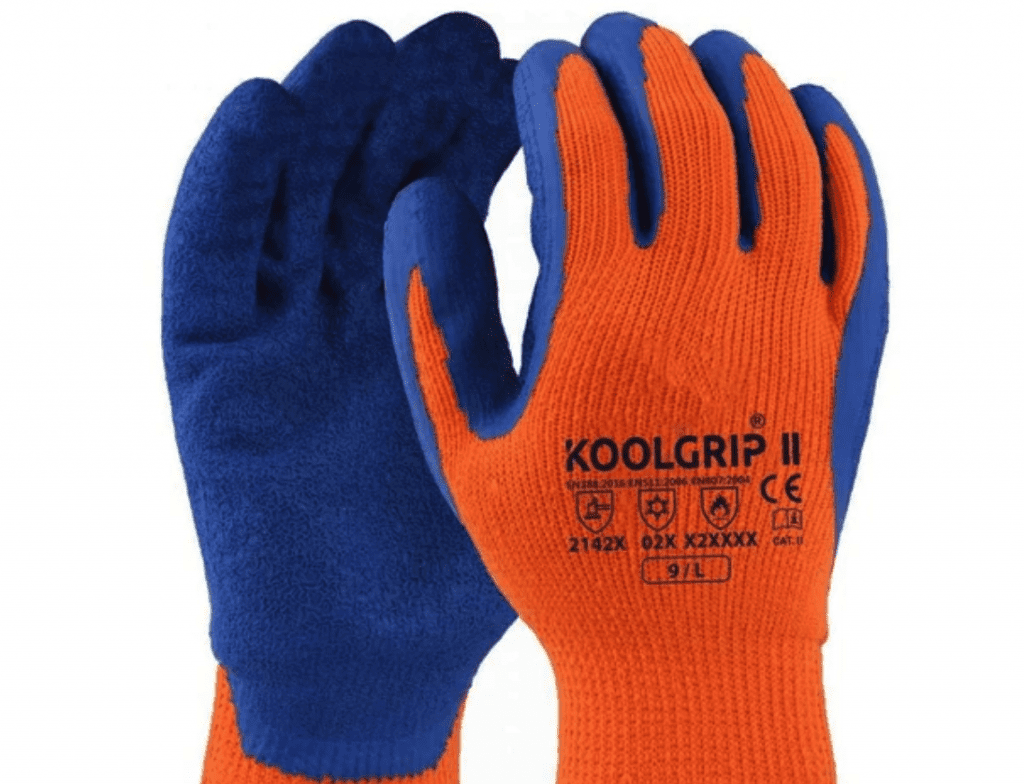 They are long lasting gloves that ensure warmth, durability and safety all day. They are also EN388:2016 Certified, meaning they are proven to protect against mechanical risks such as abrasions, cuts and impacts. This is a really strong pair of gloves that perform superbly in both wet and dry conditions, with excellent insulating capacities to keep hands warm in cold environments.
Keep your scaffold boards in place
When stormy weather blows in, the last thing you need is unsecured scaffold boards that become displaced. This is extremely hazardous and could result in a board dislodging and striking fellow workers, or misplaced footing causing falls and trips. A good set of board clamps will ensure your scaffold boards remain in place during the bad weather.
Our recommendation: Board Retaining Clamps
They are long lasting gloves that ensure warmth, durability and safety all day. They are also EN388:2016 Certified, meaning they are proven to protect against mechanical risks such as abrasions, cuts and impacts. This is a really strong pair of gloves that perform superbly in both wet and dry conditions, with excellent insulating capacities to keep hands warm in cold environments.
Keep your scaffold boards in place
When stormy weather blows in, the last thing you need is unsecured scaffold boards that become displaced. This is extremely hazardous and could result in a board dislodging and striking fellow workers, or misplaced footing causing falls and trips. A good set of board clamps will ensure your scaffold boards remain in place during the bad weather.
Our recommendation: Board Retaining Clamps
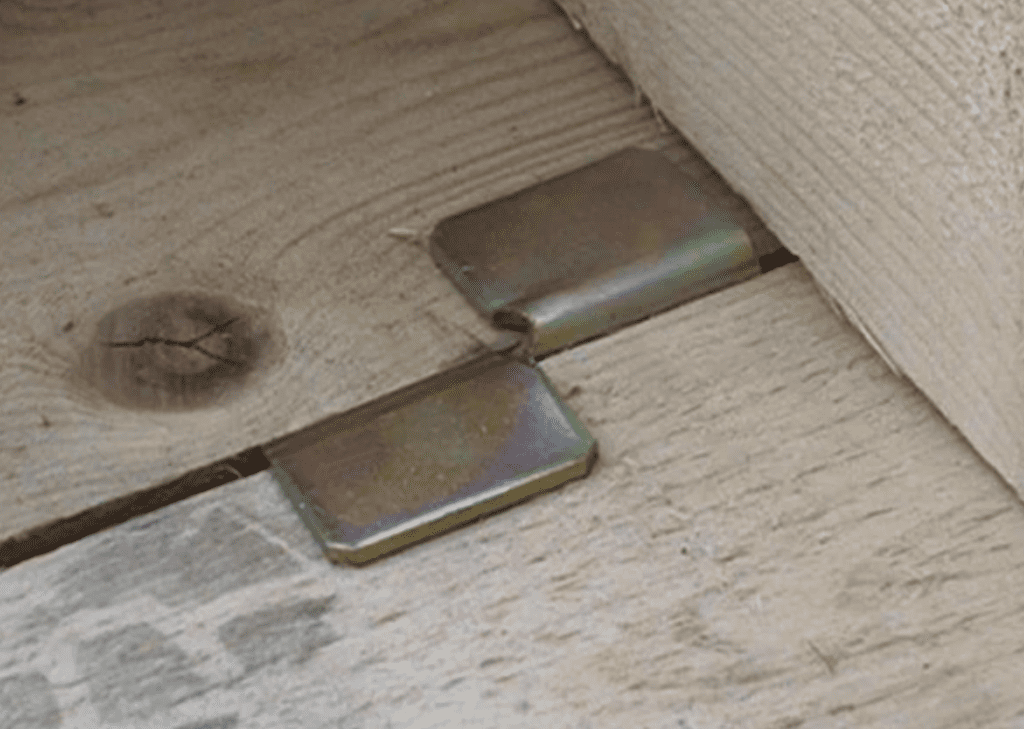 Scaffold boards can be quickly and securely locked in the correct position with these Board Retaining Clamps. With considerable resistance to both lateral and upward movement, we highly recommended their use in wintery conditions.
Be seen, keep warm, stay dry
The wrong attire can result in productivity plummeting. When visibility is low and the cold sweeps in, not only is it important you’re highly visible to reduce the risk of being struck by moving vehicles, but you need to stay warm and dry too.
A good hi-vis jacket is perfect to help you achieve this. The more comfortable the worker, the easier it is to do the job.
Our recommendation: BIGBEN® Hi-Vis Waterproof Winter Jacket
Scaffold boards can be quickly and securely locked in the correct position with these Board Retaining Clamps. With considerable resistance to both lateral and upward movement, we highly recommended their use in wintery conditions.
Be seen, keep warm, stay dry
The wrong attire can result in productivity plummeting. When visibility is low and the cold sweeps in, not only is it important you’re highly visible to reduce the risk of being struck by moving vehicles, but you need to stay warm and dry too.
A good hi-vis jacket is perfect to help you achieve this. The more comfortable the worker, the easier it is to do the job.
Our recommendation: BIGBEN® Hi-Vis Waterproof Winter Jacket
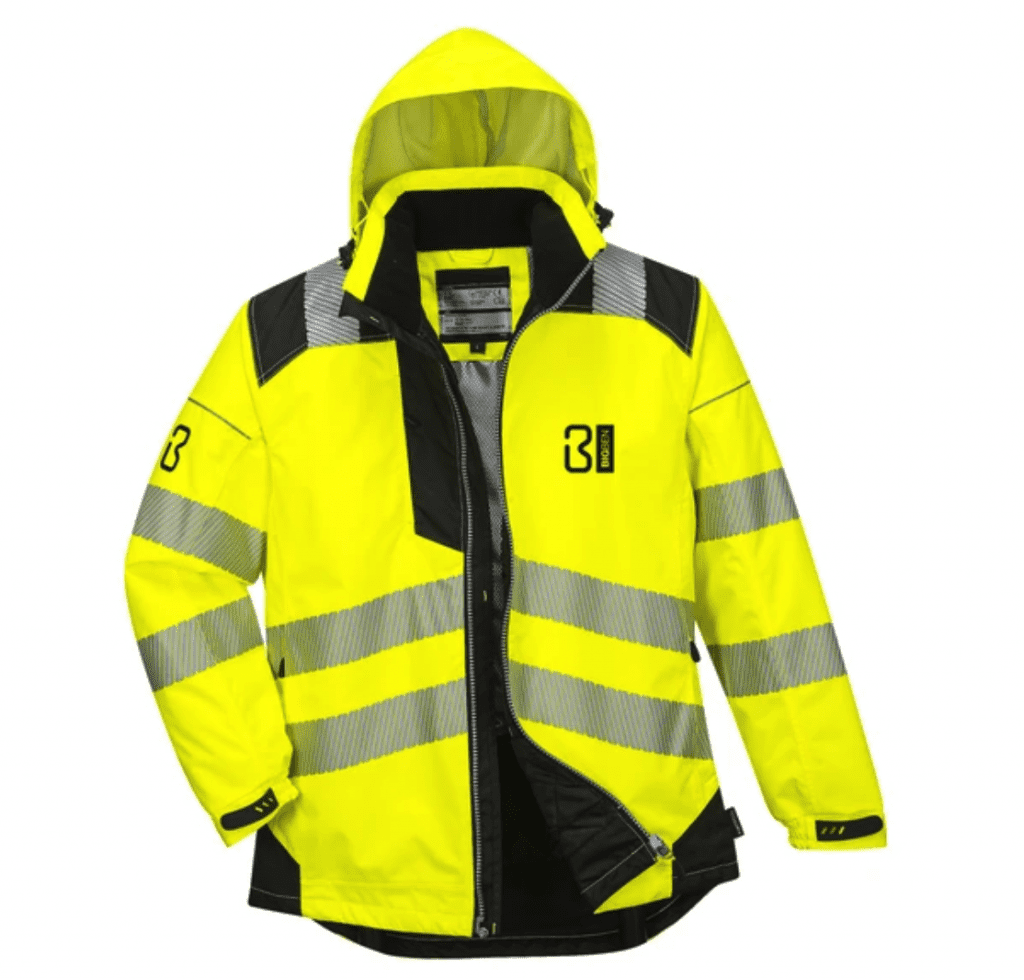 The BIGBEN Hi-Vis Waterproof Jacket is stylish, functional and ensures you’ll stand out from the crowd. This jacket is of premium quality and includes many outstanding features, such as the new Insulatex heat reflective lining panel which reflects heat back into the body ensuring maximum warmth and comfort. It’s a must have for your winter workwear wardrobe.
Don’t forget your feet!
Winter footwear must offer great protection, but also be durable and comfortable. A decent pair of safety boots will improve productivity as you’ll feel better on your feet for longer. During the winter, you’ll want to stop the cold setting in too so you’ll need something fully waterproof and insulated.
Our recommendation: Caiman Waterproof Safety Boots
The BIGBEN Hi-Vis Waterproof Jacket is stylish, functional and ensures you’ll stand out from the crowd. This jacket is of premium quality and includes many outstanding features, such as the new Insulatex heat reflective lining panel which reflects heat back into the body ensuring maximum warmth and comfort. It’s a must have for your winter workwear wardrobe.
Don’t forget your feet!
Winter footwear must offer great protection, but also be durable and comfortable. A decent pair of safety boots will improve productivity as you’ll feel better on your feet for longer. During the winter, you’ll want to stop the cold setting in too so you’ll need something fully waterproof and insulated.
Our recommendation: Caiman Waterproof Safety Boots
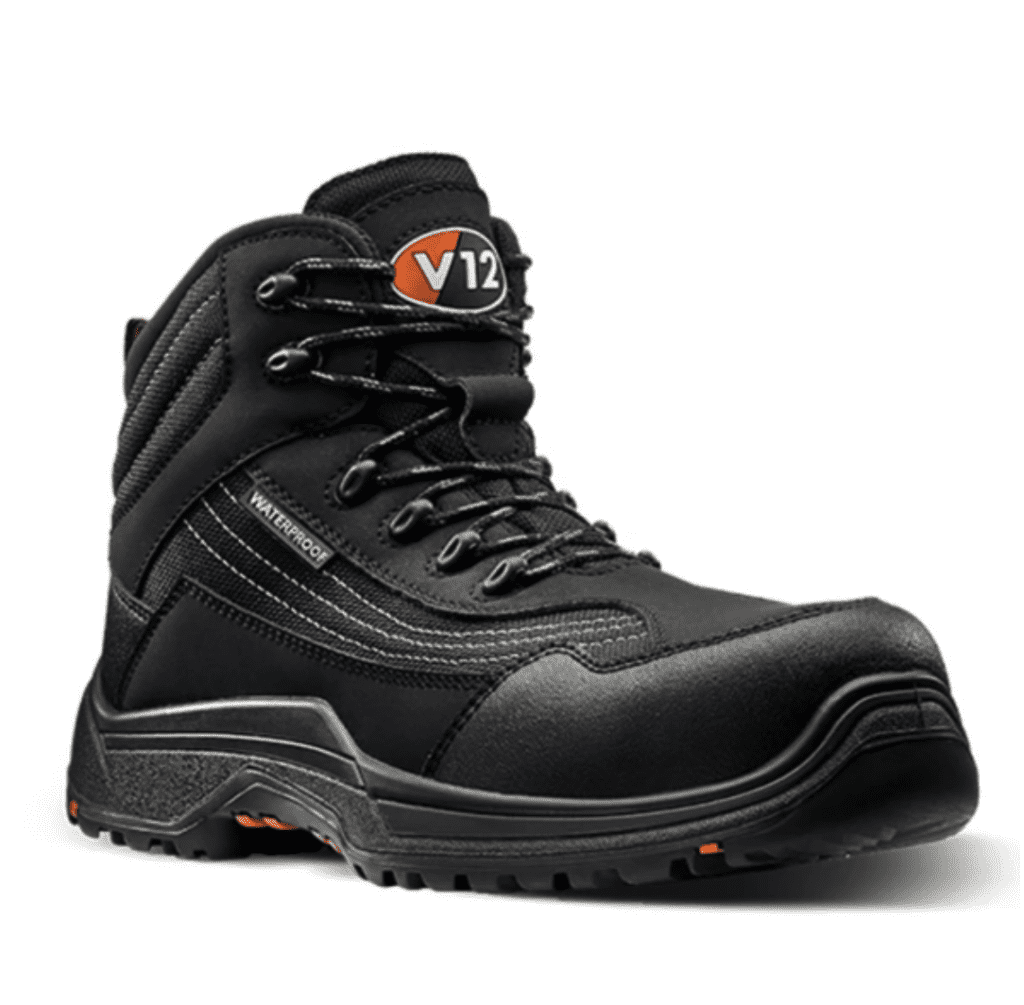 The Caiman is a stand-out choice here. This boot is waterproof and breathable. Its lightweight composite midsole and toecap make the Caiman incredibly light and comfortable, helping reduce wearer fatigue. It’s also fully waterproof with a bellows tongue and waterproof lining to ensure breathability.
Let’s make scaffolding safer this winter
Working on scaffold sites is incredibly dangerous in the winter months. It’s important workers are prepared for the weather, and that businesses put safety at the core of their operations by implementing strict safety precautions.
Our aim is to keep you safe and help reduce the number of injuries on site this winter.
So, stay safe out there, and if you need support to prepare for winter, visit www.leachs.com or give our friendly team a call and we’ll be happy to advise on a bespoke range for your needs. Call +44 (0)1432 346 890 today.
The Caiman is a stand-out choice here. This boot is waterproof and breathable. Its lightweight composite midsole and toecap make the Caiman incredibly light and comfortable, helping reduce wearer fatigue. It’s also fully waterproof with a bellows tongue and waterproof lining to ensure breathability.
Let’s make scaffolding safer this winter
Working on scaffold sites is incredibly dangerous in the winter months. It’s important workers are prepared for the weather, and that businesses put safety at the core of their operations by implementing strict safety precautions.
Our aim is to keep you safe and help reduce the number of injuries on site this winter.
So, stay safe out there, and if you need support to prepare for winter, visit www.leachs.com or give our friendly team a call and we’ll be happy to advise on a bespoke range for your needs. Call +44 (0)1432 346 890 today. 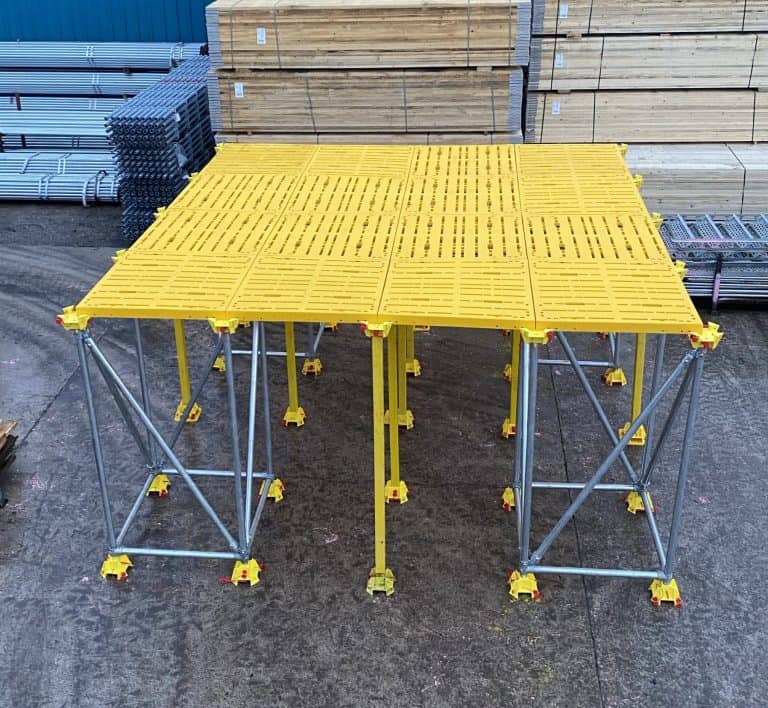
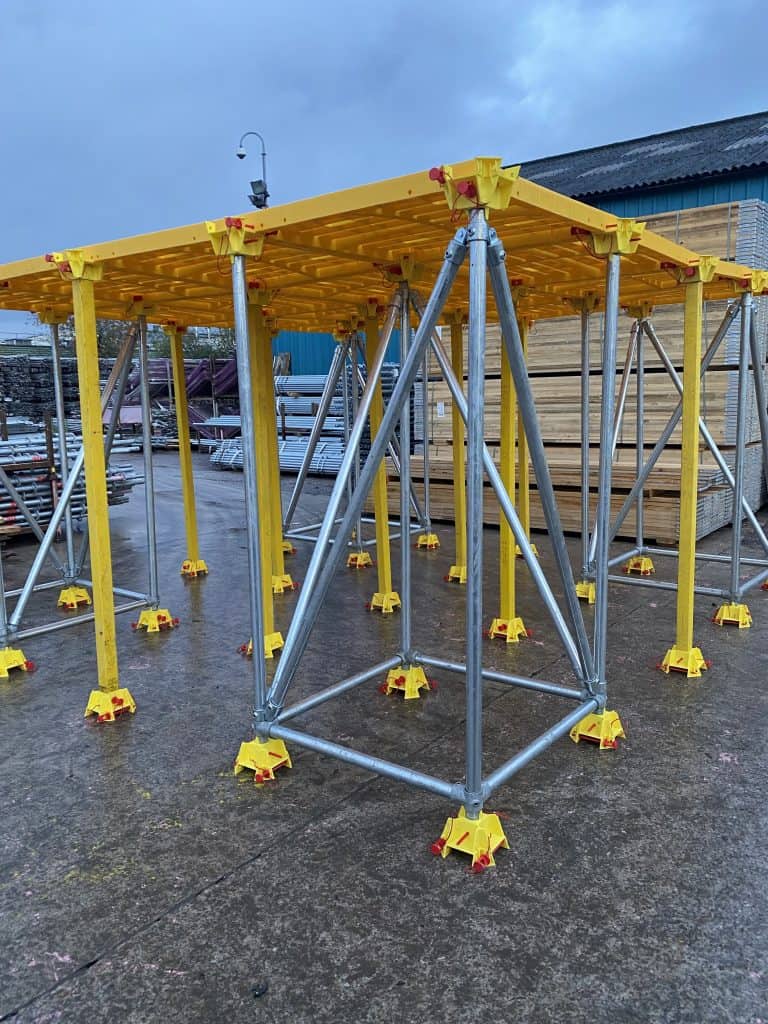 The new hybrid system has been designed for use with standard scaffold or key clamp fittings and is fully compatible with scaffold jacks or base plates. It allows for the option to mix steel and plastic legs, offering complete flexibility to decking design and erection, and is a free-standing system solution using corner bays, with a range of bay configurations to suit varying room sizes.
The hybrid system is also fully compatible with existing base and head units and conforms to load class 3 of BS EN12811-1
The new hybrid system has been designed for use with standard scaffold or key clamp fittings and is fully compatible with scaffold jacks or base plates. It allows for the option to mix steel and plastic legs, offering complete flexibility to decking design and erection, and is a free-standing system solution using corner bays, with a range of bay configurations to suit varying room sizes.
The hybrid system is also fully compatible with existing base and head units and conforms to load class 3 of BS EN12811-1






 “Our mechanical access teams always strive to treat each customer like they are number one – no matter if they only have small single MASTCLIMBERS™ or 10 large twin MASTCLIMBERS™ and multiple hoists on their project.
And this level of service quality goes back to the drawing board and in-house design teams, not just the on-site delivery and completion from our many skilled operatives.
“Having been part of Taylor’s Hoists growth in UK construction for 15+ years and the BrandSafway era, my expectations are very high, but I already know that the Lyndon SGB MASTCLIMBERS™ team is able to meet and deliver these high standards from what I have witnessed over the last month. We are all very excited about the future and the exciting projects we are currently and will be working on, in the whole of the UK.
“My vision is that we continue to perfect the great service we already offer, continue to invest in the newest, greenest fleets and ancillaries – assisting our clients with their mechanical access needs, however complex. I look forward to growing and aligning the mechanical access business with the great, large-scale team we already have to support our goal – to be the best access provider in the country.”
Lyndon SGB says, In the first month since Paul took on the new role, there have already been some significant changes – netting great rewards for Lyndon SGB, MASTCLIMBERS™ and Taylor’s Hoists customers countrywide.
“Our mechanical access teams always strive to treat each customer like they are number one – no matter if they only have small single MASTCLIMBERS™ or 10 large twin MASTCLIMBERS™ and multiple hoists on their project.
And this level of service quality goes back to the drawing board and in-house design teams, not just the on-site delivery and completion from our many skilled operatives.
“Having been part of Taylor’s Hoists growth in UK construction for 15+ years and the BrandSafway era, my expectations are very high, but I already know that the Lyndon SGB MASTCLIMBERS™ team is able to meet and deliver these high standards from what I have witnessed over the last month. We are all very excited about the future and the exciting projects we are currently and will be working on, in the whole of the UK.
“My vision is that we continue to perfect the great service we already offer, continue to invest in the newest, greenest fleets and ancillaries – assisting our clients with their mechanical access needs, however complex. I look forward to growing and aligning the mechanical access business with the great, large-scale team we already have to support our goal – to be the best access provider in the country.”
Lyndon SGB says, In the first month since Paul took on the new role, there have already been some significant changes – netting great rewards for Lyndon SGB, MASTCLIMBERS™ and Taylor’s Hoists customers countrywide.