The UK’s largest scaffolding trade body has welcomed new funding that will provide £300m to UK housebuilders and secure work across the construction sector.
The Housing Growth Partnership Fund aims to support SME and regional housebuilders with the development of 10,000 new homes by 2025.
Established by Lloyds Banking Group and Homes England in 2016, the partnership enters its second phase helping to bridge the homebuilder funding gap, allowing housebuilders to build more houses across the UK and grow their own businesses so that they can support further projects in the future.
The partnership has already invested alongside 46 housebuilders to support the delivery of over 4,568 new homes, with nearly half now completed and sold to families across the UK.
The latest funding will be broader in scope to enable investment into larger housebuilding projects with a development value of up to £75 million. It will offer support for the delivery of a wider range of housing projects including Build to Rent, Regeneration and Retirement Living.
The partnership will also look to prioritise projects with a greater sustainability focus, as well as those using modern methods of construction and other evolutionary construction methods.
Robert Candy, Chief Executive of the Scaffolding Association, commented “A significant amount of construction is needed in the coming decade to fulfil the government’s plan for building 300,000 homes per annum and this funding will help with this ambitious target.However, there is still a great deal of uncertainty within the sector with product availability, rising material costs and skills shortages already resulting in developers pausing or rethinking their plans. Whilst this funding is of course welcome, it will not resolve these broader challenges”.He added, “The Scaffolding Association is a strong advocate for improved skills provision and access to work within the construction sector and works tirelessly to highlight where improvements are needed to support growth with government, stakeholders, training boards and policy decision makers”.
British Steel scaffolders are set to hold a march on Scunthorpe as their fair pay dispute continues.
Unite the Union have tonight confirmed that striking scaffolders working on the British Steel site in Scunthorpe will now hold a march at 7 am on Monday (11 October) as part of their ongoing campaign for fair pay.
More than 60 scaffolders working on the site have been holding continuous action with all-out strikes since Monday in a long-running battle over pay.
The workers employed by Actavo have been fighting to be paid the recognised rate for the job since 2019, Unite says.
Since the strike began Actavo has refused to enter into further negotiations to seek a resolution of the dispute.
Unite general secretary Sharon Graham said: “Scaffolders at Scunthorpe are determined to defend their national industrial agreements and they have the full support of their union in this fight for fairness.“Where employers like Actavo undermine workers’ pay rates and refuse to pay the recognised rate for the job, they will face determined opposition from Unite.”
Local support
Workers at British Steel and members of the local community are being encouraged to join the march in support of the striking scaffolders.
Unite regional officer Richard Bedford said: “The march on Monday will demonstrate the commitment and unity of the scaffolders who are determined to secure the correct rate of pay for the job.“The strike is already causing considerable disruption on the British Steel site, In order to resolve the strike then Actavo needs to return to the negotiating table and agree the correct rate of pay for our members.”
The dispute
As previously reported the dispute began in 2019 when the workers first attempted to get their pay rates paid in line with the National Agreement for the Engineering Construction Industry (NAECI). By being paid in line with the NAECI agreement the scaffolders would see a 10-15 per cent pay rise.
Significant strike action occurred earlier this year when the workers were employed by the previous contractor Brand Energy. Since taking over the contract the workers feel that Actavo has failed to resolve the pay issue.
The scaffolders maintain over 500 scaffolding structures at the British Steel site.
A large scaffold on a tower block in Hong Kong has collapsed onto a busy street killing a female worker and trapping others.
The bamboo scaffold that surrounded the 30-storey residential tower block collapsed this morning (8 October) after a strong gust of wind from a tropical storm hit the city.
One female worker has reportedly died in the incident while two others are still missing. A number of motorists were also injured in the collapse after the huge scaffolding fell onto cars travelling along a busy road.
The fringes of tropical storm Lionrock has lashed Hong Kong prompting the city’s highest-level ‘black’ rainstorm alert and a No 3 strong wind signal.
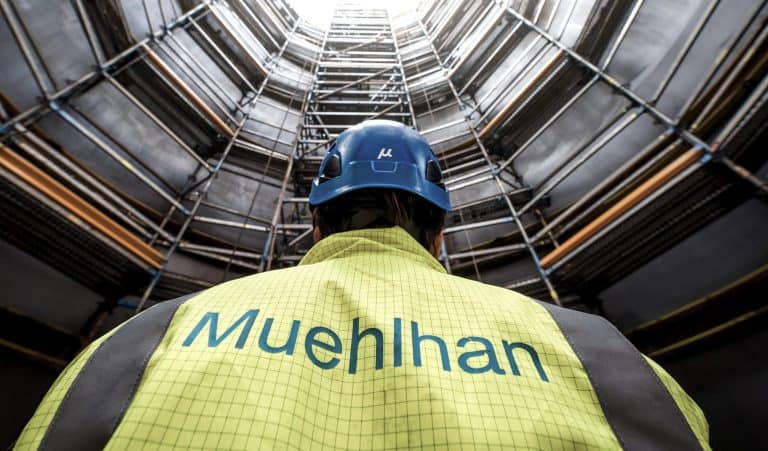
BrandSafway has announced the acquisition of German scaffolding business Gerüstbau Muehlhan.
Owners of Lyndon SGB and many others, BrandSafway has acquired the business in a bid to expand its scaffolding and access operations in the German market.
Gerüstbau Muehlhan specialises in advanced scaffolding solutions, operating from three locations in Northern Germany- Hamburg, Bremerhaven and Brunsbüttel.
The business is expected to be a good fit alongside the group’s existing Hünnebeck scaffold and formwork operations in the country.
Gabriel McCabe, president of BrandSafway’s International Division said: “Gerüstbau Muehlhan is a great addition to our company. Its proven expertise and emphasis on excellence in customer service, together with its strong reputation in safety, will further strengthen our market position in Germany. It is also a step toward diversifying and expanding into other end markets in the commercial, renewable energy and shipbuilding sectors.”
Martin Hemberger, vice president of Forming & Shoring International added: “Both Gerüstbau Muehlhan’s and BrandSafway’s customers will benefit from this acquisition. Together, we can offer an even wider range of customized and highly efficient scaffolding services to an enlarged customer base.”
Malte Herrmann, one of two managing directors at Gerüstbau Muehlhan said: “We are very pleased that we are now part of BrandSafway. This acquisition opens up very attractive opportunities for our customers and employees.” Co-managing director Gunnar Freier added: “While we bring our expertise and know-how to BrandSafway, our customers and employees alike can benefit from the global capabilities and resources that BrandSafway offers.”
BrandSafway has been operating in Germany since 2012, under the name Brand Energy & Infrastructure Services. With headquarters in Ratingen, Western Germany, and numerous locations on customers projects, Brand Energy & Infrastructure Services has experienced dynamic growth and serves customers in various industrial end markets, especially in the chemical, pharmaceutical, energy, food, and steel market sectors.
The Altrad Group has agreed with Interserve on a deal to buy RMD Kwikform.
In a deal reportedly worth more than £140m, the French industrial services group has agreed to buy RMD Kwikform (RMDK) a global formwork, falsework and shoring solutions provider.
Owned by previously troubled Interserve, RMD Kwikform employs more than 1,300 people and has been involved in various stages of construction at HS2, Crossrail, Battersea Power Station and Hinkley point.
Scaffmag understands the sale of RMDK is part of the planned restructuring of the Group, which has also seen the sale of businesses including Interserve Healthcare to City & County Healthcare Group and Interserve Support Services to Mitie Group plc in 2020.
RMDK is headquartered in the West Midlands and employs over 1300 people around the world including in its core markets of the UK, India, Australia and the UAE.
Ran Oren, joint Chief Executive of Altrad Group said: “We are so excited to welcome RMDK to the Altrad family. We have watched and admired RMDK’s specialist engineering skills and services for many years and strongly believe in its brand, client solutions and ability to return to growth. RMDK will enhance our portfolio of products, in line with our strategy of the geographic, sector and product diversification.
Altrad is well-financed with a strong balance sheet and the unwavering support of its stakeholders. We are able to provide investment to fuel the further growth of RMDK as part of a leading industrial group.”
Altrad’s latest acquisition deal comes just weeks after the group announced the agreement to buy the Hire & Sales division from Actavo. Previous acquisitions by Altrad include Cape (2017), Hertel (2015), Trad, BarOmix, Belle Group, Beaver 84, NSG, Generation and MTD.
Crossrail, RMD
Alan Lovell, Chairman of Interserve Group Limited said: “The sale of RMDK to Altrad Group continues the significant progress we have made selling the constituent parts of Interserve Group to best realise value for our shareholders.I have no doubt that RMDK will thrive as part of Altrad Group which will benefit both its staff and clients alike. I would like to thank all the team at RMDK for their outstanding contribution to the Group and wish them well for the future.”
Scaffolding trade association the NASC has revealed its finalists for this year’s forthcoming 2021 awards.
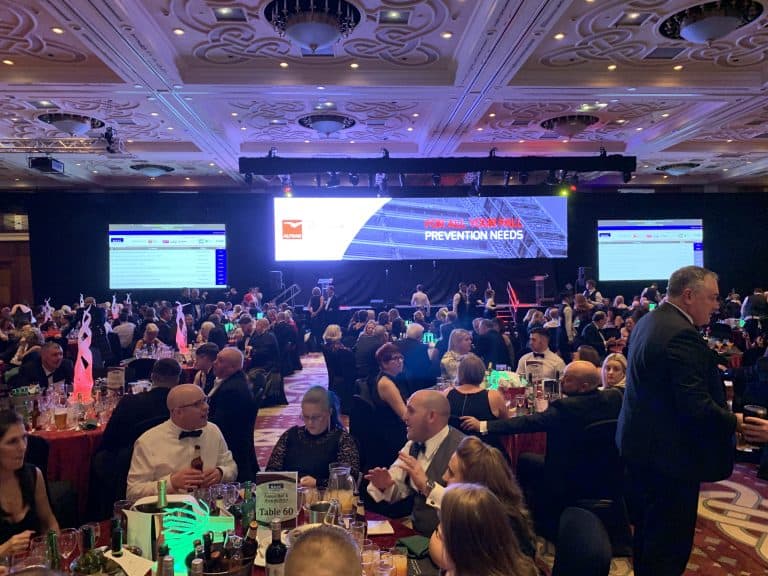
The NASC has announced its shortlist for the 2021 NASC Awards that saw a record number of entries submitted. The scaffolding trade association announced yesterday that the awards drew 72 submissions across seven categories.
Taking place again at the five-star Celtic Manor Resort, Newport, on Friday 19 November 2021 the NASC Ball & Awards showcases the very best scaffolding projects, processes, products and personnel.
NASC Awards Shortlist
Apprentice of the Year
Brand Energy & Infrastructure Services UK Ltd T/A Lyndon SGB – Mark Davies
City Access Scaffolding Ltd – Adam McLennan
Connect Scaffolding Ltd – Harrison Witcomb
Rose System Scaffolding Ltd – James Harrison
H&S (1-66 Employees)
CCS Scaffolding Ltd
City Access Scaffolding Ltd
Fred Champion Scaffolding Ltd
Shield Environmental Services Ltd
H&S (67+ Employees)
Actavo (UK) Ltd
Benchmark Scaffolding Ltd
Connect Scaffolding Ltd
TRAD Scaffolding Co. Ltd
Innovation of the Year
Bilfinger Salamis UK – Scaffold Portal
Connect Scaffolding Ltd – The Connect TW Clip
HAKI Ltd – HAKI BIM
Layher Ltd – Layher Allround AGS Façade System
NASC President’s Award
Lyndon SGB – Ian Hines
HAKI Ltd – Priscila Escobar
Millcroft Services Plc – Mike Wright
Apex Scaffolding (Exeter) Ltd – Robin Whatling
Project of the Year (Turnover up to £5m)
City Access Scaffolding Ltd – St Andrew’s House, Edinburgh
Connolly Scaffolding Ltd – The Liverpool Municipal Building
Crossway Scaffolding (Elland) Ltd – Saltburn Viaduct, North Yorkshire
Simon Robinson, NASC Marketing Manager, said: “The NASC would like to place on record its gratitude to the judges of this year’s awards, who dedicated a great deal of their time, expertise and effort on evaluating each and every entry.”
Two directors are on trial after a scaffolder was crushed to death in a “long-predicted” church collapse.
A court heard that Jeff Plevey, 56, from Cardiff, died when the derelict Citadel Church in the city, collapsed as he dismantled the scaffolding surrounding it in July 2017.
Stewart Swain director of Swain Scaffolding Ltd and Keith Young director of Young Contractors, the demolition firm working on the church are accused of gross negligence manslaughter.
Both directors deny the charges at the trial being held at Swansea Civic Centre.
Lead prosecutor Andrew Langdon QC told a jury that at about 14:45 on 18 July, 2017, railway workers on the nearby Splott Bridge heard a “loud crack” and “a bang, like a small explosion”.
They then heard men at the church building site shouting “run”, and telling someone to “jump” before scaffolding around the church collapsed.
The railway workers hurried across to find those who had escaped looking “distressed” and repeatedly saying “Jeff is inside”.
Scaffolder, Jeff Plevey was eventually discovered among the rubble and wreckage. He had been crushed to death, the court was told.
Scaffolder Jeff Plevey was crushed to death in the collapse.
The prosecutor said the case was about the collapse of the church wall. “Could it have been predicted? If so, why were three men working on scaffolding that abutted it?” he added.
Mark Gulley, from Penarth, director of Amos Projects Limited, who had owned the Citadel since 2006, and Richard Lyons, from Bristol, a partner of Optima Scaffold Design Solutions Ltd are also on trial for health and safety offences.
Mr Gulley had intended to refurbish the church and repurpose it into flats, but then later decided to demolish the church and sell the site to developers.
The trial was told a report commissioned by Network Rail into the building found the church to be in a “poor” state and the rear wall “in danger of imminent collapse”.
The report was sent to Mr Gulley in 2016 and shared with demolition contractors, but not with the scaffolding contractor and defendant Mr Swain. Despite the report’s warning and the “obvious” danger posed by the rear wall, the prosecution said contractors failed to carry out sufficient works to stabilise it.
Scaffolding erected around the building was then tied to the wall, making any collapse liable to take the scaffolding with it.
According to a news report, Mr Plevey and two other scaffolders had been told to dismantle the scaffolding in preparation for the wall demolition when the collapse happened.
Mr Langdon said: “It was the long-predicted collapse of that unstable wall. Unsupported and dangerous as it had been throughout, it had become even more dangerous since the demolition of the church had begun.”
The prosecution claimed no-one had taken responsibility for the project as a whole, describing the management of the site as “dysfunctional”. The court was also told that had building regulations been followed “this fatality could not have occurred”.
Two other men, Phil Thomas, from Cardiff, who was Mr Young’s health and safety advisor from South Wales Safety Consultancy Ltd, and Richard Dean, of Abertillery, from NJP Consultant Engineers Ltd, have already pleaded guilty to health and safety offences.
The prosecution was brought following a joint investigation by South Wales Police and the Health and Safety Executive.
The trial before Mrs Justice Jefford is expected to take up to 10 weeks.
Technical support for TG20:13 to be withdrawn next week, says NASC.
Scaffolding trade body the National Access and Scaffolding Confederation (NASC) is reminding users of TG20:13 that technical support for the scaffolding software will be withdrawn by NASC from Tuesday 12 October 2021.
The technical support withdrawal for TG20:13 comes after the latest version of the software TG20:21 was launched six months ago.
From Tuesday 12 October the following changes will take effect:
The TG20:13 online wind map will be removed.
Licensing services will be switched off, so customers will no longer be able to activate, deactivate or move TG20:13 eGuide licences.
The TG20:13 support dashboard will be switched off.
The NASC says that the TG20:13 eGuide software is being formally withdrawn as the software platform it was developed on, Adobe Air, is no longer supported or maintained by Adobe.
An NASC statement informing TG20:13 users of the planned withdrawal was released in July.
Scaffolders on the British Steelworks in Scunthorpe began an all-out strike on Monday in a long-running pay dispute.
Over 60 scaffolders employed by Actavo walked out on Monday (5th October) and took to the picket line over a long-running row over their pay.
The workers want to be paid in line with the National Agreement for the Engineering Construction Industry (NAECI). The rates for the workforce are currently 10 to 15 per cent below these rates, according to UNITE the union.
The pay dispute began back in 2019 when their former employers Brand Energy had the maintenance contract on the site. Actavo took over the contract in February 2021 but the dispute continues. There is a difference of £2 an hour between their current pay rates and the established NAECI pay rates.
The scaffolders are responsible for the maintenance of over 500 scaffolding structures at the site.
Speaking previously about the dispute Unite regional officer John McIntyre said: “Our members play a crucial role maintaining safety on the British Steel site and deserve to be paid the correct rate for the job.”
The scaffolders will picket the British Steel gates A, D and G from 5.30-9.30am every day.
Scaffolding boss and current NASC president, Lynn Way has been re-elected as a Specialist Contractor Director of Build UK.
The first-ever female NASC president will continue to provide strategic direction for the leading construction industry body.
Lynn, who also holds the position of Financial Director and Company Secretary at Cornwall based Chris Sedgeman Scaffolding Ltd, said: “she was pleased to be re-elected by Build UK trade association members.”“In the past year, I have been privileged to represent the scaffolding industry, ensuring the needs and views of our industry are heard, as well as delivering for the construction industry as a whole and I look forward to continuing these efforts in 2022.”
Build UK is the leading representative organisation for the UK construction industry. By bringing together Clients, Main Contractors, Trade Associations representing over 11,500 Specialist Contractors and other organisations committed to industry collaboration, Build UK represents in excess of 40% of UK construction.
We use cookies on our website to give you the most relevant experience by remembering your preferences and repeat visits. By clicking “Accept”, you consent to the use of ALL the cookies.
This website uses cookies to improve your experience while you navigate through the website. Out of these, the cookies that are categorized as necessary are stored on your browser as they are essential for the working of basic functionalities of the website. We also use third-party cookies that help us analyze and understand how you use this website. These cookies will be stored in your browser only with your consent. You also have the option to opt-out of these cookies. But opting out of some of these cookies may affect your browsing experience.
Necessary cookies are absolutely essential for the website to function properly. These cookies ensure basic functionalities and security features of the website, anonymously.
Cookie
Duration
Description
cookielawinfo-checbox-analytics
11 months
This cookie is set by GDPR Cookie Consent plugin. The cookie is used to store the user consent for the cookies in the category "Analytics".
cookielawinfo-checbox-functional
11 months
The cookie is set by GDPR cookie consent to record the user consent for the cookies in the category "Functional".
cookielawinfo-checbox-others
11 months
This cookie is set by GDPR Cookie Consent plugin. The cookie is used to store the user consent for the cookies in the category "Other.
cookielawinfo-checkbox-necessary
11 months
This cookie is set by GDPR Cookie Consent plugin. The cookies is used to store the user consent for the cookies in the category "Necessary".
cookielawinfo-checkbox-performance
11 months
This cookie is set by GDPR Cookie Consent plugin. The cookie is used to store the user consent for the cookies in the category "Performance".
viewed_cookie_policy
11 months
The cookie is set by the GDPR Cookie Consent plugin and is used to store whether or not user has consented to the use of cookies. It does not store any personal data.
Functional cookies help to perform certain functionalities like sharing the content of the website on social media platforms, collect feedbacks, and other third-party features.
Performance cookies are used to understand and analyze the key performance indexes of the website which helps in delivering a better user experience for the visitors.
Analytical cookies are used to understand how visitors interact with the website. These cookies help provide information on metrics the number of visitors, bounce rate, traffic source, etc.
Advertisement cookies are used to provide visitors with relevant ads and marketing campaigns. These cookies track visitors across websites and collect information to provide customized ads.