StepUp Scaffold partners with Danish composite pioneer

0
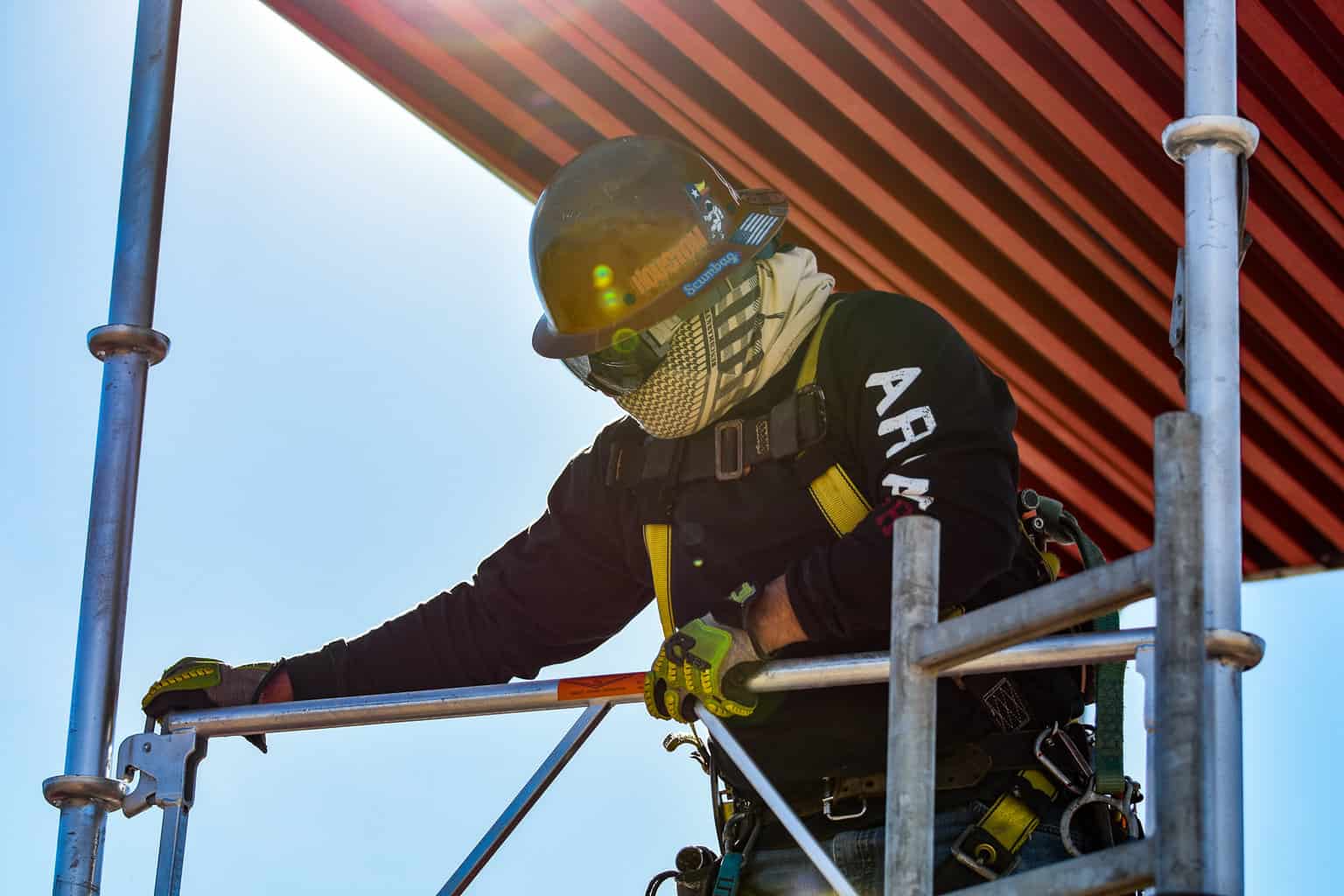
System scaffolding supplier StepUp Scaffold has revealed its entered a strategic partnership with Danish pioneers Nordic Platform to launch composite scaffolding solutions to the US scaffolding market. Composite scaffolding solutions have gradually emerged on the European market over the past 8 years and are progressively entering mainstream use and application as ESG considerations increasingly influence corporate procurement strategies and decision-making. Glasgow-based StepUp Scaffold UK, a subsidiary of the StepUp Scaffold Group in Memphis (US), has successfully been testing and participating in the development of an emerging market for composite equipment in Europe for several years. They have now entered a strategic partnership with Danish composite pioneer Nordic Platform in order to bring innovative and sustainable solutions into StepUp’s home market in the US as well.

It started with a lightweight composite deck in 2012

The innovative approach and long track record of Nordic Platform in this niche segment has been noticed in the StepUp headquarters in Memphis (US) as market acceptance is accelerating in Europe. “It all started with a genuine concern for both the environment and the health and safety of scaffolders”, CEO of Nordic Platform Per Mose Jakobsen explains. “Back in 2012 when we started developing our composite decks no one in the business had ever heard of ESG compliance. It just made sense for a lot of practical reasons.”

ESG is starting to shape demand

StepUp Scaffolds European director Knud Højland has been following the development of Nordic Platform closely over the past decade and points out several interesting perspectives for the strategic partnership between the two companies in the US market. “The development of the first composite decks back in 2012-14 and subsequent launch in 2015 was a bold and innovative move. Ten years and more than half a million decks later it has passed the test of time in Europe, and today it serves as a perfect solution for sustainability-conscious companies, that additionally reduces theft and relieves the heavy lifting by scaffolding workers,” Knud Højland points out. “Strategic ESG considerations impact more and more of construction financing. We are already experiencing the first trickle-down effects and we must listen to what the market wants”; he adds. StepUp Scaffold will be introducing the new range of composite decks to the American market at the 2022 SAIA annual convention & exhibition from August 21-25 in Boston, MA.

Panthera wins multi-service contract for city centre building refurb

0
A major makeover underway at a building located at the foot of the Millennium Bridge, between St Paul’s Cathedral and the Tate Modern, has been secured with EnviroHoard™ sustainable hoarding from Panthera Group as the first part of a contract for multiple site services.  Millennium Bridge House was originally completed in the late 1980s following demolition of the previous site and is set to be redeveloped by contractor ISG after approval by The City of London Corporation. Along with the sustainable site hoarding solution, Panthera Group will provide a variety of site services for the duration of the project. This includes the internal fit out for welfare facilities such as ISG offices, subcontractor offices, toilets, changing rooms, showering facilities and a canteen along with a security hut at the entrance. The £65 million project included a stipulation to redevelop the building sustainably by embracing circular economy, carbon reduction and resource efficiency principles. To that end, ISG worked with Piercy and Company Architects on a design to retain the majority of building structure whilst reconfiguring the internal layout to optimise space for retail facilities, offices, a roof level restaurant and roof. A new façade will embrace natural light and create energy efficiency throughout the building. One of the overall objectives of the project is to achieve BREEAM RFO 2014 (Excellent) which means sustainability compliance in the supply chain is key. Robert Ingram, Managing Surveyor at ISG, opted to work with Panthera Group on the project; “I have worked with the Panthera team for over 10 years and have always found them to be extremely professional and collaborative in their approach. It made sense to use EnviroHoard™ for our perimeter hoarding as it is a verified net zero carbon solution. Panthera was wholly supportive during the tender process; providing the environmental assessment and generally offering a great service to our project teams. Phase one works are underway and this includes the first elevation of EnviroHoard™ which is looking good. Phase two is imminent and will involve the site set up services.” EnviroHoard™ offers many commercial as well as environmental advantages. The flexible, modular system is quick to install and can be easily relocated as and when required.  

Construction Apprenticeship changes in Wales

Changes to some of the key construction apprenticeship qualifications in Wales come into force on 1stAugust in time for the autumn college term. They are designed to shape the supervisors and construction business owners of the future by better meeting the needs of employers and students alike. CITB, City & Guilds and Careers Wales are supporting the introduction of the new Apprenticeship Qualifications commissioned by Qualifications Wales following its  Building the Future review of construction qualifications. The review, which included in-depth interviews with employers found that a number of changes should be made to modernise the framework of study. The Qualifications Wales review decided to look at the occupations which historically have most apprentices in Wales, these being Site Carpentry, Architectural Joinery, Bricklaying, Solid Plastering and Painting and Decorating and Plant Operations. Also trades which are emerging in importance such as Dry Lining, Timber Frame Erecting, Civil Engineering Groundworkers, Roofing (Slate and Tile) and Wall and Floor Tiling. Apprenticeships in these occupations will be changing from 1st August 2022 as new Level 3 Apprentice Qualifications have been developed for them.? All other occupations will continue to follow the NVQ/Technical Diploma route and will not change whist awarding bodies continue to offer these qualifications. Entry requirements for the level 3 Apprenticeships are inclusive and include several options to ensure inclusivity. The new Apprenticeships come into play in September 2022, with some qualifications already launched in September 2021. CITB Wales’ Standards and qualifications Manager, Gareth Williams said: We want to assure parents and learners that a lot of research and time has gone into designing the new courses. Over the last year we have been working with employers to make sure they are ready to support apprentices on this new qualification path. “Employers will be required to take a greater role and responsibility for signing off the competency of their apprentice, but this will be an equal partnership between employers and learning providers.” There are guidance documents for employers. Employers are to work with and support apprentices throughout their apprenticeship and will need to ensure they can provide all the work experience the apprentice needs. Angharad Lloyd Beynon, City and Guilds said: “Our new suite of Construction qualifications have been designed to meet the skills needs of Wales and provide learners with clear progression routes to help people get into a job, get on in the job and go further in their career. “They are designed to make learners more knowledgeable, skilled and ready for the modern workplace so that they can deliver results for their employers and achieve their career goals. We have developed learning programmes and assessment that meet employers needs while forging a clear and simplified education landscape. “We make all of our qualifications and learning materials available through the medium of Welsh to empower the achievement of a bilingual nation.”

SIMIAN to hold training open day in Coventry

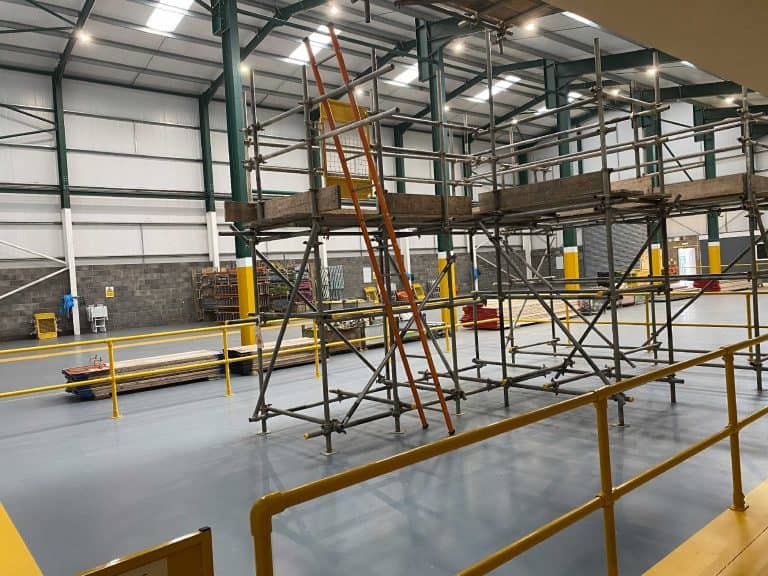
SIMIAN the UK’s largest privately owned scaffolding training provider is marking the formal opening of its newest training centre in Coventry with an educational open day. On 22 September 2022 event organisers at SIMIAN are aiming to host a day that provides an excellent networking opportunity for attendees and share the ‘inside word’ on all that’s currently hot in the industry. People attending the event will hear an update on the forthcoming NASC guidance SG4:22 by SIMIAN’s Simon Hughes who is the Technical Author of the flagship industry guidance. The event is also set to feature a Grants in Construction update by the CITB and a Digital pull testing demo highlighting the highly innovative means for testing scaffolding anchors. Spanset will also be attending highlighting its work at height rescue and a flurry of industry supplier stands will be on display at the event. Guest will be given the opportunity to tour the facility and will have the opportunity of winning a CISRS course of their choice, in addition to the fabled free lunch! Speaking of the forthcoming event, Sarah Cockell, SIMIAN’s Midlands area Business Development Manager said: “The official opening of our centre in Coventry has been a long time coming, and we have Coronavirus to thank for that. The centre is now very well established, and we look forward to showcasing what we can offer to both old and new customers, in terms of scaffolding and construction training, and our ever-expanding portfolio of consultancy services.” If you would like to attend follow this link to secure your tickets. Spaces are limited and will be issued on a first-come, first-served basis, so those wishing to attend are advised to book early! Please note that tickets are currently limited to 2 per business, but additional spaces can be secured by emailing [email protected].

Flexible working pilot deemed successful

0
An 18-month long ground-breaking flexible working pilot with four of the UK’s leading construction firms has proved to be successful, with all four firms continuing with the new flexible working practices after it finished. Major contractors BAM Construct, BAM Nuttall, Skanska UK and Willmott Dixon all took part in the pilot and now report a decline in the rate of sickness absence, with flexible working believed to be a contributing factor. The social enterprise and flexible working experts Timewise has published a review of the impact of the pilot, called ‘Making Construction a great place to work – a view one year on’. The review was commissioned by CITB and the four Pioneer Partners – BAM Construct, BAM Nuttall, Skanska UK and Willmott Dixon. The findings suggest that flexible working has had a number of positive impacts – for workers in terms of reduced stress, increased well-being and for job satisfaction. For firms, in terms of enhanced performance and notably, a reduction in sickness-related absence rates. The Pioneer Partners all report results that buck the wider UK picture. Specifically:
  • Willmott Dixon say overall sickness absences have reduced by one third since 2019.
  • BAM Construct say overall sickness absences have reduced by one tenth.
  • Skanska UK report that one-day sickness absences have more than halved.
  • BAM Nuttall has seen one-day sickness absence reduce by a third.
By contrast, analysis of ONS data by Timewise shows that the national sickness absence rate in construction has increased post pandemic, from 1.4% in 2020 to 2.1% in 20211. While flexible working won’t be the only factor reducing the sickness absence rates experienced by the four Pioneers, Timewise says the difference in the direction of travel is significant. It is well known that sickness absences cost the industry millions of pounds a year – last estimated at £160m in 2018, as reported by the Health and Safety at Work Executive. The report also highlights the next barriers for the construction industry to overcome, in terms of flexible working. Key among these being the need to ensure greater fairness, by finding a way to extend flexible working to the sub-contracted workforce. Emma Stewart MBE, the co-founder of Timewise who led the Construction Pioneers pilot and the review said: “It’s great to see a reduction in sickness absence noted by all four Construction Pioneer firms, especially given that one of the main drivers for running the pilot programme came from concern around the sector’s poor record on mental health and well-being.  Some firms are also reporting increased productivity levels through the use of hybrid working where possible, which they feel is the result of having a happier workforce. Flexible working makes both business sense and common sense.” Suzannah Nichol is the chief executive of Build UK and commissioned the original pilot. She says: “Reducing the stresses of everyday life whether through less commuting, more suitable start and finish times, reduced hours or simply being able to attend an appointment without losing a day’s pay makes a huge difference. A happier workforce is more productive with greater job satisfaction, less sickness absence and better mental health – a virtuous circle that encourages more people to join our industry and enables businesses to grow.  To realise these benefits your company needs to take the next step and trial flexible working – I promise you won’t regret it.” Tim Balcon, CITB Chief Executive says: “By being more flexible and inclusive, we will become a more diverse industry and open opportunities for our existing workforce, as well as new joiners from all backgrounds, to grow long-lasting careers that will help meet the skills demand across the industry.”  
Scaffolding company pleads guilty for death of teen apprentice

A scaffolding company involved in a major scaffolding collapse in Sydney, Australia which killed a teenage apprentice has pleaded guilty to offences. Synergy Scaffolding Services Pty Ltd (Synergy) has pleaded guilty to a Category 1 offence under New South Wales workplace safety laws, in relation to the scaffolding collapse that happened on 1 April 2019 at a construction site. The collapse resulted in the death of 18-year-old Christopher Cassantiti and seriously injured another worker. It was reported that the young teen fell from a height of almost eight-storeys when a large section of scaffolding suddenly collapsed at the Macquarie Park worksite. Sentencing will take place on 21 November 2022. Minister for Fair Trading Eleni Petinos said it is one of the first prosecutions of its kind for SafeWork NSW since major amendments were introduced to strengthen work health safety laws in 2020. “No family should ever have to experience the tragedy of losing a loved one through an incident at work as the Cassinitis did,” Ms Petinos said. “This is a reminder that our work health safety laws are important and must be upheld by all operators”.
18-year-old Christopher Cassaniti.
18-year-old Christopher Cassantiti
In the past two years SafeWork NSW has implemented numerous programs to improve safety for workers in the construction industry including:  

CWIC Scaffolding Academy Gains CISRS Advanced Accreditation

CWIC is a unique CITB-funded all-Wales training centre with its hub forming part of the University of Wales Trinity Saint David’s in Swansea. Gareth Evans/ Barry Liles, Pro-Vice-Chancellor Skills and Lifelong Learning at the University of Wales Trinity Saint David (UWTSD) said: “CWIC’s activities are already supporting employers in the construction industry across Wales. Our partnership with CITB is delivering world-class training and bespoke programmes for this hugely important sector to the Welsh economy. Access to such facilities and expertise through CWIC gives employers the confidence to develop their employees and to recruit new entrants into the industry.” The facility underwent an approximately £1.5million refurbishment, thanks to TRJ Construction, to create an Access Hall of 2,000 m2 including classroom and IT facilities. Since its initial CISRS approval in 2020, the centre has really hit the ground running, welcoming almost 1000 trainees through its doors on a range of courses since that date. In addition to those undertaking the recognised CISRS Pt1, Pt2 route to qualification, Inspection and Supervisory training, around 50 operatives are currently nearing completion of their Scaffolding Apprenticeships, with another 18 candidates signed up for 2022-23 plus a waiting list of 20 in place for the next cohort. This is a considerable feat for any new centre but all the more impressive when taking into consideration the COVID pandemic and Storm Damage to the Academy Roof in the last 18 months. Sheila Holmes -CWIC Scaffolding Academy Director said: “The addition of the CISRS advanced scaffolding course ensures that the Welsh scaffolding industry has direct access to the whole scaffolding training provision here in Swansea and will no longer have to travel to England or beyond to acquire a full set of skills. “We are proud of the development at the Academy and gaining the CISRS advanced accreditation is the culmination of hard work and commitment by the whole team.” CISRS Auditor Trevor Donoghue added: “The CWIC Scaffolding Academy in Swansea has constructed an excellent training facility and has consistently been developing its delivery capabilities over the last few years. It was a pleasure to witness the recent Pilot CISRS Advanced Scaffolding Course and confirm the upgrade in the centre’s CISRS accreditation to Advanced delivery status. Congratulations to the centre’s management team and staff on this achievement, I wish them every success in the future.”  

Scaffolders run for their lives as massive lightning bolt strikes yard

0
Amazing footage captures the moment a massive bolt of lightning hit a yard in Penzance, Cornwall after the UK saw record-breaking temperatures this week. Scaffolders are seen running for their lives in the shocking footage below captured by Zak Harries an employee of scaffolding and access specialists Chris Sedgeman Scaffolding.
The terrifying strike hit at around 6:50am on Tuesday (July 19) while scaffolding workers were loading up trucks with materials for the day ahead. Mr Harries had been filming the dark sky when lightning suddenly cracked from the sky towards the ground. Although the strike was initially thought to of hit scaffolding in the yard, further investigation found it struck a yard light in the Great Western Railway Depot that is directly opposite Chris Sedgeman’s yard. It knocked a signal out on the line and caused chaos for commuters with trains between Penzance and Plymouth were heavily impacted. Chris Sedgman Managing Director of Chris Sedgman Scaffolding said; “The strike was so strong it was felt by everyone in the yard, making us all think that it was our yard that was hit. After further investigation, we could see it was not our yard. It did, however, knock all our WIFI, Server and some phones out.”

UKSSH helps protect a greener future

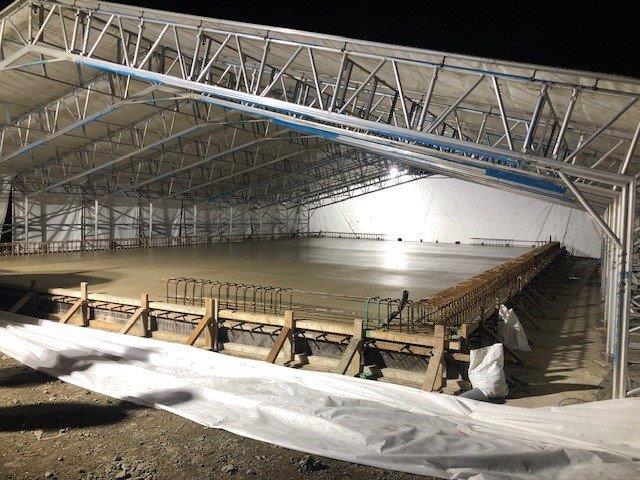
The recent heatwave made us all focus on the importance of reducing our carbon footprint for the good of the planet, but on a recent project for its client Taylor Woodrow, UKSSH literally covered a major step forward in the journey to carbon neutrality, supplying a work shelter to provide a controlled environment for the first major pour in the UK of an ultra-low carbon concrete. The pour took place at EcoPark South, the first building phase in North London Waste Authority’s plans to create a £1.2bn sustainable waste management hub in Edmonton; the North London Heat and Power Project. Developed over four years by Ecocem and VINCI Construction, the technology – Ecocem Ultra – forms part of VINCI Construction’s Exegy® ultra-low carbon concrete range, and reduces the carbon footprint of the construction project by up to 70% when compared to traditional concrete. It has already been tested on several projects in France, but the EcoPark provided the perfect opportunity to launch it in the UK. The innovation is so significant that Exegy® ultra-low carbon concrete’s first use in the UK was witnessed by an invited audience from across Europe, so it was imperative that the notoriously fickle British weather wouldn’t pour cold water on the event: That’s why Taylor Woodrow approached UKSSH to supply a temporary work shelter which was 19.80m wide, 24.40m long and 1.50m high at the eaves to provide a controlled work environment. Gary Griffiths, MD of UKSSH commented “We were delighted to play our part in an event which demonstrated how new technology can contribute to ultra-low carbon emissions. “At UKSSH we are committed to minimizing environmental impact: From the obvious choices like running electric vehicles and placing high importance on the environmental impact for all purchasing decisions, to the hidden benefits of our products – for example, the fact that lighter and fewer components for a project significantly reduce transport requirements. It’s probably no coincidence that our products were used at COP26 in Glasgow”. The Haki Temporary Work Shelter isn’t just a preferred option for high profile events – built to any length in 3.05 metre modules, and able to cater for any width, it is quick and easy to install as either a static or mobile unit and its proven ability to keep out the worst that the British weather can throw at it means that the Haki Temporary Work Shelter is the cost-effective way to allow work to continue 24 hours a day, seven days a week.  

Bilfinger partners with Layher UK to deliver world’s first ‘FlexBeam’ underdeck system

0
Engineering and maintenance contractor Bilfinger UK, in collaboration with Layher UK, designed the world’s first underdeck scaffolding system using FlexBeam to provide safe access to the underside of an oil rig. Bilfinger was tasked to deliver a fit-for-purpose solution which would provide safe access to the underside of the platform to remove and replace the underdeck oily drains pipework. Bilfinger partnered with Layher Scotland’s technical team to design the system scaffold configuration using Layher’s cutting-edge aluminium scaffolding FlexBeam, reducing construction time by 40% when compared with traditional conventional tube and fitting scaffolding. David Cruickshank, Project Manager at Bilfinger UK, said: “As we continue to support operations within a maturing basin, innovation has never been more important. Layher FlexBeam is a step change in the way we offer access solutions to our clients, this collaborative project has gone some way to showing what can be achieved when you have a fit for purpose solution, a forward thinking client and an engaged workforce. “Having watched this project progress from the early engagement sessions with Layher, all the way through to our Scaffold Foreman carrying out its first scaffold inspection, I am extremely proud of what our team have achieved. This project was delivered on time, within budget and most importantly with zero HSE concerns; an outstanding accomplishment from everyone involved.” By utilising FlexBeam, Bilfinger installed the access system six days ahead of the initial estimation and 15 days ahead of the time estimated if utilising tube and fitting scaffolding. This equates to 246 work hours ahead of schedule and 601 work hours ahead of what would have been required if using traditional tube and fitting scaffolding, providing a labour saving of around £30,000. Ryan Clegg, Bilfinger Scaffold Technical Authority, said: “I am absolutely delighted that Bilfinger are the first to bring this fantastic access innovation to the offshore industry. As Scaffold Technical Authority, it has been great to be part of this project from planning through to successful execution. This is a huge step change for an alternative access method that we are excited to bring to all our onshore and offshore operations.” Sean Pike, Managing Director at Layher UK, added: “We are delighted to have been involved in and to have supported Bilfinger UK in this flagship underdeck system with our FlexBeam. It is the first use of our FlexBeam offshore on the underside of an oil rig, not only in the UK, but also in the rest of the world. “We were therefore very excited to play our part in support of the whole team at Bilfinger UK, from the procurement departments, technical and T.A. management team through to the scaffolders that had the job of turning the scheme into reality. We were also delighted to assist in product familiarisation and hands on training onshore, at our Livingston depot so as to ensure, as best as possible that the scaffolders were as prepared as they could be on a dry run, prior to the real installation out at sea. “From our point of view the final realisation is superb and with Bilfinger UK we now look forward very much to achieving the same success and time and money savings on several more offshore rigs – I would especially acknowledge the hard work and positivity of the scaffolding crew in particular, and all of the Bilfinger UK team involved without whom this level of project build and delivery success would have been harder to achieve.”