CISRS has approved the first Overseas Scaffolding Training Scheme (OSTS) centre in Russia.
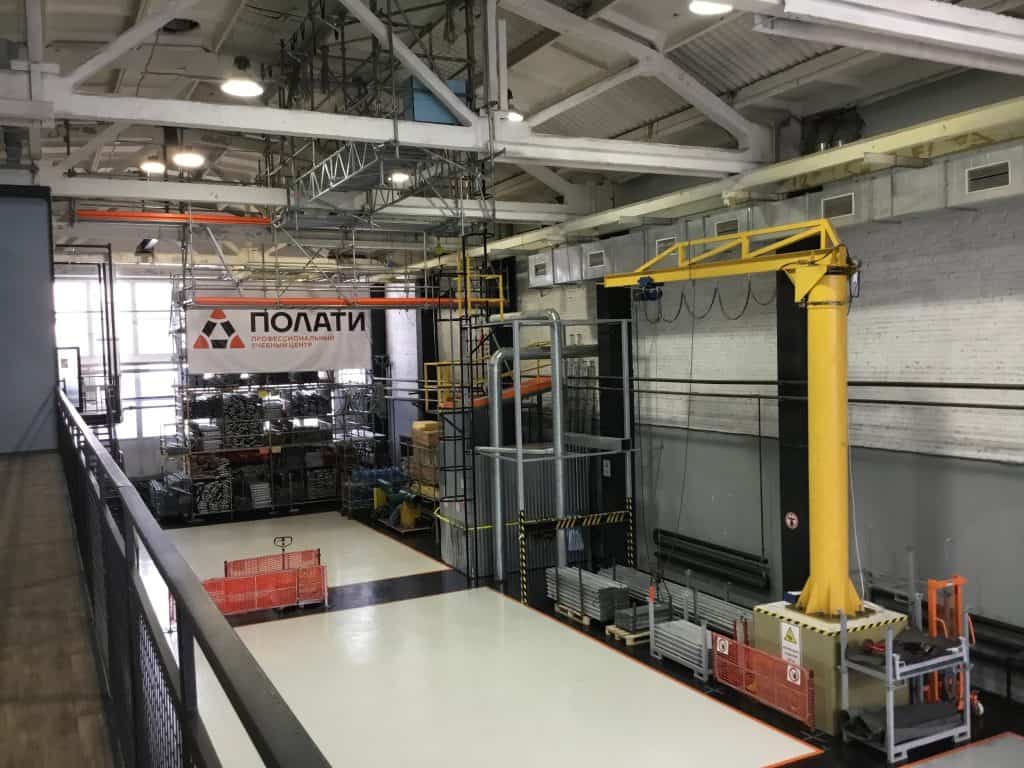
SIMIAN International working in collaboration with Prostaff LLC, part of the Polati Group, a Russian scaffolding supplier and contracting company, have opened the training facility in the Moscow suburb of Mytishchi.
A successful accreditation audit last week has allowed the centre to now offer CISRS OSTS training.
Polati Training Centre has been running their own scaffolding training programme for some time, and originally opened their centre in 2017. They also deliver other associated courses such as Rope Access, confined space and rescue training.
They were, however, very keen to gain third party approval with CISRS as they see it as the leading international training standard for tube and fitting scaffolding.
Initially, the Centre will offer CISRS Level 1 and 2 Training for Scaffolders in Tube and fitting, Basic Scaffold Inspection and Supervisory programmes.
The centre is looking to build upon their CISRS portfolio going forward, possibly incorporating Soyuz a ring-type system which they use and supply, plus other scaffolding systems.
Dave Mosley, CISRS Managing Director, said: “The centre is fitted out to the highest specifications, with brand new materials, tools and PPE. There are several classrooms but one is particularly impressive as it houses both an independent and a hanging scaffold actually within the classroom.”
SIMIAN International Managing Director Ian Fyall added: “We are delighted to be partnering Prostaff in this venture and moving both SIMIAN and CISRS’ footprint into another part in the world. We are looking forward to training and assessing their instructors and giving advice and guidance going forward.“It’s been 12 months in the making due to Covid but we eventually got there”BabyScaff – a miniature modelling system
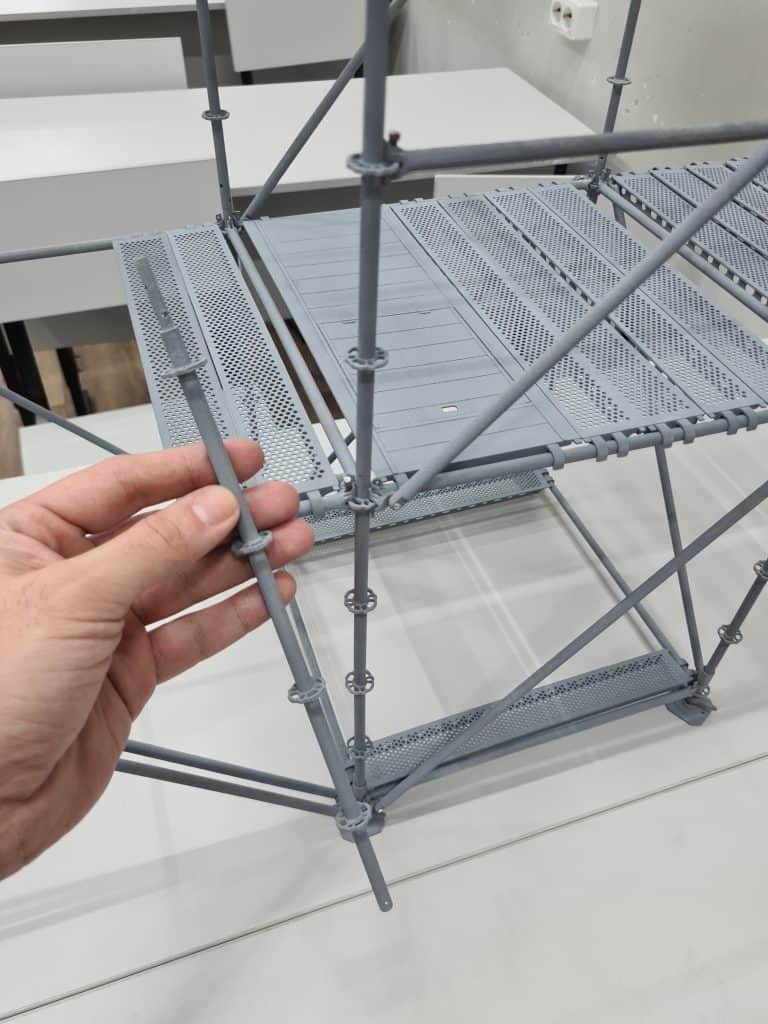
The centre also makes use of a miniature modelling system called BabyScaff, which is an exact replica of the ring-type scaffold system and is used to explain assembly, loadings and stability of scaffolds.
Training Centre CEO Evgenii Guseinov said: “We are extremely pleased to be working with SIMIAN International and very proud to have opened the first CISRS centre in Russia. We have been delivering our own successful training programme for several years, however, gaining third party approval from CISRS which is recognised as the international standard for Tube and fitting scaffolding training, is another step forward and will set us apart from our competitors.”
Polati are a very large Scaffolding Supplier and Contracting company with around 3,000+ scaffolders in Russia and surrounding countries. In 2017 they worked on the Lakhta Tower project in St Petersburg, at 448m it was the largest building in Europe which involved around 250 Scaffolders using over 700 tonnes of Layher Allround Scaffolding in extreme weather conditions.
They have several depots across Russia and are looking to open additional CISRS OSTS approved facilities in the near future, including one in Kazakhstan.
Work at height safety training and temporary safety systems company, G&M Safety Netting Ltd/G&M Safe Deck have re-branded.
The Cheshire based firm is also celebrating its 20th year in business. Established in 2001-2 by founders Geoffrey Irlam and Managing Director Mark Pickles. The G&M Group is still trading as G&M Safety Netting Ltd / G&M Safe Deck and continues to be a family-run business today.
They deliver quality safety training and safety-enhancing products to the UK construction sector’s main contractors nationwide.
Based at Middlewich in Cheshire – where there is now a state-of-the-art training facility in place offering a wide range of FASET and other courses to riggers, deckers and managers alike.
The firm has grown to now have operational centres in the Midlands and South West, serving the construction, house-building, timber-frame and other sectors country-wide.
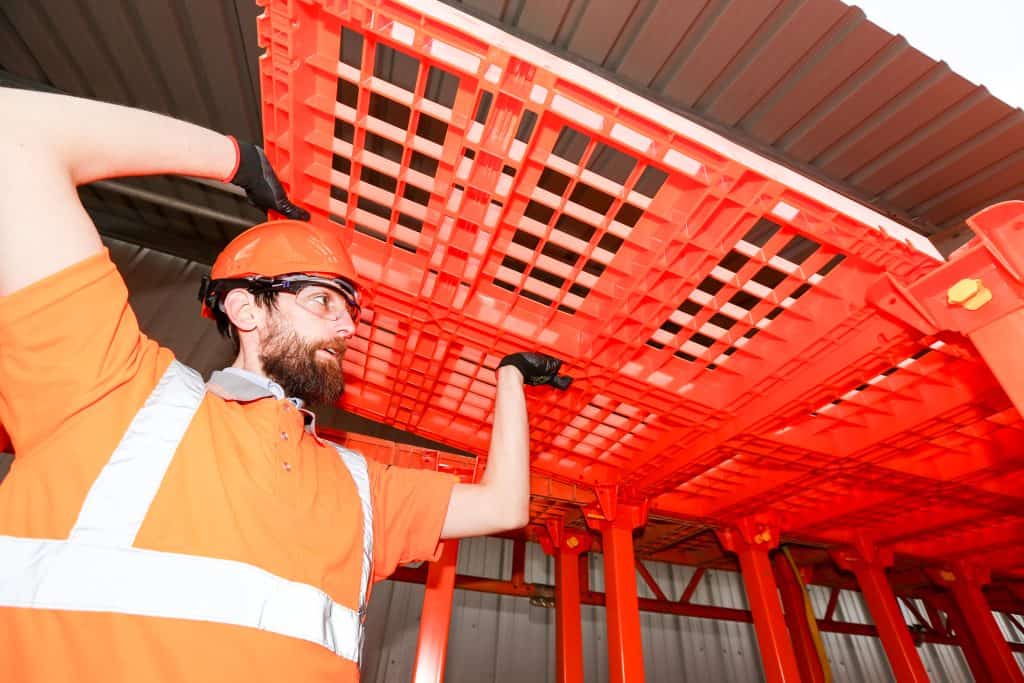
The decision to re-brand to G&M Group has come as the business is set to launch a series of innovative new products in their 20th anniversary year, which will boost their existing offerings of G&M Safe Deck, G&M safety netting, stair towers, edge protection, rope access and other leading work at height safety products.
G&M Group Managing Director, Mark Pickles said: “The launch of the G&M Group brand is a fantastic way to celebrate two busy, successful decades of trade within the construction sector. We are so lucky to have kept some of original team members – including Sean Barber – and to have such a great team of people in the office training centre and on-site installing. WE are a great team offering the best products, training and customer service. “And with three new safety-enhancing, time and money-saving products about to launch in 2022, the future looks bright for the G&M Group and our many valued customers. Here’s to the next 20 years!”
48.3 Scaffold Design Limited, a part of the Richter group companies, has opened its latest office in Glasgow, Scotland.
The expansion into Scotland marks the next exciting step for the group business which has enjoyed considerable success and growth throughout 2021.
Schemes such as the £4m Great North Rail Project replacing a key piece of transport infrastructure, the continued relationship with the East West Rail Alliance, large scale project works on HS2, Hinkley Point C, and numerous re-cladding projects, have all benefited from the companies’ experience and expertise.
The group, comprising of 48.3, R W Clarke Limited and Preene Groundwater Consulting have come together over the course of the last three years, with the aim of becoming the UK’s leading temporary works design consultancy and provider of technical services to Civil Engineering and Building contractors.
Roger Tice CEng FICE, Richter Group Managing Director said: “Glasgow and the surrounding areas have many talented people and there is a wealth of competent clients, both existing and new who Richter wish to be aligned with. Following recent successful contracts in this location, now is the time expand our geographical presence and the introduction of the new Glasgow office fulfils our business plans. It is great to see this move happen now.”
Ben Beaumont CEng MICE, Richter Group Director added: “With the opening of this Scottish office, we are looking to establish new engineering teams to work with all of our engineering design offices and to champion the success of this new region. Our group businesses are coming together to become one ‘symbiotic’ service offering. We have engineering design roles for all grades and we look forward to hearing from those wanting to join our forward thinking company and to build upon our recent years successes.”
Campaigners are set to stage protests at four Actavo sites across England, Scotland and Ireland to demand that Actavo pays scaffolders the rate for the job.
As previously reported over 50 scaffolders employed by Actavo at British Steel in Scunthorpe are continuing a long-running dispute over pay. The workers are being paid up to 15 per cent below the agreed rate for the job under the National Agreement for the Engineering Construction Industry (NAECI).
The scaffolders will begin continuous strike action this Wednesday (26 January 2022). Supporters of the Scunthorpe scaffolders in their pay dispute are planning to stage protests at key Actavo locations around the country.
14,000 supporters have signed Unite’s petition calling on Actavo’s boss to respect national agreements and pay his company’s scaffolders the agreed rate for the job.
Unite is calling on both British Steel and Actavo to enter into tripartite negotiations with Unite.
Unite general secretary, Sharon Graham said: “Supporters across the UK and Ireland are sending a clear message. Pay the Scunthorpe scaffolders the rate for the job.“British Steel and Actavo need to understand that Unite is standing firm. We will fight tooth and nail to stop the race to the bottom. British Steel and Actavo can’t go on ignoring the issue forever.”
Unite regional officer Richard Bedford said: “We call on both British Steel and Actavo to join Unite in tripartite discussions. It’s time for all parties to get around the negotiating table so the scaffolders can get back to work.”
BLC Construction Supplies is offering its customers ReActivair – a special coating that eats pollution that can be used for a wide range of scaffold sheeting applications.
ReActivair, the pollution-eating speciality coating is made from naturally occurring materials that improves air quality by using energy from natural sunlight to break down harmful pollutants and odour molecules in the air.
When sunlight hits the ReActivair coating, it prompts a series of reactions taking humidity and oxygen from the air turning them into cleaning agents that scrub the air of volatile organic compounds (VOC’s) and Nitrious oxides (NOx), also known as smog.
Bristol-based BLC Construction Supplies say It can be used on a wide range of sheeting applications like Building wraps, Scaffold sheeting, Netting and Rail and Roadside billboards.
Results from tests at Sheffield University show 1m2 of coated material can take out approx 2g of NOx per day. As an example, just 1 roll of 2m x 45m scaffold sheeting (c.90m2) coated completely with ReactivAir, will potentially remove the pollution created by 250 cars, every week.
Band of Builders (BoB) has unveiled ambitious plans to complete a record-breaking 12 projects in 2022 for fellow tradespeople and their families facing hardship.
The registered charity – which completes practical projects to help members of the UK construction industry who are battling illness or injury – is set to double the amount of projects it completed last year and is busy mobilising its members ready for projects as far afield as Plymouth, South Shields and its first one in Northern Ireland.
BoB has also been working closely with its partners and supporters – which include some major names within the construction industry, including DEWALT, Jewson, Tarmac, Gibbs & Dandy, V12 Footwear, Talasey, Resideo and Haemmerlin – to start to arrange the ring-fencing of materials for each project.
Gavin Crane, the Chair of the Board of Trustees of the fast-growing charity, which was formed in 2016 and has already completed more than 20 projects, said that BoB is gearing up to meet the challenge of completing a project per month.
“Requests for support have hit an all-time high from tradespeople right across the spectrum of the UK construction industry, and we are taking BoB to the next level to help as many people as we can this year,” said Gavin.
“None of this would be possible without the generosity and commitment of our members and other tradespeople who volunteer their skills and time for free to be part of the BoB community, delivering projects that are life-changers for the recipients.“Projects this year range from complete home renovations – like the one we completed at the end of last year for Cher Little, a mum of two and partner of plasterer Mark; she was left relying on a wheelchair after having her legs amputated due to contracting meningococcal septicaemia, a rare and often fatal bloodstream infection – through to landscaping projects for housebound former tradespeople so they can enjoy their gardens.”
Projects in the pipeline for this year include ones for:
A 51-year-old father of four in Hertfordshire who fell 20 ft from scaffolding after having a seizure and has since been diagnosed with a brain tumour
A 40-year-old man from Walsall who suffered spinal cord damage after a heart operation went wrong and left him permanently disabled
A 63-year-old former brickie from Northern Ireland who suffers from progressive multifocal leukoencephalopathy (PML) – a breakdown of his immune system
An electrician from Loughborough whose 5-year-old son has cerebral palsy and cannot sit up unaided
The wife of a plasterer from South Shields who has ovarian cancer, which is spreading
A 55-year-old father of two who was a building surveyor before he suffered a hypoxic brain injury caused by lack of oxygen due to a heart attack, currently in neuro rehab
Ahead of each project, the BoB team assesses the requirements of the project – such as the trade materials required – and then engages with merchants and its membership base for support.
Gavin added: “We have amazing backing from the industry, but every little bit helps, so if anyone wants to help in any way, we always welcome support – whether it’s financial, materials or anything else. Anyone who wants to get involved can email [email protected] for more information.”
The projects won’t be the sole focus of BoB’s activities in 2022, as the charity will also continue with vital initiatives such as the Big Brew. This will take place again this October and encourage tradespeople to come together and talk over a cuppa in a bid to remove the taboo around mental health in the sector – at a time when the suicide rate of UK construction workers is estimated to be as high as two people every day.
Peter Cape, Big Brew lead at BoB, said: “Our first Big Brew – which was sponsored by Resideo – proved to be a real lifeline for people right across the construction industry and showed us that there is so much more to do on this. We see the struggles of our colleagues within our community on a regular basis and see peer-to-peer support as vital to addressing this crisis.”
Registrations are open for the next Big Brew at https://www.bandofbuilders.org/get-involved/the-big-brew/
Yorkshire-based manufacturer, ITP Ltd, has secured a contract to supply scaffold sheeting for the multi-million-pound makeover of Leeds’ most iconic building.
The company’s Powerclad Standard FR system has been installed as a key element in support of major refurbishment at Leeds Town Hall, which is one of the largest town halls in the UK and currently stands as the city’s eighth tallest building.
Originally opened in 1858 by Queen Victoria, the Grade I listed building will benefit from a wide-ranging project to secure its legacy for future generations.
Designed by Page Park Architects, the refurbishment will use specialist decorative artists to carry out the renewal of the original features in the hall alongside the addition of several new features including new seating, enhanced soundproofing, vastly improved public access, additional toilet facilities, two new bars and new event space.
The venue – which saw 340,000 visitors last year – is used to host live music, comedy, film screenings, entertainment and many of the city’s renowned arts and cultural events. The facility is due to reopen in 2022 in time for the 2023 city-wide cultural festival.
Award-winning scaffold company, IBN Scaffold Access Ltd, is using ITP’s Powerclad Standard FR 2.2 sheeting throughout the project to protect the building during its renovation. The product’s certified flame retardant material has been tested to the highest standard by independent regulators and follows all relevant standards and regulations. At Leeds Town Hall, Powerclad sheeting is improving the safety and security of the site while minimising the environmental impact of development work.
David Brown, Managing Director of IBN Scaffold Access Ltd, said: “We have worked with ITP on many major developments and their products and customer service are consistently outstanding. Powerclad will provide robust and reliable containment and protection throughout the timeline of this refurbishment. The product meets the rigorous performance requirements of IBN’s comprehensive quality control program which is designed to deliver customer satisfaction in every project.”
ITP Account Manager, David Gilmore, added: “We are proud to see our sheeting being used to facilitate the rejuvenation of one of Leeds’ most well-known and well-loved buildings. Leeds Town Hall is one of the numerous high-profile projects across the globe which feature our Powerclad systems, which have gained recognition throughout the construction sector for their strength, durability and flame retardancy. Contractors and scaffolding specialists also appreciate the quality of our manufacturing, with total batch traceability, and our ISO 9001 certification which demonstrates the reliability of our services and products.”
CITB boss Steve Radley who holds the position of Director of Policy and Strategic Planning is set to leave CITB in the spring.
The Construction Industry Training Board (CITB) has announced its Director of Policy and Strategic Planning, Steve Radley, will be leaving the CITB in March 2022.
Steve joined CITB in 2014 and since then has led the company’s engagement with the government and the construction industry to establish an evidence base that has underpinned CITB’s approach for almost eight years.
“It has been a real privilege to be part of CITB for the past eight years,” Steve said.
“During this time, I have had the opportunity to shape how CITB supports the construction industry, using the levy funding more strategically and strengthened our relationship with government and helped to secure key areas of funding and support. I’ve enjoyed working with the many talented people within CITB and our partners. “I joined CITB to make a difference and look forward to seeing the industry continue to grow and thrive.”
Tim Balcon, CITB Chief Executive, added: “Steve has brought to his role significant insight and dedication. He has been instrumental in ensuring CITB has a strong voice around key issues including the outlook for industry skills, migration and NetZero. He also played an instrumental role in CITB’s response to the pandemic.“We wish him all the very best for the future and thank him for all that he has achieved for CITB and the industry.”
Scaffolders employed by Actavo at British Steel in Scunthorpe have voted for more industrial action in 2022.
After 12 weeks of strike action in 2021, 83 per cent of the workers voted in favour of more action in 2022. The scaffolders have agreed to begin continuous strike action beginning on Wednesday 26th January.
In the long-running dispute over the scaffolders pay Unite said Actavo and British Steel need to take responsibility for the ‘mess’ they have created by refusing to apply the national agreement and pay workers the rate for the job.
The scaffolders are in dispute with their employer Actavo (UK). But Unite says that the client, British Steel, must also take responsibility for this long-running dispute.
Problems began in 2019, as a result of the scaffolders not being paid in line with the National Agreement for the Engineering Construction Industry (NAECI). The rates for the workforce are currently between 10-15 per cent (depending on specific roles) below these rates. The workers maintain 500 scaffolding structures at the British Steel site.
Unite general secretary, Sharon Graham said: “Both Actavo and British Steel need to take responsibility and sort this mess out. I hope this overwhelming vote for more strike action in 2022 will focus minds and spur the management into action to resolve this dispute.“The employers could have industrial peace in 2022. Or else we are prepared to fight tooth and nail to stop the race to the bottom.”
Unite regional officer Richard Bedford said: “There is an unwavering determination to protect the national agreement and the rate for the job. We call on both British Steel and Actavo to join Unite in tripartite discussions. It’s time to stop passing the buck and for all parties to get around the negotiating table so the scaffolders can get back to work.”
Help Inside the Hard Hat, the latest awareness campaign from the Lighthouse Construction Charity goes on tour on 7th February for a week, to raise awareness of the charitable support services available to the construction industry, allied trades and their families.With their mission that “No construction worker or their family should be alone in a crisis” the tour aims to deliver the message directly to frontline workers along with information about the crucial services that the charity provides.The five-day tour will visit various locations across the Midlands from 7th – 11th February. The charity is asking companies and sites to contact them if they would like a visit from the ‘Hard Hat’ tour team to deliver the charity’s messages directly to those that might need support and there will also be a great range of prizes and freebies up for grabs. To request a visit by the Help Inside the Hard Hat tour, contact Andy Stevens on; Twitter @Andystevenstv Email [email protected]The tour will be hosted by three familiar faces in the construction industry media and loyal supporters of the charity, Andy Stevens from @andystevenstv, Rob Muldoon @myhpodcast and Matt Dunleavy @d5constuctionltd. Their down to earth, relatable approach and first-hand life experiences are a winning combination sure to make the tour a huge success. Bill Hill, CEO of Lighthouse Construction Charity said, “There is a marked increase in suicides within the trades, machine operators and our unskilled labour force. Over 50% of this workforce are either self-employed, agency workers or on zero-hour contracts and are often part of the subcontracted labour force on our construction sites. This suggests that communication about the support services we have available are simply not getting through to these workers and they are the ones that need us the most”.In the UK, two construction workers take their own lives every working day and stress, anxiety and depression account for a fifth of all work-related illnesses. The charity’s ‘Help Inside the Hard Hat’ campaign has already helped to raise vital awareness of poor mental health within the industry. Over 35,000 posters have been downloaded and sites across the country have shared the campaign message on site hoardings. The campaign has also seen the Help Inside the Hard Hat message on vehicles, mobile working platforms and cranes. To find about more about the work and services the charity offers visit :www.Lighthouseclub.orgIf you or anyone you know needs help today you can contact the Construction Industry Helpline 24/7: UK 0345 605 1956 or ROI 1800 939 122For more information and to download free resources visit Help Inside the Hard Hat
We use cookies on our website to give you the most relevant experience by remembering your preferences and repeat visits. By clicking “Accept”, you consent to the use of ALL the cookies.
This website uses cookies to improve your experience while you navigate through the website. Out of these, the cookies that are categorized as necessary are stored on your browser as they are essential for the working of basic functionalities of the website. We also use third-party cookies that help us analyze and understand how you use this website. These cookies will be stored in your browser only with your consent. You also have the option to opt-out of these cookies. But opting out of some of these cookies may affect your browsing experience.
Necessary cookies are absolutely essential for the website to function properly. These cookies ensure basic functionalities and security features of the website, anonymously.
Cookie
Duration
Description
cookielawinfo-checbox-analytics
11 months
This cookie is set by GDPR Cookie Consent plugin. The cookie is used to store the user consent for the cookies in the category "Analytics".
cookielawinfo-checbox-functional
11 months
The cookie is set by GDPR cookie consent to record the user consent for the cookies in the category "Functional".
cookielawinfo-checbox-others
11 months
This cookie is set by GDPR Cookie Consent plugin. The cookie is used to store the user consent for the cookies in the category "Other.
cookielawinfo-checkbox-necessary
11 months
This cookie is set by GDPR Cookie Consent plugin. The cookies is used to store the user consent for the cookies in the category "Necessary".
cookielawinfo-checkbox-performance
11 months
This cookie is set by GDPR Cookie Consent plugin. The cookie is used to store the user consent for the cookies in the category "Performance".
viewed_cookie_policy
11 months
The cookie is set by the GDPR Cookie Consent plugin and is used to store whether or not user has consented to the use of cookies. It does not store any personal data.
Functional cookies help to perform certain functionalities like sharing the content of the website on social media platforms, collect feedbacks, and other third-party features.
Performance cookies are used to understand and analyze the key performance indexes of the website which helps in delivering a better user experience for the visitors.
Analytical cookies are used to understand how visitors interact with the website. These cookies help provide information on metrics the number of visitors, bounce rate, traffic source, etc.
Advertisement cookies are used to provide visitors with relevant ads and marketing campaigns. These cookies track visitors across websites and collect information to provide customized ads.

 Dave Mosley, CISRS Managing Director, said: “The centre is fitted out to the highest specifications, with brand new materials, tools and PPE. There are several classrooms but one is particularly impressive as it houses both an independent and a hanging scaffold actually within the classroom.”
SIMIAN International Managing Director Ian Fyall added: “We are delighted to be partnering Prostaff in this venture and moving both SIMIAN and CISRS’ footprint into another part in the world. We are looking forward to training and assessing their instructors and giving advice and guidance going forward.
“It’s been 12 months in the making due to Covid but we eventually got there”
Dave Mosley, CISRS Managing Director, said: “The centre is fitted out to the highest specifications, with brand new materials, tools and PPE. There are several classrooms but one is particularly impressive as it houses both an independent and a hanging scaffold actually within the classroom.”
SIMIAN International Managing Director Ian Fyall added: “We are delighted to be partnering Prostaff in this venture and moving both SIMIAN and CISRS’ footprint into another part in the world. We are looking forward to training and assessing their instructors and giving advice and guidance going forward.
“It’s been 12 months in the making due to Covid but we eventually got there”

 Dave Mosley, CISRS Managing Director, said: “The centre is fitted out to the highest specifications, with brand new materials, tools and PPE. There are several classrooms but one is particularly impressive as it houses both an independent and a hanging scaffold actually within the classroom.”
SIMIAN International Managing Director Ian Fyall added: “We are delighted to be partnering Prostaff in this venture and moving both SIMIAN and CISRS’ footprint into another part in the world. We are looking forward to training and assessing their instructors and giving advice and guidance going forward.
“It’s been 12 months in the making due to Covid but we eventually got there”
Dave Mosley, CISRS Managing Director, said: “The centre is fitted out to the highest specifications, with brand new materials, tools and PPE. There are several classrooms but one is particularly impressive as it houses both an independent and a hanging scaffold actually within the classroom.”
SIMIAN International Managing Director Ian Fyall added: “We are delighted to be partnering Prostaff in this venture and moving both SIMIAN and CISRS’ footprint into another part in the world. We are looking forward to training and assessing their instructors and giving advice and guidance going forward.
“It’s been 12 months in the making due to Covid but we eventually got there”

 G&M Group Managing Director, Mark Pickles said: “The launch of the G&M Group brand is a fantastic way to celebrate two busy, successful decades of trade within the construction sector.
We are so lucky to have kept some of original team members – including Sean Barber – and to have such a great team of people in the office training centre and on-site installing. WE are a great team offering the best products, training and customer service.
“And with three new safety-enhancing, time and money-saving products about to launch in 2022, the future looks bright for the G&M Group and our many valued customers. Here’s to the next 20 years!”
G&M Group Managing Director, Mark Pickles said: “The launch of the G&M Group brand is a fantastic way to celebrate two busy, successful decades of trade within the construction sector.
We are so lucky to have kept some of original team members – including Sean Barber – and to have such a great team of people in the office training centre and on-site installing. WE are a great team offering the best products, training and customer service.
“And with three new safety-enhancing, time and money-saving products about to launch in 2022, the future looks bright for the G&M Group and our many valued customers. Here’s to the next 20 years!”