


A former branch manager at MG Scaffolding has been ordered to pay back all the money he gained from fraudulently selling scrap metal.
The 34-year-old had been employed at the Cheltenham based scaffolding firm between September 2017 and October 2018 his job was to oversee the contracts manager and other staff at the company.
Gloucester crown court heard that the man’s fraudulent activity came to light soon after he left the company and the value of the metal that he sold without permission was calculated at just under £6,000, reports Punchline.
Prosecutor, Alec Daymond said: “The amount of fraud was tiny in comparison with the company’s turnover, however it is still detracted from the turnover.”“The company generated very little scrap metal over the years and this consisted mainly of damaged scaffolding poles or ones that had been cut and no longer met regulations.“During 2016 the company generated 780kg of scrap valued at £70, the following year it was 1,240kg which generated £119 and in 2019 the company scrapped metal that was valued at £700.“The normal practice would have been that the metal would have been saved up and taken to scrap metal merchants when there was enough to transport.“The fraudulent activity came to light after he had left the company on July 30, 2019 when the office manager overheard a conversation between the workmen that there was no need to collect a docket to take with him to the scrap metal merchants.“The workman explained that he’d previously taken around 40 small amounts to the merchants, but there was never any paperwork involved.“When the workman arrived at the merchant’s he was asked if the account details was still the same. However, on investigation, it turned out that these details were in fact the bank account belonging to the former scaffolding branch manager.“The scrap metal merchants revealed that there had been 24 transactions between July 2017 and September 2018 that totalled 59,369kg for which the branch manager had received £5,840.20 into his bank account.“He abused his position of being branch manager to dupe the scrap metal merchants into paying into his bank account. This was an abuse of trust which was sustained for a period of 18 months.”
In his police interview, the branch manager claimed that there was a ‘gentlemen’s agreement’ to allow this to happen. The scaffolding company denied this was the case. He later accepted that what he was doing was fraudulent.
Matthew Harbinson, defending, said: “When he arrived at the company he was proactive in cleaning up the yard. In doing so he collected up a lot of scrap metal.“He said most of the metal was offcuts and he decided that as these lengths didn’t meet regulations he would send them for scrap for his own financial gain.“He is prepared to pay the company the amount he gained financially back in full.”
The former branch manager admitted fraudulent activity in that between June 2017 and September 2018 he dishonestly obtained scaffolding tubes belonging to MG Scaffolding and sold them as scrap.
Judge Ian Lawrie QC told him: “You really need to examine your sense of integrity in the light of your offending.“However, I am pleased that you have found new employment in a completely different career. You do need to be punished, however, for the gross betrayal of trust.“You will repay the amount you fraudulently gained back to the company.”
The judge ordered that he pay £5,840.20 compensation to MG Scaffolding and be subjected to an 18-month community order that includes 200 hours of unpaid work He also ordered him to pay court costs of £1,822 and a victim surcharge.
PERI held its first CPD (continuing professional development) event earlier this month to give engineers from Richter and 48.3 Scaffolding Design Limited insight into its scaffolding range and innovative and sustainable applications.
Among the attendees were graduate engineers who had recently joined the construction industry from university.
The event was held at PERI’s new £15 million facility in Brentwood, allowing attendees to get closer to the temporary works systems they are used to working with on screen.
The agenda involved a blend of product knowledge and practical exercises, which gave the engineers a better understanding of how scaffold and formwork designs impact the end user and the construction process on site.
Graduate Engineer at Richter, Huda Lohiya, commented: “I found the workshop really useful; any time I had a question I didn’t feel embarrassed to ask it, which is really important, especially as a woman in engineering.Being able to implement the components and put them together during the practical exercise has helped me to understand some of the struggles on site. So now, when I think about designing a project, I’m thinking of ways to simplify the process and how I can make it easier for those building the system.”
Charles Stratford, Business Development Manager – PERI UP, said: “In today’s world, it’s really important that we share our knowledge and work collaboratively with the whole supply chain. The days are gone where you stand alone in winning major projects and promoting safe working practices. We feel it’s important that engineers have a full appreciation of weight, buildability, and the integration with other systems to be able to put the best design forward.We’ve had a lot of positive feedback around the event, and we look forward to hosting more days like this where we can support the next generation of industry workers as we strive to make the construction process more efficient and safer.”
Swansea Arena hosted careers advisers from schools on Thursday (16 September) to show off the hundreds of different roles involved in construction.
Careers advisers from schools in the Swansea area heard how pupils interested in any subject can find a role suitable for them in the sector.
They were given first-hand accounts of how schoolwork can lead to well paid, structured careers as bid writers, designers, drone operators, lawyers, conservationists, accountants, project leaders, health and safety officers and many more, all involved in some way during the different stages of a construction site.
The first in a series of visits to sites for careers advisers across Wales, titled Building IOK (Industrial Occupational Knowledge), the event involved a demonstration of the Go Construct website, specifically set up by the construction industry to demonstrate the hundreds of roles available, including how to start an apprenticeship.
Pupils from the advisers’ schools would also be offered work experience covering all aspects of construction, while have-a-go equipment can also be brought into school premises.
Andrew Wonklyn, team manager at Careers Wales who attended the event, said: “Site visits like these are really valuable to our advisers so they can continue to have the most up to date knowledge of career paths available and continue to provide the best service possible to the people of Wales. There are many stereotypes about the types of jobs available in the sector so this is a great myth-busting initiative and one that all regions in Wales can benefit from.”
Schools participating included Birchgrove Comprehensive School; Bishop Gore School; Bishop Vaughan RC School; Bishopston Comprehensive School; Cefn Hengoed Comprehensive School; Dylan Thomas Community School; Gowerton Comprehensive School; and Pentrehafod Comprehensive School.
Building IOK is an initiative between Construction Industry Training Board (CITB) Wales and Careers Wales and will continue with careers advisers and schools from all over Wales visiting local building sites.
Rob Davies, CITB Wales Senior Customer Engagement Manager, said: “This is a great way to show that there’s something for everyone in construction, whatever you’re interested in. Due to a labour shortage the sector is crying out for new entrants right now, and offers so many paths into a highly rewarding career, from apprenticeships to Further Education and more.”
The landmark 3,500-capacity Swansea Arena is being built by Buckingham Group Contracting Ltd. This is part of the £135m Copr Bay Phase One regeneration being developed by Swansea Council.
Cllr Rob Stewart, Swansea Council Leader, said: “So much construction is taking place in Swansea at the moment as we transform our city into one of the UK’s best places to live, work, study and visit. “Not only will the combination of these schemes create a far better city for our residents and businesses, but they are also generating construction jobs for local people while inspiring our schoolchildren to explore careers in the construction sector. With schemes like Copr Bay phase one also attracting further private sector investment in Swansea, the construction sector is set to continue to play a key role here in coming years.”
Susan Jones, Buckingham Group Major Projects Social Value Manager, said: “With an increasing average age of 42.5 in the industry, we need more young people to see the benefits of working in construction so they choose it as their career path. Without this, the skill shortage will become critical within the next few years.
“It has been a pleasure to work with Careers Wales and CITB where we have been able to introduce future prospects to pupils, and offer a more rounded understanding of construction career opportunities.”
Find out what construction career you’re best suited to at Go Construct.
In a bid to simplify the card application process CSCS have made changes to its Gold Cards.
The Construction Skills Certification Scheme (CSCS) no longer require applicants applying for the Supervisory Gold card with an OWS N/SVQ to submit additional evidence demonstrating competence in their occupation.
The change comes after consultation with the National Working Group (NWG) for Occupational Work Supervision (OWS).
Applicants need only to provide evidence of their OWS N/SVQ and to have passed the Specialist Supervisor level CITB Health, Safety and Environment test within the last two years, CSCS has said.
The announcement from the National Working Group also means that CSCS will stop printing the occupational endorsement on the reverse of the card for any new card applications received from 1st October 2021.
Garry Mortimer, Operations Manager at CSCS said: “CSCS supports the findings of the National Working Group. The removal of the endorsement will simplify the card application process for our applicants.”
The NWG accepts that it is the responsibility of all employers to ensure that their supervisors are competent to carry out their duties.
The NWG for OWS has approved any of the following entry requirements for those taking the OWS NVQ or SVQ:
the individual’s occupational industry experience prior to being registered for the Occupational Work Supervision qualification
the individual’s ability and experience in supervising teams
the individual is occupationally competent to at least level 2 or SCQF level 5 in construction
Awarding Organisations must ensure that candidates provide evidence to demonstrate relevant verifiable experience. This evidence must be verified prior to being registered for the OWS N/SVQ and should meet the following criteria:
The candidate provides evidence to demonstrate relevant verifiable experience and competence in their occupational area for example: qualification to N/SVQ Level 2 or SCQF Level 5, or
A letter from the employer confirming the candidate’s suitability and a professional discussion or portfolio evidence of previous experience.
Garry Mortimer continued: “To ensure safety on-site, it is vital that the Awarding Organisations verify candidates’ evidence before approving their entry onto the N/SVQ.“Similarly, employers have a duty to not only check the CSCS card thoroughly to ensure the holder has achieved the OWS NVQ, but to ensure that their supervisors are competent to carry out their duties.”
The Lighthouse Construction Industry Charity has just released its 2020 Impact Report which demonstrates the vital support they provided in 2020.
Against the backdrop of the Covid-19 pandemic and three national lockdowns, the charity was able to provide a lifeline to 2264 families in crisis and delivered £1.287M of charitable giving.
For the first time ever, the report also details the social value created by the charity which equates to £7.48 for every £1 of charitable spend.
It was of little surprise to see increased demands on the charity’s 24/7 Construction Industry Helpline resources and the number of complex cases needing multiple interventions increased by 70%.
These cases were managed by caseworkers who have expertise in pulling together all the available resources to provide all-round support.
40% of calls handled by the charity’s caseworkers mentioned struggles with mental health issues and 4% of callers mentioned an attempted suicide.
21% of cases were for issues directly related to Covid-19 and the charity responded quickly to urgent requests for financial support with household bills, emergency food deliveries and helping with debt.
Despite these challenges, the charity’s caseworkers leveraged an amazing £564,000 by working with 3rd party sources before releasing charitable grants, meaning more support, to a higher quality and at a lower cost per case.
The report also details major developments in the charity’s education and training programme. In response to the restrictions on face to face training, all courses were augmented so that they could be delivered online and free of charge, with over 1500 people attending courses ranging from coping with stress through to resilience and mindfulness.
The ongoing success of a major national project funded by the CITB delivered a further 41 Mental Health First Aid Instructors into the industry.
One of the highlights of the year was the launch of a dedicated free helpline number for the construction community in the Republic of Ireland and working with the Construction Industry Federation is ensuring that construction colleagues in Ireland can access the same support as their counterparts in the UK.
Bill Hill, CEO of the Lighthouse Construction Industry Charity said, “Our hard work continues and as well as detailing our achievements so far, our impact report also outlines our accelerated plans for expanding the charitable services we offer. We must ensure we continue to pro-actively support the industry’s mental wellbeing and make our services easy to access and freely available to everyone and I am proud to say that we have been able to provide life changing support to our construction community. But our work is only possible due to the fantastic support we receive and I would like to thank every single person and company that has helped us, especially during these difficult and uncertain times. You have helped us take another step towards our mission to ensure that no construction worker or their family is alone in a crisis.”Read the 2020 Impact Report here.
The Scaffolding Association aims to help its members and the wider industry after publishing a first-of-its-kind Clean Air Zone Tracker
The UK’s largest scaffolding trade body the Scaffolding Association has today published details that demonstrate the scale of Clean Air Zones (CAZ’s) being introduced across the UK.
Bath, Birmingham, and London already have schemes in place which are imposing charges on certain light and heavy commercial vehicles to enter specific areas and nearly a dozen more major towns and cities across the UK are at the advanced stages of introducing similar arrangements.
In recent years, the government has increased pressure on local authorities to improve air quality and many have chosen to introduce charges to deter the most polluting vehicles from entering their towns and cities.
The devolved powers that these local authorities have been given from central government have led to inconsistencies to the types of vehicles affected and the charges being applied from one town or city to another causing significant confusion for fleet operators.
The Scaffolding Association has said its pleased to be able to provide their CAZ Tracker which will help their members and the wider sector to understand the implications and support them when quoting for work and planning their journeys.
Chief Executive of the Scaffolding Association, Robert Candy, said “It is inevitable that our members working in urban areas will be impacted by Clean Air Zones now or in the very near future. Daily charges from £2 for LGVs to £300 for HGVs must be factored in when tendering for work and planning vehicle movements.”He added “it is disappointing that local authorities see fit to penalise those working to build, repair or restore within their towns and cities. The construction industry has no feasible alternative to using commercial vehicles and more time should have been given for these businesses to upgrade to newer cleaner vehicle technologies in order to avoid charges.”
He said, “The average lifespan of a HGV is 12 years and businesses which have invested in vehicles that are now affected by CAZ’s have seen their values decimated and it will now be very difficult to sell them on.”
Munich based KEWAZO has raised a further $5 million in investment from a leading investor in Silicon Valley
Kewazo has today announced that venture capitalists True Ventures have become investors in the business to help scale its robotic fleet of ‘Liftbot’ into the $50 billion scaffolding industry.
Existing investor MIG AG, a Munich-based venture capital firm and one of the founding investors in BioNTech, also participated in the round.
New investors True Ventures provides seed and Series A financing to entrepreneurs in today’s fastest-growing markets. True Ventures has helped more than 300 companies launch and scale their businesses, creating more than 25,000 jobs worldwide.
Kewazo’s scaffolding robot ‘Liftbot’ has now raised a cool $9 million in total following a series of funding rounds since 2018 when its robotic material hoist was just a prototype.
Initially, Kewazo is focused on scaffolding assembly — a $50 billion industry. During the building or dismantling of scaffolding, more than 80 percent of projects are still done completely manually.
‘Liftbot’ makes assembly more efficient by automating manual material transport. Using the robot saves up to 44 percent of man-hours, which directly addresses the labour shortage, a long-term problem in the industry, says Kewazo.
The robot reduces the risk of accidents and improves working conditions on-site. With minor adjustments, the technology can be applied to additional tasks such as insulation, painting and other on-site material transport.
Liftbot also collects operational data and provides it to customers in the form of a data analytics platform. Those insights aid planning and improve profitability, and customers benefit from faster, more predictable projects.
Scaffmag understands that a number of UK scaffolding contractors are currently piloting liftbot on some high-profile projects.
Artem Kuchukov, CEO of Kewazo told us: “We’re excited to have found a partner in True Ventures that understands our vision of bringing robotic technology to the construction industry.” “With the new investment, we aim to expand our robotic fleet in Europe and the U.S., to introduce the RaaS model, and to enable further digital services. LIFTBOT improves worker safety, makes jobs more efficient, and drastically cuts the amount of man-hours projects take, all while saving money.” “Since our Seed-Investment in 2018, Kewazo has come a long way from prototype to the marketable and robust LIFTBOT system. Having True Ventures now leading the Series A round takes the company to the next level and we are proud to further support Kewazo’s international development”, states Matthias Guth, MIG Venture Partner and Kewazo Board member.
The first batch of ‘Liftbots’ has been successfully delivered to key customers in the EU markets. Prospective projects worldwide include scaffolding assembly at greenfield projects and maintenance jobs at construction sites, oil and gas refineries, power plants, and shipbuilding yards.
Kewazo has completed more than 40 pilot and test projects, and has delivered robots to major customers like Bilfinger, a leading European industrial service provider, on oil and gas sites in Germany.
“We have tested Liftbot during ongoing operations and immediately recognized the potential of the solution,” said Alexander Brod, branch manager of Bilfinger Arnholdt in Gelsenkirchen. “With innovative technologies from the fields of robotics and automation, we offer our industrial customers an even safer and more efficient service.”“So many aspects of the construction industry stand to benefit immensely from robotic intelligence and RaaS offerings,” said Puneet Agarwal, partner at True Ventures. “The Kewazo team has a strong track record and proven solution that addresses a significant need in a critical part of the industry. We’re excited to fund this team and help them expand to new verticals in construction and other markets.”
The scaffolding industry is being urged to get involved with the ‘Big Brew’ – a new national campaign to highlight the mental health crisis in the construction sector.
The Big Brew will start on 1 October and will encourage scaffolders and other tradespeople to connect and talk over a cuppa in a bid to remove the taboo around mental health across the construction industry.
The event is the brainchild of the national construction charity Band of Builders (BoB), which is organising a range of events on construction sites and at builders’ merchants up and down the UK to encourage people within the industry to come together to discuss mental health issues and support one another, breaking down the stigma around mental health – and also helping the charity fund its vital services.
Resideo (through its Honeywell Home brand), Jewson, DeWalt and JW Grant are supporters of the Big Brew and have already pledged to host events throughout October.
The campaign comes amid a mental health crisis within the industry, with the suicide rate of UK construction workers estimated to be as high as two people every day. UK construction workers are also nearly three times more likely to die by suicide than their counterparts in other industries.
Further shocking figures show that:
In the UK alone, more than 400,000 working days were lost to mental health issues in 2018 (55% of all days lost)1
Mental health issues cost the UK construction industry approximately £37 billion every year
A survey in 2019 found that 90% of construction managers said they had struggled with their mental health2
BoB is a registered charity that helps members of the UK construction industry who are battling illness or injury. It does this through the completion of practical projects, with volunteer tradespeople giving up their time to work on these projects, while materials are donated by companies across the construction industry.
Peter Cape, Big Brew lead at BoB, wants to encourage tradespeople to get involved with the Big Brew.
“It’s so important that members of the construction community look out for each other, including talking about mental health or looking for the telltale signs that fellow roofers may be struggling – and what better way to do it than over a brew, especially a big one,” said Peter.
He went on to say: “We are all acutely aware of the mental health crisis within construction. Suicide rates in the sector were already at one per day before the COVID pandemic, according to ONS figures, and it’s widely accepted that these have worsened to closer to two per day3.“At Band of Builders, we see the struggles of our colleagues within our community on a regular basis and see peer-to-peer support as vital to addressing this crisis. That’s where the Big Brew comes in. By encouraging people to do such a basic thing – sharing a brew – we want to create a space where tradespeople and others in the sector can share experiences, break down taboos around mental health and support one another. The Big Brew isn’t just about a few one-off events but about creating something long term that will address one of the biggest issues in our industry all year round.”
What the Big Brew will fund
Anyone can host a Big Brew – and builders wishing to register to host their own events can visit https://www.bandofbuilders.org/the-big-brew/ to find out more. Hosting a Big Brew will offer a place for people to meet and share a cuppa. It will also help raise funds to provide a range of mental health support services aimed at members of the UK construction industry and focused on supply chain companies, small businesses and the self-employed, who were recently discovered to be at higher risk than those working in larger organisations.
These support services will include:
Funding dedicated industry mental health support lines
The provision of interim counselling services to support members of the UK construction industry
The provision of counselling support for BoB beneficiaries and volunteers
The provision of 300 free mental health awareness course places for small and medium-sized businesses and the self-employed. BoB will also work with fellow construction charity The Lighthouse Club and partners on the Beacons campaign, which aims to increase the provision of, and access to, regional peer support groups
Know your wellbeing STATS
Peter Cape added that, as part of the campaign, the Big Brew will encourage tradespeople to remember their wellbeing STATS and support one another:
S – Support each other
T – Talk about it
A – Always ask twice
T – Take it seriously
S – Stop the cycle
He said: “Wellbeing STATS around mental health are vital, and we hope that the Big Brew will be a way for tradespeople to start opening up, even just a little bit, because we all need to do everything we can to start reversing the mental health crisis in the construction sector.”
Support the Big Brew at https://www.bandofbuilders.org/the-big-brew/
Teams from Lyndon SGB’s Leeds branch are busy supplying complex scaffolding and access solutions on a landmark modern construction project in Leeds city centre
The £105m construction scheme lead by Galliford Try is set to transform the South West of Leeds city centre, on the former Monk Bridge steelworks site, just off Whitehall Road, bordering onto the Leeds-Liverpool canal.
The 665-home development (being constructed on behalf of Highline Investments) consists of five new-build residential tower blocks and more than 15 scaffolding operatives from Lyndon SGB have been at work on the site since August 2020 and will be in action there until August 2022.
The scaffolding project features an in-house designed, highly detailed Cuplok access scaffold combined with Omega hop-up system – covering the five residential blocks, varying from 12 to 22 storeys in height.
Jonathan O’Connor, Lyndon SGB General Manager at Leeds said: “Monk Bridge is an extremely challenging project in particularly from a logistical perspective. From a location, design and resource point of view as a business we are ideally placed to help Galliford Try deliver this prestigious project. Special praise should also go to Jamie Field & Matt Grosvenor, who received monthly supervisors award in the first month on site.”
Stephen Hart, Project Director at Galliford Try, commented: “We are delighted to be able to start work on such a prestigious high-density residential building development in the heart of Leeds. This scheme is a significant investment in the current economic environment.”
Official figures show an improving picture for the UK jobs market with vacancies hitting new record levels
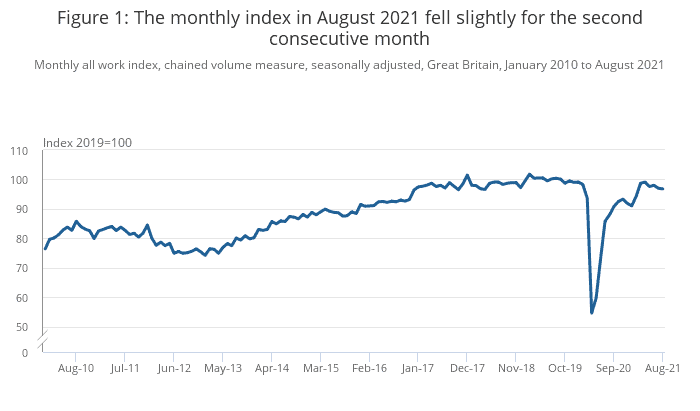
The number of job vacancies available in the UK has climbed to over one million for the first time since records began, says the Office of National Statistics (ONS).
The construction sector has also seen vacancies reach their highest ever level, with 37,000 positions available between June and August. This is an increase of 2,000 from May to July, which, at the time, was another record for the industry.
Scaffolders and other industry operatives are also in huge demand across the country with shortages of skilled scaffolders being reported.
Marco Verdonkschot, Managing Director at IronmongeryDirect, said: “Such high numbers of vacancies suggest that UK construction firms are feeling confident about their future and have sufficient work and finances to be able to increase their staff numbers.
“This is good news for unemployed construction workers, as the number of people out of work currently stands at 53,000. Hopefully they will be able to take advantage of the vacancies and get back into employment.
“They may consider turning self-employed, as the latest data suggests many workers in the sector are doing just that. There was a big jump between March and June, with 28,000 new self-employed construction workers, taking the UK total to 269,000, which is the highest in a year.
“This follows the general pattern in the industry, as the total number of employees in UK construction reached 518,000 in June, which is the highest since records began in 1978.
“There is some regional variation, however, as while some areas, like London (14%) and the West Midlands (6%) saw growth, others experienced slight decreases in their staff numbers, like the East Midlands (-5%) and the North East (-2%).
“This shows that while the country appears to be heading in the right direction and recovering after a long and challenging 18 months, there is still work to be done before everyone is back to where they were before.”
We use cookies on our website to give you the most relevant experience by remembering your preferences and repeat visits. By clicking “Accept”, you consent to the use of ALL the cookies.
This website uses cookies to improve your experience while you navigate through the website. Out of these, the cookies that are categorized as necessary are stored on your browser as they are essential for the working of basic functionalities of the website. We also use third-party cookies that help us analyze and understand how you use this website. These cookies will be stored in your browser only with your consent. You also have the option to opt-out of these cookies. But opting out of some of these cookies may affect your browsing experience.
Necessary cookies are absolutely essential for the website to function properly. These cookies ensure basic functionalities and security features of the website, anonymously.
Cookie
Duration
Description
cookielawinfo-checbox-analytics
11 months
This cookie is set by GDPR Cookie Consent plugin. The cookie is used to store the user consent for the cookies in the category "Analytics".
cookielawinfo-checbox-functional
11 months
The cookie is set by GDPR cookie consent to record the user consent for the cookies in the category "Functional".
cookielawinfo-checbox-others
11 months
This cookie is set by GDPR Cookie Consent plugin. The cookie is used to store the user consent for the cookies in the category "Other.
cookielawinfo-checkbox-necessary
11 months
This cookie is set by GDPR Cookie Consent plugin. The cookies is used to store the user consent for the cookies in the category "Necessary".
cookielawinfo-checkbox-performance
11 months
This cookie is set by GDPR Cookie Consent plugin. The cookie is used to store the user consent for the cookies in the category "Performance".
viewed_cookie_policy
11 months
The cookie is set by the GDPR Cookie Consent plugin and is used to store whether or not user has consented to the use of cookies. It does not store any personal data.
Functional cookies help to perform certain functionalities like sharing the content of the website on social media platforms, collect feedbacks, and other third-party features.
Performance cookies are used to understand and analyze the key performance indexes of the website which helps in delivering a better user experience for the visitors.
Analytical cookies are used to understand how visitors interact with the website. These cookies help provide information on metrics the number of visitors, bounce rate, traffic source, etc.
Advertisement cookies are used to provide visitors with relevant ads and marketing campaigns. These cookies track visitors across websites and collect information to provide customized ads.