
New Fleet Acquisition for Caspian Group
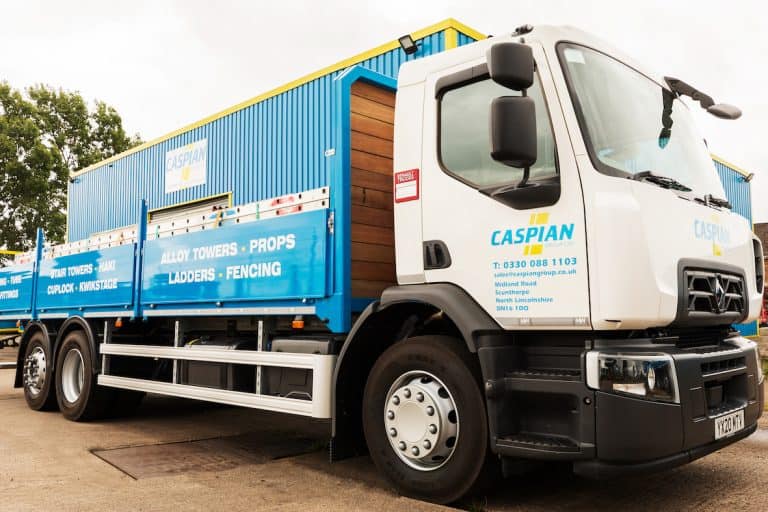
Caspian Group continue their expansion with further investment in their transport fleet.
The Scunthorpe based scaffolding supplier recently added a new Renault D26 wide 6×2 truck to their growing range of vehicles, acquired from Thompson Commercials Ltd, with whom they have worked with to secure most of their current fleet. With the fleet ranging from 3.5 tonne vehicles through to 26 tonne vehicles, which also includes HIAB loader crane trucks, Caspian have incredible flexibility and reliability to meet the growing requirements of their customers across the UK. “Our in-house transport is vital to the success of our business, ensuring our customers receive their orders on time, every time, anywhere in the UK” says Managing Director, Neil Garrison. “Our fleet gives us total control and full flexibility to be able to meet any demands that our customers have, enabling us to provide even higher levels of service.” Investing in their transport fleet is just part of Caspian’s continued growth, having already invested significantly in their Scunthorpe scaffold board manufacturing facility and acquiring a new three-acre site on Scunthorpe’s Grange Lane over the past 18 months.Actavo expands Shoring operations into Scotland
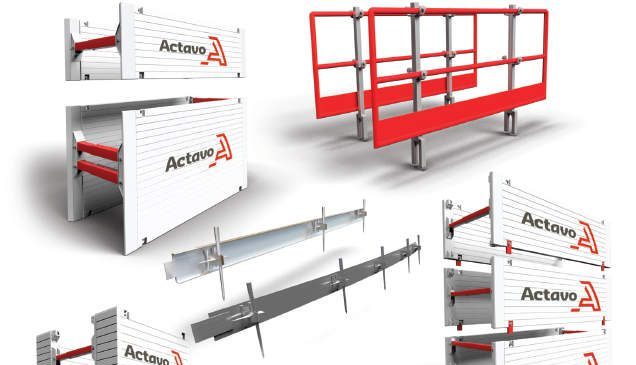
Actavo Hire and Sales has announced that it will continue to expand its shoring operations across the UK starting with Glasgow.
The company has twenty-three branches in the UK and has established Shoring operations in Uxbridge, Raunds and Birmingham. The company’s UK shoring operation is focussed on a range of trenching products ensuring excavation work is carried out using the safest equipment. Actavo Shoring supply Trench Boxes, Manhole Boxes, Drag Boxes, Lightweight Box Systems, Closing Panels, Trench Sheets, Manhole Braces, Walers, Struts, Edge Protection, Fall Arrest Systems, Pipe Stoppers, Gas Detection and other related Shoring products. The existing shoring business was established in 2012 and has secured contracts throughout the South of the UK. Opportunities in Scotland have presented the company with its next move further North to develop its presence, grow its geographic reach and establish a base to grow. Peter Bavister, Director of Shoring UK says, “We are delighted to announce that we are pressing forward with our growth plans and it is a strong testament to the resilience and stability of Actavo Hire and Sales to be doing so given the current situation around the world. We are confident that we have the resources and demand to make this another success in our Shoring Division.” Shoring operations will be open in Glasgow on the 13th of July and will be operating out of Actavo Hire and Sales flagship branch in Scotland located at 2580 London Road, Glasgow, G32 8XZ. “We’re looking forward to offering Shoring products for Hire and Sale across the North of the UK and the stronghold in Glasgow allows us to provide our well-renowned products and services to more of our loyal customers” says Bavister.Scaffolding group announces big recruitment drive after £2M contract win

The JMAC Group are set to create 40 full-time jobs in the North East following over £2m in contract wins and exports to Europe.
The Teesside based group, consisting of J Mac Scaffolding, J Mac Safety Systems & J Mac Industrial Services are proving there’s some positivity on the job front as the COVID pandemic restrictions ease.
Following on from the chancellor’s announcement 8th July, the group has started by launching a national recruitment drive with central office positions based in the Teesside region.
Whilst the impact of the coronavirus has forced many companies to lay off staff, JMAC Group are looking ahead and creating opportunities for a diverse range of skillsets.
The JMAC brand is well known in Teesside and many people will recognise the name from their original company, JMac Scaffolding, which has been part of the construction industry for almost four decades now.
Since then, the JMAC brand has expanded and grown to such an impressive extent they are now looking for more people than ever & showing no signs of being slowed down by recent events.
Within the past month, almost all of their staff have returned from the Government Furlough Scheme, and have now started as they mean to go on, with the appointment of the Group Head of Finance &, Head of Marketing, Hire/Sales Controller/Office Manager, along with a temporary Industrial Operations Manager. The current roles they are actively recruiting for are:
- HR & HSEQ Coordinator
- Business Development Manager
- Industrial Operations Manager
- 5 Hire & Sales Representatives (National) Scotland, Yorkshire and Humberside, South East, North West, Midlands.
- 25 Scaffolders
- 4 Safety Decking Installers
- 2 Drivers
- 2 Yard Operatives
Speaking of the recruitment drive, JMAC Group MD Luis McCarthy said: “The JMAC brand began back in 1981 in Teesside, and that’s something we’re very proud of. Our heritage means we’ll always look to support our area and the people in it. Where possible, we use local suppliers, local people and local products to drive a variety of areas in our business and the coronavirus setback will not stop us from doing so.
The pandemic hit us hard, as it did for many people, but we are coming back harder and faster than ever with a spring in our step following commercial support from Santander & Clive Owen. We are now in a position to create almost 40 Full-time Jobs in the area following over £2m in contract wins and our first exports to Europe.”
Hire & Sales Manager, Aaron Foley, added: “We’ve spent the past few months pushing to ensure we can continue as normal as possible with JMAC after lockdown and it’s really paying off for us. We’ve recently sold a large number of our BrickGuard products to Total in Belgium. We’ve won new contracts with large clients such as Vistry Group, Tolent & Countryside Properties, Thirteen Group, not only this, our locally manufactured products have been dispatched to Persimmon Homes in Scotland showing the construction and housing market is well and truly back.
There are so many exciting things happening, it’s a great time for people to join our team.”
You can contact the JMAC office on 01642 563696 if you have any questions.
TRAD UK enters second phase of replacing 8,000 tonnes of rival Layher stock

The second package of TRAD UK’s 8,000 tonnes of rival Layher Allround system is now up for sale after the firm decided to replace its stock with its own PLETTAC METRIX system last year.
Following the successful completion of the first stage, TRAD UK is now set to commence with the second phase of the programme to replace TRAD Scaffolding’s stock of 8,000 tonnes of Layher Allround with ALTRAD’s system scaffold, PLETTAC METRIX. The system which its maker’s state can dramatically cut the cost of scaffold projects, whilst also improving both on-site productivity and safety. Des Moore, TRAD UK CEO said: “As I stated when we initially embarked on this programme of replacement, the added efficiencies which this provides will not only further grow TRAD Scaffolding’s operational capabilities but will also ensure we can continue to provide cutting-edge scaffolding solutions to our clients. PLETTAC METRIX has proven itself to be one of the most advanced ring-based system scaffolds and is significantly faster than traditional Tube & Fitting Scaffolding, generally giving labour savings from 30% to 50%.” “Since becoming part of the Altrad Group, TRAD has benefitted from significant investment and subsequent growth and this trend continues with further development of the PLETTAC METRIX scaffold system – manufactured in Germany by ALTRAD PLETTAC – including newly implemented automation to increase manufacturing capacity to meet demand.” TRAD believes the PLETTAC METRIX system has many advantages over other ring-based system scaffolds. And being a true modular scaffolding system, PLETTAC METRIX is suitable for use in all construction, heavy-duty industrial and civil engineering applications and is easily palletised allowing for optimal transportation. TRAD Scaffolding was one of the first companies to recognise the advantages and benefits which a systemised scaffold afforded some 25 years ago, and quickly introduced it into all sectors in which it worked. TRAD UK now believes that PLETTAC METRIX takes system scaffold to the next level. If any TRAD UK customers are interested in purchasing TRAD Scaffolding’s Layher stock, please email [email protected] for further details.Scaffolding Training Resumes After Lockdown
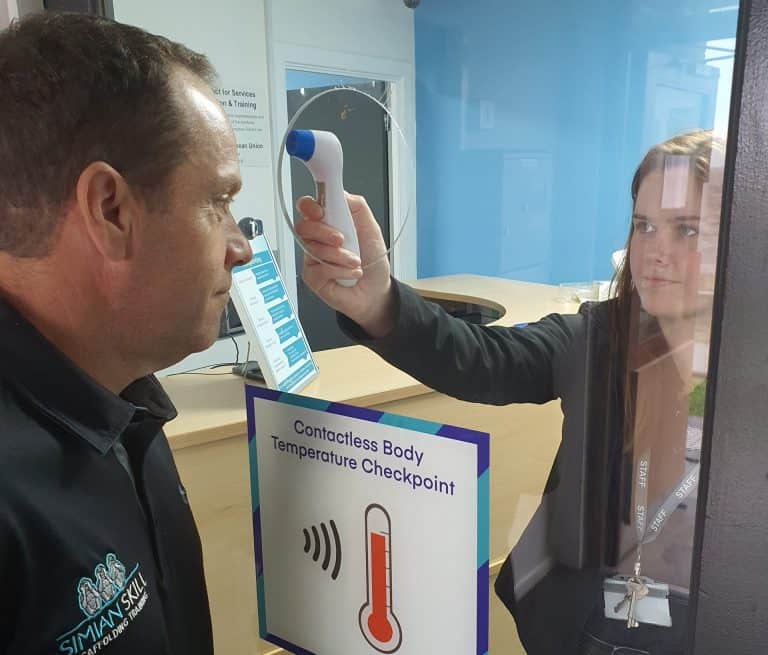
UK Scaffolding training providers are adapting to a ‘new normal’ after cautiously reopening their doors post lockdown.
Scaffolding training is now underway at over 18 locations around the UK, with many more to follow suit in the coming weeks. Providers are showing real resilience after swiftly adapting to overcome government restrictions. The Construction Industry Scaffolders Record Scheme (CISRS) has been working tirelessly with training providers throughout the lockdown to get them back open and COVID ready. Before reopening, CISRS has said that all centres were required to submit detailed risk assessments and method statements with supporting documentation and photographic evidence showing restrictions and precautions put in place to prevent the spread of Covid-19, whilst delivering training. Providers had to cover each step of the training experience from arriving at the centre, moving around the site, getting to classrooms, practical training areas, welfare facilities and getting back home safely. Although, the reduced centre capacity restriction is causing a strain for a number of providers the industry demand for CISRS training is unfaltering. So much so, Scaffmag understands that several scaffolding training providers are laying on extra courses in particular short duration ones like COTS and CPD.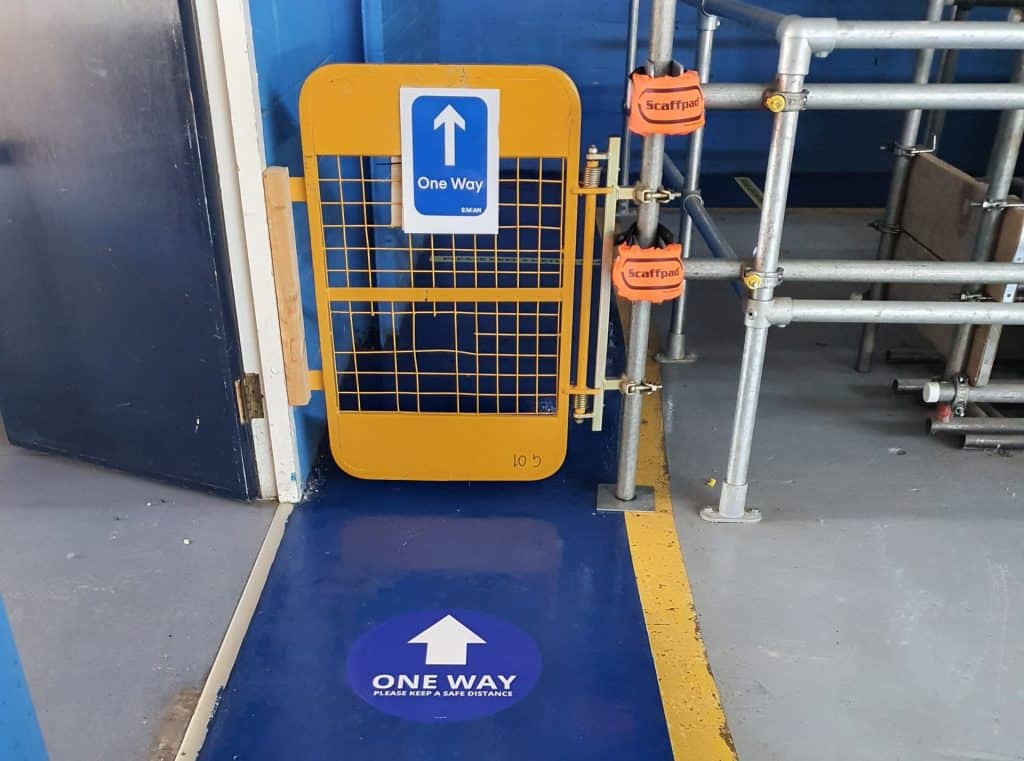
UK Startup Develops Innovative Floating Access System

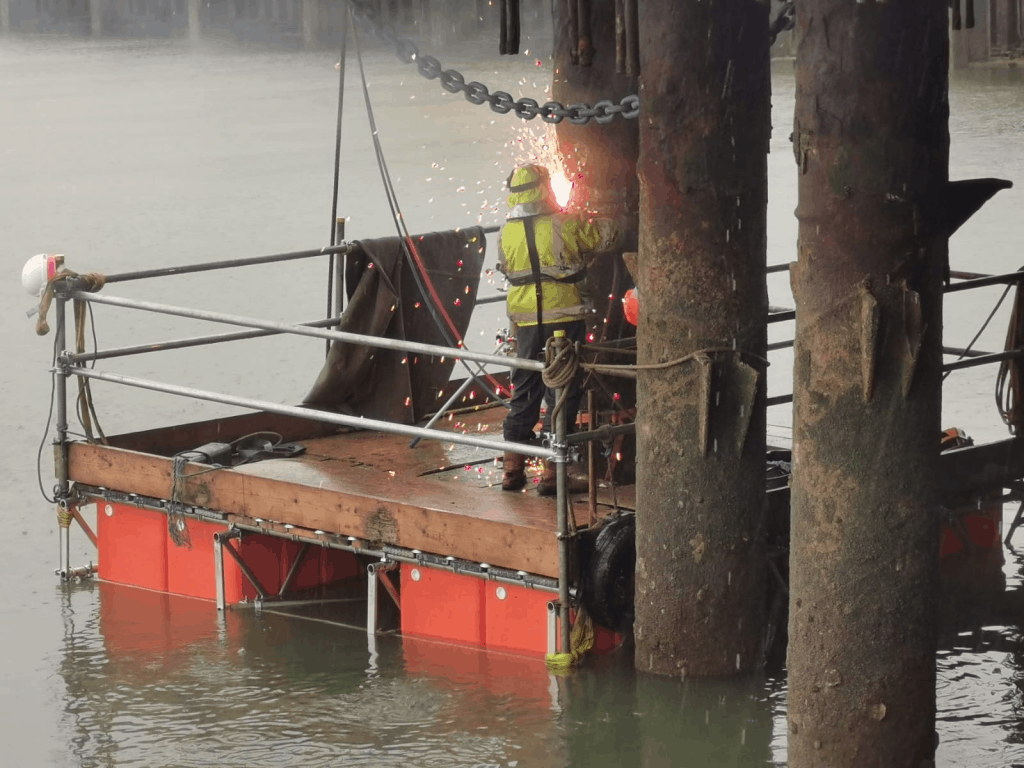
An award-winning Cornish based start-up has developed and patented a new product that allows UK scaffold firms to offer floating access solutions.
The product called ScaffFloat is a set of tough plastic floats that have been specifically designed to integrate with standard scaffolding parts to make floating pontoons, rafts and versatile floating structures. The company has been testing the system in the field over the last few months and now their initial R&D work has been completed, they are starting to introduce the product to the market, take bookings and actively look for UK scaffolding companies that are keen to offer floating access solutions to their customers. Toby Budd, Founder and MD said ‘’We are already speaking to a number of scaffolding companies who are interested in becoming Approved Delivery Partners. After a signed agreement has been put in place, and we have provided the necessary training, they can hire floats from us and use them to start building pontoons for their customers. The interest has been much stronger than we expected.’’ He added, ‘’We appreciate that most scaffolders are not familiar with floating structures, so, as well as hiring them the floats, we provide an in house design service. All our pontoon designs come with full structural, buoyancy and stability calculations and we are happy to produce renders and drawings FOC to help our partners bid for and win tenders, we are also always on the end of the phone to offer advice. Category 3 checks can also be provided for larger projects.’’

 Roger Tice, Managing Director of Richter Associates, said ‘’We are a firm of consulting civil, structural and geotechnical engineers that specialise in temporary works and construction sequences. We are actively working with the ScaffFloat team and offer design solutions to our customers using this innovative system.
We can see all sorts of exciting applications for this within the industry we serve, and in most cases, there are very significant cost savings to be had. 48.3 Scaffolding Design Limited – a Richter group company dedicated to the scaffolding market is proudly working with ScaffFloat, and bringing this system to its existing client base. We endorse this system created by ScaffFloat.’’
Roger Tice, Managing Director of Richter Associates, said ‘’We are a firm of consulting civil, structural and geotechnical engineers that specialise in temporary works and construction sequences. We are actively working with the ScaffFloat team and offer design solutions to our customers using this innovative system.
We can see all sorts of exciting applications for this within the industry we serve, and in most cases, there are very significant cost savings to be had. 48.3 Scaffolding Design Limited – a Richter group company dedicated to the scaffolding market is proudly working with ScaffFloat, and bringing this system to its existing client base. We endorse this system created by ScaffFloat.’’ London tower crane collapse kills woman

A woman was pronounced dead and four people were injured after a tower crane suddenly collapsed onto a row of houses in east London yesterday.
The 20-meter tower crane was working on a construction site when it came crashing down onto nearby houses in Bow, east London. A woman was found dead on the first floor of one of the houses hit by the crane, London Fire Brigade confirmed. Firefighters attended the science and spent several hours freeing people trapped inside the demolished buildings. Assistant Commissioner for London Fire Brigade Graham Ellis said: “A 20-metre crane collapsed onto a block of flats under development and into two terraced houses on Compton Close. “Our Urban Search & Rescue crews undertook a complex rescue operation and used specialist equipment to search the properties.
Unite calls for an urgent investigation
Jerry Swain, The national officer for construction at the Unite the union, said: “Yet again we have seen a crane collapse on a construction site. Our thoughts are with those injured in this accident and we hope that no one has been seriously injured and that there has been no loss of life. “Unite is in the process of contacting the company to discover more details about this accident. There must be an urgent, full and complete investigation into the circumstances that led to this accident. The preliminary findings of which must be released in weeks, rather months or years, in order to ensure that similar accidents are avoided in the future.”NASC Backs Talent Retention Scheme

NASC has welcomed the launch of the Construction Talent Retention Scheme, which will help keep scaffolding workers in the industry.
The National Access and Scaffolding Confederation (NASC) have said it backs the new scheme which was in today’s announcement by Chancellor Rishi Sunak. The scheme aims to protect jobs in the construction sector and will match workers displaced as a result of the Coronavirus pandemic with employers seeking new staff.David Mosley, NASC Training Director, said: “The NASC wholeheartedly welcomes the introduction of the Talent Retention Scheme.
“Considering the time and investment our sector puts into creating a fully-trained and competent workforce it would be disastrous to lose such skilled workers at this challenging time. We will be encouraging our members to make full use of all of the support available.”
The Scheme, which will formally launch later this month, will be an online portal that supports redeployment of staff at risk of redundancy across the sector, while also enabling temporary employee loans between businesses.
The not-for-profit programme now has funding secured until the end of the financial year, providing a free online platform for any organisation looking to hire, while ensuring that candidates’ skills and experience are given a prominent platform within the industry.
Businesses can register their interest in the scheme at: www.trs-system.co.uk/construction
£1,000 payout for each worker brought off furlough